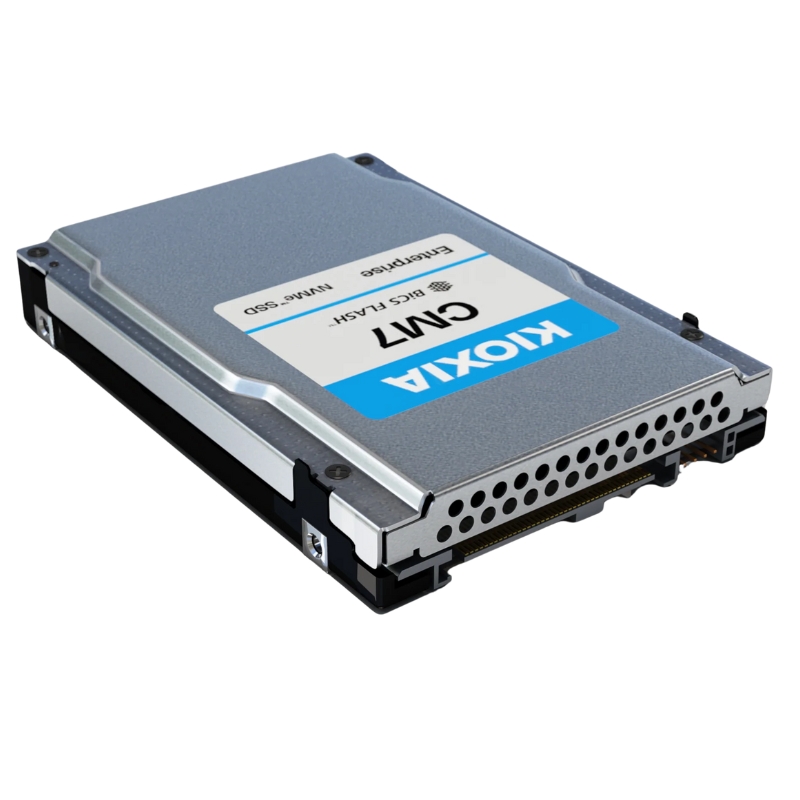
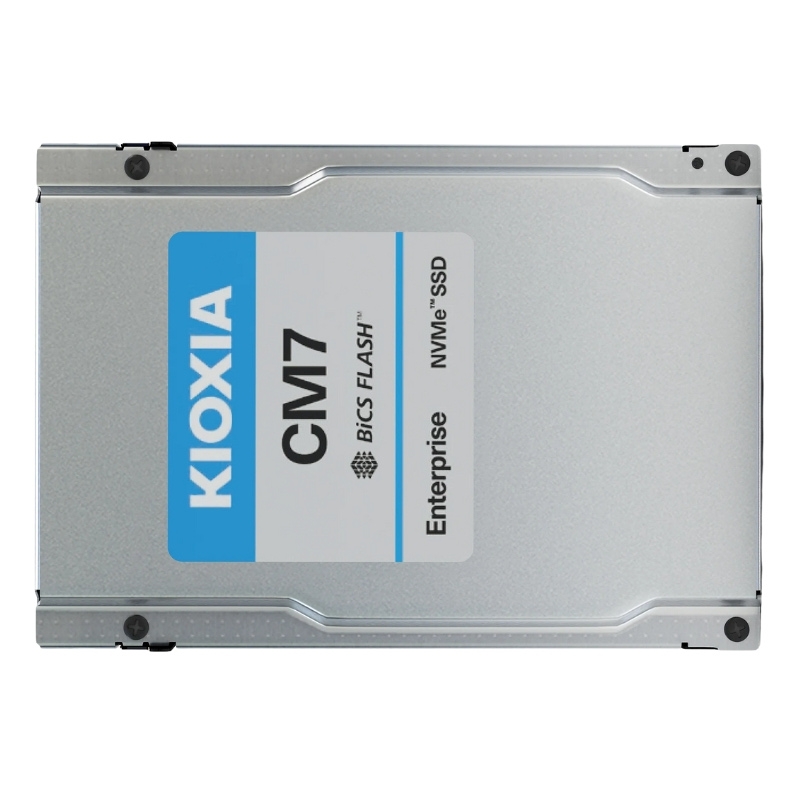
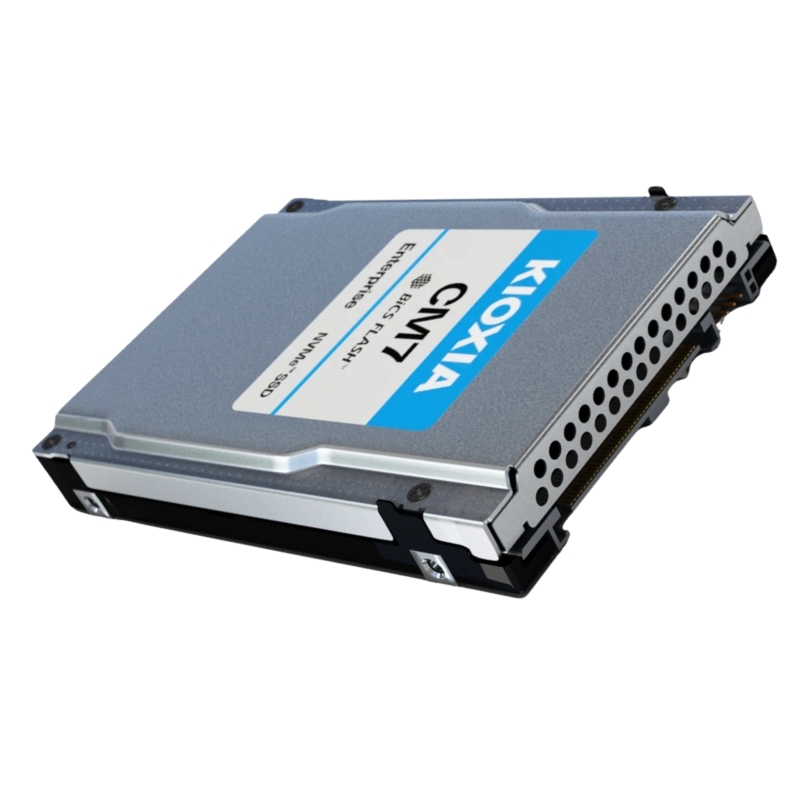
KIOXIA CM7-R Series Enterprise SSD: Unmatched Storage Performance
Engineered for data centers and enterprise applications, the KIOXIA CM7-R Series represents a pinnacle of internal solid-state drive technology, delivering exceptional capacity and speed.
Key Features & Highlights
Core attributes at a glance
The KIOXIA SDF3085DAB01T belongs to the enterprise NVMe SSD category, engineered to deliver:
- 1.92TB usable capacity — ideal for mixed-read/write database volumes, virtual machine storage, and caching layers.
- NVMe over PCIe interface — efficient command set and low-latency access compared with legacy SATA/SAS solutions.
- Enterprise reliability features — power-loss protection, media management, and firmware routines to preserve data integrity.
- Optimized endurance — engineered for heavy write cycles typical in server and storage arrays.
- Form factor & compatibility — designed for modern server platforms that support the CM7-R family; supports hot-swap capable chassis when paired with the correct carrier.
Core Specifications and Technical Attributes
This drive is meticulously designed to meet the rigorous demands of modern server environments.
Capacity and Flash Memory Architecture
- Ample Storage Volume: Boasts a substantial 1.92 Terabytes of data space.
- Advanced Memory Technology: Constructed with cutting-edge 3D TLC (Triple-Level Cell) NAND flash, ensuring a optimal balance of performance, endurance, and cost-efficiency.
Form Factor and Physical Integration
Adopting the ubiquitous 2.5-inch industry-standard form factor, this SSD ensures seamless integration into existing server racks and storage infrastructures.
Blazing-Fast Data Transfer and Interface
The drive leverages the most advanced connection protocols to eliminate bottlenecks.
Next-Generation PCIe Interface
- High-Speed Host Interface: Features a U.2 (SFF-8639) connector utilizing the PCI Express 4.0 x4 lane interface, operating in compliance with the NVMe protocol for ultra-low latency and maximum throughput.
- Bay Compatibility: Designed for seamless installation in a standard 2.5-inch compatible drive bay.
Exceptional Performance Metrics
Experience unparalleled speed that accelerates data-intensive workloads and applications.
Sequential Read and Write Velocity
- Rapid Data Retrieval: Achieves a phenomenal internal read data rate of up to 14,000 Megabits per second.
- Swift Data Commitment: Delivers a powerful internal write data rate of up to 5,300 Megabits per second.
Random Input/Output Operations
- Extreme Random Read: Capable of reaching up to 155,000 IOPS (4KB random read).
- Massive Random Write: Supports astounding peak performance of 2,000,000 IOPS (4KB random write) for handling immense transactional workloads.
Endurance and Operational Reliability
Built for continuous operation in demanding 24/7 environments, ensuring data integrity and long-term value.
Drive Endurance Rating
- DWPD Metric: Rated for 1 Full Drive Write Per Day (DWPD), indicating users can write the entire 1.92TB capacity every day of the drive's warranty period.
Predicted Operational Longevity
- Mean Time Between Failures (MTBF): An impressive 2.5 million hours MTBF underscores the drive's exceptional design and manufacturing quality, promising outstanding reliability and reduced total cost of ownership.
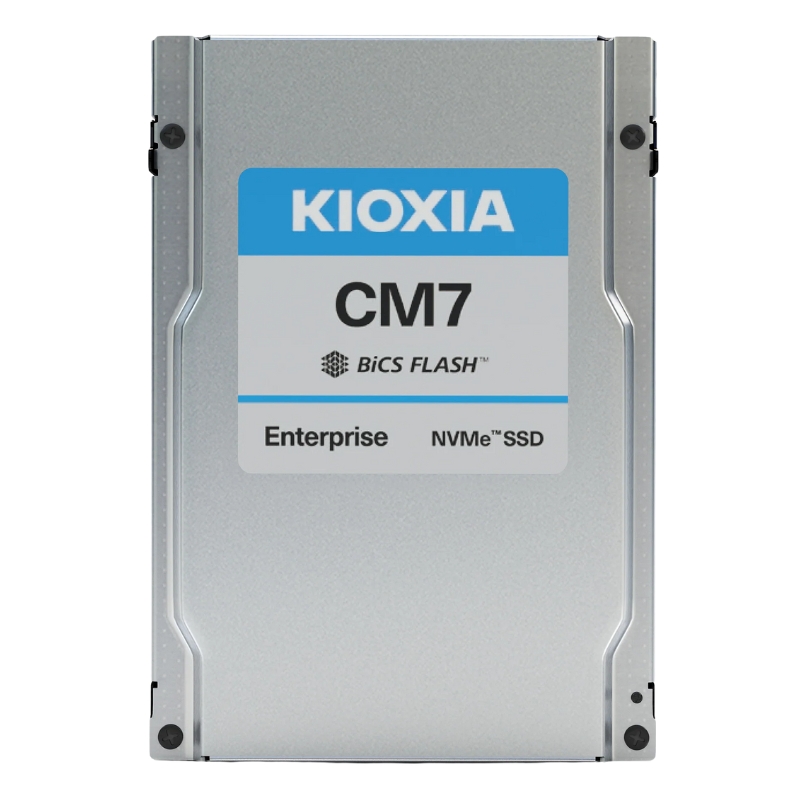
KIOXIA SDF3085DAB01T — 1.92TB PCIe CM7-R NVMe SSD: Enterprise-Grade Performance & Reliability
The KIOXIA SDF3085DAB01T 1.92TB PCIe CM7-R NVMe SSD is designed for demanding data center and enterprise workloads where consistent low latency, high throughput, durability, and data integrity matter. This category description explains what makes the CM7-R series drive a top choice for storage architects, systems integrators, and IT buyers who need a balance of performance, endurance, and efficient power management. Use this page as your guide to features, use cases, integration tips, buying considerations, and frequently asked questions about this specific model and its subcategory within KIOXIA's NVMe product portfolio.
This SSD matters for modern data centers
Enterprises are pushing more transactional, analytics, and virtualization workloads onto flash-based storage. The SDF3085DAB01T stands out by offering a capacity point and feature set tuned for mid-to-large scale deployments where predictable performance and long lifecycles reduce total cost of ownership (TCO).
Technical Considerations & Compatibility
Interface and protocol
The SDF3085DAB01T uses the NVMe protocol over a PCIe connection, making it suitable for servers and storage enclosures that expose NVMe lanes to host systems. NVMe provides parallel I/O paths and a streamlined command set, reducing CPU overhead and enabling much higher IOPS and throughput than legacy block interfaces.
Form factor and physical fit
This model is part of KIOXIA's CM7-R family configuration — confirm your chassis and motherboard support the physical and thermal characteristics of the drive. In many enterprise racks and storage platforms, CM7-R drives are used with dedicated carriers or sleds; ensure your serviceability needs (hot-swap capability, drive indicators, and screws) are compatible before purchase.
Power, thermal, and performance tuning
Enterprise NVMe drives balance power consumption and thermal output against peak throughput. System integrators typically:
- Plan for adequate airflow and drive spacing to maintain consistent performance under sustained load.
- Tune BIOS/UEFI power settings and NVMe driver options for best latency and quality-of-service (QoS) for critical workloads.
- Use vendor firmware and monitoring tools to manage thermal throttling and endurance diagnostics.
Performance Characteristics & Workload Suitability
Designed for mixed enterprise workloads
The 1.92TB capacity is a common choice for applications requiring a balance between raw capacity and performance density. Typical use cases include:
- Database systems (OLTP/OLAP) — low latency random reads/writes are essential for transaction throughput.
- Virtualization and container platforms — many smaller random I/O streams benefit from NVMe parallelism.
- Caching and tiering layers — use the drive as a performance tier in hybrid storage systems.
- Big data and analytics — medium to large sequential transfers for ingestion and query acceleration.
IOPS, throughput and latency — what to expect
While exact performance figures depend on platform, queue depth, and firmware tuning, enterprise NVMe drives like the SDF3085DAB01T generally deliver:
- High IOPS for small-block random reads/writes at low latency.
- Strong sustained sequential bandwidth for large-block transfers.
- Consistent QoS under mixed read/write patterns when appropriately provisioned and cooled.
Always consult KIOXIA's technical documentation for measured peak values and test conditions; real-world performance will vary with workload and system design.
Endurance, Reliability & Data Protection
Endurance ratings and workload planning
Enterprise SSDs are rated with an endurance metric (typically Drive Writes Per Day or TBW). When planning deployment:
- Estimate the daily write load for each workload and map it to the drive's endurance rating.
- Distribute write-heavy tasks across multiple drives to avoid early wear-out of a single device.
- Use overprovisioning where supported to increase effective endurance and maintain performance stability.
Data integrity mechanisms
Robust enterprise drives include firmware-level diagnostics, error correction, and power-loss protection to ensure data is not lost or corrupted during unexpected power events. Combine these features with RAID or erasure coding at the system level for multi-node protection.
Monitoring, telemetry and firmware updates
Use SMART, vendor management tools, and telemetry metrics to monitor drive wear, temperature, firmware versions, and predictive failure indicators. Regular firmware updates from KIOXIA may improve performance, reliability, and compatibility — follow best practices and maintenance windows when applying updates in production environments.
Integrations & Ecosystem
Typical deployment patterns
The SDF3085DAB01T is commonly deployed in:
- High-performance compute servers hosting databases and analytics engines.
- All-flash arrays and NVMe-oF (NVMe over Fabrics) front-ends to accelerate storage clusters.
- Hyperconverged infrastructure (HCI) nodes where storage density and low latency are key.
Platform compatibility checklist
Before integrating, confirm:
- Your server/host supports the physical CM7-R form factor and NVMe mapping used by the drive.
- Your OS and hypervisor have the proper NVMe drivers and firmware compatibility statements.
- Enclosures/carriers are validated for airflow and hot-swap mechanical compatibility.
Software & management tools
Many customers rely on vendor-supplied management software for firmware updates, monitoring, and health reporting. Consider integrating these tools into your existing monitoring stack (Prometheus, Grafana, Splunk) to centralize telemetry and alarms.
Evaluating competitors
When comparing across vendors, focus on these metrics:
- Real-world published IOPS numbers at different queue depths and mixed workloads.
- Endurance ratings and warranties offered for datacenter usage.
- Availability of enterprise features such as power-loss protection, advanced telemetry, and firmware update frameworks.
Procurement tips for volume purchases
For large deployments, work with resellers or KIOXIA partners to secure:
- Volume pricing and lead time commitments.
- Firmware image stability commitments and pre-deployment validation support.
- Cross-shipping or advanced replacement options for critical infrastructure.
Ongoing maintenance recommendations
Maintain healthy drives through:
- Regular firmware updates during scheduled maintenance windows.
- Continuous telemetry monitoring for temperature, SMART attributes, and write amplification trends.
- Planned replacement of drives approaching their rated endurance to avoid unplanned downtime.
Performance tuning tips
To keep your NVMe fleet performing optimally:
- Avoid oversubscribing NVMe lanes — ensure each drive has sufficient PCIe bandwidth.
- Enable operating system and filesystem features that reduce write amplification when possible (for example, use proper alignment and avoid excessive synchronous small writes when not required).
- Leverage host-side caching and write-back policies that match your data durability requirements.
Security & Compliance
Data-at-rest protections
Many enterprise drives include support for encryption standards (self-encrypting drive options) to help meet data-at-rest compliance requirements. If your deployment requires hardware encryption, confirm the drive’s support for encryption, key management compatibility, and certification claims.
Regulatory considerations
Check that the drive and supplier meet regional compliance and shipping regulations for electronic components, especially if you operate in regulated industries (finance, healthcare, government).
Use Cases: Real-World Scenarios
Case study types where this drive excels
- Database acceleration — Reduce query latencies and increase concurrent transaction throughput.
- Virtual desktop infrastructure (VDI) — Improve boot storm resilience and VM density per host.
- Edge compute nodes — Provide robust local storage for analytics with efficient power/space tradeoffs.
- Caching layers — Use as an intermediate tier for hot data in hybrid cloud architectures.
Sizing example
Suppose you run a medium-sized OLTP workload that writes an average of 500 GB/day and requires consistent low latency. Deploying several 1.92TB drives in a RAID or erasure-coded pool can provide redundancy while distributing endurance load. Capacity planning should include spare capacity for wear leveling and overhead.
Keywords & Snippets
Primary keywords to emphasize
Include these phrases naturally in product pages, meta descriptions, and internal links to improve discoverability:
- KIOXIA SDF3085DAB01T
- 1.92TB PCIe CM7-R NVMe SSD
- enterprise NVMe SSD
- data center NVMe
- high endurance SSD for servers





 Contact Us
 Information
 Catalog
 Solid State Drives (SSD)
 Network Switches
 Hard Disk Drives
 HBA & Controllers
 PC & Servers
 PC & Server Memory
 CPU & Processors
 Network Routers
 Power Supplies
 Tape Drives & Libraries
 Network Devices
 Computer & Network Cables