(7% discount is applied at checkout)
Cart is empty
Your go-to destination for cutting-edge server products
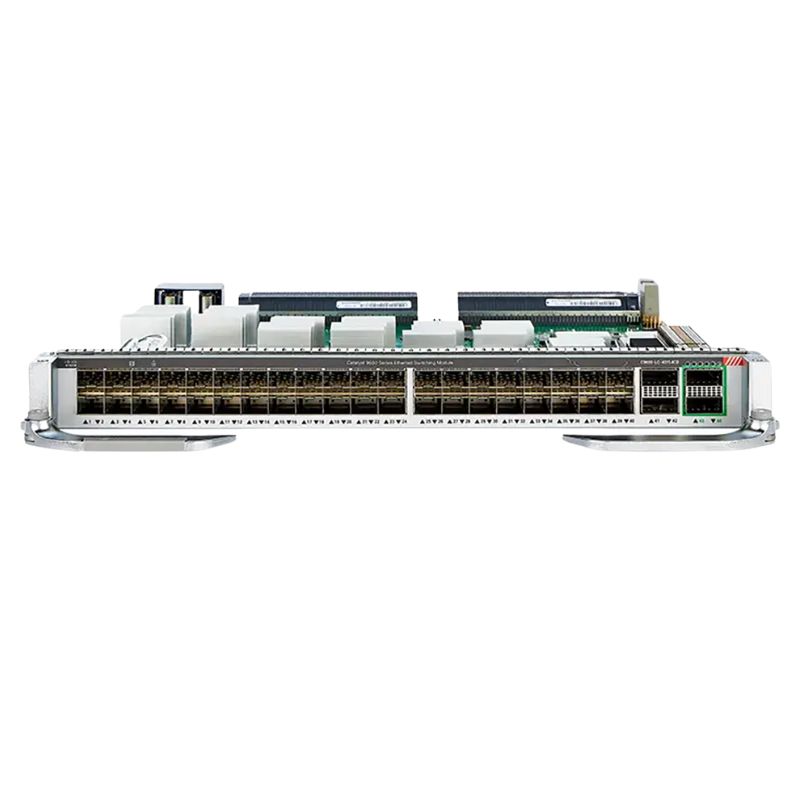


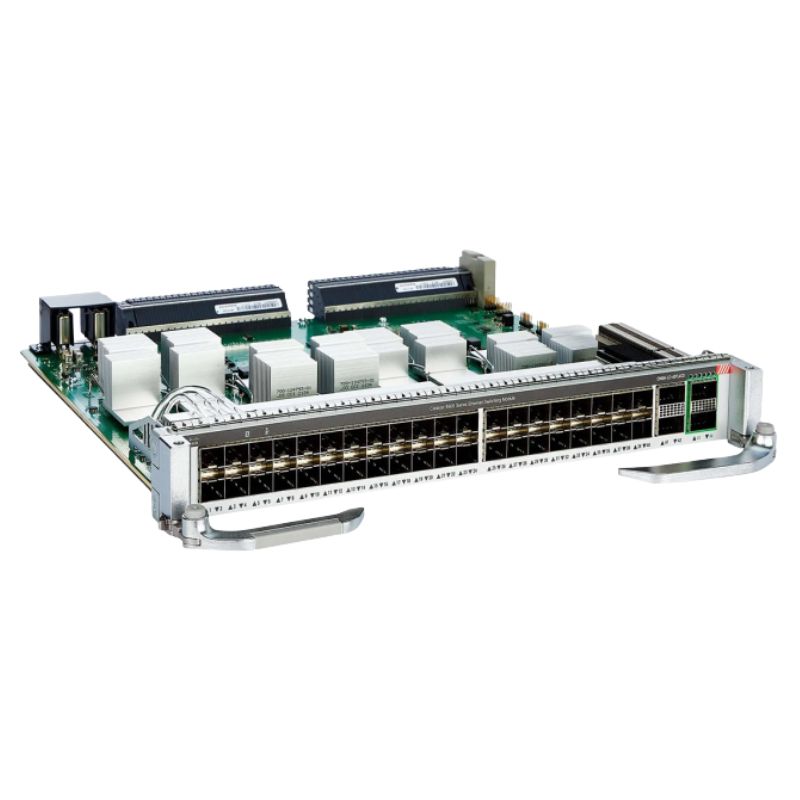
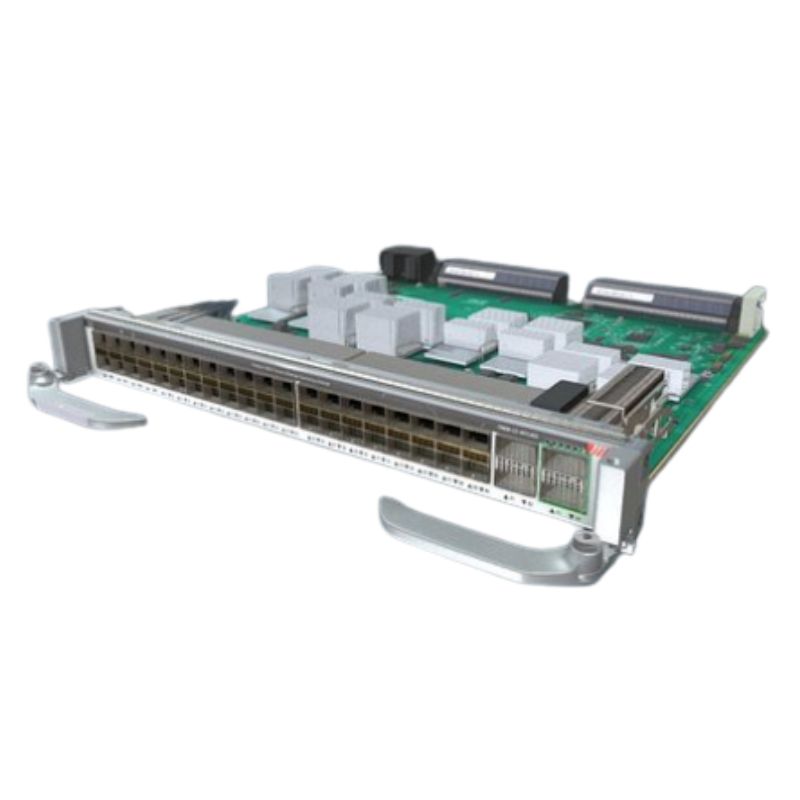
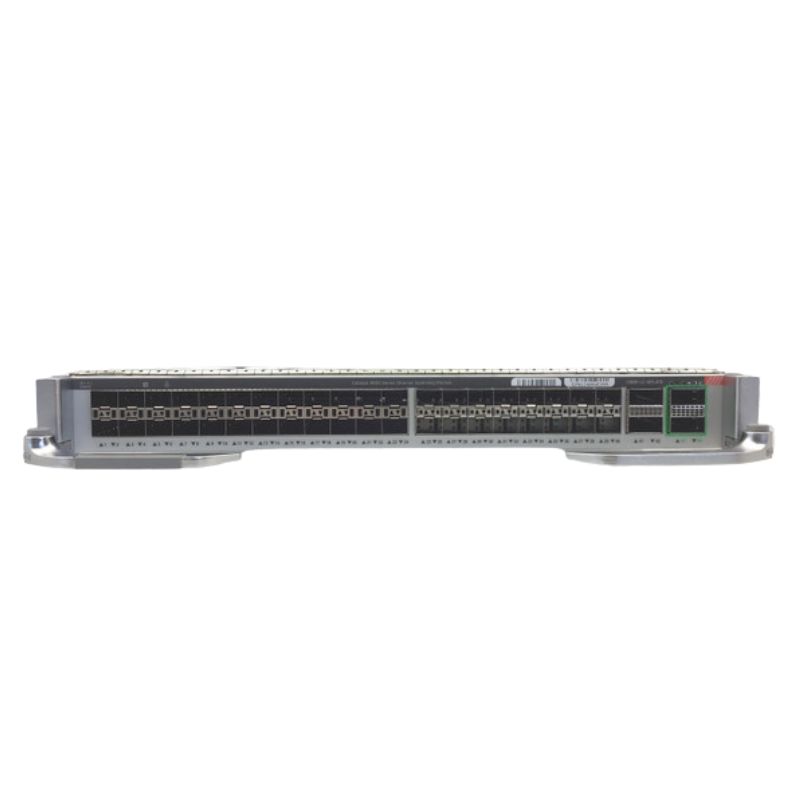
Cisco C9600-LC-40YL4CD Catalyst 9600 Series 40 Ports 50ge, 2 Ports 200ge, 2 Ports 400ge Combo Line Card. Excellent Refurbished with 1 year replacement warranty.
The Cisco C9600-LC-40YL4CD is a purpose-built expansion module engineered for enterprise-class Catalyst 9600 chassis. This line card delivers a blend of ultra-high port density and flexible multi-rate interfaces — ideal for campus cores, aggregation layers, and high-performance data center interconnects. Designed and manufactured by Cisco, the part number C9600-LC-40YL4CD represents a compact, powerful option for organizations that require both 50GbE leaf connections and next-generation 200/400GbE uplinks.
The Cisco C9600-LC-40YL4CD is a high-performance combo line card engineered for the Catalyst 9600 Series chassis. Designed for environments that demand massive east-west throughput and superior port density, this line card packs 40 x 50GbE capability with 2 x 200GbE and 2 x 400GbE combo uplink ports into a single modular card. Ideal for campus cores, data center leafs, and aggregation layers, the card delivers deterministic latency, programmable telemetry, and hardware-accelerated features that align with modern intent-based networking and Cisco DNA Center automation.
What sets the C9600-LC-40YL4CD apart is how it blends port density, flexibility, and advanced hardware features:
Flexible Combo Uplinks: 2x200G and 2x400G ports (combo-capable) let administrators select uplink speeds that match aggregation and spine fabrics.
High-Density 50G Ports: 40 ports capable of 50GbE each — ideal for connecting multi-gig access switches, APs, and servers.
Line-Rate Switching: All ports operate at line-rate with cut-through/low-latency switching to maintain application performance.
Programmability & Telemetry: Advanced streaming telemetry, gNMI support, and in-silicon counters for real-time visibility.
Advanced Security: Hardware-accelerated ACLs, MACsec support (where applicable), and integrated segmentation features for zero-trust enforcement.
Engineered for scale, the C9600-LC-40YL4CD supports:
Large forwarding tables with hardware-based MAC and route scale suitable for dense campus fabric and data center deployments. High-performance QoS pipelines that support hierarchical policies, shaping, policing, and class-of-service mapping for latency-sensitive workloads.
Seamless expansion: combine multiple cards within a Catalyst 9600 chassis to increase aggregate bandwidth and port counts without loss of feature parity.
A comprehensive hardware profile helps planners align rack, power, and cooling requirements with network goals. The C9600-LC-40YL4CD includes:
Port Composition: 40x 50GbE ports + 2x 200GbE combo + 2x 400GbE combo (format depends on chassis slot and port mapping).
Form Factor: Standard Catalyst 9600 line card dimensions designed to fit the modular chassis with hot-swap support.
Power & Cooling: Power draw and thermal profile optimized for dense port count; supports redundant chassis power systems and variable fan modules.
Optics & Transceivers: Compatible with a broad ecosystem of QSFP56, QSFP-DD and pluggable optics for 50G/200G/400G interfaces (vendor-qualified modules recommended).
The line card is purpose-built for the Cisco Catalyst 9600 Series family and requires supported supervisor engines and chassis health firmware to enable full feature sets. When mixing line cards, follow Cisco interoperability matrices to ensure consistent forwarding behavior and to avoid feature gaps.
Port numbering and slot labeling are critical for configuration clarity. Administrators should reference the Catalyst 9600 documentation for the exact naming scheme (for example GigabitEthernet1/0/1-style or TenGigE1/1/1-style depending on platform translation). Standard practice:
Label schematic diagrams with chassis slot numbers, card part numbers, and optical type per port for maintenance efficiency. Use consistent device naming in configuration templates to make automation predictable.
Flexibility at the physical layer ensures the line card can be tailored to connectivity needs and distances. Options typically include:
QSFP56 modules: For 50GbE/100GbE connectivity to access stacks or high-speed servers.
QSFP-DD or OSFP transceivers: Enabling 200G and 400G uplink performance where required.
DAC & AOC options: For short-reach interconnects between chassis and racks where power and cost optimization are priorities.
Match optics to the required reach and interface type — do not oversubscribe the optics budget.Label both ends of every cable with port and device identifiers to accelerate troubleshooting.
Monitor fiber cleanliness and perform inspection on both transceivers and patch panels before insertion.
When incorporating the C9600-LC-40YL4CD into your network, consider architecture tradeoffs for performance, availability, and manageability.
The Catalyst 9600 chassis supports redundant supervisors and power feeds. Recommended HA patterns:
Active/Standby Supervisors: Ensure control-plane continuity during upgrades or faults.
Redundant Uplinks: Use diverse physical routes for uplink 200/400G ports to avoid single points of failure.
In-service Software Upgrades (ISSU): Maintain feature availability during rolling code updates where the platform and licenses permit.
Port velocity and traffic forecasts should guide the mix of 50G edge ports and 200/400G uplinks. Consider:
Growth projections in AP and server density — favor additional 50G ports when multi-gig access is expected to expand.Interim migration strategies — implement combo uplinks now to simplify future uplink speed upgrades without swapping line cards.
Power and cooling headroom in racks — high-density cards increase thermal output and power consumption, so plan accordingly.
Several proven topologies leverage the card’s strengths:
Collapsed Core-Distribution: Use the 9600 chassis with multiple 40-port line cards to aggregate distribution switches while maintaining 400G spine connectivity.
Leaf-Agg Data Center: Deploy C9600 line cards as leaf aggregation for server racks with 50G server links and 400G uplinks to spine fabrics.
Multi-POD Campus Fabric: Consolidate campus pods with VXLAN EVPN overlays using the 9600 as an underlay/overlay anchor.
The C9600-LC-40YL4CD shines in situations that blend high access density with a need for a few very high-bandwidth uplinks. Typical scenarios:
Replace multiple legacy aggregation switches with a single modular chassis populated with mixed-speed line cards. Forty 50G ports support high-bandwidth access uplinks from building distribution switches and wireless controllers, while 200/400G ports connect to the campus spine or data center.
Use this line card as an aggregation layer between leaf switches at 25/50G and the spine layer at 200/400G. It provides an optimized transition path for organizations moving access connectivity beyond 10/25G densities.
Service providers that serve enterprise customers can use these modules to collocate many client circuits at mid-range speeds while aggregating to very high-capacity backbone links.


 Contact Us
 Information
 Catalog
 Solid State Drives (SSD)
 Network Switches
 Hard Disk Drives
 HBA & Controllers
 PC & Servers
 PC & Server Memory
 CPU & Processors
 Network Routers
 Power Supplies
 Tape Drives & Libraries
 Network Devices
 Computer & Network Cables