(7% discount is applied at checkout)
Cart is empty
Your go-to destination for cutting-edge server products
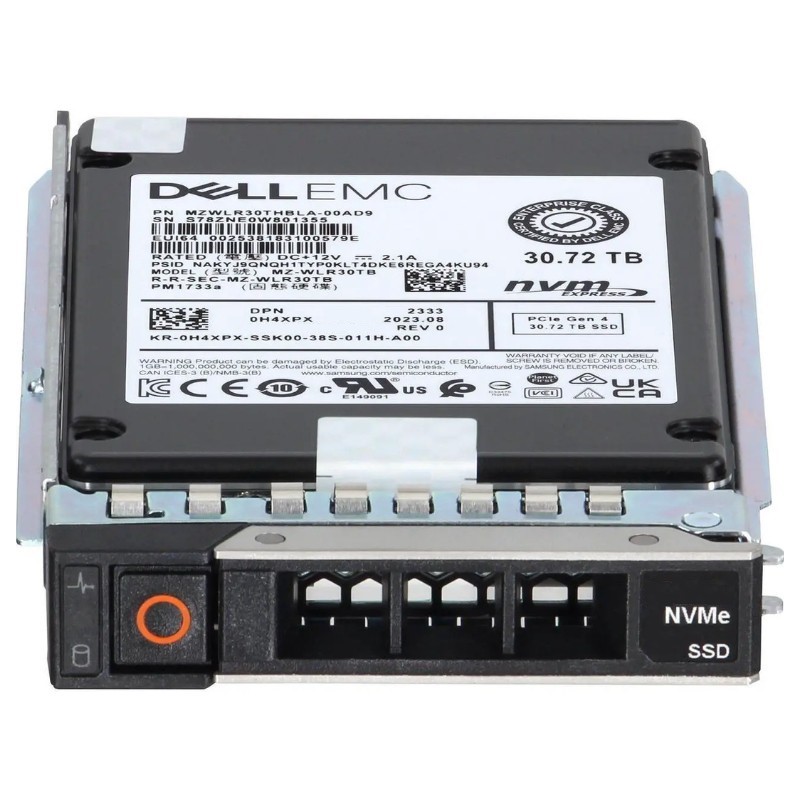


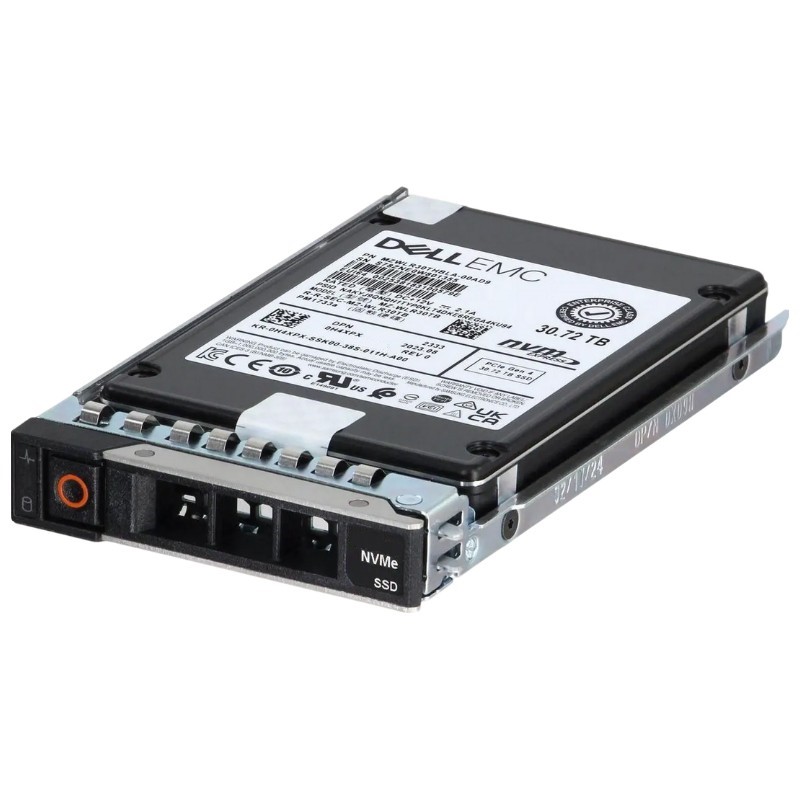
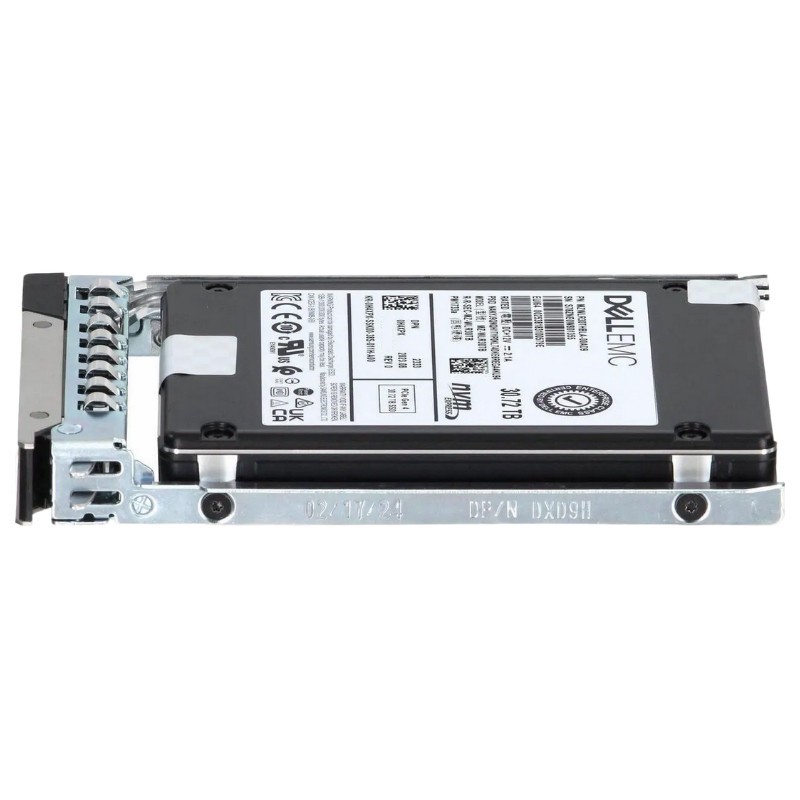
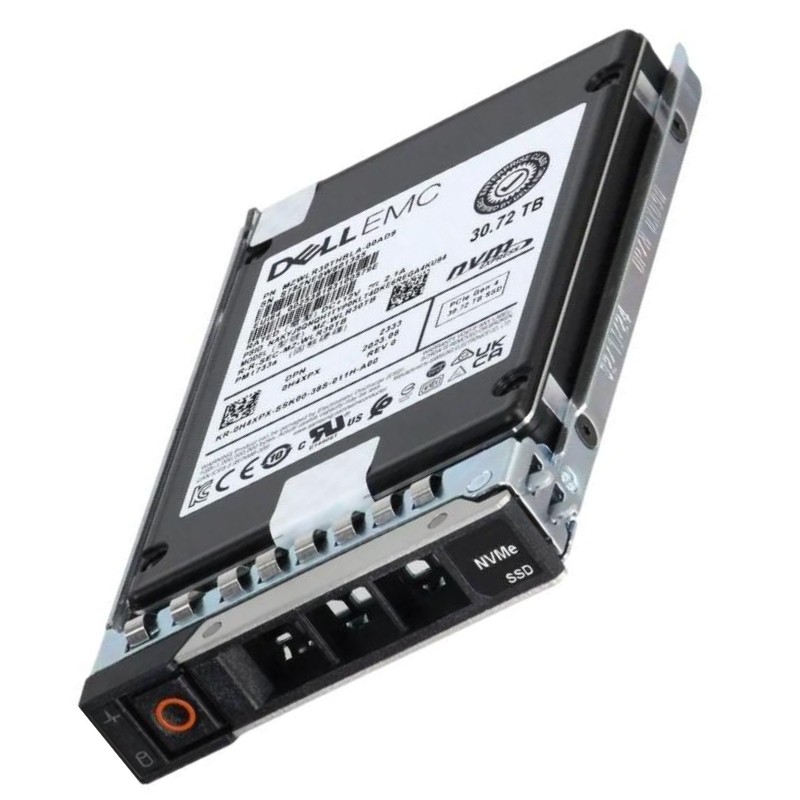
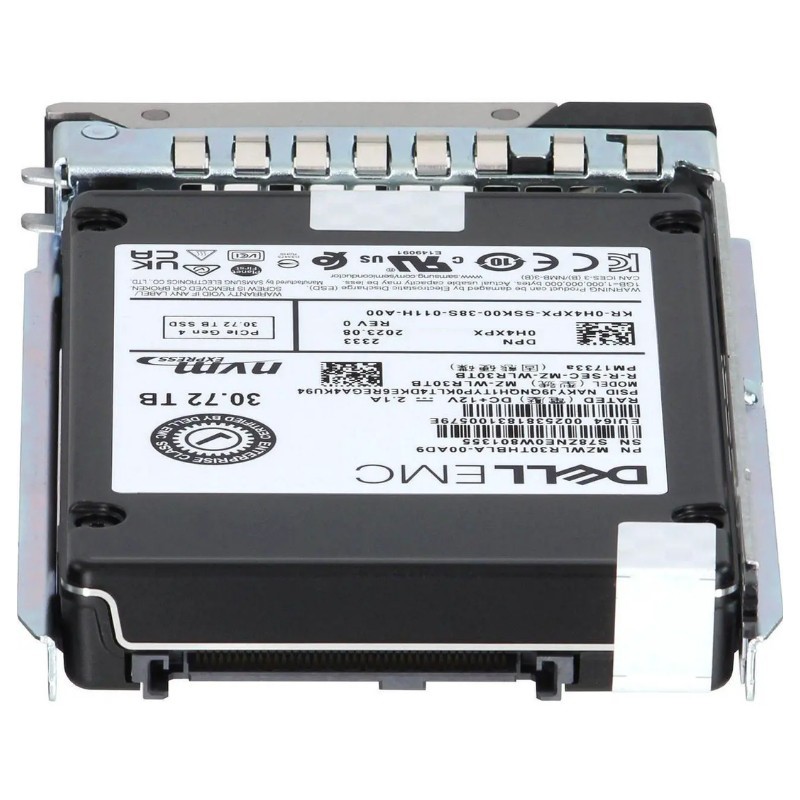
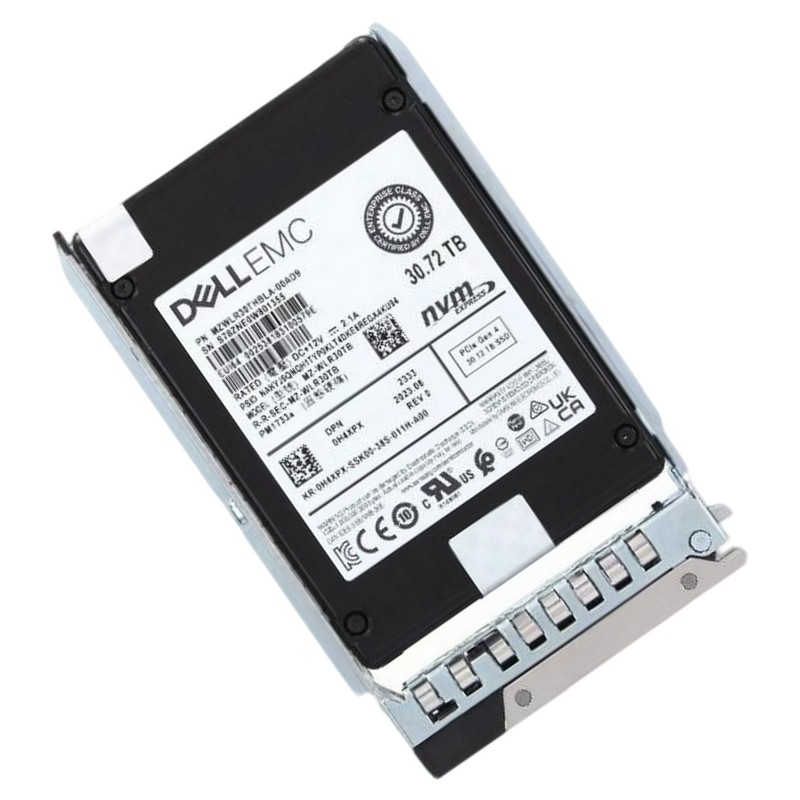
Dell TPHN2 30.72TB 3d Nand QLC PCIe Gen4.0 x4 NVMe U.2 SFF Solid State Drive. New Sealed in Box (NIB) with 1 year Replacement Warranty
Engineered for data-intensive environments, this enterprise-grade solid-state drive delivers an extraordinary 30.72 terabytes of storage. Leveraging cutting-edge QLC 3D NAND technology, it provides a transformative solution for massive data workloads, ensuring superior performance and reliability in demanding server applications.
The TPHN2 Dell 30.72TB 3D NAND QLC PCIe Gen4.0 x4 NVMe U.2 SFF Solid State Drive with tray for DELL 14g, 15g, 16g and 17g PowerEdge Server represents a high-capacity, cost-optimized storage category engineered for dense data-center tiers, archival consolidation, and hyperscale environments that require massive capacity in a familiar 2.5-inch U.2 small form factor. This category page spotlights the drive’s role as a high-density SSD option in enterprise Dell PowerEdge fleets, emphasizing compatibility, density-per-rack improvements, operational economics, and practical deployment considerations for system administrators and procurement teams.
This drive category is ideal for organizations prioritizing capacity-per-dollar and ease of integration into existing PowerEdge infrastructures. Typical workloads include cold data storage, large-scale object stores, backup-to-disk environments, archival content hosting, media repositories, and read-heavy analytics where storing huge datasets in a fast-access medium reduces the need for slower tape or multi-tiered archival overlays. The TPHN2 30.72TB QLC NVMe delivers the combined benefits of NVMe protocol efficiencies and QLC flash cost advantages, enabling administrators to consolidate many terabytes into a few drive bays and simplify storage architecture.
Quad-Level Cell (QLC) 3D NAND stores four bits per cell, which significantly raises raw capacity while driving down cost-per-terabyte. In enterprise settings where absolute maximum capacity and predictable read performance matter more than the highest endurance for random write-intensive workloads, QLC-based U.2 drives are an economical choice. The TPHN2 category balances this tradeoff: it harnesses modern flash management, overprovisioning, and firmware-level wear management to provide usable, high-density storage without forcing a major architectural change in PowerEdge servers.
Organizations replacing multiple smaller drives or hard-disk arrays can dramatically reduce rack space and power draw. By offering a 30.72TB capacity inside a U.2 2.5-inch SFF package, this category helps reduce the number of required drive bays, controllers, and adjacent components. The savings extend beyond hardware: simplified cabling, fewer drive failure points, and lower cooling load contribute to reduced operational expenditure over time. Procurement teams will find the cost-per-TB argument compelling when comparing these drives to multi-node HDD racks for cold or warm data tiers.
Compatibility is a standout feature for this category: the TPHN2 drives are packaged with the tray and firmware options intended for seamless physical and logical integration into Dell PowerEdge 14th, 15th, 16th, and 17th generation servers. Administrators benefit from straightforward hot-swap insertion, recognizable drive IDs in iDRAC and OpenManage, and the ability to use existing U.2 backplanes and drive cages without additional adapters. This makes upgrades and capacity expansions faster and less disruptive to live environments.
Each TPHN2 drive in this category includes the compatible tray required for proper mechanical fit and airflow within PowerEdge drive bays. Using the supplied tray ensures appropriate connectors, drive latch operation, and thermal contact paths are preserved. The trays also ensure correct activity LED behavior and ease of replacement during hot-swap operations, lowering the risk of accidental drive damage during service. For environments that perform frequent drive rotations or require rapid capacity scaling, these details significantly reduce operational friction.
The PCIe Gen4.0 x4 NVMe interface provides a low-latency, high-bandwidth path between the drive and the server CPU, enabling better throughput and reduced I/O wait times for read-oriented workloads. While QLC flash is optimized for density rather than sustained random-write performance, modern firmware techniques—like dynamic SLC caching, host-managed write amplification control, and internal garbage collection—help sustain predictable sequential and burst performance under typical enterprise reads and large-block transfers.
Users should expect NVMe-level latency improvements over traditional SATA/SAS SSDs, which improves responsiveness for applications reading large datasets. Throughput advantages of PCIe Gen4 are especially noticeable during large sequential reads, bulk restore operations, or when streaming media from a single node. Administrators should set realistic expectations for write-heavy workloads: the QLC nature of these drives means endurance and sustained write rates differ from higher-endurance TLC or enterprise NAND variants. For workloads requiring frequent, heavy random writes, consider hybrid architectures or using a write-optimized cache tier in front of these QLC drives.
Best practice deployments include using TPHN2 drives as capacity tiers behind a small number of higher-endurance NVMe drives used as write caches or metadata stores. In distributed filesystems and object stores, placing metadata on TLC drives while sharding large objects to QLC drives can balance cost and performance. Backup repositories and deduplicated backup targets are another natural fit because deduplication and compression reduce effective write amplification while maximizing capacity utilization.
Endurance for QLC drives is inherently lower than TLC or SLC-based enterprise SSDs; however, this category emphasizes lifecycle planning rather than raw endurance. Reliability is achieved through robust firmware, overprovisioning, and enterprise-grade components like capacitors and controllers that gracefully handle power failures. When integrated into environments with routine monitoring and SMART-driven thresholds, these drives can deliver acceptable operational lifetimes that align with refresh cycles common to archival storage tiers.
For organizations with regulatory obligations, selecting drives that support hardware-based encryption and secure erase features is crucial. Many enterprise NVMe drives offer AES-based encryption and NVMe-compliant secure sanitize commands, which simplify decommissioning and data destruction workflows. When deploying TPHN2 drives in regulated environments, verify that the drives’ encryption features meet specific compliance requirements and that key management aligns with your security posture.
High-density NVMe drives in server environments demand attention to thermal design. The U.2 SFF form factor used by this category facilitates predictable airflow and helps maintain acceptable operating temperatures when installed in PowerEdge drive cages. However, administrators must still validate cooling budgets, monitor drive temperatures under realistic workload conditions, and consider additional airflow tuning or baffle adjustments when populating many high-capacity drives in a single chassis.
Compared to high-capacity HDD arrays, these QLC NVMe drives typically reduce power consumption and improve rack-level efficiency, particularly at idle. The power profile during active writes and heavy sequential operations can increase, so it is important to include these drives in power capacity planning for a server or rack. In environments where constrained power or cooling is a concern, the density gains of 30.72TB U.2 SSDs can still yield net positive efficiency improvements versus equivalent-capacity HDD enclosures.
Place the drives where recommended by the server vendor to maintain designed airflow paths. If retrofitting older chassis with maximum populated bays, check that fan speed profiles are adequate and that ambient inlet temperatures remain within operational limits. Monitoring temperature trends in early deployment phases can prevent throttling and unnecessary wear due to thermal stress.
Large-capacity drives reduce the complexity of logical volume management by lowering the number of physical devices administrators must track. Capacity planning should account for RAID or erasure coding overhead, metadata allocation, and reserve space for overprovisioning. When provisioning new volumes, consider carving out smaller logical units for critical data and using larger contiguous volumes for bulk content. File-system choices, block-size alignment, and deduplication/compression strategies will significantly influence usable capacity and performance.
Using these drives within traditional RAID arrays requires careful assessment of rebuild times and fault domains, because the larger the drive, the longer a rebuild can take. Erasure coding with distributed storage systems can help mitigate rebuild impact by leveraging parallelization across multiple nodes. For RAID-based designs, balance the need for high capacity with the increased time-to-rebuild risk by reducing rebuild window exposure through smaller RAID member counts or hybrid protection schemes.
The NVMe U.2 interface and the drives’ firmware make them compatible with common enterprise file systems and software-defined storage platforms. When integrating at scale, performance tuning (such as queue depth configuration, host-side caching settings, and I/O scheduler adjustments) delivers the best real-world results. Many software-defined stacks include built-in QoS and tiering functionality, which pairs well with these drives as a capacity tier.
Because of the high capacity contained within each unit, maintaining a smaller number of spares may be sufficient compared to HDD-driven designs, but lead times can vary. Align spare stocking policies with expected failure rates and procurement lead times. Centralized spare pools across multiple racks or data halls can reduce total spare inventory while maintaining service continuity.
Firmware compatibility with server management and RAID controllers is essential. Establish a validation process for firmware updates in a staging environment before rolling them into production. Document fallback procedures and ensure that firmware release notes are reviewed for changes to telemetry reporting and performance characteristics.
Security-conscious organizations must plan for secure disposal and data sanitization. The drives in this category typically support NVMe secure erase and crypto-erase functions that make decommissioning straightforward when combined with an effective key-management strategy. End-of-life procedures should include documented secure erasure, hardware recycling through approved channels, and updating asset inventories to reflect drive retirement.
Large capacity changes can trigger data rebalancing in distributed storage clusters. Schedule rebalancing during off-peak windows and stagger capacity migrations to avoid intensive simultaneous background operations. Many modern software-defined systems include throttling and priority controls to reduce the impact on foreground workloads during these operations.
These drives can serve as attractive on-premise targets for hybrid-cloud architectures and backup appliances. Backing up deduplicated and compressed datasets to high-density on-premise targets can reduce cloud egress and storage costs while preserving rapid restore capabilities. Ensure that backup and archive software recognizes the drive’s attributes, aligns retention policies, and optimizes transfer patterns for large sequential writes.


 Contact Us
 Information
 Catalog
 Solid State Drives (SSD)
 Network Switches
 Hard Disk Drives
 HBA & Controllers
 PC & Servers
 PC & Server Memory
 CPU & Processors
 Network Routers
 Power Supplies
 Tape Drives & Libraries
 Network Devices
 Computer & Network Cables