(7% discount is applied at checkout)
Cart is empty
Your go-to destination for cutting-edge server products
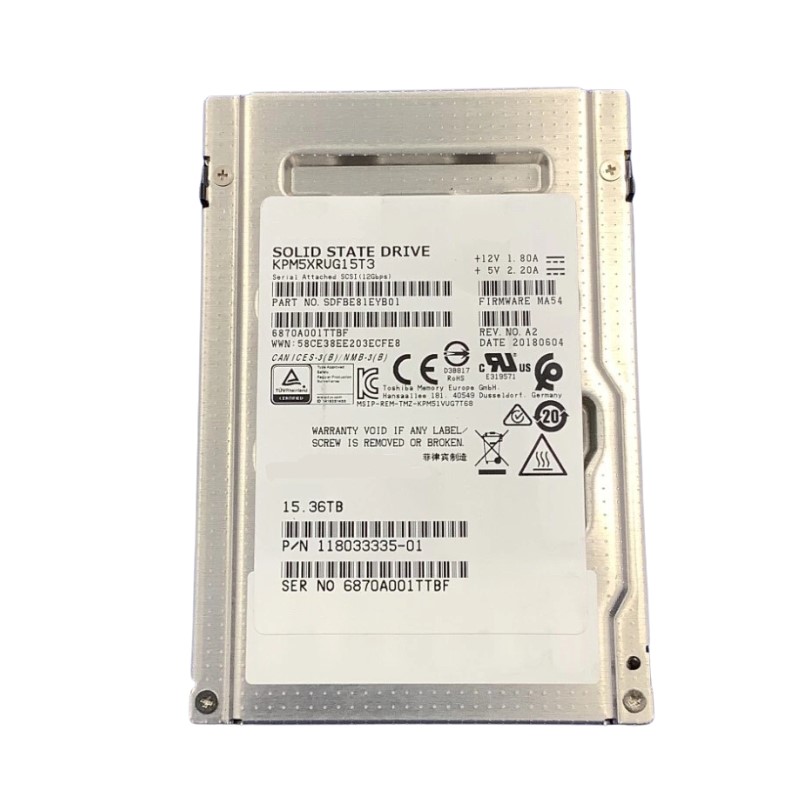


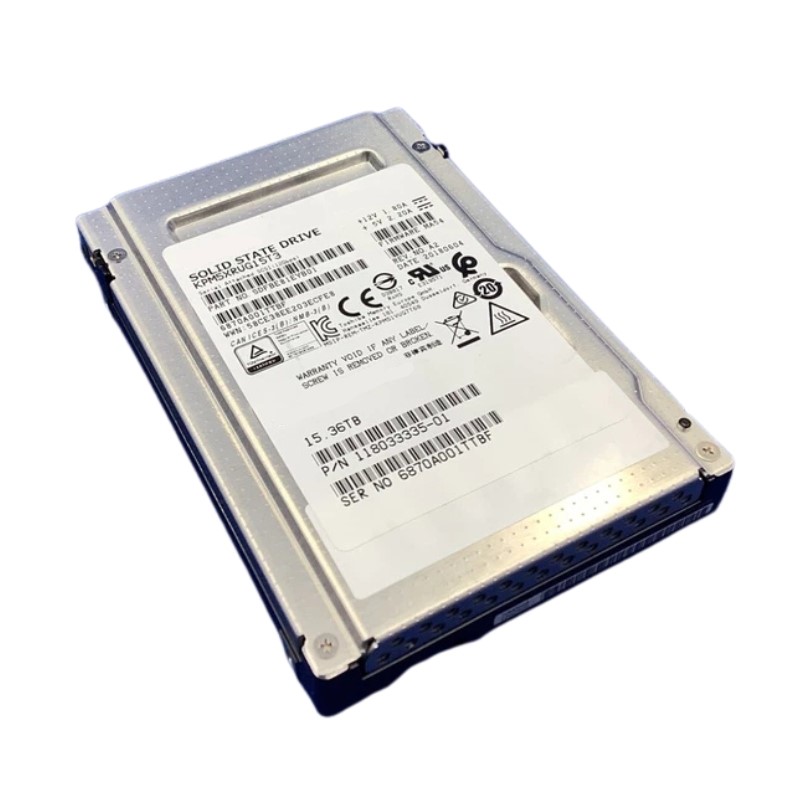
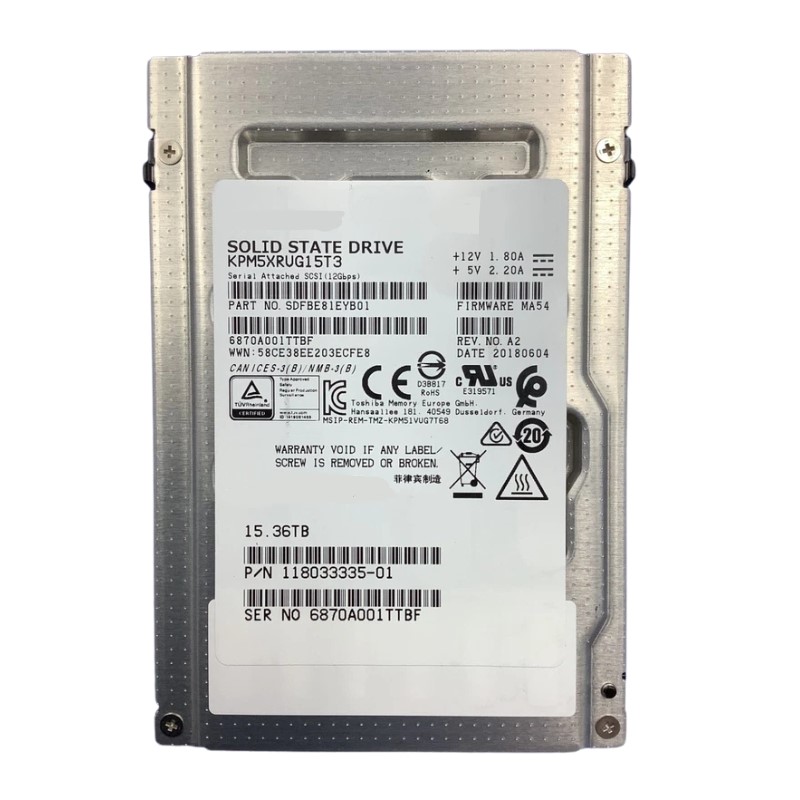
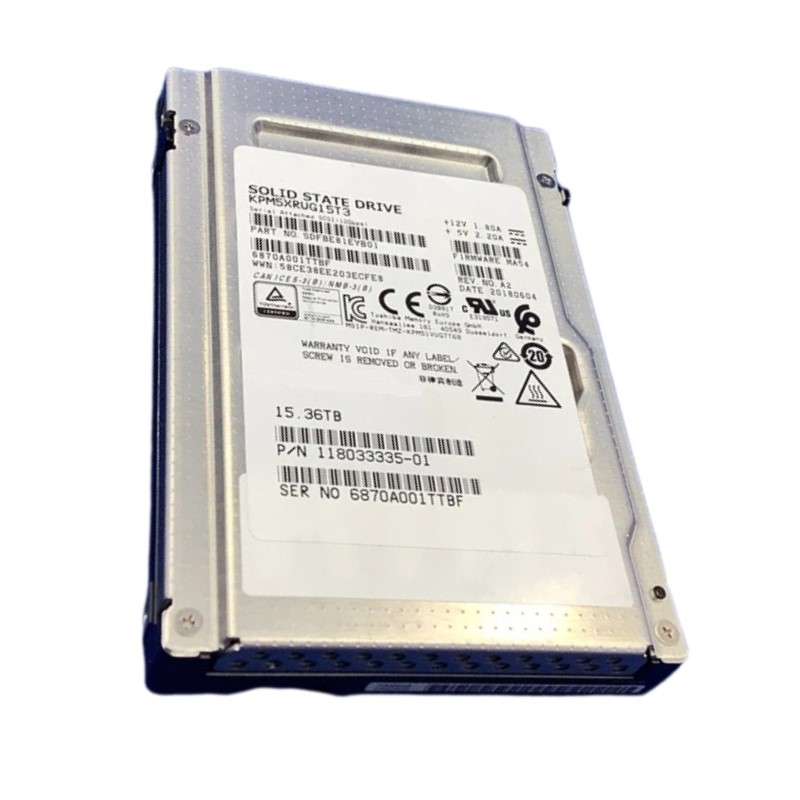
Kioxia KPM5XRUG15T3 15.36TB SAS 12GBPS 2.5inch Read Intensive Solid State Drive. Excellent Refurbished with 1 year replacement warranty
Engineered for data-center workloads that prioritize read throughput, the Kioxia KPM5XRUG15T3 is a 15.36 TB, 2.5-inch SAS 12 Gb/s solid-state drive built with BICS Flash™ TLC. It combines high sequential bandwidth with strong random read performance to accelerate large-scale virtualization, caching, analytics, and content-delivery applications.
This drive delivers up to 2,100 MB/s for both sustained 128-KiB sequential read and write transfers, making it well suited for large file streaming, backup consolidation, and workloads that move bulk data between tiers.
With a random 4-KiB read capability reaching around 300k IOPS, the KPM5XRUG15T3 dramatically reduces latency for read-heavy transaction engines, hot caches, and virtual desktop infrastructures (VDI). The 4-KiB write performance (~35k IOPS) ensures background writes and metadata updates keep pace without throttling read operations.
Using triple-level cell (TLC) BICS Flash™, this SSD provides a favorable balance between cost per GB and endurance suitable for read-dominant environments. The architecture targets long service life when deployed in typical enterprise read-intensive patterns.
While optimized for reads, the drive’s substantial capacity makes it a compelling option for dense nearline storage where occasional writes occur — for example, serving as a hot tier within a hybrid storage pool or as a cache/accelerator layer for slower disk arrays.
Kioxia’s enterprise lineup emphasizes drive reliability and data integrity. Features such as power-loss protection (depending on model and configuration), advanced ECC, and rigorous validation protocols help safeguard data and reduce the chance of silent corruption.
Although optimized for read-dominant workloads, the TLC-based Kioxia drive still provides meaningful endurance metrics appropriate for caching, read pools, and nearline applications. Calculated mean time between failures (MTBF) and drive writes per day (DWPD) targets are engineered to meet typical enterprise SLAs when used in the intended workload profile.
The 2.5-inch design provides high density in rack servers and storage arrays. Its compact footprint is ideal for blade or half-height enclosures where space efficiency is paramount.
Architect the Kioxia drive as a hot tier or read cache in a multi-tier storage design. It pairs well with high-capacity HDDs for cold data and ultra-low-latency NVMe for the most demanding read/write hotspots.
Because TLC provides a lower cost per terabyte than higher-end flash technologies, the KPM5XRUG15T3 is an economical choice for expanding read performance without dramatically raising storage capital expenditure.
Use this drive when you need to combine generous capacity with enterprise-grade read performance inside SAS-based infrastructures. Its balance of throughput, density, and cost efficiency makes it a compelling building block for read-focused storage tiers in modern data centers.
The Kioxia KPM5XRUG15T3 15.36TB SAS 12Gbps 2.5" belongs to Kioxia’s enterprise read-intensive SAS family (PM5 / KPM5X variants) designed to deliver high-capacity, low-latency storage for modern mixed read workloads. These drives target data center applications where large, mostly-read datasets must be served quickly and reliably — for example, analytics platforms, content distribution, virtualization, metadata storage, and caching tiers. The PM5/KPM5X family emphasizes high sequential throughput, sustained random read performance, and enterprise features such as power-loss protection and end-to-end data integrity.
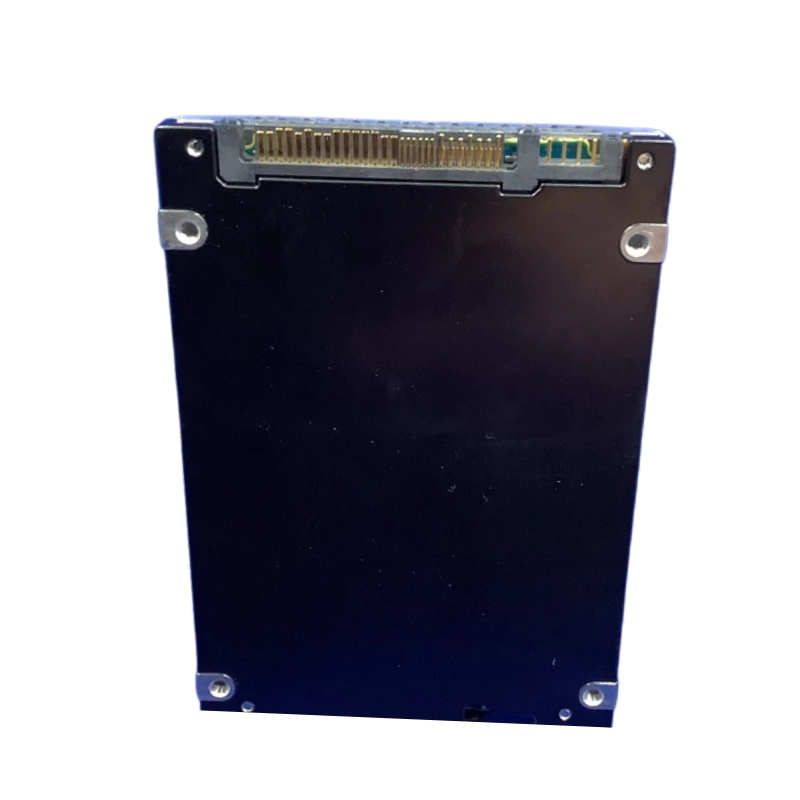
This model uses a 12.0 Gbit/s SAS interface (SAS 12Gb/s), in a 2.5-inch small form factor with a 15 mm z-height. The KPM5XRUG15T3 offers a raw capacity point at 15.36 TB, one of the largest single-drive capacities available in a 2.5" SAS enterprise drive line, enabling density-focused server and storage array designs.
The PM5/KPM5X family is characterized as a read-intensive SSD class with endurance optimized to support heavy read workloads while providing reasonable write endurance (commonly quoted at around 1 DWPD depending on the exact sub-model and capacity). This balance makes the KPM5XRUG15T3 suitable for environments where reads dominate but predictable write behavior and drive lifetime are still required.
Standard enterprise features include power-loss protection, end-to-end data protection (including support for T10 DIF), optional self-encrypting (SED) capability, and sanitize/secure-erase options. MultiLink SAS and single/dual-port configurations help maintain availability in dual-controller storage arrays. These features reduce the risk of data corruption during unexpected power events and help meet enterprise data security and regulatory requirements.
Kioxia’s enterprise SAS SSDs in this family typically use Kioxia’s own NAND technology (multi-layer BiCS FLASH) along with an enterprise-grade controller that implements advanced firmware features such as wear leveling, overprovisioning, background garbage collection, and host-aware optimizations. The combined controller and flash architecture prioritizes consistent read latency and predictable I/O service time across large datasets, essential for database frontends and storage caching layers.
To maximize longevity and performance, Kioxia ships these drives with factory overprovisioning and firmware tuned for background garbage collection that minimizes foreground write amplification. For administrators, understanding the drive’s reserved capacity and recommended host queue depths will help tune storage controllers and RAID configurations for optimal sustained performance.
MultiLink SAS (and the option for single or dual-port operation) enables flexible deployment in SAN and DAS topologies. Dual-port variants provide redundant data paths for high-availability arrays and allow concurrent access from two controllers, which is useful for active/active storage systems and enterprise RAID shelves that demand continuous operation during controller failover.
As a read-intensive device, the KPM5XRUG15T3 is tuned to deliver very high sequential and random read throughput with low IOPS latency for small and mid-size I/O. This characteristic makes it ideal for read-dominated workloads such as OLTP read caches, content streaming, metadata stores, and analytical queries where low latency on reads directly translates to application responsiveness.
While not positioned as a heavy-write or mixed-use drive (those classes typically fall into the higher DWPD tiers), the KPM5XRUG15T3 maintains consistent write behavior sufficient for write-bursty patterns thanks to its enterprise controller algorithms, power-loss protection capacitors, and judicious use of overprovisioning. For write-intensive applications, planners should consider higher-endurance models; for read-dominated deployments, the KPM5XRUG15T3 provides an excellent performance/value ratio.
Real-world IOPS and latency depend on system architecture, host adapter firmware, queue depth, and RAID/array overhead. Typical enterprise testing shows strong 4 KiB random read IOPS figures in this product line when the drives are deployed in multi-drive arrays with modern SAS controllers — making them well suited for dense compute clusters and virtualization hosts that serve many simultaneous read requests.
Large analytics platforms that keep working sets on fast storage will benefit from the KPM5XRUG15T3’s capacity and read performance. Its high capacity enables consolidation of large indexes, column stores, and hot partitions onto fewer drives, reducing controller overhead and simplifying rack design while delivering rapid query responses.
For virtualization hosts and Virtual Desktop Infrastructure (VDI) pools, predictable read latency is critical. The KPM5XRUG15T3 helps ensure consistent boot storms and login performance by serving read requests for OS images and shared libraries with minimal latency, while its capacity supports more VMs per host than smaller SSDs.
Content delivery networks, media repositories, and web caching tiers gain the most from read-first devices. High sequential read throughput and large capacity let you serve large media files and frequently-requested content directly from SSDs, cutting down on HDD spin-up times and improving user experience with faster delivery.
Filesystem metadata servers, search indexes, and other small-random-read dominated services see immediate benefit. The device’s architecture reduces tail latencies and makes it possible to maintain large, fast indexing tiers without incurring the cost of all-flash NVMe arrays.
The 2.5" 15 mm SAS form factor is widely supported by enterprise servers and storage arrays. OEM part numbers (Dell/EMC equivalents and compatible SKUs) often appear in server vendor compatibility lists; be sure to verify the drive's firmware family and supported submodel against your server vendor’s HCL for validated operation. Kioxia and reseller datasheets provide the necessary part numbers and firmware release notes to cross-reference with OEM servers.
Firmware revisions may include performance optimizations, new power management profiles, and fixes for compatibility with specific host bus adapters. Administrators should follow vendor guidelines for updating drive firmware: validate firmware in a test pool, confirm interoperability with RAID controllers and OS drivers, and schedule updates during maintenance windows to avoid unexpected reboots or reseating operations.
Enterprise SAS drives export SMART attributes and vendor-defined telemetry that allow storage managers to monitor health, remaining life, spare capacity, and thermal trends. Use your storage management tools or vendor utilities to gather SMART logs and set alerts on metrics such as media errors, unsafe shutdowns, or increasing bad block counts.
The 2.5" x 15 mm profile is chosen to maximize capacity in high-density servers and storage drawers. At 15.36 TB per device, rack planners can achieve significant TB per U density compared with lower-capacity 2.5" or 3.5" options—especially when combined with high-bay enclosures or blade chassis that accept 15 mm drives.
Enterprise SSDs trade off a bit more peak power for sustained performance; therefore, server designers should consider the drive’s active and idle power specifications (available in the product brief) when provisioning power supplies and calculating thermal budgets. Adequate airflow and strategically placed baffles help maintain optimal drive temperatures — thermal throttling can reduce throughput under sustained heavy use if ambient cooling is inadequate.
These drives are engineered for data center vibration profiles, but proper caddies and sleds in server backplanes will further minimize mechanical stress. When deploying in heavy-vibration enclosures (for example in certain chassis with many spinning disks), ensure the server vendor’s guidelines for mixed-media drive deployments are followed.
Many enterprise SAS SSDs including PM5 family members offer SED options that implement hardware encryption to protect data at rest. When enabled, SED reduces the risk of data exposure if a drive is removed from the system. Integrating SED into your key management and host BIOS/UEFI environment completes the security chain and satisfies many regulatory requirements.
For secure decommissioning, Kioxia supports sanitize/instant-erase features on enterprise drives which enable rapid cryptographic erase or secure block overwrite methods. These options are useful when retiring devices or reassigning drives in multi-tenant environments where fast, provable data erasure is required. Check the product brief and firmware options for supported sanitize methods and any vendor-specific invocation utilities.
Typical new OEM purchases include a multi-year limited warranty (often three years for many enterprise SSDs in this class, but confirm with your reseller or OEM paperwork). The warranty covers manufacturing defects, but not wear-out due to normal DWPD usage beyond the rated endurance window. Always retain purchase records and serial numbers for RMA and support claims.
With high-value enterprise components, authenticity matters. Buy from authorized distributors, OEM channels, or established resellers that can prove new condition and provide valid warranty transfer when applicable. Avoid suspiciously cheap listings without clear provenance; used or refurbished drives may be appropriate for non-critical workloads but require thorough testing and acceptance of potential shorter remaining life.
Given the high capacity of each device, plan a spare inventory (hot spares) and establish a replacement cadence that factors projected DWPD consumption, SMART indicator thresholds, and workload growth. Consider rolling firmware updates across a lab first, and schedule staggered replacements to avoid simultaneous drive churn across racks.
When using RAID, modern erasure codes or RAID-6/RAID-DP configurations are recommended for large arrays. Because rebuild times can be lengthy on very large capacity drives, consider RAID layouts and spare strategies that minimize rebuild impact and reduce the risk of second-drive failures during a rebuild. For extremely large volumes, erasure coding across nodes (in software-defined storage) may be preferable to single-chassis RAID.
Always align drive firmware with host adapter driver versions and array controller firmware to avoid subtle interoperability issues. Maintain a test cluster to validate new firmware and document rollback steps. Use vendor tools to read drive logs and apply recommended host settings such as queue depth limits or NCQ settings if applicable in your architecture.
Implement proactive monitoring that alerts on SMART thresholds, media and interface errors, and unsafe shutdown counts. Many modern storage management suites ingest vendor telemetry for trending and can predict potential failures before they affect production, enabling planned maintenance and spare swaps without emergency downtime.
If your workload profile shifts toward heavy sustained writes, low-latency synchronous writing, or the need for extremely high IOPS per device, consider moving to higher DWPD enterprise SSDs or NVMe solutions. NVMe delivers superior latency and per-drive IOPS, but SAS SSDs like the KPM5XRUG15T3 remain compelling when existing infrastructure, cable/connectivity, and array investments are SAS-centric.
High-capacity 15.36 TB drives allow consolidation of many smaller volumes onto fewer physical devices — lowering controller overhead, rack power draw, and cabling complexity. When calculating TCO, include licensing and management costs, and quantify the value of reduced physical footprint versus options such as hybrid flash/HDD tiers or NVMe pools.


 Contact Us
 Information
 Catalog
 Solid State Drives (SSD)
 Network Switches
 Hard Disk Drives
 HBA & Controllers
 PC & Servers
 PC & Server Memory
 CPU & Processors
 Network Routers
 Power Supplies
 Tape Drives & Libraries
 Network Devices
 Computer & Network Cables