(7% discount is applied at checkout)
Cart is empty
Your go-to destination for cutting-edge server products
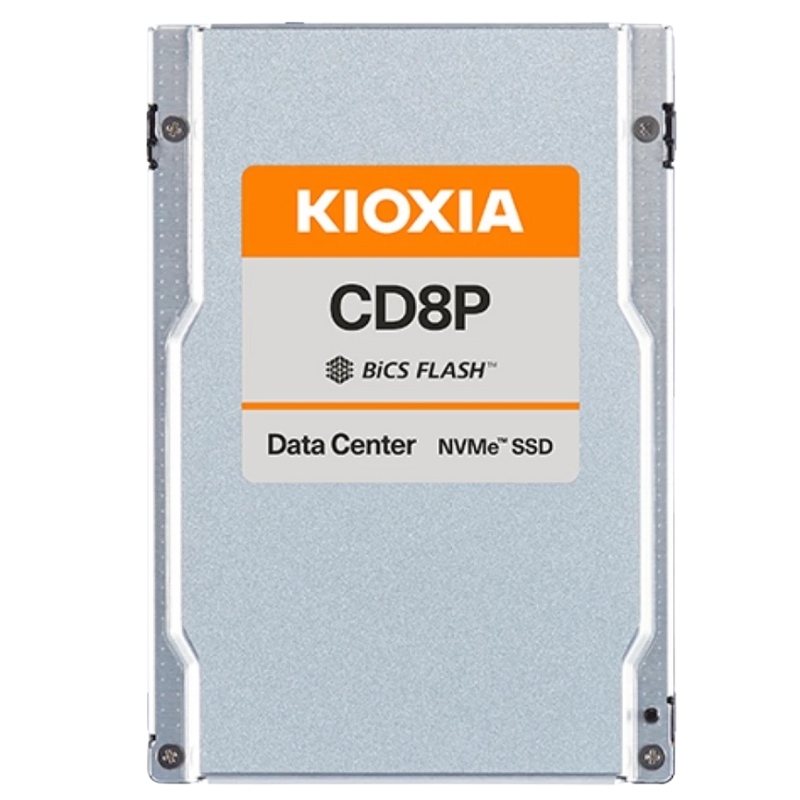


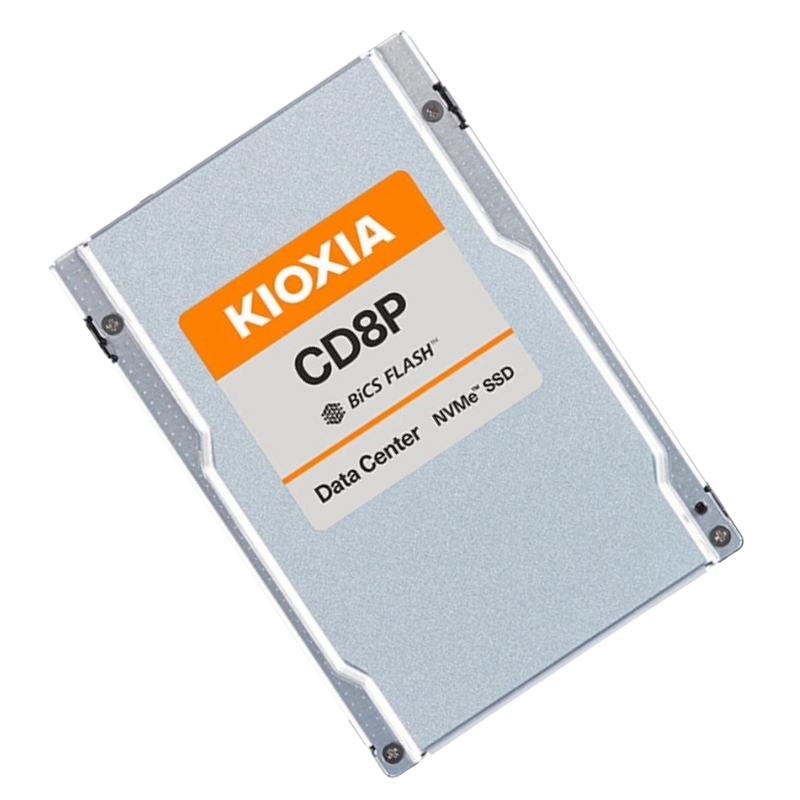
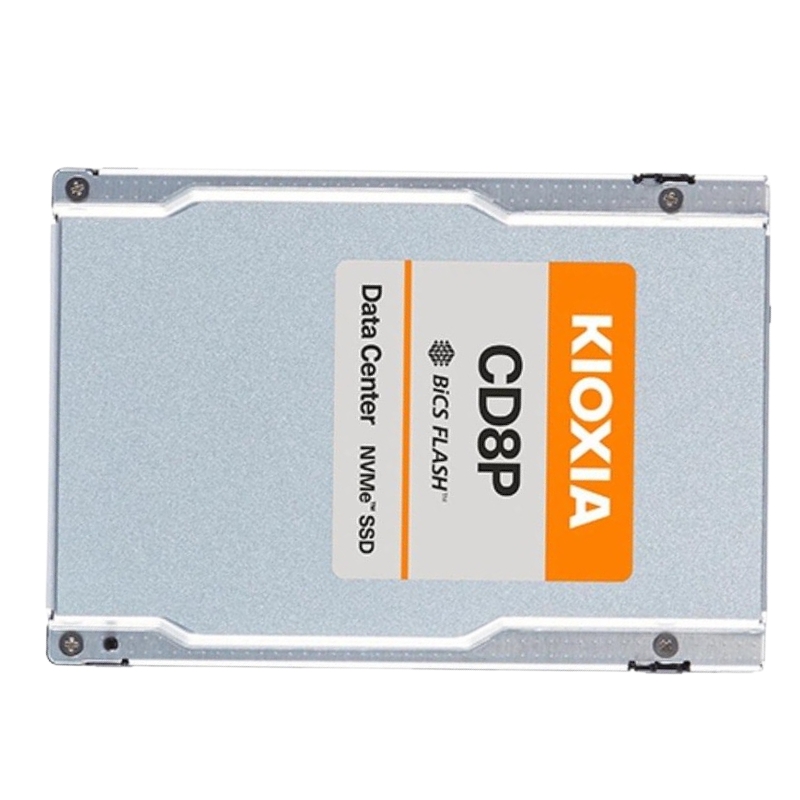
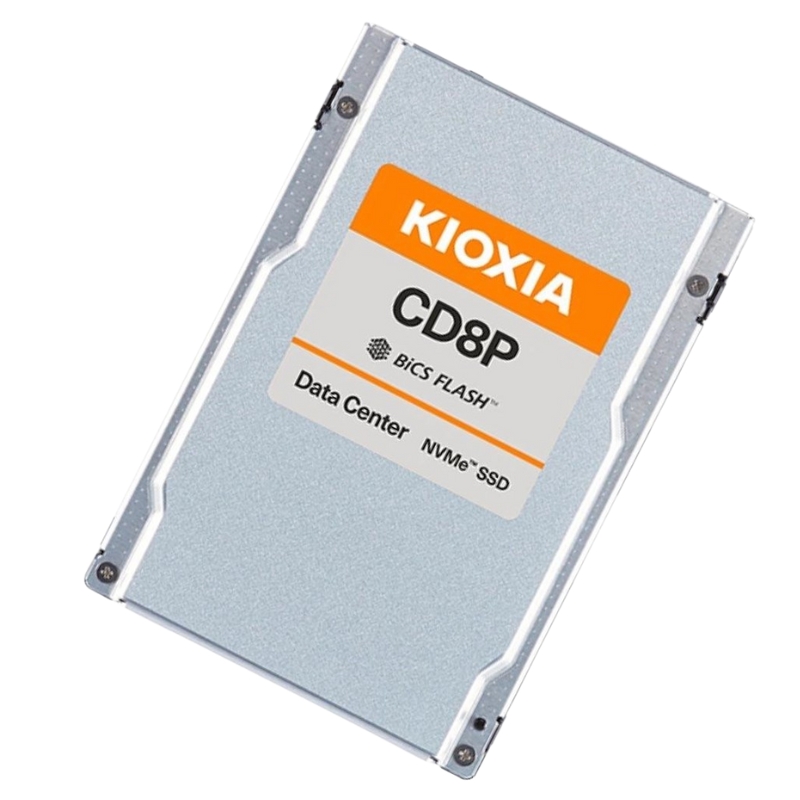
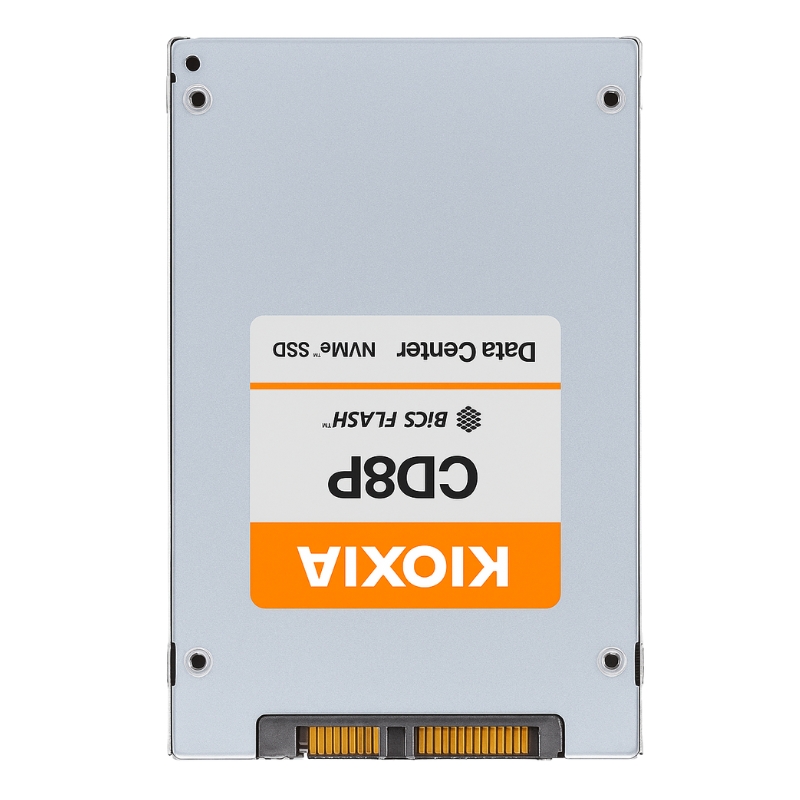
Kioxia SDF7280GEB01T 30.72TB RI NVME PCIE SSD. New Sealed in Box (NIB) with 3 Years Warranty
The KIOXIA CD8P-R Series represents a pinnacle of enterprise-grade data storage, engineered for read-centric workloads. This 2.5-inch solid-state drive leverages cutting-edge technology to deliver exceptional performance and vast capacity for demanding server environments.
Employing the latest PCI Express 5.0 x4 lane interface, this drive ensures maximum bandwidth utilization. It operates on the NVMe 2.0 protocol, designed for ultra-low latency and high queue depths.
Boasts a monumental storage volume of 30.72 Terabytes. This is achieved through advanced BiCS FLASH TLC (3D Flash Memory) construction, ensuring a blend of high density, reliability, and cost-efficiency.
Excels in random read operations, achieving up to 1,600,000 IOPS. Its random write performance is a robust 150,000 IOPS, ideal for mixed-use scenarios.
Delivers breathtaking sequential read velocities up to 10,000 MB/s. Sequential write speeds are equally impressive, reaching up to 4,900 MB/s, facilitating rapid data transfer and processing.
Engineered for continuous operation, this SSD features a Mean Time To Failure (MTTF) rating of 2.5 million hours, underscoring its exceptional durability and design integrity for 24/7 data center applications.
Overview — Enterprise Read-Intensive NVMe Storage Built on PCIe 5.0
The Kioxia SDF7280GEB01T 30.72TB is a purpose-built data-center SSD engineered for large-capacity, read-intensive workloads that demand the low latency and high throughput of NVMe over PCI Express 5.0. Designed in a 2.5-inch, 15 mm form factor and leveraging modern BiCS TLC flash, this drive targets cloud, hyperscaler, and enterprise applications where sequential throughput and high random read IOPS translate directly into application responsiveness and lower total cost of ownership.
The SDF7280GEB01T implements PCIe® 5.0 (x4) with NVMe™ 2.0 command set compatibility. By moving to a Gen5 electrical interface, the device doubles the per-lane bandwidth relative to Gen4 and allows the drive to realize read and write throughput numbers that are well suited to modern scale-out storage architectures and high-performance caching tiers. This interface choice ensures forward-looking compatibility with next-generation server platforms while retaining the NVMe feature set data centers rely on.
At 30.72 TB, the SDF7280GEB01T belongs to the high-capacity class of U.2/SFF-2.5 enterprise SSDs. The 2.5-inch, 15 mm profile provides a balance of density and serviceability, enabling easy deployment in standard 2.5" bays and sleds used by many rack-mount servers and storage enclosures. This capacity point is ideal for metadata caches, index stores, content repositories, and read-heavy object stores where capacity per bay matters for rack-level efficiency.
Kioxia equips this model with BiCS™ TLC (3-bit per cell) flash memory tuned for read-intensive use cases. The drive is positioned as a Read-Intensive (RI) device — meaning endurance is tailored to workloads with a high read:write ratio. This makes it a cost-efficient alternative to mixed-use or write-intensive SSDs when the application workload profile is predominantly read operations. Endurance metrics and drive writes per day (DWPD) vary by model and configuration, but typical RI devices offer favorable capacity-to-cost ratios for read-dominant data center tiers.
For large sequential transfers — typical of streaming, backup restores, and bulk reads — the SDF7280GEB01T delivers very high sustained throughput. Published figures for similar Kioxia Gen5 enterprise models show sequential read performance up to roughly 10,000 MB/s and sequential write performance in the range of 4,900 MB/s, making the drive suitable for high-bandwidth data pipelines and accelerators that feed CPUs, GPUs, or network fabric with large contiguous datasets.
Random I/O performance is critical for database, metadata, and high-concurrency web workloads. The drive’s random 4KiB read performance is rated in the high hundreds of thousands to the low millions of IOPS depending on queue depth and test conditions; representative figures from vendor listings show peak random reads near 1.6M IOPS and random writes around 150k IOPS. Low and predictable latency under concurrent access loads is one of the reasons enterprise NVMe SSDs like this are preferred for latency-sensitive server tiers.
High throughput in a small chassis increases thermal density. Typical active power numbers for similar Gen5 2.5" devices are in the mid-20 watt range under load, with a low idle/ready power state around single-digit watts. System integrators should plan bay airflow, consider heatsink options, and enable drive thermal management in host firmware to prevent throttling during sustained heavy writes or long sequential transfers. Many data centers prefer drives with thermal throttling curves that prioritize read performance and protect data integrity under elevated temps.
Kioxia’s enterprise SSD portfolio typically includes features to protect in-flight data on unexpected power loss events — often implemented as power loss protection (PLP) capacitors and firmware safeguards — along with end-to-end data path protection, internal ECC, and RAID-like parity across NAND channels. Enterprises deploying drives in critical tiers should confirm the presence and scope of PLP and power sequencing requirements during procurement.
Modern data center drives expose SMART attributes, NVMe log pages, and vendor telemetry to enable predictive maintenance, health trending, and automated inventorying. The SDF7280GEB01T supports the NVMe management framework that allows monitoring of media wear, error counters, temperature, and namespace statistics — data that is essential for fleet health operations, firmware rollouts, and capacity planning.
Data security in the drive layer typically includes optional hardware encryption and support for NVMe-compliant self-encrypting drive (SED) standards. For environments requiring drive-level encryption, confirm whether the model supports TCG Opal or other FIPS-aligned modes and whether key management fits into your existing key management infrastructure. For large fleets, remote key provisioning and zeroization support are helpful features for rapid decommissioning and repurposing.
Because it’s read-optimized, the SDF7280GEB01T is ideal for front-end cache layers: CDN edge caches, metadata caches for object stores, read caches in hyperconverged platforms, or a hot tier in tiered storage architectures. Its high sequential throughput complements cache algorithms that move large objects or aggregates, while strong random read IOPS accelerate small object and metadata lookups.
Analytics pipelines and media streaming platforms that continuously deliver large read streams benefit from the sustained MB/s characteristics of PCIe 5.0 SSDs. A single 30.72 TB drive can serve multiple high-throughput streams or be combined in arrays for parallelism without creating a thermal or power overhead that is disproportionate to capacity. Because Gen5 drives reduce host-side bottlenecks, architects can plan smaller server counts for the same aggregate throughput, saving rack space and simplifying networking.
In CDN and cloud compute fleets that boot from network images or baked OS images, a high-capacity read-oriented SSD can host many images or container layers, enabling fast boot times and high VM/container density per host. The low latency and strong random READ IOPS reduce boot contention during fleet-wide updates and scale events.
To unlock advertised Gen5 throughput, the host must provide PCIe 5.0 lanes to the device and a platform PCIe topology that avoids shared fabric bottlenecks. Many current-generation server platforms offer PCIe 5.0 connectivity on select CPU lanes or via dedicated root complexes; confirm that your server backplane, cabling, and HBA/root complex configuration provide direct lanes to each drive. On older platforms, the drive remains compatible in lower-speed modes (Gen4/Gen3) but will not reach Gen5 peak numbers.
Keep host NVMe drivers, firmware, and OS kernel NVMe stacks up to date to ensure full feature compatibility (multipath, namespace management, persistent reservations, and vendor telemetry). Kioxia publishes product data sheets and firmware notices; cross-check installed firmware versions during procurement and lifecycle operations to ensure any field fixes or performance optimizations are applied.
While the 2.5" 15 mm form factor is widely supported, verify that your enclosure’s sleds and backplane support the drive’s power pinout and connector type (U.2 or U.3 mappings, if applicable). Some high-density chassis require passive or active cooling options to maintain drive health under heavy sustained activity; ensure sleds permit sufficient airflow across the drive’s surface and that the system BIOS/firmware can poll drive health metrics for thermal management.
For consistent performance:
Adopt a controlled firmware update pipeline: test firmware in a staging cluster that mimics production load patterns; validate performance and SMART telemetry; and schedule updates in maintenance windows with validated rollback procedures. Many enterprise drives include emergency recovery paths — confirm such capabilities with your vendor and include them in runbooks.
Understanding workload profile is essential for selecting the right endurance class:
The SDF7280GEB01T is positioned for RI use — choose MU or WI variants if your write volume or DWPD needs are higher.
This 30.72 TB Gen5 Drive Excels
This model’s sweet spot is large-capacity read caches, streaming content stores, metadata/index tiers, and consolidation scenarios where per-bay capacity reduces rack counts. For latency-critical transactional databases, a higher-endurance mixed-use drive may be a better fit despite a higher cost per TB. Evaluate total TCO and serviceability when choosing drive classes across your fleet.
When procuring, focus on cost per usable TB after overprovisioning and RAID/replication overheads. Read-intensive TLC drives commonly present the best cost per TB for read-dominated workloads, but you must account for RAID overheads, spare capacity (OP), and failure domain planning. For example, a high-density deployment strategy using 30.72 TB drives can reduce enclosure counts, network ports, and power and cooling overhead compared to smaller drives at the same raw capacity.
Before purchasing the SDF7280GEB01T (or similar Gen5 RI SSD), validate:
Deployment Checklist
When installing and bringing drives into service:


 Contact Us
 Information
 Catalog
 Solid State Drives (SSD)
 Network Switches
 Hard Disk Drives
 HBA & Controllers
 PC & Servers
 PC & Server Memory
 CPU & Processors
 Network Routers
 Power Supplies
 Tape Drives & Libraries
 Network Devices
 Computer & Network Cables