(7% discount is applied at checkout)
Cart is empty
Your go-to destination for cutting-edge server products


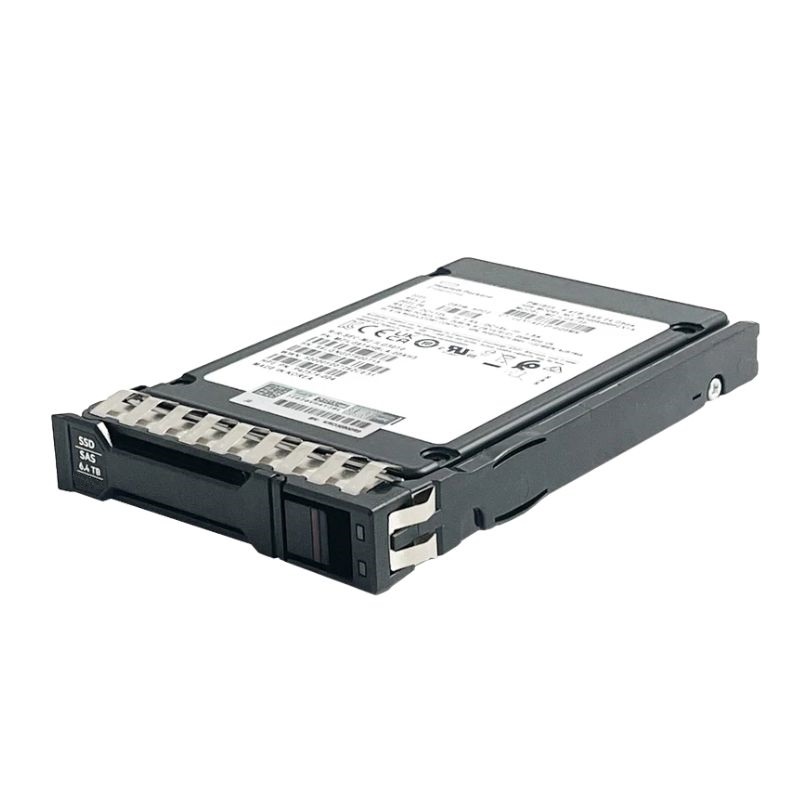
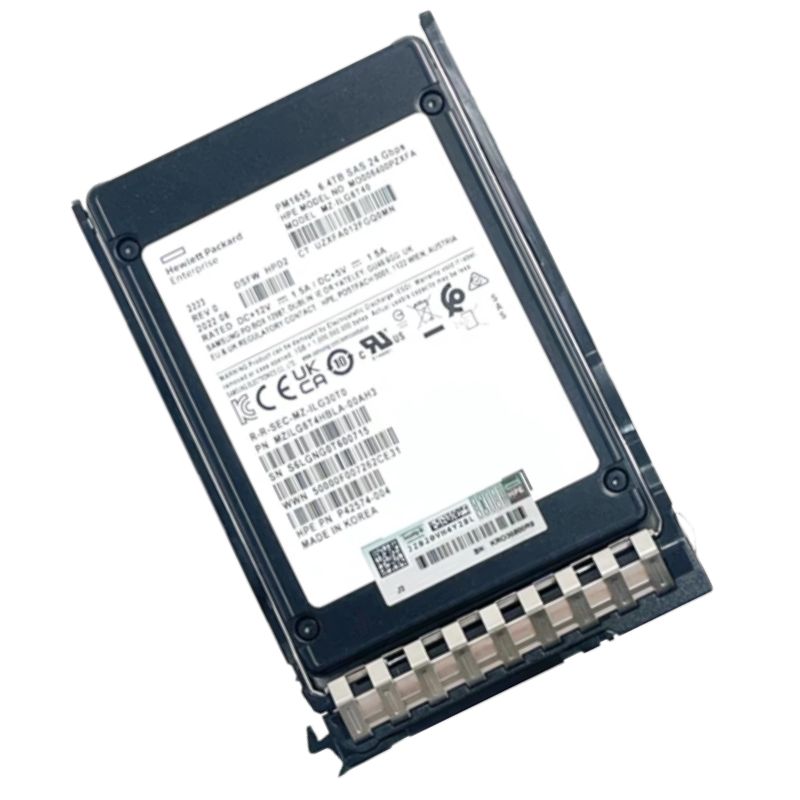
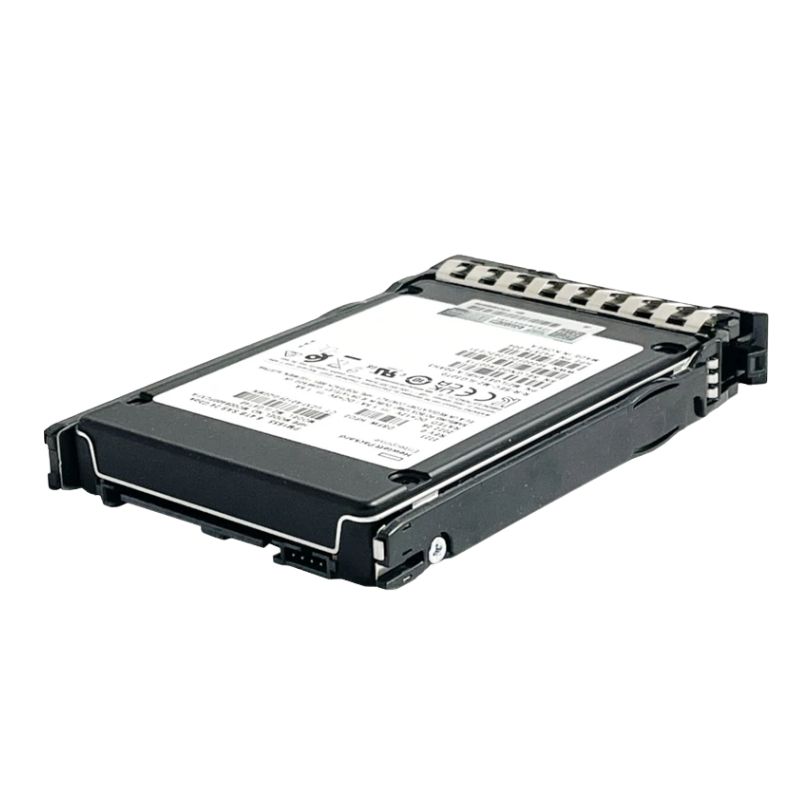
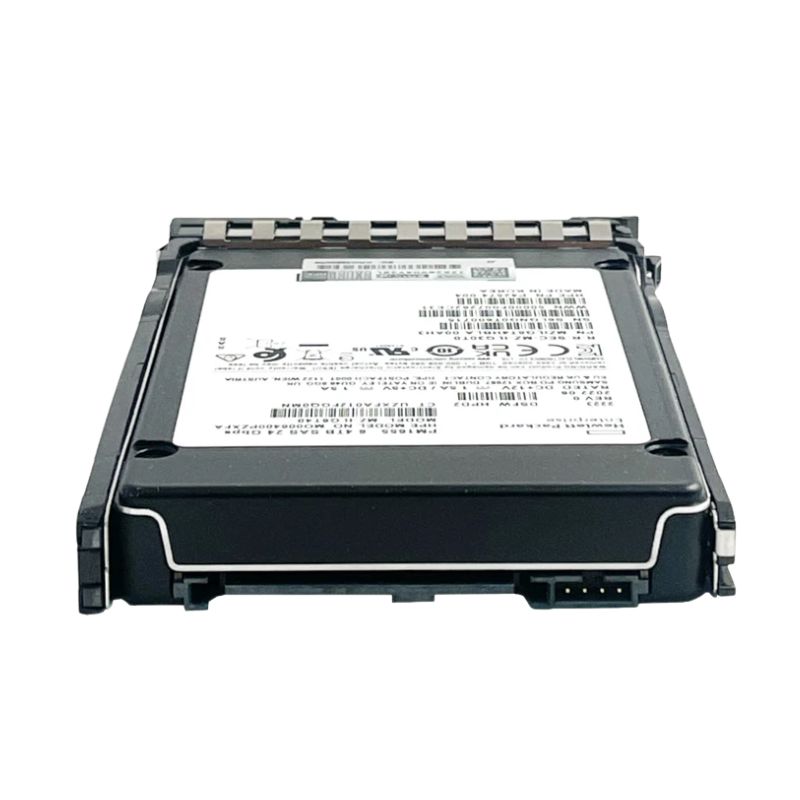
HPE P41504-001 6.4TB SAS 24GBPS Mixed Use SFF BC Hot Plug SSD. Factory-Sealed New in Original Box (FSB) with 3 Years Warranty
Engineered for demanding datacenter workloads, the HPE P41504-001 is a high-capacity SAS solid-state drive that balances endurance, throughput, and low latency. Designed in a compact 2.5-inch SFF profile with a 15 mm height, this hot-pluggable module fits modern server and storage arrays where reliability and performance are non-negotiable.
Random I/O (Small Block) — Improved Responsiveness
Hot-Plug & Carrier Operational Convenience
Recommended Use Cases
P41504-001 HPE 6.4TB Hot Plug SSD Overview
The P41504-001 HPE 6.4TB SAS 24GB Mixed Use SFF BC Hot Plug SSD belongs to a class of enterprise-grade storage media designed to deliver high capacity, predictable performance, and rugged reliability for server and storage arrays. As a mixed-use solid-state drive (SSD) with a small form factor (SFF) and hot-plug capability, it is ideal for tiered storage architectures, virtualization hosts, database servers, and mixed read/write workloads found in modern data centers. This category page explores the technical characteristics, operational benefits, deployment scenarios, compatibility notes, lifecycle management tips, and purchase considerations that help IT teams choose, deploy, and optimize these HPE-branded enterprise SSDs.
The term mixed use in SSD classification describes a balance between endurance and sustained performance. Mixed-use SSDs are engineered to handle both read- and write-intensive tasks — not as write-heavy as data center NVMe drives built for logging or heavy caching, but more durable than client-class drives. For organizations that consolidate diverse workloads (virtual machines, databases, containerized applications, and file services) on a single tier, mixed-use SSDs offer a cost-effective middle ground: better write endurance than consumer SSDs and more predictable I/O performance than budget drives.
This product name encodes several important technical cues that buyers and engineers use to assess fit:
A 6.4TB nominal capacity supports dense storage footprints for high-value applications. In practice, usable capacity depends on drive formatting, RAID overhead, and any reserved over-provisioning. For maximum usable space in arrays, account for RAID parity or erasure coding overhead when planning capacity.
The drive is identified in the product title as SAS (Serial Attached SCSI) — a protocol widely used in enterprise servers and storage systems for its robust error recovery, multipath capability, and compatibility with established SAN/HBA ecosystems. The product string includes in the title; when evaluating interface speed or bus compatibility, always confirm the exact signaling rate and backwards-compatibility with your controller or HBA. SAS drives are typically backwards compatible across common controller generations, but mixing different protocol generations can influence peak throughput.
"SFF" signals a small form factor, enabling higher drive density in server bays and storage shelves. "BC" in the name is commonly used in vendor SKU nomenclature to indicate a specific caddy or connector variant — verify the exact sled/caddy type against your server model. Hot-plug capability is essential: it allows in-service replacement and expansion without shutting down the host, improving uptime for maintenance and upgrades.
Drives in this class are typically deployed where a mix of read and write activity exists at enterprise scale. Below are common usage scenarios that match the performance and endurance profile of a 6.4TB mixed-use SAS SSD.
Virtual machine hosts running dozens to hundreds of VMs benefit from SSDs that provide predictable IOPS and consistent latency under mixed workloads. Mixed-use SSDs help reduce storage-induced VM latency and accelerate boot storms, live migrations, and snapshot operations.
Relational and NoSQL databases that mix reads and writes (OLTP workloads) gain from the endurance and consistent write performance of mixed-use drives. Consistent latency is especially important for transaction-heavy workloads, where tail-latency impacts application responsiveness.
In tiered architectures, mixed-use SSDs are often used as a mid-tier: faster than spinning disk for hot and warm data while more cost-effective than ultra-high-endurance NVMe drives for cold storage. They are an excellent fit for cache or scratch layers that see varied access patterns.
File servers, content delivery nodes, and media processing platforms that need both capacity and responsiveness can deploy 6.4TB mixed-use SSDs to reduce latency and improve throughput for frequently accessed content while keeping total system cost lower than higher endurance-only SSD tiers.
Enterprise buyers should set realistic performance expectations: mixed-use SSDs provide strong sustained throughput and predictable IOPS under mixed workloads, but real-world performance depends on the server HBA, RAID configuration, queue depth, stripe size, and firmware settings. Use monitoring tools and controller metrics to observe key indicators such as average queue depth, I/O latency distributions, and bandwidth saturation points.
While the product SKU points to an HPE-branded drive, compatibility with servers and arrays is not automatic — verify cross-references with your HPE server model, controller, and firmware revision. Mixing vendor-branded SSDs and different protocol generations in the same array can cause unexpected behavior or suboptimal performance.
Confirm that your HPE ProLiant or HPE storage controller supports the drive's interface and form factor. Controllers often have qualification lists (HCLs) that show officially supported drives and recommended firmware versions.
Enterprise SSDs are engineered for continuous operation. Reliability is achieved through a combination of hardware-grade NAND, enterprise firmware, over-provisioning, error correction algorithms (ECC), and power-loss protection. Mixed-use SSDs balance write endurance with capacity — they are not primarily aimed at the highest-write endurance use cases (e.g., logging appliances constantly writing large volumes of data) but are robust enough for everyday enterprise workloads.
Follow structured deployment steps to ensure reliable operation and simple maintenance. Hot-plug drives reduce downtime risk, but safe handling and proper procedures remain essential to avoid data loss or drive damage.
SSD security is multi-faceted: physical access controls, encryption support, and secure erase capabilities are often required by compliance frameworks. When deploying high-capacity SSDs in regulated environments, ensure the drives and storage controllers support your required security features.
For GDPR, HIPAA, PCI-DSS, and other compliance regimes, document drive lifecycle actions (secure erase, decommissioning) and maintain logs of physical disposal when drives reach end-of-life. Use certified sanitization processes for drives that will leave secure facilities.
Buying enterprise SSDs requires balancing CAPEX, inventory risk, and support needs. HPE-branded SKUs like P41504-001 may be available through authorized distributors, direct HPE channels, or secondary markets. When evaluating offers, confirm warranty transferability and firmware compatibility.
Buying used or refurbished enterprise SSDs can reduce upfront cost but carries increased risk. For used drives, require full disclosure of usage history, remaining warranty, firmware revision, and a health report (SMART data) prior to acceptance. When possible, prefer certified refurbishers that offer limited warranties.
Data centers are increasingly focused on sustainability. SSDs contribute to reduced energy consumption and lower cooling load compared with spinning disk arrays for many workloads. Still, proper lifecycle management — from deployment to secure decommissioning and recycling — is critical for environmental and compliance reasons
For validation and final purchasing decisions, obtain the official HPE product datasheet and server compatibility matrix, test a pilot drive in your environment, and coordinate with HPE or your channel partner to confirm warranty coverage. Accurate planning and a short proof-of-concept deployment will reduce risk and ensure the drive meets your expectations in production.
Keep this category content maintained: update compatibility notes when HPE publishes new firmware or server families, refresh warranty and support processes periodically, and add confirmed performance numbers only after validated laboratory or vendor-supplied benchmarks. For precise numbers (IOPS, endurance in DWPD, MTBF, power usage), always reference the official product datasheet.


 Contact Us
 Information
 Catalog
 Solid State Drives (SSD)
 Network Switches
 Hard Disk Drives
 HBA & Controllers
 PC & Servers
 PC & Server Memory
 CPU & Processors
 Network Routers
 Power Supplies
 Tape Drives & Libraries
 Network Devices
 Computer & Network Cables