(7% discount is applied at checkout)
Cart is empty
Your go-to destination for cutting-edge server products
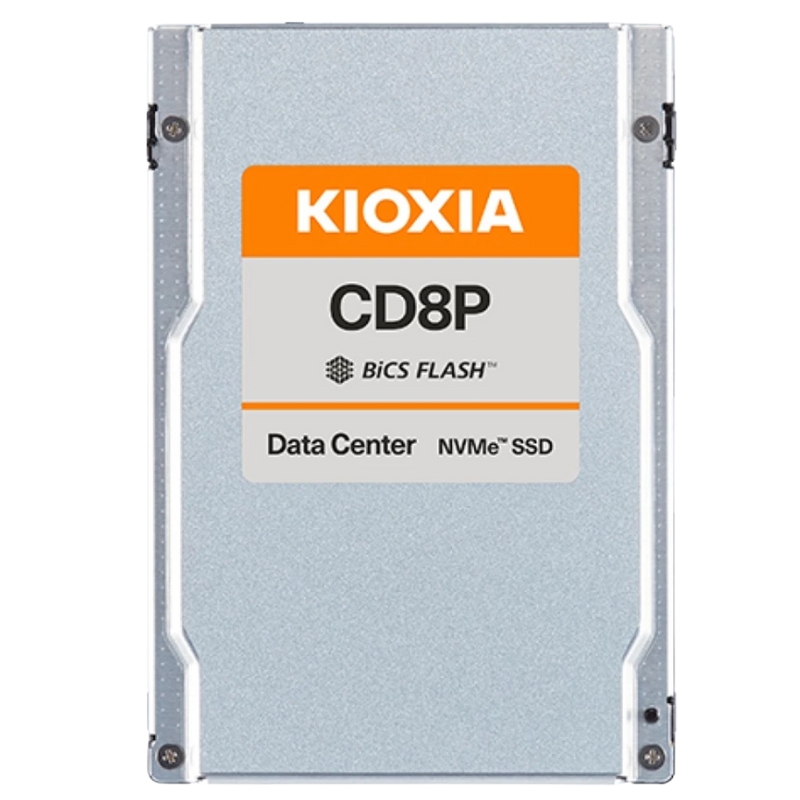


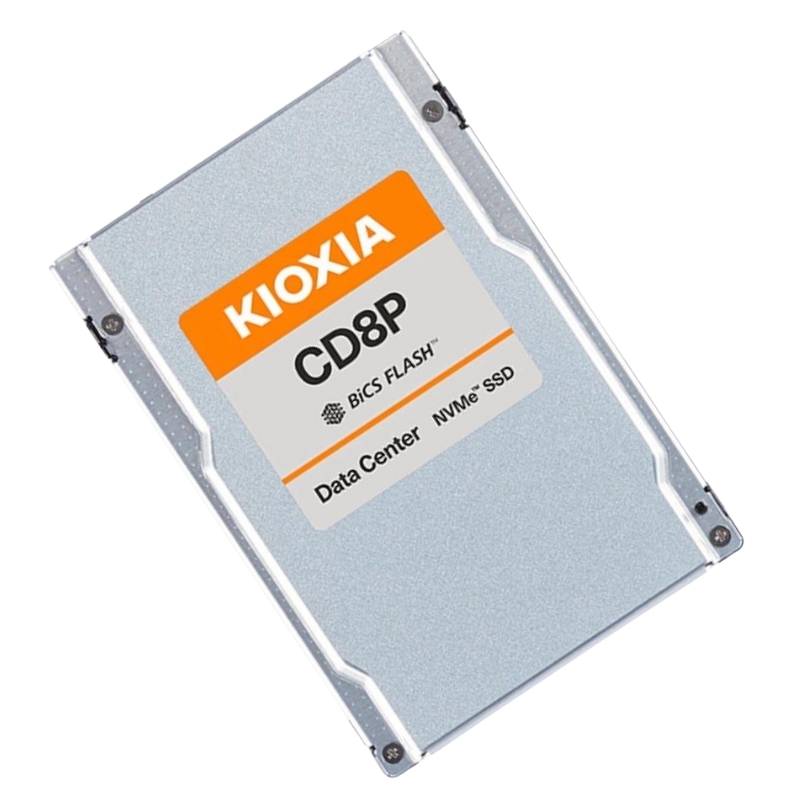
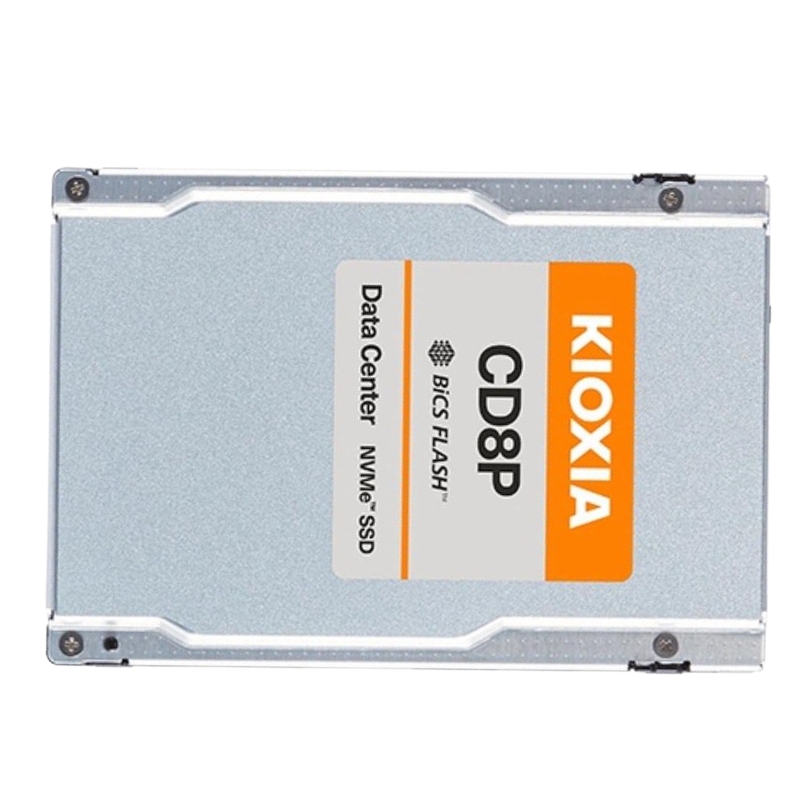
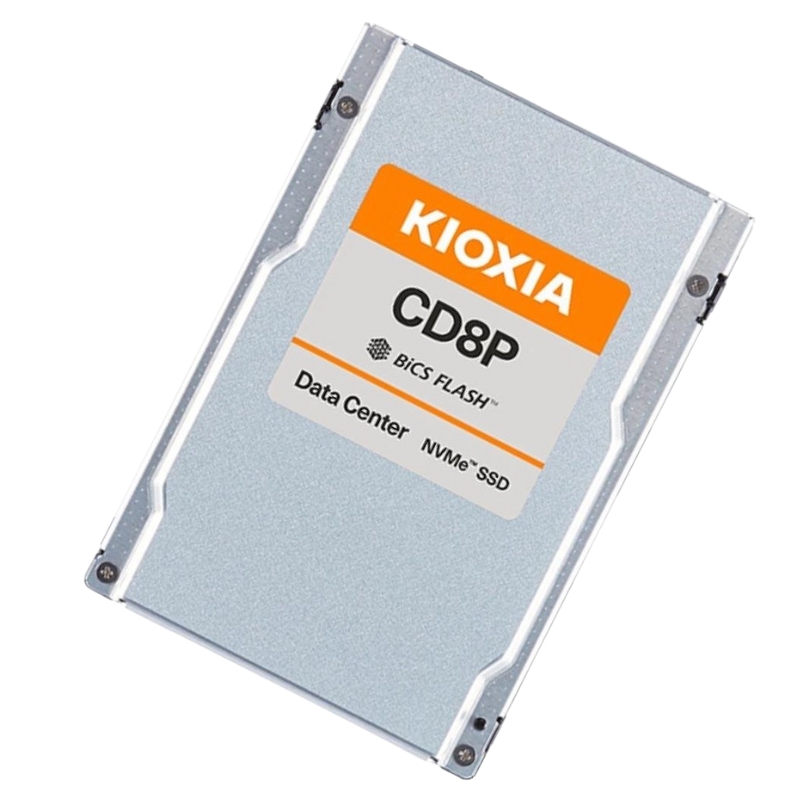
Kioxia SDF7481GEB01T 12.8TB Cd8p Mixed Use PCIe NVMe SSD. New Sealed in Box (NIB) with 3 Years Warranty
Engineered for high-performance data centers, the KIOXIA 12.8TB CD8P-V series represents a pinnacle of storage technology, integrating cutting-edge PCIe 5.0 interface speeds with exceptional reliability for mixed-use applications.
The unit is identified by the manufacturer part number SDF7481GEB01T. This 2.5-inch form factor drive is constructed with a 15mm z-height profile, designed for compatibility with enterprise server bays.
Physical Dimensions and Mass
This solid-state drive delivers remarkable random access performance, achieving up to 2,000,000 read IOPS and 400,000 write IOPS for 4Kib block transfers.
For large block sequential operations, the drive sustains exceptional throughput, reaching 12,000 megabits per second for read tasks and 55,000 megabits per second for write operations using 128Kib blocks.
Utilizing a PCI Express 5.0 x4 lane interface, the drive complies with the NVMe 2.0 protocol standard, ensuring minimal latency and maximized data transfer efficiency.
At its core, the drive employs BiCS FLASH TLC (3D Flash Memory) technology, providing an optimal balance between storage density, endurance, and cost-effectiveness for enterprise environments.
The Mean Time To Failure (MTTF) is rated at 2.5 million hours, underscoring the drive's design for continuous operation and long-term durability in demanding 24/7 server workloads.
Ideal for read-intensive and mixed-use scenarios such as cloud computing infrastructure, big data analytics, and high-frequency transaction processing, where consistent low-latency performance is critical.
Positioning in Enterprise Storage: Kioxia SDF7481GEB01T 12.8TB Cd8p Mixed Use PCIe NVMe SSD
The Kioxia SDF7481GEB01T 12.8TB Cd8p Mixed Use PCIe NVMe SSD sits in the modern data center as a balanced, high-capacity solid-state drive engineered for both read and write intensity. As part of Kioxia’s Cd8p lineage, this model targets servers and storage arrays that need predictable Quality of Service (QoS), low latency under load, and robust endurance suited to mixed I/O patterns. Its PCIe NVMe interface shortens the path between application and flash, while the mixed-use tuning makes it ideal for databases, virtualization, analytics staging, and general-purpose enterprise workloads that cannot rely on read-optimized media alone. This category description explores technical traits, deployment guidance, performance tuning strategies, and purchase considerations to help architects, integrators, and operators select and use the drive effectively.
The SDF7481GEB01T leverages the PCI Express infrastructure widely available in next-generation servers. Over this physical layer, the drive uses the NVMe command set to deliver parallelism with multiple queues and deep queue depths. NVMe’s streamlined register model and doorbell mechanisms reduce software overhead, which translates into lower latency and better CPU efficiency compared with legacy storage stacks. For operators, this equates to higher throughput per socket and more consistent tail latencies when many tenants or microservices issue concurrent I/O.
Designed for enterprise sleds and trays, the drive follows a 2.5-inch data center form factor that slots into common server backplanes. Compatibility with mainstream carrier designs and standard hot-swap mechanisms aids serviceability, ensures easy field replacement, and allows dense packing in storage nodes, hyperconverged appliances, and JBOD/JBOF shelves. The height profile supports adequate thermal mass and surface area for airflow-driven cooling, which is essential for sustained performance in tightly packed racks.
Mixed-use enterprise SSDs are tuned across the controller firmware, flash translation layer (FTL), and NAND configuration to balance endurance and performance. The SDF7481GEB01T uses enterprise-grade TLC NAND organized across multiple channels and ways to exploit parallelism while preserving write durability through wear-leveling and advanced error correction. Overprovisioning headroom, write coalescing, and garbage-collection heuristics are calibrated to mitigate write amplification, stabilize latency, and extend life under steady mixed workloads.
A hallmark of NVMe enterprise drives is the ability to define one or more namespaces—logical storage units that can be independently managed and exposed to different hosts or virtual machines. With the SDF7481GEB01T, administrators can create multiple namespaces to isolate workloads, align sector sizes with application block preferences, and perform non-disruptive maintenance on one namespace while others continue running. This reduces noisy-neighbor effects and enables finer-grained capacity planning.
Mixed-use deployments frequently alternate between transactional bursts and bulk movement of data. The drive’s parallel flash architecture, coupled with NVMe’s multi-queue I/O submission model, allows it to sustain high bandwidth in sequential reads and writes when fed with adequate queue depth. Applications that stream log archives, transform data sets, or hydrate analytics tables see smoother throughput curves when the underlying media is engineered to avoid long-tail throttling during garbage collection cycles.
The defining metric for mixed-use suitability is consistent random performance at realistic, mid-range queue depths. Database storage engines, message queues, key-value stores, and metadata-heavy filesystems produce interleaved random reads and writes. The SDF7481GEB01T’s firmware scheduling, SLC caching strategies, and wear-aware write placement are orchestrated to keep latency predictable even when the write ratio rises during peak events, backups, or nightly compactions.
While headline IOPS numbers attract attention, production architects pay closer heed to QoS envelopes—for example, the 99th or 99.9th percentile latency at a given load. The drive’s command arbitration, interrupt coalescing, and adaptive thermal controls are tuned to prevent sudden outliers. Predictable tail latency enables tighter Service Level Objectives (SLOs) for applications like payment processing APIs, inventory updates, ad-serving platforms, and real-time personalization engines.
NVMe scales with concurrent queues and submission threads, but real systems can become CPU-bound or NUMA-imbalanced before the drive’s internal channels saturate. When deploying the SDF7481GEB01T, measure and tune the per-core queue submission rate, pin interrupt threads to local cores, and keep queues local to the socket that hosts the PCIe root complex. This strategy yields lower cross-socket penalties and steadier application latency.
Enterprise SSDs implement end-to-end data integrity checks that verify user data from the host interface through the controller, DRAM, and NAND. The SDF7481GEB01T extends protection with internal ECC on NAND pages, parity or RAID-like redundancy across flash dies, and metadata checksums. Together, these mechanisms defend against silent data corruption and random bit errors that could otherwise surface as application-level anomalies.
Sudden power events remain a critical risk in the data path. The drive integrates power-fail protection circuitry that flushes in-flight data from volatile buffers to non-volatile media. This design preserves atomicity for writes under normal operation and sharply reduces the probability of metadata inconsistencies. For operators, the result is faster recovery after power incidents and more confidence when performing controlled shutdowns in constrained maintenance windows.
Lifecycle management in regulated environments requires deterministic sanitization. The SDF7481GEB01T supports secure erase options designed for rapid cryptographic purge or full media sanitize procedures. Administrators can invoke these controls during repurposing, RMA handling, or decommissioning to retire drives without exposing residual data.
Continuous observability underpins predictable operations. Health counters—including media wear, spare block consumption, temperature history, and error statistics—are exposed through NVMe log pages and SMART attributes. Fleet managers can harvest these signals to build baseline models, detect anomalies early, and plan replacements before risk materializes. The mixed-use character of the SDF7481GEB01T means health metrics will track both read- and write-driven stress, offering a realistic picture of remaining life in general-purpose server roles.
Online transaction processing systems blend small reads (index lookups) with frequent writes (journals, redo/undo logs, row updates). A mixed-use NVMe SSD like the SDF7481GEB01T provides the endurance headroom needed for heavy commit rates while sustaining low-latency point reads. Tuning the DB’s log file placement and setting filesystem mount options to minimize fsync overhead leverages the drive’s strengths for ACID workloads.
Consolidated hypervisors contend with noisy neighbors, boot storms, and backup windows that shift I/O patterns hour by hour. Mixed-use endurance avoids premature wear when several guests spike write activity concurrently. With NVMe’s multi-queue model, hypervisors can map guest queues to host queues, reducing contention and shrinking the latency gap between virtual disks and bare-metal access.
In HCI, the same physical media underpins both data services and application VMs. Platforms that tier data or implement distributed erasure coding rely on consistent mixed I/O behavior during rebuilds, rebalances, and background scrubs. The SDF7481GEB01T supports this duality: it keeps read latencies stable while absorbing the write pressure that background jobs generate, enabling clusters to maintain user-facing SLOs even during maintenance.
Data engineering pipelines ingest, transform, and stage data continuously. Temporary tables, shuffle partitions, and checkpoint files generate sustained writes, while analysts stream large read queries. Deploying mixed-use NVMe SSDs in the staging and cache tiers lets teams compress job runtimes, reduce spill penalties, and improve utilization of CPU and memory resources across nodes.
Search engines and observability platforms maintain write-heavy ingestion pipelines while serving latency-sensitive queries on hot indices. Index merges, segment compactions, and retention policies impose periodic write surges. The SDF7481GEB01T’s endurance and FTL policies keep throughput predictable during these events, ensuring that dashboards, alerts, and search endpoints remain responsive.
Feature stores and vector indexes consume both read bandwidth and random write IOPS as models update embeddings or append new features. Mixed-use SSDs prevent the storage layer from becoming the bottleneck during retraining and online learning. Low-latency lookups accelerate inference services, while steady write handling keeps continuous ingestion on schedule.
With 12.8TB usable capacity per device, architects can balance density and failure domains. Fewer, larger SSDs reduce slot count and simplify cabling, but each device becomes a larger portion of a pool. Consider rebuild times, the effect of a single drive loss on capacity headroom, and your target recovery time objectives. In many designs, pairing the SDF7481GEB01T with intelligent erasure coding delivers an optimal protection-to-capacity ratio.
Mixed-use SSDs are typically specified for multiple drive writes per day (DWPD) across the warranty period, reflecting their capacity to endure balanced read/write activity. When projecting write budgets, include application writes, filesystem metadata, compaction, logging, replication overhead, and garbage-collection amplification. Sizing clusters to keep daily write utilization well below the DWPD ceiling extends life and smooths performance.
Overprovisioning (OP) augments the controller’s room for garbage collection and wear-leveling. While the drive ships with a factory OP ratio, administrators can increase host-level OP by short-formatting or provisioning smaller namespaces. The trade-off is straightforward: a modest reduction in presented capacity in exchange for improved sustained write performance and longer endurance—beneficial for log-heavy, compaction-heavy, or ingest-oriented services.
For best results, attach the SSD to a PCIe root complex with adequate lanes and minimal sharing. In dual-socket servers, favor the socket with direct lanes to the slot or backplane port and align NUMA placement accordingly. Avoid oversubscribed PCIe switches for the most latency-sensitive applications; where switches are unavoidable, validate their buffer sizes and flow-control behavior under concurrent traffic.
Modern Linux kernels and enterprise distributions include mature NVMe drivers with support for multipath, ANA/Asymmetric Namespace Access, and advanced power states. Windows Server and popular hypervisor platforms also provide robust NVMe support. Keep drivers current to benefit from bug fixes, improved queue handling, and namespace management features that simplify day-two operations.
Choose filesystems that align well with NVMe semantics. XFS and ext4 on Linux, ReFS/NTFS on Windows, and VMFS for hypervisors are common pairings. Match filesystem block sizes and database page sizes to 4K-aligned I/O whenever possible to minimize read-modify-write cycles. For log-structured or append-heavy workloads, mount options that reduce journal overhead can further cut latency without compromising durability requirements.
At the node level, software RAID or mirrored vdevs offer straightforward protection, but distributed storage frameworks increasingly rely on erasure coding to increase usable capacity. The SDF7481GEB01T participates smoothly in both designs. For disaggregated architectures, exporting the drive via NVMe over Fabrics (NVMe-oF) brings NVMe-class performance over Ethernet or InfiniBand, enabling pooled flash for microservices without sacrificing latency.
Sustained mixed writes can elevate device temperature, particularly in dense chassis with constrained airflow. Align airflow direction with rack design, preserve front-to-back pathways, and ensure blanking panels are installed to prevent recirculation. Drive firmware typically manages thermal throttling gracefully, but sufficient cooling avoids performance step-downs and extends component life.
NVMe devices support multiple power states to balance energy usage and performance. In always-on production clusters, prioritize performance states during peak periods and consider adaptive policies for off-peak hours in environments with predictable cycles. Lowering power draw slightly during quiet windows can reduce cumulative thermal stress without affecting user experience.
Before placing the SDF7481GEB01T into production, conduct controlled, application-representative tests. Synthetic benchmarks are useful for mapping limits, but replaying real I/O traces or running shadow workloads exposes how journal tuning, compaction cadence, and cache policies interact with the drive. Capture read/write ratio, average and tail latencies, and CPU overhead per I/O to set realistic SLOs.
Integrate SMART and NVMe log polling into your observability stack. Alert on media wear thresholds, temperature excursions, rising correctable error counts, and unexpected changes in queue depths. Track firmware versions as inventory attributes and correlate anomalies with specific revisions. Trend analysis across a fleet highlights outliers for early intervention.
Production environments thrive on headroom. Maintain free space in pools so that rebuilds, scrubs, and compactions complete quickly and without user-visible impact. When a device fails, the rebuild pressure increases write intensity across the remaining drives; mixed-use endurance of the SDF7481GEB01T helps absorb this burst, but adequate capacity headroom is still the most reliable safeguard for performance.
Protecting sensitive data at rest is table stakes in modern infrastructure. The SDF7481GEB01T supports drive-level encryption that can be integrated with enterprise key management. Deploy policies for secure key rotation, strong access control to sanitize commands, and change-management procedures that document every step from provisioning to decommissioning.
High-trust environments require traceability. Maintain records of drive serials, firmware versions, topology maps, and change tickets involving each device. Tie storage events—such as namespace modifications, power cycles, and temperature alarms—into centralized audit logs. This discipline compresses incident triage time and supports regulatory audits without ad-hoc data gathering.
When returning a drive for warranty service or repurposing it between departments, follow a documented chain of custody. Use rapid cryptographic erase for immediate sanitization and, when policy dictates, perform full media sanitize. Label, seal, and log the handoff of decommissioned devices to prevent mishandling.
Teams moving from SATA or SAS SSDs to NVMe often see immediate latency improvements thanks to the streamlined NVMe stack and direct PCIe attachment. When consolidating onto the SDF7481GEB01T, adjust I/O schedulers and queue parameters that were tuned for HDD-era assumptions. Applications with synchronous write paths particularly benefit from the reduced overhead and deeper queues.
Disaggregation allows storage to scale independently from compute. The SDF7481GEB01T works well as a building block in NVMe-oF targets, providing consistent behavior for pooled flash arrays serving multiple clusters. With careful fabric design and modern congestion control, latencies remain close to direct-attach NVMe for most enterprise workloads, while operations benefit from centralized capacity management.
In environments that keep colder data on high-capacity HDD or QLC tiers, the SDF7481GEB01T often anchors the performance tier. It accelerates metadata access, index seeks, and transaction logs while downstream tiers hold bulk data. Intelligent caching policies—such as read-hot promotion and write-through for critical logs—leverage the drive’s endurance and keep the hottest working sets close to compute.
Mixed-use SSDs deliver a balanced cost model: more endurance than read-intensive devices without the premium of write-intensive tiers. To calculate total cost of ownership, account for usable capacity after redundancy, overprovisioning, and reserved headroom, then model expected write rates against DWPD budgets. The 12.8TB capacity point eases node scaling by letting operators choose between fewer large drives or more granular spreading of risk with additional nodes.
A fleet strategy should include defined sparing levels and rapid replacement logistics. Keep a small pool of pre-burned spare SDF7481GEB01T drives imaged with baseline firmware to reduce recovery time. Document swap procedures, including namespace recreation and secure erase of the failed unit before shipping under RMA, to minimize operational friction.
Consolidating workloads onto dense NVMe media can shrink the server footprint, lowering embodied carbon and ongoing power draw for equivalent performance. The SDF7481GEB01T’s throughput per watt supports sustainability targets while maintaining headroom for future growth. Pairing the drive with efficient CPUs and right-sized memory yields balanced nodes that do not strand resources.
Golden Signals to Track
Latency percentiles (50/90/99/99.9), queue depth distribution, device temperature, host CPU time per I/O, write amplification factors, and namespace-level utilization are the core signals to keep in dashboards. Overlay these with deployment events—such as code releases or schema changes—to separate storage effects from application shifts.
Regularly inject failures in staging: remove a drive from a mirror, throttle a link, or simulate a thermal event. Observe how quickly services recover and how the SDF7481GEB01T responds under rebuild pressure. Use insights to tune redundancy levels, alert thresholds, and runbooks.
Mixed-use SSD firmware employs adaptive write placement to smooth write bursts. By monitoring write locality and hot/cold data separation, the controller coalesces small updates into larger, flash-friendly writes. This reduces internal fragmentation, lowers garbage-collection overhead, and stabilizes latency during unpredictable phases of application behavior.
Enterprise NAND must balance retention, endurance, and read disturb. The SDF7481GEB01T mitigates read disturb by monitoring access patterns and periodically refreshing blocks that approach threshold margins. Retention management routines operate in the background, ensuring that seldom-touched data remains correct without user intervention.
When hosts issue deallocate (TRIM) commands, the device marks ranges as reusable, accelerating subsequent writes. For databases and log-structured stores that recycle space frequently, enabling TRIM on appropriate intervals helps keep write amplification in check. Pair scheduled TRIM with monitoring to avoid contention during peak I/O windows.
NVMe supports host reservations and persistent registrations that coordinate multi-host access, vital in clustered filesystems and shared-disk architectures. The SDF7481GEB01T implements these features to prevent split-brain updates and to orchestrate orderly failover. Operators can script reservation acquisition and release as part of start/stop routines for clustered services.
Many systems benefit from isolating write-intense logs or journals to a dedicated namespace on the same physical drive. This isolates write-heavy traffic from latency-sensitive read volumes while preserving device-locality advantages. The SDF7481GEB01T’s mixed-use endurance ensures that the log namespace does not prematurely wear, even under sustained commit rates.
After maintenance or node reboots, caches are cold and databases may rebuild in-memory structures. To avoid misattributing cold-start penalties to storage, pre-warm datasets by replaying hot queries or running targeted scan jobs. The drive’s low access latency shortens warm-up windows, allowing services to hit SLOs quickly.
Snapshots offer rapid rollback but can cause copy-on-write penalties. Schedule snapshot creation during low traffic periods and co-locate ephemeral snapshot metadata on a less contended namespace. When pruning old snapshots, throttle deletion jobs to prevent sudden write spikes that could collide with business workload peaks.
A storage protocol tailored for non-volatile memory over PCIe, offering parallel queues and lower latency compared with legacy protocols.
A durability metric indicating how many times you can write the entire capacity of the SSD each day over the warranty period.
A logically independent storage space on an NVMe device that can be formatted, managed, and presented separately to a host or hypervisor.
A set of performance consistency measures, often focusing on tail latencies (e.g., 99th percentile) crucial to user experience.
The ratio of bytes written to flash versus bytes written by the host. Lower is better for endurance and consistent performance.
Place redo/transaction logs on a dedicated namespace on the SDF7481GEB01T and locate data files on another namespace of the same device or a sibling drive. Enable synchronous commits while using application-level batching to keep queue depths healthy. This pattern leverages the drive’s endurance for logs without penalizing read latency for table scans and index probes.
Build a pool with multiple SDF7481GEB01T drives per node and apply an erasure coding policy (e.g., k+m) tuned for your failure domain. Reserve free capacity to keep rebuilds within SLO during a node or device loss. NVMe’s parallelism enables background healing without noticeable performance collapse for client traffic.
Export namespaces from SDF7481GEB01T devices over an NVMe-oF fabric. Use traffic shaping and queue mapping per tenant to limit contention. Application clusters mount logical volumes from the fabric, benefiting from NVMe semantics while central operations manage capacity and firmware lifecycle centrally.
Maintain per-model playbooks: installation steps, tuning defaults, SMART thresholds, and known-good benchmark ranges. This discipline compresses onboarding time for new engineers and standardizes operations—even as your fleet scales to hundreds or thousands of drives.
Coordinate with your supplier for advanced RMA, cross-shipping, and early-access firmware advisories. Share workload patterns and performance goals so optimization guidance can be tailored to your environment. Feedback loops between operators and vendor engineering accelerate resolution of edge cases.


 Contact Us
 Information
 Catalog
 Solid State Drives (SSD)
 Network Switches
 Hard Disk Drives
 HBA & Controllers
 PC & Servers
 PC & Server Memory
 CPU & Processors
 Network Routers
 Power Supplies
 Tape Drives & Libraries
 Network Devices
 Computer & Network Cables