(7% discount is applied at checkout)
Cart is empty
Your go-to destination for cutting-edge server products
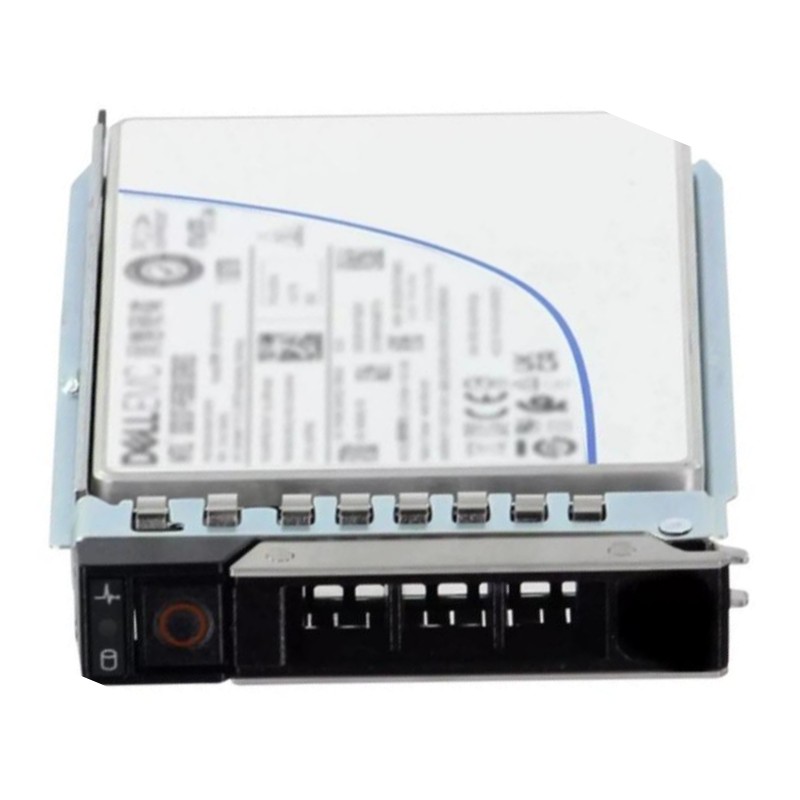


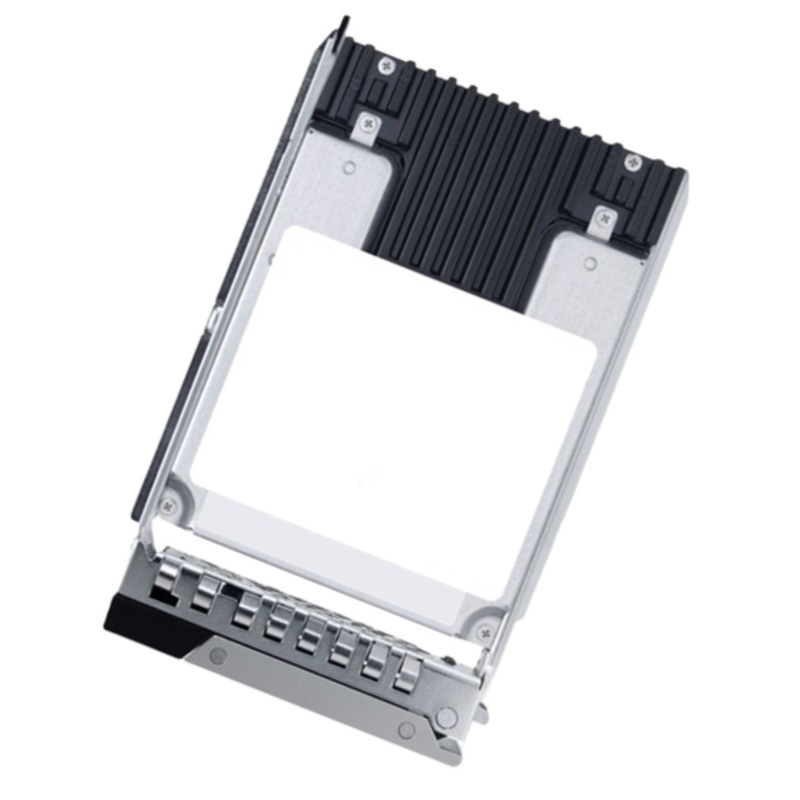
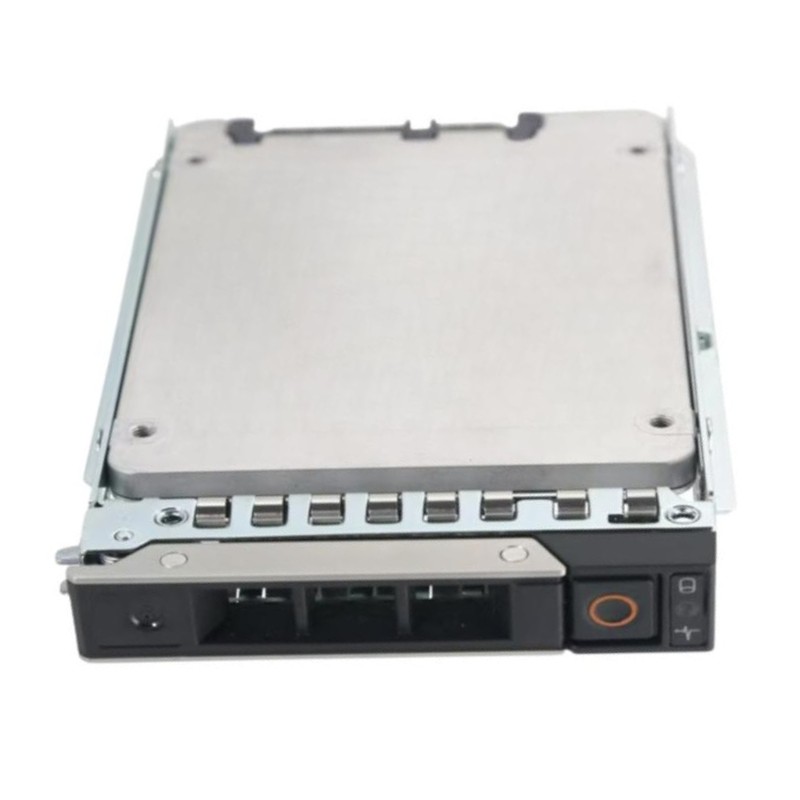
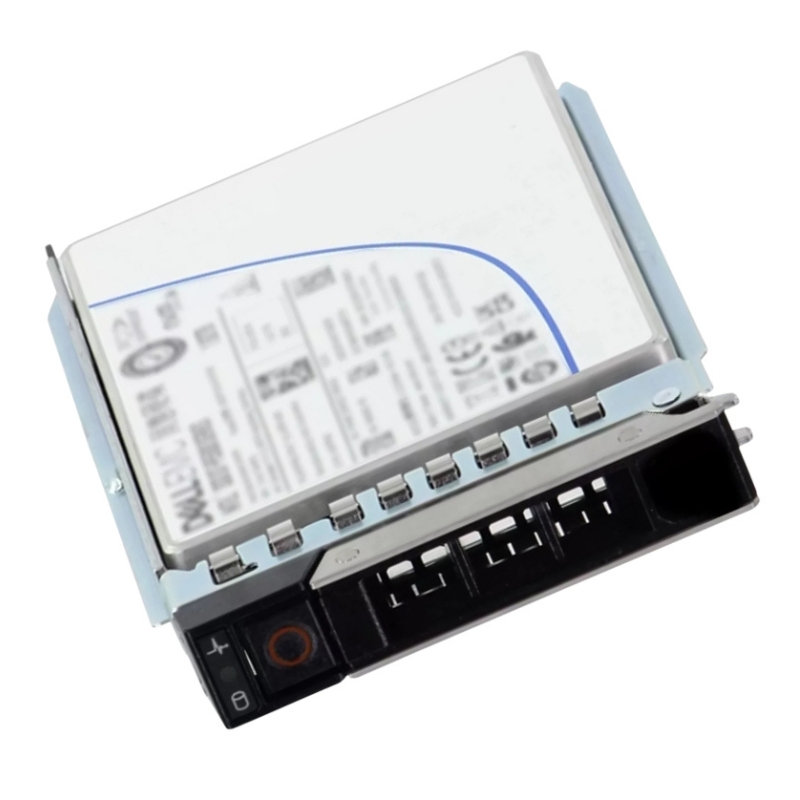
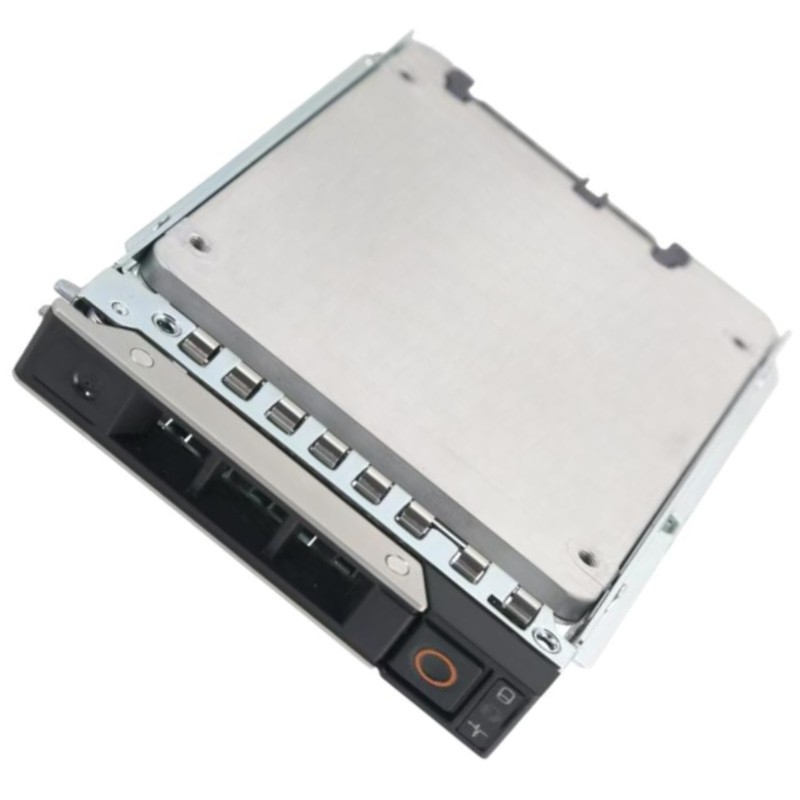
Dell VD689 61.44TB QLC 3D Nand PCI-E 4.0 x4 NVMe U.2 SFF Enterprise SSD. New Sealed in Box (NIB) with 1 Year Replacement Warranty. Call
Experience a new echelon of data center performance with this colossal capacity solid state drive. Engineered for the most demanding server environments, this U.2 form factor drive leverages cutting-edge QLC 3D NAND technology to deliver unprecedented storage density and rapid data access.
Performance is a defining characteristic of the VD689 Dell 61.44TB QLC 3D NAND PCI-E 4.0 x4 NVMe U.2 SFF Enterprise Solid State Drive category. These drives leverage the high bandwidth and low latency of PCIe 4.0 NVMe to deliver sustained throughput and competitive random I/O performance for read-centric and mixed workload environments. Designed for dense capacity at a reduced cost per gigabyte, QLC 3D NAND architectures in this class prioritize high sequential read and write speeds, predictable latency under steady-state conditions, and efficient handling of large sequential datasets typical in archival, capacity tiering, and cold-storage use cases.
Form factor is central to deployment flexibility. The U.2 small form factor (SFF) enables hot-swap compatibility in enterprise servers and storage enclosures that accept U.2 NVMe drives. Equipped with a PCIe 4.0 x4 interface, drives in this category take full advantage of doubled per-lane bandwidth compared with PCIe 3.0, enabling higher peak sequential throughput and better parallelism for multi-threaded workloads.
QLC 3D NAND stores four bits per memory cell, allowing significantly greater raw capacity within the same silicon footprint compared with TLC and MLC. In the VD689 class, this density advantage translates into very large single-device capacities such as 61.44TB while keeping cost-per-terabyte low. Because QLC packs more bits per cell, drive firmware, caching algorithms, and over-provisioning strategies are critical to maintaining endurance and consistent performance over the drive’s lifecycle.
Controller design and firmware optimization are the brains that manage QLC characteristics. Enterprise-class controllers in this category implement advanced error correction, wear-leveling, read-disturb mitigation, and dynamic SLC caching to accelerate random writes. Firmware also implements telemetry and SMART reporting to provide administrators with insight into health, endurance consumption, and thermal conditions, allowing preemptive maintenance and integration with monitoring frameworks.
Sequential performance for the VD689 class typically excels in large-block transfers—ideal for streaming reads and writes of multi-gigabyte objects. When paired with a capable server platform and optimized storage stack, these drives can sustain high MB/s rates for extended periods, making them suitable for tasks such as data ingestion, media archives, and large-scale backup targets.
Random IOPS for QLC devices are intentionally tuned to balance density and cost. While QLC cannot match the IOPS of high-end TLC or enterprise-optimized PCIe SSDs for continuous heavy random-write workloads, the VD689 series mitigates this with intelligent caching and write coalescing. Latency for read-dominant workloads remains low and consistent, which is crucial for scale-out storage nodes, content delivery, and analytics pipelines that frequently read large datasets.
In steady-state operation, performance stabilization relies on the drive’s over-provisioning and the effectiveness of its garbage collection. For mixed workloads, administrators should expect initial high write performance while SLC cache is available, followed by sustained but lower performance once cache transitions to QLC programming. Proper workload characterization and capacity planning ensure that these devices deliver predictable outcomes when used in their intended tiers.
Capacity-density makes the VD689 class a natural fit for cold or capacity-tier storage where large volumes of data are infrequently modified but must remain swiftly accessible. Industries such as media & entertainment, scientific research, and large-scale backup services can consolidate many terabytes into fewer drive bays, lowering rack-space and power overhead while maintaining acceptable access times for archival retrievals.
Applications with heavy read-to-write ratios benefit from QLC-based U.2 NVMe devices. Examples include content distribution networks, analytics platforms that mostly scan datasets, and cache tiers in hybrid storage architectures. The high sequential read throughput and NVMe protocol efficiency reduce the time-to-insight for large-scale queries and batch analytics jobs.
Integrating VD689-class drives into tiered storage strategies allows organizations to place the most cost-sensitive datasets on QLC tiers while reserving higher-performance TLC/MLC tiers for latency-sensitive workloads. Automated data movement policies between tiers can keep hot datasets on faster media while cold data remains on dense QLC capacity, optimizing total cost of ownership.
Endurance for QLC is lower than for denser-per-bit alternatives, which is why enterprise QLC drives emphasize over-provisioning and workload-aware deployment. The manufacturer and model-specific endurance ratings, such as drive writes per day (DWPD) or total terabytes written (TBW), are essential inputs for lifecycle planning. For use cases dominated by reads or occasional writes—such as object stores or backup repositories—the endurance profile is typically more than adequate when drives are deployed according to vendor guidance.
Advanced ECC (error-correcting code) schemes and robust metadata protection are vital for QLC reliability. Enterprise controllers implement multi-bit ECC and read-retry mechanisms to handle QLC’s higher raw bit error rates. Drive-level features such as power-loss protection and metadata journaling ensure data integrity in the event of unexpected power events, and they integrate cleanly into enterprise storage stacks.
Telemetry exposed via SMART and NVMe log pages gives system administrators a window into drive health parameters including media integrity, temperature, and endurance consumption. Properly instrumented monitoring systems can alert on thresholds and trends, enabling predictive replacement and minimizing the risk of unplanned service interruptions.
These drives are designed for seamless integration into Dell EMC server platforms and storage arrays that support U.2 NVMe modules. Compatibility matrices should be consulted to ensure firmware and BIOS/UEFI settings are tuned for NVMe operation. In many deployments, hot-swap trays and drive carriers make maintenance straightforward, while firmware bundles and vendor tools enable bulk provisioning, inventory, and firmware rollouts.
Integration with software-defined storage, object stores, and hyperconverged infrastructures is commonplace. VD689-class drives typically function as capacity nodes within broader storage pools, and orchestration layers can manage replication, erasure coding, and data placement across heterogeneous media types. API-driven management and telemetry collection make these drives suitable for automated data-center operations.
High-density NVMe drives can generate substantial heat under heavy sustained IO. Enterprise deployments must consider front-to-back airflow, drive sled heat transfer, and ambient rack temperature to prevent thermal throttling. Drive firmware often includes thermal throttling policies that reduce performance to protect media when thresholds are exceeded. Rack-level cooling and chassis airflow design directly influence the sustained performance of these devices.
Power per terabyte is a key metric for large deployments. QLC-based high-capacity drives reduce the number of physical devices required, which often yields lower aggregate power and cooling costs compared with many smaller drives providing equivalent capacity. However, peak power under heavy write bursts should be accounted for in power procurement and UPS sizing to ensure uninterrupted operation.
Hardware-based encryption options are frequently available in enterprise SSD variants and may be factory-enabled or selectable via firmware. Self-encrypting drives provide an efficient way to safeguard data at rest without the performance penalty of host-based encryption. For organizations with regulatory requirements, SED helps meet data protection mandates and simplifies secure decommissioning.
Secure erase and cryptographic erase commands are supported by NVMe drives and are recommended procedures for returning or decommissioning drives. Vendor-provided tools and documented workflows should be followed to ensure regulatory compliance and prevent data remanence. Proper end-of-life handling also includes responsible recycling and an understanding of the environmental impact of high-density storage media.
Before deploying VD689-class drives, profile your workloads to understand read/write ratios, average request sizes, and peak IOPS. Drives with QLC media are optimal for read-dominant, sequential, and archival workloads. If workloads are write-heavy or latency-sensitive, consider hybrid approaches where write-intensive hot data resides on TLC/MLC tiers and cold data is moved to QLC tiers.
Configure over-provisioning and reserve capacity to provide headroom for garbage collection and wear leveling. Many enterprise SSDs support vendor-recommended over-provisioning values; following these recommendations improves steady-state performance and longevity. In addition, logical volume and filesystem alignment can reduce write amplification and improve media efficiency.
Before large-scale deployment, validate candidate drives in representative testbeds that replicate production concurrency, access patterns, and thermal conditions. Synthetic benchmarks for throughput and IOPS are useful, but real-world application benchmarks reveal the true behavior under mixed and bursty workloads.
High-capacity QLC drives reduce the number of drive sleds required to house equivalent terabytes, which in turn reduces chassis and rack count, power consumption, and cooling needs. For organizations focused on sustainability, the consolidation afforded by 61.44TB devices supports a smaller footprint and potentially lower carbon emissions when combined with efficient infrastructure design.
Consider the environmental implications of drive manufacturing and disposal. Reputable vendors provide guidance on recycling and take-back programs for decommissioned media. Composting these practices into procurement contracts can support corporate environmental goals and regulatory compliance.


 Contact Us
 Information
 Catalog
 Solid State Drives (SSD)
 Network Switches
 Hard Disk Drives
 HBA & Controllers
 PC & Servers
 PC & Server Memory
 CPU & Processors
 Network Routers
 Power Supplies
 Tape Drives & Libraries
 Network Devices
 Computer & Network Cables