(7% discount is applied at checkout)
Cart is empty
Your go-to destination for cutting-edge server products


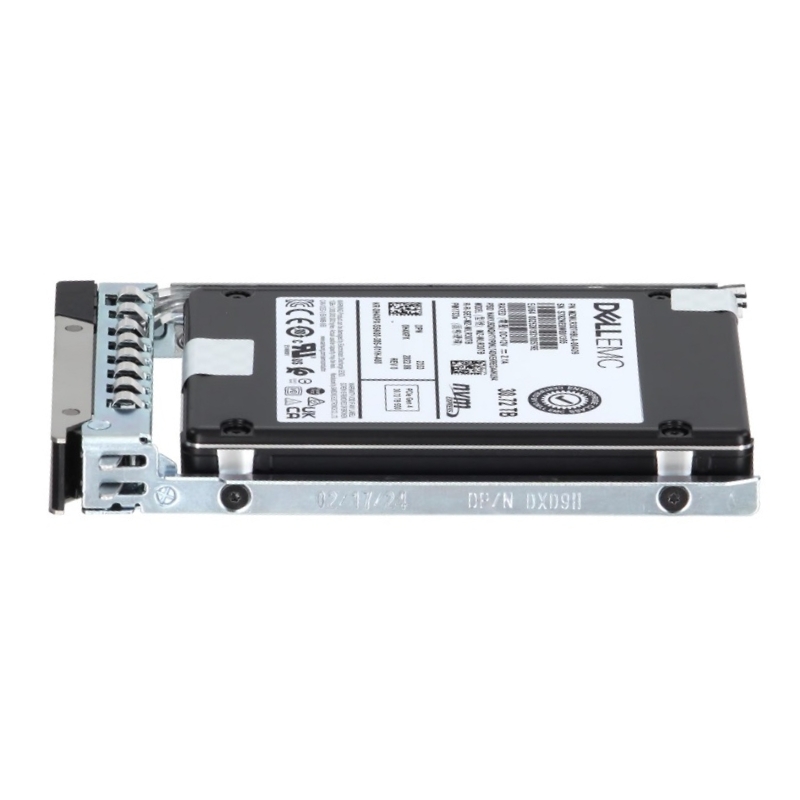
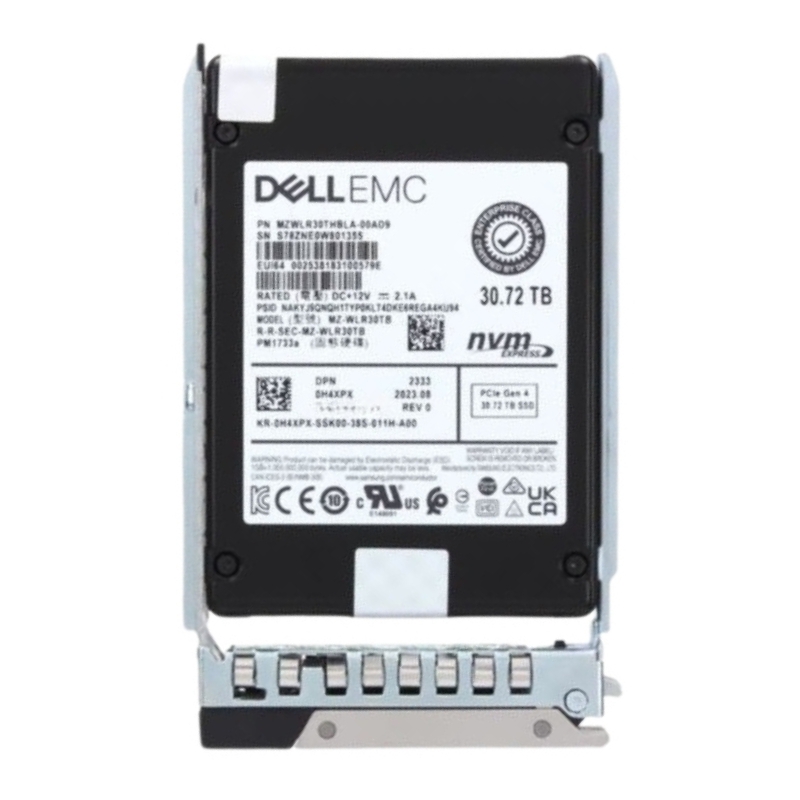
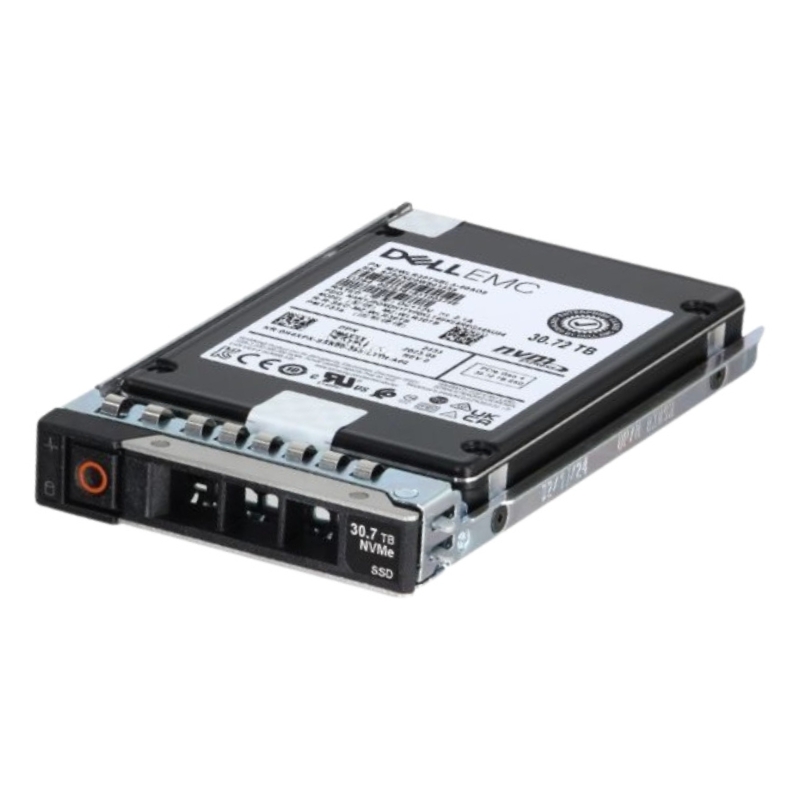
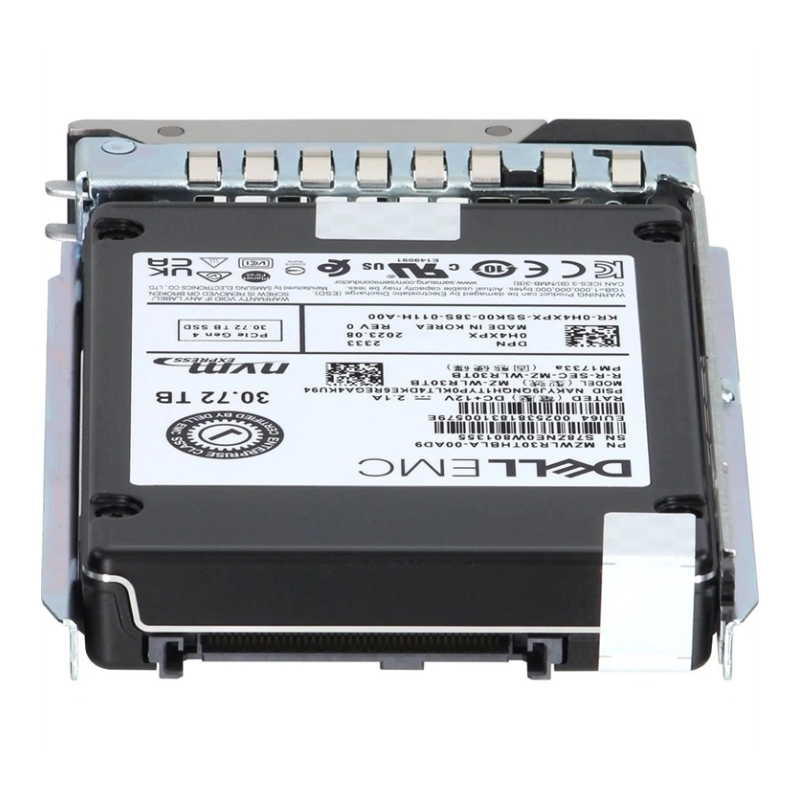
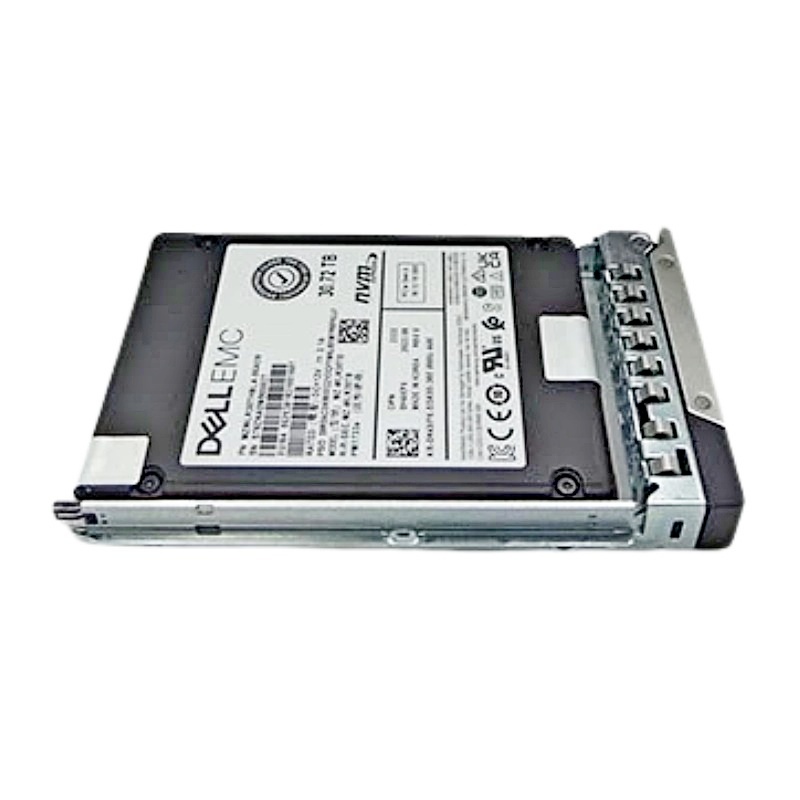
Dell 345-BKVX NVMe 30.72TB PCI-e QLC Gen4.0 x4 U.2 SFF SSD. New Sealed in Box (NIB) with 1 Year Replacement Warranty
The Dell 345-BKVX 30.72TB PCIe Gen4 NVMe QLC U.2 Small Form Factor (SFF) SSD represents a breakthrough in ultra-high-capacity solid-state storage tailored for enterprise environments. Built on QLC (Quad-Level Cell) NAND technology and leveraging the PCIe Gen4 x4 interface, this SSD delivers massive storage density, efficient read performance, and cost-effective scalability for data centers, hyperscale platforms, and cloud-native infrastructures. With a U.2 interface and 2.5-inch SFF design, the 345-BKVX integrates seamlessly into existing server architectures, offering exceptional performance for read-intensive workloads such as archival systems, content delivery networks (CDNs), and big data analytics.
The Dell 345-BKVX SSD utilizes the PCIe Gen4 x4 interface, delivering up to 64GT/s of total bandwidth. This translates to sequential read speeds of up to 7,000MB/s and write speeds approaching 3,000MB/s. Compared to Gen3, PCIe Gen4 doubles the data transfer rate, enabling faster access to large datasets and reducing latency across enterprise workloads. This performance is critical for applications that require rapid data retrieval and high concurrency.
Built on the NVMe 1.4 protocol, the 345-BKVX SSD supports multiple parallel command queues, reducing CPU overhead and improving IOPS performance. NVMe’s streamlined architecture allows for efficient communication between the SSD and host system, making it ideal for virtualized platforms, containerized applications, and distributed databases. The protocol’s low-latency design ensures consistent performance under heavy I/O loads.
The U.2 interface provides enterprise-grade connectivity and supports hot-plug functionality, allowing administrators to replace or upgrade drives without system downtime. This feature is essential for mission-critical systems requiring continuous availability. The U.2 connector also supports integration with backplane architectures, simplifying deployment in rack-mounted servers and storage arrays.
The Dell 345-BKVX SSD is housed in a 2.5-inch SFF enclosure, ensuring compatibility with Dell PowerEdge servers and other enterprise platforms. This compact form factor enables high-density storage configurations, maximizing rack space utilization. The drive’s mechanical design supports tool-less installation and removal, facilitating rapid deployment and maintenance.
Advanced thermal design ensures consistent performance under sustained workloads. Integrated heat spreaders and thermal sensors monitor operating temperatures, preventing overheating and throttling. The SSD is also engineered for vibration resistance and shock tolerance, enhancing durability in high-activity environments such as edge computing and mobile data centers.
The Dell 345-BKVX SSD is built on QLC NAND flash, which stores four bits per cell, enabling higher storage density compared to TLC (Triple-Level Cell) and MLC (Multi-Level Cell) technologies. QLC drives offer cost-effective scalability for read-intensive workloads, making them ideal for archival systems, media libraries, and cloud storage platforms. While QLC has lower write endurance, it excels in environments where data is written infrequently but accessed frequently.
By utilizing QLC NAND, the 345-BKVX achieves a lower cost per terabyte than traditional TLC-based SSDs. This makes it a compelling choice for organizations seeking to expand storage capacity without significantly increasing budget. The drive’s 30.72TB capacity enables consolidation of workloads, reducing the number of physical drives required and simplifying infrastructure management.
With a 1DWPD (Drive Writes Per Day) endurance rating over a five-year lifespan, the Dell 345-BKVX supports approximately 30.72TB of data writes daily. This endurance level is ideal for read-centric environments such as backup repositories, data lakes, and machine learning inference platforms. The drive balances performance, reliability, and cost-efficiency for large-scale deployments.
The drive’s firmware is optimized for low latency and deep queue depths, enabling consistent performance under concurrent access scenarios. NVMe’s parallelism allows the SSD to process multiple I/O requests simultaneously, reducing wait times and improving application responsiveness.
The Dell 345-BKVX SSD consumes less power per IOPS compared to SATA-based alternatives, contributing to lower data center energy costs and improved sustainability. Power management features dynamically adjust consumption based on workload intensity, while thermal throttling algorithms ensure safe operating temperatures.
The 30.72TB capacity of the Dell 345-BKVX makes it ideal for archival storage and backup repositories. Organizations can consolidate large volumes of infrequently accessed data onto fewer drives, reducing hardware footprint and simplifying data management. The drive’s read-optimized design ensures fast retrieval of archived content when needed.
CDNs require rapid access to static content such as images, videos, and web pages. The Dell 345-BKVX’s read-centric architecture ensures fast content delivery, reduced latency, and improved user satisfaction. Its scalability allows for deployment across edge servers and caching nodes, enhancing global content distribution.
For analytics platforms and machine learning inference engines, the Dell 345-BKVX provides consistent read performance and low latency. It accelerates data ingestion, model loading, and query execution, enabling faster insights and decision-making. Its high IOPS capability supports concurrent access from multiple compute nodes.
Cloud providers and SaaS platforms benefit from the SSD’s ability to serve static assets and application data with minimal delay. The drive supports high concurrency, fast page loads, and reliable uptime, enhancing user experience and platform scalability. Its large capacity simplifies multi-tenant storage architectures.
The Dell 345-BKVX SSD is validated for use with Dell PowerEdge servers supporting PCIe Gen4 and U.2 interfaces. It integrates seamlessly with Dell RAID controllers, storage backplanes, and management software, ensuring optimal performance and simplified deployment.
This SSD supports various RAID levels, including RAID 1 for redundancy, RAID 5 for fault tolerance, and RAID 10 for performance. IT teams can deploy multiple units to achieve specific storage goals, whether prioritizing data protection, throughput, or capacity. The drive’s consistent performance enhances RAID array efficiency.
Dell OpenManage software enables centralized monitoring and management of storage devices. The 345-BKVX integrates seamlessly, allowing administrators to track performance metrics, receive alerts, and schedule maintenance tasks. SMART attributes provide real-time insights into drive health, wear levels, and error rates.


 Contact Us
 Information
 Catalog
 Solid State Drives (SSD)
 Network Switches
 Hard Disk Drives
 HBA & Controllers
 PC & Servers
 PC & Server Memory
 CPU & Processors
 Network Routers
 Power Supplies
 Tape Drives & Libraries
 Network Devices
 Computer & Network Cables