(7% discount is applied at checkout)
Cart is empty
Your go-to destination for cutting-edge server products
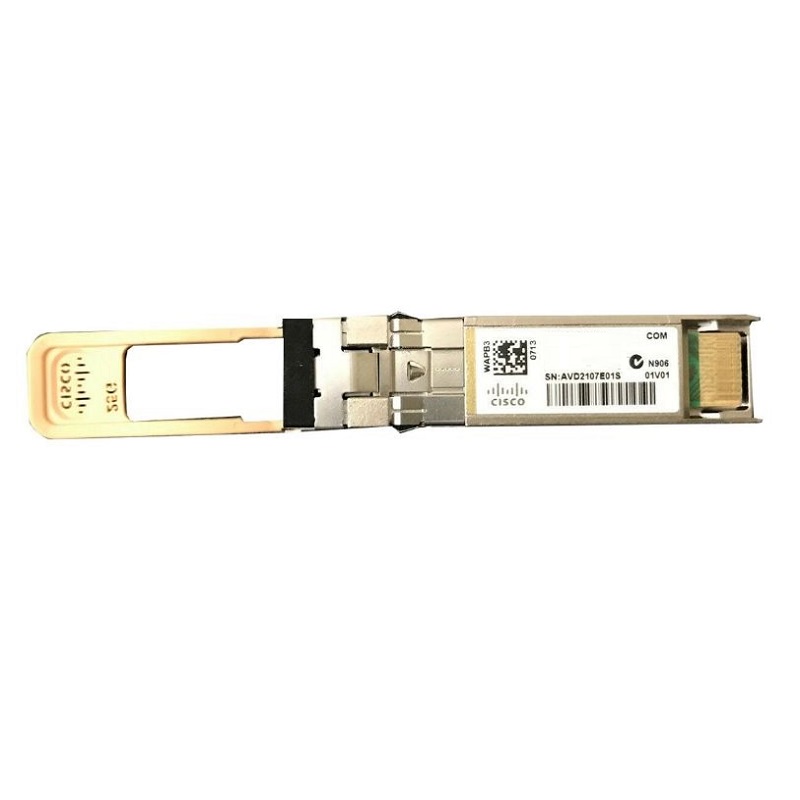


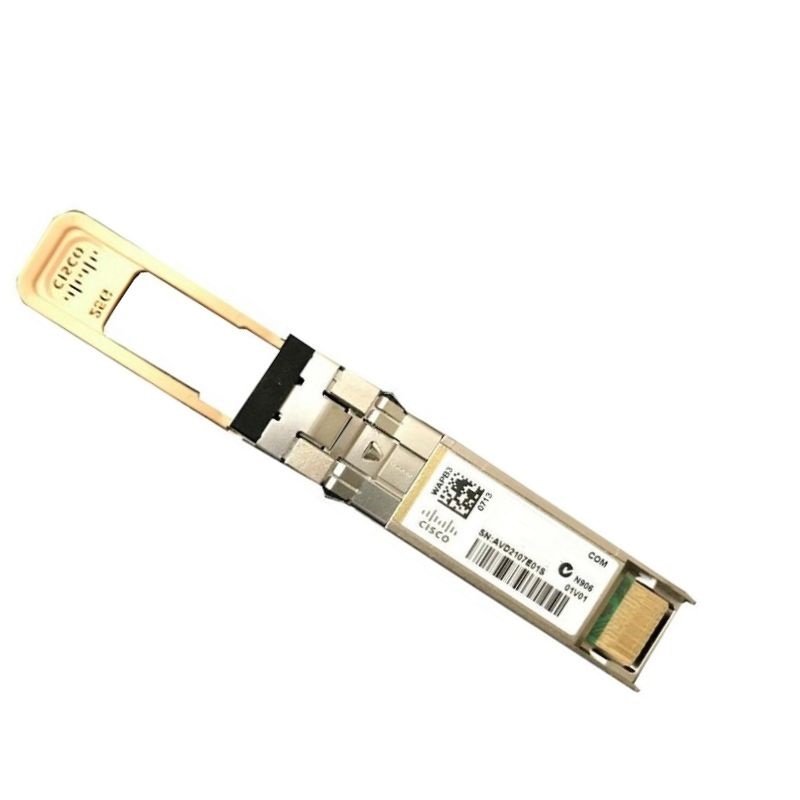
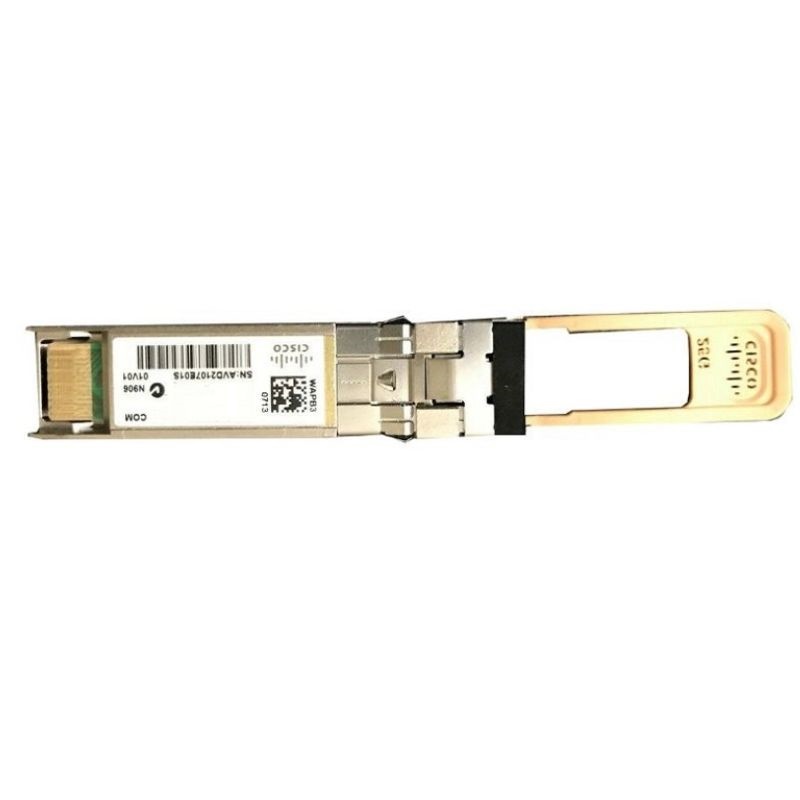
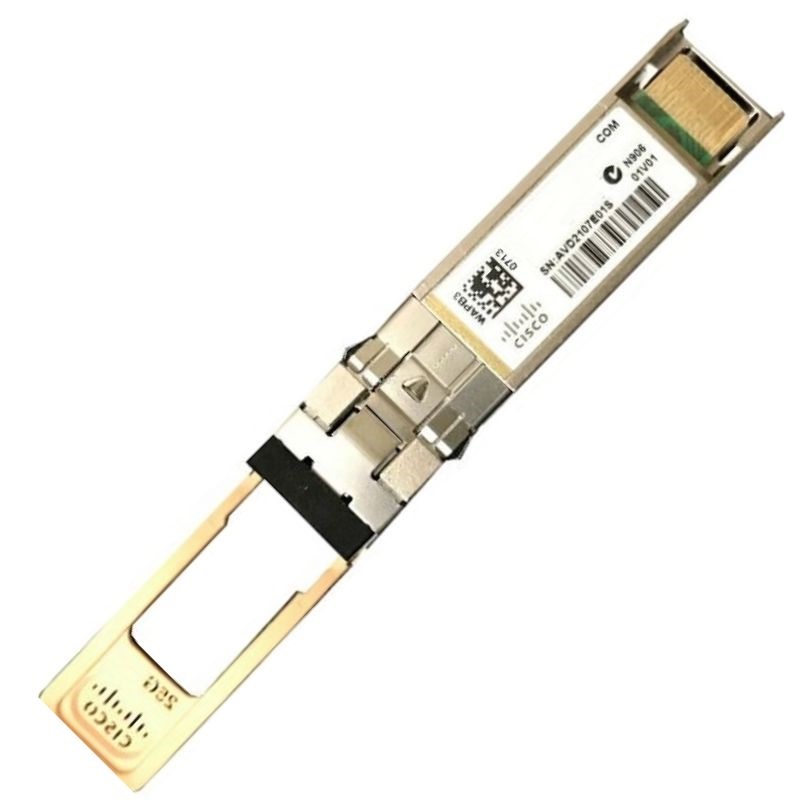
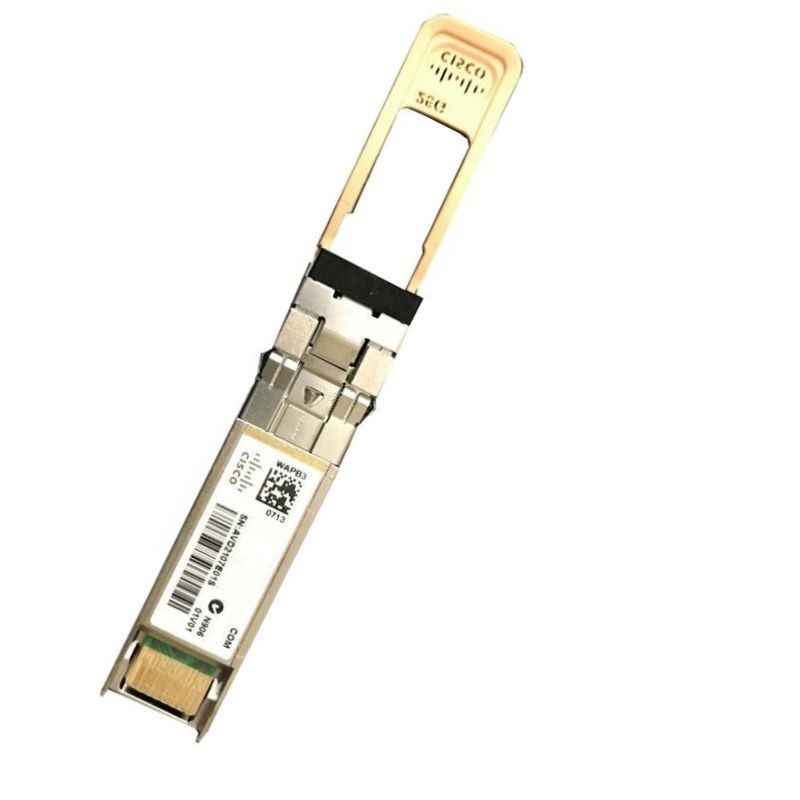
Cisco 10-3227-03 SFP28 25GBPS MMF Transceiver Module. Factory-Sealed New in Original Box (FSB) with 1 year replacement warranty
| SKU/MPN | Warranty | Price | Condition | You save |
|---|---|---|---|---|
| 10-3227-03 | 1 Year Warranty | $190.00 | Excellent Refurbished | You save: $66.50 (26%) |
| 10-3227-03 | 1 Year Warranty | $276.00 | Factory-Sealed New in Original Box (FSB) | You save: $96.60 (26%) |
Engineered for modern data center and enterprise switching, this hot-swappable SFP28 optical module delivers dependable 25 GbE links over multimode fiber with LC/PC connectors. It’s certified for Cisco SFP28 ports and adheres to key IEEE standards for smooth, multi-vendor interoperability.
Designed to meet IEEE 802.3by (25 GbE) and IEEE 802.3cc requirements, ensuring predictable link negotiation, optical budgets, and PHY behavior across compliant hardware.
The Cisco 10-3227-03 SFP28 25GBase-SR MMF 850 nm transceiver module serves short-reach 25 Gigabit Ethernet links inside modern data centers and enterprise aggregation layers. Built around the SFP28 form factor and optimized for multimode fiber, this optical module enables high-density 25 GbE switching and server connectivity with low power draw, proven interoperability, and hot-swap convenience. Because it operates at 850 nm with a VCSEL light source, it is tailored for high-performance short-range runs across structured cabling that uses OM3 or OM4 multimode fiber, making it a staple building block of spine-leaf fabrics, top-of-rack designs, and campus cores seeking to balance cost, simplicity, and bandwidth.
This category page highlights the key capabilities, common deployment scenarios, best-practice design notes, cabling guidance, lifecycle and support considerations, and purchasing tips for organizations standardizing on the Cisco 10-3227-03 SFP28 25GBase-SR. Whether you are refreshing server access links, migrating from 10 GbE to 25 GbE, or building out a new cloud-ready network, the information below will help you specify, deploy, and maintain these optics with confidence.
While actual specifications vary by manufacturing revision, the Cisco 10-3227-03 SFP28 25GBase-SR module is designed to meet the SFP28 25GBase-SR optical interface standard and typical data center requirements. The following characteristics are commonly associated with this optical category:
The 25GBase-SR optical specification is defined for short-reach links over MMF. Cisco’s 10-3227-03 SFP28 module is designed to interoperate within platforms that support 25 GbE SR optics and adheres to the SFP28 form-factor Multi-Source Agreement (MSA). Always review your specific switch or adapter software release notes for interoperability matrices and any platform-specific restrictions.
Because 25 GbE offers a better cost-per-gigabit than 10 GbE and avoids the cabling bulk associated with 40 GbE parallel optics, 25GBase-SR modules are prevalent in modern designs. Below are canonical topologies that showcase how the 10-3227-03 fits in.
In leaf-spine architectures, servers connect to leaf switches using 25 GbE. The Cisco 10-3227-03 is ideal for server-to-leaf connections where rack-level distances are usually within a few meters to tens of meters. Using duplex LC OM4 jumpers keeps patching simple, while structured cabling in the row supports aggregation uplinks at higher speeds. Because 25 GbE lanes are single-lane serial, the optics avoid the complexity of parallel MPO breakouts used by 40 GbE SR4, reducing both costs and operational overhead.
For operators standardizing on 25 GbE from the access edge up to aggregation, SFP28 SR links can connect ToR units to EoR or middle-of-row aggregation switches placed within the same data hall. With OM4 fiber trunks and LC cassettes, organizations enjoy clean cable management and predictable performance. The reach profile—up to ~100 m on OM4—comfortably spans most rows in contemporary facilities.
Hyperconverged clusters (HCI) and scale-out storage frequently adopt 25 GbE for east-west traffic. The low latency and solid signal integrity of short-wave SR optics, combined with RS-FEC on the host, enable reliable links for iSCSI, NFS, SMB Direct (where supported), and RoCE deployments. Administrators often prefer optical patching over copper direct-attach cables (DACs) when rack layouts are fluid or when airflow concerns suggest keeping heavy twinax cables to a minimum.
In high-end campus environments seeking to upgrade from 10 GbE, the Cisco 10-3227-03 allows reuse of existing OM3/OM4 fiber between distribution and core switches, provided distances are within SR limits. This approach preserves budget while boosting backbone capacity for Wi-Fi 6/6E/7 access, multi-gigabit uplinks, and application backhaul.
Proper cabling ensures consistent performance and predictability. The guidelines below align with typical 25GBase-SR deployments.
Short-wave optics are sensitive to end-face contamination. Follow an Inspect-Clean-Inspect routine before mating LC connectors. Keep dust caps on transceivers and patch cords when not in use, and avoid touching ferrules. Even minor debris can increase insertion loss and back reflection, reducing link margin and potentially causing intermittent errors.
Ensure A-B duplex polarity from transmitter to receiver in both directions. When patching through cassettes or panels, maintain polarity standards consistently across the channel. Label patch fields clearly, and document patch paths to simplify moves, adds, and changes (MACs).
25GBase-SR link budgets assume a limited number of mated pairs and defined insertion loss. Keep total connector count minimal, prefer low-loss components, and avoid unnecessary couplings. If your structured cabling introduces multiple cross-connects, calculate worst-case loss and compare to the optic’s launch power and receiver sensitivity, leaving margin for aging and temperature drift.
The Cisco 10-3227-03 SFP28 25GBase-SR is intended for Cisco platforms that support 25 GbE SR optics in the SFP28 form factor. Compatibility is subject to software versions, transceiver EEPROM coding, and hardware revision levels. Review your switch, router, or server adapter data sheets and release notes for supported transceiver lists. When designing multi-vendor links, ensure both ends support 25GBase-SR over duplex LC MMF and that any required FEC settings are aligned.
25 GbE ports may support auto-negotiation and FEC capabilities that affect link stability. If your platform exposes FEC configuration (e.g., RS-FEC on/off), follow vendor guidance. RS-FEC is often recommended to protect against burst errors and to extend link margin, especially on longer OM3 channels. Consistent settings on both ends are essential to avoid link bring-up issues.
Some environments run SFP28 SR optics at 10 GbE rates when both the port and the optic permit rate adaptation. Confirm with platform documentation; do not assume universal support. If 10 GbE operation is required broadly, consider using dedicated 10GBase-SR SFP+ optics to simplify operations.
The 10-3227-03 supports digital optical monitoring (DOM/DDM), enabling administrators to observe Tx power, Rx power, temperature, voltage, and bias currents via the network OS. Proactive monitoring helps predict failures and validate cabling health.
Monitor interface error counters—CRC errors, symbol errors, FEC stats (if exposed)—to catch subtle degradation. In controlled environments, baseline counters after install and compare periodically. A sudden increase in alignment errors often points to a patching issue or degrading connector.
Organizations moving from 10 GbE server access can often preserve their multimode fiber plant. The Cisco 10-3227-03, paired with SFP28 ports, provides a speed uplift with minimal physical changes. Consider the following migration steps:
The 10-3227-03 SFP28 25GBase-SR occupies a sweet spot between performance, simplicity, and cost. Here’s how it compares to neighboring technologies:
Unlike parallel optics that split lanes (e.g., 100 GbE to 4×25 GbE), SFP28 SR operates on a single serial lane end-to-end, simplifying optical paths and reducing the need for MPO components when only 25 GbE is required.
25 GbE offers an attractive cost-per-bit for east-west and access-layer traffic. When planning budgets:
Data centers vary from cold aisle containment to free-air cooling. The 10-3227-03’s low power draw means less local heat, but proper airflow is still paramount. Ensure fan policies on the host switch are set appropriately and that cable management does not occlude intake paths around SFP28 cages.
Before production, lab validation reduces risk.
Use an optical power meter to measure Tx at the jumpers and Rx at the far end where accessible. Compare readings against nominal targets and ensure adequate margin.
Most data center deployments rely on commercial temperature modules (0–70 °C). If you operate in harsher environments (industrial, outdoor enclosures), consult for hardened variants. The 10-3227-03 is typically targeted at data center and enterprise gear rooms.
DOM/DDM capability is critical for proactive monitoring. Ensure your operational tooling surfaces DOM values per interface, and confirm that your OS supports reading thresholds from the 10-3227-03.
Some optics are coded expressly for certain platforms. The 10-3227-03 is intended for Cisco platforms that expect Cisco coding. When mixing vendors, verify acceptance policies on each device to avoid unsupported transceiver warnings.
Maintain a spare pool sized to the criticality of 25 GbE links. For dense ToR deployments, a 2–5% spare ratio per model is a common starting point, refined by observed failure rates and SLA requirements.
In a 40-rack pod, each rack may host 20 dual-port 25 GbE servers connected to redundant ToR switches. Standardizing on 10-3227-03 across all server NICs and ToR ports simplifies operations. Using color-coded OM4 jumpers for each fabric (e.g., blue for Fabric A, aqua for Fabric B) enhances visual management. DOM monitoring feeds into a single pane of glass, where alerts trigger on Rx power <–7 dBm (example threshold—check platform specifics).
While spines often run at 100/400 GbE, leaf uplinks to spines can still utilize 25 GbE in smaller fabrics or for non-critical pods. The 10-3227-03 delivers predictable performance without introducing MPO-based cabling. As growth demands, leaves can be upgraded to higher-speed QSFP ports while preserving SR optics at the server edge.
Opting for energy-efficient optics like the 10-3227-03 reduces cumulative power draw compared with older generations. Short-wave SFP28 modules typically consume around a watt, enabling dense deployments without significant thermal impact. Extend service life through proper cleaning and handling to minimize e-waste, and recycle end-of-life units in accordance with local directives.
25 GbE remains a sweet spot for virtualization clusters, container platforms, and AI/ML pipelines that do not yet demand 100 GbE at the node. The 10-3227-03 supports these workloads by providing:
Design dual-homed server links across independent ToR switches, each equipped with 10-3227-03 optics on separate fibers. Leverage LACP with fast timers or active-active NIC teaming where supported. Keep patch cords physically separated to reduce common-cause failure risk.
Store labeled, pre-tested spare 10-3227-03 units in each row or at least each data hall. Maintain a run-book that includes exact steps, expected LED states, and a post-swap verification script to ensure quick, consistent MTTR.
Accurate documentation makes scale manageable:
When researching and cataloging this category, commonly used phrases include: “Cisco 10-3227-03 SFP28,” “25GBase-SR MMF 850 nm transceiver,” “Cisco 25G SR LC duplex,” “SFP28 25GbE short reach,” “OM3/OM4 25G optics,” “LC duplex SFP28 SR,” and “Cisco 25G multimode fiber module.” Incorporate these naturally in product listings, comparison charts, and support articles to improve discoverability while remaining accurate and helpful to readers.
In chassis packed with many SFP28s, local heating can raise case temperatures. Ensure front-to-back airflow is unobstructed and avoid tight fiber bundles that block vents. Monitor DOM temperature trends after densification projects.
In racks where 10 GbE and 25 GbE coexist, use clear labeling to prevent cross-patching. Establish port-profile templates in the network OS that enforce speed and FEC settings to reduce human error.
Each unit typically ships as a single SFP28 optical transceiver with protective dust plugs and standard labeling. Packaging varies by distributor; retain all materials for RMA eligibility.
Even as 100/200/400 GbE uplinks proliferate, 25 GbE at the server edge remains cost-effective. Standardizing on the 10-3227-03 for short-reach access preserves optionality: as nodes demand more bandwidth, you can add ports, bond links (where appropriate), or step up at the aggregation layer without replacing your structured cabling plant.
When connecting to higher-speed uplinks, keep the 25 GbE edge independent. Use dedicated uplink ports for 100 GbE or 400 GbE spines. Avoid makeshift breakouts unless they are expressly supported. The clarity of single-lane 25 GbE SR optics at the edge prevents the operational pitfalls of mixed media paths.
Incorporate consistent templates in your change records for optics work:
Reliable 25 GbE links translate to faster application response, improved VM density per host, and smoother data replication. Choosing the Cisco 10-3227-03 for short-reach needs helps network teams deliver these outcomes without over-engineering or overspending.
When the requirement is short-distance, high-reliability 25 GbE over multimode fiber, the Cisco 10-3227-03 SFP28 25GBase-SR MMF 850 nm transceiver module is a practical, standardized choice. Pair it with clean, well-labeled OM3/OM4 cabling; align FEC and speed policies; monitor DOM; and maintain a modest spare pool. These fundamentals will keep your access and aggregation layers humming—rack after rack, pod after pod.


 Contact Us
 Information
 Catalog
 Solid State Drives (SSD)
 Network Switches
 Hard Disk Drives
 HBA & Controllers
 PC & Servers
 PC & Server Memory
 CPU & Processors
 Network Routers
 Power Supplies
 Tape Drives & Libraries
 Network Devices
 Computer & Network Cables