(7% discount is applied at checkout)
Cart is empty
Your go-to destination for cutting-edge server products
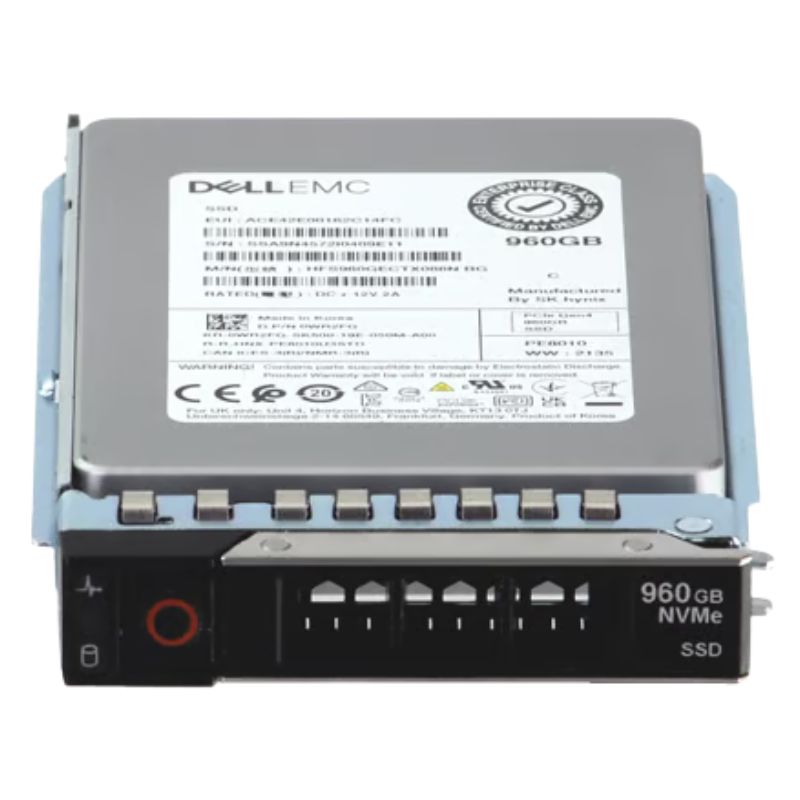


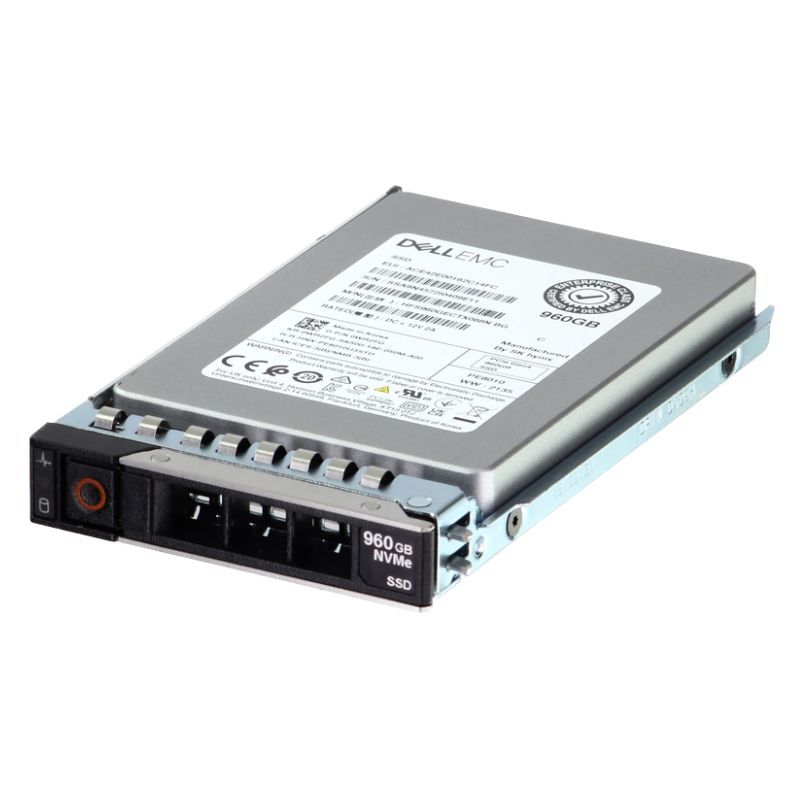
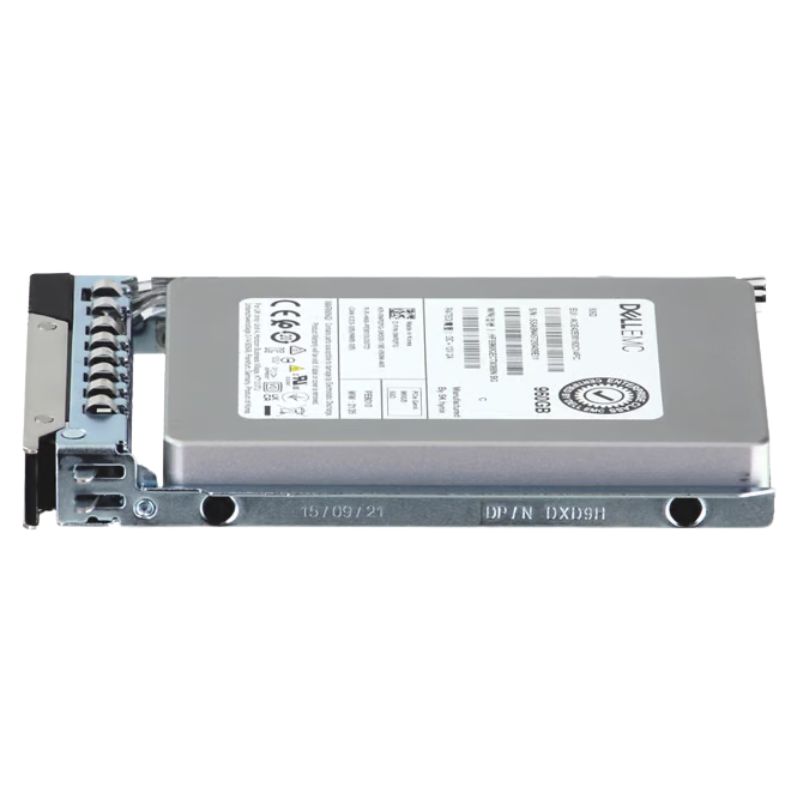
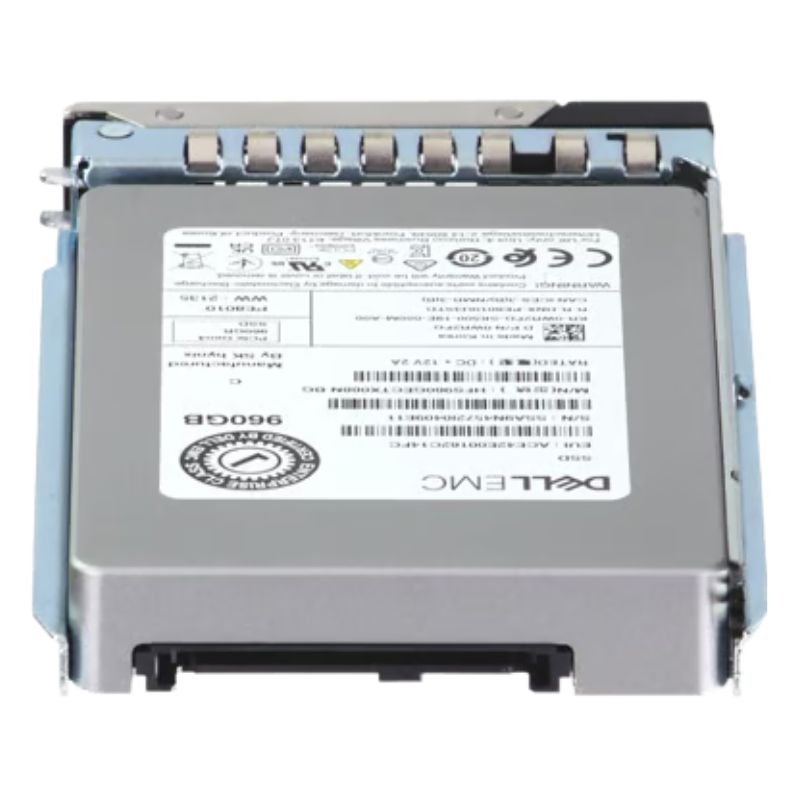
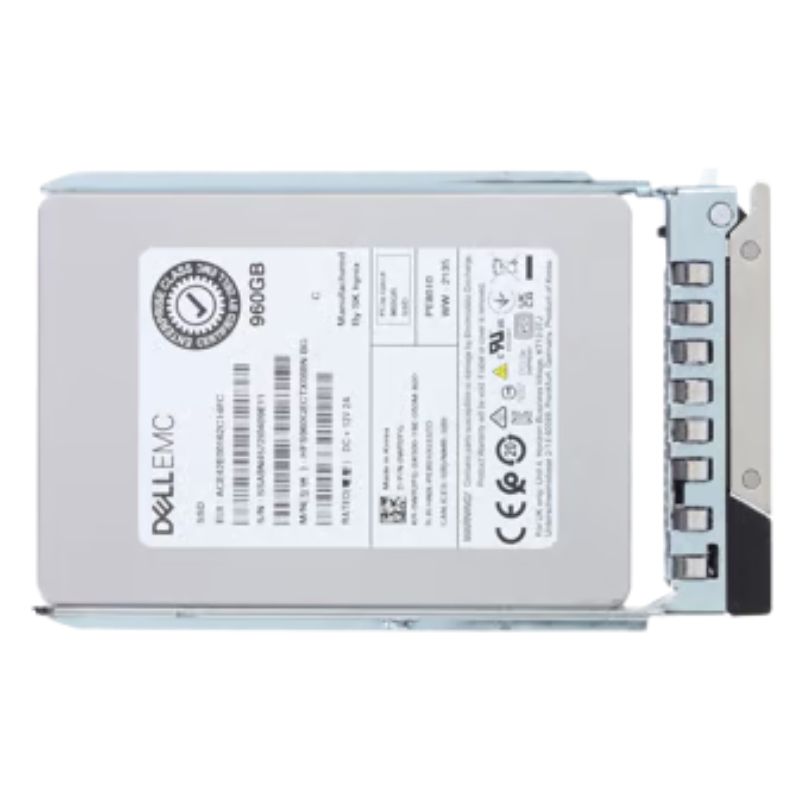
Dell 345-BJBJ 960GB PCI-E Gen4 NVMe Read Intensive U2 with 2.5 Inch Solid State Drive. New Sealed in Box (NIB) with 1 year Warranty
The Dell 345-BJBJ solid-state drive delivers exceptional read-intensive capabilities tailored for data center environments. Engineered with a PCIe Gen4 NVMe interface, this 960GB internal SSD ensures rapid data access and robust reliability for demanding workloads.
This SSD is validated for seamless integration with a wide array of Dell PowerEdge systems, ensuring optimal performance and compatibility.
While the listed PowerEdge models are verified for support, this drive may also be compatible with select MD PowerVault arrays and other Dell server configurations. Always consult your system documentation or Dell support for confirmation.
The Dell 345-BJBJ 960GB PCI-Express Gen4 NVMe Data Center Read Intensive U.2 SFF Solid State Drive with Carrier for PowerEdge Server represents a focused category of enterprise storage designed for workloads that demand exceptionally fast read performance, low latency, consistent I/O, and the reliability required in modern data centers. This class of drives is engineered specifically to fit PowerEdge server environments via the U.2 small form factor (SFF) interface and includes carriers for seamless hot-swap integration. Targeted at read-intensive applications such as content delivery, caching layers, boot volumes, analytics-heavy databases, and virtualization read caches, these drives emphasize read IOPS, high sustained throughput, and efficient power-to-performance balance. The Gen4 PCI-Express NVMe interface unlocks the parallelism and reduced protocol overhead that modern server architectures expect, enabling dramatic improvements in access times and data movement compared with legacy SATA and SAS SSDs.
At the core of each drive in this category is NVMe protocol support over PCIe Gen4 lanes. PCIe Gen4 doubles the per-lane bandwidth of the previous generation, allowing a 4-lane NVMe drive to achieve substantial sequential throughput and multiple hundreds of thousands of IOPS when properly provisioned in a PowerEdge chassis. The U.2 small form factor preserves enterprise drive bay compatibility and provides a robust connector designed for hot-swap operation and carrier mounting. The 960GB capacity point sits in an optimal sweet spot for many enterprise deployments: it balances cost per gigabyte with capacity efficiency, often used as an operating system or read cache tier where densities higher than 480GB but lower than multi-terabyte capacities are advantageous for predictable performance and endurance budgeting.
Read-intensive NVMe drives are tuned for low average read latency and a high ratio of read to write IOPS. For applications that perform a majority of read operations—such as web servers serving static content, indexing engines, or read-heavy database queries—these drives deliver consistent latency metrics and maintain high throughput during extended periods of read activity. The PCIe Gen4 interface enables higher sequential read and write throughput compared with Gen3 drives; however, the distinguishing factor for this category is the drive’s firmware optimization for read prioritization, intelligent I/O scheduling, and sustained performance under mixed but read-focused workloads. In real-world deployment, these drives reduce queueing delays and deliver faster response times to client requests when paired with multi-core CPUs and NVMe-capable RAID controllers or host software stacks designed for NVMe namespaces.
Data center operators pay close attention to steady-state performance rather than peak burst numbers. Drives in this category often include over-provisioning, background garbage collection policies tuned for read-heavy use, and firmware features that reduce performance degradation over long-term use. This reduces tail latency spikes and helps maintain quality-of-service (QoS) guarantees for critical applications. Properly configuring the PowerEdge server firmware, BIOS NVMe settings, and OS-level NVMe drivers is essential to realize these steady-state advantages; when done correctly, the result is improved predictability and tighter SLO adherence for latency-sensitive services.
One of the category’s defining selling points is the inclusion of carriers that make these U.2 SFF NVMe drives plug-and-play compatible with Dell PowerEdge enclosures. The carrier provides the mechanical interface, latch mechanism, and often the drive LEDs required by the server’s backplane.
Hot-swap serviceability is critical in modern data center operations. U.2 carriers in this category are engineered to support safe removal and insertion of drives without powering down the server, provided the server’s OS and applications support online replacement procedures. The carrier’s design makes physical handling straightforward for technicians while preserving proper airflow and thermal conduction inside dense chassis.
These drives are purpose-built for read-intensive workloads that prioritize low latency and consistent throughput over maximum write endurance. Use cases include but are not limited to read caching layers for distributed file systems, VM boot volumes in virtualized infrastructures where reads dominate, database index storage that experiences high read-to-write ratios, media streaming edge nodes, and search or analytics workloads that perform heavy random reads. When integrated into a tiered storage architecture, the Dell 345-BJBJ 960GB NVMe drives are commonly used as the fast read tier, with higher-capacity, higher-endurance drives serving as bulk storage or write-heavy layers.
In hybrid storage systems, these NVMe drives excel as cache or read tier components, accelerating access to the most frequently requested data and reducing load on slower HDD or SATA-based flash tiers. Software-defined storage stacks can add these drives as a hot tier, leveraging policy-driven tiering to move hot blocks to the NVMe devices automatically. Caching solutions that support write-through or read-only cache models align well with read-intensive NVMe devices because they maximize read acceleration while limiting the write workload placed on the drive.
Compared with high-endurance enterprise SSDs, read-intensive Gen4 NVMe drives typically cost less per gigabyte while delivering comparable read performance and lower write endurance ratings. Compared with SATA and SAS SSDs, NVMe Gen4 drives offer markedly lower latency and higher parallel throughput, enabling faster application response and improved overall server efficiency. For mixed workloads or write-heavy database logging, consider complementing read-intensive drives with high-endurance NVMe or NVMe-oF solutions to balance the overall storage tiering strategy. The decision matrix often involves workload analysis, cost constraints, and the existing server and storage architecture.
Choose read-intensive NVMe drives when the workload’s read-to-write ratio is heavily skewed toward reads and when predictable read latency is the top priority. Opt for high-endurance NVMe drives when large sustained write volumes, heavy background rebuilds, or write-heavy database transactions are expected. Many environments implement both types across different roles: read-intensive drives for cache and front-tier reads, and high-endurance drives for write logs and persistent transactional storage where TBW requirements are greater.
Because NVMe drives dramatically reduce storage latency, other subsystems—network and CPU—can become the next bottlenecks in the stack. Ensure that the server’s CPU allocation and network fabric (NIC speeds, RDMA support, and switch backplane capacity) are matched to the expected increase in request rates. In virtualization environments, monitor vCPU contention and adjust scheduling and resource reservations to prevent context switching and CPU starvation from eroding the NVMe performance benefits.


 Contact Us
 Information
 Catalog
 Solid State Drives (SSD)
 Network Switches
 Hard Disk Drives
 HBA & Controllers
 PC & Servers
 PC & Server Memory
 CPU & Processors
 Network Routers
 Power Supplies
 Tape Drives & Libraries
 Network Devices
 Computer & Network Cables