(7% discount is applied at checkout)
Cart is empty
Your go-to destination for cutting-edge server products
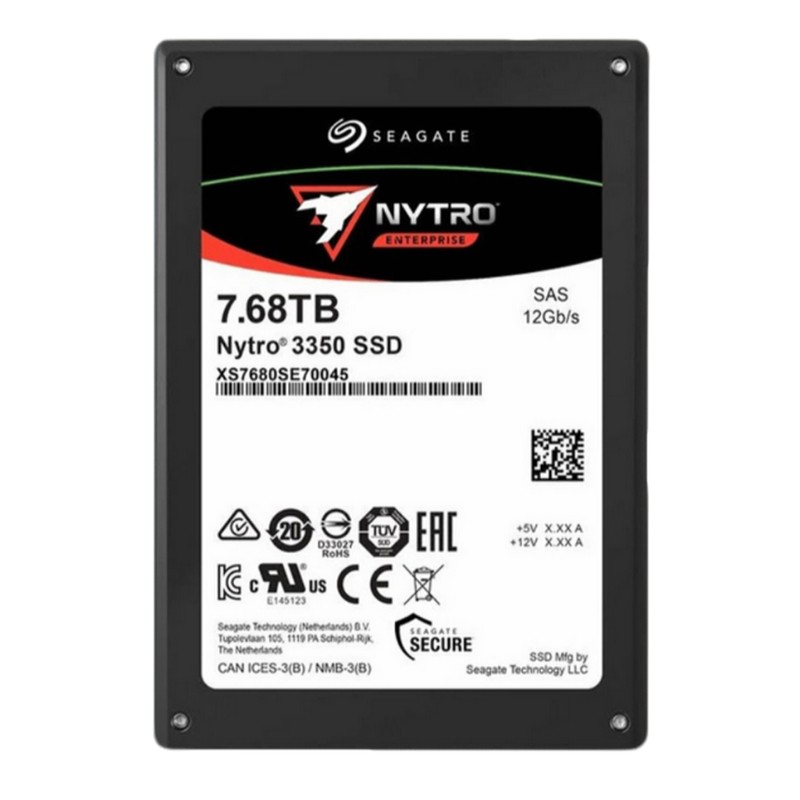


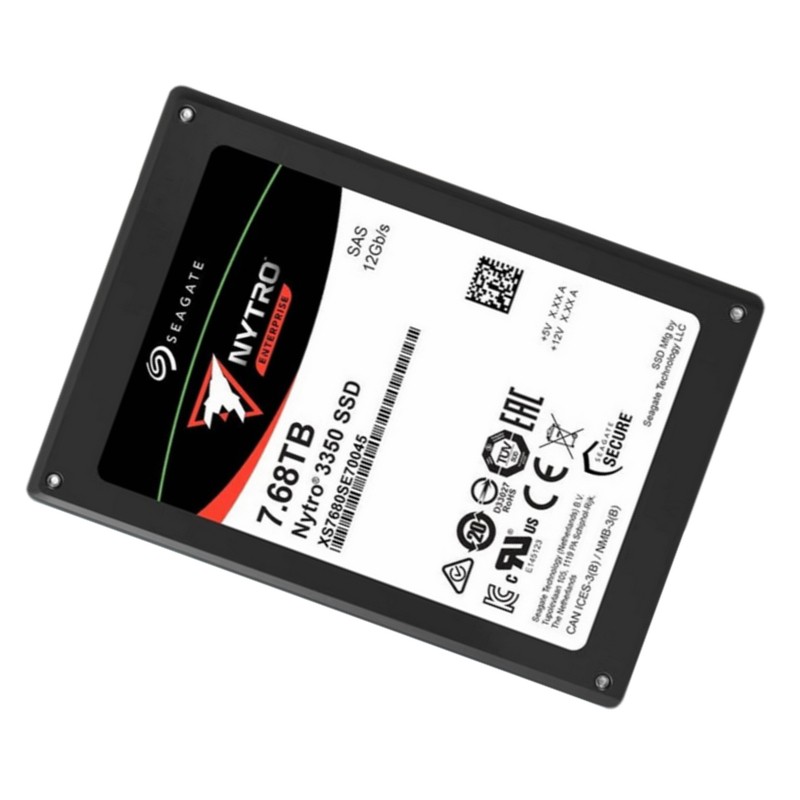
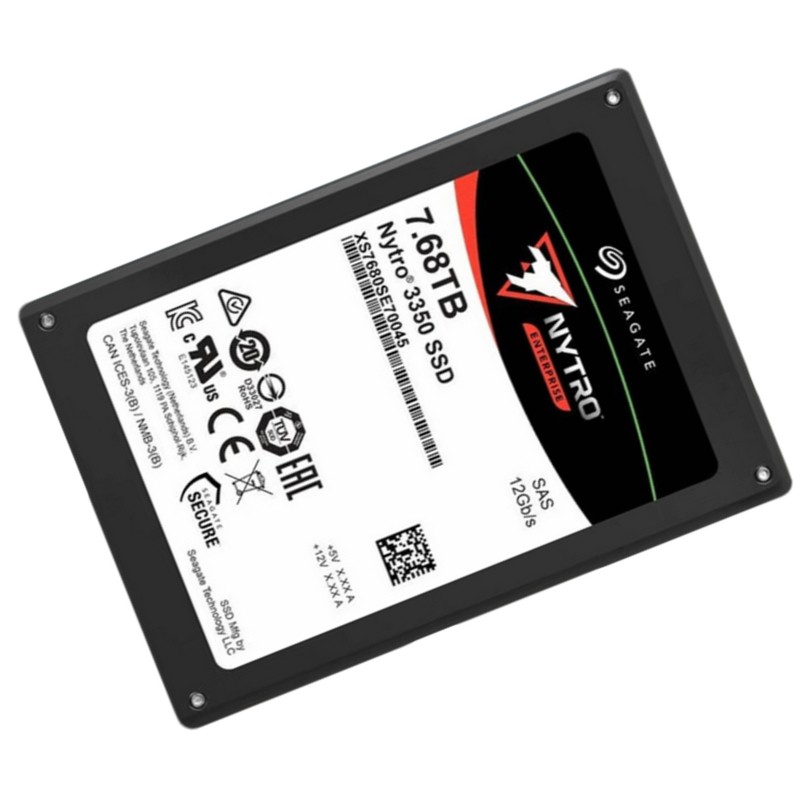
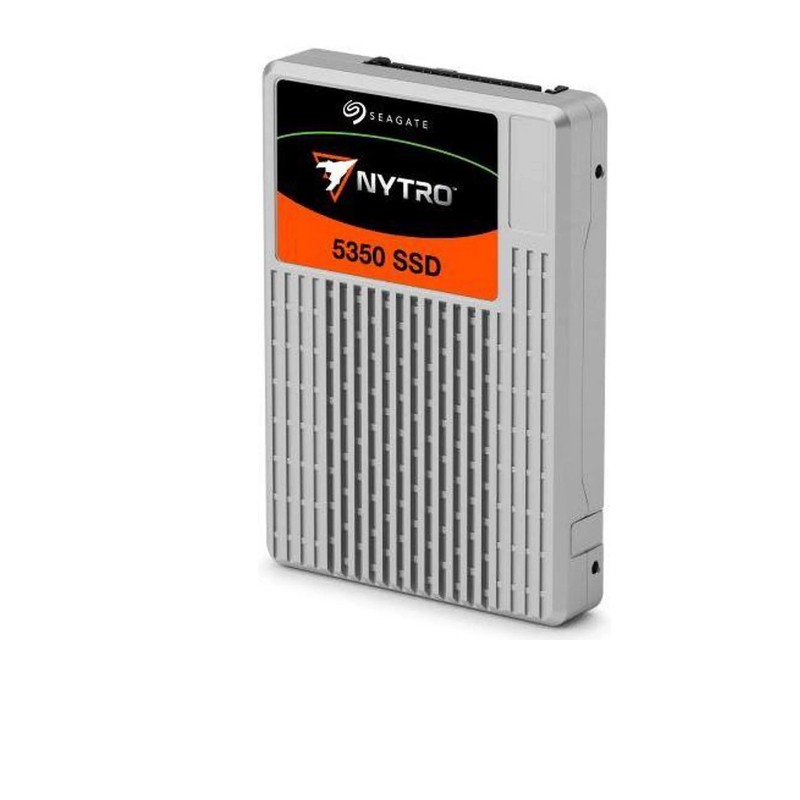
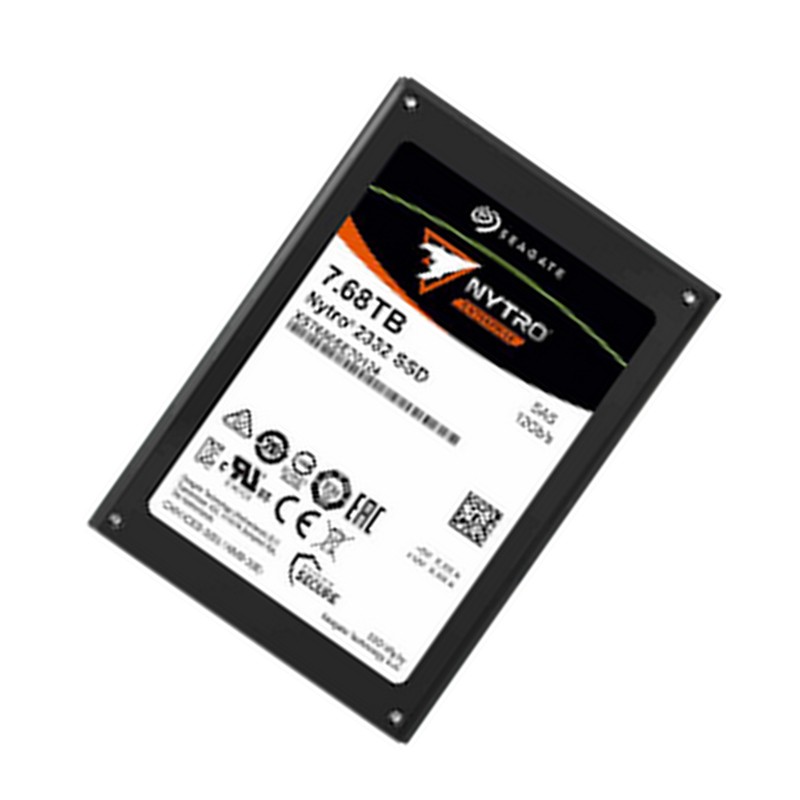
Seagate XS7680SE70134 Nytro 2332 7.68TB Scaled Endurance SAS-12GBPS 3d Etlc SED 2.5inch 15mm Solid State Drive. Excellent Refurbished with 1 year replacement warranty - Dell Version
Built for reliability and speed, the Seagate Nytro 2332 solid-state drive offers robust performance for data-intensive environments. With dual SAS 12Gbps connectivity and advanced 3D eTLC NAND technology, this 2.5-inch drive is optimized for scalable storage systems and SATA-compatible platforms.
The Seagate Nytro 2332 model XS7680SE70134 is a high-capacity enterprise SAS solid-state drive engineered for data-center applications that demand sustained throughput, resiliency and strong security features. At 7.68TB usable flash capacity in a 2.5-inch × 15mm package, this drive is designed to slot into dense server and storage arrays to deliver predictable performance for mixed read/write workloads, large datasets and high-concurrency environments. Key platform attributes include a 12Gb/s SAS interface, 3D eTLC (engineered TLC) NAND, self-encrypting drive (SED) capabilities and Seagate’s scaled-endurance firmware optimizations that target long service life under enterprise duty cycles.
Enterprise SAS SSDs like the Nytro 2332 balance capacity, endurance and cost to serve as a bridge between high-performance NVMe flash and lower-cost archival HDD tiers. They are ideal where existing infrastructure is SAS-based or when dual-port connectivity, backplane compatibility and multipath availability are required. This category is frequently chosen for boot/system volumes, metadata stores, virtual machine hosts, database logs, and caching layers—places where predictable latency and strong security matter more than extreme raw latency numbers. The Nytro 2332 family specifically targets customers seeking multi-terabyte density without sacrificing the manageability features enterprises expect.
The drive’s 2.5-inch form factor with a 15mm z-height supports higher NAND stack density compared to 7mm or 9.5mm SSDs, allowing multi-terabyte capacities in a compact footprint. The 12Gb/s SAS interface (often provided as single-port or dual-port SKUs) offers enterprise-grade features like multipath failover and out-of-band management over SAS-aware controllers. For systems that require redundancy and high availability (e.g., SAN nodes or dual-controller storage), SAS is often preferred for its topology and management features.
eTLC (engineered TLC) is Seagate’s approach to triple-level cell flash optimized for enterprise workflows. By combining 3D stacking with controller and firmware techniques, eTLC aims to deliver the capacity advantages of TLC (more bits per die) while improving endurance and data integrity over consumer TLC. For procurement teams, that generally means lower $/GB compared with SLC/MLC enterprise flash but higher endurance and performance consistency than commodity client TLC. This is an attractive tradeoff for many scale-out applications.
Many SKUs in the Nytro 2332 family, including the XS7680SE70134, are offered as Self-Encrypting Drives (SED). Hardware encryption helps with data privacy, enabling features like instant secure erase and meeting compliance needs for regulated data. In environments where drive disposal, redeployment or multi-tenant separation is practiced, SED reduces the operational overhead of secure erasure compared with software-only approaches. Administrators should pair SED drives with compatible key management and verification procedures to ensure true end-to-end protection.
Seagate publishes endurance figures and reliability metrics (for example, DWPD or AFR) for the Nytro lineup. Scaled-endurance models tune the drive firmware and overprovisioning to meet target drive-write per day (DWPD) ratings suitable for mixed enterprise workloads. Typical reliability specifications for drives in this product family include an Annualized Failure Rate (AFR) around the low-tenths of a percent and mean time between failures (MTBF) that aligns with enterprise expectations. Buyers should consult the exact datasheet for the SKU they plan to deploy to confirm sustained write allowances, warranty terms and AFR.
Seagate’s datasheets list sequential and random performance figures for the Nytro 2332 family; for dense eTLC 7.68TB SKUs, sequential throughput is typically in the mid-hundreds of MB/s range for sustained writes and reads when connected to a 12Gb/s SAS host. Random IOPS for small-block reads and writes will vary dramatically by firmware, host controller and provisioning (e.g., capacity available for user data vs. overprovisioning). When benchmarking, test with the application’s typical I/O size, queue depth and read/write mix—for example, database redo logs differ greatly from VM boot storms or mixed analytics queries. Vendors also often publish sample 128KB sequential read/write numbers and sustained throughput; consult the official datasheet for the definitive figures.
Virtualization hosts and virtual desktop infrastructure (VDI) where many small random reads/writes occur.Database log and index storage that requires consistent low latency and secure erasure.
Caching layers in hybrid arrays to accelerate HDD-based bulk storage.
Boot/system volumes for enterprise servers that demand predictable availability.
Multi-tenant infrastructures where SED helps enforce tenant data separation.
Because these drives utilize the SAS protocol, verify that your server and HBA/RAID controller firmware support 12Gb/s SAS SSD devices and the specific command sets used for security and S.M.A.R.T. attributes. Use vendor-tested firmware bundles when available, and ensure multipath and failover settings align with the dual-port or single-port SKU you select. In clustered storage, validate that hot-swap behavior, enclosure management (SES) and temperature reporting follow your chassis vendor’s guidelines.
While SSDs bring lower latency, they change some RAID planning assumptions. Rebuild times are typically faster than HDDs but can stress controllers and backplanes during sustained rebuilds. Use RAID levels that balance performance and redundancy (RAID-6 is common for high-capacity arrays), and consider adding spare drives to reduce rebuild windows. For mixed endurance arrays, avoid mixing drives with very different performance or endurance profiles in the same RAID group to prevent uneven wear and performance anomalies.
Enterprise SSDs require regular monitoring and firmware lifecycle management. Seagate provides datasheets and utilities that report S.M.A.R.T. attributes, endurance used, and other telemetry. Integrate drive health checks into your monitoring stack so you can detect early signs of wear or impending failure (e.g., rising corrected error counts, decreasing spare capacity). Follow vendor guidance before applying firmware updates—coordinate updates across nodes to prevent operational surprises and always test updates in a staging environment that mirrors production.


 Contact Us
 Information
 Catalog
 Solid State Drives (SSD)
 Network Switches
 Hard Disk Drives
 HBA & Controllers
 PC & Servers
 PC & Server Memory
 CPU & Processors
 Network Routers
 Power Supplies
 Tape Drives & Libraries
 Network Devices
 Computer & Network Cables