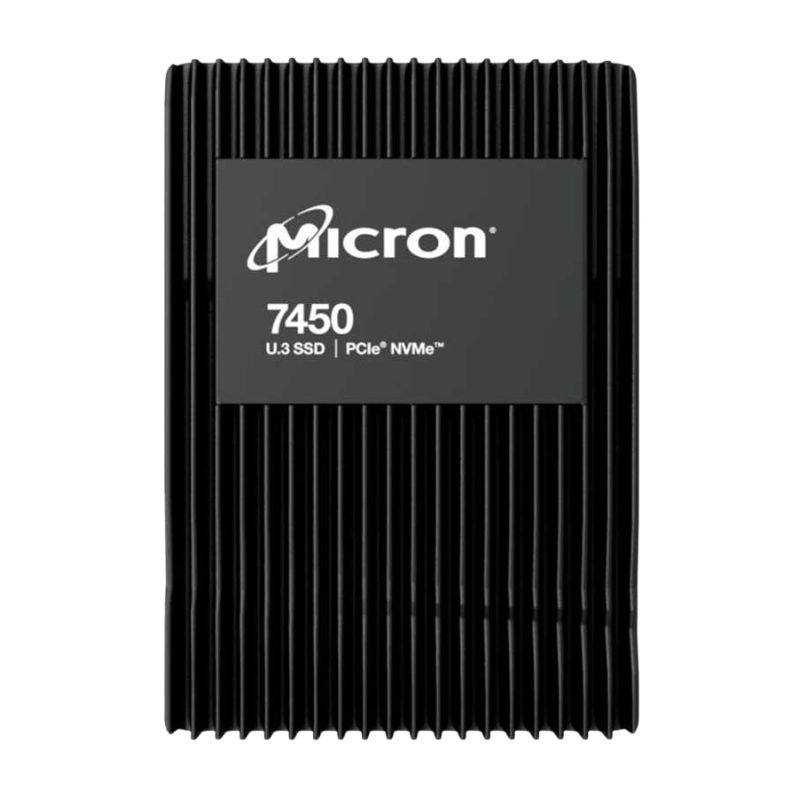
Micron 7400 Pro MTFDKCC3T8TFR-1BC1ZABDA Product Overview
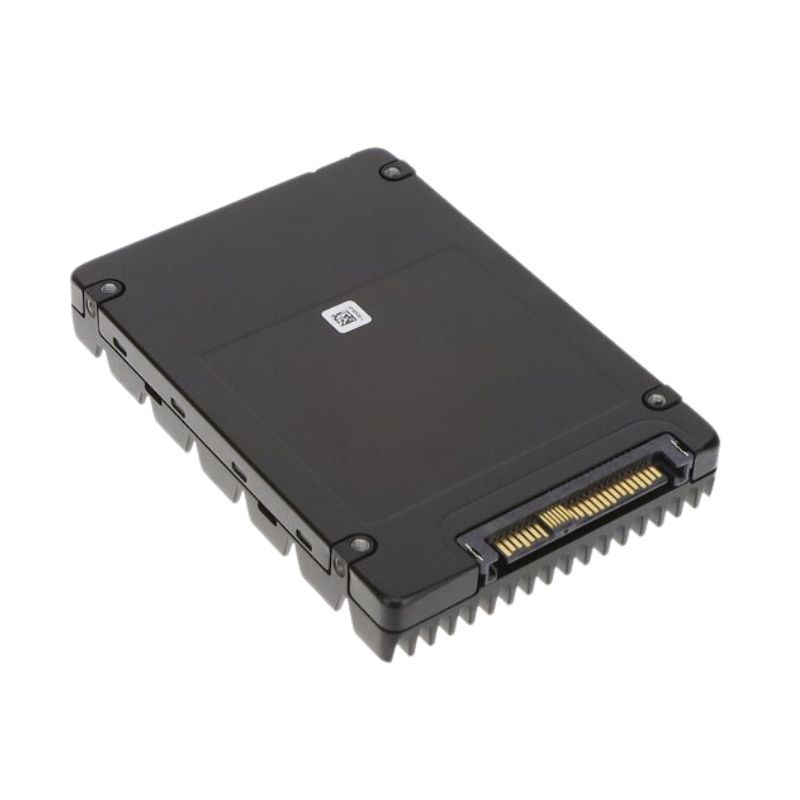
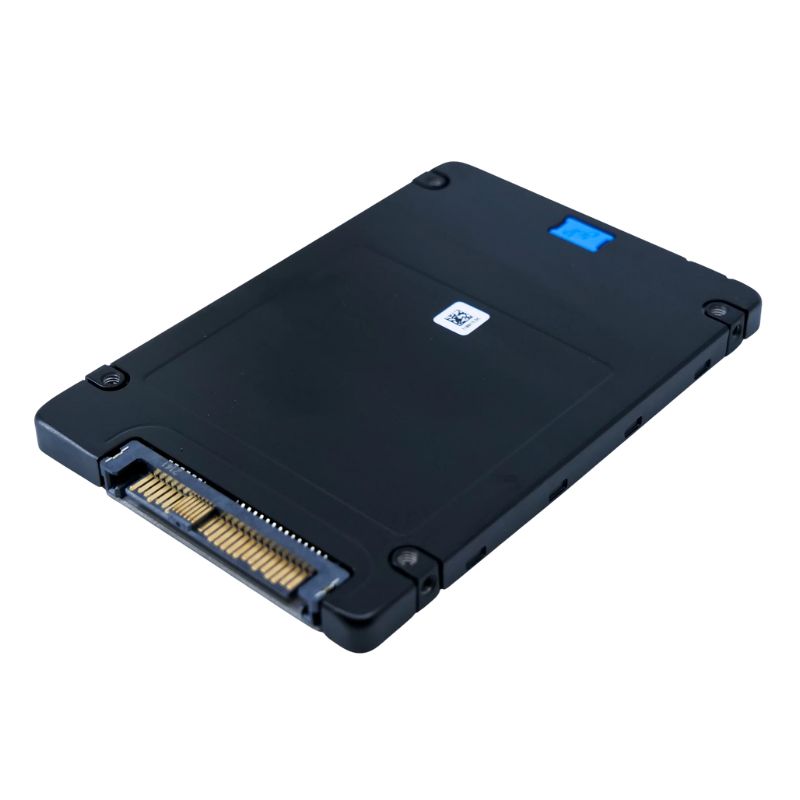
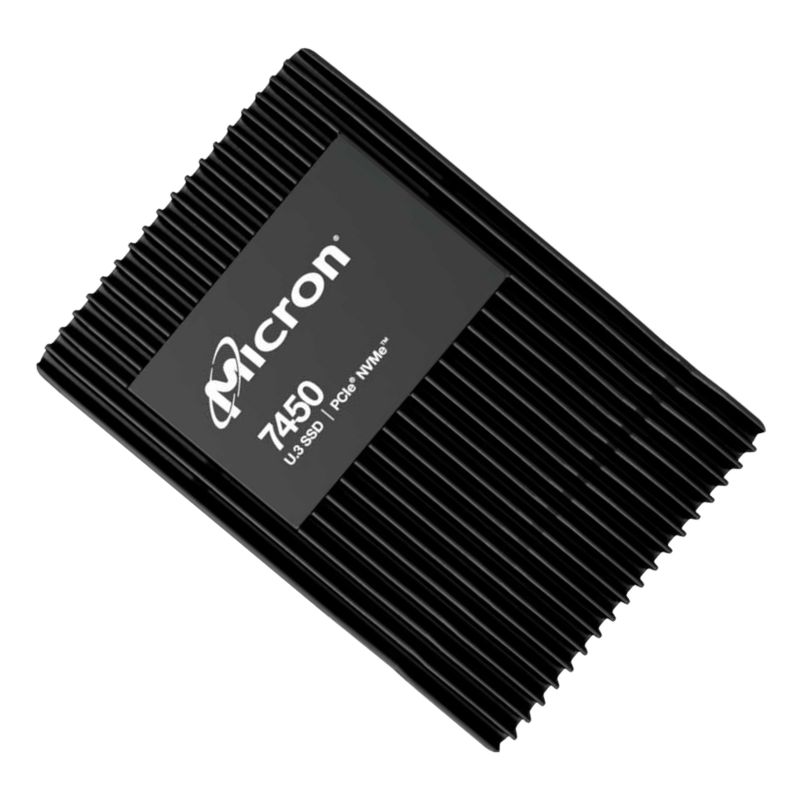
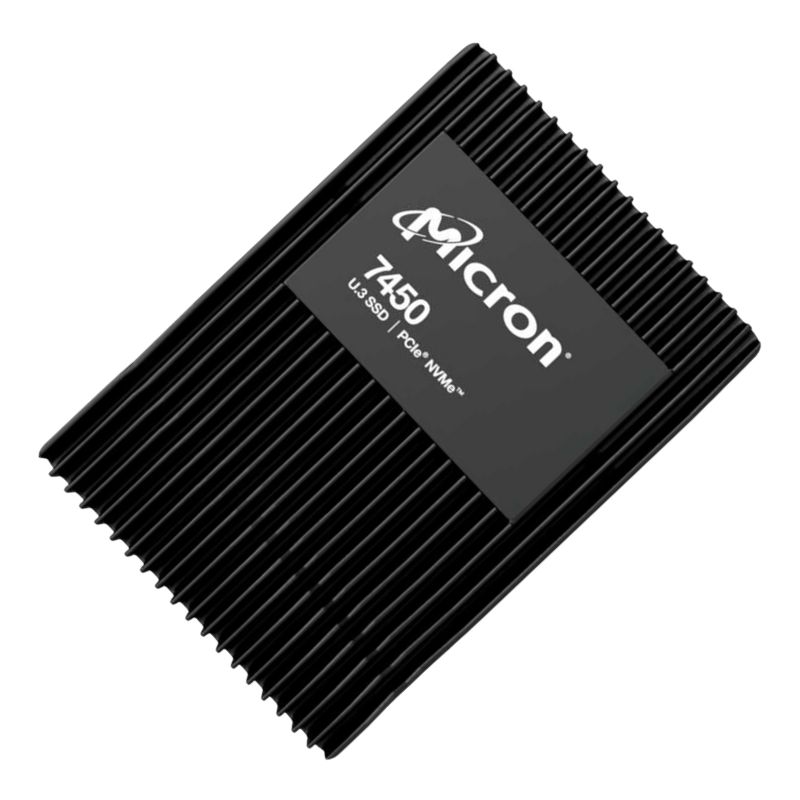
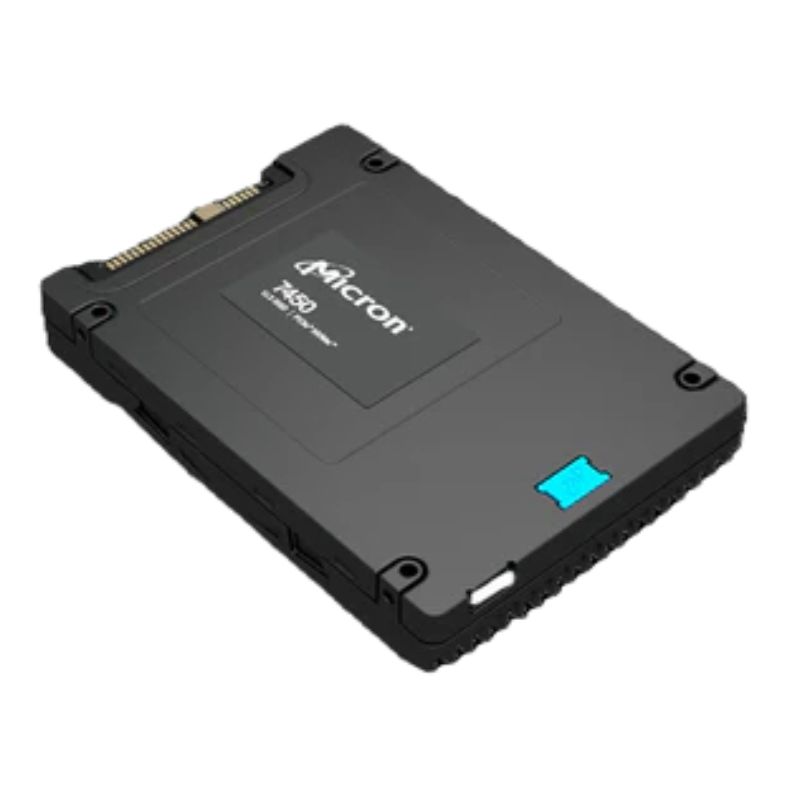
The Micron 7400 Pro in the MTFDKCC3T8TFR-1BC1ZABDA configuration is a high-capacity NVMe SSD engineered for enterprise-grade workloads. Presented in a U.3 2.5" package, this internal solid-state drive delivers a blend of blistering read/write throughput, elevated endurance, and robust reliability features.
Key Technical Highlights
- Manufacturer: Micron
- Part Number: MTFDKCC3T8TFR-1BC1ZABDA
- Form Factor: U.3, 2.5-inch (suitable for 2.5" enterprise bays)
- Interface: PCIe 4.0 x4 (NVMe protocol)
- Capacity: 3.84 TB usable storage
- NAND Type: Micron 96-layer 3D TLC NAND
- Sustained Internal Bandwidth: Up to 6,800 MB/s read and 5,300 MB/s write
- Random I/O: Up to 1,000,000 IOPS (4KB read) and 180,000 IOPS (4KB write)
- Endurance: 3,500 TB total bytes written (TBW)
- Reliability: MTTF of 2,000,000 hours and UBER < 1 sector per 10^17 bits read
- Data Rate (external spec): Stated 600 Mbps (see performance section for internal peak throughputs)
Quick Reference At-a-Glance
- Capacity: 3.84 TB
- Interface: PCIe 4.0 x4 (NVMe)
- Form Factor: U.3 2.5"
- NAND: Micron 96-layer 3D TLC
- Endurance: 3,500 TBW
- Peak Internal Rates: ~6,800 MB/s read, ~5,300 MB/s write
- Random IOPS: Up to 1,000,000 read / 180,000 write (4KB)
- Reliability: MTTF 2,000,000 hours; UBER < 1 per 10^17 bits read
Checklist Is This Drive Right for You
- Need high sequential throughput (up to multi-GB/s)? ➜ Good fit
- Require strong random IOPS for many small transactions? ➜ Strong candidate
- Looking for high endurance (multi-PB TBW)? ➜ Meets robust endurance needs
- Installing into a U.3 bay with PCIe 4.0 support? ➜ Ideal
- Want the lowest possible cost-per-GB regardless of performance? ➜ Consider HDD tiers or cold-tier SSDs
Random IOPS & Small-Block Performance
- Random I/O matters for latency-sensitive tasks. This drive’s random read IOPS of up to 1,000,000 (4KB) and random write IOPS up to 180,000 (4KB) make it suitable for database index operations, high-concurrency virtual machines, and metadata-heavy file systems.
Real-world Considerations
- Peak numbers assume optimal host configurations (NVMe driver stack, thermal management, and adequate queue depths).
- Performance under mixed read/write patterns may vary; use workload-specific benchmarks to set expectations.
- Latency and IOPS can be impacted by host CPU, memory, and I/O path design—tune the host for NVMe efficiency.
Reliability & Data Integrity Features
MTTF and UBER Explained
- The Mean Time To Failure (MTTF) of 2,000,000 hours indicates the manufacturer’s projected reliability under nominal conditions. Combined with an Unrecoverable Bit Error Rate (UBER) of less than 1 sector per 10^17 bits read, the 7400 Pro offers enterprise-grade data integrity protections to reduce the risk of silent corruption.
Enterprise-Class Safeguards
- Advanced error-correction algorithms to detect and correct multi-bit flash errors.
- Power-loss protection strategies to help preserve in-flight data during sudden outages.
- SMART reporting and telemetry to assist with predictive maintenance and fleet management.
Interface Notes
- Interface: PCIe 4.0 x4 NVMe — ensure host firmware and OS NVMe drivers support PCIe 4.0 for maximum throughput.
- Backward Compatibility: Works in PCIe 3.0 slots but will operate at lower bandwidths appropriate to the host slot.
- Bay Size: Compatible with standard 2.5" enterprise bays designed for U.3/U.2 devices.
Use Cases & Ideal Workloads
Where the 7400 Pro Excels
- Database Systems: High random IOPS and low latency make it ideal for OLTP and mixed OLTP/OLAP workloads.
- Virtualization: Supports dense VM consolidation with strong IOPS performance per terabyte.
- Content Delivery & Media: Fast sequential reads accelerate high-throughput media streaming and rendering workflows.
- AI/ML Pipelines: Large capacity and speedy reads help feed data pipelines for training and inference.
- Backup Tiers & Caching: Use as a fast cache or tier between DRAM and slower persistent tiers.
Rack & System Integration Best Practices
Thermal Management
- Sustained high-bandwidth operation generates heat. Pair the 7400 Pro with adequate airflow, heat sinks, or chassis-integrated thermal solutions to avoid throttling. Monitor SMART telemetry to detect thermal events early.
Driver & Firmware Recommendations
- Keep server BIOS/UEFI and NVMe drivers up to date to ensure stable PCIe 4.0 operation and compatibility.
- Install the manufacturer’s recommended firmware updates when validated in your test environment.
- Test firmware in a staging cluster before rolling into production to avoid regressions.
Data Protection Strategies
- Implement RAID configurations compatible with NVMe devices for redundancy (or software-defined replication strategies).
- Use enterprise backup and snapshot routines; TBW and MTTF are not substitutes for regular backups.
- Leverage SMART and telemetry for fleet-wide health monitoring and predictive replacements.
Quick Comparison Checklist
- Throughput vs. IOPS: Choose the 7400 Pro if you need balanced sequential and random performance.
- Endurance Needs: 3,500 TBW suits heavy-write environments; choose higher-TBW models for extremely write-intensive use.
- Capacity Requirements: 3.84 TB is a good fit for VM hosts, cache layers, and mid-sized database partitions.
Useful Metrics
- Media Health Percentage
- Remaining Spare Blocks
- Temperature (Celsius)
- Total Bytes Written (TBW progress)
- Power-On Hours and Error Counts
Typical Operating Ranges
- Operating Temperature: follow Micron-recommended range (verify actual drive product documentation for exact values)
- Shock and Vibration: designed for rackmount environments — consult official specs for precise tolerances
Economic Considerations
- Lower maintenance frequency due to high endurance
- Potential consolidation of drives (fewer high-capacity SSDs replacing multiple lower-capacity devices)
- Reduced energy footprint per IOPS compared with spinning disks.
Suggested On-Page Elements
- Manufacturer and model as primary keywords
- Technical table with clearly labeled specs (capacity, interface, form factor, TBW)
- Use-case headings targeted at buyer personas (DBA, system architect, cloud operator)
- FAQ and troubleshooting tips to capture long-tail queries
Product family and model focus Micron 7450 Pro MTFDKCC3T8TFR-1BC1ZABDA series
The Micron 7450 Pro family represents Micron’s enterprise-class NVMe SSD platform engineered for PCIe Gen4 data-center deployments. This category description focuses on the 3.84 TB U.3 / 2.5" SFF variant (product codes in the MTFDKCC3T8TFR family), describing architectural choices, performance characteristics, deployment patterns and purchasing considerations for systems integrators, datacenter architects, and high-performance storage buyers. The 7450 Pro leverages Micron’s advanced 3D NAND and NVMe controller technology to deliver a balanced combination of high sequential throughput, low latency, and sustained random I/O suitable for mixed application workloads.
Key specifications and technical highlights
The 3.84 TB Micron 7450 Pro (MTFDKCC3T8TFR-series) is a PCIe Gen4 x4 NVMe v1.4 device in a U.3 2.5" 15 mm small-form-factor enclosure. It pairs Micron’s latest 3D NAND with a data-center-optimized NVMe controller and firmware stack to provide high sequential bandwidth and strong random IOPS performance. Important published numbers for this capacity class include peak sequential read rates up to ~6,800 MB/s, sequential writes up to ~5,300 MB/s, and random read IOPS that can approach the 1,000,000 IOPS range for 4 KB reads under appropriate queue depth and test conditions. These performance figures are representative of the product class and are validated in Micron’s technical product specification and vendor listings.
Form factor & interface details
Form factor variants for the 7450 family include U.3 (2.5" SFF, 15 mm), M.2 22110/2280 where applicable, and E1.S; the SFF U.3 option is commonly used in enterprise servers with hot-swap drive bays and NVMe backplanes. The interface is PCIe Gen4 x4 (NVMe) which yields the bandwidth headroom required to approach the sequential maxima listed above. Compatibility with server backplanes and NVMe trays is a core consideration for integrators when choosing the U.3 SFF variant.
Factory options and security
Micron offers multiple firmware and security options across the 7450 family—these can include TCG Opal, TCG Enterprise/TCG Pyrite where applicable, and AES-based hardware encryption features. Some SKUs are TAA-compliant or offered with secure erase and firmware-locked options to satisfy procurement and regulatory requirements. When ordering, check the exact part number suffix for the security/SED (self-encrypting drive) variants.
Performance deep-dive: throughput, IOPS and latency
The 7450 Pro 3.84 TB MTFDKCC3T8TFR-1BC1ZABDA class is built for high throughput and consistent low latency. Sequential read/write and random I/O behave differently in real-world workloads, so it’s useful to separate them:
Sequential performance
- Sequential reads: Up to approximately 6,800 MB/s under ideal conditions on a Gen4 x4 host.
- Sequential writes: Peak numbers reported in vendor specs are up to ~5,300 MB/s for this capacity class; sustained write rates will vary with workload, over-provisioning and thermal constraints.
Sequential bandwidth is most relevant to large-file streaming, database bulk loads, backup/restore operations and streaming analytics where contiguous transfers dominate.
Endurance, reliability and enterprise features
Endurance ratings for data-center SSDs differ by workload profile (read-intensive, mixed, write-intensive). Micron publishes endurance (DWPD / TBW) figures and recommended workloads in the product documentation; for the 7450 Pro class, endurance targets and over-provisioning strategies are tuned for data-center longevity and predictable maintenance windows. Enterprise-grade features include power-loss protection, end-to-end data path protection, robust error-correction (ECC), and firmware features that reduce data recovery windows.
Deployment patterns and recommended use cases
Below are practical deployment patterns where the 3.84 TB 7450 Pro excels and considerations for each pattern:
Hyper converged infrastructure (HCI) and virtualization
- Use case: Fast boot volumes, VM image stores, and read-intensive virtual desktop infrastructure.
- Considerations: Match drive endurance to VM churn rates. Use monitoring to detect hot VMs that generate disproportionate write traffic and consider moving those to higher-endurance devices or caching tiers.
Database & analytics nodes
- Use case: Read replicas, OLAP queries, and indexes that benefit from high random read IOPS.
- Considerations: Right-size capacity per node to reduce overprovisioning waste; tune filesystem parameters and NVMe driver settings for low-latency access patterns.
Edge and content delivery
- Use case: Edge caching and content delivery where both sequential bandwidth and large capacity are valuable.
- Considerations: Balance replication and local cache eviction policies to take advantage of the drive’s sequential throughput during content warm-up operations.
Best practices for firmware updates
Always follow Micron’s and your server vendor’s best practices: apply firmware in maintenance windows, maintain backups for critical data, and validate post-update performance and SMART telemetry. Rolling firmware updates across a large fleet should be orchestrated to avoid simultaneous driver-level reinitializations that could impact cluster availability.
Interpreting benchmark results
Use percentiles (P95/P99) rather than averages to understand tail latency because averages can hide occasional spikes that affect application SLAs. If the tail latency is unacceptable, look at queue depths, host I/O concurrency, and application-level retries before changing hardware.
Where to find authoritative documentation
For final specification verification, always consult Micron’s official product pages and the technical product specification PDF. Vendor listings (authorized distributors and resellers) include part-number variants and pricing, but the technical product specification provides the canonical electrical, thermal and performance tables to inform system design.
Recommended next steps for teams evaluating the 7450 Pro
- Gather representative workload traces and define acceptance criteria (IOPS, latency percentiles, sustained throughput).
- Schedule a pilot deployment with a limited number of drives to observe real application behavior over days/weeks under production-like load.
- Integrate NVMe telemetry into your monitoring and alerting stacks to manage drive lifecycle proactively.
- Engage Micron or channel partners for bulk procurement negotiations, service-level agreements, and firmware update guidance.
Final technical references
Important technical references to consult when planning deployment: Micron’s 7450 NVMe SSD MTFDKCC3T8TFR-1BC1ZABDA product page and the official 7450 technical product specification (PDF), both of which include the authoritative performance tables, power-state data and supported features for each form factor and capacity. Use these documents as the baseline for rack power planning, thermal design and procurement planning.





 Contact Us
 Information
 Catalog
 Solid State Drives (SSD)
 Network Switches
 Hard Disk Drives
 HBA & Controllers
 PC & Servers
 PC & Server Memory
 CPU & Processors
 Network Routers
 Power Supplies
 Tape Drives & Libraries
 Network Devices
 Computer & Network Cables