(7% discount is applied at checkout)
Cart is empty
Your go-to destination for cutting-edge server products
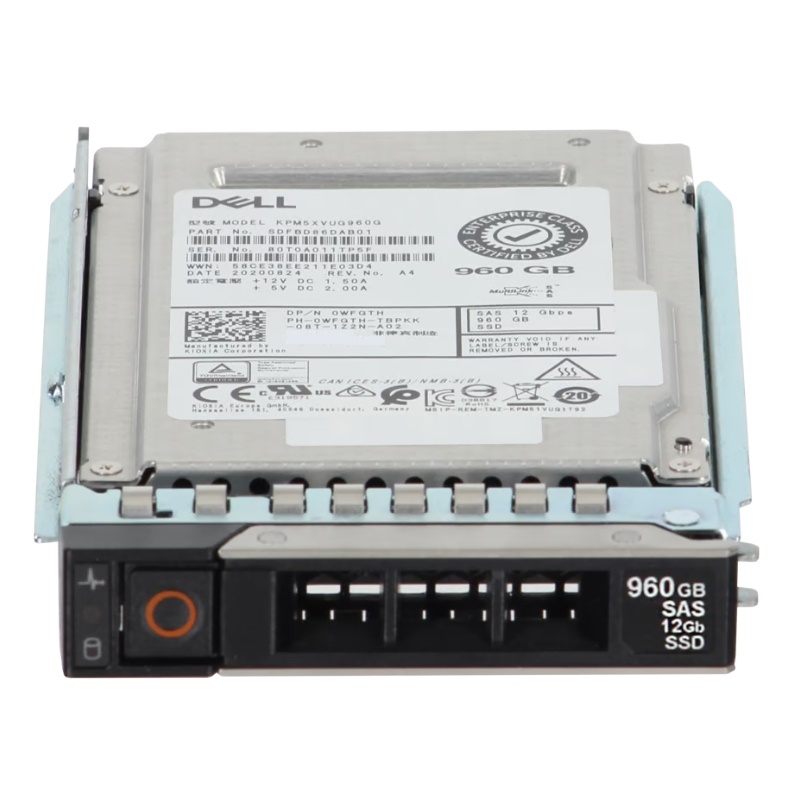


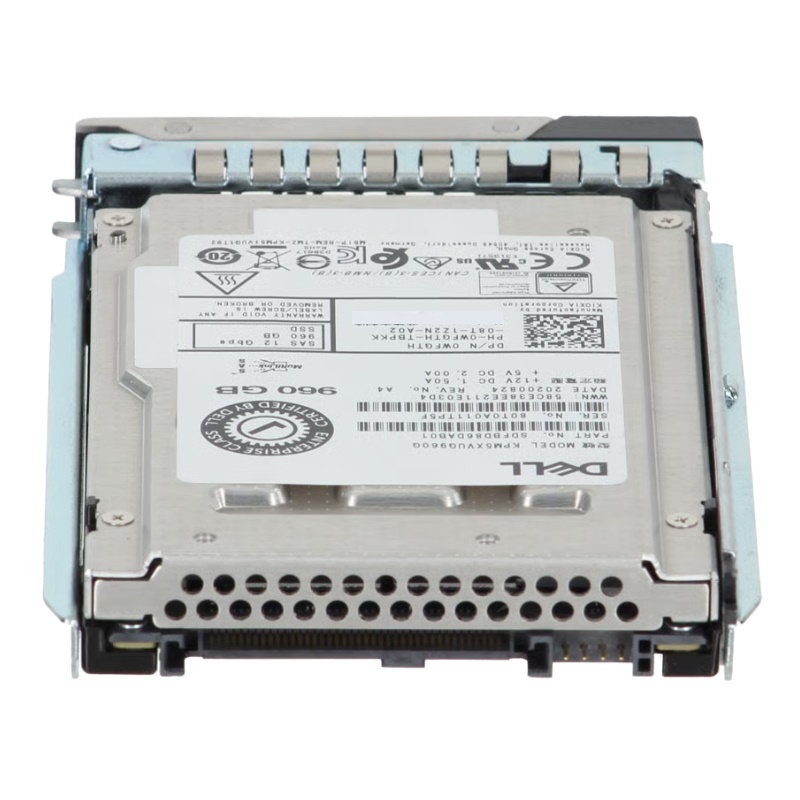
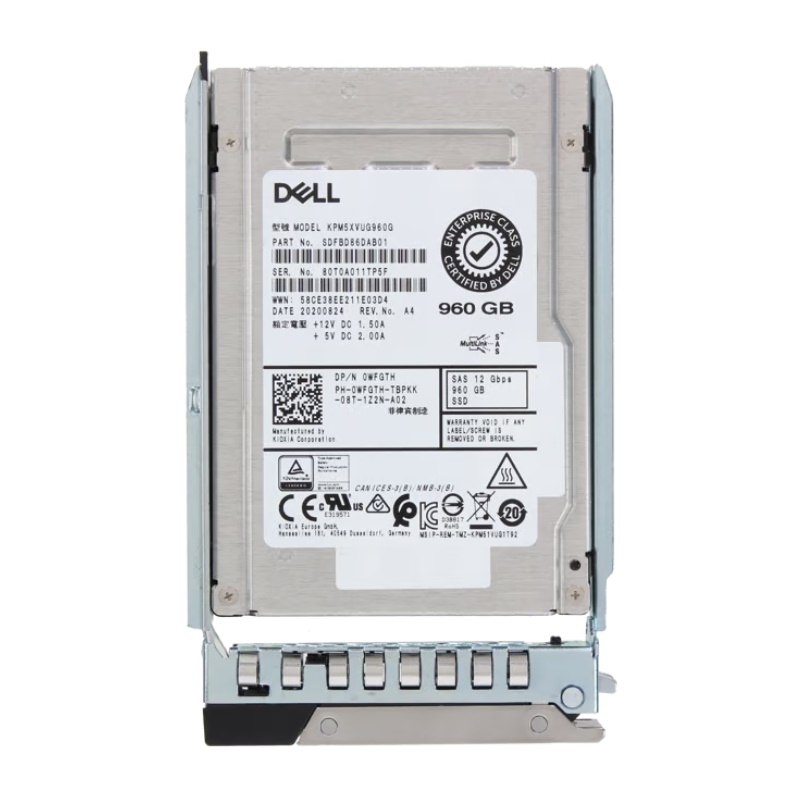
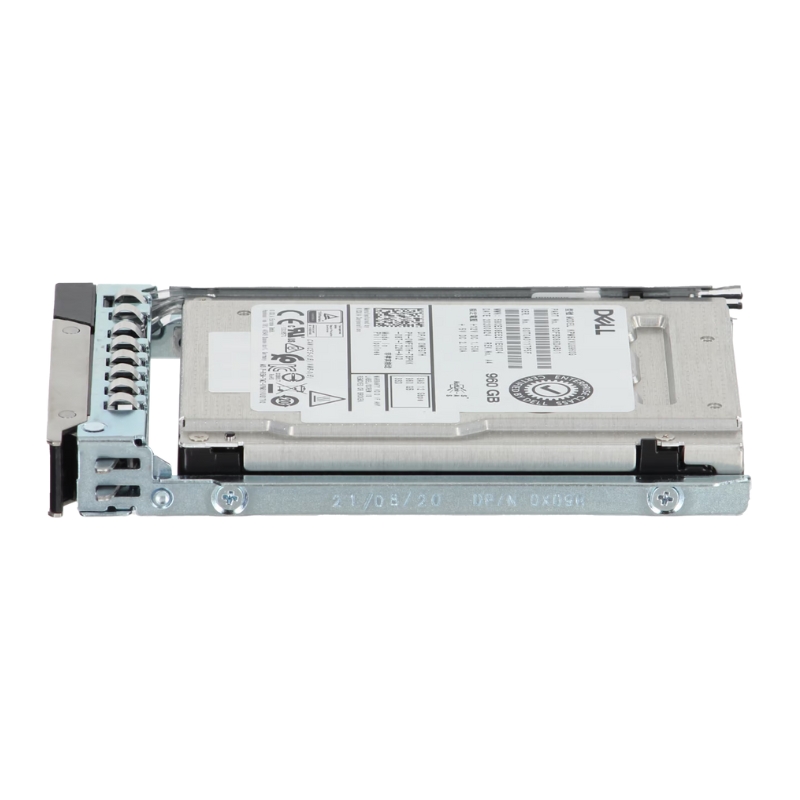
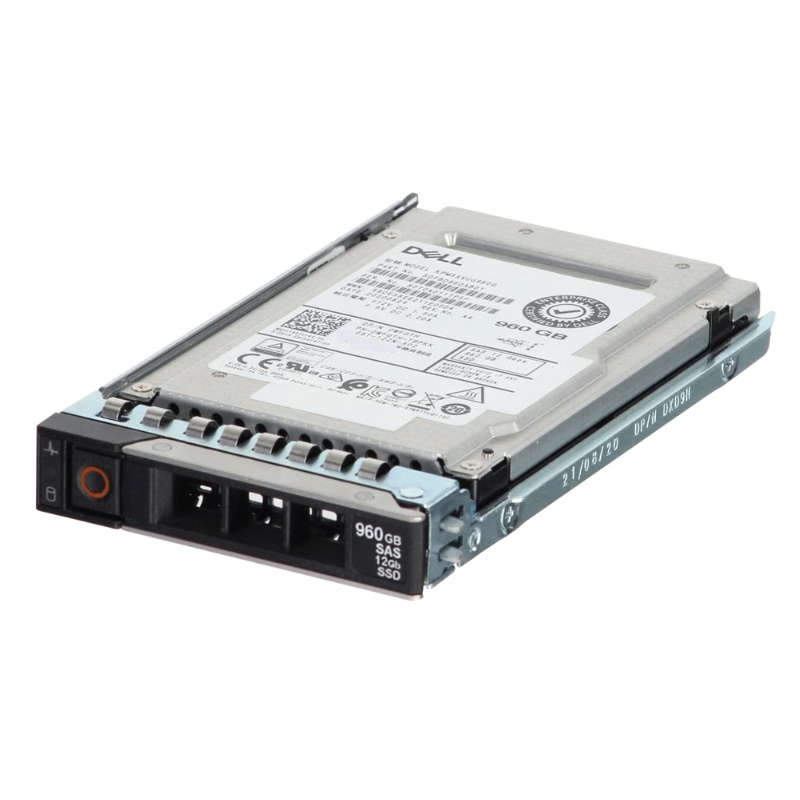
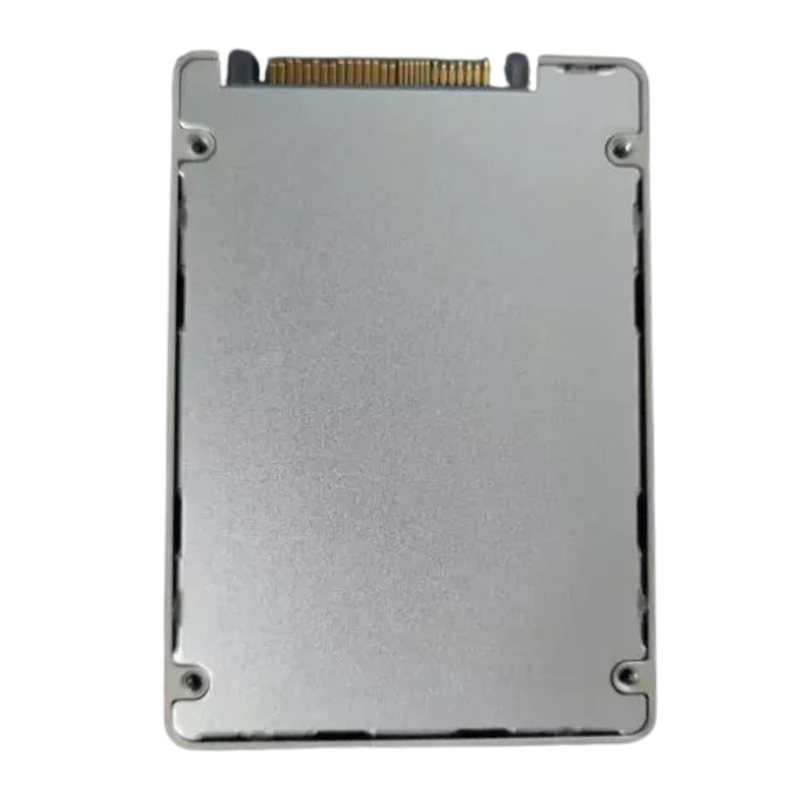
Dell 345-BLCT 960GB SED Read Intensive SAS 12GBPS 1DWPD 2.5-Inch Hot Plug SSD. New Sealed in Box (NIB) with 1 Year Warranty
The Dell 345-BLCT features a 960GB storage capacity optimized for enterprise environments requiring substantial storage with consistent performance. This 2.5-inch hot-plug solid state drive utilizes the industry-standard form factor that ensures compatibility with existing server and storage infrastructure. The compact 2.5-inch design allows for high-density deployments in data center environments where physical space optimization is critical. The hot-plug capability enables maintenance and replacement without system shutdown, providing continuous operation for mission-critical applications. This specific capacity point represents the sweet spot for many read-intensive workloads, balancing cost-effectiveness with sufficient storage for operating systems, applications, and frequently accessed data.
Equipped with SAS 12Gbps interface technology, the 345-BLCT delivers maximum theoretical transfer speeds of 12 gigabits per second, doubling the bandwidth of previous-generation 6Gbps SAS drives. The Serial Attached SCSI protocol provides full-duplex communication, meaning the drive can read and write data simultaneously without performance degradation. This enterprise-grade interface includes advanced features like dual-port capability for high availability configurations, end-to-end data protection, and superior error recovery compared to SATA alternatives. The SAS ecosystem ensures compatibility with sophisticated storage arrays and server configurations that require robust data integrity features and predictable performance under heavy workloads.
The transition to 12Gbps SAS represents a significant performance milestone, effectively eliminating interface bottlenecks that could limit SSD performance. With theoretical bandwidth of approximately 1,200MB/s per port, the interface fully leverages the inherent speed of NAND flash memory. The dual-port capability inherent to SAS technology provides redundant paths to the storage device, enabling multipath I/O configurations that enhance both performance and reliability. This is particularly crucial in enterprise environments where system uptime and data accessibility are paramount. The robust command set of SAS, including native command queuing with up to 256 commands per port, ensures optimal performance in heavily virtualized environments and database applications where multiple simultaneous I/O requests are common.
As a Self-Encrypting Drive (SED), the 345-BLCT implements hardware-based encryption that protects data at rest without performance degradation. The drive utilizes AES 256-bit encryption, the same standard used by government and financial institutions for sensitive data protection. Encryption and decryption occur transparently within the drive controller, eliminating the computational overhead that would otherwise burden the host system. The SED functionality includes comprehensive security management capabilities compatible with TCG Enterprise and IEEE 1667 security protocols. This hardware-based security approach provides immediate data protection as information is written to the NAND flash, ensuring that if the physical drive is removed from the system, the data remains inaccessible without proper authentication credentials.
The encryption engine is integrated directly into the drive's controller architecture, providing cryptographic processing that operates at wire speed without introducing latency. Each Dell 345-BLCT SED contains a unique media encryption key burned into the controller during manufacturing that never leaves the secure boundary of the drive's cryptographic module. User authentication occurs through security protocols that support both pre-boot and post-boot authentication models. The drive supports multiple security states including secured, locked, and frozen modes to prevent unauthorized access while maintaining flexibility for enterprise deployment scenarios. For organizations requiring regulatory compliance, the encryption implementation meets requirements for standards including FIPS 140-2, HIPAA, GDPR, and various data protection regulations.
The Dell 345-BLCT is specifically engineered for read-intensive workloads where the majority of storage operations are read requests rather than write operations. This design focus optimizes cost-efficiency while delivering exceptional performance for applications characterized by high read-to-write ratios. Typical read-intensive scenarios include web serving, content delivery networks, virtual desktop infrastructure (VDI) boot images, database query operations, data analytics processing, and video streaming applications. In these environments, the drive delivers consistent low-latency response times for read requests while providing sufficient write performance for metadata updates, logging, and configuration changes. The endurance characteristics are precisely calibrated to match the wear patterns of these specific usage scenarios, ensuring reliable operation throughout the drive's service life.
Enterprise applications demand predictable storage performance, and the 345-BLCT incorporates several technologies to maintain consistent operation under varying workload conditions. The drive controller implements advanced garbage collection algorithms that proactively manage NAND flash blocks to minimize write amplification and maintain performance during sustained operations. Background media management occurs during idle periods to prepare clean blocks for future write operations, reducing the performance impact typically associated with these maintenance activities. The power-loss protection circuitry ensures that in-flight data is protected during unexpected power interruptions, preventing data corruption and maintaining filesystem integrity. These technologies work in concert to deliver the quality of service that enterprise applications require for stable operation.
At the core of the drive's consistent performance lies sophisticated NAND flash management that extends beyond basic error correction. The controller implements multi-level wear leveling that distributes write operations evenly across all available memory cells, preventing premature wear on frequently written blocks. Bad block management identifies and retires marginal memory areas while maintaining sufficient spare capacity for the drive's rated endurance. Advanced read-retry algorithms dynamically adjust read thresholds to compensate for cell voltage drift that occurs as NAND flash ages. The combination of these technologies ensures that the drive maintains its performance specifications and data integrity throughout its operational lifespan, even as the underlying NAND flash characteristics change with usage and time.
The 345-BLCT utilizes 3D TLC (Triple-Level Cell) NAND flash memory arranged in a multi-layer architecture that provides the optimal balance of cost, capacity, and endurance for read-intensive workloads. The three-dimensional structure of the memory cells increases density without sacrificing reliability, enabling the 960GB capacity in a standard 2.5-inch form factor. While TLC technology stores three bits per cell compared to two bits in MLC or one bit in SLC configurations, advanced error correction and wear leveling algorithms compensate for the inherently lower endurance of TLC flash. The specific grade of TLC NAND selected for this drive is qualified for enterprise usage with enhanced durability characteristics compared to consumer TLC flash, ensuring it meets the rigorous demands of data center environments.
Data integrity is paramount in enterprise storage, and the Dell 345-BLCT implements a sophisticated multi-layer error correction strategy. The drive controller employs Low-Density Parity Check coding, an advanced error correction algorithm that approaches the theoretical limits of correction capability. LDPC provides significantly stronger protection compared to the BCH ECC used in earlier generation SSDs, enabling reliable operation with TLC NAND flash that has narrower voltage thresholds between states. The error correction operates in multiple stages - with lighter correction applied during normal operation and increasingly powerful correction algorithms engaged as NAND flash ages or experiences retention issues. This adaptive approach maximizes performance during normal operation while maintaining data integrity even as the underlying NAND flash characteristics change throughout the drive's operational life.
The 2.5-inch hot-plug design enables installation and removal of the Dell 345-BLCT without powering down the host system, a critical feature for maintaining service availability in enterprise environments. The drive carrier and connector system are designed to withstand repeated insertion and extraction cycles while maintaining electrical connectivity and signal integrity. The SAS connector includes staggered pins that ensure proper power sequencing during hot-plug events, preventing electrical issues that could damage the drive or host system. Backplane compatibility encompasses both direct-attach storage configurations and expanded storage enclosures with SAS expanders. The drive automatically negotiates link speed with the host controller, supporting mixed environments with both 12Gbps and 6Gbps SAS infrastructure while operating at the highest mutually supported speed.
Engineered for data center deployment, the 345-BLCT operates within standard enterprise environmental parameters including temperature, humidity, and altitude specifications. The typical operating temperature range of 0°C to 70°C ensures reliable performance in properly cooled data center environments. Power consumption is optimized for energy-efficient operation with active power typically under 5-7 watts during read/write operations and dropping to 1 watt or less during idle periods. These power characteristics enable high-density deployments without exceeding power budget constraints in storage arrays and servers. The drive supports advanced power management features including multiple power states that can be managed by the host system to optimize energy usage during periods of reduced activity while maintaining quick response times when I/O requests resume.
The 345-BLCT is validated for seamless integration within Dell EMC storage and server platforms, including PowerEdge servers and PowerVault storage arrays. This validation encompasses firmware compatibility, management integration, and performance optimization specific to Dell hardware architectures. The drive is detectable by Dell system management tools including OpenManage and iDRAC, providing comprehensive monitoring of health parameters, temperature, remaining life, and performance statistics. Within the Dell ecosystem, the drive benefits from optimized firmware paths that enhance performance for specific workload patterns common in Dell solutions. This tight integration simplifies procurement, deployment, and support for organizations standardized on Dell infrastructure, ensuring predictable performance and reducing compatibility concerns that can arise with third-party storage components.
While optimized for Dell systems, the 345-BLCT maintains standards compliance that ensures interoperability with SAS storage infrastructure from other vendors. The drive adheres to T10 SAS protocol standards and supports standard SCSI commands that enable basic functionality in non-Dell environments. However, certain advanced management features and performance optimizations may require Dell-specific management interfaces or firmware extensions. Organizations deploying these drives in multi-vendor environments should verify compatibility with specific host bus adapters, RAID controllers, and storage enclosures to ensure all required features are supported. The drive's standard 2.5-inch form factor and SAS interface provide broad compatibility with enterprise storage systems that accept this common form factor and protocol.


 Contact Us
 Information
 Catalog
 Solid State Drives (SSD)
 Network Switches
 Hard Disk Drives
 HBA & Controllers
 PC & Servers
 PC & Server Memory
 CPU & Processors
 Network Routers
 Power Supplies
 Tape Drives & Libraries
 Network Devices
 Computer & Network Cables