(7% discount is applied at checkout)
Cart is empty
Your go-to destination for cutting-edge server products
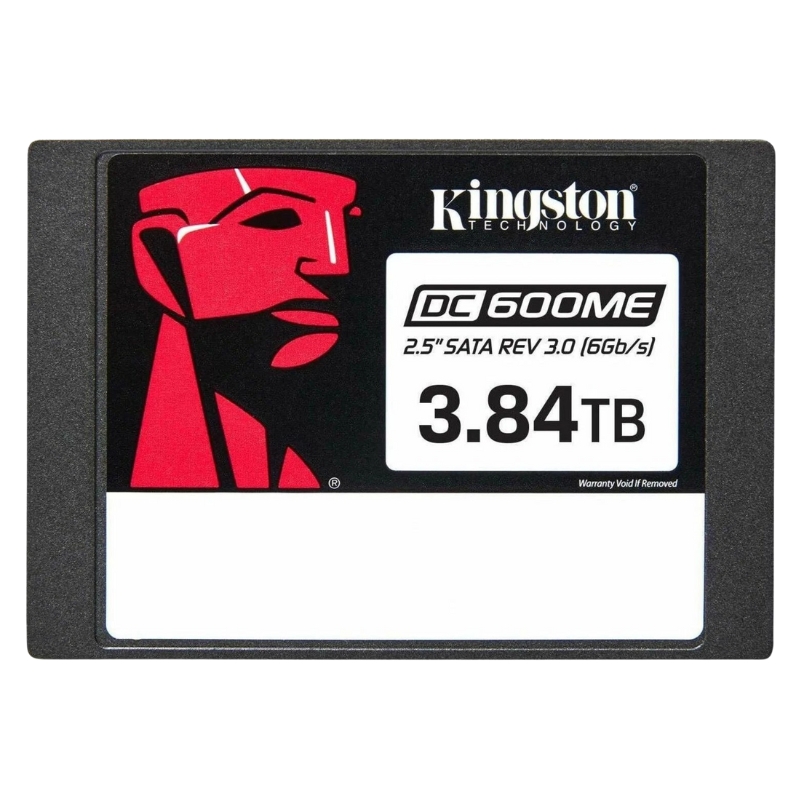


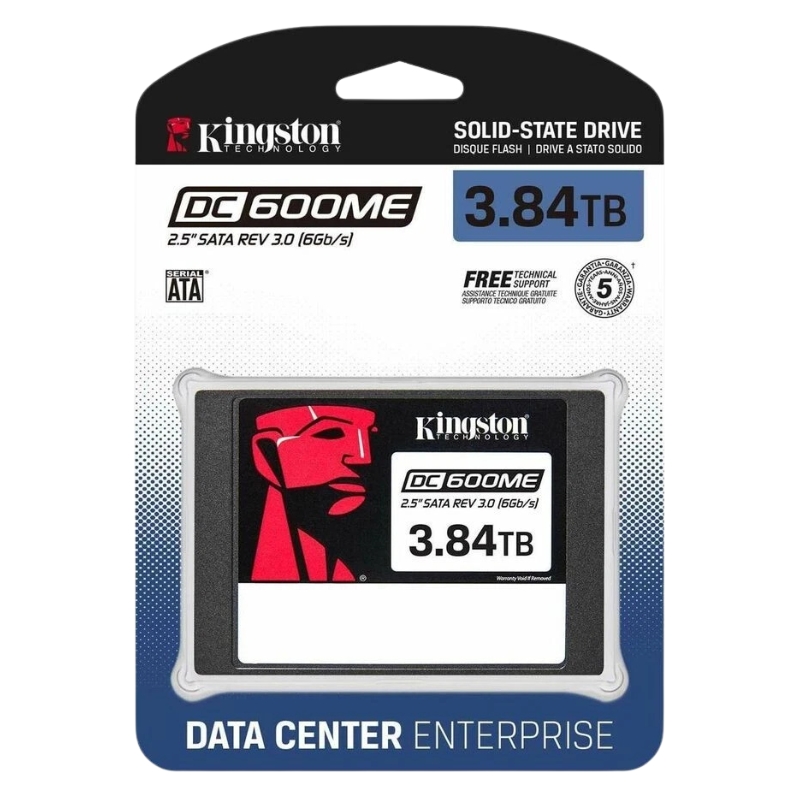
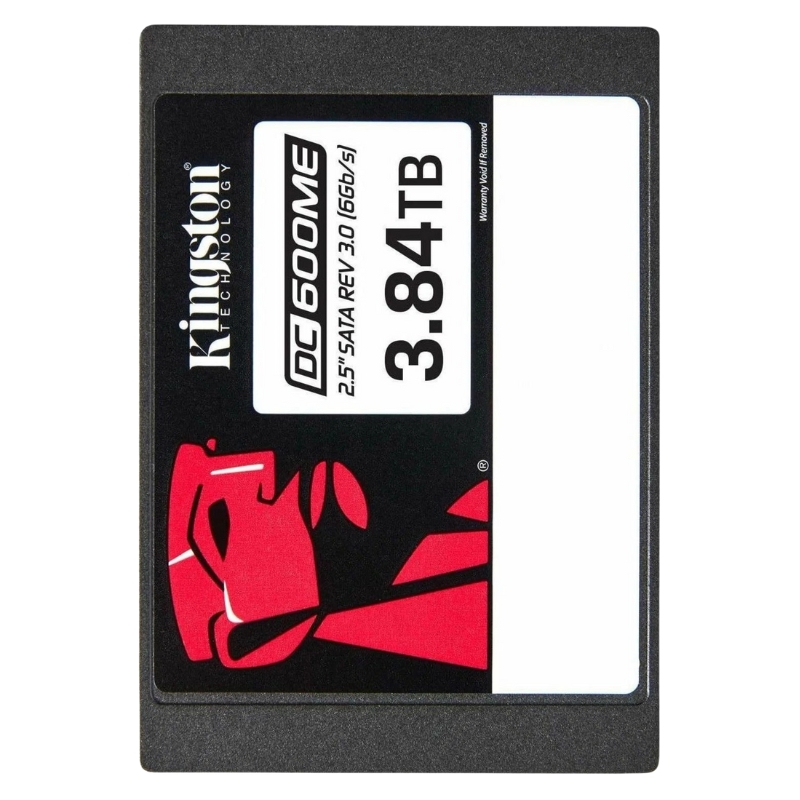
Kingston SEDC600ME/3840G 3.84TB SATA 6GBPS 2.5inch DC600M Mixed Use SSD. New Sealed in Box (NIB) with 3 years Warranty
An in-depth exploration of the features and capabilities of this high-performance enterprise storage solution.
Mixed use SSDs like the Kingston DC600M series are engineered to hit a midpoint between read-intensive and write-intensive drives. The SEDC600ME/3840G 3.84TB model is optimized to handle both random and sequential I/O patterns typical of virtualization, database caching, web servers, and mixed cloud workloads. Expect sustained throughput characteristics suitable for applications that require consistent low-latency access and moderate to high write endurance over the drive’s lifecycle.
The SATA 6Gbps interface ensures broad compatibility with legacy and modern server platforms, HBA cards, and storage arrays. The 2.5" 7mm/9.5mm (depending on chassis variants) form factor provides density and ease of integration in blade, rack, and tower servers. This combination makes the SEDC600ME/3840G ideal where NVMe is unavailable or where SATA's cost-per-GB and interoperability are preferred.
Enterprise category drives typically include features beyond consumer SSDs — higher mean time between failures (MTBF), power-loss data protection, background media management, and enhanced firmware algorithms. The DC600M family is built for continuous operation in datacenter environments; the SEDC600ME/3840G model benefits from these reliability enhancements, yielding predictable uptime and minimized data corruption risk under unexpected power events.
At 3.84TB usable capacity, the SEDC600ME/3840G strikes a pragmatic balance between per-drive capacity and cost efficiency. For large-scale deployments, mixing multiple 3.84TB drives can provide substantial aggregate capacity while preserving performance characteristics for mixed workloads — an important consideration when designing storage tiers for virtualization, VDI, or database acceleration.
The SATA III (6Gbps) interface supports backward compatibility with older SATA controllers while delivering up to ~600 MB/s theoretical transfer rates. In practice, mixed-use drives are tuned to provide consistent performance at this bus limit without saturating I/O with throughput spikes that lead to latency variance.
The standard 2.5-inch form factor ensures the SSD fits a wide range of server trays and storage enclosures. Mounting options and adapter caddies are common, enabling the SEDC600ME/3840G to be used in dense server arrays, converged systems, and external JBODs where hot-swap capability and rack density matter.
Random I/O performance — typically measured with 4KB read/write tests — is crucial for database transactions, virtualization hosts, and metadata-heavy file systems. The SEDC600ME/3840G offers consistent low-latency responses under mixed I/O conditions, supporting many concurrent threads and VMs without incurring high tail latency that could degrade application performance.
Sequential throughput is important for large-file operations such as backups, snapshot migrations, and streaming workloads. While SATA's bus limits will cap peak synthetic throughput, enterprise firmware tuning on the DC600M ensures predictable sustained transfer rates and efficient garbage collection to avoid performance cliffs during long sequential writes.
Ensure firmware compatibility between SATA controllers, RAID/HBA cards, and server firmware. While SATA is broadly interoperable, enterprise environments often run mixed controller firmware levels; compatibility testing and vendor-verified interoperability matrices are recommended for large-scale rollouts.
When used in RAID arrays, consider the rebuild time, RAID-level suitability, and interaction between RAID controller cache settings and the SSD’s power-loss protection features. The DC600M mixed-use drives are commonly used in RAID 5/6/10 configurations; their endurance and consistent performance help reduce rebuild-induced performance degradation.
Firmware plays a critical role in SSD stability. Kingston routinely issues firmware updates to address compatibility, performance, and security issues. IT teams should have a validated firmware management process to stage updates in test environments before wide-scale deployment — especially because firmware updates in enterprise SSDs may require careful scheduling to avoid downtime.
Verify that the operating environment supports TRIM and that garbage collection mechanisms are allowed to run during scheduled maintenance windows. Proper handling of TRIM helps maintain long-term performance by allowing the SSD to reclaim free blocks efficiently.
In dense server deployments, SSD power consumption contributes to rack-level power budgets. Mixed-use SSDs like the DC600M are optimized for efficiency without sacrificing endurance; however, planning for peak power draw during heavy sustained writes and rebuild operations is prudent.
Thermal management impacts both performance and longevity. SSDs under sustained heavy write can warm up; ensure server airflow, drive tray spacing, and chassis cooling are adequate. Monitoring SMART temperature attributes and implementing automated alerts for thermal excursions will help preemptively address overheating risks.
The 2.5" form factor typically supports hot-swap in enterprise chassis. Design your service processes around hot-swap replacement, labeling, and failover to minimize impact during drive failures or upgrades. Kingston’s enterprise drives generally support hot-swap operations when used within compatible server platforms.
Modern enterprise-class SSDs often include hardware encryption, supporting standards like TCG Opal. If data-at-rest encryption is a requirement for compliance or regulatory reasons, verify drive-level encryption capabilities and integration with key management systems (KMS) or self-encrypting drive (SED) workflows.
Hardware-level power-loss protection (PLP) reduces the risk of incomplete writes and metadata corruption during abrupt power failures. For mixed-use enterprise workloads, PLP contributes to data integrity and reduces the chance of needing extensive rebuild or recovery procedures.
SMART attributes provide early indicators of drive health. Integrating SMART telemetry into monitoring stacks (Nagios, Zabbix, Prometheus, or vendor tooling) allows proactive replacement strategies before drives reach failure thresholds. Kingston’s drives typically expose key SMART metrics that should be integrated into any robust monitoring regimen.
Keep a rotating pool of spare SSDs matching the capacity and firmware revision of deployed drives. This minimizes configuration drift during emergency replacements and shortens mean time to repair (MTTR).
Read-intensive SSDs trade write endurance for higher read-centric performance and lower cost-per-GB. Mixed-use drives like the SEDC600ME/3840G offer higher write endurance and firmware tuned for write-heavy bursts — making them better for workloads with significant write pressure.
Write-intensive SSDs provide the highest DWPD and are intended for logging, caching, or transactional workloads with constant heavy writes. While DC600M mixed-use drives are robust, write-intensive drives remain the choice when writes dominate the workload and TCO for frequent replacements is acceptable or planned.
NVMe offers higher raw throughput and lower latency due to the PCIe bus, but SATA mixed-use SSDs like the DC600M remain compelling where legacy infrastructure, cost-per-GB, or controller compatibility dictates. NVMe is ideal for ultra-low-latency, high-concurrency environments; SATA provides a predictable, cost-effective tier with easier interoperability across a wider hardware base.
Calculate TCO by factoring in acquisition cost, expected operational lifespan (based on TBW/DWPD), power and cooling costs, and expected downtime or replacement labor. The SEDC600ME/3840G typically offers an attractive mix of capacity and endurance that can reduce the need for frequent replacements compared to consumer-grade drives, thereby lowering operational overhead.
For large deployments, negotiate volume pricing and consider support contracts that include priority RMA, firmware assistance, and validated interoperability reports. Bundling deployment services and support can simplify lifecycle management and reduce administrative burden during scale-out operations.
Integrate SMART monitoring, set thresholds for critical attributes (percent used, media errors, uncorrectable errors), and automate alerts to operations teams. Proactive replacement before drives cross critical endurance thresholds reduces unplanned downtime.
SSD reliability reduces failure rates, but it does not eliminate the need for backups and replication. Combine SSD deployment with snapshotting, off-host backups, and replication policies that align with RTO/RPO targets. For mission-critical systems, consider geographically distributed replication to protect against site-level failures.
Use the DC600M mixed-use SSDs as a mid-tier between high-performance NVMe cache and high-capacity HDD tiers. Intelligent tiering maximizes cost-efficiency while delivering the performance where it is needed most, such as hot datasets and frequently accessed VM images.


 Contact Us
 Information
 Catalog
 Solid State Drives (SSD)
 Network Switches
 Hard Disk Drives
 HBA & Controllers
 PC & Servers
 PC & Server Memory
 CPU & Processors
 Network Routers
 Power Supplies
 Tape Drives & Libraries
 Network Devices
 Computer & Network Cables