(7% discount is applied at checkout)
Cart is empty
Your go-to destination for cutting-edge server products
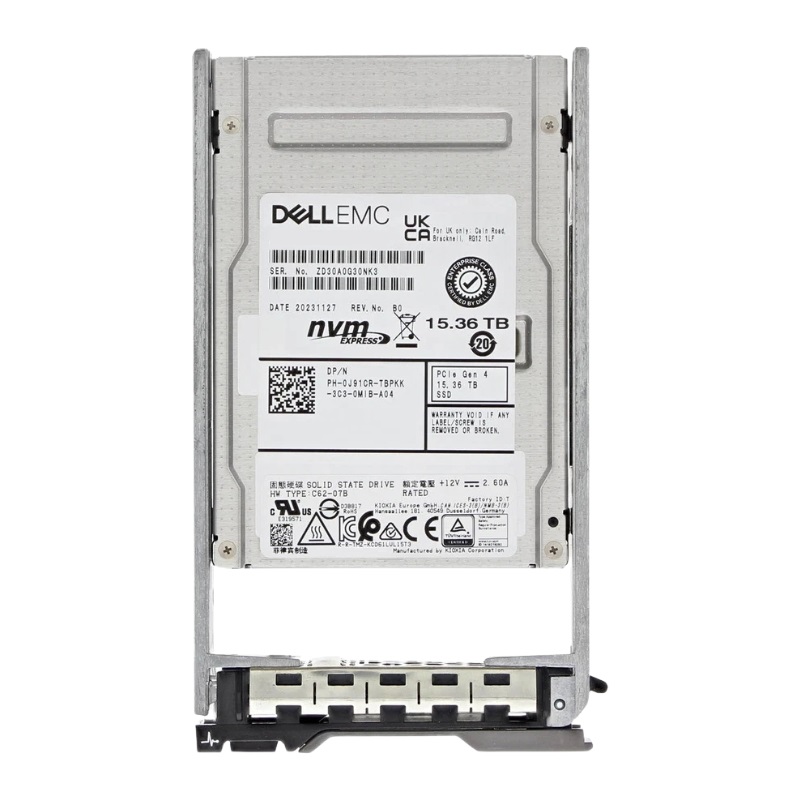


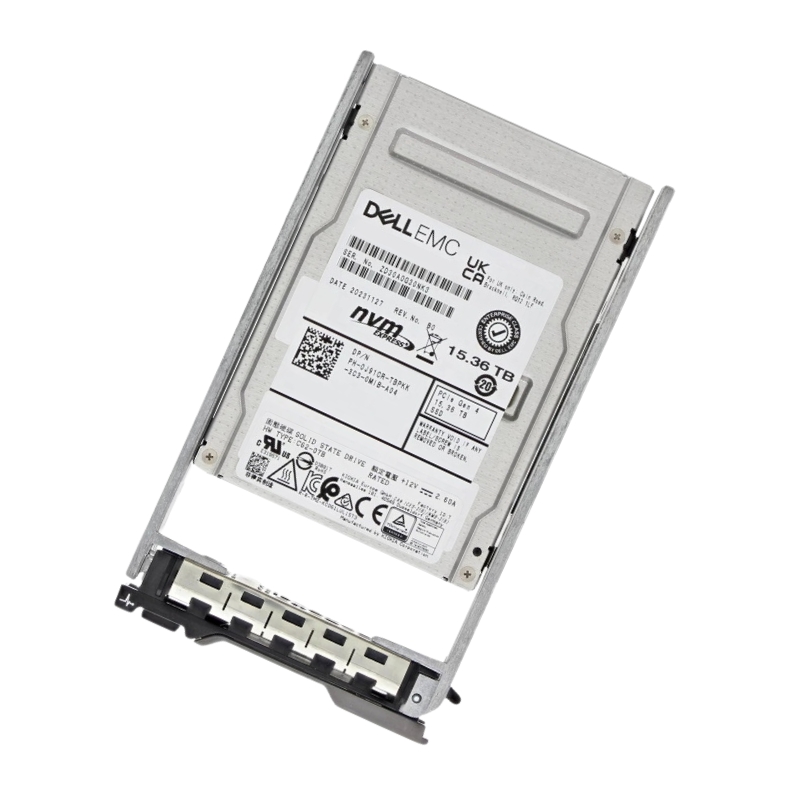
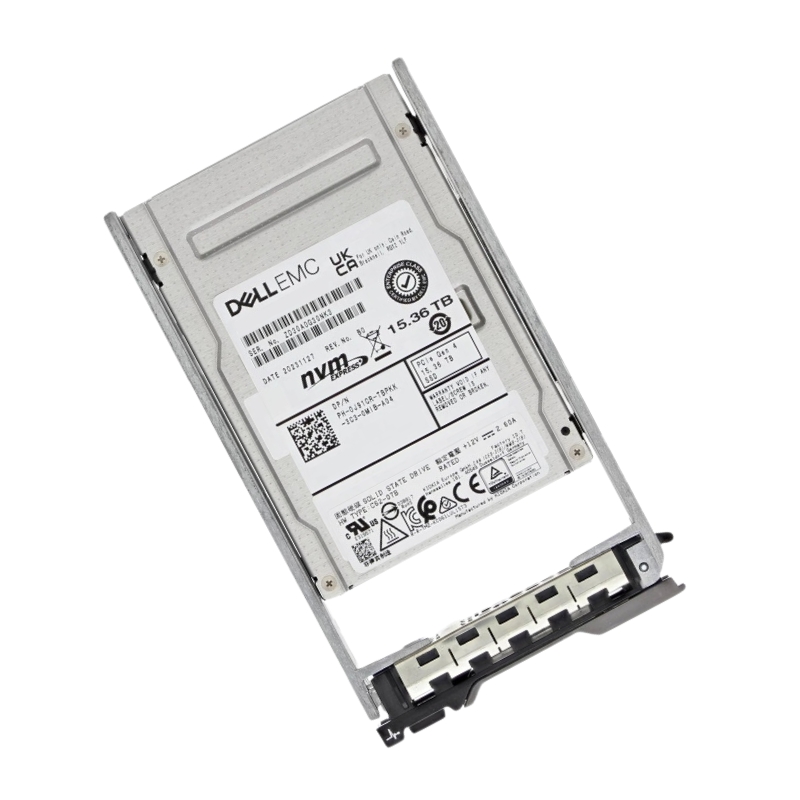
Dell 400-BPMN NVMe 15.36TB PCIe U.2 SFF Gen4 TLC Read Intensive 1Dwpd SSD. New Sealed in Box (NIB) with 1 year Warranty
The Dell 400-BPMN 15.36TB PCIe Gen4 NVMe 2.5-Inch U.2 Read Intensive Solid State Drive is an advanced enterprise-grade storage solution engineered to meet the demands of modern data centers. Designed for compatibility with Dell PowerEdge 14G, 15G, 16G, and 17G servers, this SSD offers ultra-fast performance, reliable data handling, and high efficiency for read-intensive workloads. With its superior build quality and cutting-edge technology, it ensures optimized performance in mission-critical environments.
Built with PCIe Gen4 technology, the Dell 400-BPMN delivers exceptional throughput, low latency, and consistent response times. Its 3D TLC NAND architecture enhances efficiency while maintaining durability, making it ideal for applications such as online transaction processing, data analytics, virtualization, and cloud computing.
The U.2 2.5-Inch form factor combines compact size with enterprise-level endurance, making it suitable for high-density storage solutions. The drive’s PCIe Gen4 NVMe interface ensures superior bandwidth compared to SATA and earlier PCIe generations, providing the scalability required by modern applications.
Virtualized infrastructures and cloud applications require consistent performance. The Dell 400-BPMN is engineered to maintain stability under heavy I/O operations, ensuring smooth and predictable results.
The drive integrates seamlessly with Dell PowerEdge servers across multiple generations, ensuring straightforward installation and management. This reduces downtime and allows IT teams to focus on strategic tasks rather than maintenance.
Dell enterprise solid state drives are extensively tested and validated for reliability, endurance, and performance. With enterprise-level firmware and robust error correction, these drives minimize downtime and provide secure, uninterrupted operation for businesses requiring dependable data storage.
Perfect for high-volume environments where reliability and speed are essential.
Enables rapid scaling and efficient workload handling in shared cloud infrastructures.
Provides faster query processing and improved VM density for IT environments.
Ensures smooth streaming and fast content retrieval for digital services.
The Dell 400-BPMN 15.36TB NVMe U.2 SFF Gen4 PCIe Read Intensive TLC 1Dwpd SSD is engineered to deliver uncompromising performance, superior scalability, and exceptional reliability for demanding enterprise workloads. With an enormous storage capacity of 15.36 terabytes, this solid-state drive is specifically tailored to handle intensive read-focused applications while ensuring optimized endurance with its 1 Drive Write Per Day (DWPD) rating. Built with advanced TLC NAND flash and leveraging the PCIe Gen4 interface, it provides significantly faster data transfer rates compared to previous generations, ensuring seamless data processing, minimal latency, and improved input/output operations per second (IOPS).
Offering a vast 15.36TB of storage, the Dell 400-BPMN is designed to accommodate the ever-growing demand for massive data storage in modern enterprises. It is particularly suitable for organizations managing large-scale databases, virtualization environments, and cloud-centric infrastructures. The drive ensures that businesses can consolidate workloads efficiently, reducing the number of drives required while lowering total cost of ownership (TCO).
Utilizing the NVMe U.2 interface with PCIe Gen4 technology, the Dell 400-BPMN SSD guarantees faster sequential read and write speeds, significantly improving server responsiveness. With up to double the throughput compared to PCIe Gen3, it helps accelerate mission-critical applications, reduce latency, and ensure stable bandwidth for intensive data transactions.
The integration of PCIe Gen4 ensures a streamlined pathway between the server CPU and the storage device. This advancement results in reduced data bottlenecks, allowing IT departments to run high-demand workloads such as artificial intelligence, machine learning, and virtualization clusters without performance interruptions.
This SSD is classified as "Read Intensive," making it an optimal choice for workloads that predominantly involve frequent data retrieval rather than continuous heavy writing. With an endurance level of 1 DWPD, the Dell 400-BPMN is perfect for applications like content delivery networks, media streaming, cloud storage services, and other large-scale data consumption workloads where reading far outweighs writing.
With its 1 Drive Write Per Day endurance rating, the Dell 400-BPMN ensures durability and dependability under sustained workloads. This endurance level signifies that the drive can handle complete overwriting of its total storage capacity once daily throughout its warranted lifespan. For organizations running read-intensive workloads, this endurance specification strikes the perfect balance between reliability, cost-effectiveness, and performance.
Backed by Dell’s enterprise-class validation, the 400-BPMN SSD undergoes rigorous testing for compatibility, resilience, and stability. It incorporates advanced error correction codes (ECC), power-loss protection mechanisms, and thermal throttling management to ensure optimal reliability in diverse environments. Businesses can trust it for uninterrupted data access and reduced risks of data corruption or downtime.
This SSD leverages Triple-Level Cell (TLC) NAND technology, which strikes a balance between capacity, endurance, and performance. TLC flash is particularly well-suited for read-intensive tasks, providing excellent cost efficiency without compromising significantly on speed. By adopting TLC NAND, the Dell 400-BPMN delivers large storage volumes while maintaining affordability and enterprise-level resilience.
Featuring the U.2 Small Form Factor (SFF) design, the Dell 400-BPMN is compatible with a wide range of enterprise servers and storage arrays. This hot-swappable design ensures easy deployment, replacement, and scalability within rack-mounted infrastructures, minimizing downtime during maintenance or upgrades.
U.2 drives are increasingly preferred in enterprise data centers due to their efficient balance of performance, compatibility, and thermal management. The Dell 400-BPMN's U.2 form factor provides straightforward integration with existing infrastructure while enabling future upgrades without requiring significant hardware changes.
Security is a cornerstone of enterprise storage solutions, and the Dell 400-BPMN integrates multiple safeguards to ensure data integrity. These features include end-to-end data path protection, advanced error detection, power-loss safeguard mechanisms, and optional hardware-based encryption support. Collectively, these security measures strengthen business continuity by preventing data corruption, unauthorized access, and loss during unexpected power outages.
The Dell 400-BPMN SSD is validated for use with a wide array of Dell PowerEdge servers, ensuring seamless compatibility and optimized system integration. Whether deployed in rack, tower, or blade server environments, this SSD maintains consistent performance and reliability, aligning perfectly with Dell’s end-to-end enterprise solutions.
This SSD can be effectively deployed across various industries and use cases, particularly where read-intensive data demands dominate. From large-scale analytics to virtualized infrastructures, its versatility makes it a go-to choice for enterprises striving to scale without performance bottlenecks.


 Contact Us
 Information
 Catalog
 Solid State Drives (SSD)
 Network Switches
 Hard Disk Drives
 HBA & Controllers
 PC & Servers
 PC & Server Memory
 CPU & Processors
 Network Routers
 Power Supplies
 Tape Drives & Libraries
 Network Devices
 Computer & Network Cables