(7% discount is applied at checkout)
Cart is empty
Your go-to destination for cutting-edge server products
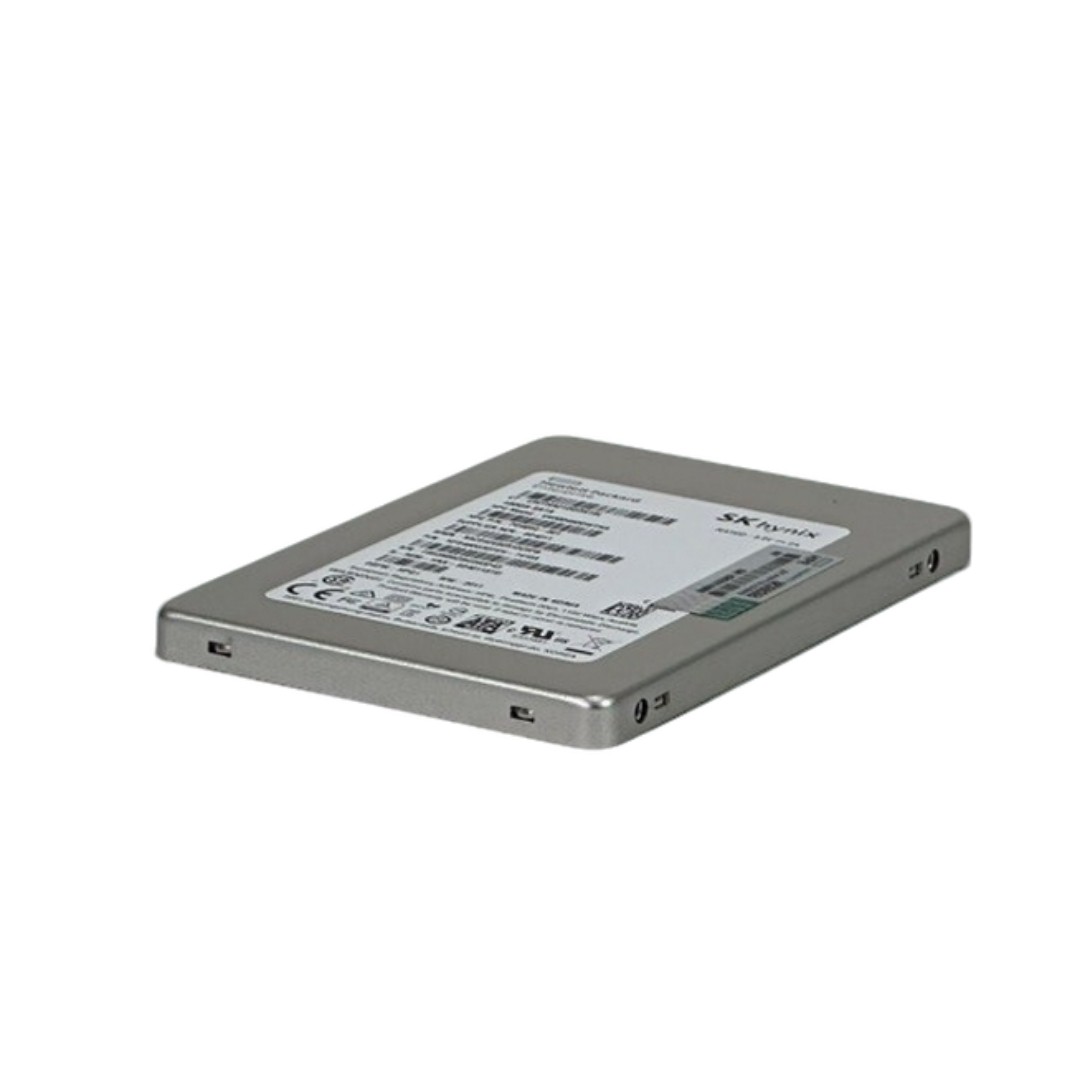


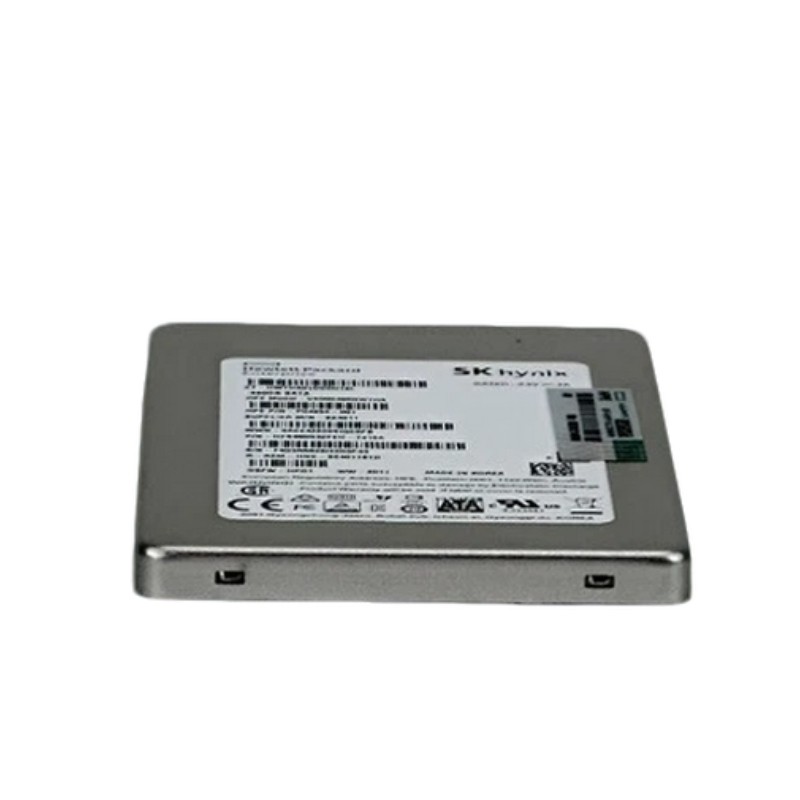
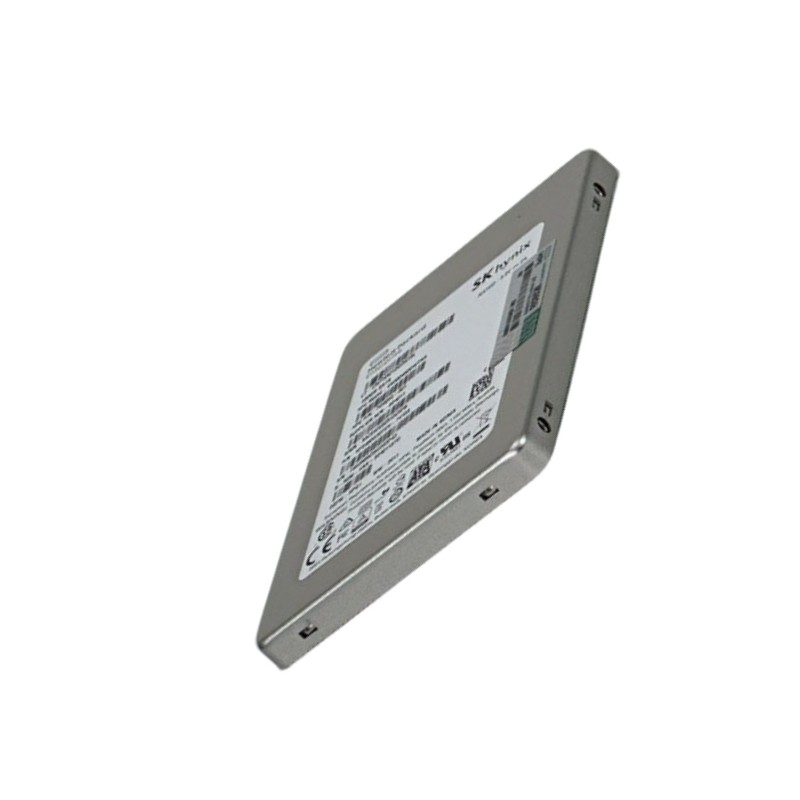
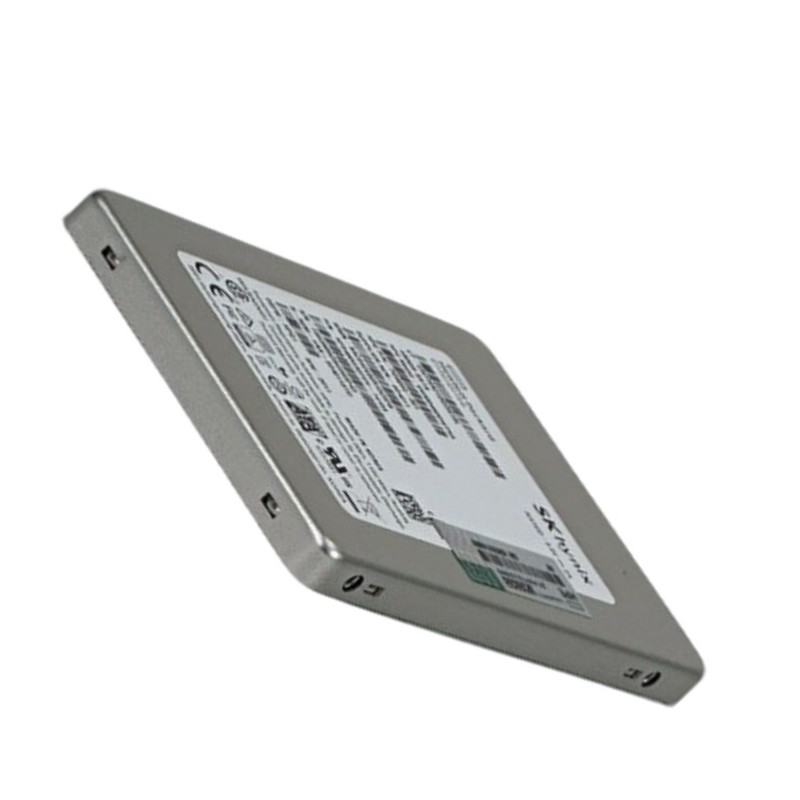
Hynix HFS480GDC8X099N PM8110 480GB M.2 2280 PCI-Express 3.0 X4 NVME Read Intensive TLC Enterprise Internal SSD. Excellent Refurbished with 1 year replacement warranty - Dell Version
Tailored for modern systems requiring rapid access and efficient storage, the SK Hynix PM8110 HFS480GDC8X099N is a high-performance internal SSD built on PCIe 3.0 x4 architecture. With advanced 96-layer 4D TLC NAND technology, this M.2 2280 drive delivers robust throughput and reliability for both consumer and enterprise applications.
INTEL P4326 15.36TB NVMe RULER SSD — ultra-dense, capacity-optimized NVMe category
The INTEL P4326 15.36TB NVMe RULER (SSDPEXNV153T8D) represents a class of ultra-high capacity NVMe solid-state drives engineered for hyperscale cloud providers, large enterprise storage clusters, and OEMs building compact, high-density storage nodes. These ruler/EDSFF-style modules deliver very high raw TB-per-slot while retaining NVMe protocol advantages — low latency, parallel queueing, and efficient CPU utilization — making them ideal for warm or nearline storage tiers, object payload pools, and backup/rapid-restore targets where access speed matters but per-device capacity must be maximized.
Ruler-class NVMe drives compress petabyte-scale storage into far fewer chassis and racks. The business justification is straightforward: fewer backplane ports, fewer controllers, lower cabling complexity, and reduced service overhead — all while improving restore times and random read latency compared with HDD-only cold tiers. This category is intentionally tuned for workload patterns that are read-dominant or write-modest, where QLC/TLC high density and firmware optimizations deliver the lowest watts/TB and better space efficiency.
Although "ruler" is the colloquial term, implementations vary (EDSFF E1.L, vendor sleds, U.2 derivatives). The extended PCB spreads NAND packages along the drive length to increase capacity while enabling improved thermal dissipation across the surface; chassis designers pair these modules with ducts and baffles to maintain consistent CFM across the sled. Integrators must validate sled fitment, connector mating, and server vendor compatibility matrices to avoid link-train or power profile mismatches in production.
Design validation should include sustained-load thermal mapping: intake vs exhaust deltas, per-drive thermistor trends, and throttle thresholds. Because ruler modules contain many NAND packages, a small increase in ambient temperature or a blockage in ducting can trigger thermal management that reduces throughput and raises tail latencies; planned airflow headroom is critical for predictable QoS.
Best practice is to standardize on tool-less sleds with clear slot IDs, QR codes for inventory, and a documented hot-swap SOP that includes controller rescan and telemetry verification. Keep a spare pool sized to your erasure-coding and rebuild policy so rebuilds do not compromise cluster performance. :contentReference[oaicite:3]{index=3}
Capacity-optimized NVMe drives typically choose high-density NAND (QLC or high-stack TLC in different SKUs) combined with controllers tuned for steady-state throughput and background maintenance. The P4326 family emphasizes predictable behavior under long sequential reads and large parallel scan workloads rather than aggressive small-random write endurance. Endurance figures and DWPD/TBW ratings vary by exact SKU and firmware revision; always check the specific datasheet for warranty and TBW metrics before large rollouts.
Many high-capacity drives include an SLC cache to accelerate bursts of writes. Architects and benchmarkers must measure steady-state performance after cache saturation to understand real sustained write rates and plan ingestion/destaging layers accordingly. For ingest-heavy architectures, pairing a small high-DWPD NVMe tier for immediate writes and later destaging to P4326 capacity pools preserves endurance and latency SLAs.
For S3-compatible clusters, ruler modules act as the primary object payload layer: large objects are stored on capacity NVMe while small objects and metadata stay on faster mixed-use media. Erasure coding ratios (e.g., 8+2, 6+3) determine usable capacity and rebuild impacts; the higher the stripe width the fewer drives you need, but longer rebuilds are possible if the network or compute resources are limited.
Backup appliances and snapshot repositories that require fast restores get big wins from NVMe capacity tiers: sequential restore speed and low seek overhead reduce RTO significantly vs HDD pools. When combined with deduplication/compression appliances the effective protected capacity can be much larger than raw TB, making rulers a pragmatic choice for space- and time-sensitive recovery objectives.
Scan-heavy analytics (large sequential reads, distributed queries) benefits from high aggregate throughput. For interactive analytics, combine P4326 capacity nodes with a small latency-optimized NVMe cache tier to keep query tail latency low while scanning petabyte datasets quickly.
Pilot against a representative subset of data and nodes. Automate acceptance tests (SMART baseline, steady-state write soak, throughput checks) and gate fleet admission on telemetry health. Roll out firmware updates in staged waves, maintain rollback packages, and ensure your monitoring collects vendor-specific health attributes for predictive alerts.
For high-concurrency workloads, tune NVMe submission/completion queues per CPU core and bind IO threads to local NUMA nodes. Increasing queue depth raises throughput but can increase tail latency; monitor CPU overhead and percentile latencies to find the operational sweet spot.
Use filesystems well-tested with NVMe at scale (XFS, tuned ext4) and consider application-level direct IO (O_DIRECT) where the app manages caching. For erasure-coded storage, align RAID/erasure stripe size to the expected large-block IO patterns to reduce read amplification during common access patterns.
When compliance requires encrypted data-at-rest, choose SED (self-encrypting drive) variants and integrate with a key management system (KMIP, cloud KMS). Ensure secure erase procedures are documented for RMA and decommissioning workflows.
Aggregate vendor telemetry and SMART attributes into your observability platform. Trending wear, spare count, uncorrectable error counts, and temperature over time lets you schedule proactive replacements before performance is affected. Integrate with runbooks that map telemetry thresholds to replacement SLAs.
Evaluate ruler NVMe against HDD and smaller NVMe fleets using all-in TCO: chassis and backplane costs, power and cooling, NIC/CPU overhead for rebuilds, operational labor, and spare inventory. Ruler devices often win on operational simplicity, faster rebuilds, and lower watts/TB despite sometimes higher raw $/TB. Include patching and lifecycle management costs when comparing alternatives.
Confirm device TBW/DWPD and warranty terms; large data centers should negotiate RMA and firmware support. Because high-capacity NVMe SKUs may be rebranded or supplied through OEM channels, track part numbers carefully and confirm long-term availability or acceptable successor SKUs before committing at scale.
The Hynix PM8110 family (HFS480GDC8X099N) represents a category of compact, enterprise-grade M.2 NVMe SSDs optimized for PCIe 3.0 x4 hosts. These 480GB modules are commonly used as boot drives, OS volumes, metadata stores, and read-intensive cache layers in servers, appliances, and edge nodes. They combine enterprise firmware, TLC NAND, and efficient power profiles to deliver consistent latency, predictable steady-state behavior, and a small physical footprint that frees front bays for larger capacity devices. Representative vendor listings and OEM part references indicate this SKU is widely available as a Dell/SK Hynix/OEM part with Gen3 x4 NVMe performance and enterprise telemetry features.
M.2 NVMe modules like the HFS480GDC8X099N excel where serviceability and density tradeoffs favor direct motherboard slots over hot-swap front bays. Their small size and high bandwidth are ideal for fast boot, local caches, and componentized appliances. This category is especially practical in hyperconverged appliances, compact edge servers, and systems where minimizing cabling and backplane complexity is a priority.
M.2 modules depend on heatsinks and directed chassis airflow because they lack the mass and plate cooling of 2.5-inch drives. Install with appropriate heatsink plates or verify vendor-provided shrouds that channel flow across the module. On motherboards where two M.2 slots share lanes, confirm lane bifurcation behavior and negotiated speed to avoid unexpected link downs or reduced throughput.
Although M.2 is not typically hot-swappable, the category remains simple to service: a single screw removal and insert. For critical systems, mirror the boot volume or use a redundant M.2 pair to allow replacement without downtime. Keep spares in ESD-safe pouches and document site procedures for on-leg replacements and re-synchronization after swap.
PCIe 3.0 x4 provides ample bandwidth for most boot, cache, and metadata tasks. The Hynix PM8110 series emphasizes predictable random read IOPS and low latency at practical queue depths rather than chasing extreme synthetic sequential peaks. For workloads that need very high sequential throughput, system integrators may opt for Gen4 parts; however, many server OEMs and appliances standardize on Gen3 M.2 for stability and broad platform compatibility.
TLC NAND commonly uses an SLC cache to accelerate bursts. For continuous sustained writes above cache capacity, test steady-state performance to understand write throughput and potential thermal throttling. For read-heavy caches and OS volumes, SLC cache behavior typically improves perceived performance without materially impacting endurance.
Deploy these M.2 modules as primary boot volumes to shorten startup and patch windows, reducing operational time during mass updates or reimaging events. Mirror boot volumes in RAID1 or rely on network-based recovery if zero downtime is required during replacement.
Use HFS480GDC8X099N as a local cache for object gateways, package registries, and artifact stores; it delivers fast cache hits and quick warm-up times after restarts. When paired with cache eviction policies tuned to working set size, these drives boost application responsiveness significantly.
Edge nodes and security appliances with limited bay space use M.2 for fast local storage. VDI hosts can host OS images or read-optimized replicas on these modules to accelerate boot storms and reduce front-bay pressure for VM datastores.
Enterprise M.2 modules expose SMART attributes and vendor telemetry (media health, spare blocks, temperature). Collect these into your central monitoring plane to trigger proactive replacements and schedule maintenance before failures impact operations.
If compliance requires encryption at rest, verify SED support on the purchased SKUs and integrate key management procedures. Use crypto-erase and documented secure-erase steps before returning or repurposing modules to ensure data removal.
Review TBW/DWPD and OEM warranty terms carefully. Some SKUs sourced as OEM (Dell, HPE) may have differing warranty coverage from retail SKUs; align procurement sources with support expectations and RMA SLAs. Maintain an accurate CMDB with firmware versions and part numbers for fleet governance.
Stock a modest number of spares per site, especially for remote or edge locations, to minimize mean time to repair. For enterprise deployment, pre-stage spares with configuration labels and verification firmware to speed replacement.
Gen3 x4 modules like PM8110 give excellent value and wide compatibility; Gen4 and U.2/U.3 provide higher bandwidth or hot-swap serviceability. Choose M.2 Gen3 when platform compatibility, lower per-unit cost, and boot/caching roles are primary; choose Gen4 or front-bay NVMe when you need sustained multi-GB/s streaming or hot-swap convenience.
Select RI class for workloads where reads dominate and write churn is predictable and modest. Use mixed-use for general purpose server workloads with balanced IO, and WI when logs, databases, or sustained ingest are heavy and endurance needs are high. The Hynix PM8110 family is commonly positioned in the RI to mixed-use boundary depending on model variant and firmware.
For a balanced, high-performance cluster: use Hynix PM8110 M.2 modules for OS, control plane, and local caches (fast boots, local artifact caches); deploy INTEL P4326 ruler drives in front bays for dense capacity and fast payload streaming. Use a small mixed-use NVMe tier for write absorb and journaling, then destage to the ruler capacity pool for long-term retention. This pattern preserves low-latency control-plane operations while achieving high TB density for bulk data.
Edge nodes with PM8110 modules serve local users quickly and synchronize hot segments to a core of P4326-based capacity nodes. This reduces WAN backhaul and concentrates heavy management in the core data center where operator staff and spare inventory are centralized.


 Contact Us
 Information
 Catalog
 Solid State Drives (SSD)
 Network Switches
 Hard Disk Drives
 HBA & Controllers
 PC & Servers
 PC & Server Memory
 CPU & Processors
 Network Routers
 Power Supplies
 Tape Drives & Libraries
 Network Devices
 Computer & Network Cables