(7% discount is applied at checkout)
Cart is empty
Your go-to destination for cutting-edge server products
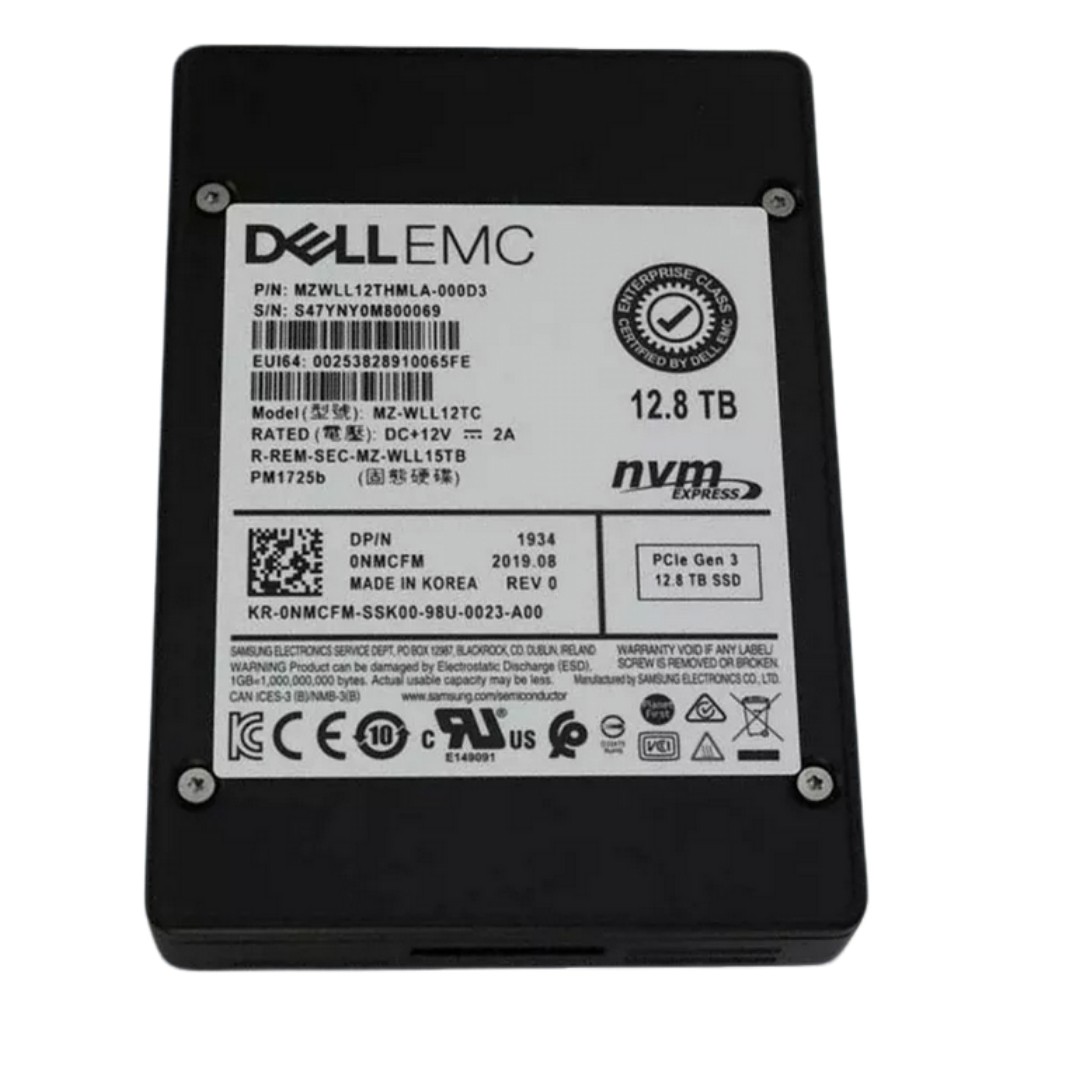


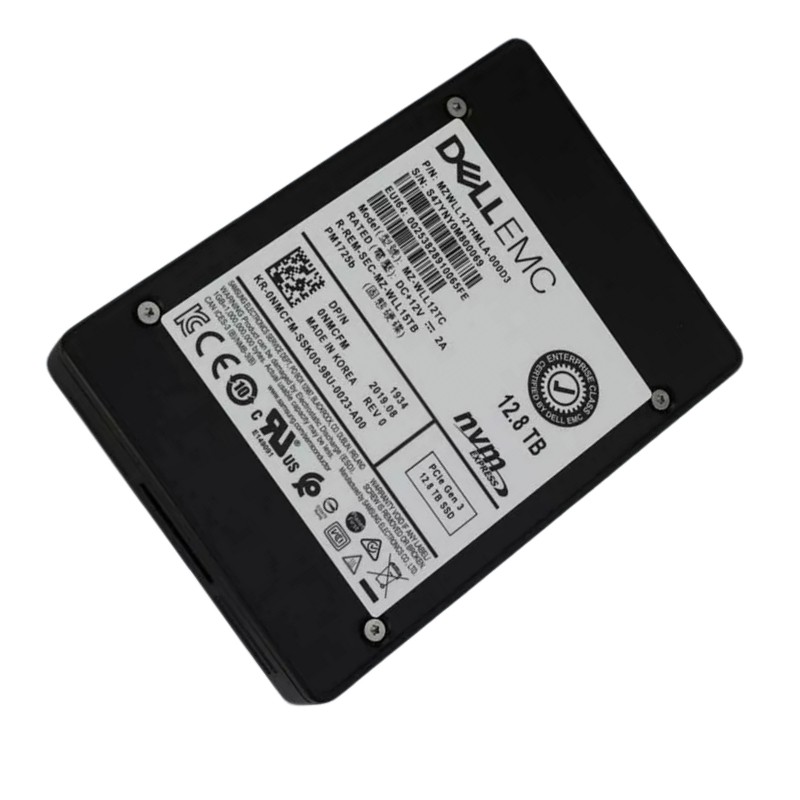
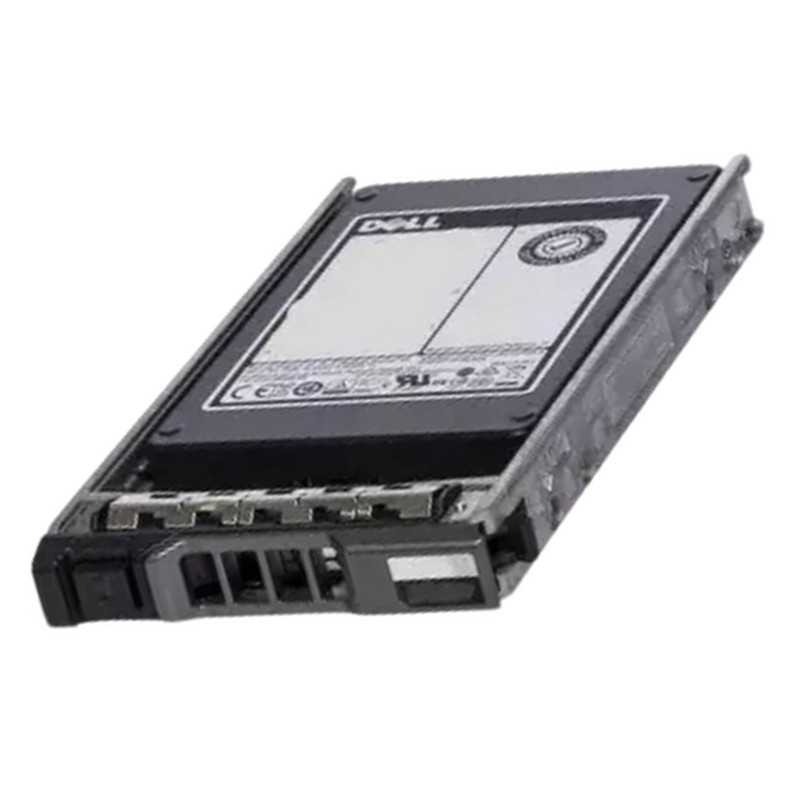
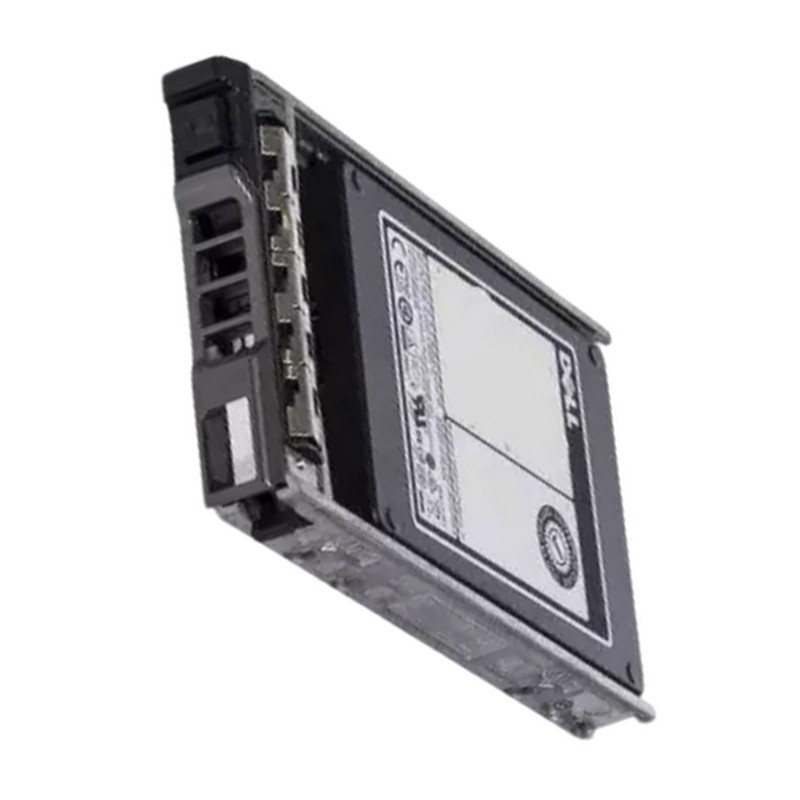
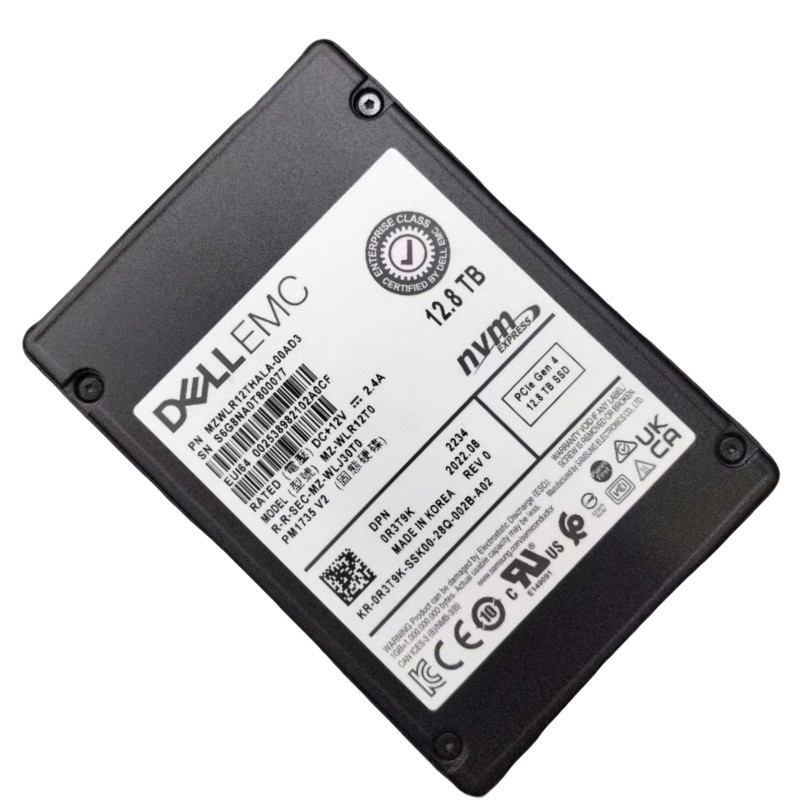
Dell HM7M3 12.8TB Mixed Use 2.5inch PCI-Express 4.0 X4 NVME Sie BICS Flash TLC Enterprise Internal Solid State Drive. New Sealed in Box (NIB) with 1 year Replacement Warranty
Engineered for demanding data environments, the Dell CM6 Series HM7M3 solid-state drive offers an impressive 12.8TB of storage capacity. Built with BiCS TLC NAND and PCIe 4.0 x4 interface, this 2.5-inch internal SSD delivers exceptional speed, reliability, and endurance for mission-critical workloads.
INTEL P4326 15.36TB NVMe RULER (SSDPEXNV153T8D) — category overview and strategic placement
The INTEL P4326 15.36TB NVMe RULER (SSDPEXNV153T8D) is representative of an enterprise capacity-optimized NVMe category that prioritizes terabytes-per-slot density, low watts-per-TB and NVMe-class access semantics over peak small-block write endurance. Ruler (EDSFF/E1.L-style) modules such as this are engineered to shrink the physical footprint of large-capacity pools — consolidating raw capacity into far fewer U, simplifying cabling and reducing management overhead — while still delivering the low-latency random and very high sequential read throughput required by warm/nearline tiers like object payloads, data-lake bodies and fast restore repositories.
Ruler drives spread NAND and controller components across an elongated PCB (E1.L or vendor sled variants). This geometry both enables very high capacity in a single device and changes thermal engineering: the extended surface area favors heat spreading, but consistent laminar airflow across the entire length is critical to avoid hotspots and thermal throttling. Chassis designers must validate blind-mate connectors, sled latch mechanics, and per-slot thermistor placement. In practice, successful ruler deployments are those where sled design, ducting and fan curves are co-validated with the drives under realistic steady-state workloads.
Standardize on service sleds with clear human-readable IDs and QR codes linked to your CMDB. Maintain spare pools sized for your erasure-code stripe and rebuild policies; because each ruler contains a large chunk of node capacity, keeping hot spares reduces risk during rebuild windows. Also document secure-erase and RMA workflows for compliance and simplified decommissioning.
To achieve 15.36TB in a single module these drives typically use high-density QLC/TLC NAND (depending on SKU) and controllers whose firmware is tuned to prioritize steady-state sequential reads, background garbage collection that minimizes latency impact and metadata integrity (power-loss protection). The tradeoff is lower DWPD/TBW compared with write-intensive SSDs; this is acceptable for warm/nearline workloads but requires architects to model write amplification from erasure coding and rebuilds and to plan refresh cadence accordingly. When evaluating P4326-class drives, verify published TBW figures and match them to your projected host writes including rebuild amplification.
Most capacity-optimized NVMe modules implement a dynamic SLC cache to absorb burst writes. Short, cache-resident synthetic benchmarks thus overstate sustained write throughput. Always run steady-state tests that deliberately flush SLC regions and record p50/p95/p99/p99.9 latencies and sustained MB/s to capture realistic operational performance for your workload traces.
In object-storage clusters the standard practice is to place small objects and metadata on a fast mixed-use tier while committing large object bodies to a capacity tier composed of ruler NVMe modules. This reduces the number of drives per pod and shortens object GET and restore latencies relative to HDD-only payloads. Erasure coding (e.g., 6+3 or 8+2) must be tuned for strike between usable capacity and rebuild cost: a wider stripe increases capacity efficiency but may lengthen rebuild windows if network or CPU are constrained.
Backup repositories that need fast restores gain from ruler NVMe’s sequential throughput. Paired with dedupe and compression upstream, the effective stored data per TB increases and restores become dramatically faster than HDD alternatives. For appliances and service-levels that emphasize RTO, ruler NVMe can deliver clear SLA advantages.
Scan-heavy analytical workflows (parallel reads across columnar files) exploit the high sequential throughput and distributed parallelism offered by NVMe rulers. For interactive queries that rely on low tail-latency access to small indexes, combine a small low-latency NVMe tier with the ruler capacity tier to keep user-facing latencies low while enabling rapid scans across the lake.
The Dell HM7M3 12.8TB Mixed Use 2.5-inch PCIe 4.0 x4 NVMe SSD is an OEM-labeled member of the mixed-use enterprise NVMe category (12.8TB class) that balances performance, moderate to high write endurance and hot-swap serviceability in the common U.3 / 2.5" server bay format. OEM labels such as HM7M3 frequently map to underlying vendor platforms (for example, Kioxia/Toshiba or similar CM6/CM6-V series parts) that are built on PCIe 4.0 and enterprise TLC NAND. These drives are widely chosen for VM datastores, mixed OLTP/OLAP database nodes, cache fronts and front-end tiers where both high bandwidth and meaningful endurance are required.
Mixed-use NVMe combines the low-latency performance of NVMe with endurance levels that support sustained read/write workloads—making it a true multi-purpose workhorse in enterprise environments. The 12.8TB capacity point hits a practical sweet spot: enough capacity for several VMs, large datasets or replica nodes while still being replaceable and field-serviceable in front-bay U.3 chassis. For organizations that prefer hot-swap serviceability and proven 2.5" bay ecosystems, the Dell HM7M3 and its referenced vendor equivalents provide a strong balance of performance, $/GB and operational convenience.
Many 12.8TB mixed-use enterprise SSDs are built on 96-layer (or similar) 3D TLC NAND with controllers supporting PCIe 4.0 x4 and NVMe 1.4. This combination yields very high sequential throughput, strong random read IOPS and significant random-write capability (often quoted in the hundreds of thousands of IOPS for reads and tens to hundreds of thousands for writes depending on QD). The CM6 family, which commonly appears under OEM labels similar to the HM7M3, is specified for high mixed-use workloads and is designed to deliver up to ~1.4M random read IOPS and up to ~350K random write IOPS on some SKUs at specified conditions, with endurance typically in the 3 DWPD class for mixed-use variants. Always confirm the precise OEM part’s datasheet for exact TBW/DWPD figures before procurement.
The 2.5" U.3 form factor offers hot-swap convenience, mature caddy ecosystems and straightforward field replacement procedures — advantages in datacenters and distributed sites where technician time is a material cost. 15mm U.3 variants permit higher NAND counts (12.8TB) while remaining mechanically compatible with most enterprise backplanes. They simplify spare management compared to board-mounted alternatives like M.2.
Use the HM7M3-class drives as primary datastores for VM hosts or VDI image repositories where both read concurrency and reasonable write endurance are required. For VDI boot storms, ensure sufficient aggregate network and host CPU to support parallelism, and tune queue depths and NUMA affinity to avoid cross-socket penalties.
For mixed OLTP or mixed workloads, 12.8TB mixed-use drives give databases room for data and indexes while providing endurance adequate for substantial daily writes. If extremely high sustained write volumes are expected, allocate high-DWPD log devices to protect mainstore endurance.
Edge and CDN origins benefit from the balance of high read throughput and hot-swap replaceability. The Dell OEM labeling allows easy sourcing and replacement in fleets standardized on Dell chassis and backplanes. Maintain per-site spare pools sized to expected failure rates for remote PoPs.
Both categories play complementary roles in a multi-tier NVMe architecture. A recommended three-tier model is:
Writes are initially journaled on a high-DWPD tier to protect endurance; hot metadata and small indexes are served from Tier 0 for low-latency access; hot datasets and VMs live on Tier 1 (HM7M3 class); cold objects and backup payloads are compacted and destaged to Tier 2 (P4326 rulers) during off-peak windows. This pattern reduces rebuild complexity, preserves endurance across the fleet, and keeps RTOs for restored data low because the capacity tier remains NVMe-accessible.


 Contact Us
 Information
 Catalog
 Solid State Drives (SSD)
 Network Switches
 Hard Disk Drives
 HBA & Controllers
 PC & Servers
 PC & Server Memory
 CPU & Processors
 Network Routers
 Power Supplies
 Tape Drives & Libraries
 Network Devices
 Computer & Network Cables