(7% discount is applied at checkout)
Cart is empty
Your go-to destination for cutting-edge server products
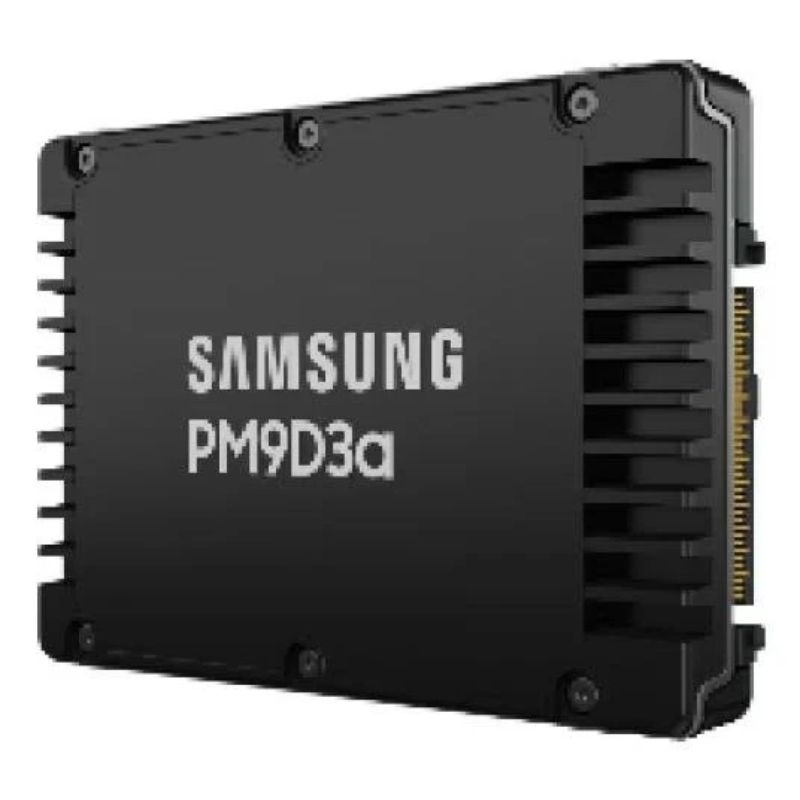


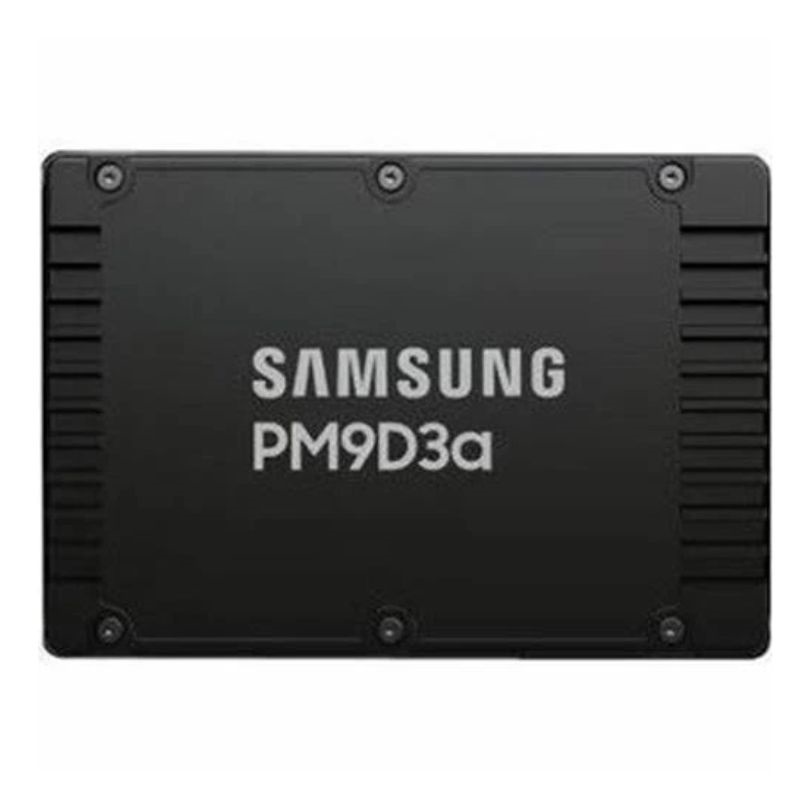
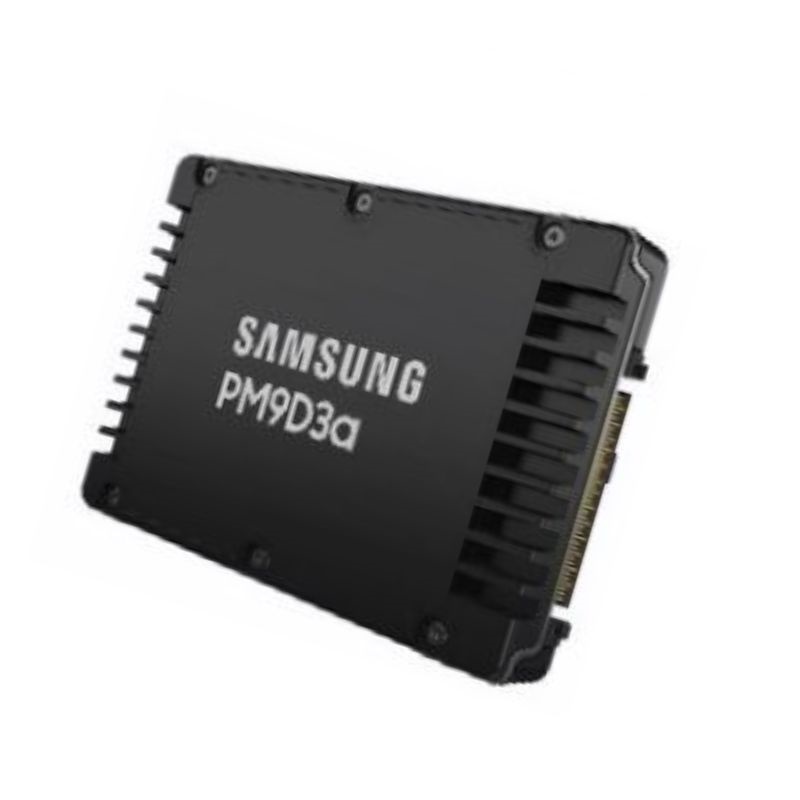
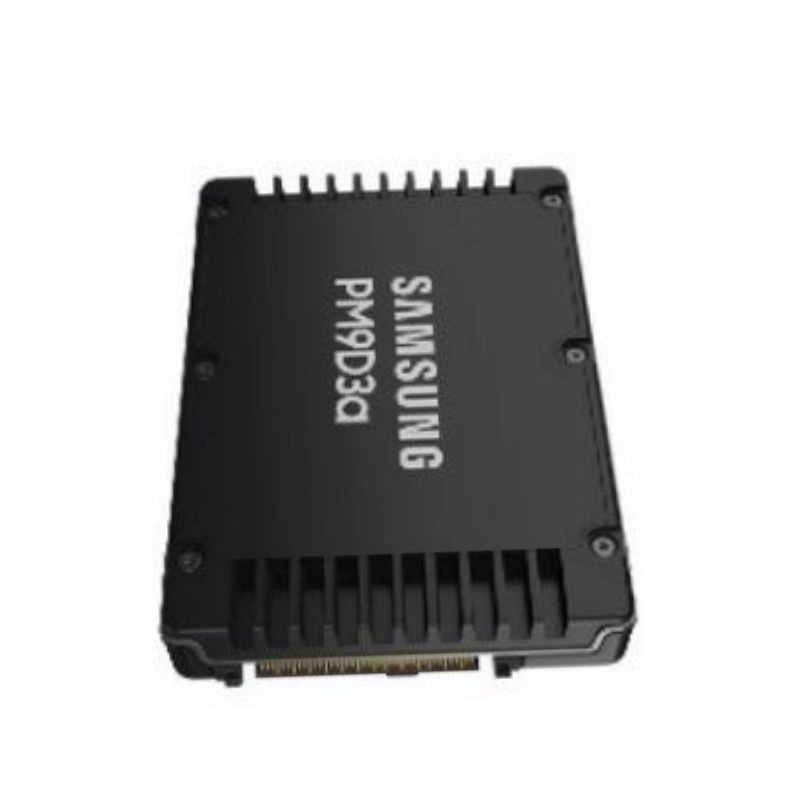
Samsung MZWL63T8HFLT-00BW7 3.84TB PCI-E5.0 X4 NVMe Internal Solid State Drive. New Sealed in Box (NIB) with 3 Years Warranty.
The Samsung PM9D3a 3.84TB PCIe 5.0 x4 2.5-inch Internal Solid State Drive is a high-performance enterprise-grade storage device designed to deliver next-level speed, reliability, and efficiency for demanding workloads. With its cutting-edge PCIe 5.0 interface, this SSD ensures lightning-fast data transfers, exceptional durability, and optimized performance across a wide range of applications such as servers, artificial intelligence, cloud computing, and data-intensive operations.
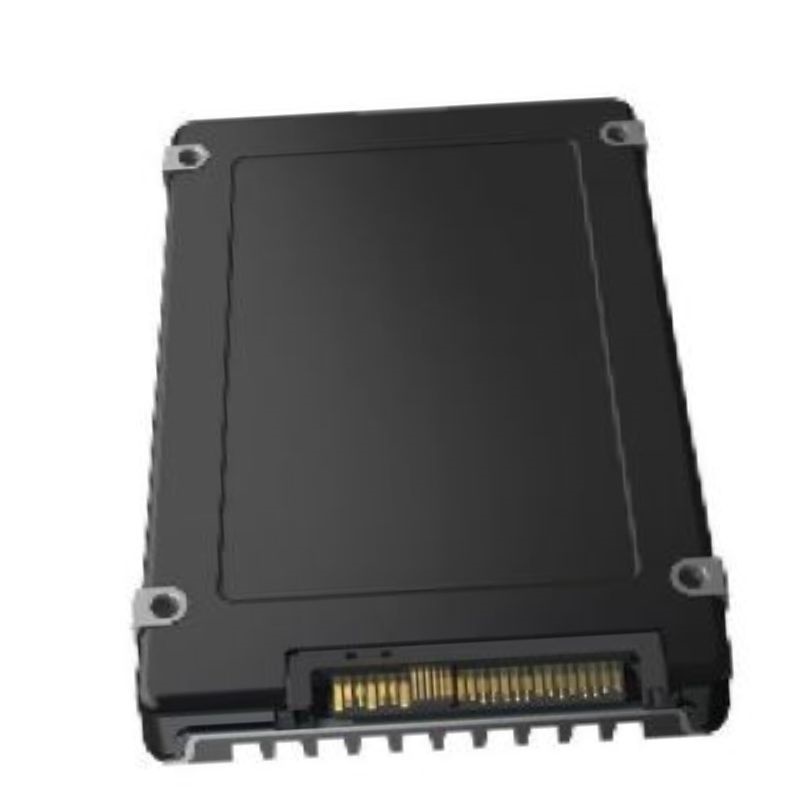
Built with precision and modern architecture, this 3.84TB enterprise-class SSD offers robust storage capabilities with support for PCIe 5.0 x4 lanes, ensuring ultra-fast bandwidth. Its 2.5-inch form factor makes it compatible with a wide variety of server configurations while maintaining optimal airflow and efficiency.
The Samsung PM9D3a series is engineered for maximum throughput and efficiency, making it suitable for mission-critical environments where both speed and consistency are non-negotiable.
With advanced error correction technologies, solid build quality, and optimized firmware, this SSD ensures reliable performance for sustained workloads and round-the-clock operations.
Choosing the Samsung PM9D3a means equipping your infrastructure with a state-of-the-art PCIe 5.0 SSD that excels in speed, endurance, and reliability. Designed for enterprises that demand flawless storage operations, this model ensures future-proofing and enhanced performance for AI-driven analytics, real-time processing, and high-volume transactions.
The Samsung MZWL63T8HFLT-00BW7 is a high-capacity, PCIe 5.0 x4 NVMe internal solid state drive engineered for modern workstations, enterprise servers, high-performance desktops, and data-intensive edge systems. With a generous 3.84TB of flash storage and a controller designed to exploit the bandwidth of PCI Express Gen 5 lanes, this drive targets scenarios where sustained throughput, low latency, predictable quality of service (QoS), and reliability are mission critical. Whether powering virtualized environments, accelerating analytics, or streamlining creative workflows, this NVMe SSD enables faster application launches, optimized I/O patterns, and greater concurrency than SATA or older PCIe generations.
As organizations and power users consolidate storage and remove performance bottlenecks, the combination of NVMe command sets, multiple queues, and advanced wear-leveling opens a path to consistent performance even under mixed workloads. The 3.84TB capacity offers a balanced sweet spot for databases, high-resolution media libraries, source code monorepos, container images, and large project assets. The compact internal form factor integrates cleanly into existing systems, while the Gen 5 interface preserves backward compatibility modes through platform firmware, allowing pragmatic deployment plans during staged hardware refreshes.
In practical terms, the Samsung MZWL63T8HFLT-00BW7 NVMe drive pushes beyond the throughput ceilings associated with SATA and earlier PCIe generations. Databases benefit from reduced tail latencies during peak hours; content creators enjoy quicker scrubbing, render caching, and proxy generation; developers compile large codebases with minimal I/O stalls; and virtualization hosts experience faster VM boot and migration times. The end result is less waiting, greater responsiveness, and more predictable performance curves over long sessions.
PCIe Gen 5 doubles the per-lane throughput of PCIe Gen 4, and with four lanes dedicated to this drive, the link budget supports exceptionally high data transfer rates. Real-world performance depends on the host CPU, PCIe topology, thermal environment, firmware maturity, and workload pattern, but the link-level headroom enables queues to drain faster and allows a larger margin for sustained I/O in parallel applications.
NVMe’s architecture excels at handling multiple queues and parallel submissions. This makes a tangible difference in environments where many threads or virtual machines access storage simultaneously. Combined with a modern controller and high-quality NAND flash, the Samsung MZWL63T8HFLT-00BW7 is designed to keep latencies low and throughput high even as queue depth rises.
System builders should verify the drive’s form factor and connector expectations in the host system’s manual. Many PCIe 5.0 NVMe SSDs ship in M.2, U.2, or EDSFF variants depending on the target platform. Ensure your motherboard or server backplane supports the required physical interface, offers sufficient airflow, and can deliver the necessary power budget. Enterprise enclosures typically provide dedicated cooling channels and airflow guides that maintain optimal operating temperatures during continuous, high-write workloads.
Many enterprise-grade NVMe SSDs integrate firmware safeguards and end-to-end data path protection to help mitigate risks. Depending on the specific sub-variant and platform, features may include power-loss signal handling, ECC, and namespace-level controls. Consult your platform documentation and storage administrator guidelines to align firmware settings, power policies, and monitoring thresholds with your reliability targets.
Performance gains with the Samsung MZWL63T8HFLT-00BW7 are felt most strongly where parallelism and queue depth can be exploited. Rather than only measuring synthetic benchmarks, consider throughput and latency under the specific mix of random and sequential I/O your applications generate. The drive’s ability to sustain performance over time—without sharp degradation when buffers fill—matters just as much as peak figures.
Transactional databases, OLTP systems, and analytics pipelines rely on fast random reads and predictable write latencies. NVMe’s deep queues and low overhead are well-suited here. Business intelligence tasks can prefetch datasets faster; ETL steps can stage intermediate results with fewer stalls; and point-in-time recovery windows can shrink when storage latency is not the bottleneck.
High-resolution video editing, 3D rendering, CAD, and game development stress storage with large sequential reads, mixed random access, and frequent metadata updates. The 3.84TB capacity allows spacious project directories, caches, proxies, and texture libraries to live on a single fast volume, reducing the friction of shuttling assets across multiple slower disks.
On virtualization hosts or containerized platforms, storage becomes a shared utility consumed by many tenants. The Samsung MZWL63T8HFLT-00BW7 supports these scenarios by delivering rapid VM boots, snappy snapshot operations, and steady I/O under multiplexed access. Faster pull and push operations for container images reduce deployment time across CI/CD pipelines.
Endurance is central to flash storage planning. The right strategy pairs the drive’s rated program/erase characteristics and firmware-level wear-leveling with your write intensity. The 3.84TB capacity helps distribute writes and provides room for over-provisioning, which can stabilize performance during heavy write phases. Continuous operation under enterprise workloads requires a clear maintenance plan: monitor health indicators, schedule firmware updates during maintenance windows, and maintain verified backups.
Modern NVMe drives incorporate low-level error correction and path protection to detect and correct bit errors. Firmware counters, SMART attributes, and telemetry logs provide actionable insights into media wear, temperature excursions, throttling events, and spare block usage. Administrators should integrate these signals into existing observability tools to catch issues before they affect service-level objectives.
The Samsung MZWL63T8HFLT-00BW7 is targeted at systems that expose PCIe 5.0 x4 NVMe connectivity. Many contemporary server motherboards and workstation platforms support NVMe boot and hot-plug features through UEFI firmware. Before deployment, verify BIOS/UEFI versions, enable NVMe boot where applicable, and review vendor release notes for compatibility updates—especially in early PCIe 5.0 ecosystems, where firmware maturity can enhance stability and performance.
Keep motherboard, backplane, and storage firmware synchronized with vendor guidance. Early in a platform’s lifecycle, microcode or driver updates can enhance link training reliability, improve power state transitions, and refine thermal management policies. Roll out updates in controlled waves to validate stability before broad deployment.
From creative studios to financial services and scientific research, the Samsung MZWL63T8HFLT-00BW7 3.84TB PCIe 5.0 x4 NVMe SSD offers a flexible, high-performance storage tier that meets varied requirements. Below are representative scenarios that highlight where this drive can be a strategic fit.
Large repositories benefit from faster cloning, branching, and dependency installation. Build systems that fan out jobs over many cores rely on rapid temporary file creation and deletion. With NVMe-level IOPS and concurrency, developers experience fewer I/O bottlenecks during compiles and test runs.
Trading systems, risk engines, and fraud detection platforms demand predictable latency. NVMe’s parallel queues and PCIe 5.0 bandwidth reduce contention, while the 3.84TB capacity holds high-fidelity historical data for in-memory acceleration layers or rapid replays.
Medical imaging workflows involve massive files and stringent privacy requirements. Fast local NVMe storage speeds up ingestion, anonymization, pre-processing, and secure transfer. Researchers can iterate more rapidly on models and analyses when storage does not gate throughput.
Workstations handling 4K, 6K, or higher-resolution footage, multi-channel audio, and complex timelines benefit from sustained NVMe throughput. Local project caching on the Samsung MZWL63T8HFLT-00BW7 reduces dependency on network shares during intensive edits, then syncs back to shared storage during off-peak hours.
At 3.84TB, this PCIe 5.0 NVMe SSD is an ideal capacity for a performance tier that holds hot datasets, active projects, and virtual machine images. Paired with network or nearline tiers for colder data, it yields a balanced storage strategy that keeps costs in check while accelerating critical paths. As workloads evolve, the drive can be redeployed as a fast staging layer, metadata store, or caching device for larger pools.
Allocating additional spare area can improve sustained write performance and reduce write amplification. Some environments reserve a portion of the drive unallocated to serve as de facto over-provisioning, while others leverage vendor utilities or firmware options. Evaluate the tradeoff between raw capacity and steady-state performance in the context of your application’s write intensity.
Security-conscious deployments often require encryption at rest, secure erase workflows, and auditable change control. The Samsung MZWL63T8HFLT-00BW7 can participate in these frameworks using operating system encryption features, platform security modules, or controller-level methods where available. Proper key management remains essential—choose solutions that integrate cleanly with your directory services and disaster recovery plans.
When retiring or redeploying the drive, follow a documented sanitization process suitable for flash media. Depending on policy, this can include crypto-erase, vendor-sanctioned secure erase commands, or physical destruction for the most sensitive environments. Maintain verifiable logs of sanitization events to satisfy regulatory or contractual requirements.
Fast storage can reduce compute waste by eliminating idle time while jobs wait on I/O. With an NVMe Gen 5 device like the Samsung MZWL63T8HFLT-00BW7, jobs complete faster, enabling servers to return to low-power states sooner. Consolidation—running more VMs or containers per host without storage bottlenecks—also improves overall rack efficiency. Ensure power policies and thermals are tuned to avoid overcooling or unnecessary fan ramping.
Pick a capacity that keeps hot data on NVMe and migrates colder data automatically. Automation via policies, scripts, or storage software helps sustain optimal placement without constant human intervention. The 3.84TB class provides a generous working set for many teams, serving as a high-speed landing zone for daily operations.
To realize the full benefits of the Samsung MZWL63T8HFLT-00BW7, treat storage as a first-class resource. Optimize software stacks, align hardware choices, and make data placement decisions that keep hot data local. The following strategies help eliminate common bottlenecks and preserve performance headroom.
Keep queue depths tuned for your application layer. Excessively shallow queues underutilize the bus; excessively deep queues can inflate latency. Profile the sweet spot under real workloads. For databases and analytics engines, consult vendor tuning guides to map threads to NVMe queues efficiently.
Right-size the number of containers or VMs per host to avoid saturating storage queues. If the NVMe drive underpins many tenants, enforce IOPS or bandwidth limits to prevent noisy-neighbor effects. Namespaces or partitions can simplify enforcement and accounting.
The 3.84TB class balances capacity, performance, and cost. It’s large enough to host multiple high-value datasets without constant shuffling, yet small enough to deploy widely across many nodes. This balance suits distributed systems, high-speed caches, and workstations that need both space and speed. As data volumes grow, this drive can remain in service as a cache tier or staging layer even if primary datasets later expand beyond its capacity.
Fewer drives can simplify cabling, power distribution, and airflow management. By moving from multiple lower-performance devices to a single high-performance NVMe SSD like the Samsung MZWL63T8HFLT-00BW7, you reduce points of failure and configuration overhead while increasing throughput per device bay. This approach also streamlines monitoring and firmware management.
Below are example patterns that show how the Samsung MZWL63T8HFLT-00BW7 can be integrated efficiently across a variety of environments, each with a distinct objective and operating constraint set.
As system memory and CPU core counts rise, storage must scale accordingly. PCIe 5.0 x4 NVMe is a forward-looking interface with substantial headroom for today’s workloads and room to grow. The Samsung MZWL63T8HFLT-00BW7 fits neatly into this trajectory, offering a capacity point that remains useful across multiple upgrade cycles—first as primary high-speed storage, later as a cache or staging tier as datasets expand.
Plan for NVMe infrastructure that supports hot-swap where your chassis allows, firmware update processes that minimize downtime, and monitoring that detects performance regressions early. Keep documentation up to date so future team members can redeploy the drive confidently as roles evolve.
This 3.84TB PCIe 5.0 x4 NVMe internal SSD delivers a compelling mix of capacity, speed, and reliability features for modern computing. It accelerates databases, virtualized environments, creative applications, and build pipelines while offering the operational predictability needed for enterprise service levels. With mindful installation, cooling, monitoring, and data management, it becomes a stable cornerstone of high-performance systems—empowering teams to do more in less time and with fewer storage bottlenecks.


 Contact Us
 Information
 Catalog
 Solid State Drives (SSD)
 Network Switches
 Hard Disk Drives
 HBA & Controllers
 PC & Servers
 PC & Server Memory
 CPU & Processors
 Network Routers
 Power Supplies
 Tape Drives & Libraries
 Network Devices
 Computer & Network Cables