(7% discount is applied at checkout)
Cart is empty
Your go-to destination for cutting-edge server products
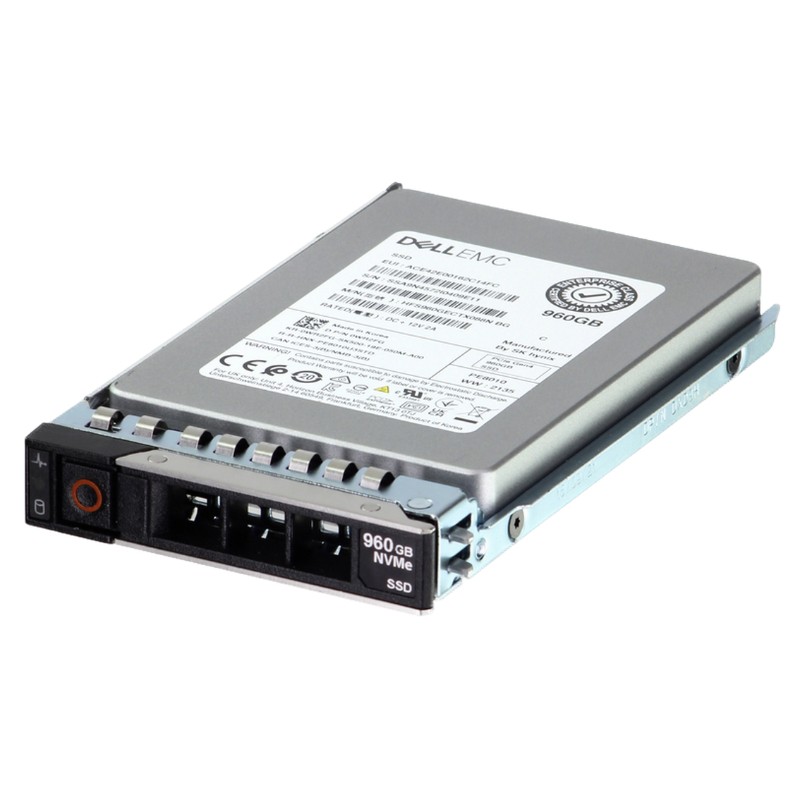


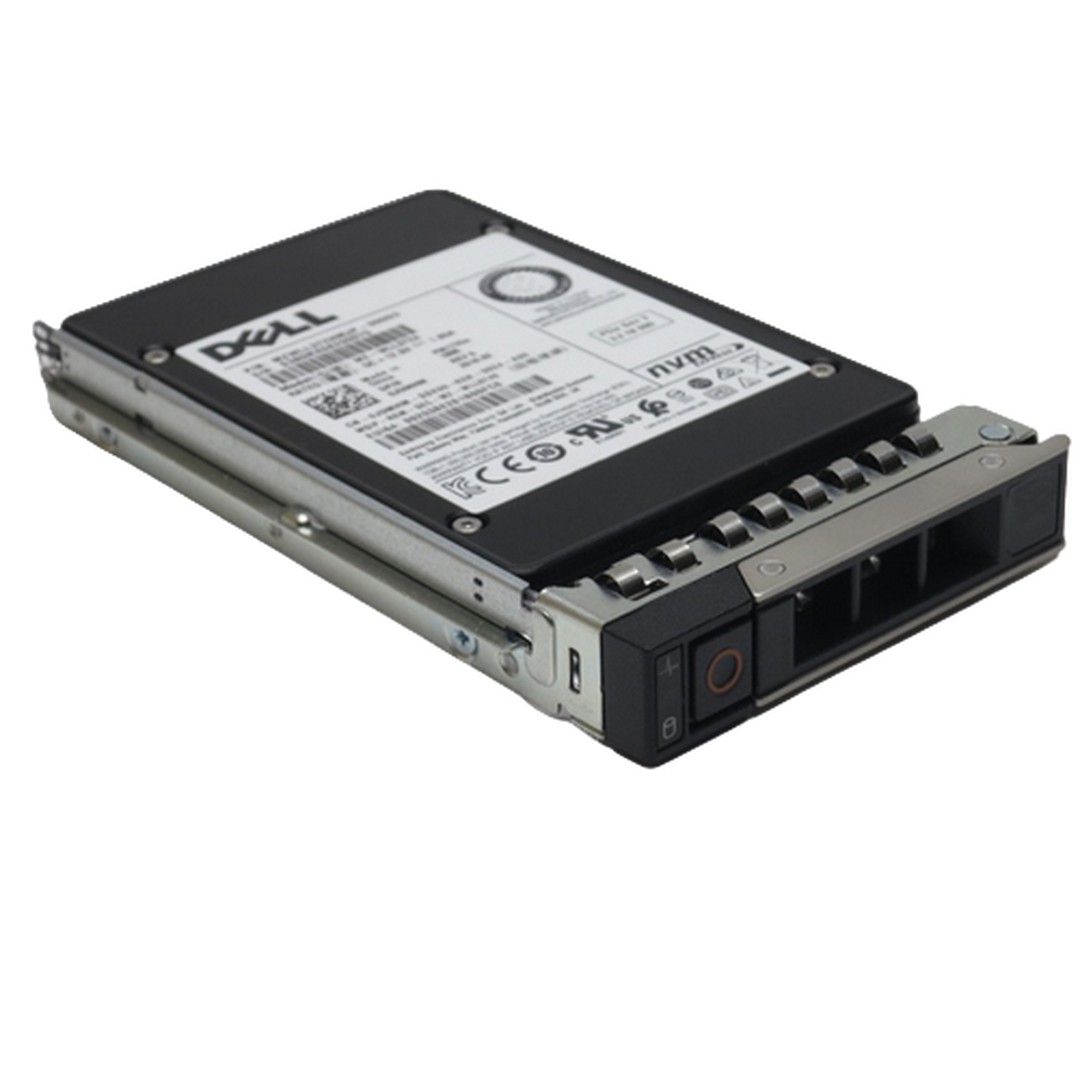
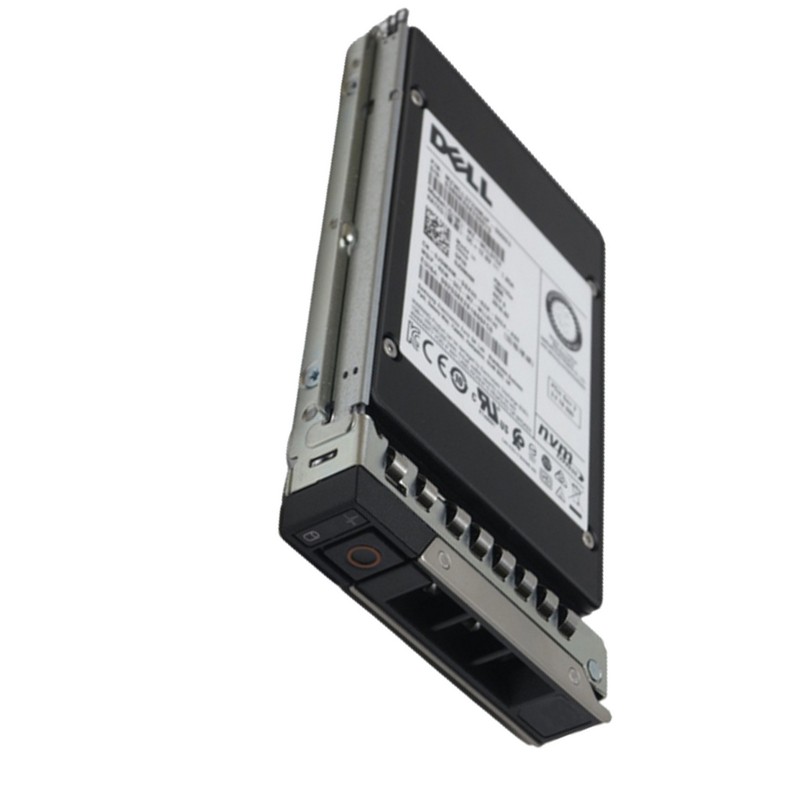
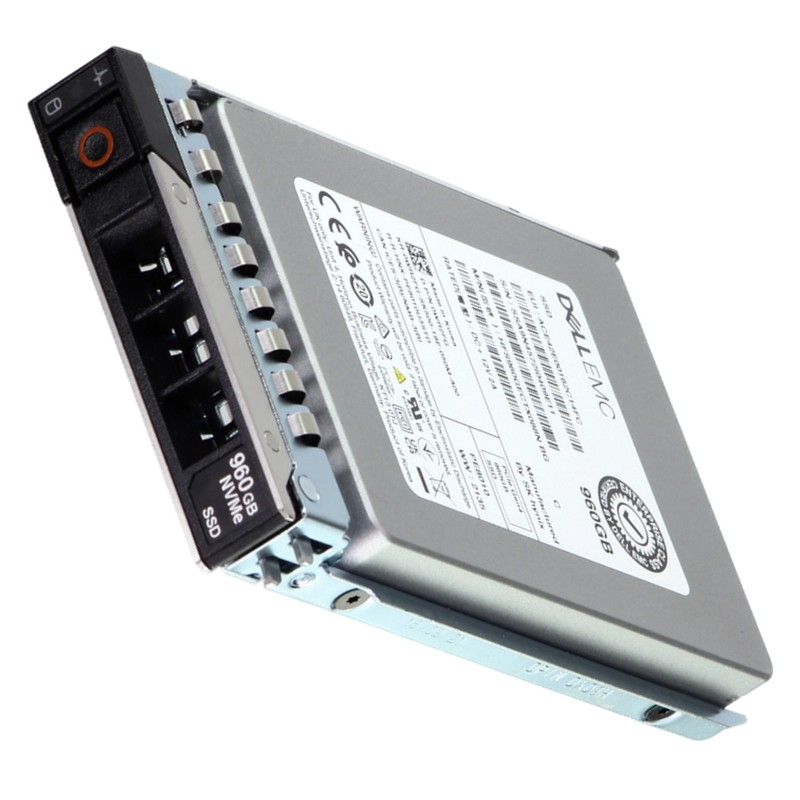
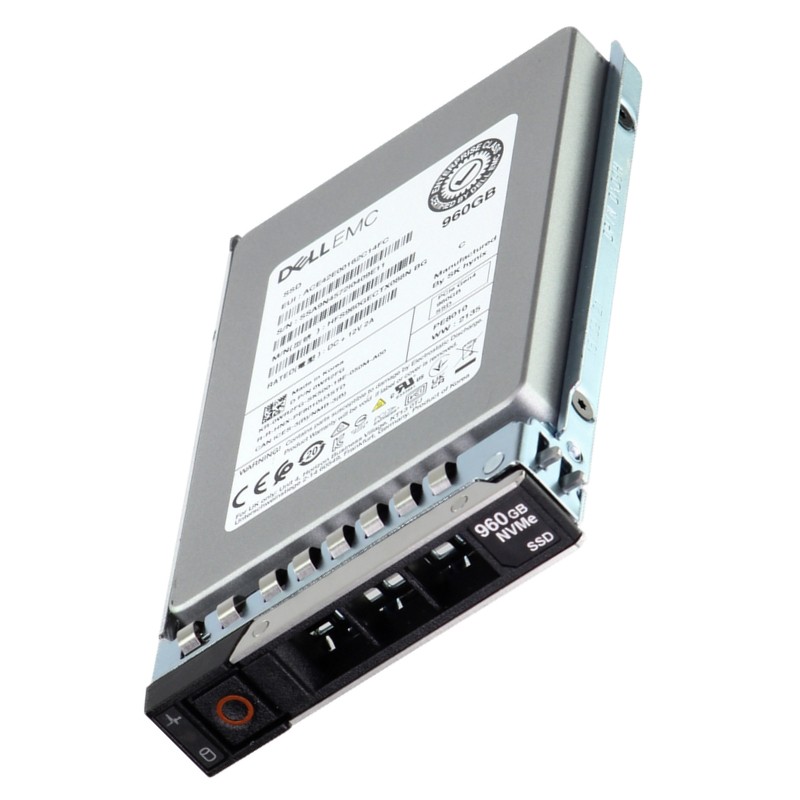
Dell HN8H6 960GB SED PCI-e Gen4 X4 NVME M.2 2280 Read Intensive 1dwpd TLC Enterprise Solid State Drive. Excellent Refurbished with 1 year replacement warranty
Engineered for high-efficiency server environments, the DELL 960GB solid-state drive offers exceptional read performance and secure data handling. With PCIe Gen4 ×4 connectivity and a compact M.2 2280 form factor, this enterprise-class SSD is ideal for read-intensive workloads across Dell PowerEdge platforms.
The Intel P4326 15.36TB NVMe Ruler SSD (model SSDPEXNV153T8D) sits in a category designed for maximum capacity, power efficiency, and straightforward serviceability in space-constrained server environments. Leveraging the E1.L “ruler” small form factor, this enterprise SSD enables ultra-dense front-loading arrays with exceptional airflow characteristics and vertically oriented PCB space for more NAND packages, resulting in higher capacity per drive bay and a lower total cost per terabyte.
Within the E1.L NVMe category, the Intel P4326 delivers the pivotal benefits that modern data centers require to scale sustainably and reliably.
Ruler SSDs allow extremely dense configurations, often enabling significantly more terabytes per rack unit than traditional 2.5-inch drives. The elongated enclosure distributes heat more effectively and unlocks larger capacity options without sacrificing performance consistency.
Hot-plug capability, front-access serviceability, standardized NVMe management, and consistent firmware lifecycle practices simplify deployment and ongoing operations. The result is better utilization and fewer service disruptions in large-scale fleets.
NVMe over PCIe provides a direct path to the CPU for lower latency and higher parallelism. The P4326 focuses on balanced sequential throughput and strong QoS for read-intensive and mixed workloads common to content repositories, data lakes, big data analytics, and warm storage tiers.
While specific numbers vary by firmware, NAND generation, and host configuration, the Intel P4326 15.36TB NVMe ruler SSD commonly emphasizes the following category attributes:
As part of the Intel enterprise NVMe lineup, the P4326 category highlights robust mechanisms that preserve data integrity in always-on environments.
Checksums and integrity checks protect data from the host to the NAND, reducing the risk of silent data corruption and bit errors in flight.
Capacitor-backed protection ensures in-flight data is safely committed in the event of sudden power interruption, safeguarding metadata and user data alike.
Adaptive error correction, bad block management, and wear-leveling algorithms extend media life and deliver consistent performance over the drive’s service interval.
Secure erase workflows support asset retirement, repurposing, and compliance with data sanitization policies in tightly controlled environments.
The P4326 category focuses on sustained throughput and consistent QoS rather than peak benchmark bursts. Administrators can expect steady performance for streaming reads, large object fetches, backup/restore, and analytic scans. For transaction-heavy, write-intensive applications, pairing with higher-endurance NVMe tiers or leveraging tiered caching policies can help optimize write absorption without compromising the capacity-centric value of the P4326.
E1.L ruler drives are engineered to work with server airflow, presenting a slim face to incoming air and a greater surface area along the chassis. This design promotes efficient heat exchange and can reduce fan speeds for a given thermal load, potentially lowering acoustic signatures and energy spend across a full rack deployment.
Standardized NVMe management commands interact with SMART, health logs, and vendor telemetry. Operators can integrate the P4326 into existing observability stacks, monitoring critical indicators such as media wear, temperature, error rates, and over-provisioning status.
Planned firmware maintenance ensures stability, security, and feature enhancements. Rolling updates across chassis groups minimize downtime and maintain consistent behavior across the fleet.
Enterprises often carry a small pool of identical capacity rulers for quick swaps. The front-loading design speeds service and limits handling risks, improving mean time to repair.
The P4326 category supports enterprise security controls, including secure erase workflows and compatibility with data-at-rest encryption strategies in the platform stack. Clear sanitization methods and lifecycle documentation help satisfy audit requirements and internal compliance checklists.
Organizations that need to store massive volumes of hot-to-warm data with predictable read performance, efficient power use, and pragmatic serviceability benefit from the P4326 profile. The combination of NVMe performance, ruler density, and enterprise protections enables cost-effective scale without sacrificing operational simplicity.
By improving watts per terabyte and optimizing service touchpoints, the P4326 E1.L category helps reduce both direct energy spend and the hidden costs of maintenance. Higher effective density means fewer servers and switches for a given capacity target, reducing supporting infrastructure overheads and simplifying growth planning.
The Intel P4326 15.36TB NVMe Ruler SSD blends capacity, performance, and operational maturity. It stands as a prime choice for teams moving from HDD or SATA SSD warm tiers to a more responsive, NVMe-native capacity layer built for hyperscale efficiency.
The Dell HN8H6 960GB Self-Encrypting Drive (SED) is part of the enterprise M.2 2280 PCIe NVMe category tailored for boot, cache, and read-intensive application tiers. With TLC NAND, robust firmware controls, and hardware-based data-at-rest protection, this drive class fits a broad range of Dell PowerEdge and professional workstation platforms that require fast NVMe performance in a compact, power-efficient form factor.
Ideal as a dedicated boot device for Linux distributions, Windows Server, or hypervisors such as VMware and Proxmox, separating OS volumes from data arrays to simplify maintenance and reduce risk.
Accelerate package repositories, container images, and frequently accessed libraries. Pairing an M.2 NVMe cache with capacity tiers shortens cold-start delays and improves node responsiveness.
M.2 2280 drives are particularly suitable for compact edge servers, where power budgets and space are constrained, yet reliability and rapid reboot cycles are mandatory.
For creative and engineering workstations, the HN8H6 provides snappy load times for codebases, design assets, and reference datasets, while SED features support controlled environments and device retirement policies.
Self-encrypting capability is central to this category. Encryption occurs at the drive controller level, typically with minimal performance impact and transparent to the operating system once enabled by platform tools.
This category prioritizes strong sequential reads, solid random read IOPS, and consistent service times under mixed but read-heavy workloads. TLC paired with firmware-managed SLC caching absorbs bursts while maintaining predictable response for the majority of real-world server tasks such as OS operations, log fetches, and application reads.
Health metrics—temperature, media wear, error rates, and spare blocks—allow proactive maintenance and replacement cycles without unplanned downtime.
Enterprise M.2 devices in this category are engineered for resilience. Combined with modern filesystems and journaling practices, they deliver stable behavior through expected power events and controlled shutdowns.
While robust for everyday server duties, a read-intensive TLC drive is not intended for sustained heavy write logging or multi-hour ingest pipelines. Pair with write-optimized NVMe for those patterns, or deploy tiered caching policies to maintain longevity.
Use golden images and automated provisioning to reduce variance and speed up hardware swaps or scale-out deployments. Keep encryption onboarding steps well-documented to ensure policy compliance on every node.
Coordinate firmware baselines across a fleet for consistent behavior. Plan rolling updates to mitigate risk while maintaining security posture and stability.
Even with mirrored boot devices, maintain bare-metal restore media or PXE images. For workstations, include self-service recovery options and clear guidance for cryptographic key handling.
M.2 2280 NVMe drives deliver high performance in a small footprint. Ensuring adequate airflow is essential—particularly in compact 1U servers or dense workstations. Heat spreaders, slot placement away from CPU hotspots, and chassis-level fan curves help sustain peak and steady-state performance.
Enterprises choose the Dell HN8H6 category for its balance of speed, security, and practicality. The combination of NVMe performance, SED protection, and manageable endurance delivers a dependable foundation for OS volumes and daily operational workloads without over-provisioning beyond actual needs.
Set alerts for temperature excursions, percent life remaining, and media error rates. Proactive replacement before reaching defined wear limits preserves uptime and ensures predictable behavior during patch cycles and reboots.
By using M.2 slots instead of 2.5-inch bays, operators keep front drive bays free for capacity storage while still benefiting from NVMe performance. This arrangement simplifies cabling and can reduce chassis weight, contributing to better service ergonomics and airflow balance.
Use the HN8H6 as a boot and management volume while keeping VM datastores on separate NVMe/SAS pools. This separation streamlines troubleshooting and allows clean hypervisor updates.
Speed up build artifact reads and dependency installs. Pair with RAM-backed caches for peak iteration speed, while the M.2 device ensures persistence across reboots.
Keep libraries, notebooks, and smaller datasets on the M.2 SED for fast access with the assurance of hardware-level encryption for sensitive material.


 Contact Us
 Information
 Catalog
 Solid State Drives (SSD)
 Network Switches
 Hard Disk Drives
 HBA & Controllers
 PC & Servers
 PC & Server Memory
 CPU & Processors
 Network Routers
 Power Supplies
 Tape Drives & Libraries
 Network Devices
 Computer & Network Cables