(7% discount is applied at checkout)
Cart is empty
Your go-to destination for cutting-edge server products
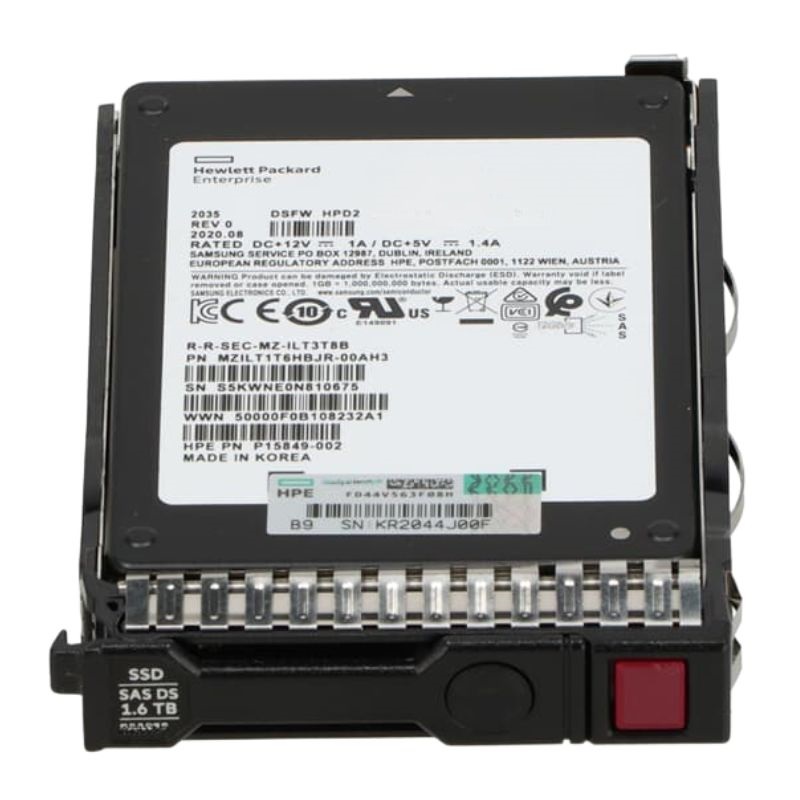


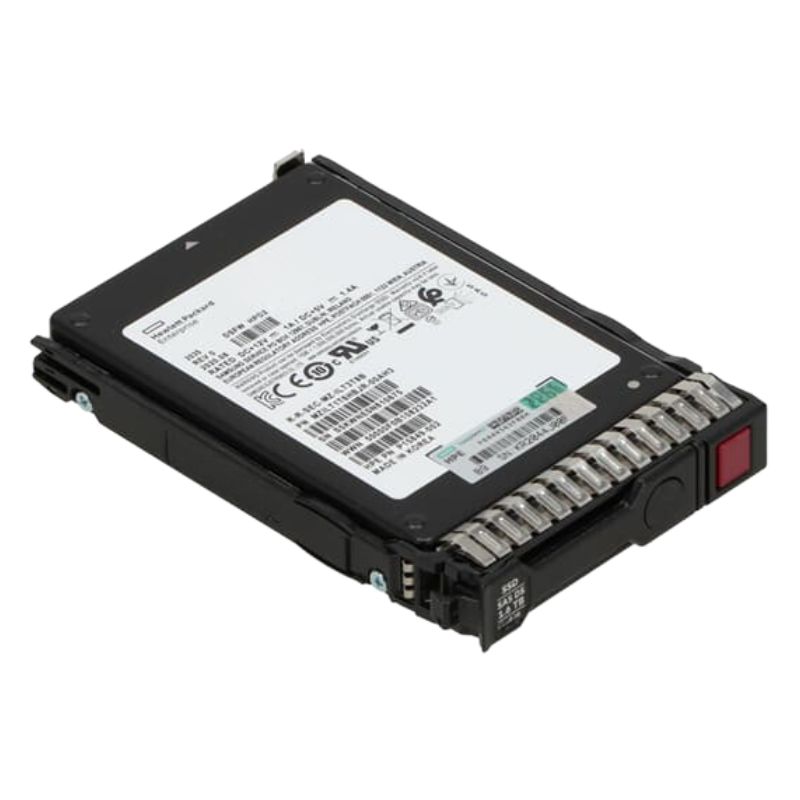
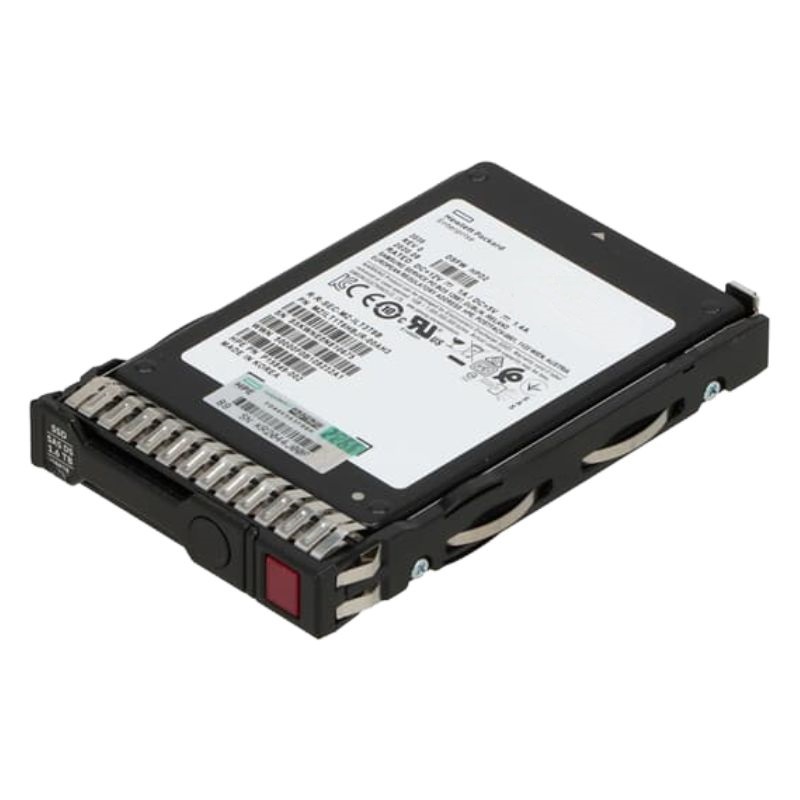
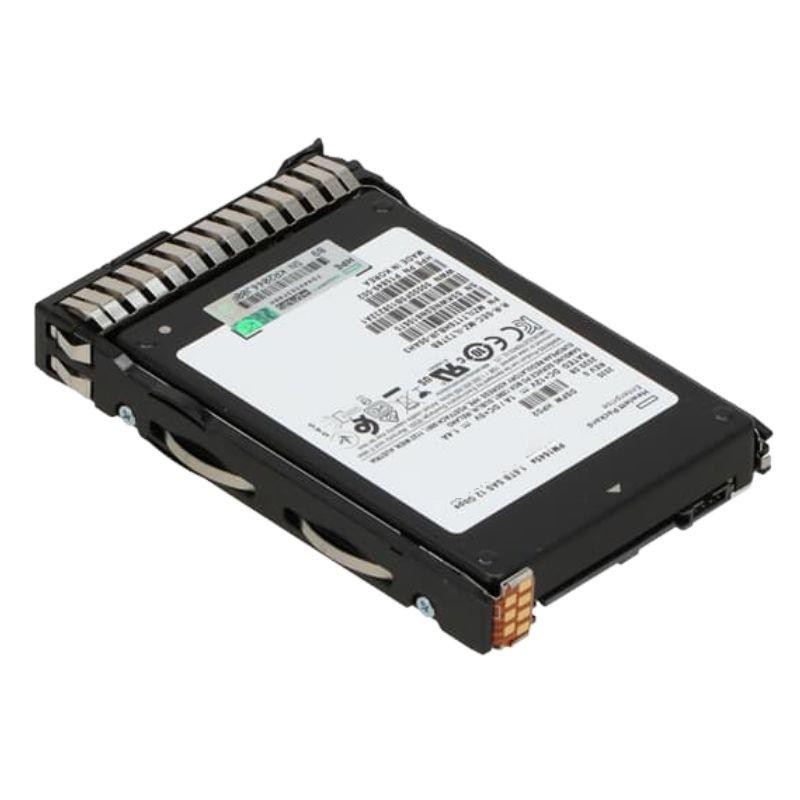
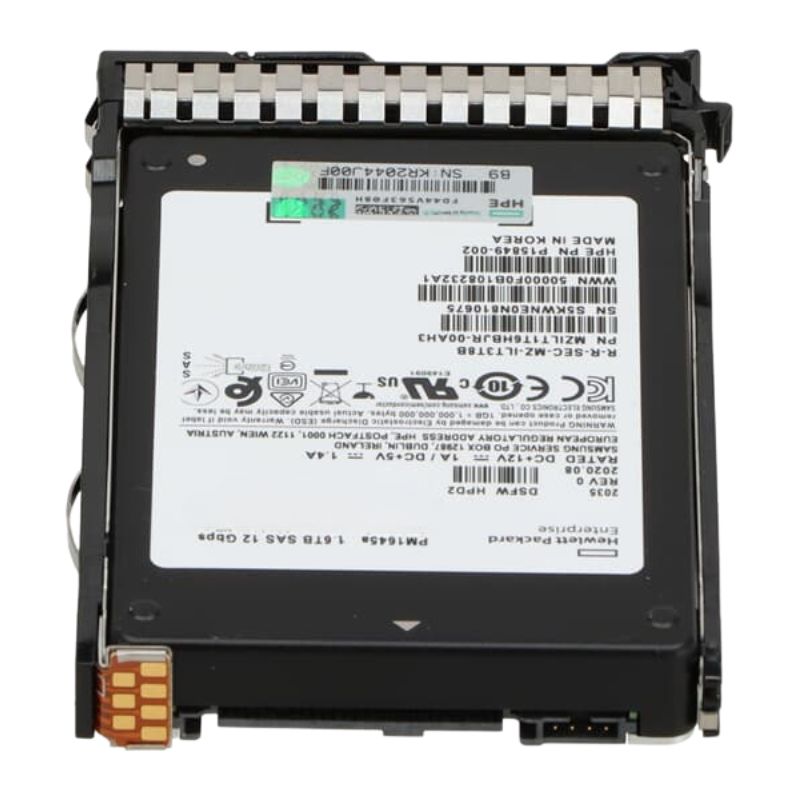
HPE EO001600JXBFN 1.6 TB SAS 12GBPS WI SFF SC Solid State Drive. Excellent Refurbished with 1 year replacement warranty
Designed for high-demand enterprise environments, this solid-state drive delivers exceptional performance and reliability. The unit is a cornerstone for data centers requiring robust storage solutions.
This storage device is meticulously engineered for seamless integration and peak operation.
The drive incorporates cutting-edge technology to ensure unwavering data integrity and speed.
Engineered for write-centric tasks, this SSD excels in transactional database applications, content delivery networks, and server boot drives.
This component is validated for and fully compatible with HPE ProLiant Gen10 and Gen10 Plus server platforms, ensuring optimal performance and management through the HPE ecosystem.
The HPE EO001600JXBFN 1.6 TB SAS 12Gbps Write-Intensive SFF (2.5") SC Solid State Drive is engineered for enterprise storage arrays in HPE ProLiant Gen10 and Gen10.5 servers. Designed specifically for write-intensive workloads, this SSD balances high throughput, low latency, and robust endurance. Its SAS 12Gb/s interface and SFF 2.5" form factor make it an ideal drop-in upgrade for data center racks that require deterministic performance under heavy write loads such as databases, VM datastores, log processing, and caching layers.
High performing enterprise SSDs differentiate themselves by predictable latency and endurance under sustained loads. The HPE EO001600JXBFN drive targets operations where writes dominate and consistent throughput is essential.
With a SAS 12Gb/s interface the drive supports higher sequential and random throughput compared with legacy 6Gb/s SAS drives. The drive sustains write performance across long bursts and smaller random I/O patterns typical of databases, journaling, and virtualized environments. Low queue depth random IO latency means faster transactions and improved responsiveness for applications that require many small writes.
Although exact IOPS depend on the host platform and RAID configuration, write-intensive enterprise SSDs like this model are tuned to deliver consistent random write IOPS even under 100% write patterns. This makes them ideal for:
Enterprise environments need predictable quality of service (QoS). The HPE EO001600JXBFN implements firmware and garbage collection algorithms designed to minimize latency spikes and deliver steady-state performance over long duty cycles. That translates to fewer application slowdowns and smoother multi-tenant performance in shared infrastructures.
Designed and qualified for HPE ProLiant Gen10 and Gen10.5 platforms, this SSD integrates seamlessly into validated HPE server configurations. Using vendor-supported drives maintains warranty alignment, ensures drive firmware compatibility with HPE system firmware, and makes device replacement and lifecycle management simpler.
The SFF 2.5" design supports hot-swap replacement in most HPE server sleds and enclosures. Dual-port SAS provides redundant host connectivity enabling multipath I/O (MPIO) and high availability in clustered or SAN attached systems.
HPE certified drives are typically accompanied by firmware validated against ProLiant BIOS/UEFI and SmartArray controllers. Real-time monitoring through HPE Integrated Lights-Out (iLO) or storage controller management tools allows administrators to monitor SMART attributes, endurance consumption, and proactively identify drives that may require replacement.
Endurance and data integrity are cornerstone priorities for write-intensive SSDs. The HPE EO001600JXBFN includes enterprise-grade features to protect against data corruption and mitigate the risk of data loss in critical environments.
Built-in PLP circuitry helps ensure that in the event of unexpected power loss, in-flight data in the drive’s write cache is flushed to NAND, protecting the host from partial writes and metadata corruption. This is especially important in transactional systems where atomicity must be preserved.
End-to-end CRC and parity verification mechanisms check data integrity across the drive’s entire data path—from the host interface to the NAND media and back. These mechanisms reduce silent data corruption and support enterprise compliance needs.
S.M.A.R.T. attributes combined with HPE system telemetry enable predictive drive health analytics. Administrators can set thresholds for metrics such as media wear, bad block counts, and uncorrectable error rates, enabling planned replacements and minimizing unplanned downtime.
Advanced wear leveling and over-provisioning techniques extend usable life by distributing program/erase cycles evenly across NAND. The drive’s firmware balances performance and endurance, making it well suited for environments with high daily write volumes.
Enterprises choose write-intensive SSDs where data durability, consistent write performance, and predictable latency are non-negotiable. Below are typical deployment scenarios that benefit from the HPE EO001600JXBFN 1.6 TB drive.
Databases with frequent commits and heavy write patterns demand drives that can handle continuous write amplification without suffering latency spikes. The HPE 1.6 TB write-intensive SSD provides the endurance and low latency required to keep transaction processing efficient and consistent.
Virtualized infrastructures stress storage with many small synchronous writes from guest OSes. This drive supports large VM density per host and improved VM boot storms with faster I/O response and sustained writes for persistent disks and snapshots.
Centralized logging systems and telemetry ingestion pipelines require storage that can absorb and persist large, continuous write streams. This drive’s architecture supports these write bursts while maintaining data integrity.
In hybrid storage architectures, write-intensive SSDs are commonly used in cache or hot tier layers to offload active write traffic from spinning disks, thereby reducing write latency and improving overall system throughput.
Choosing the appropriate SSD workload class is crucial to balance cost and longevity. Below is a high-level comparison to guide procurement decisions.
Evaluate your data center’s read/write ratio, IOPS distribution, and retention policies. If daily write volumes exceed what read-optimized drives can handle comfortably, a write-intensive SSD like the HPE EO001600JXBFN will deliver greater reliability and lower long-term replacement costs.
When designing storage arrays with enterprise SSDs, capacity planning and RAID selection affect both performance and redundancy. Below are considerations for incorporating 1.6 TB write-intensive SSDs into your storage fabric.
Configure reasonable over-provisioning or reserve spare capacity to improve endurance and reduce write amplification. Enterprise arrays often allow administrators to reserve spare space at the controller level or via drive configuration.
Enterprise SSD selection should be driven by long-term TCO analysis. While write-intensive drives carry a premium per gigabyte compared with consumer and read-optimized alternatives, their superior endurance, lower failure rates under heavy writes, and reduced rebuild times can lower operational costs.
Purchasing HPE-branded or HPE-qualified drives typically includes support for drive failures and firmware compatibility issues. Check current warranty terms, RMA processes, and extended support agreements for Gen10 and Gen10.5 platforms to ensure you have the desired replacement SLAs.
Use drive health telemetry, SMART monitoring, and capacity planning tools to schedule replacements before drives reach critical wear thresholds. Firmware refreshes and HPE firmware bundles should be applied according to HPE recommendations to maintain compatibility and security.
Integrate drive health metrics into your monitoring stack. Alert on early signs of wear: rising corrected/uncorrectable error counts, rapid increases in bad block totals, or SMART attributes indicating nearing program/erase cycle limits.
Regularly check HPE advisories for firmware updates that address performance, reliability, and security. Schedule firmware updates during maintenance windows and follow vendor precisely documented procedures to avoid data path disruptions.
Drive rebuilds after failures can generate substantial load on remaining drives. Use controller settings that throttle rebuild speeds during peak hours or leverage background rebuild windows to minimize service impact. SSDs rebuild faster than HDDs generally, but planning is still essential.


 Contact Us
 Information
 Catalog
 Solid State Drives (SSD)
 Network Switches
 Hard Disk Drives
 HBA & Controllers
 PC & Servers
 PC & Server Memory
 CPU & Processors
 Network Routers
 Power Supplies
 Tape Drives & Libraries
 Network Devices
 Computer & Network Cables