(7% discount is applied at checkout)
Cart is empty
Your go-to destination for cutting-edge server products
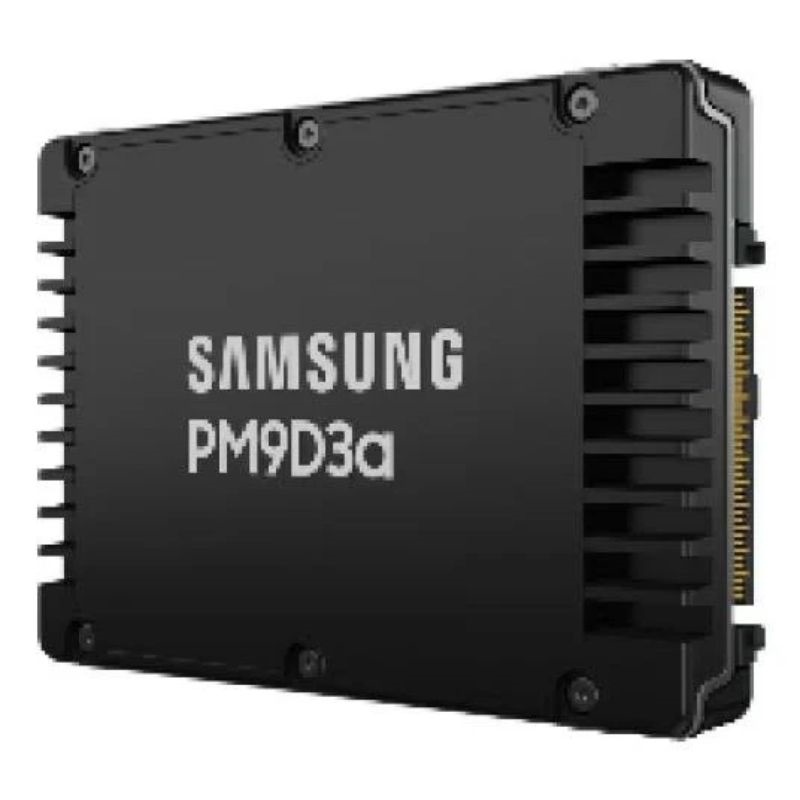


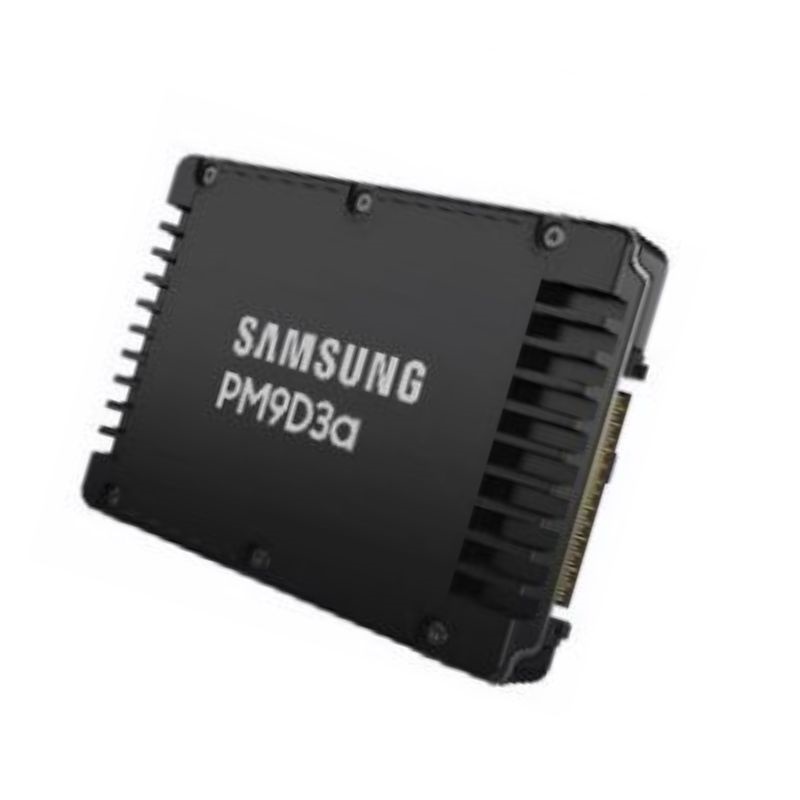
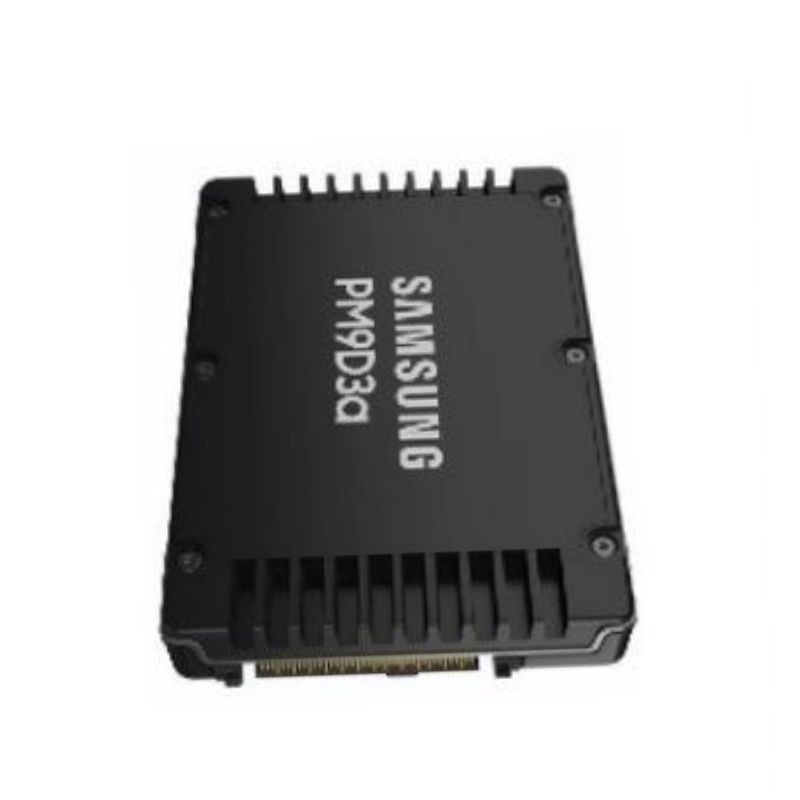
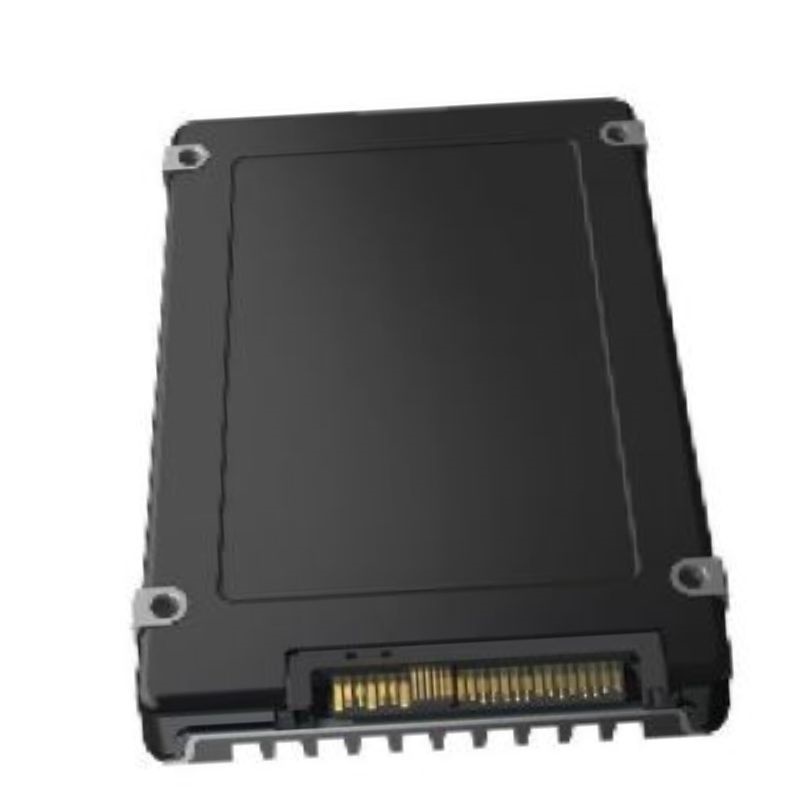
Samsung MZWL67T6HBLC-00BW7 PM9D3a 7.68TB PCI-E 5.0 x4 2.5 Inch SSD. New Sealed in Box (NIB) with 3 years Replacement Warranty
The Samsung PM9D3a 7.68 TB PCIe 5.0 x4 2.5-inch Internal SSD (Part No. MZWL67T6HBLC-00BW7) brings next-generation throughput, high IOPS, and rock-solid endurance to demanding datacenter and edge environments. Built on the PM9D3a series, this drive leverages PCI Express 5.0 and NVMe to minimize latency and accelerate read-intensive and mixed workloads such as databases, analytics, virtualization, and high-volume transaction systems.
When upgrading storage tiers, IT teams prioritize predictable performance, high availability, and efficient scaling. The PM9D3a is engineered to deliver sustained throughput and consistent latency, ensuring application SLAs are met even during peak utilization windows.
This model supports a wide range of enterprise applications that benefit from rapid access to large datasets and predictable latency characteristics.
By pairing PCIe 5.0 x4 with NVMe, the PM9D3a substantially reduces command overhead. The result is low-latency I/O, especially beneficial for mixed read/write patterns common to cloud-native apps and SaaS platforms.
Storage planning is more than raw terabytes; it’s about usable performance and write budget.
Understanding the balance between sequential throughput and random access is key to extracting value from NVMe SSDs in production.
Mission-critical environments demand strict reliability metrics and data integrity protections.
Before rolling out at scale, align platform settings and power/cooling budgets with the drive’s capabilities.
Whether you’re expanding an existing cluster or building a new platform, standardizing on the PM9D3a offers predictable performance across fleets, simplifies spares management, and streamlines monitoring.
The MZWL67T6HBLC-00BW7 Samsung PM9D3a 7.68TB PCI-E 5.0 x4 2.5 Inch NVMe Internal SSD sits in the enterprise solid-state drive category designed for data center duty cycles, mixed workloads, and scale-out infrastructure. This class of drive focuses on consistent latency, high endurance, predictable quality of service (QoS), and robust data integrity features rather than consumer-style burst speed. With a 2.5-inch enterprise form factor and a PCIe 5.0 x4 NVMe interface, it is engineered to drop into modern server backplanes and storage arrays that demand dense capacity, linear scalability, and standards-based management.
Samsung’s enterprise part numbers encode capacity, interface generation, and options that align with data-center standards. In this case, MZWL67T6HBLC-00BW7 identifies a PM9D3a family member with a nominal capacity class of 7.68 TB delivered via a PCIe 5.0 x4 link in a 2.5-inch drive bay footprint. The PM9D3a line is engineered for modern server platforms that expose PCIe Gen5 lanes through U.2/U.3 backplanes or via cabled PCIe connectors in dense front-bay designs. While the exact firmware option set can vary by SKU, the family centers on enterprise readiness: data path protection, power-loss protection, steady-state performance, and telemetry suitable for fleet operations.
The 2.5-inch enterprise drive form factor prioritizes hot-swap serviceability, predictable airflow, and standardized mounting. Compared with M.2 gumstick modules, a 2.5-inch carrier offers improved thermal mass, a larger surface for heat dissipation, and native support for front-accessible drive bays—critical for minimizing service windows in production racks.
Many Gen5-ready servers use U.2 or tri-mode U.3 backplanes to expose PCIe lanes to 2.5-inch bays. U.3 backplanes can route SAS, SATA, or PCIe signaling to the same physical bays (depending on host controller and cabling), simplifying inventory and service. The PM9D3a integrates seamlessly into NVMe-addressable bays, enabling the low-latency, parallel command structure that NVMe is known for.
PCI Express Gen5 doubles the per-lane throughput versus Gen4, enabling substantially more headroom for sequential and random operations. A x4 link leverages four lanes in each direction, ensuring the device can service deep queues while sustaining consistent IO even under contention. Paired with the NVMe protocol, the drive implements an efficient command set, multiple queues, and low-overhead submission/completion paths that reduce CPU cycles per IO.
In virtualized clusters and microservices environments, dozens or hundreds of threads can issue IO concurrently. Multi-queue NVMe allows this drive to process commands with minimal locking overhead, distributing IO across CPU cores for superior throughput and predictable tail latency under load.
Enterprise operators care about consistency as much as raw speed. The PM9D3a class is designed for steady behavior during garbage collection, background wear leveling, and thermal events, helping maintain service-level objectives for latency-sensitive databases and APIs.
At 7.68 TB, this model fits a sweet spot between performance and capacity density. It enables high-IOPS caches, database primary storage, and read-intensive content repositories while remaining manageable for RAID sets, erasure coding, or namespace partitioning. The capacity point simplifies growth planning: populating a 24-bay 2U with 7.68 TB drives offers multi-hundred terabyte raw footprints without exceeding power or cooling budgets common in edge or core racks.
Enterprise SSDs are typically offered in endurance tiers tailored to read-intensive, mixed-use, or write-intensive scenarios. While endurance specifics vary by exact SKU and firmware feature set, the family is meant to withstand sustained 24×7 duty cycles, with device-level wear management and robust error-correction engines. For planners, mapping write-amplification factors (WAF) and daily data change rates to the endurance tier ensures long, predictable service life.
PCIe Gen5 and NVMe unlock headroom for both sequential and random access patterns. In practice, multi-tenant environments exhibit mixed IO sizes and a wide range of queue depths; the PM9D3a is engineered to preserve QoS and limit tail-latency spikes under such churn. Sequential throughput matters for backups and large object movement, while random IO under low-to-mid queue depths dominates OLTP and many microservice data paths.
Modern application stacks benefit from IO parallelism, but simply cranking queue depth does not guarantee lower latency. This drive family is tuned to deliver strong throughput scaling while keeping transaction times bounded. Administrators should align IO submission with CPU core pinning, NUMA locality, and scheduler policies to extract maximum value.
Enterprise operators focus on p99 and p99.9 latency figures. For latency-sensitive services, placement of write-intensive logs on separate volumes, deliberate over-provisioning, and thermal headroom preserve microsecond-scale response under spiky demand. The PM9D3a class includes controller-level algorithms to mitigate pauses during garbage collection, thereby reducing jitter.
Enterprise NVMe SSDs are designed with end-to-end data integrity in mind. The PM9D3a family implements multiple layers of protection to guard against silent corruption and sudden power events. While exact feature codes depend on the specific SKU, the architectural goals remain consistent: detect, correct, and prevent data errors while maintaining service availability.
Many enterprise SKUs support self-encrypting drive (SED) capabilities and standards such as TCG enterprise profiles. Availability of specific security modes, sanitize commands, and cryptographic erase can vary by region and option code; administrators should verify exact security features for compliance frameworks. Regardless of chosen security mode, secure firmware update mechanisms, signed images, and controlled life-cycle states support best-practice governance.
Using NVMe namespaces, operators can carve a single physical drive into logical units with strong isolation. This allows precise allocation for different tenants or microservices, simplifying performance budgeting and reducing blast radius during maintenance or failures.
For asset retirement or repurposing, enterprise drives typically implement crypto-erase and sanitize operations. Administrators should script these procedures into decommissioning playbooks, ensuring audit trails are captured via NVMe logs and BMC integrations.
PCIe Gen5 devices can pull higher peak power than previous generations, making chassis airflow planning essential. The 2.5-inch form factor of this PM9D3a model provides a heat-spreading enclosure that works in concert with server fan curves.
At rack scale, watts per terabyte and watts per IOPS matter. The PM9D3a class emphasizes efficient IO per unit energy, allowing denser deployments without overwhelming PDU budgets. Features such as autonomous power-state transitions, host-controlled power management, and firmware-guided throttling help balance performance and thermals.
This 7.68 TB PCIe 5.0 x4 NVMe SSD is intended for servers that expose Gen5 lanes to their 2.5-inch bays. It remains backward compatible with many Gen4 environments at link-training time, though platform behavior depends on the server’s BIOS/UEFI and backplane.
Confirm whether your chassis implements U.2 or U.3 tri-mode backplanes. For U.3, ensure the HBA or host bus adapter advertises NVMe mode. In cabled PCIe layouts, verify correct cable type and insertion order to avoid lane reversal issues. Many vendors provide midplane mapping diagrams—use these to balance lanes across CPU sockets.
Well-planned deployment extracts maximum value from Gen5 NVMe. Consider the following patterns for reliable, high-performing clusters built on PM9D3a drives.
In hypervisor environments, present PM9D3a namespaces as virtual disks to VMs with paravirtualized NVMe controllers where available. In Kubernetes, use a CSI driver that supports volume expansion, snapshotting, and replication. For write-sensitive microservices, consider a pod-local ephemeral NVMe volume for scratch while keeping stateful data on replicated pools.
Relational databases (OLTP) prefer low tail latency; configure write-ahead logs on dedicated namespaces with guaranteed IOPS reservations. Columnar analytics engines benefit from high sequential read rates; pre-warm caches during off-peak windows and leverage asynchronous prefetching for scan workloads. For streaming pipelines, pair PM9D3a with log-structured storage engines to reduce write amplification.
Edge nodes performing just-in-time packaging or dynamic thumbnail generation leverage the drive’s parallel read performance and consistent writes. Place frequently accessed segments on PM9D3a while aging cold objects to capacity HDD tiers through lifecycle policies.
The PM9D3a’s consistent performance and NVMe feature set pair well with software-defined storage stacks. Whether building a hyperconverged cluster or a disaggregated NVMe-over-Fabrics (NVMe-oF) layer, the drive’s Gen5 bandwidth and latency discipline reduce bottlenecks.
Leverage filesystem snapshots for point-in-time recovery and test restores routinely. For backup windows, schedule long sequential reads during off-peak hours, and ensure your network fabric is sized to match the storage layer’s throughput to avoid oversubscription.
When enabling inline compression or deduplication, validate CPU overhead and IO amplification on representative workloads. The PM9D3a’s steady latency can mask inefficiencies temporarily; benchmark with production-like data to ensure features improve net cost per terabyte.
If using SED features, ensure key management integrates with your KMS. Document procedures for drive unlock, rekey, and sanitize to meet regulatory requirements and audit readiness.
Selecting the MZWL67T6HBLC-00BW7 Samsung PM9D3a 7.68TB variant involves balancing initial capital expense against operational simplicity and performance per watt. Consider fleet homogeneity: standardizing on a capacity and firmware cohort reduces spare inventory complexity and eases automation. Interface forward-compatibility with Gen5 helps extend platform longevity, lowering the total cost of ownership over refresh cycles.
Validate backplane, HBA, and BIOS interoperability during lab testing. Confirm hot-plug behavior, boot device policies (if applicable), and enclosure management LED mapping. Ensure your management stack reads NVMe telemetry correctly through the BMC and OS layers.
Run canary groups when upgrading firmware, capture before/after latency histograms, and record any change in background task cadence. Keep per-rack staggered rollout schedules to limit correlated risk.
Base spares on mean time to replacement (MTTR), logistics lead times, and population size. For mission-critical environments, maintain ready-to-install spares in each data hall to minimize incident MTTD (mean time to deploy).
Modern storage planning includes energy efficiency and lifecycle impact. A Gen5 NVMe drive that delivers more IO per watt and per rack unit frees capacity and compute cycles for other services, directly reducing carbon and power spend.
Fleet-wide uniformity improves resilience. Standardize on this 7.68 TB PM9D3a option across nodes to streamline spare handling, firmware baselines, and performance profiles. Homogeneous performance reduces cross-node variance in distributed systems, increasing predictability during failovers and rebalancing.
For branch and edge deployments with limited on-site support, the PM9D3a’s emphasis on consistency and telemetry simplifies remote management. Combine with out-of-band control and automated remediation to maintain uptime without frequent site visits.
When security features are enabled on applicable SKUs, key handling and sanitize workflows support compliance with industry standards. Document regional policies for data handling and validate that firmware options match those requirements before deployment.
In clustered designs, the 7.68 TB capacity point offers granular scaling without overcommitting to oversized LUNs. This allows operators to add nodes or drives incrementally, keeping utilization in the efficiency zone while preserving performance headroom. In erasure-coded pools, spreading data across more devices smooths rebuild impact and reduces the probability of long tail repair times.
Plan around chassis, rack, and power feed domains. Ensure your rebuild bandwidth is aligned with the drive’s sequential capabilities and the network’s replication throughput. With faster Gen5 NVMe devices, verify that background repairs do not starve foreground IO—apply IO priority classes and throttle policies if necessary.
Use front-bay access to replace failed drives without shutdown. Coordinate with your enclosure management to assert locate LEDs and verify slot mappings before removal to avoid human error. Always confirm namespace migrations or evacuations have completed successfully prior to a physical swap.
Post-incident, use the maintenance window to align firmware versions. Keep a baseline “golden image” and sign your rollout stages; record checksums and success/failure metrics in your CMDB for auditability.
While the PM9D3a class is engineered for stability, every environment has quirks. Here are considerations that help avoid surprises.
For brownfield environments, migrate to PM9D3a volumes using online replication or storage vMotion-style tools. Validate application behavior under dual-write or mirror phases, confirm alignment and sector sizes, and run post-cutover performance baselines to detect any regression early.
Balance DRAM page caches and NVMe queue depths. Over-aggressive caching can mask IO issues until flush time; right-size dirty writebacks and tune memory pressure thresholds to avoid synchronous stalls.
Coordinate with developers for optimal IO sizing and batching. Databases and loggers that align writes to device-friendly sizes reduce amplification and prolong lifespan. Encourage asynchronous and vectored IO where appropriate to keep device queues efficiently utilized.
Create runbooks for common incidents: drive replacement, firmware update, thermal alarms, and performance degradation. Include command examples, screenshot references, and approval flows to shorten mean time to resolution.
Rehearse node loss, bay loss, and rack loss scenarios. Validate that your backup strategy can restore service levels when PM9D3a volumes are the primary tier, and size your recovery network to match storage speed.
Keep serials, firmware versions, and logs readily accessible. When opening a case, include detailed metrics and event timelines to accelerate diagnosis.


 Contact Us
 Information
 Catalog
 Solid State Drives (SSD)
 Network Switches
 Hard Disk Drives
 HBA & Controllers
 PC & Servers
 PC & Server Memory
 CPU & Processors
 Network Routers
 Power Supplies
 Tape Drives & Libraries
 Network Devices
 Computer & Network Cables