(7% discount is applied at checkout)
Cart is empty
Your go-to destination for cutting-edge server products
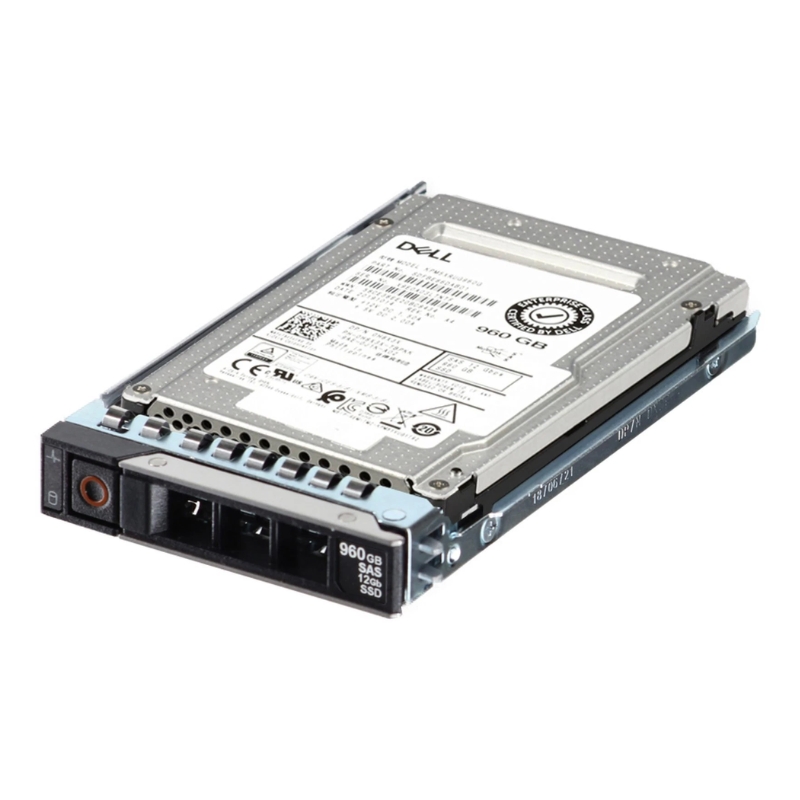


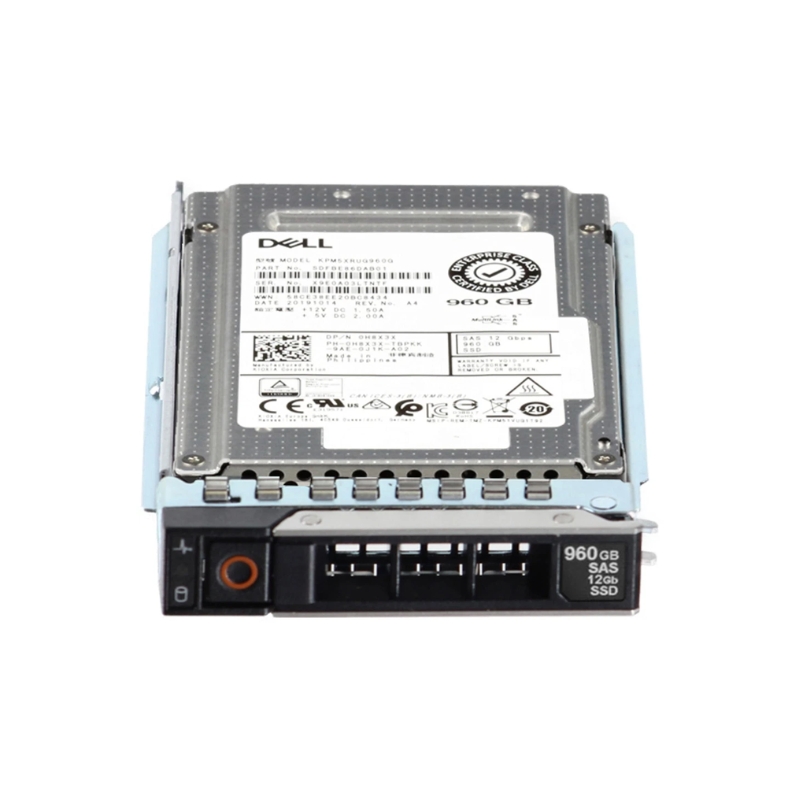
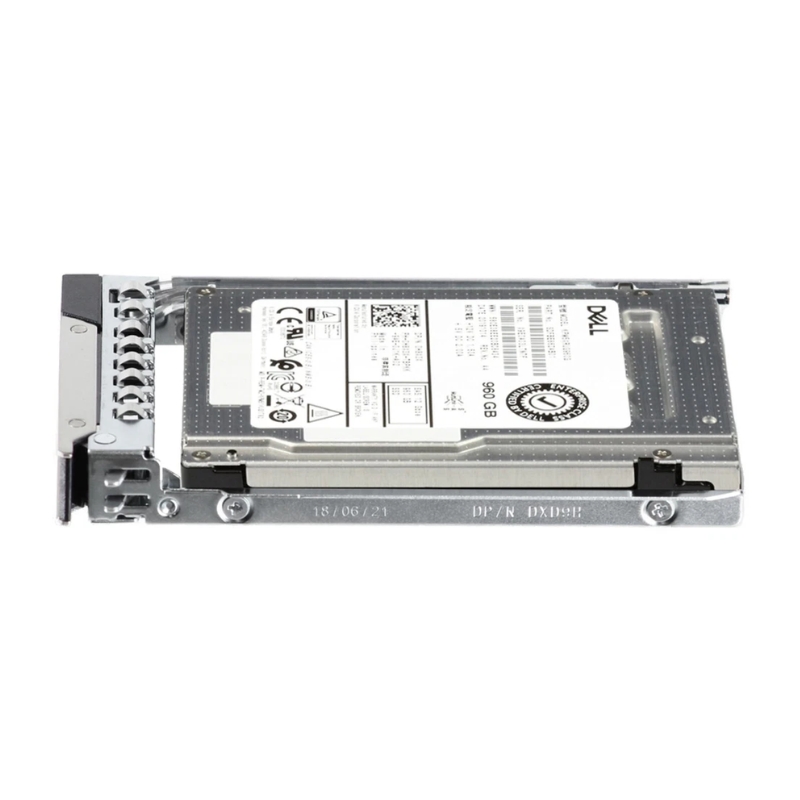
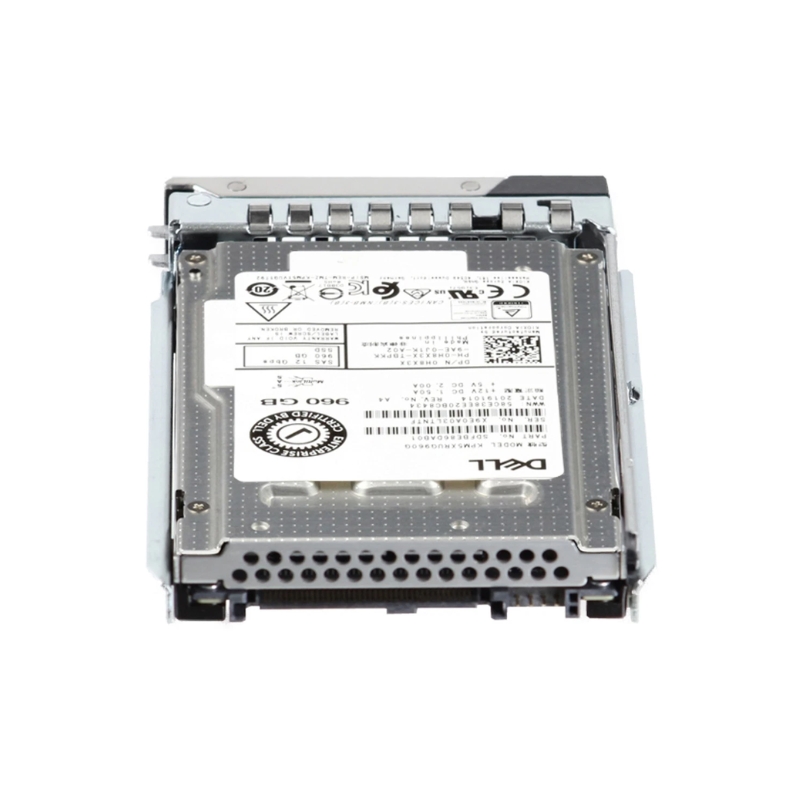
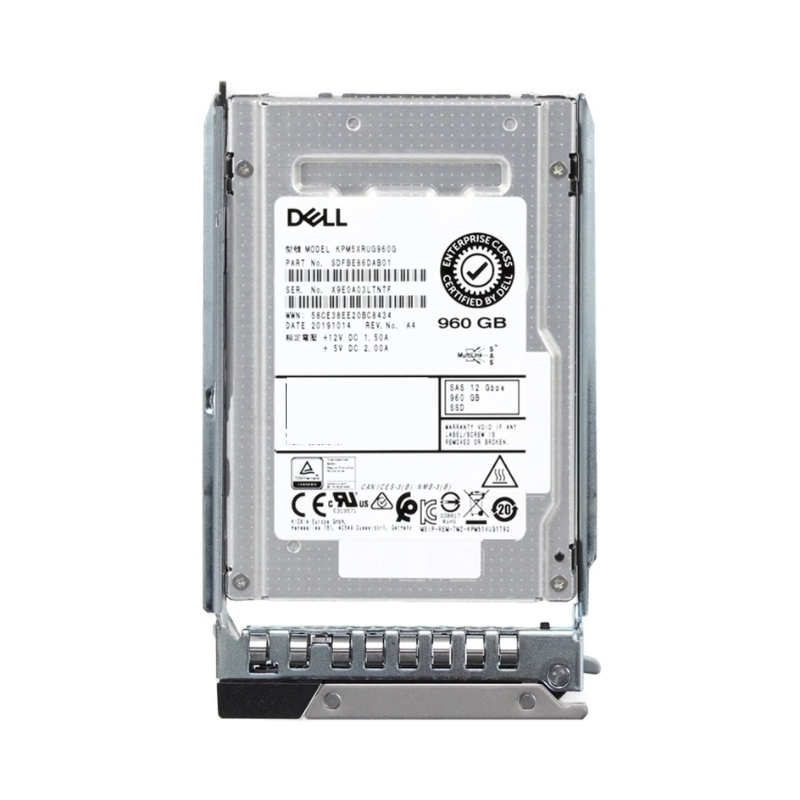
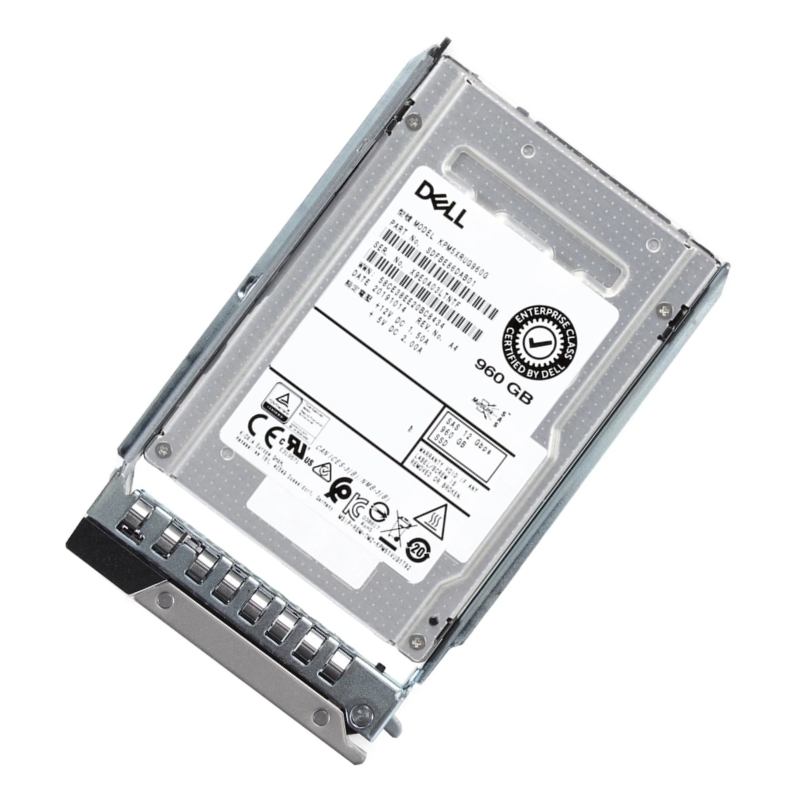
Dell 345-BKGW 960GB SAS-12GBPS RI TLC 2.5inch Hot-plug With Tray For 14g/15g/16g Poweredge Server SSD. New Sealed in Box (NIB) with 1 year Warranty
The Dell 345-BKGW 960GB Self-Encrypting SAS-12Gbps Read Intensive TLC Solid State Drive is engineered for optimal performance and reliability in enterprise environments. Designed for 14G, 15G, and 16G Dell PowerEdge servers, this hot-plug certified SSD delivers enhanced data security, advanced endurance capabilities, and outstanding read speeds that maximize storage efficiency for mission-critical workloads.
Engineered for environments with heavy read operations, this 960GB SAS SSD ensures predictable performance. With its 1 Drive Write Per Day (DWPD) rating, it is optimized for long-term efficiency, minimizing downtime while maintaining data integrity. The self-encrypting technology (SED) adds an additional layer of data protection, making it suitable for industries that prioritize security compliance.
This enterprise-grade Dell SSD is certified for use in a wide range of Dell PowerEdge servers, ensuring seamless integration and consistent reliability. It supports multiple 14th, 15th, and 16th generation PowerEdge platforms, offering IT administrators the confidence of compatibility and stable performance.
The combination of high sequential reads, fast random IOPS, and SAS-3 interface ensures smooth handling of business-critical applications such as database workloads, virtualization, and data analytics.
Built-in self-encrypting drive technology guarantees compliance with strict data protection standards, reducing risks associated with unauthorized access.
The hot-plug 2.5-inch tray provides hassle-free installation and replacement without downtime, enabling businesses to maintain continuous operations.
With its Read Intensive endurance profile, this SSD offers the balance of high performance and cost-effectiveness for workloads dominated by read operations.
The Dell 345-BKGW 960GB 2.5-inch Hot-plug SAS-12Gbps Read-Intensive (RI) TLC solid-state drive (SSD) sits within the enterprise server storage category designed for dependable throughput, consistent latency, and ease of serviceability inside modern data center racks. This drive form factor and interface combination aligns with the mainstream Dell PowerEdge ecosystem, enabling quick insertion and removal from front-accessible backplanes while maintaining dual-port SAS connectivity. As a Read-Intensive class device, it targets workloads dominated by reads, cache layers, content delivery, VDI non-persistent desktops, analytics queries, and general virtualization, delivering a balance of endurance, speed, and cost.
With 960GB of usable capacity, the model provides a practical footprint for OS images, application binaries, database replicas, and warm tier datasets. The use of TLC NAND with enterprise-grade firmware, power-loss protection, and adaptive wear-leveling adds the reliability demanded by production environments. Combined with 12Gbps SAS bandwidth and queue depth scaling, the 345-BKGW functions as a drop-in component for administrators standardizing on 2.5-inch SFF hot-swap bays across servers and storage enclosures.
Category devices like the Dell 345-BKGW are built on enterprise TLC NAND with on-board DRAM for mapping tables and a controller that supports SAS-3 (12Gb/s) link rates. Read-intensive tuning prioritizes low-latency read paths and write amplification controls that protect the flash cells from unnecessary program/erase cycles. Background garbage collection and TRIM-like maintenance processes are executed in ways that minimize user-visible jitter, a hallmark of enterprise SSD design.
TLC (Triple-Level Cell) NAND provides high density with robust error correction. Read-Intensive drives generally offer endurance profiles optimized for workloads with a high read ratio, often positioned around 0.3–1 drive write per day (DWPD) depending on the specific firmware qualification and over-provisioning. The 345-BKGW class integrates advanced ECC (such as LDPC), RAID-like parity within the flash array, and wear leveling to distribute program/erase cycles across the NAND footprint. Power-loss protection capacitors protect in-flight data, preserving metadata integrity during unexpected outages.
The 2.5-inch small form factor (SFF) with a hot-plug carrier integrates seamlessly with front-accessible server bays. Administrators can add, remove, or replace the SSD without powering down the host when storage policy permits, accelerating maintenance windows and reducing mean time to repair (MTTR). LED indicators on compatible carriers communicate activity and fault status, aiding quick identification in the rack.
The Dell 345-BKGW category product is qualified for a broad range of Dell PowerEdge servers and compatible storage arrays that accept 2.5-inch SAS hot-swap drives. Integration typically occurs behind PERC/RAID controllers or SAS HBAs. Mixed drive populations—RI, MI (mixed-use), and WI (write-intensive)—are often supported within the same chassis, though arrays and RAID sets should maintain class consistency to ensure uniform performance and endurance.
When paired with Dell PERC controllers, drive health, predictive failure analytics, and rebuild prioritization can be orchestrated centrally. Administrators should enable patrol reads, define appropriate write-back/write-through policies, and set cache behaviors in alignment with application patterns. Multipath driver configuration in the OS ensures proper use of dual-port redundancy.
Read-Intensive SAS SSDs emphasize predictable read latency and efficient handling of concurrent streams. Typical real-world results include fast random read IOPS, strong sequential read throughput, and consistent mixed read/write performance within the endurance envelope. The 12Gbps SAS link prevents interface bottlenecks for many server use cases and supports scale-out performance with additional drives in a RAID or HBA-attached topology.
For mixed read/write applications—such as light OLTP, logging, or CI/CD artifact storage—RI drives perform well when writes are bursty and not sustained at maximum intensity. RAID level selection (e.g., RAID 10 for higher write performance or RAID 5/6 for capacity efficiency) should match workload durability and throughput goals.
Enterprise SAS SSDs incorporate end-to-end data path protection, cyclic redundancy checks, and strong ECC schemes. The 345-BKGW category also employs power-loss protection capacitors, ensuring controller DRAM contents and critical metadata are safely committed during unexpected power interruptions. Many deployments add another layer of protection via RAID and application-level replication.
The 960GB capacity point offers a flexible building block for tiers that value fast read access and predictable response times. For environments seeking higher aggregate performance, scaling out with multiple drives across striped arrays increases throughput and IOPS. Capacity-efficient RAID levels may be appropriate for datasets with robust application-level replication, while mirrored strategies are suitable for ultra-low latency and high write burst tolerance.
Operational excellence for enterprise SSD tiers includes proactive monitoring, threshold alerts, and capacity headroom. Leverage controller and OS tools to watch media wear, bad block counts, temperature excursions, and link integrity. Implement alerting for SMART attributes and establish service level objectives (SLOs) tied to latency, IO queue depth, and error rates.
Aligning data temperature to the Dell 345-BKGW’s strengths maximizes ROI. Keep hot read datasets, indices, container images, and runtime binaries on RI SSD tiers. Cold archives, backups, and large write-heavy logs can reside on capacity SAS/SATA or object storage. Automated tiering—guided by access patterns—ensures the most frequently accessed blocks remain on the read-optimized tier.
SSDs typically consume less power per I/O than mechanical drives and deliver far superior performance density. Consolidating read-heavy workloads onto 345-BKGW-class drives can reduce rack footprint, power, and cooling demands versus HDD-based tiers for the same application outcomes. Fleet standardization also minimizes e-waste through predictable spares management and extended useful life via careful endurance planning.
When anomalies arise—such as unusual latency spikes, growing media wear counts, or link errors—follow a structured triage. Check firmware levels, examine controller logs, confirm backplane health, and test alternative slots. Use vendor diagnostic tools to read SMART attributes and error registers. If a drive approaches wear thresholds, schedule a proactive replacement during a safe maintenance window to avoid unplanned outages.
As applications scale, moving from mixed media to standardized RI SAS tiers yields predictable operations. Plan refresh cycles based on endurance telemetry, warranty timelines, and platform roadmap transitions. Where NVMe adoption is targeted for ultra-hot datasets, keep SAS RI tiers like the 345-BKGW for broad application pools that prioritize redundancy, stability, and familiar management processes.


 Contact Us
 Information
 Catalog
 Solid State Drives (SSD)
 Network Switches
 Hard Disk Drives
 HBA & Controllers
 PC & Servers
 PC & Server Memory
 CPU & Processors
 Network Routers
 Power Supplies
 Tape Drives & Libraries
 Network Devices
 Computer & Network Cables