(7% discount is applied at checkout)
Cart is empty
Your go-to destination for cutting-edge server products
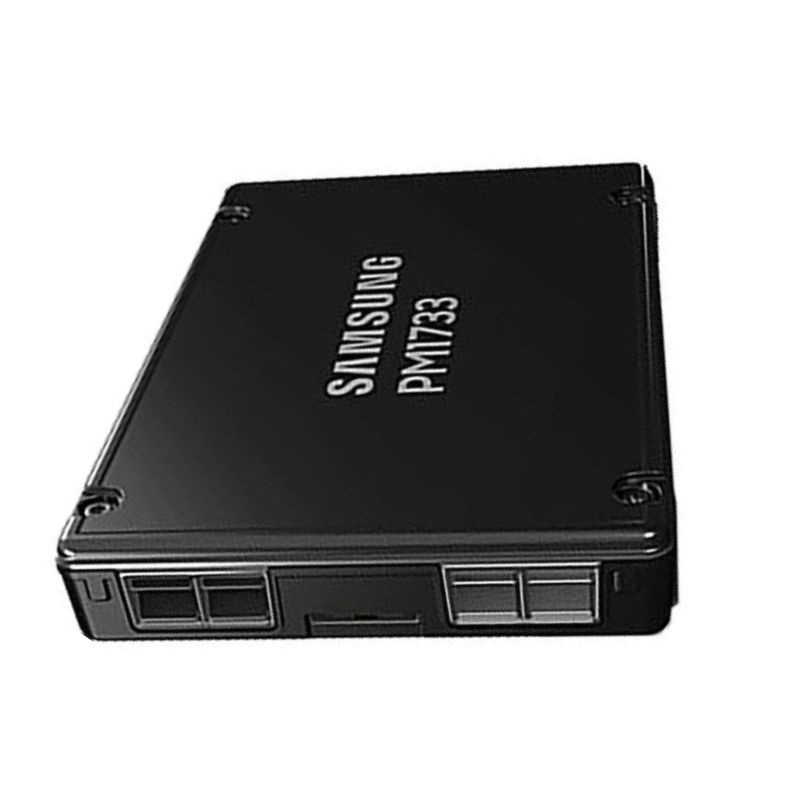


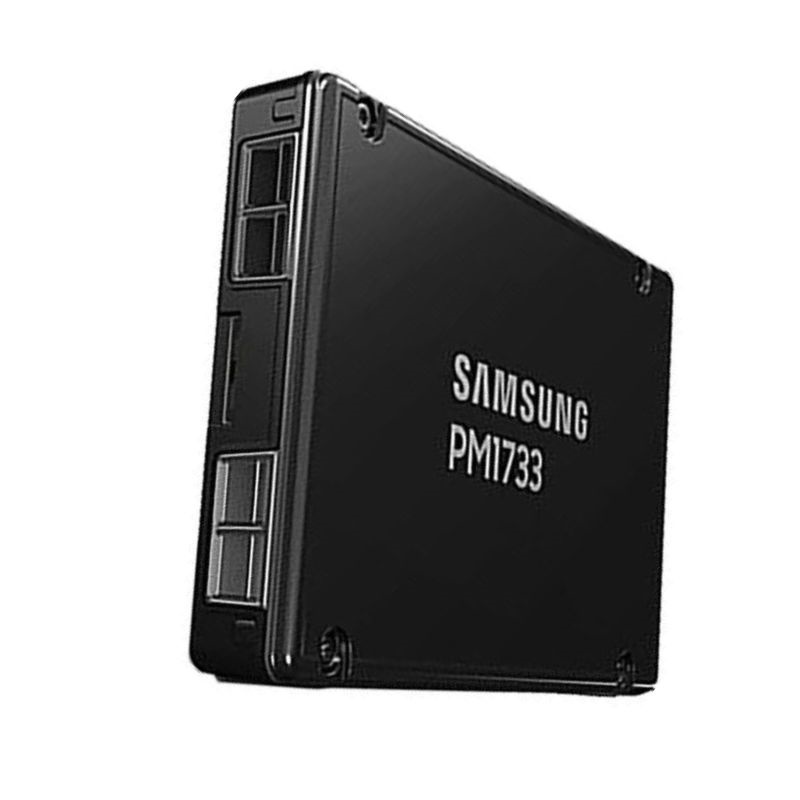
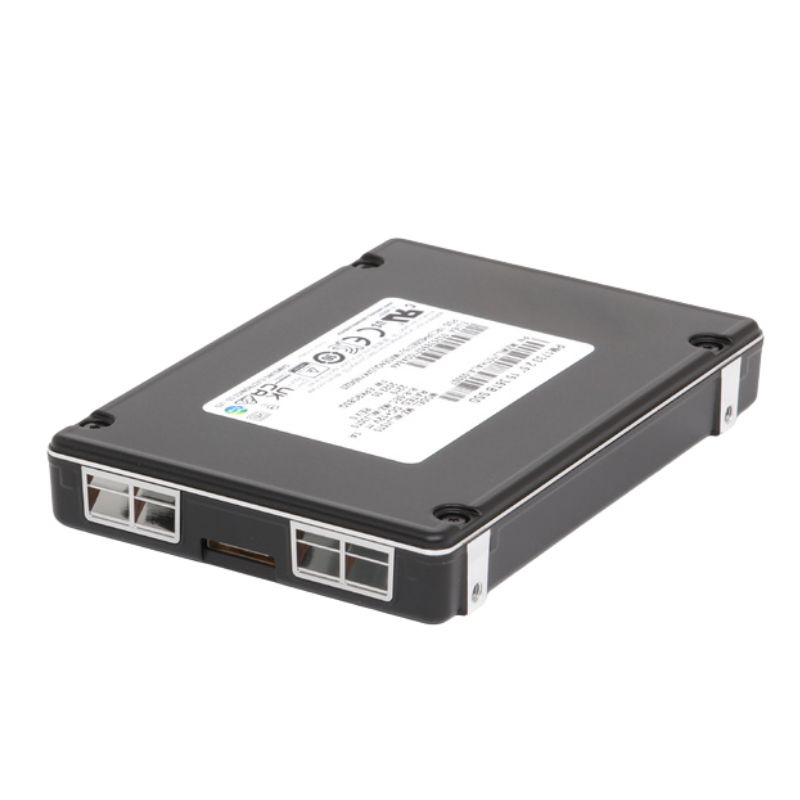
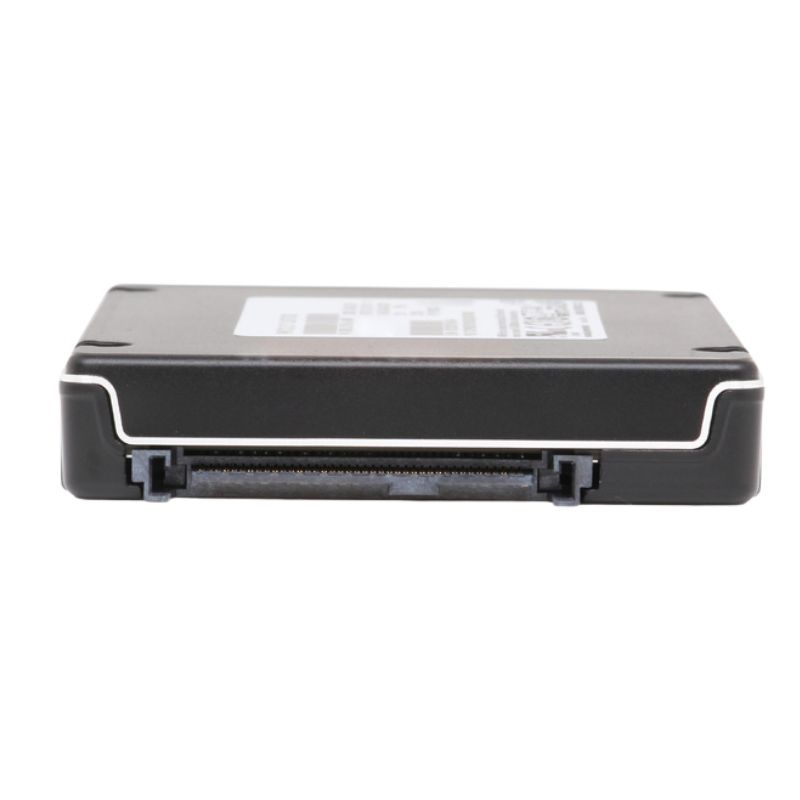
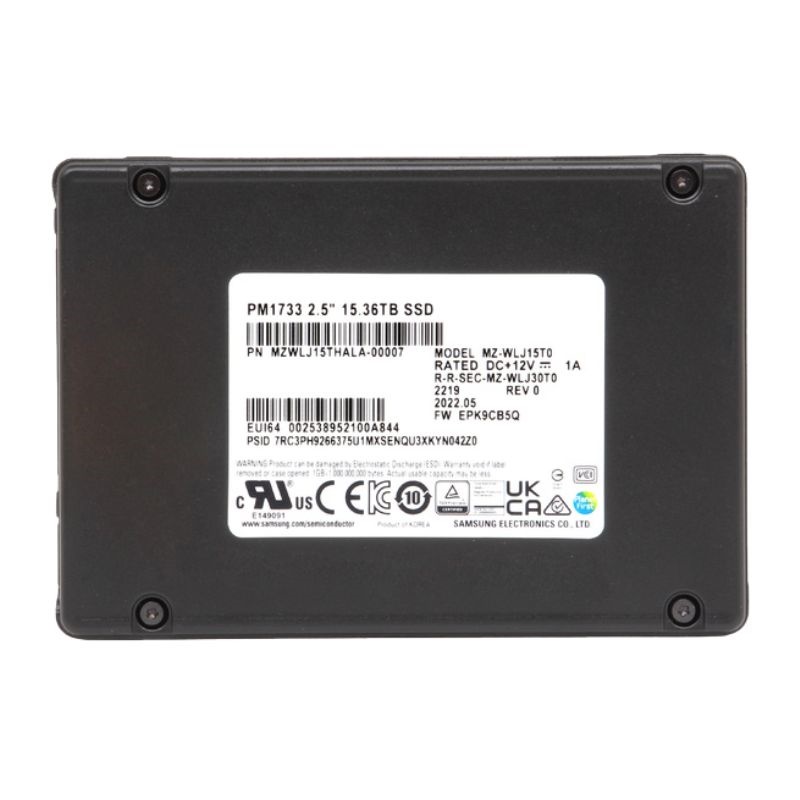
Samsung MZWLJ15THALA-0007 15.36TB PCI-E NVMe Internal Solid State Drive. Excellent Refurbished with 1 Year Replacement Warranty
The Samsung PM1733 MZWLJ15THALA-0007 is a high-capacity enterprise-grade internal SSD engineered for organizations demanding maximum performance, consistent reliability, and advanced storage efficiency. With an impressive 15.36TB storage capacity in a compact 2.5-inch form factor, this drive utilizes PCI Express 4.0 x4 NVMe interface to deliver unmatched speed and responsiveness. Built for demanding server workloads and large-scale data-intensive applications, it is a trusted solution for data centers, cloud storage environments, and mission-critical infrastructures.
Designed for extreme workloads, the Samsung PM1733 showcases outstanding sequential and random performance. The drive can handle massive datasets without latency, ensuring smooth operations for virtualization, analytics, high-transaction databases, and heavy read/write environments.
This enterprise SSD supports 1 DWPD endurance rating, allowing continuous daily writes across its full capacity. Its durability makes it reliable for long-term deployment in environments where uptime and data consistency are critical.
Built with dual PCI Express 4.0 x4 NVMe interfaces, this SSD ensures seamless integration with modern servers and enterprise storage systems. Its 2.5-inch bay compatibility makes it versatile for high-performance deployments in rack-mounted environments.
Businesses gain maximum value from this drive by reducing downtime, scaling storage efficiently, and leveraging its high-speed performance for demanding workloads. It enables IT infrastructure to operate more efficiently while maintaining cost-effectiveness in the long term.
The Samsung MZWLJ15THALA-0007 15.36TB PCI-E NVMe Internal Solid State Drive stands at the intersection of capacity, performance, and durability, making it a compelling choice for organizations that require ultra-fast, always-on storage. As part of the broader category of enterprise NVMe SSDs, this model is engineered for servers, workstations, and professional appliances that leverage the PCI Express interface and the NVMe protocol to minimize latency and maximize throughput. Within this category, buyers often evaluate total bytes written, latency characteristics, mixed-workload behavior, and quality-of-service consistency—areas where high-end NVMe drives excel compared to legacy SATA and SAS SSDs.
With a multi-terabyte footprint, this drive consolidates storage footprints, reduces rack sprawl, and modernizes back-end performance for databases, virtualization clusters, high-resolution media pipelines, and AI/ML scratch spaces. In practical terms, adopting a 15.36TB NVMe SSD can transform nightly batch processes into near-real-time analytics, shrink backup windows, and enable dense VM hosting without sacrificing responsiveness.
NVMe solid state drives populate a spectrum from consumer M.2 modules to enterprise U.2/U.3 and add-in-card solutions. The MZWLJ15THALA-0007 belongs to the enterprise tier, optimized for servers and storage arrays that demand predictable latency and robust data protection. This tier emphasizes sustained performance under constant load, end-to-end data integrity, power-loss protection strategies, and firmware tuned for 24/7 duty cycles.
NVMe drives communicate directly over PCI Express, eliminating the legacy translations found in SATA/SAS stacks. The result is lower overhead, more parallel queues, and the ability to saturate high-bandwidth links with consistent performance even during heavy multitasking. For infrastructure teams, this translates into faster job completion, higher consolidation ratios, and lower TCO when measured against application-level outcomes.
While model-specific figures vary by firmware configuration and system environment, the defining characteristics of this category center on balanced performance, resilient endurance, and advanced reliability features. The MZWLJ15THALA-0007 exemplifies these attributes with a 15.36TB capacity point and a high-speed PCIe NVMe interface designed to sustain demanding, mixed read/write workloads.
Compared to SATA SSDs that are bottlenecked by legacy host controllers, NVMe devices in this class unlock significantly higher queue depths and parallelism. This is especially beneficial for servers running multi-core applications where many threads issue I/O simultaneously. In database and analytics workloads, the result is reduced transaction wait time and improved query completion rates. For media pipelines, editors experience smoother scrubbing, faster render caching, and shorter export times.
Enterprise NVMe SSDs are built to serve as primary storage in mission-critical environments. Beyond raw speed, they prioritize consistent latency, reliability controls, and lifecycle management. The Samsung MZWLJ15THALA-0007 aligns with these expectations, offering administrators a storage component that behaves predictably under stress and integrates into orchestrated fleets.
Workloads vary between write-heavy logging, read-heavy analytics, mixed virtualization, and bursty content creation. Enterprise NVMe SSDs handle these patterns by sustaining consistent IOPS and bandwidth across queue depths. They also maintain performance when the drive approaches high utilization and when the I/O mix shifts rapidly—capabilities that separate enterprise models from consumer-grade alternatives.
In data centers, QoS matters more than peak benchmarks. NVMe drives of this class are optimized to minimize outliers—those 99.9th percentile latencies that can slow an entire microservice chain. When SLAs depend on query and response time, a tighter latency distribution is often more valuable than a higher average throughput figure.
Before adopting the MZWLJ15THALA-0007, confirm that your server or storage chassis supports enterprise NVMe drives across the desired backplane type and PCIe generation. Check controller firmware, BIOS/UEFI settings, and NVMe enablement where applicable. Many modern platforms provide native NVMe hot-swap support, while some require vendor-qualified backplanes.
Enterprise NVMe often uses U.2/U.3 connectors or add-in cards (AICs) for PCIe attachment. Ensure correct cabling, PCIe lane allocation, and thermal design. If deploying in an array, match slots to the controller’s lane bifurcation plan to avoid needless oversubscription. When using PCIe switch cards, confirm firmware compatibility.
Data center operations benefit from hot-swap support, LED slot indicators, and standardized drive carriers. NVMe’s hot-plug workflows are mature in modern platforms, allowing technicians to replace drives without service interruption when the OS and platform firmware are correctly configured.
Enterprise NVMe SSDs deliver impressive performance, but achieving stable results requires thoughtful tuning and monitoring. The MZWLJ15THALA-0007 class of drives responds well to optimized I/O schedulers, aligned block sizes, trimmed/managed over-provisioning, and up-to-date firmware.
Maximize parallel queues in applications that can take advantage. Database engines, message brokers, and analytics frameworks often expose settings to control I/O concurrency. Properly sizing queue depth can increase throughput while avoiding unnecessary context switching or memory pressure.
Align filesystem block sizes with application access patterns. For databases with large page sizes, matching filesystem block sizes can reduce write amplification. For mixed workloads, a balance between block size and queue depth often yields the best QoS.
On platforms that support it, enabling TRIM or scheduled discard keeps free space visible to the SSD controller, improving steady-state performance. Maintaining a reserve of unallocated space—over-provisioning—gives the controller flexibility for garbage collection and wear leveling under sustained writes.
In the enterprise tier, endurance is gauged by sustained daily writes, wear-leveling efficacy, and NAND management strategies. While specific DWPD or TBW values vary by model and deployment, drives in this category are designed for continuous duty. The MZWLJ15THALA-0007 employs firmware techniques that help preserve performance while ensuring that data is written predictably and verified along the path from host to media.
Enterprise NVMe SSDs implement strategies to safeguard in-flight writes against unexpected power events. This may include power-loss circuitry and metadata journaling, ensuring that the drive can recover cleanly and maintain consistency after power is restored.
Health monitoring via SMART attributes and NVMe logs enables administrators to set thresholds, trigger alerts, and replace drives proactively. Tracking media wear, temperature, error-rate trends, and spare-block counts allows for planned maintenance windows and minimal disruption.
With high performance comes a need for proper cooling. Drives in this category are designed to operate in data center thermal envelopes, but enclosure airflow and ambient temperatures must be managed carefully. Under sustained write workloads, temperature monitoring helps prevent throttling and preserves low-latency performance.
Enterprise NVMe SSDs typically deliver superior performance-per-watt compared to mechanical disks and even SATA SSDs, especially under parallel workloads. Consolidating multiple HDDs into fewer high-capacity NVMe devices can reduce total energy consumption and cooling requirements.
Solid state drives are inherently quieter than spinning disks, reducing acoustic output and eliminating rotational vibration concerns. This improves the reliability of neighboring components and simplifies rack-level vibration management.
Choosing a 15.36TB NVMe SSD like the MZWLJ15THALA-0007 opens the door to versatile deployment strategies, from single-node performance upgrades to multi-node storage fabrics.
Place primary tablespaces, redo/transaction logs, or tempdb/scratch volumes on NVMe to reduce latency for critical queries. Scaling read replicas becomes more efficient when replicas read from low-latency media, improving replication lag and read throughput.
Run VM images, container layers, and orchestrator ephemeral volumes on NVMe to accelerate boot, migration, and scaling. With proper QoS controls, multi-tenant clusters can deliver predictable performance across noisy-neighbor scenarios.
Use NVMe as a high-speed ingest tier, cache region, or collaborative project workspace. Multi-stream high-bitrate editing benefits from low seek times and sustained bandwidth, enabling real-time playback and faster rendering across teams.
Administrators may combine enterprise NVMe drives into RAID sets or software-defined storage pools to balance resilience and performance. NVMe’s bandwidth and low latency make parity-based schemes more viable, though mirroring and erasure coding strategies should be selected based on workload characteristics and recovery objectives.
Platforms such as Ceph, Gluster, and NVMe-over-Fabrics benefit from enterprise NVMe drives as object, block, or file backends. When deploying SDS, ensure network fabrics (25/40/100GbE or Fibre Channel with NVMe/FC) can keep pace with local device performance.
NVMe-oF extends NVMe semantics across the data center network, enabling remote pools with nearly local performance. This lets teams decouple compute and storage while maintaining the low-latency characteristics demanded by real-time applications.
Enterprise NVMe SSDs frequently support security features to protect sensitive data at rest and during service events. While specifics vary, organizations should consider encryption, secure erase, and sanitization procedures as part of their compliance posture.
Limit administrative access to firmware and SMART tools, and maintain detailed audit trails. Logging of drive events enhances incident response readiness and supports forensic analysis if needed.
Procure from vetted channels to ensure genuine firmware and full warranty support. Maintain records of serial numbers and deployment locations for asset management and compliance audits.
Lab benchmarks provide valuable guidance, but production workloads reveal true behavior. When evaluating the MZWLJ15THALA-0007, test with your actual data and access patterns. Replay representative traces, simulate peak hours, and measure tail latencies. Consider how deduplication, compression, and encryption interact with your application and storage stack.
Look beyond peak numbers to latency percentiles and QoS stability. If you observe performance cliffs under specific patterns, consider tuning queue depth, block sizes, and filesystem options, or adjust over-provisioning to stabilize steady-state performance.
For aggregate performance, combine multiple NVMe drives with software RAID, LVM, ZFS pools, or SDS platforms. Ensure adequate PCIe lanes and a network fabric that matches the storage subsystem to prevent bottlenecks elsewhere.
Longevity stems from proper thermal management, controlled firmware updates, and attentive monitoring. Treat NVMe as a living component in your infrastructure—observable, tunable, and upgradable.
Even with enterprise reliability, resilient data strategy is essential. Combine snapshots, replication, and offsite backups for layered protection. NVMe’s performance shortens backup windows and enables more frequent recovery points.
Maintain operational headroom to avoid performance degradation as the drive fills. Plan capacity expansions ahead of time and employ auto-scaling where supported.
A storage protocol crafted for non-volatile memory over PCI Express, providing low latency and high parallelism.
Peripheral Component Interconnect Express—high-speed serial expansion bus used to attach NVMe SSDs directly to the CPU complex.
Endurance metrics: Drive Writes Per Day and Total Bytes Written. Useful for matching storage to write intensity.
Quality of Service. In storage, it refers to predictability of latency and performance under load, not simply peak throughput.
NVMe over Fabrics—extends NVMe across network transports (like RDMA, TCP, or Fibre Channel) while preserving low-latency semantics.
Below are sample approaches to leveraging the Samsung MZWLJ15THALA-0007 15.36TB PCI-E NVMe Internal Solid State Drive in different environments. Adjust to your application and platform specifics.
The Samsung MZWLJ15THALA-0007 15.36TB PCI-E NVMe Internal Solid State Drive represents the enterprise NVMe category’s promise: massive capacity, low-latency performance, and robust reliability. For data-centric organizations—whether powering customer-facing apps, accelerating analytics, or streamlining multimedia production—this class of NVMe SSD provides a pragmatic path to better service levels and lower total cost of ownership.
Validate platform compatibility, define performance targets, and establish monitoring baselines. With those elements in place, integrating this NVMe drive into your infrastructure can deliver immediate, measurable improvements across critical workloads.


 Contact Us
 Information
 Catalog
 Solid State Drives (SSD)
 Network Switches
 Hard Disk Drives
 HBA & Controllers
 PC & Servers
 PC & Server Memory
 CPU & Processors
 Network Routers
 Power Supplies
 Tape Drives & Libraries
 Network Devices
 Computer & Network Cables