(7% discount is applied at checkout)
Cart is empty
Your go-to destination for cutting-edge server products
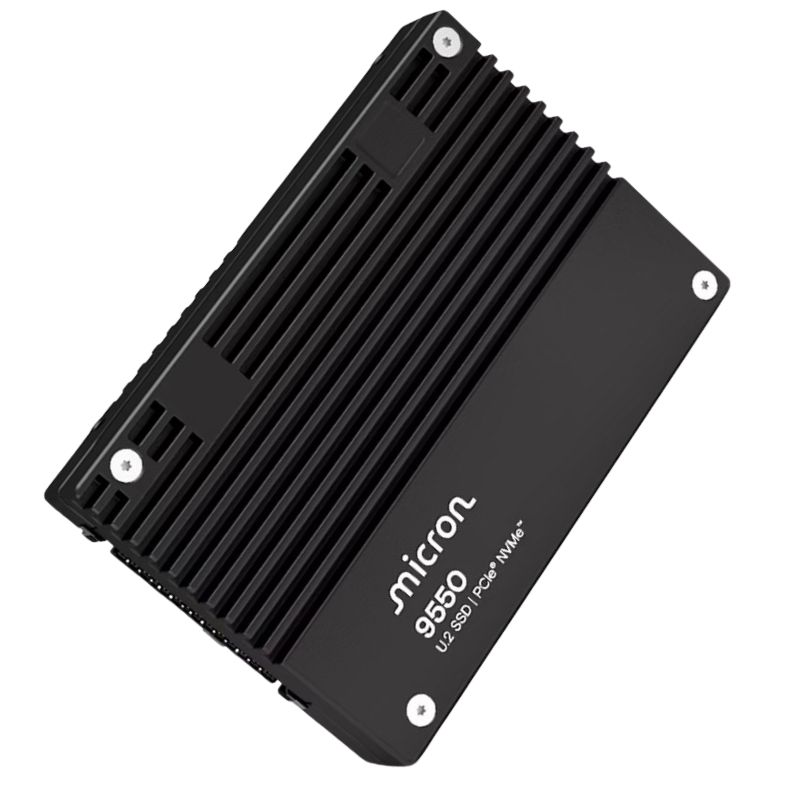


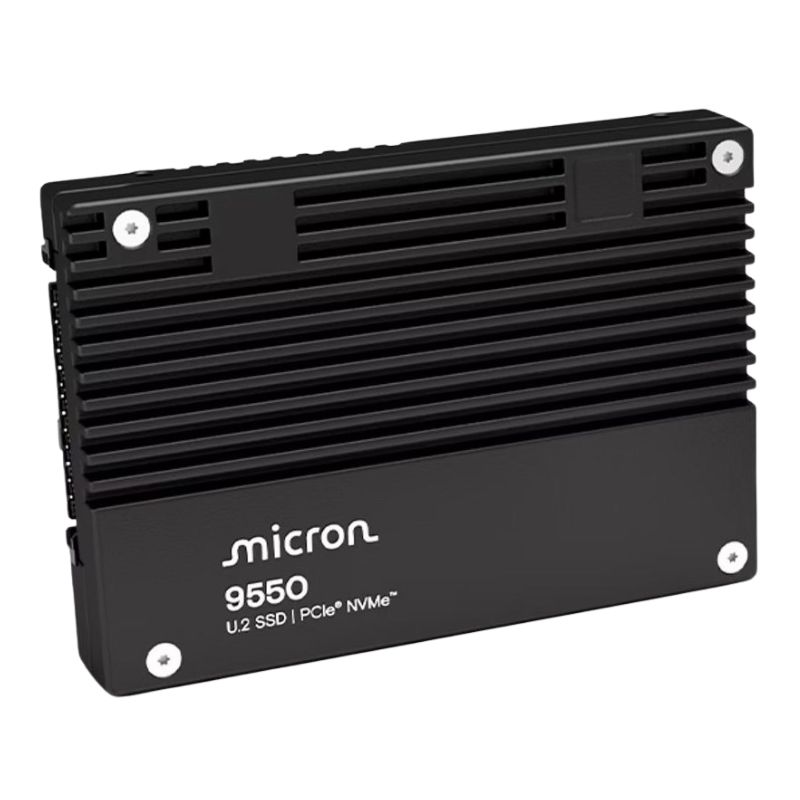
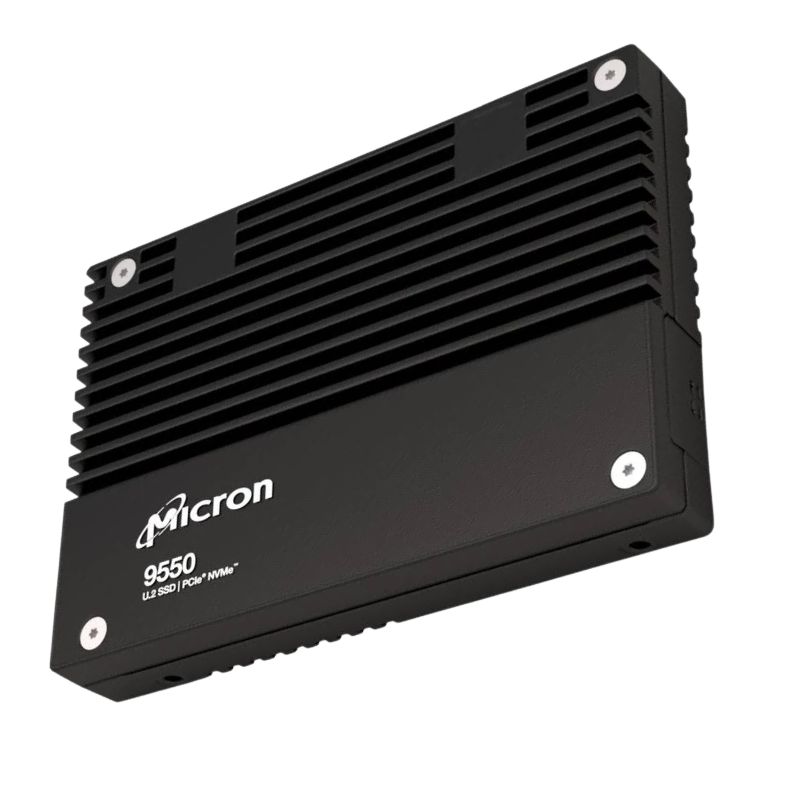
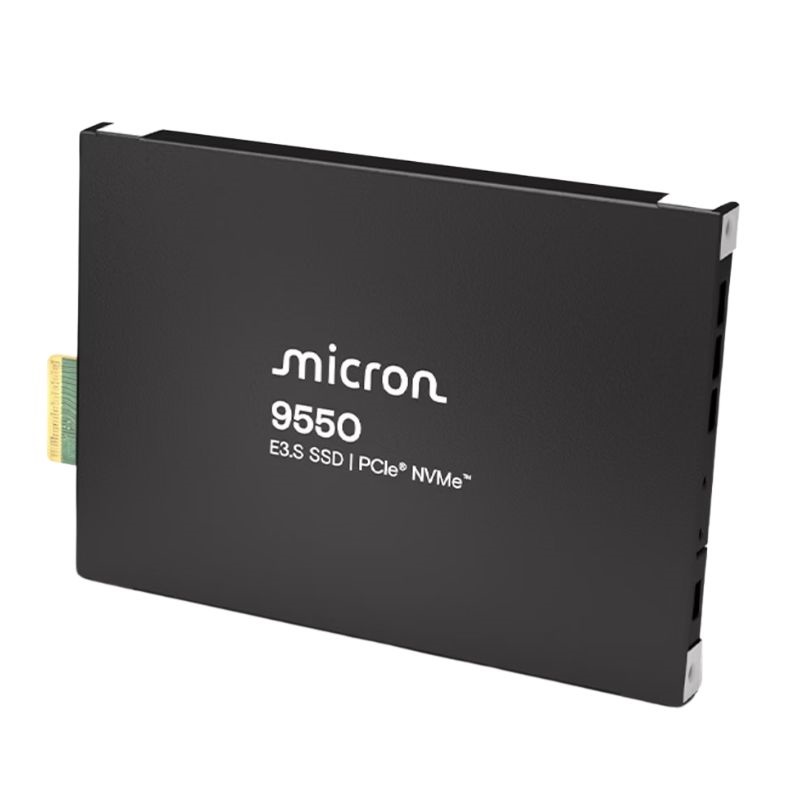
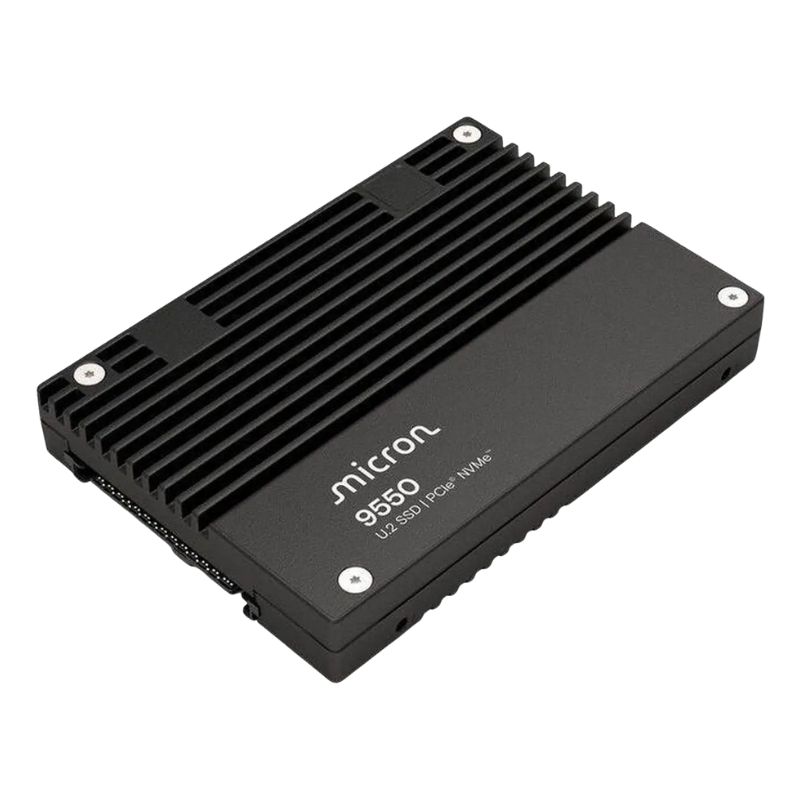
Micron MTFDLBQ25T6THB-1BK1DABYY 9550 MAX 25.6TB E3.S NVMe Solid State Drive. New Sealed in Box (NIB) with 3 Years Replacement Warranty
The Micron 9550 Max 25.6TB NVMe E3.S Solid State Drive delivers unparalleled efficiency, offering enterprises a storage solution designed for heavy workloads and data-intensive applications. Built on advanced Micron 3D TLC NAND technology, this drive ensures ultra-high performance with a balance of endurance, capacity, and energy efficiency, making it a perfect choice for next-generation data centers.
Detailed Feature Breakdown
Built with Micron’s proprietary 3D TLC NAND technology, this SSD ensures robust performance with high endurance. Enterprises gain confidence in consistent speed, lower latency, and enhanced write endurance.
The NVMe protocol delivers drastically lower latency and faster command processing compared to legacy SATA and SAS drives. This ensures the Micron 9550 Max can handle modern enterprise workloads without bottlenecks.
At just 7.5mm thickness, the E3.S form factor allows higher storage density per rack unit. This is especially critical for organizations scaling up data centers while maintaining energy and space efficiency.
With a rated 2 million hours MTTF, the Micron 9550 Max ensures long-term dependability. Enterprises can deploy this SSD with confidence, knowing it is designed to withstand heavy workloads over years of operation.
The MTFDLBQ25T6THB-1BK1DABYY Micron 9550 MAX 25.6TB E3.S NVMe Solid State Drive represents the high-capacity, enterprise-class tier of solid-state storage built for modern data-center workloads. As a product category description, this section explores the defining characteristics, deployment scenarios, optimizations, and decision factors you should consider when evaluating this drive or a family of similar Micron 9550 MAX E3.S NVMe products.
The E3.S form factor is specifically engineered for modern server platforms that demand high density and flexible thermal/power envelopes. When selecting a 25.6TB E3.S NVMe drive, review your server chassis compatibility, drive-slot mechanical adapters (if any), and backplane NVMe mappings.
E3.S modules provide an advantageous combination of capacity per rack unit and thermal footprint. In high-density server blades or storage nodes, using 25.6TB E3.S drives lowers the number of devices required to achieve petabyte-scale storage compared with smaller form factors, which simplifies management and can reduce points of failure.
Drives in this category are engineered to deliver consistent performance under enterprise loads. Focus areas when assessing performance include sequential throughput, random I/O (4K/8K), and tail latency at scale. Real-world performance is affected by workload pattern, host firmware, queue depth, and parallelism across namespaces.
NVMe protocols prioritize low-latency access paths. For workloads that need high sustained bandwidth—such as large-object streaming, content delivery, or backup target nodes—the 25.6TB Micron 9550 MAX class is tuned to maintain throughput over long write windows and heavy read bursts.
Enterprise-grade SSDs emphasize a combination of NAND wear management, end-to-end data protection, and firmware resilience. The 25.6TB capacity and enterprise positioning suggest provisions for strong endurance, background media management, and multi-layered protection mechanisms.
When planning how many drives you need for a given TBW (terabytes written) budget, account for workload write amplification, RAID/erasure code overhead, and flash-level wear leveling. High-capacity drives reduce the number of devices required, but they also concentrate endurance risk into fewer units — planning should reflect that tradeoff.
Security features in this class of SSDs are oriented around data-at-rest protection, secure erase, and integration with enterprise key management systems. For compliance-conscious environments, the drive’s support for industry-standard encryption (e.g., TCG Opal, FIPS-capable modules where offered) and secure provisioning workflows is essential.
For large-scale deployments, integrate drive-level encryption with centralized key management systems to enable remote key rotation, audit logging, and automated key lifecycle policies. Check vendor documentation for supported KMS platforms and protocols.
Visibility into drive health, performance counters, temperature, and SMART attributes is critical for predictive maintenance and capacity planning. Devices in this family expose telemetry designed to feed fleet-monitoring tools and enterprise dashboards.
Integrate drive telemetry into existing monitoring stacks (Prometheus, Nagios, Splunk, etc.), set thresholds for proactive replacement, and automate alerts for latency deviations, rising re-try counts, or thermal excursions.
The Micron 9550 MAX 25.6TB E3.S NVMe SSD category is well-suited for a range of enterprise and hyperscale workloads where high capacity, low latency, and manageability intersect. Below are common deployment scenarios and why enterprises choose this class of drives.
Validate the drive in a staging environment that mimics production topology and workload patterns to uncover subtle interactions, such as driver timeouts, firmware quirks, or thermal throttling under sustained peak load.
High-capacity NVMe devices generate measurable heat during heavy I/O. E3.S modules are designed to operate within a specific thermal envelope; however, system-level airflow design and power budgeting are essential for consistent long-term performance.
When maximizing capacity density, measure power-per-TB to compare holistic efficiency across possible drive choices. While larger single drives reduce the number of devices, they concentrate power draw and thermal load — account for this when selecting racks and cooling designs.
Capacity scaling strategy and total cost of ownership (TCO) should weigh device cost, density benefits, endurance per dollar, and operational overhead. Consolidating onto larger-capacity NVMe drives can reduce chassis and controller costs, but it also requires robust redundancy planning to mitigate the impact of a single large-device failure.
When consolidating TBs into fewer drives, implement erasure coding or RAID with cross-node redundancy to mitigate rebuild times and the probability of correlated failures. Rebuild times on very large drives can be long; design the protection scheme accordingly.
Placing the Micron 9550 MAX 25.6TB E3.S in context helps procurement teams weigh tradeoffs against competing drive families, whether smaller capacity NVMe drives, U.2/U.3 form factors, or high-capacity HDDs for cold storage.
E3.S is optimized for density and thermal/power efficiency in hyperscale and blade servers, while U.2/U.3 devices may be more common in legacy rack servers and certain vendor ecosystems. Consider slot population limits and thermal characteristics when choosing between form factors.
HDDs still offer a lower $/TB for cold or infrequently accessed data. However, NVMe drives deliver orders-of-magnitude better latency and far higher throughput for active datasets, analytics, and transactional systems. Deploy NVMe where performance and agility justify the higher cost-per-TB.
Purchasing enterprise NVMe SSDs involves considering warranty terms, support SLAs, firmware update policies, and long-term availability. Negotiate clear replacement windows and firmware maintenance support for large fleets.
Understand vendor timelines for firmware support and end-of-life notices. Combine indexed inventories and firmware tracking to ensure that drive firmware remains compatible with platform and orchestration updates over time.
While enterprise NVMe drives support hot-swap in many platforms, ensure the system is certified for hot-removal of E3.S modules and follow electrostatic discharge (ESD) safe handling procedures to protect the drive and system board.
Routine maintenance keeps high-capacity drives operating reliably. Include proactive checks for SMART thresholds, event logs, and performance regressions. Establish runbooks for common events like thermal throttling, firmware rollbacks, and RMA replacements.
For latency spikes: check queue depth, host CPU contention, and thermal conditions. For sudden errors or media faults: capture device logs, preserve data contexts (avoid overwriting logs), and liaise with vendor support with full telemetry attached.
Workloads that benefit most include high-performance databases, virtual machine density consolidation, content-delivery caches, analytics nodes, and any application where low latency and high throughput are required while maintaining a compact device footprint.
Non-Volatile Memory Express — an interface and protocol designed for modern SSDs to minimize latency and maximize parallelism.
Enterprise and Datacenter SSD Form Factor (E3 Small) — a compact, dense module format optimized for server blade and hyperscale nodes.
Terabytes Written — a metric describing endurance; use it with workload profiling to estimate drive lifespan.
Self-Monitoring, Analysis, and Reporting Technology — health metrics exposed by storage devices for predictive maintenance.
Sample meta/snippet phrasing for SERP visibility: "Micron 9550 MAX 25.6TB E3.S NVMe — enterprise-grade, ultra-high capacity NVMe SSD ideal for dense server deployments, databases, and analytics clusters." Use variations of this language across titles, alt-tags, and category summaries to increase relevance for search queries targeting "Micron 9550", "25.6TB NVMe", and "E3.S SSD".
A few items often missed during procurement and rollout:
Keep firmware revisions consistent across fleets where possible — mixed firmware levels can produce variability in performance, SMART reporting, or compatibility with storage orchestrators.
When reclaiming or rebalancing data, large single drives can complicate redistribution algorithms. Design automated rebalancing workflows and account for the I/O impact during data migration windows.
Large-capacity drives may have longer operational lifetimes in some workloads but plan for graceful replacements and automated re-provisioning to minimize service disruption when drives reach end-of-life thresholds.
The following snapshot outlines the type of specification language you might see in procurement documents. Treat it as a template for RFP language rather than an exact technical guarantee.
Below are stylized examples demonstrating how organizations might deploy high-capacity E3.S NVMe drives for business outcomes.
A content provider consolidates cache tiers using 25.6TB E3.S devices to reduce node count, increasing per-node capacity while maintaining sub-millisecond fetch times for hot objects. The result: fewer servers, simplified routing, and faster cache warm-ups.
An analytics platform re-architects I/O-heavy aggregation jobs to run on nodes armed with 25.6TB NVMe drives to reduce network shuffles and localize working sets, shortening query times and lowering the overall compute footprint required for peak-period processing.


 Contact Us
 Information
 Catalog
 Solid State Drives (SSD)
 Network Switches
 Hard Disk Drives
 HBA & Controllers
 PC & Servers
 PC & Server Memory
 CPU & Processors
 Network Routers
 Power Supplies
 Tape Drives & Libraries
 Network Devices
 Computer & Network Cables