(7% discount is applied at checkout)
Cart is empty
Your go-to destination for cutting-edge server products
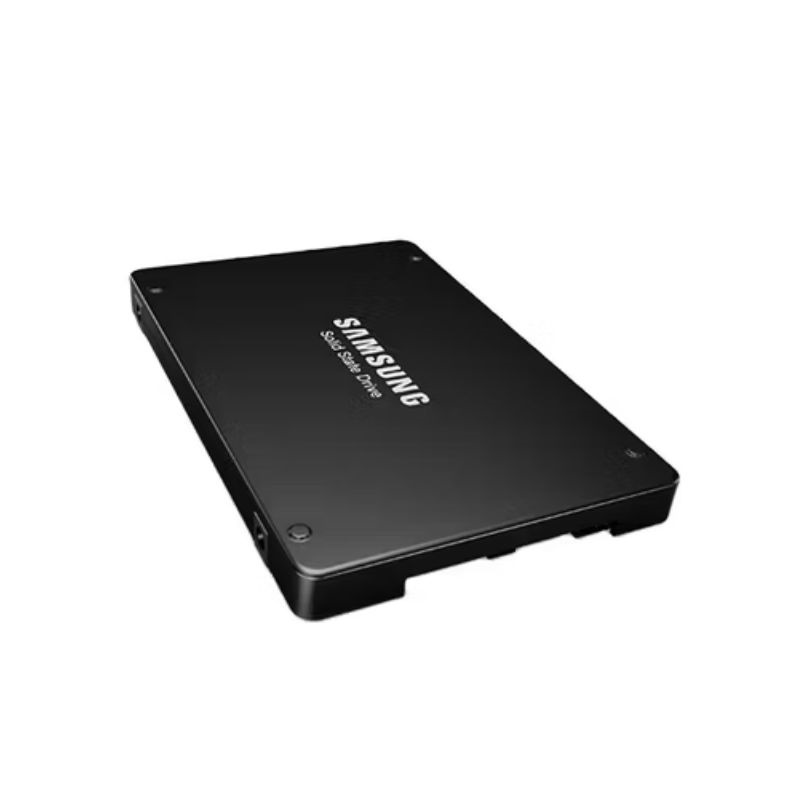


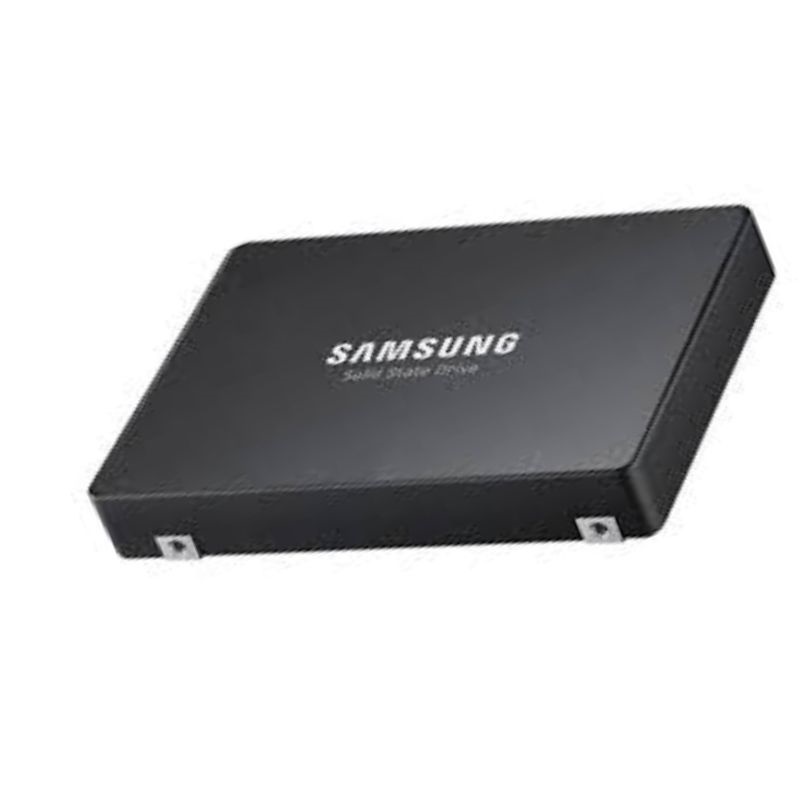
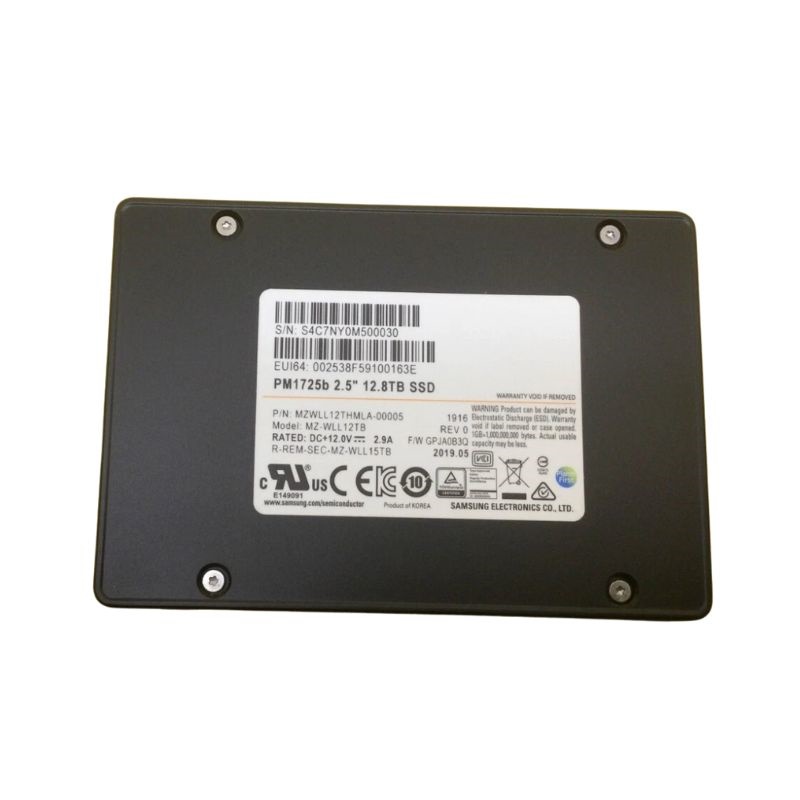
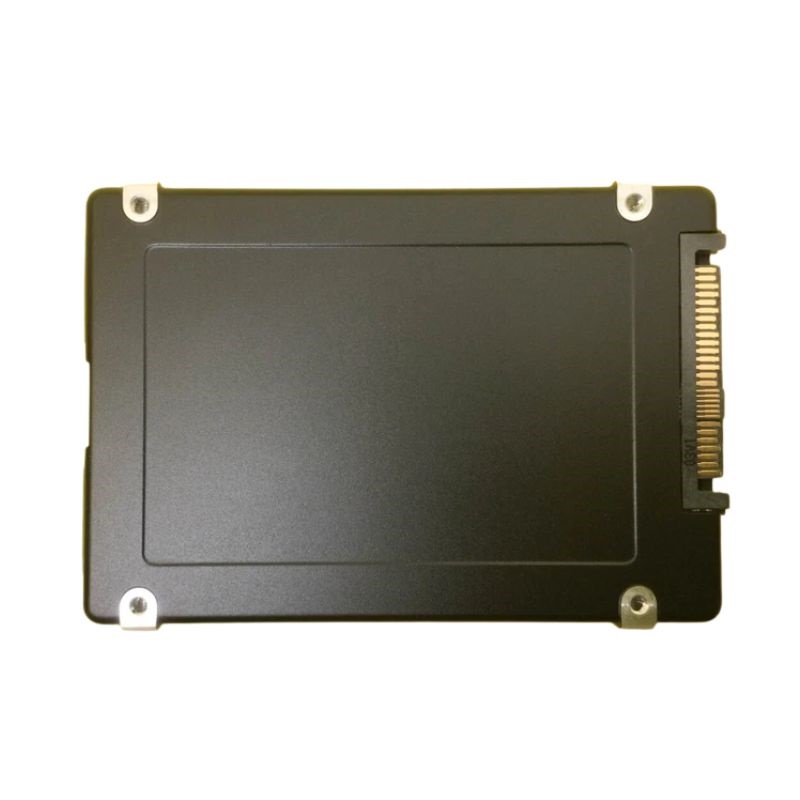
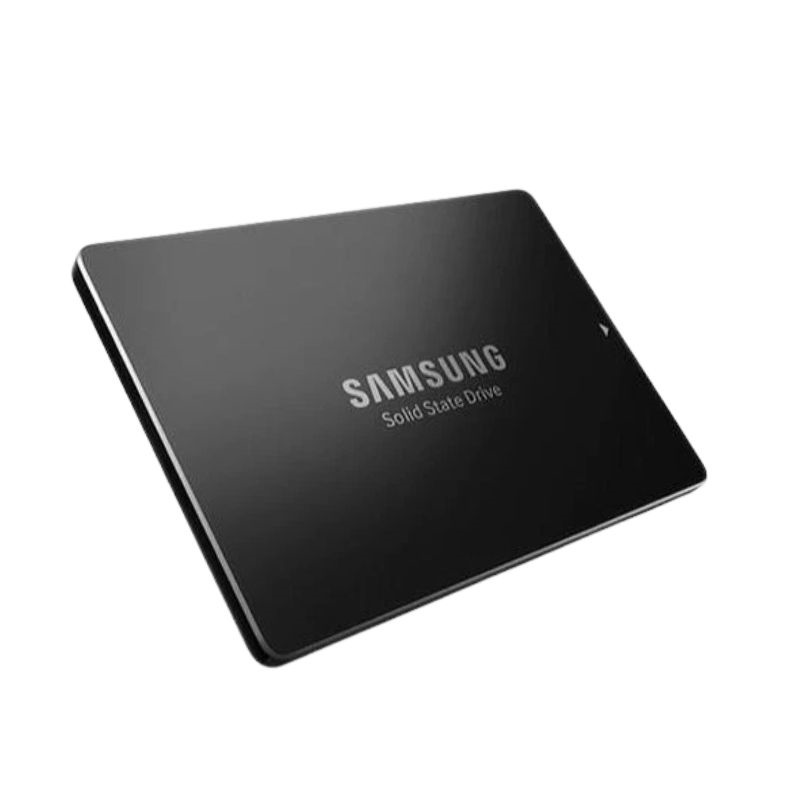
Samsung MZWLL12THMLA PM1725b 12.8TB PCI-E Dual Port 2.5inch Internal SSD. New Sealed in Box (NIB) with 3 Years Warranty
The Samsung PM1725b MZWLL12THMLA is a high-capacity enterprise-grade internal solid-state drive designed for exceptional performance, reliability, and durability. With its PCIe Gen3 x4 / Dual Port x2 interface, 12.8TB storage capacity, and 2.5-inch form factor, this SSD is tailored to meet the demanding needs of data centers, enterprise applications, and mission-critical workloads.
Engineered with Samsung’s advanced V-NAND technology, this SSD combines impressive endurance with outstanding efficiency. Its design ensures long-term stability for businesses handling large-scale data.
Built to deliver blazing-fast performance, the Samsung PM1725b ensures superior input/output operations and ultra-low latency. This makes it ideal for high-performance computing, virtualization, and cloud infrastructure.
Designed for modern businesses, the PM1725b series balances speed, capacity, and reliability. Its dual-port design ensures uninterrupted operation, even in cases of hardware failure. With massive storage and high throughput, it’s the perfect solution for enterprise data centers, virtualization clusters, and high-traffic database applications.
Samsung is renowned for innovation and quality in flash storage technology. The PM1725b leverages years of expertise, delivering unmatched efficiency, consistent performance, and extended reliability for organizations that demand uncompromising storage solutions.
The Samsung MZWLL12THMLA—part of the PM1725b enterprise NVMe family—delivers high-capacity solid-state storage in a 2.5-inch U.2 form factor designed for mission-critical servers. Built for sustained performance, predictable latency, and robust data protection, this 12.8TB model integrates PCI Express Gen3 connectivity with NVMe command efficiencies to accelerate modern workloads. Its flexible link design supports either a single PCIe Gen3 x4 path or dual-port x2 operation for high availability environments where seamless failover and multipath I/O are essential. With enterprise-grade components, end-to-end data protection, and power-loss safeguards, it is a dependable choice for data centers, virtualization clusters, container platforms, edge nodes, and performance-sensitive databases seeking dense flash capacity without sacrificing resilience.
As organizations consolidate storage footprints and shift latency-sensitive applications to NVMe, the PM1725b series provides a mature, field-proven platform. The MZWLL12THMLA SKU pairs very large usable capacity with consistent I/O behavior across mixed read/write patterns and queue depths. Whether the deployment requires front-end web services with high request concurrency, real-time analytics pipelines, or log-intensive microservices, the drive’s steady throughput profile helps stabilize tail latency and reduces jitter that can disrupt service-level objectives.
Leveraging NVMe’s lean command set and parallelism, the PM1725b streamlines I/O submission and completion across multiple queues, minimizing overhead per operation compared with legacy SAS/SATA. In practical terms, this translates to fast access for small, random transactions and high sequential bandwidth for large block transfers. On PCIe Gen3 links, the drive attains strong throughput while maintaining consistent latency, enabling balanced performance across read-intensive, write-heavy, and mixed workloads.
A defining capability of this 2.5-inch U.2 model is its dual-port mode, which exposes two independent PCIe x2 paths. In redundant topologies—such as dual-controller servers or clustered nodes—each port can be connected to separate hosts or separate root complexes to provide path redundancy. If one path or controller experiences a fault or planned maintenance event, the alternate path keeps storage online, protecting application uptime. Dual-port NVMe is especially valuable in shared-nothing architectures, software-defined storage, and scale-out databases where continuity is paramount.
Enterprise environments demand verifiable data integrity. The PM1725b applies end-to-end protection mechanisms that check data as it travels from the host interface through buffers, controllers, and flash media. With support for data path parity and configurable protection information, silent data corruption risks are mitigated and detection is improved. Many deployments pair these features with file systems or volume managers that support checksums, providing multiple layers of verification from application to media.
To guard against unexpected outages, the drive includes power-loss protection (PLP). On loss of external power, onboard energy stores commit in-flight data and critical metadata to non-volatile media, reducing the risk of partial updates or mapping table inconsistencies. PLP complements the use of journaled databases, write-ahead logging, and transactional file systems to maintain atomicity and durability without excessive performance penalties.
Beyond headline throughput, predictable latency is where NVMe shines in production. The PM1725b’s controller firmware and wear-management algorithms are tuned to deliver stable response times even as the drive ages, fills, and encounters varying queue depths. This steadiness helps maintain p99 and p999 latency targets that matter to user experience, real-time bidding, financial trades, and API response budgets in microservices.
Hypervisors and container runtimes benefit from the PM1725b’s combination of capacity and I/O parallelism. Hosting many virtual machines or Kubernetes pods on a single host requires rapid context switching between mixed random and sequential streams. NVMe’s multiple submission and completion queues allow per-VM or per-pod isolation, improving fairness and reducing interference. The 12.8TB capacity simplifies storage planning by consolidating hot datasets, template libraries, and ephemeral cache layers on fewer drives and PCIe lanes.
OLTP databases, time-series stores, and key-value engines often operate within tight service-level agreements. The PM1725b’s steady random read and write performance is suitable for write-ahead logs, redo/undo logs, index files, and hot tables. Administrators can place log files on a dedicated namespace or volume while keeping data files on another, using filesystem-level QoS or the drive’s own features to balance contention. Dual-port support adds an extra layer of protection for clustered database nodes that need persistent shared access with failover.
Stream processors and low-latency analytics pipelines ingest continuous data and transform it into actionable insights. The PM1725b can absorb sustained write streams and serve concurrent query traffic with predictable latency. This is particularly relevant for security event ingestion, APM/telemetry storage, IoT edge gateways, and observability stacks (logs, metrics, traces) where hot windows of data must be immediately queryable.
Web caches, CDN edge nodes, and API gateways profit from the drive’s swift random access. Frequently requested objects—thumbnails, compiled templates, compressed assets—can be retained in flash for instant delivery, reducing backend pressure and egress costs. In edge compute sites with limited rack space and power budgets, the 2.5-inch U.2 package provides dense capacity with fewer devices to manage.
SDS platforms (Ceph, vSAN-style clusters, NVMe-oF targets, and similar systems) rely on fast local media for both data and metadata. The PM1725b helps shorten rebuild windows and improves small I/O responsiveness that can otherwise bottleneck distributed writes. Its dual-port flexibility supports shared enclosures or dual-path topologies, and its predictable latency keeps cluster operations—like rebalancing, scrubbing, or snapshotting—within acceptable maintenance windows.
The MZWLL12THMLA comes in a standard 2.5-inch U.2 format that fits common NVMe backplanes in enterprise servers. This provides serviceability benefits: hot-swap trays, tool-less carriers, and front-panel status LEDs streamline field maintenance compared with internal, add-in PCIe cards. U.2 also aligns with familiar storage expansion processes, enabling rapid scale without internal cabling complexity.
Enterprise NVMe drives generate heat under sustained load, and the PM1725b is engineered with a thermal envelope compatible with standard server airflow patterns. Administrators should verify that chassis fan profiles and front-to-back air paths meet the drive’s cooling needs. Power consumption scales with activity; reserving adequate power headroom ensures consistent performance during bursts, rebuilds, or background maintenance routines.
The PM1725b incorporates advanced wear-leveling and bad block management. By distributing writes evenly across cells and proactively retiring marginal blocks, the drive sustains performance while extending service life. Firmware-coordinated garbage collection and spare area allocation reduce write amplification, particularly in mixed workloads where random writes can otherwise degrade over time.
Comprehensive SMART attributes expose health metrics—total bytes written, percentage life used, temperature history, media errors, and more. NVMe log pages enable programmatic monitoring via modern tooling and orchestration systems. Operators can set alerts on thresholds to schedule replacements or maintenance before applications are affected.
NVMe namespaces allow segmentation of capacity for different tenants, applications, or file systems, each with its own set of attributes. Combined with security features such as secure erase and optional encryption support (when enabled by system policy), administrators can safely repurpose drives, enforce data separation, and streamline return-to-service workflows during lifecycle operations.
In typical enterprise scenarios, the PM1725b delivers high sequential bandwidth for large file transfers and strong random IOPS for I/O-intensive queries. While performance specifics depend on workload, queue depth, firmware, and system configuration, administrators consistently value the drive for its steady behavior under pressure—especially when datasets include a mix of small and medium block sizes. Sustained performance is particularly evident during concurrent operations such as replication, backup, and compaction where lesser drives can exhibit sharp degradation.
The hallmark of the PM1725b line is predictable latency. Even during internal maintenance events—like background defragmentation or cell refresh—the controller is tuned to cap worst-case response times. This keeps long-tail latency within bounds, improving the reliability of distributed systems that are sensitive to stragglers, head-of-line blocking, and cascading slowdowns.
When many services share the same drive, prioritization becomes critical. The PM1725b works well with OS-level and hypervisor-level QoS policies (I/O schedulers, cgroups, storage classes) to prevent noisy neighbors from monopolizing the queue. Setting reasonable per-tenant IOPS and bandwidth limits protects overall service quality while preserving performance bursts for latency-sensitive tiers.
A single 12.8TB NVMe device can replace multiple smaller SATA or SAS SSDs, reducing the number of failure points, power connectors, and monitoring targets. Fewer drives means faster maintenance, fewer carriers, and simplified inventory. In density-constrained racks, consolidating onto high-capacity U.2 NVMe frees bays for additional compute or external interconnects.
Many organizations deploy the MZWLL12THMLA as an upper-tier cache for hot data while colder data sits on capacity-optimized media. Tiering engines can promote frequently accessed content to the PM1725b automatically, leading to noticeable reductions in access latency without migrating entire datasets. This hybrid approach keeps budgets in check while preserving end-user responsiveness.
With generous capacity and swift clone creation on the host file system or SDS layer, development teams can spawn test environments rapidly. The drive’s low latency shortens CI/CD feedback loops, quickens package installations, and accelerates dependency resolution. For machine images, container layers, and golden templates, the PM1725b provides the headroom necessary to maintain many versions without frequent cleanup cycles.
Keep firmware levels aligned across hosts to avoid path negotiation anomalies. Implement consistent host timeouts and retry policies so that failovers are quick but not so aggressive that they cause unnecessary flapping during transient slowdowns. Test full path isolation, link reset, and controller reboot scenarios as part of your DR playbook.
Mixed workloads are the rule in multi-tenant environments. Use I/O schedulers that fairly allocate queue depth among services. Where possible, separate write-heavy logs from read-heavy indexes by namespace or logical volume to limit interference. Periodic review of block size distributions and cache hit ratios helps keep the drive in an optimal working set.
Garbage collection, TRIM operations, snapshots, and scrubs can cause activity spikes. Schedule them during low-traffic windows and apply rate limits where supported. The PM1725b handles these tasks gracefully, but aligning them with predictable cycles simplifies capacity and performance planning.
When repurposing or retiring drives, use NVMe secure erase or cryptographic erase (if enabled) to sanitize data. Document procedures to comply with internal governance and external standards. Keep audit logs of sanitization events tied to asset tags and serials for traceability.
Limit administrative access to hosts that manage the drive. Use change control for firmware updates and configuration changes. Pair out-of-band management with multi-factor authentication for maintenance actions that could impact availability.
The PM1725b family represents a mature Gen3 NVMe platform that emphasizes stability, high availability via dual-port options, and generous capacities like 12.8TB. While newer generations increase per-lane bandwidth, the PM1725b continues to offer excellent value in environments where Gen3 backplanes remain standard or where dual-port support is a requirement. Its proven controller and firmware stack make it a reliable anchor for mixed enterprise workloads.
Compared with SAS/SATA SSDs, NVMe reduces protocol overhead and unlocks deeper parallelism, often leading to lower latency and higher IOPS per device. Transitioning to NVMe—especially in U.2 form factor—allows organizations to reuse familiar 2.5-inch serviceability while moving to a next-generation performance profile. The PM1725b’s capability to operate in dual-port configurations provides a bridge for teams accustomed to SAS multipath resiliency.
Place write-ahead logs or transactional journals on dedicated namespaces backed by the PM1725b. Size queue depth to match log writer threads, and enable barriers or fsync semantics aligned with the database’s durability requirements. Expect steadier commit latency and reduced tail-latency spikes during checkpoints.
For telemetry stacks, maintain the last several days—or the current hot window—on the PM1725b, with older data tiered to capacity storage. Query heavy dashboards gain responsiveness, and background compactions complete more quickly thanks to predictable write behavior.
Boot storms and profile logons stress small-block random reads. Hosting the VDI golden images and user profile caches on the MZWLL12THMLA reduces logon times and improves user experience, especially during morning spikes or patch cycles.
Align partitions to the drive’s internal page boundaries and select a filesystem block size that matches predominant I/O. For many enterprise workloads, 4K blocks are a sound default, but larger blocks may help sequential workloads at the cost of some small-IO efficiency. Benchmark representative workloads before finalizing to find the sweet spot for your environment.
Reserving a small portion of capacity as spare area can help the controller maintain lower write amplification and more consistent latency in heavy random write situations. This is particularly useful in SDS nodes and database backends where background processes continuously modify data.
Keep a change log of firmware versions, release notes, and observed behavior. Apply updates during controlled windows with rollback plans. Consistency across nodes in a cluster reduces variability and simplifies troubleshooting.
By consolidating many workloads onto fewer high-capacity NVMe drives, organizations can shrink overall power and cooling consumption per unit of performance delivered. The PM1725b’s efficient controller and Gen3 interface balance performance with manageable thermal output, making it suitable for high-density deployments in standard server chassis.
U.2 hot-swap capability, standardized carriers, and accessible front-loading simplify field replacement. Fleet management benefits from uniform SKUs like the MZWLL12THMLA, reducing spare stocking complexity and enabling faster recovery when failures occur.
Use the MZWLL12THMLA as the top tier for read-intensive indices, hot keys, and logs. Middle tiers can hold warm datasets, while archival data resides on lower-cost media. Automated policies migrate data between tiers based on recency, frequency of access, and cost targets. This model maximizes the premium performance of NVMe while keeping total storage spend controlled.
While the drive itself focuses on raw performance and integrity, upstream systems may apply compression and deduplication. For example, log streams compress efficiently, and VM templates deduplicate well across tenants. This reduces the footprint on the 12.8TB tier and extends the effective capacity of hot storage.
In dual-port deployments, simulate pulling one path and observe application continuity. Verify that failover completes within expected timeouts and that no data integrity events occur. Restore the path and confirm load balancing resumes.
Stress I/O during elevated ambient conditions to verify that fan policies keep temperatures within guidance. Track any throttling events and adjust airflow or workload placement accordingly.
While PLP safeguards in-flight data, testing controlled power interruption scenarios—using lab equipment or power shelves—helps validate recovery procedures and confirms that services reattach volumes cleanly.
Consolidating workloads onto high-capacity NVMe like the 12.8TB PM1725b reduces the number of devices needed for a given performance target, lowering material consumption and eventual e-waste. Better performance per watt also contributes to greener operations over the life of the deployment.
As applications evolve, drives can be securely sanitized and repurposed for less demanding roles. Clear wipe procedures and health criteria ensure that redeployed units continue to meet reliability expectations, extracting maximum value from each asset.
The PM1725b’s dense capacity and consistent performance make it viable for both scale-up (adding more capacity in the same node) and scale-out (distributing across many nodes) strategies. Choose based on failure domains, operational preferences, and the need for localized vs. distributed performance.
Even as later-generation PCIe standards become common, many environments retain PCIe Gen3 backplanes for years. The MZWLL12THMLA provides a stable platform for these systems while accommodating dual-port resiliency. When infrastructure evolves, it can continue to serve reliably in secondary roles, dev/test clusters, or edge sites.
Non-Volatile Memory Express, a protocol designed for flash that streamlines command sets and supports deep parallelism to reduce latency and CPU overhead.
A 2.5-inch physical interface for NVMe SSDs that allows front-accessible hot-swap service similar to traditional enterprise storage bays.
A configuration exposing two independent PCIe paths to a single device, enabling redundant connections for high availability and multipath I/O.
A hardware-assisted feature that safely commits in-flight data and metadata to non-volatile media when external power is lost.
For many stacks, 12.8TB offers enough headroom to consolidate hot working sets, indices, and logs without splitting across multiple devices. The result is simpler provisioning, fewer volumes to manage, and consistent performance from a single fast tier.
Enterprise features—PLP, end-to-end protection, SMART telemetry—are not add-ons; they are core to stable, long-running systems. The PM1725b line emphasizes these capabilities so that operators can meet uptime and data integrity goals even under heavy, continuous use.
12.8TB Samsung PM1725b U.2 NVMe with dual-port x2: consistent performance, enterprise-grade protection, and hot-swap serviceability for mission-critical servers.
Consolidate workloads with the MZWLL12THMLA—PCIe Gen3 NVMe, dual-port availability, power-loss protection, and end-to-end integrity in a compact 2.5-inch form factor.


 Contact Us
 Information
 Catalog
 Solid State Drives (SSD)
 Network Switches
 Hard Disk Drives
 HBA & Controllers
 PC & Servers
 PC & Server Memory
 CPU & Processors
 Network Routers
 Power Supplies
 Tape Drives & Libraries
 Network Devices
 Computer & Network Cables