(7% discount is applied at checkout)
Cart is empty
Your go-to destination for cutting-edge server products
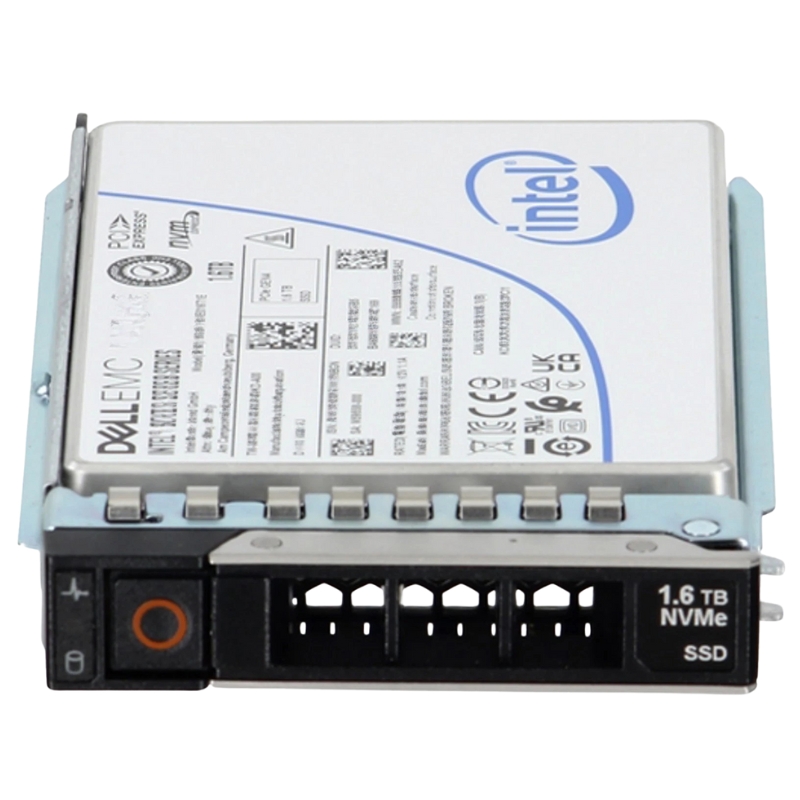


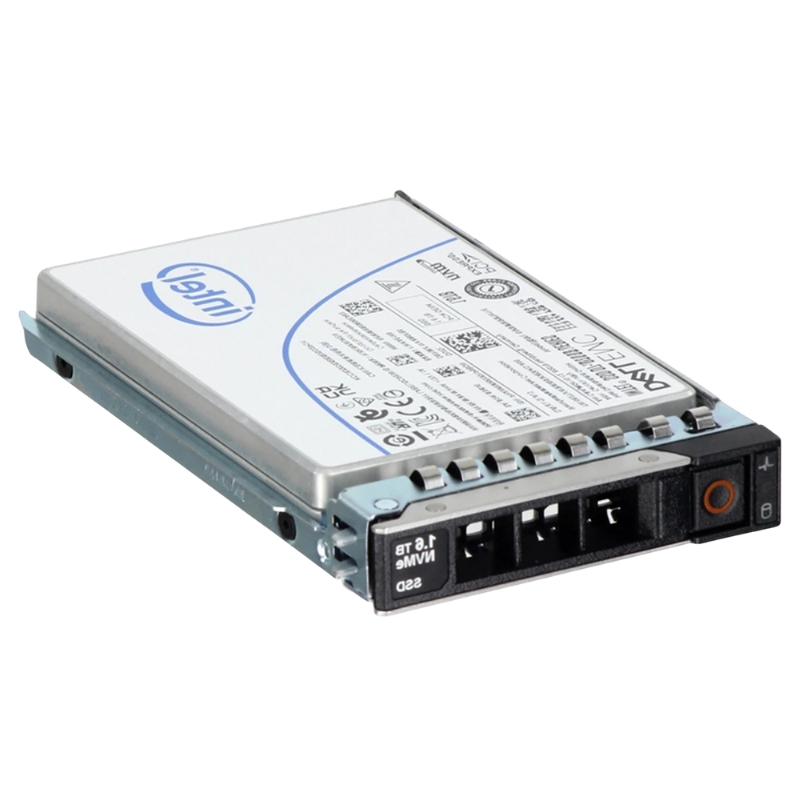
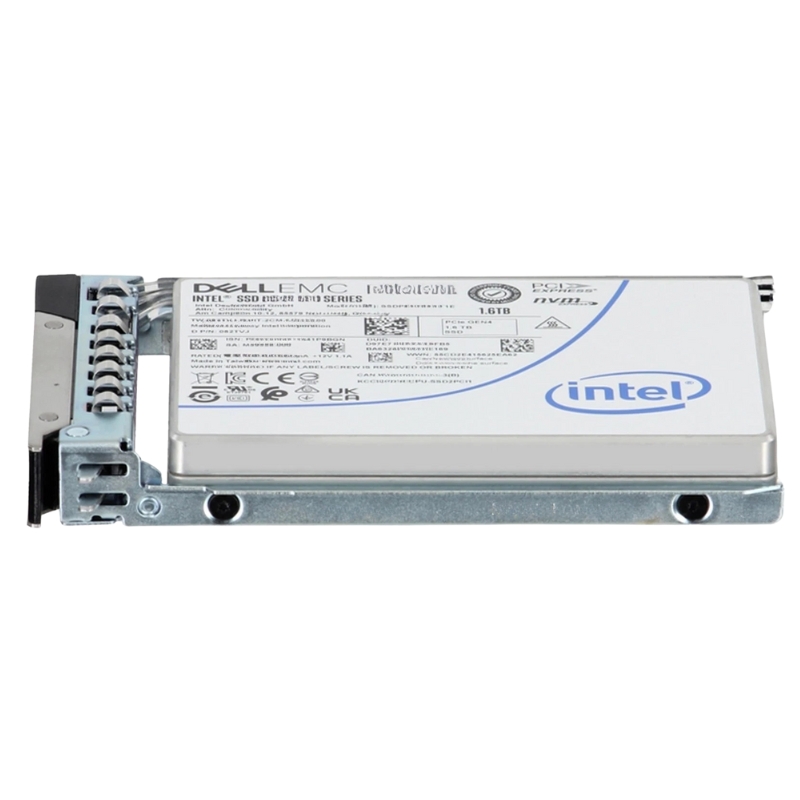
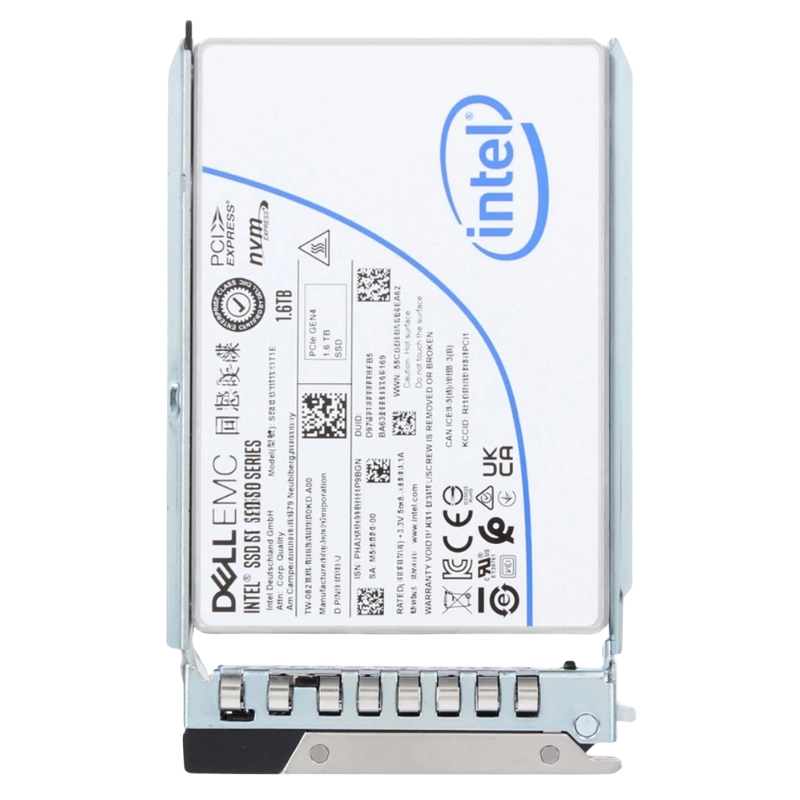
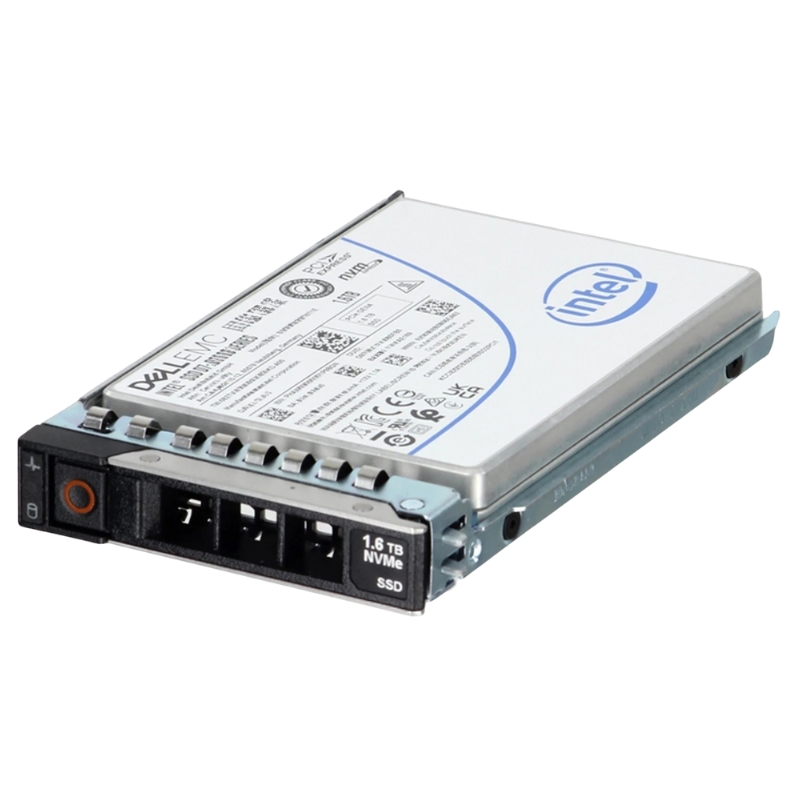
Intel SSDPF2KE016T9E 1.6TB 2.5Inch D7-P5600 PCI-E NVMe Mixed Use SSD. Excellent Refurbished with 1 year replacement warranty. Dell Version
This analysis provides a detailed examination of the Intel D7-P5600, a high-performance internal solid state drive engineered for demanding data center and enterprise applications.
The Intel D7-P5600 (model SSDPF2KE016T9E) represents a pinnacle of storage technology, designed to accelerate data-intensive workloads with exceptional reliability.
This storage solution delivers exceptional velocity and input/output operations, crucial for reducing latency in server environments.
Engineered for mixed-use scenarios, this drive sustains high performance across read-intensive and write-activity workloads, ensuring consistent operation in enterprise storage systems, data analytics, and virtualized environments.
The Intel SSDPF2KE016T9E 1.6TB belongs to a focused category of enterprise-class, mixed-use NVMe solid-state drives (SSDs) designed for demanding data center workloads that need a balance of high throughput, low latency, strong quality-of-service (QoS) and sustained endurance. This category sits at the intersection of performance and durability: drives engineered to serve high-I/O transactional applications, mixed read/write databases, virtualization and general purpose block storage in rack servers and storage arrays. The 2.5-inch, U.2 (or equivalent 2.5in enterprise) form factor combined with PCIe NVMe interface places these drives where modern data centers expect them — compact, hot-swappable, and optimized for the shortest possible data paths between host CPUs and persistent flash media.
Mixed-use NVMe SSDs like the SSDPF2KE016T9E are targeted at workloads where read and write activity are both significant and sustained over time. Typical use cases include:
The 2.5-inch mechanical profile of the Intel SSDPF2KE016T9E provides broad compatibility with server bays and enterprise storage sleds. Mechanically, the drive is designed for hot-swap operation in standard enterprise chassis. Electrically and logically, the NVMe protocol over PCIe provides multiple lanes of high bandwidth and native command queuing optimized for SSDs, minimizing CPU overhead compared with legacy SAS/SATA protocols. The NVMe stack additionally exposes powerful features such as namespaces, multi-queue IO, and advanced telemetry that storage administrators leverage for fine-grained performance tuning and monitoring.
Mixed-use enterprise drives commonly ship as PCIe Gen3 x4 or Gen4 x4 devices depending on model and market generation. Regardless of generation, the NVMe architecture optimizes parallelism via multiple submission and completion queues, enabling higher IOPS and lower latency under multi-threaded workloads. For data centers upgrading to newer platforms, verifying host platform NVMe lane support and driver/firmware compatibility is an essential part of deployment planning.
Performance in this SSD category emphasizes a combination of high steady-state throughput and strong small-block random IO performance. Typical metrics customers evaluate include sequential read/write throughput (MB/s), random read/write IOPS (4K and 8K), and latency percentiles (average, 99th, and 99.9th). Mixed-use enterprise drives are engineered to maintain high IOPS under mixed 70/30 or 60/40 read/write ratios and to deliver consistent latency even as the drive reaches steady state.
Under realistic multi-tenant workloads, performance characterization must include tail latency (e.g., 99th percentile) since outliers can severely affect application SLAs. Drives in this category typically aim to keep p99 latency within a narrow band during mixed workloads while delivering exceptionally high random IOPS at queue depths common to server environments. System architects evaluate these characteristics using industry tools (FIO, vdbench) and realistic I/O profiles drawn from production telemetry.
While random I/O is the headline for many enterprise OLTP environments, sequential throughput remains important for bulk operations such as snapshot replication, backups, and large file transfers. A 1.6TB mixed-use NVMe drive balances parallelism and internal flash bandwidth to provide strong sequential performance during large transfers without long degradation cycles.
Endurance in mixed-use SSDs is measured in drive writes per day (DWPD) or total bytes written (TBW) over the warranty period. This category is tuned for moderate to high endurance to support continuous mixed read/write activity over multi-year deployments. Enterprise-grade controllers, firmware-level wear-leveling, strong ECC algorithms, and power-loss protection mechanisms are common features to safeguard data and prolong service life.
Enterprise SSDs often incorporate capacitive or firmware-assisted power loss protection to flush write caches and complete in-flight writes in a controlled manner in the event of unexpected power interruptions. Data path protection extends from the host interface through internal DRAM caches and controller buffers to the NAND media, ensuring that metadata and user data remain consistent and recoverable after abrupt power events.
Modern enterprise SSDs deploy sophisticated error correction codes and background media management to detect and correct bit errors, remap failing blocks, and proactively retire suspect NAND. SMART/health telemetry exposes critical indicators — spare capacity, media wear, uncorrectable errors, and temperature metrics — enabling predictive maintenance and integration with data center monitoring systems.
Firmware is the intellectual heart of enterprise NVMe SSDs. It orchestrates flash management, garbage collection, wear leveling, and QoS priorities while exposing vendor tools and APIs for monitoring and updates. The category emphasizes drives with robust firmware update mechanisms, vendor management utilities, and support for NVMe management features such as NVMe-Mgmt, NVMe command sets and vendor extensions for telemetry.
Integration with host telemetry systems is a key differentiator. Drives provide SMART attributes, NVMe namespaces and log pages, and vendor-specific telemetry to report performance counters, endurance remaining, and internal error rates. Datacenter operators depend on these signals to automate maintenance, schedule firmware upgrades proactively and to trigger replacement before drives approach critical thresholds.
Enterprise deployments require strict control of firmware versions. The category emphasizes a secure update process (signed firmware images, rollback protection) and rigorous validation — enterprise firmware updates should be planned and tested under representative loads to avoid service interruptions.
When selecting a mixed-use NVMe SSD, compatibility with the server platform, storage controller and OS NVMe driver stack is essential. Data center engineers should validate BIOS/UEFI NVMe support, NVMe hotplug behavior, and that the OS recognizes NVMe namespaces correctly. Integration best practices include ensuring firmware versions are supported by the hardware vendor and testing drives in a staging environment under target workload profiles.
2.5-inch NVMe drives may be deployed in hot-swap bays, sleds, or dedicated NVMe backplanes. Proper airflow and thermal management are critical: NVMe SSDs under heavy load generate more heat than SATA drives. Ensure proper chassis fan curves and drive caddies are in place to avoid thermal throttling that affects performance and longevity.
While NVMe SSDs excel as single-drive performance accelerators, many deployments use them behind software-defined storage or hardware RAID controllers. The category supports configurations where NVMe drives become part of local RAID arrays, caching tiers, or as direct-attached high-performance volumes. Administrators should account for rebuild times, appropriate spare drive provisioning, and testing rebuild procedures with realistic failure modes.
Enterprise SSDs provide an array of security features to meet regulatory and operational requirements. These include hardware-accelerated AES encryption, TCG Opal or enterprise key management support, secure erase capabilities, and firmware-level protections. Drives aimed at mixed-use environments balance cryptographic performance with minimal impact on latency so that encryption does not become a bottleneck for transactional workloads.
Built-in AES encryption (256-bit) offloads cryptographic work to the SSD controller, enabling secure at-rest data protection without noticeable performance penalty. For environments with stringent compliance demands, support for key management solutions and secure erase allows administrators to retire or redeploy drives securely.
Secure erase commands and vendor utility tools allow safe data sanitization at end-of-life or before redeployment. These operations are essential for organizations that need to preserve confidentiality and meet standards for data destruction.
The 1.6TB capacity point sits within a practical sweet spot for many mixed-use deployments — large enough to host substantial working sets while still allowing high levels of parallelism across flash channels. Right-sizing involves selecting a capacity that balances usable storage, endurance, and cost. Overprovisioning, either vendor-set or via host allocation, improves steady-state performance and extends endurance by increasing spare pool available for wear leveling and garbage collection.
Higher capacity often correlates with better endurance and performance due to more NAND die available for parallel access. System architects should consider TBW/DWPD ratings against expected write amplification in the workload to determine the appropriate capacity tier and overprovisioning level.
When used in virtualized or pooled storage infrastructures, thin provisioning can improve utilization but must be combined with monitoring to prevent unexpected capacity exhaustion. Enterprise NVMe drives expose accurate space reporting via NVMe namespaces enabling better capacity planning and alerting.
SMART attributes and NVMe log pages are invaluable for trending endurance, error rates and thermal patterns. Automated scripts and monitoring tools parse these metrics to escalate alerts when thresholds are crossed or degradation patterns emerge.
Rolling out firmware updates across a fleet requires staged deployment, canary testing and rollback plans. Apply updates during maintenance windows, validate with targeted I/O tests, and document results to ensure consistent firmware states across server clusters.
Upfront drive cost is only one part of TCO. This category emphasizes the economic benefits provided by performance: faster transaction processing, reduced software licensing costs when fewer nodes are needed, and improved density of virtual machines per server. When sizing for TCO, include endurance (replacement frequency), energy consumption, chassis density and administrator time for monitoring and replacement.
SSDs generally consume less power than spinning disks under comparable performance, but under heavy sustained NVMe loads they still draw non-trivial power. Factor in increased cooling needs for racks populated with high-density NVMe drives to avoid thermal throttling and maintain long-term reliability.
Not all mixed-use drives are created equal. Buyers evaluate several dimensions when comparing models: raw performance (IOPS and throughput), latency behavior under mixed loads, endurance ratings, power loss protection, encryption features, telemetry quality, and vendor ecosystem (management tools, compatibility). Comparative testing under representative workloads is essential to determine which model best matches an organization’s balance of performance, cost, and reliability.
Documentation, community feedback from other data center operators, and vendor-provided performance data should be cross-validated with independent benchmarking and pilot deployments. Even small differences in firmware tuning can manifest significantly under the particular I/O mix of a production workload, so hands-on validation avoids surprises.
To extract the full value from mixed-use NVMe drives, follow operational best practices: maintain optimal firmware hygiene, monitor telemetry continuously, stage firmware changes, ensure adequate cooling, and design for graceful failure with spares and automated failover. Properly configured orchestration and observability systems will amplify the benefits of these drives, delivering predictable performance and simpler maintenance routines.
Before wide rollout, provision test environments to emulate peak workloads. Use load testing tools to measure latency percentiles, rebuild behaviors, and thermal response over extended periods. Capture the results and create operational runbooks to guide production deployment and incident response.
Maintain an active inventory of drive health states and replacement thresholds. Consider automated workflows for RMA initiation when telemetry indicates imminent wear limit conditions. Reducing time to detect and replace degraded drives minimizes impact on performance and reliability.
Within the broader NVMe SSD market, mixed-use drives represent a balanced class positioned between read-intensive drives (optimized for heavy read workloads with lower write endurance) and write-intensive drives (designed for the highest write endurance but at higher cost). Mixed-use models like the SSDPF2KE016T9E are optimized to handle both sides of the equation — suitable for environments with unpredictable or balanced read/write ratios without incurring the cost premium of write-intensive media.
Choose read-intensive for cache layers and archive access where writes are rare. Choose write-intensive for logging, high-frequency database writes or streaming ingest. For general purpose server storage, virtualization, and medium-to-high transaction databases, mixed-use typically delivers the best balance of cost and lifecycle performance.
Architectures often combine subcategories across tiers — write-intensive drives as write journals or commit logs, mixed-use for active datasets and read-intensive drives for caching large read-dominant datasets. This tiered approach maximizes resource utilization and reduces TCO while meeting performance requirements.


 Contact Us
 Information
 Catalog
 Solid State Drives (SSD)
 Network Switches
 Hard Disk Drives
 HBA & Controllers
 PC & Servers
 PC & Server Memory
 CPU & Processors
 Network Routers
 Power Supplies
 Tape Drives & Libraries
 Network Devices
 Computer & Network Cables