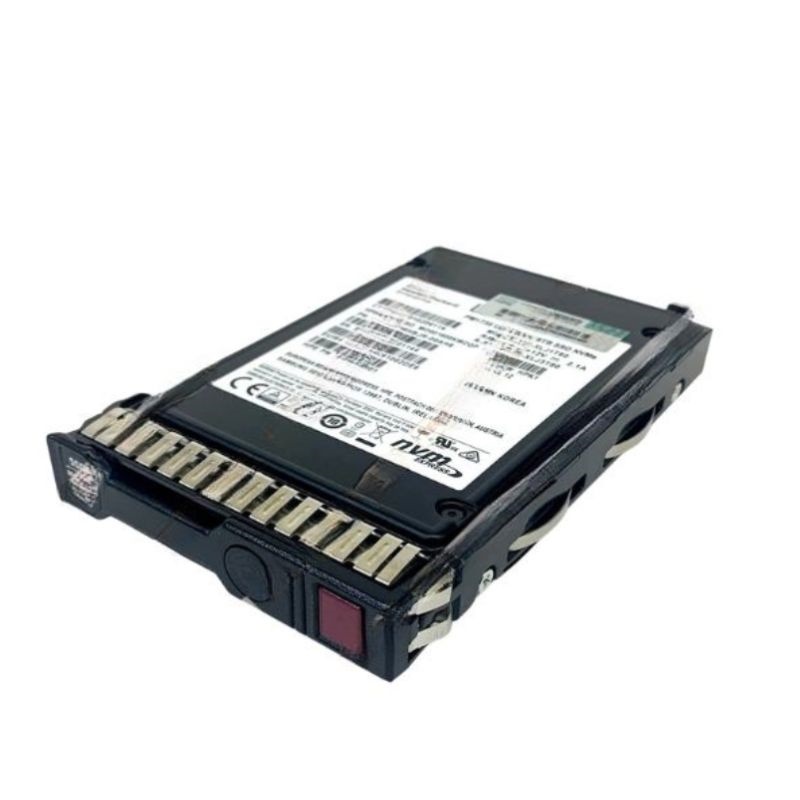
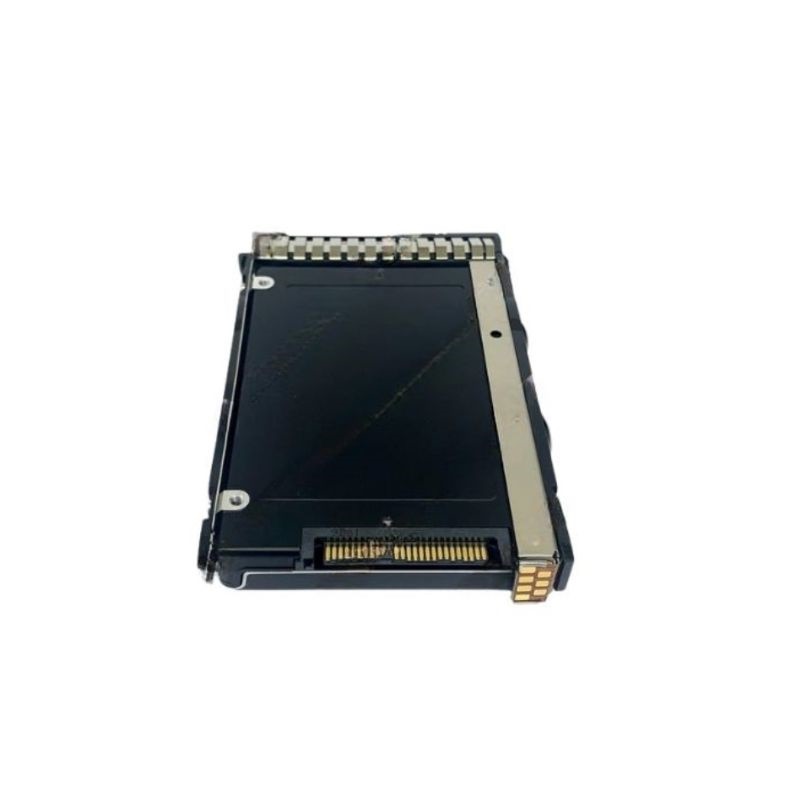
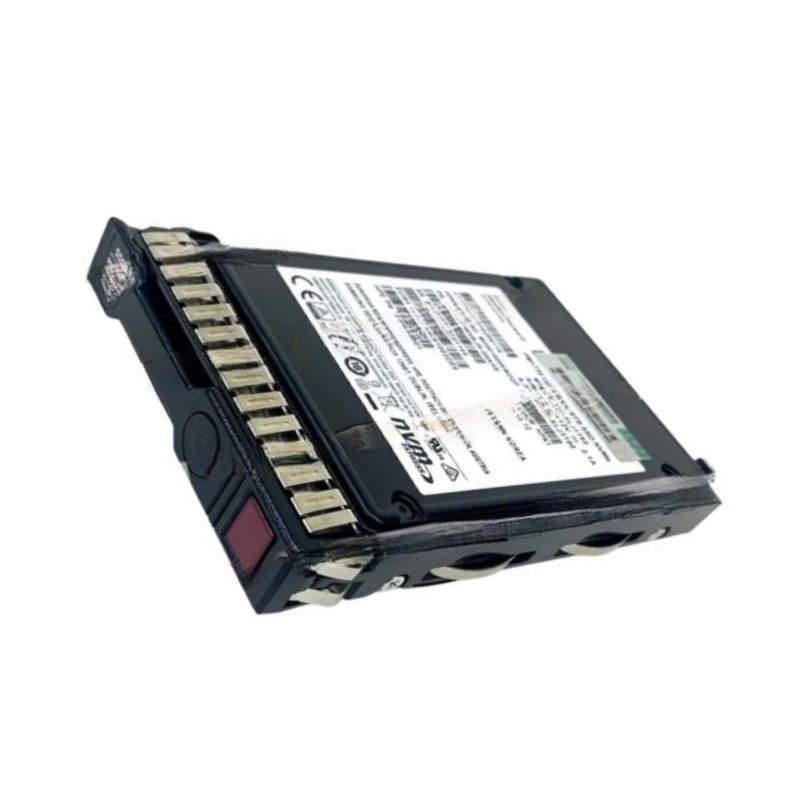
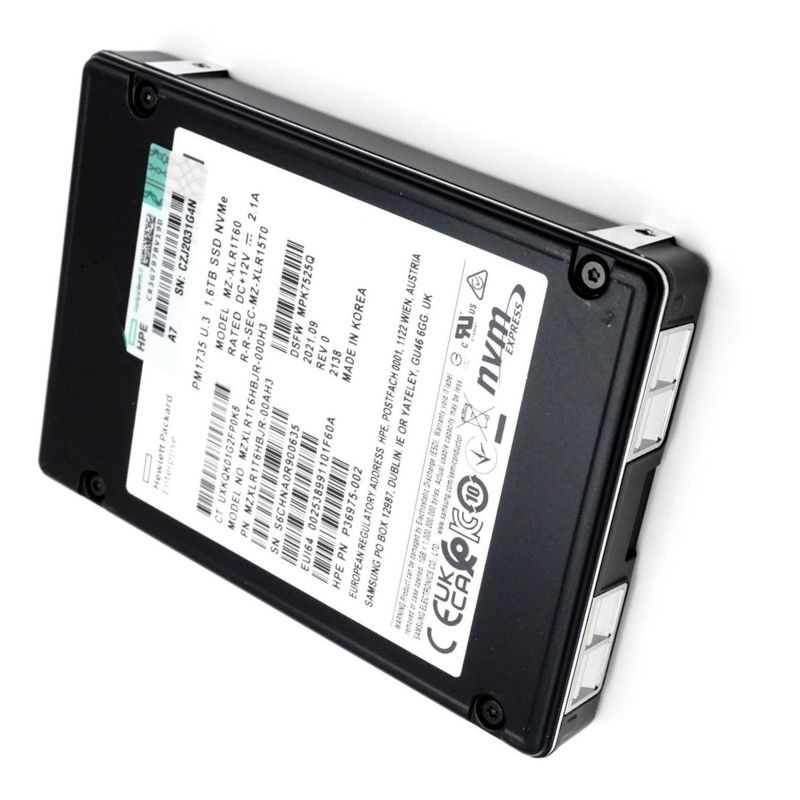
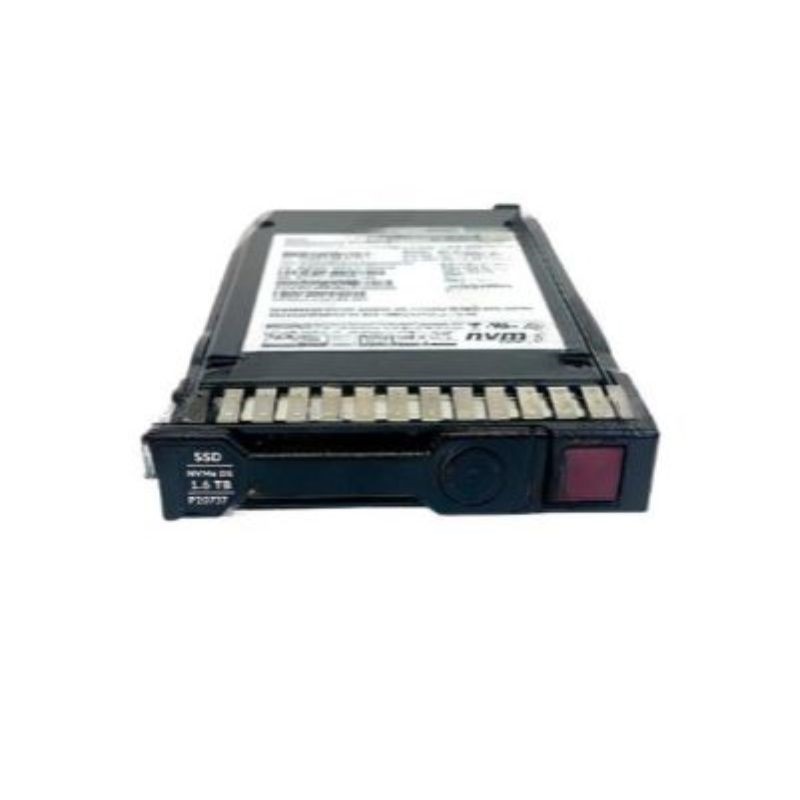
Samsung MZXLR1T6HBJR-000H3 1.6 TB PCI-E NVMe Internal Enterprise SSD
The Samsung MZXLR1T6HBJR-000H3, part of the PM1735 series, represents a class of enterprise-grade NVMe solid-state drives built for intensive, always-on workloads. Positioned for modern data centers, high-throughput analytics, virtualization clusters, and content platforms, this 1.6 TB PCIe 4.0 x8 NVMe drive blends robust performance with durability, predictable latency, and stringent reliability controls. Within the broader category of enterprise NVMe storage, the PM1735 family is designed to help organizations reduce query times, increase VM density, accelerate build pipelines, and maintain consistent Quality of Service (QoS) under mixed read/write pressure.
Unlike consumer SSDs tuned for bursty desktop patterns, enterprise NVMe drives such as the PM1735 emphasize sustained throughput, low tail latency, data integrity end-to-end, and advanced device-level features like power-loss protection, thermal governance, namespace management, and telemetry. The MZXLR1T6HBJR-000H3 SKU delivers these capabilities over the PCIe Gen4 bus with an x8 link width to maximize available bandwidth for demanding I/O profiles.
Category Serves
- Database & Transaction Systems (OLTP/OLAP): Consistent low latency for small random I/O, stable QoS at high queue depths, and strong write endurance.
- Virtualization & Cloud: High VM/Container density with predictable performance during noisy-neighbor scenarios; SR-IOV and namespace support for multi-tenant isolation.
- AI/ML & HPC Pipelines: Fast ingest of training data, accelerated checkpoints, and rapid shuffle/storage for feature stores and inference caches.
- Streaming & CDN Edge: Sustained sequential throughput and media asset caching with tight SLAs and rugged 24/7 duty cycles.
- DevOps & CI/CD: Shorter build/test cycles, parallel artifact storage, and rapid container image retrieval at scale.
Key Attributes of Enterprise NVMe in the PM1735 Class
Enterprise NVMe drives distinguish themselves through a layered focus on predictability and data assurance. While peak speeds capture attention, the category value lies in stable performance during contention, rigorous error handling, and the ability to sustain operations for years under constant load. The PM1735 exemplifies this ethos with PCIe 4.0 bandwidth, advanced firmware scheduling, and protection mechanisms designed for mission-critical environments.
Performance Characteristics that Matter
- PCIe 4.0 x8 Link: A wider, faster bus helps minimize bottlenecks for multi-threaded server workloads and mixed I/O.
- NVMe Queuing Model: Multiple queues and deep queue depths enable parallelism across CPU cores, improving IOPS scaling and reducing command arbitration overhead.
- QoS Under Pressure: The ability to maintain tight latency percentiles (p99/p99.9) during write-heavy or mixed operations is a hallmark of enterprise NVMe design.
- Thermal Stability: Hardware/firmware controls manage temperature without unpredictable throttling patterns, protecting both performance and longevity.
Reliability & Data Integrity
- End-to-End Data Path Protection: Detects and corrects errors from host interface through NAND media, minimizing silent data corruption risk.
- Power-Loss Protection (PLP): On-board hold-up capacitors flush in-flight data to non-volatile storage during unexpected outages.
- Advanced ECC and Wear Management: Enterprise-class error correction and block rotation algorithms optimize endurance and consistency.
- Telemetry & SMART: Rich health counters, lifetime usage stats, and vendor-specific logs facilitate proactive maintenance.
Form Factor and Interface Considerations
The PM1735 series is offered for server expansion slots using a PCIe add-in interface aligned to Gen4 x8. When planning deployments, confirm slot availability (electrical x8 or x16), physical clearance, and airflow. The card form factor simplifies cabling and delivers immediate access to full PCIe bandwidth without backplane adapters. This category favors environments where direct host-to-device lanes and card-level heat sinks are beneficial for sustained performance.
Slot & Platform Compatibility
- Motherboard Support: Ensure BIOS/UEFI support for NVMe boot (if required) and PCIe Gen4 lane negotiation on compatible platforms.
- Hypervisor Integration: Works with mainstream enterprise stacks such as VMware ESXi, Microsoft Hyper-V, KVM/QEMU, and container platforms layered atop Linux distributions.
- Operating Systems: Typical compatibility spans major server OS releases (e.g., Windows Server, RHEL, SLES, Ubuntu LTS, Oracle Linux, and FreeBSD in many cases). Verify kernel/NVMe driver versions for optimal features.
Workload Fit: Matching the PM1735 1.6 TB to Your Use Case
The 1.6 TB capacity point in the PM1735 line suits metadata-heavy databases, high-transaction logs, low-latency caches, and small-footprint application tiers that prioritize speed and predictability over raw capacity. It also works well as part of a tiered design, where a set of 1.6 TB drives act as a blazing-fast layer in front of larger NVMe, SAS, or object storage pools.
Databases & Transaction Logs
- OLTP Engines: MySQL, MariaDB, PostgreSQL, Microsoft SQL Server, and Oracle DB benefit from consistent write performance and fast commit operations.
- Logging & Journaling: Durable logging layers (WAL/redo) favor drives with power-loss protection and rapid, low-variance sync latency.
- Mixed Read/Write: Balanced performance helps avoid backlogs during maintenance windows, ETL jobs, or multi-tenant bursts.
Virtualization & Containers
- High VM Density: The drive’s steady IOPS and bandwidth enable more VMs per host before contention raises latency.
- Template & Snapshot Storage: Rapid cloning and rollback workflows accelerate test/dev cycles.
- Persistent Container Volumes: Low-latency PVs for stateful services in Kubernetes or Nomad clusters.
Analytics, AI/ML, and HPC
- Feature Stores & Embedding Caches: Serve models and features from ultra-fast local NVMe for real-time inference pipelines.
- Checkpointing: Consistent write performance shortens checkpoint cycles and improves job resiliency.
- Shuffle/Temp Space: Parallel I/O paths reduce job stragglers in distributed data processing frameworks.
Core Technologies Behind the PM1735 Category
Samsung’s enterprise SSD architecture combines advanced V-NAND, NVMe firmware tuned for deterministic behavior, and hardware safeguards. The result is a storage layer that performs reliably at scale, even as workloads vary across read-mostly, write-intensive, and mixed profiles throughout the day.
Advanced NAND & Controller Design
- V-NAND Architecture: High-layer 3D NAND offers density and endurance, coupled with enterprise-class program/erase management.
- Parallelism at Scale: Multiple channels and dies enable the controller to service concurrent queues without undue contention.
- Firmware Scheduling: Sophisticated I/O schedulers balance latency and throughput while honoring QoS targets, even under sustained writes.
Data Integrity & Protection Stack
- End-to-End CRC: Guards data from the host interface through controller SRAM and NAND media.
- Power-Loss Safe Writes: PLP components commit the last safe state of metadata and user data to prevent corruption during power events.
- Background Scrubbing: Proactive correction of weak pages and block retirement avoids uncorrectable error accumulation.
Security & Sanitization Features
- Secure Erase & Sanitize: Device commands enable rapid re-provisioning for lifecycle operations.
- Namespace Isolation: Logical segmentation of storage to align with tenancy models and compliance needs.
- Optional Encryption: Many enterprise deployments pair NVMe drives with OS-level or controller-based encryption policies; verify your SKU’s specific capabilities and required key management.
Capacity Planning for 1.6 TB Enterprise NVMe
The 1.6 TB size balances per-drive performance with manageable rebuild windows and predictable failure domains. In nodes that scale out horizontally, multiple 1.6 TB devices let architects segment workloads and maintain strong parallelism. Whether you are designing a mirrored log tier, RAID-protected VM datastore, or a local fast tier for a distributed system, the capacity works well when combined across two to eight drives per host depending on PCIe slot availability and airflow.
Right-Sizing Endurance and Duty Cycle
- DWPD Considerations: Enterprise SSDs are categorized by drive writes per day. Choose a write-intensive or mixed-use profile based on your logging and update patterns.
- Write Amplification Controls: Pre-allocation, alignment, and application-level batching reduce WAF and extend usable life.
- Monitoring & Forecasting: Track TBW, NAND wear, and lifetime media errors to plan refreshes before service impact.
Latency Budgets & QoS Targets
For customer-facing services, tail latency is just as important as medians. The PM1735 category is built to keep p99 latency predictable when compaction, checkpoints, or background processes kick in. Administrators can map QoS thresholds to alerts so any deviation triggers automation or load shedding before SLAs are threatened.
Deployment Patterns and Best Practices
Deploying the Samsung MZXLR1T6HBJR-000H3 effectively involves balancing slot placement, NUMA locality, scheduler settings, and file system choices. Pairing the right kernel tuning with NVMe device features yields consistent, long-running performance.
Server Placement & NUMA Awareness
- Topology Mapping: Use lspci and numactl to place storage I/O threads on the same NUMA node as the PCIe slot.
- Queue Affinity: NVMe multi-queue can be aligned to CPU cores to minimize cross-node traffic.
- Interrupt Coalescing: Tune coalescing to balance latency and CPU utilization for your workload profile.
File Systems & Block Settings
- XFS/EXT4/ZFS: Choose file systems proven in enterprise settings; align record sizes with workload I/O patterns.
- IO Schedulers: For NVMe, none or mq-deadline are common choices; benchmark with production-like traffic.
- Mount Options: Enable discard/TRIM policies appropriate to your performance and maintenance needs.
Virtualization & Container Layers
- vSphere Datastores: Place latency-sensitive VMs on datastores backed by PM1735 devices; isolate heavy writers as needed.
- Kubernetes Storage: Use CSI drivers with local PVs or host-based SDS to expose NVMe performance to pods safely.
- SR-IOV & Namespaces: Where supported, leverage virtualization features for improved isolation and performance allocation.
Comparing Enterprise NVMe Categories
Within the enterprise NVMe space, buyers weigh several axes: interface speed (PCIe Gen3 vs. Gen4), link width (x4 vs. x8), endurance class (mixed-use vs. write-intensive), and form factor (add-in card vs. U.2/U.3). The Samsung MZXLR1T6HBJR-000H3 addresses organizations that need the bandwidth of PCIe Gen4 with an x8 link for extra headroom and the reliability of an enterprise controller and firmware stack.
PCIe Gen4 x8 vs. Gen3 or x4 Alternatives
- Throughput Headroom: Gen4 x8 provides substantial bandwidth for sequential and parallel I/O beyond Gen3 or x4 links.
- Future-Proofing: High-core-count CPUs and accelerators benefit from a storage layer that scales in step.
- Consolidation: Fewer drives can meet performance targets, simplifying cabling and management.
Add-In Card vs. 2.5-inch NVMe (U.2/U.3)
- Cooling Profiles: Cards often ship with robust heat sinks for predictable thermals in high-airflow servers.
- Backplane Considerations: Add-in cards bypass backplane constraints; 2.5-inch drives may ease hot-swap.
- Slot Economics: Choose based on available PCIe lanes per host and the balance of NICs, GPUs, and storage devices.
Security, Compliance, and Data Governance
Enterprise teams balance performance with strict data controls. The PM1735 category aligns with governance requirements via sanitization workflows, namespace segmentation, and support for secure erase operations. When paired with organizational key management, access controls, and audit trails, the storage layer integrates cleanly into zero-trust strategies and compliance frameworks.
Secure Operations Checklist
- Provisioning: Initialize namespaces and access policies aligned to tenancy and compliance scope.
- At-Rest Policies: Validate encryption posture—OS-level, application-level, or controller-assisted—per your data classification.
- Decommissioning: Use sanitize commands to retire or repurpose devices safely and quickly.
Optimization Tips for Real-World Gains
Tuning matters. The same hardware can perform differently depending on queue depth, I/O size distribution, and application behavior. The following practices help teams extract the most from PM1735-class devices.
Application-Aware I/O
- Batch Writes: Coalesce small updates to reduce write amplification and latency spikes.
- Align Block Sizes: Match filesystem and database page sizes to prevalent I/O patterns.
- Concurrency Control: Avoid a single writer bottleneck; use thread pools aligned to CPU cores and NVMe queues.
Benchmarking for Capacity Planning
- Production-Like Loads: Synthetic tests should mirror read/write ratios, I/O sizes, and queue depths of your real workloads.
- Measure Tail Latency: Track p99/p99.9 metrics, not just averages, before and after tuning.
- Thermal Behavior: Test under sustained stress to verify airflow sufficiency and avoid surprise throttling.
Use-Case Patterns with the 1.6 TB PM1735
While the PM1735 series scales to larger capacities, the 1.6 TB model is a sweet spot for performance tiers where capacity per device is secondary to deterministic behavior. Below are sample patterns that help operators design practical solutions.
Low-Latency Database Log Tier
- Design: Mirror two 1.6 TB PM1735 drives per database node for high-availability logs.
- Outcome: Faster commits, smoother failover, and guardrails against power anomalies via PLP.
- Scaling: Add pairs across nodes rather than oversizing a single device to maintain isolation and predictable recovery windows.
Virtualization Datastore Acceleration
- Design: Dedicate PM1735 devices to latency-sensitive VMs and VDI profiles.
- Outcome: Enhanced responsiveness during patch nights and snapshot storms with tighter QoS.
- Operations: Monitor per-datastore latency and balance heavy writers across hosts.
Analytics Staging & Shuffle Space
- Design: Local NVMe staging on each worker node to eliminate network bottlenecks.
- Outcome: More predictable job completion times and fewer stragglers in distributed frameworks.
- Durability: PLP and end-to-end protection reduce risk during high-write ETL cycles.
Procurement Guidance: What to Verify for the MZXLR1T6HBJR-000H3 SKU
When adding the Samsung MZXLR1T6HBJR-000H3 to a bill of materials, confirm the following points to streamline deployment and ensure that expectations align with environment constraints.
Checklist
- Form Factor and Slot: Verify PCIe Gen4 x8 slot availability and physical clearance in the target chassis.
- Power & Cooling: Cross-check server power budget and airflow plans for continuous duty.
- Firmware Baseline: Align on an approved firmware version across the fleet before installation.
- OS/Hypervisor Support: Confirm driver and kernel compatibility for your preferred platforms.
- Endurance Class: Match DWPD rating to workload write profiles and data retention needs.
- Security Posture: Decide on encryption approach and namespace layout before provisioning.
Management and Maintenance in Production
Lifecycle operations are critical in enterprise storage. The PM1735 class provides the visibility and controls required to sustain performance and reliability across multi-year deployments.
Health Monitoring Routines
- Daily: Check summary dashboards for temperature, error counts, and latency outliers.
- Weekly: Review SMART wear indicators, PCIe error logs, and any throttling events.
- Quarterly: Compare TBW growth to plan, evaluate capacity headroom, and validate firmware currency.
Incident Response
- Anomalous Latency: Investigate co-located noisy neighbors, check queue depth saturation, and validate thermal headroom.
- Media Errors: Review SMART logs, assess ECC corrections, and plan proactive replacements before error rates escalate.
- Unexpected Reboots: Correlate with power events; rely on PLP to keep metadata consistent but still run integrity checks post-event.
Scalability Strategies
Scaling enterprise NVMe involves coordinating storage, compute, and network. The PM1735 series fits well in designs that scale out horizontally with consistent node templates, enabling easy capacity and performance growth.
Horizontal Scale-Out
- Node Homogeneity: Standardize on a reference host configuration to simplify automation and spares.
- Workload Placement: Use schedulers aware of storage locality for optimal performance.
- Failure Domains: Spread replicas across hosts and racks; smaller per-device capacities like 1.6 TB reduce blast radius.
Tiered Storage
- Hot Tier: PM1735 devices front mission-critical datasets.
- Warm Tier: Larger NVMe or SAS pools handle less latency-sensitive storage.
- Cold Tier: Object storage or archival solutions provide economical retention.
Specification Highlights for the Category
The following attributes characterize the Samsung MZXLR1T6HBJR-000H3 1.6 TB PM1735 and similar enterprise PCIe Gen4 x8 NVMe SSDs. Exact figures can vary by firmware and environment, but these highlights reflect what enterprise buyers evaluate during qualification.
Interface & Protocol
- Bus: PCI Express Gen4 x8
- Protocol: NVMe, enterprise feature set
- Command Queues: Multi-queue architecture for parallelism across CPU cores
Reliability & Endurance
- PLP: Hardware capacitors protect in-flight data
- Data Path Protection: End-to-end ECC and CRC
- Wear Management: Enterprise-class algorithms for long-term consistency
Manageability
- Telemetry: Detailed SMART logs and vendor-specific health counters
- Firmware: Field-upgradable with staged rollout best practices
- Security: Secure erase and sanitize commands; namespace isolation
Integration with Modern Software Stacks
The PM1735 family is designed to integrate seamlessly with modern server and cloud stacks. From low-level NVMe drivers to orchestration layers, the ecosystem recognizes enterprise NVMe as a first-class citizen, allowing storage to scale in step with CPU and memory.
Operating Systems & Hypervisors
- Linux: Leverages native NVMe drivers with multi-queue support; aligns well with KVM/QEMU and container runtimes.
- Windows Server: Integrates with the inbox NVMe stack; suitable for Hyper-V and enterprise .NET application stacks.
- VMware ESXi: A mainstay for VM clusters seeking predictable latency, snapshot resilience, and high VM density.
Databases & Data Platforms
- Relational: PostgreSQL, MySQL, SQL Server, and Oracle benefit from fast logs and hot table/index storage.
- NoSQL & Streams: Cassandra, MongoDB, Redis, RocksDB-backed services, and Kafka use NVMe for low-latency persistence.
- Analytics: Spark, Presto/Trino, and data warehouses accelerate staging, shuffle, and local cache layers.
1.6 TB PM1735 for Enterprise Tiers
The Samsung MZXLR1T6HBJR-000H3 offers a compelling balance of bandwidth, endurance, and manageability. For architects who need uncompromising performance at manageable per-drive capacities, this model fits neatly into database log tiers, VM datastores, analytics staging, and latency-sensitive application layers. Its PCIe Gen4 x8 interface ensures headroom for parallel workloads, while enterprise firmware and PLP protect data integrity during real-world incidents.
Decision Drivers
- Deterministic Latency: Predictable tail behavior under mixed load.
- Robust Protection: End-to-end data integrity and power-loss safety.
- Operational Fit: Strong telemetry, firmware lifecycle controls, and compatibility with leading OS/hypervisors.
Practical Tips for Faster Time-to-Value
To realize benefits quickly, align infrastructure and application settings with how enterprise NVMe performs best. The following tips, while simple, often deliver tangible gains within days.
Align Storage with CPU Scheduling
- Pin I/O Threads: Keep high-I/O services on the same NUMA node as the NVMe device.
- Balance Queues: Use multiple submission/completion queues mapped to worker threads.
- Use Asynchronous I/O: Avoid synchronous chokepoints; leverage aio/io_uring where applicable.
Strengthen Data Safety
- Regular Backups: PLP protects in-flight writes, but backups protect against logical errors and deletion.
- Integrity Checks: Schedule checksum verification for databases and file systems.
- Failover Drills: Practice node loss and power event scenarios to validate recovery time objectives.
Glossary of Enterprise NVMe Terms
- NVMe: A protocol optimized for non-volatile memory over PCI Express, enabling parallel queues and low overhead.
- PCIe Gen4: The fourth generation of the PCI Express standard, offering significantly higher per-lane bandwidth than Gen3.
- DWPD: Drive Writes Per Day—an endurance rating that estimates how much data can be written to an SSD each day over its warranty period.
- PLP: Power-Loss Protection—hardware capacitors and logic that commit buffered data during power interruption.
- QoS: Quality of Service—predictability of latency and throughput, especially under heavy or mixed workloads.
- Namespace: A logical storage area within an NVMe device that can be managed and presented independently.
Summary of Benefits for the Samsung MZXLR1T6HBJR-000H3 1.6 TB PM1735
- High-Bandwidth Architecture: PCIe Gen4 x8 connectivity for parallel, multi-queue workloads.
- Enterprise Durability: Built for 24/7 data center operations with robust endurance management.
- Data Integrity: End-to-end protection and PLP for resilient operations through power events.
- Operational Excellence: Telemetry-rich, firmware-manageable, and compatible with mainstream enterprise platforms.
- Right-Sized Capacity: 1.6 TB is ideal for hot tiers, transactional logs, and performance-centric datastores.





 Contact Us
 Information
 Catalog
 Solid State Drives (SSD)
 Network Switches
 Hard Disk Drives
 HBA & Controllers
 PC & Servers
 PC & Server Memory
 CPU & Processors
 Network Routers
 Power Supplies
 Tape Drives & Libraries
 Network Devices
 Computer & Network Cables