(7% discount is applied at checkout)
Cart is empty
Your go-to destination for cutting-edge server products
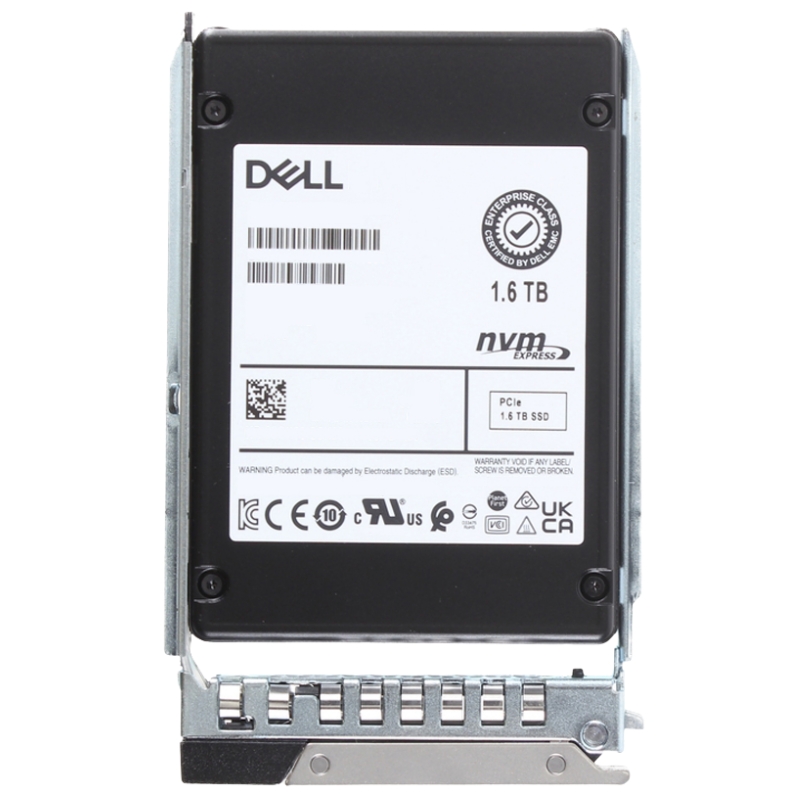


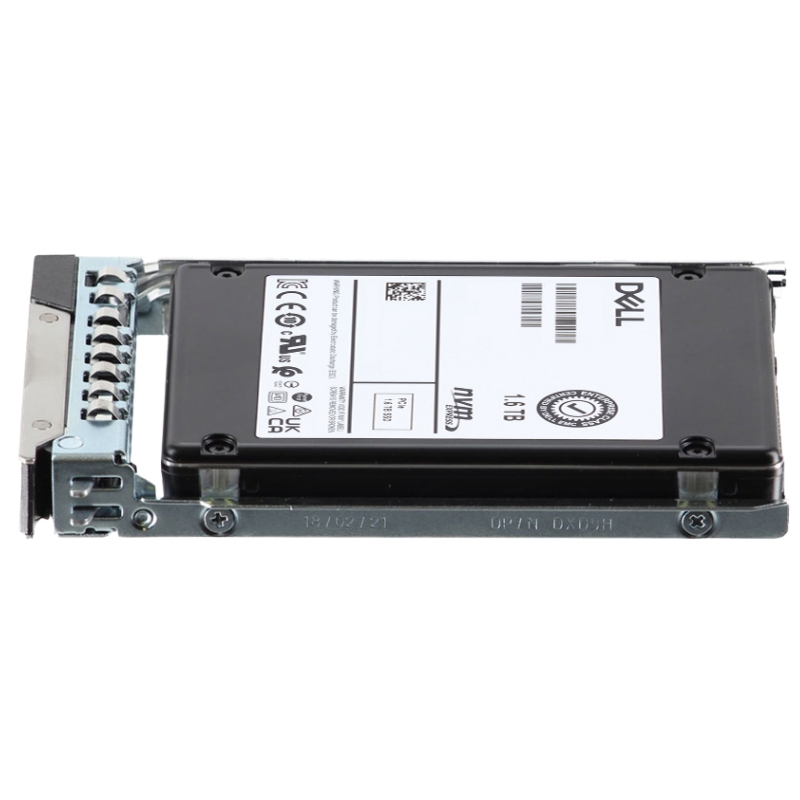
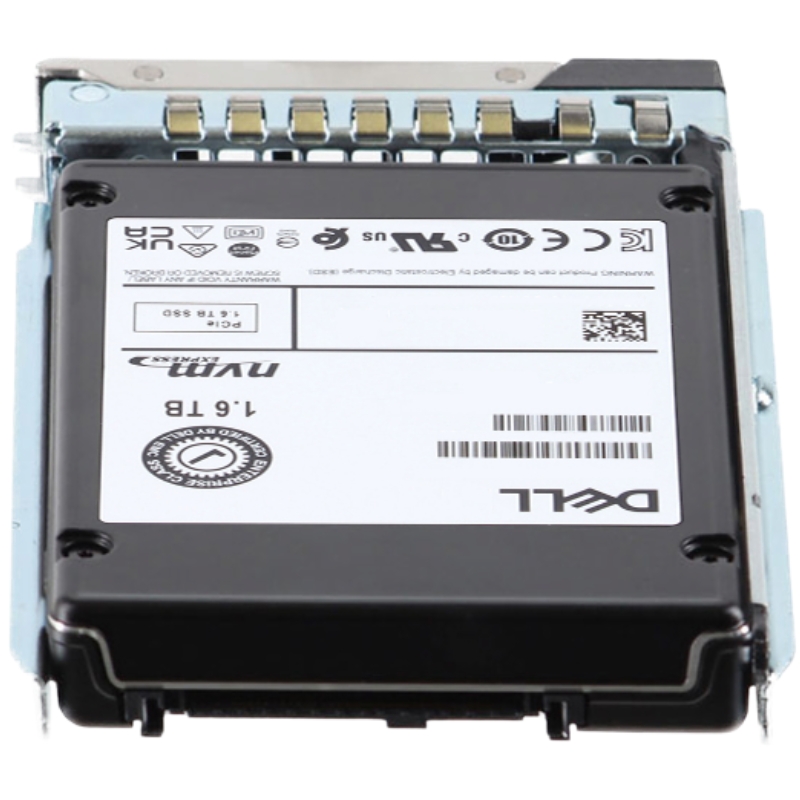
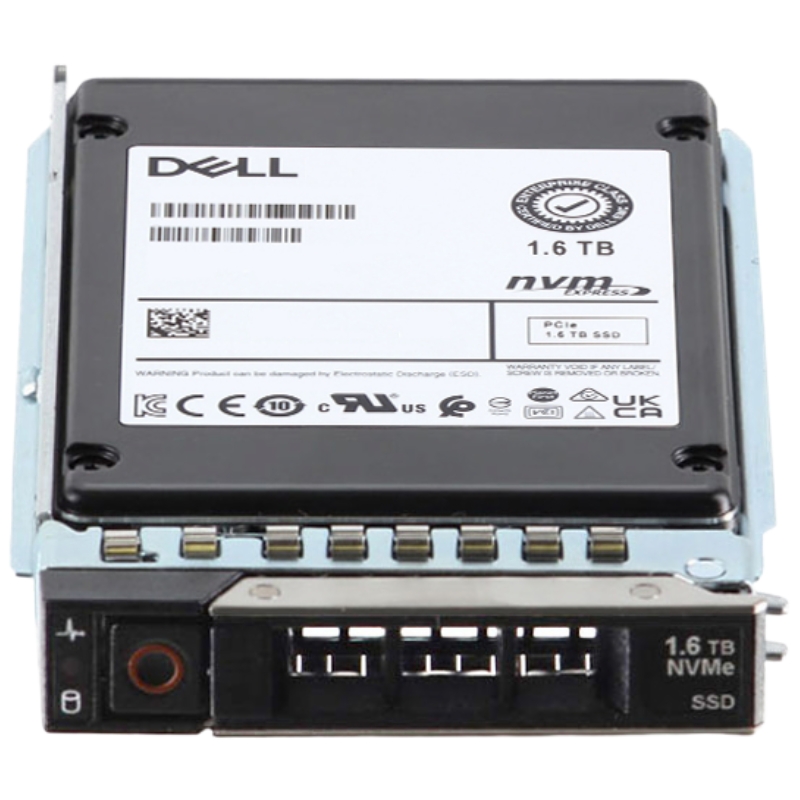
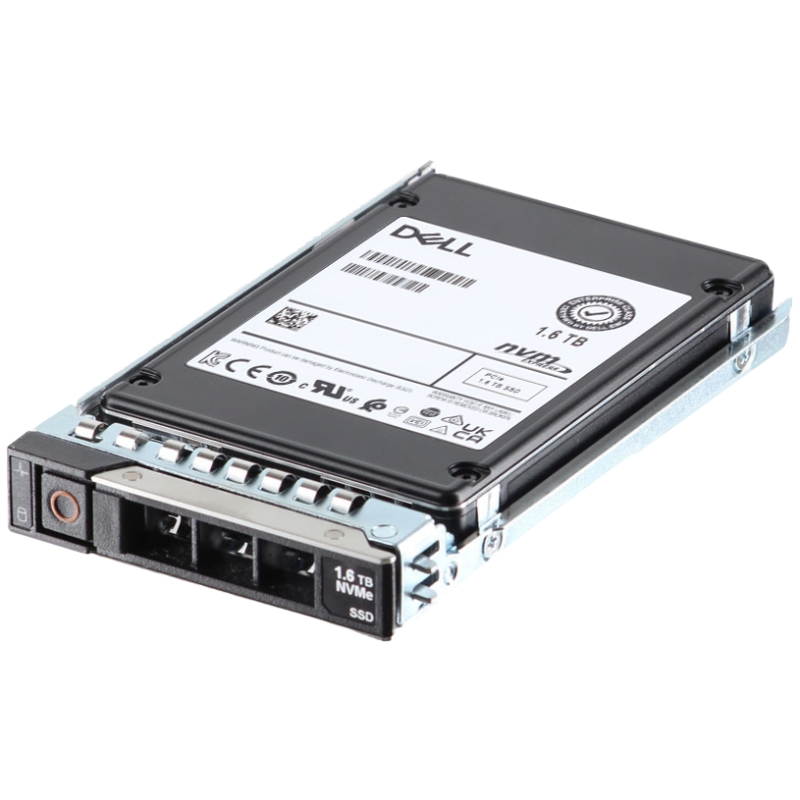
Dell DKJCG 1.6TB Mixed-Use PCI-E Gen4 X4 TLC NVMe for 14G/15G/16G Poweredge Server Solid State Drive. Excellent Refurbished with 1 year replacement warranty
This category centers on the Dell DKJCG 1.6TB Mixed-Use PCI-E Gen4 x4 TLC NVMe solid state drives purpose-built for enterprise class PowerEdge servers including 14G, 15G and 16G generations. Products in this category are targeted at deployments that demand a balance of sustained throughput, consistent low latency, and enterprise endurance for mixed read/write workloads. The descriptor “Mixed-Use” highlights these drives’ suitability where read and write activity coexist at moderate to high levels — database indexes, virtual machine boot and storage volumes, caching layers, and transaction logging are representative workloads. Because they use TLC NAND and NVMe over PCIe Gen4 x4, these drives provide a strong cost-to-performance ratio for datacenter architects who require capacity, reliability, and predictable service quality without the premium of higher-end write-optimized parts.
Drives in this category are engineered to integrate seamlessly with PowerEdge server chassis and backplanes. The form factor and connector options that Dell ships for server-grade NVMe typically support hot-swap operation and compatibility with native server sleds or caddies. Thermal design is a key aspect of server NVMe integration: server airflow, sled thermal pads, and carrier metalwork are considered to ensure these TLC NVMe modules operate within Dell’s recommended temperature windows under sustained load. System administrators planning to deploy multiple 1.6TB mixed-use NVMe devices should plan airflow and ambient temperature budgets, since NVMe devices running at sustained Gen4 throughput can generate measurable heat compared with legacy SATA SSDs.
The PCIe Gen4 x4 interface multiplied theoretical bandwidth per lane relative to Gen3, enabling higher sequential throughput and improved queue depth performance. NVMe as an interface protocol reduces command overhead and exploits parallelism across modern CPU and storage stacks, translating into significantly lower I/O latency and far greater IOPS per watt than older interfaces. For mixed-use drives, the combination of Gen4 x4 and NVMe yields a device that can sustain heavy mixed transactional workloads while reducing CPU cycles wasted on storage interrupts and legacy command translation. This matters most in virtualized environments and high-concurrency database systems where total system efficiency is essential.
Category models are tuned to deliver consistent performance under mixed workloads instead of maximizing a single benchmark metric. This means sustained sequential throughput, solid random read performance, and predictable write caching and garbage collection behavior to prevent severe latency spikes. Unlike client-grade SSDs that optimize for bursty consumer workloads, mixed-use server SSDs emphasize consistent tail latency, stable throughput in sustained writes, and deterministic response times during drive maintenance tasks such as background garbage collection and wear leveling. In practical terms, this behavior translates to fewer application timeouts, smoother VM migration, and steadier database query response times when these NVMe drives are used as primary volume storage or cache tiers.
This product category explicitly targets compatibility with Dell PowerEdge 14G, 15G, and 16G systems. Compatibility extends beyond physical fit: firmware level interoperability, server RAID/HBA controller support for NVMe pass-through or NVMe RAID solutions, and system BIOS and firmware release compatibility are all part of an enterprise validation matrix. Server ecosystems evolve over multiple firmware revisions; the drives are typically qualified against specific server firmware stacks to ensure predictable behavior with Dell OpenManage tooling, lifecycle controllers, and firmware update pipelines. IT procurement should ensure that server firmware is current and that any required firmware or driver updates are applied before mass deployment to maximize compatibility and supportability.
Mixed-use NVMe devices in this category support multiple deployment patterns across the compute stack. They excel as primary datastores for virtualization platforms where multiple VMs generate sustained random and sequential I/O, as performance cache layers in hybrid storage architectures that combine high-capacity HDDs with NVMe caching tiers, and as local fast storage for containerized workloads that require rapid instance provisioning and low-latency storage. They are also appropriate for moderately write-intensive database roles such as OLTP indexes and log buffers, where the ability to sustain mixed I/O without severe latency degradation is essential.
Choosing mixed-use NVMe drives is a tradeoff between capacity, performance, and cost. The 1.6TB capacity point is designed for dense deployment where balancing per-drive capacity and per-drive performance is important. Lower per-GB cost versus higher endurance drive classes can yield significant savings when scaled across many servers, while still maintaining the performance characteristics required by most enterprise workloads. Total cost of ownership calculations should include procurement price, expected lifespan under target workloads, power consumption differences compared with alternatives, and the operational cost of replacements and management. For many organizations, the mixed-use tier offers the sweet spot between conservative endurance and modern NVMe performance.
Compared to consumer SATA SSDs, mixed-use NVMe in this category delivers far superior throughput and lower latency. Versus write-optimized enterprise SSDs, mixed-use drives sacrifice some endurance and peak sustained write capability in exchange for better price per gigabyte and strong mixed workload performance. For organizations that require the absolute maximum write endurance or the longest media retention windows, higher endurance drives remain the right choice, but mixed-use NVMe is often the practical choice for mainstream application and virtualization workloads where balanced performance and cost are paramount.
Security and compliance are central concerns when managing server storage. Drives in this category support enterprise workflows for data sanitization, encryption and secure retirement. For regulated industries that require proof of secure erasure, ensure your procedural documentation and tools capture cryptographic erase logs and retention proof. Additionally, include NVMe device lifecycle events in audit trails and change management documentation to meet governance and compliance requirements.
These NVMe drives play an important role in hybrid architectures where on-premises performance is combined with cloud scalability. They are frequently used for local acceleration of workloads that have latency sensitivity or for transient data that is later tiered or replicated to cloud object or block storage. Integration considerations include replication lag, bandwidth between on-prem and cloud endpoints, and ensuring consistent encryption policies across tiers. Properly architected, mixed-use NVMe can significantly reduce the on-prem footprint required to achieve application SLAs while letting cloud resources absorb long-term archival and burst compute needs.


 Contact Us
 Information
 Catalog
 Solid State Drives (SSD)
 Network Switches
 Hard Disk Drives
 HBA & Controllers
 PC & Servers
 PC & Server Memory
 CPU & Processors
 Network Routers
 Power Supplies
 Tape Drives & Libraries
 Network Devices
 Computer & Network Cables