(7% discount is applied at checkout)
Cart is empty
Your go-to destination for cutting-edge server products
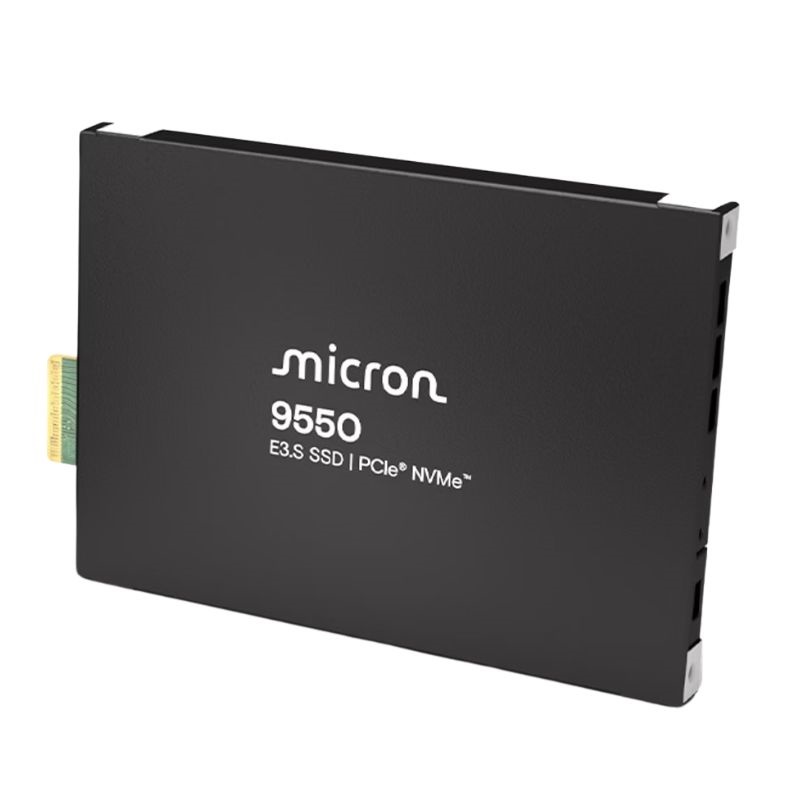


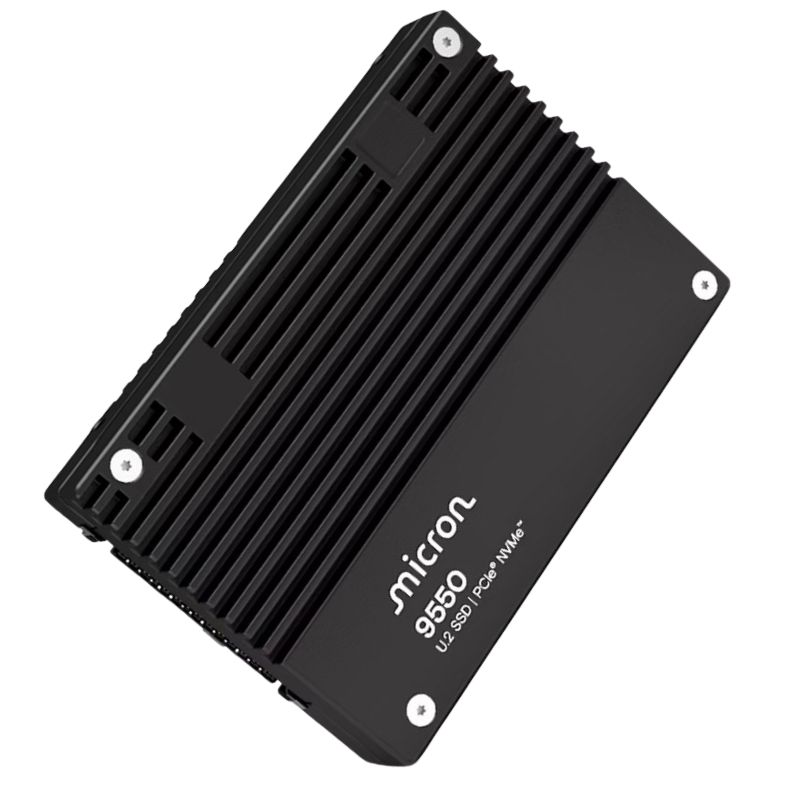
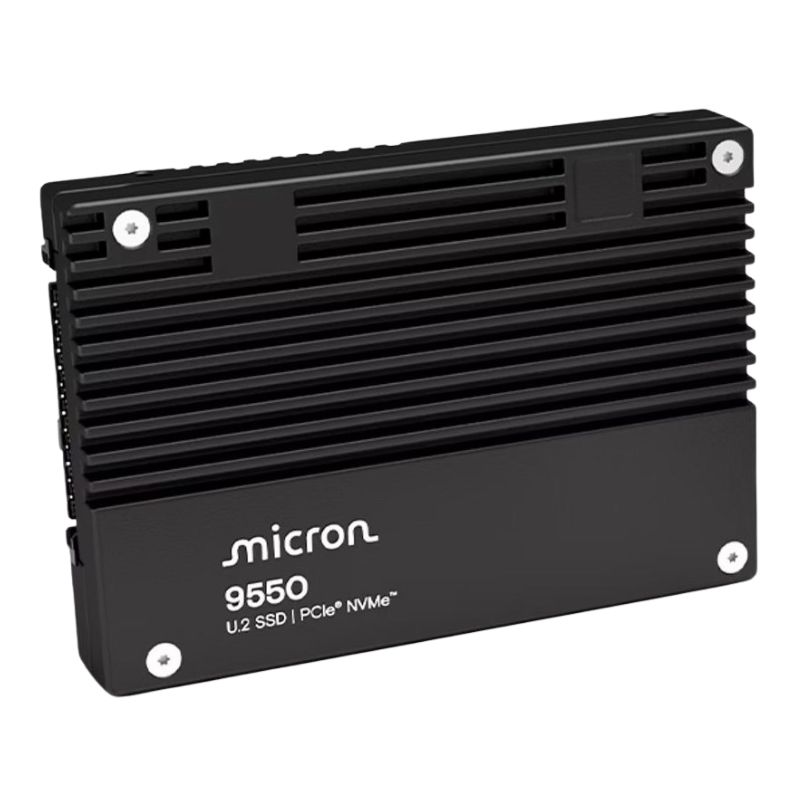
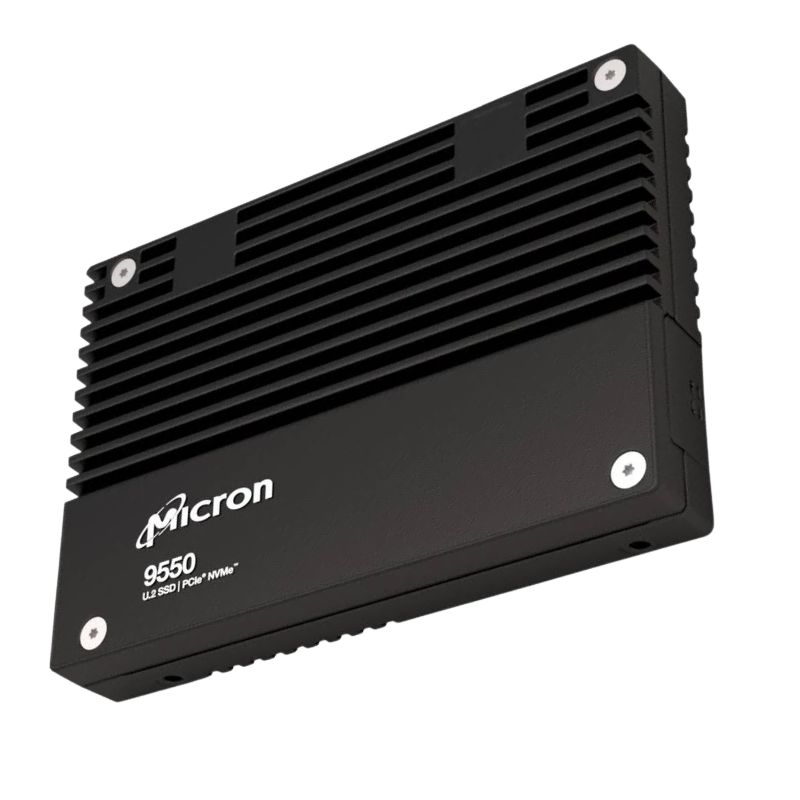
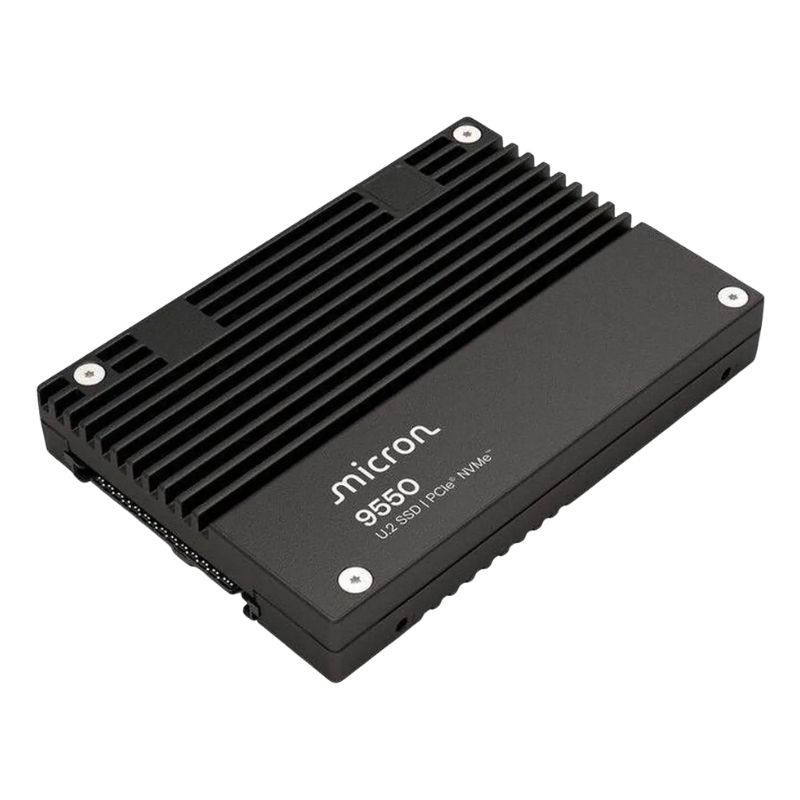
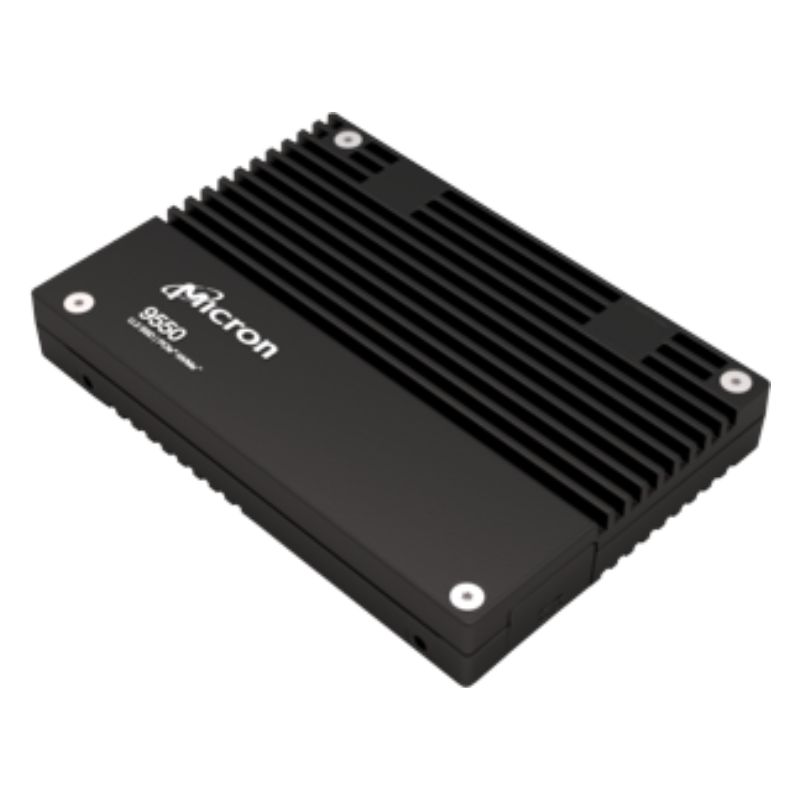
Micron MTFDLBQ7T6THA-1BK1DABYY 9550 Pro NVMe 7.68TB E3.S PCIe 5.0 x4 Internal SSD. New Sealed in Box (NIB) with 3 Years Replacement Warranty.
The MICRON 9550 Pro 7.68TB PCIe 5.0 NVMe SSD is designed for modern data-driven infrastructures requiring top-tier performance, high endurance, and consistent reliability. As part of the Micron 9550 Series, this enterprise-grade drive integrates cutting-edge PCIe Gen5 technology with the E3.S form factor, delivering unmatched bandwidth and efficiency for servers, cloud storage, and hyperscale computing environments.
- Model: Micron 9550 Pro (manufacturer part number MTFDLBQ7T6THA-1BK1DABYY) - Capacity: 7.68 TB (enterprise-class usable capacity) - Interface: PCIe 5.0, NVMe over PCIe Gen5 x4 lanes - Form factor: E3.S (E1.L/E3.S family for data center server trays; 7.5 mm variant widely supported by modern servers) - NAND: Micron G8 TLC NAND (high-density, enterprise-optimized flash die) These hardware choices balance density and performance for read-intensive and AI-feeding workloads. :contentReference[oaicite:1]{index=1}
The Micron 9550 Pro sets a high bar for sequential and random throughput on Gen5 platforms, with published sequential read speeds up to ~14.0 GB/s and sequential write speeds up to ~10.0 GB/s on validated platforms. Random I/O performance reaches into the multi-million IOPS range for combined and mixed workload scenarios when deployed on a properly configured server platform and tuned NVMe stack. These metrics make the drive ideal for streaming large datasets to GPUs, accelerating inference pipelines and moving large blocks during backup or rebuild operations.
Micron ships the 9550 Pro with enterprise-grade reliability features: typical read-intensive endurance targets (for Pro models) are commonly specified around 1 drive-write-per-day (1 DWPD) depending on capacity and workload; meanwhile the Max variants of the 9550 family provide higher endurance for mixed workloads. Additional data integrity and resiliency features include low UBER (uncorrectable bit error rate), power-loss protection, advanced ECC, S.M.A.R.T. telemetry, in-field firmware updates and hot-plug/ surprise insertion & removal support. For system administrators, these features translate into predictable maintenance windows, secure data handling and easier fleet management.
The Micron 9550 platform is available in Pro and Max variants. The Pro series is tuned for read-intensive workloads where the majority of operations are reads — common in AI model serving, content delivery and read-heavy databases. The Max series is built for higher endurance mixed workloads and use cases requiring greater write endurance or longer field life. Micron also offers a wide capacity range across the 9550 family (including larger capacities in other variants), so buyers can choose a device that matches their performance and endurance profile without sacrificing the Gen5 advantage.
A single 7.68TB E3.S device is attractive for racks where drive bays are at a premium or where high throughput per slot is required. Systems using E3.S can often increase effective capacity per server while reducing cabling and drive bay usage compared with older 2.5” designs. For distributed storage clusters, fewer drives per node leads to simplified rebuilds (less moving parts) and improved mean time to repair (MTTR) in heterogeneous fleets — but careful shard and redundancy planning remains paramount to avoid rebuild storms.
One of the strongest use cases for the MTFDLBQ7T6THA-1BK1DABYY Micron 9550 Pro family is keeping data-starved GPUs fed during model training and large-batch inference. High sequential read throughput (multi-GB/s) and strong random-access behavior reduce I/O bottlenecks for datasets stored on local NVMe media. For multi-GPU nodes and GPU-direct architectures, Gen5 bandwidth helps match the throughput demands of modern transformer models, image and video training pipelines and large-scale embedding workloads.
Read-heavy databases — including analytics clusters, key-value stores and content caching layers — benefit from the 9550 Pro’s high random read IOPS and low latency. Systems that need rapid snapshotting and fast reads of cold-hot tiered data sets can use the 7.68TB Pro drive as a hot tier; combining this with capacity tiers on object or cold storage yields cost-effective architectures.
The E3.S form factor and rugged enterprise feature set make the 9550 Pro a fit for edge compute nodes and telco racks where compact, hot-swap capable, OCP-friendly storage is preferred. The balance of performance and power efficiency matters at the edge, and Gen5 NVMe allows lower latency at the network edge when paired with compute instances performing real-time analytics.
The Micron 9550 Pro MTFDLBQ7T6THA-1BK1DABYY expects a PCIe Gen5 host to reach peak advertised throughput; however the device is backwards compatible with PCIe Gen4 hosts — in such cases the drive will operate at the host’s maximum supported link speed (Gen4), delivering excellent Gen4 performance but not the full Gen5 numbers. Administrators should review motherboard and server firmware release notes and NVMe driver recommendations for best results.
Important firmware-level features include field-upgradeable firmware (often without complete system reboots on supported platforms), namespace management, S.M.A.R.T. telemetry reporting, and as-shipped cybersecurity options such as TCG Opal. Many vendors responsible for hyperscale fleets will integrate Micron’s management tools and use telemetry to drive predictive failure analysis and capacity planning. Always check the vendor compatibility matrix and planned maintenance windows before wide-scale firmware updates.
Enterprise deployments commonly enable drive-level encryption (TCG Opal / TCG Enterprise or similar) to protect data-at-rest. The Crucial-branded and OEM-distributed 9550 Pro SKUs often list OCP 2.0 readiness and TCG Opal support, enabling compliance-friendly configurations and easier secure decommissioning. For sensitive workloads, combine drive encryption with host-side key management and strict key lifecycle policies.
Real-world reported sequential peak figures for the 9550 family approach 14 GB/s reads and 10 GB/s writes on Gen5-capable platforms; random IOPS figures are workload-dependent but can reach into the low millions for optimized configurations. Always include power and thermals in benchmark reporting to reflect real deployment constraints.
Deployment patterns and architecture examples
Example: a GPU training node with multiple Micron 9550 Pro E3.S drives configured as a local NVMe pool to feed a multi-GPU server. Use cases include dataset striping across drives for concurrent read throughput or mounting per-GPU NVMe namespaces for low-latency streaming. Consider RAID or erasure coding at the software layer for redundancy — fast rebuilds on high-bandwidth Gen5 links minimize training interruptions.
Example: a distributed object or file store where each node uses 7.68TB 9550 Pro MTFDLBQ7T6THA-1BK1DABYY drives for the hot tier. Combine local NVMe speed for metadata and active objects with slower, higher-capacity nodes for archival. This two-tier approach lowers latency for hot reads and keeps cold storage costs down. Monitor drive health and use rolling firmware updates to reduce unplanned downtime.
PCIe Gen5 NVMe devices can operate at higher power levels under sustained load than earlier generations; system integrators should ensure drive bays provide sufficient airflow or active cooling. Thermal throttling can change performance curves; for steady-state high-throughput workloads, provision enough cooling to sustain marketing throughput claims. Many vendors provide guidelines on heatsink attachments and rack-level airflow to prevent thermal-induced throttling.
The generational leap to PCIe Gen5 doubles per-lane bandwidth relative to Gen4, enabling single-device sequential throughput that previously required multiple Gen4 drives or complex striping. The 9550 Pro leverages this to deliver higher sequential throughput and improved multi-threaded random access performance on compatible hosts, which simplifies system design and lowers the total number of devices needed for a given throughput target.
Pro models prioritize read-optimized density and cost-per-GB while Max variants trade higher endurance at the same capacities for workloads heavy in writes or those needing long-term write durability. When selecting between Pro and Max, match the DWPD (drive writes per day) and workload mix to avoid overspending on endurance you won’t use or underspec’ing drives that will fail early under heavy write cycles.
Yes — the device will operate on Gen4 platforms at Gen4 link speeds, delivering excellent Gen4 performance. To reach 14GB/s read and 10GB/s write peak figures, a Gen5-capable host and proper system configuration are required.
Final technical pointers
Validate MTFDLBQ7T6THA-1BK1DABYY the server’s Gen5 capability and available physical slots for E3.S devices. - Confirm your workload characteristics (read/write mix, expected IOPS and latency budgets). - Request vendor performance validation on your specific hardware or a similar reference platform. - Plan firmware update windows and ensure telemetry/monitoring systems are ready to ingest SMART/NVMe metrics. - Budget for spares and a clear RMA/support path in your procurement contract.
Product briefs, datasheets and distributor pages provide the detailed numbers needed to finalize spec sheets and procurement orders. Consult Micron’s official 9550 product brief for validated throughput and endurance tables, and check major distributors for SKU-specific warranty and shipping information.


 Contact Us
 Information
 Catalog
 Solid State Drives (SSD)
 Network Switches
 Hard Disk Drives
 HBA & Controllers
 PC & Servers
 PC & Server Memory
 CPU & Processors
 Network Routers
 Power Supplies
 Tape Drives & Libraries
 Network Devices
 Computer & Network Cables