(7% discount is applied at checkout)
Cart is empty
Your go-to destination for cutting-edge server products
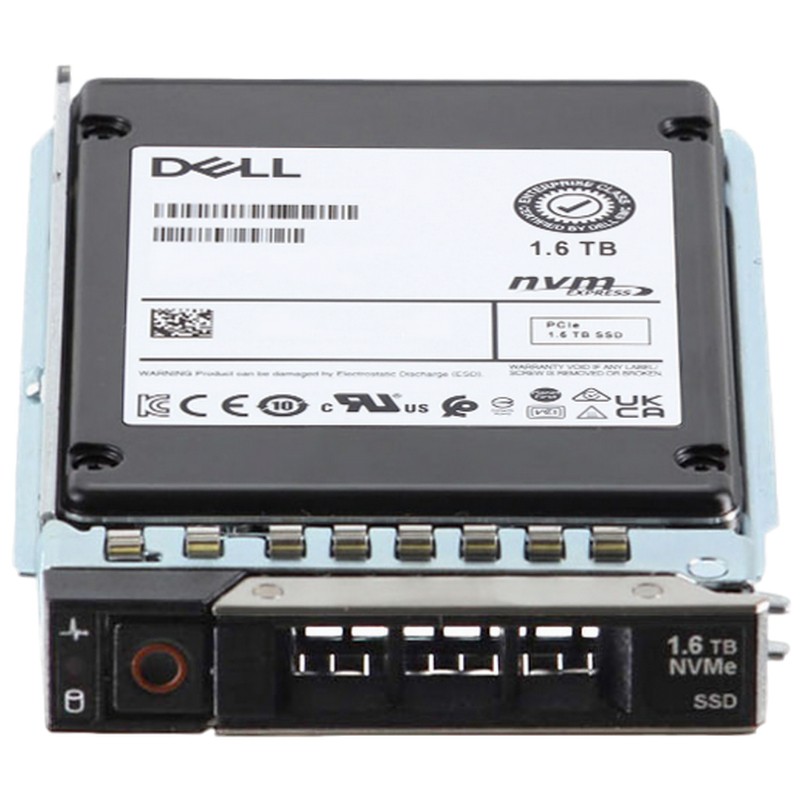


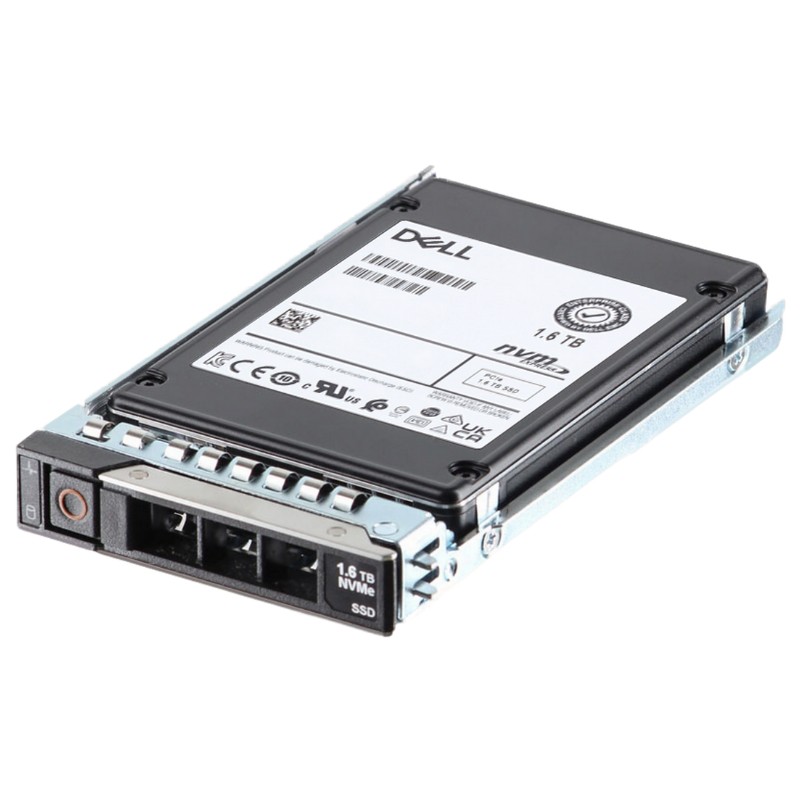
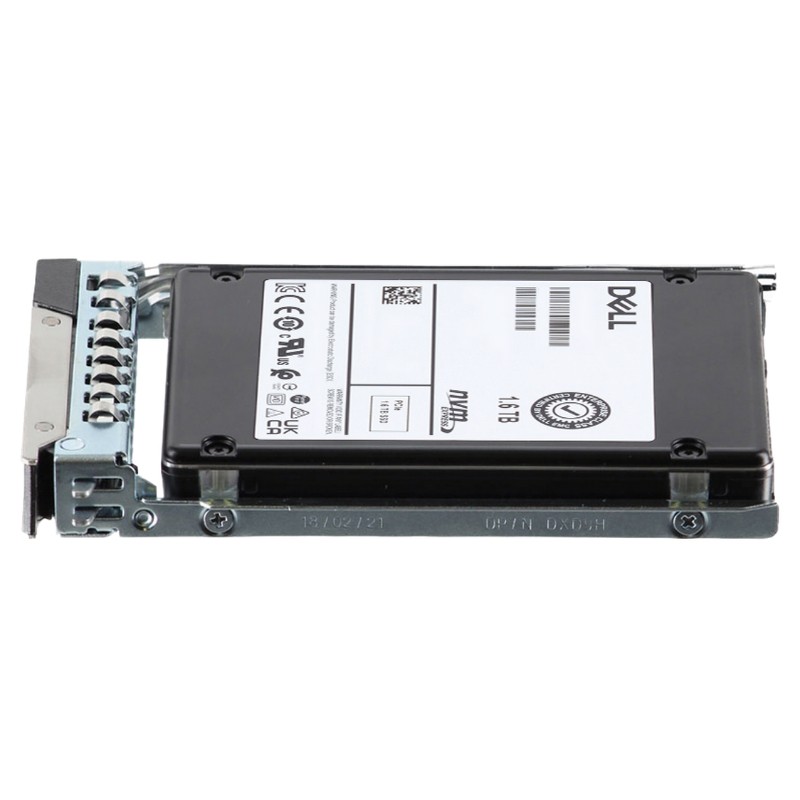
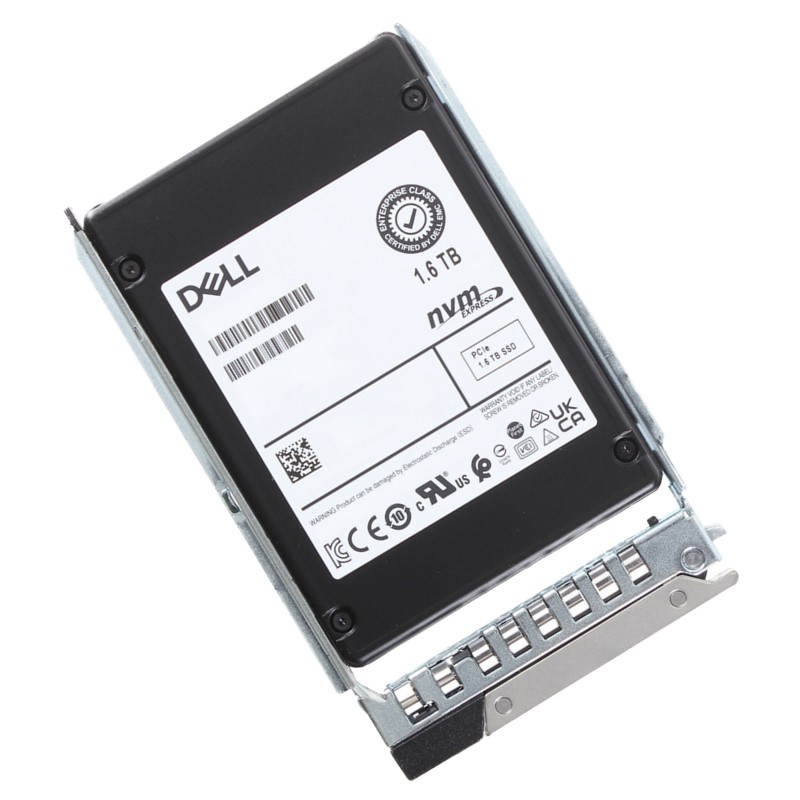
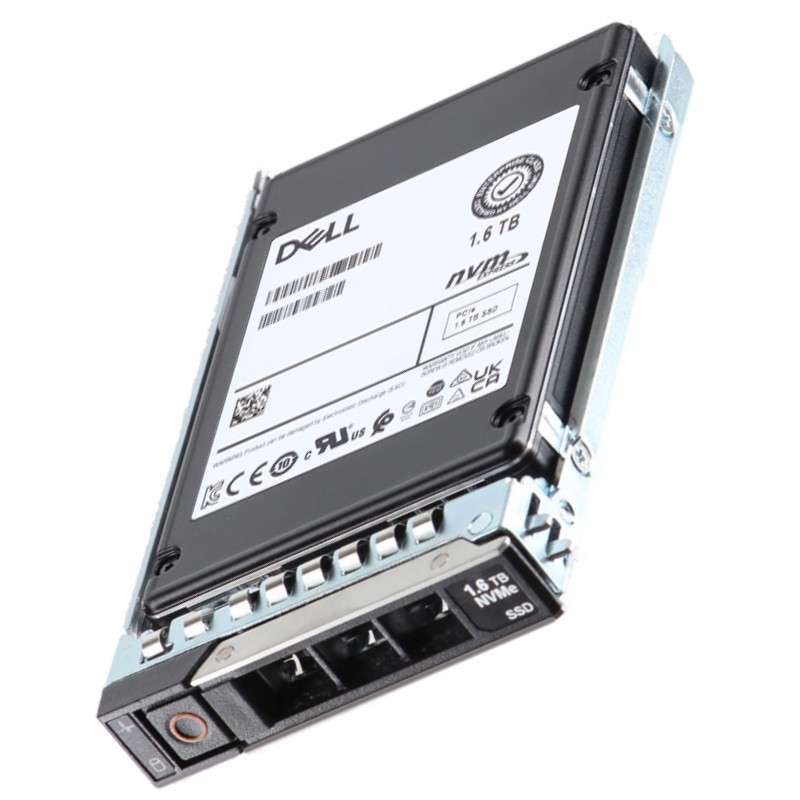
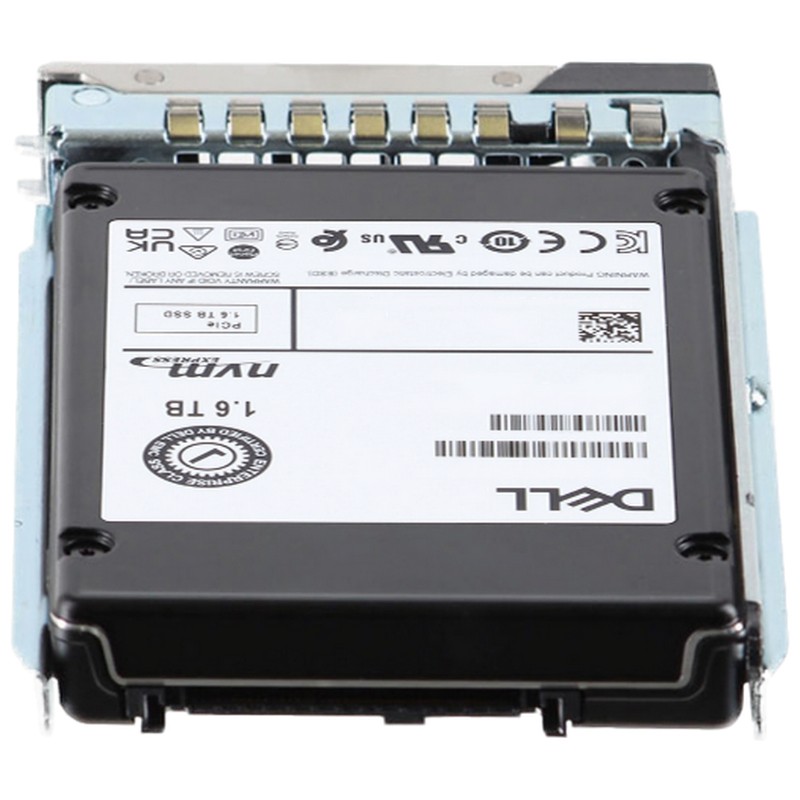
Dell 400-BMVP 1.6TB PCI-E Gen4 NVMe U.2 Mixed Use TLC SED FIPS 2.5inch Solid State Drive. Excellent Refurbished with 1 year replacement warranty
Engineered for next-generation server platforms, this solid-state drive delivers exceptional storage capabilities and robust data security.
The Dell 400-BMVP 1.6TB Self-Encrypting (SED) Mixed Use TLC PCIe Gen4 NVMe U.2 2.5-inch Solid State Drive is engineered for datacenter and enterprise PowerEdge deployments where a balance of performance, endurance, and data security is mandatory. Designed specifically to fit Dell PowerEdge 14G, 15G, 16G and 17G server families, this U.2 (2.5-inch) NVMe module leverages PCIe Gen4 bandwidth to deliver low-latency storage performance for mixed workload environments — from virtualization and database hosting to caching and VDI. For IT buyers, system architects, and procurement specialists, the 400-BMVP positions itself as a reliable mid-capacity SED option that combines modern NVMe throughput with tamper-resistant encryption features, making it ideal for regulated industries and high-security deployments.
The 400-BMVP is engineered to be fully compatible with a wide range of Dell PowerEdge servers — specifically 14th through 17th generation systems. Compatibility means the drive fits the U.2 bays or U.2 backplanes used in these systems and can be managed through Dell lifecycle management tools such as iDRAC, OpenManage, and Dell firmware update utilities. This ensures administrators can monitor drive health, view SMART attributes, and integrate firmware compliance into their existing update pipelines.
The U.2 2.5-inch form factor eases physical deployment: hot-swap trays commonly used in PowerEdge chassis accept U.2 drives without adapters, enabling straightforward serviceability in dense server environments. Logically, the NVMe protocol removes the legacy AHCI bottlenecks, providing native NVMe namespaces and command sets. When installed in supported PowerEdge models, the drive benefits from PCIe Gen4 lanes available on modern CPUs and chipsets, unlocking substantially more IOPS and throughput than previous-generation SATA or SAS SSDs.
As a PCIe Gen4 NVMe device, the 400-BMVP takes advantage of doubled per-lane bandwidth compared to Gen3, enabling higher sequential read/write throughput and more parallel I/O. This is particularly valuable for mixed-use workloads where sequential transfers and random small-block I/O patterns coexist. Expect marked improvements in application responsiveness and reduced queuing delays under multi-threaded, multi-tenant loads.
The drive uses Triple-Level Cell (TLC) NAND optimized for mixed-use workloads — a compromise between the extreme endurance of enterprise SLC/MLC designs and the cost-efficiency of QLC. TLC-based mapping and firmware-level wear management deliver solid drive life for workloads that include a combination of reads and periodic writes (e.g., databases with background updates, virtualization masters, and content repositories). For many enterprises, this mixed-use TLC variant hits the right balance: better endurance and write performance than QLC while remaining more cost-effective than MLC.
Under typical mixed-use profiles, NVMe drives like the 400-BMVP provide high sustained IOPS for small random reads/writes and strong sequential bandwidth for large streaming workloads. Quality of Service (QoS) is improved through queuing and namespace isolation inherent to NVMe, reducing tail latency and ensuring more predictable application behavior, especially important in virtualized or containerized environments.
The self-encrypting drive (SED) capability is a core differentiator for enterprises that must safeguard data at rest. Hardware-based AES encryption (commonly AES-256) is used to automatically encrypt all user data written to the NAND, with cryptographic keys stored and managed within the drive's secure element. Because encryption is enforced at the controller level, there is no performance penalty typically associated with software-based encryption, and key erasure on drive retirement becomes a straightforward secure erase operation.
SEDs are highly beneficial in environments where compliance frameworks such as GDPR, HIPAA, PCI-DSS, or local data protection laws require demonstrable measures for data confidentiality. An SED simplifies meeting compliance obligations by providing strong at-rest protections, cryptographic erase capabilities, and minimized attack surface compared with software-only encryption implementations.
Many enterprise SEDs support standards such as TCG Opal and integration with enterprise key management systems (KMS). When combined with Dell server management tools, administrators can implement centralized key management and lifecycle controls, rotate encryption keys, and audit cryptographic events for governance and forensics.
Enterprise-class drives like the Dell 400-BMVP are tested to higher reliability standards than consumer-grade SSDs. Manufacturers often provide specifications for Mean Time Between Failures (MTBF), annualized failure rate (AFR), and validated write endurance (measured in Drive Writes Per Day — DWPD) appropriate for mixed-use workloads. These guarantees build confidence for 24/7 data center operation where drives are expected to run continuously under load.
Enterprise NVMe SSDs commonly incorporate power-loss protection features — such as on-board capacitors or controller-level journaling — to protect in-flight data during unexpected power events. Combined with advanced ECC algorithms and firmware-level error resilience, these mechanisms protect against data corruption and minimize the risk of silent data errors.
Adaptive wear-leveling algorithms, over-provisioning strategies, and dynamic garbage collection ensure consistent performance across the drive’s lifetime. Firmware plays a critical role: periodic firmware updates (delivered via Dell update channels) optimize performance, correct edge-case behaviors, and occasionally introduce new features. When deploying at scale, integrate firmware updates into maintenance windows and ensure compatibility validation with your OS and hypervisor stacks.
The 1.6TB capacity and mixed-use endurance profile make the 400-BMVP well-suited for virtualization hosts where multiple VMs share a physical host. It can serve as a primary datastore for boot volumes, virtual disk images, or as a caching tier for hybrid storage solutions. In HCI clusters, predictable latency and QoS under bursty I/O are key — areas where NVMe excels.
Many transactional databases (OLTP) require high random IOPS and low latency. A mixed-use NVMe drive provides an excellent balance, offering strong read performance and adequate write endurance for database logs and indices. For write-heavy logging workloads, pairing with additional journaling or log-tier strategies may extend lifetime while maximizing performance.
Virtual Desktop Infrastructure (VDI) environments benefit from NVMe’s low latency for desktop boot storms and interactive sessions. As a caching layer or edge datastore for content delivery, the 1.6TB capacity allows substantial hot-data retention, improving response times for end users and reducing load on backend storage.
When deploying the 400-BMVP in production, architects should consider RAID configuration, NVMe-aware RAID controllers or software RAID solutions (like NVMe namespaces plus software RAID), and the trade-offs between redundancy, performance, and rebuild times. NVMe RAID rebuilds operate differently than SAS/SATA; plan for rebuild bandwidth and impact on host performance. For many environments, erasure coding or RAID-6 equivalent approaches at the software layer (e.g., in software-defined storage) complement the NVMe performance profile while providing resiliency.
High-performance NVMe drives generate more heat than legacy SATA drives — especially under sustained sequential workloads. Proper chassis airflow, server fan curves tuned through iDRAC, and ensuring U.2 bays aren’t blocked by cable routing will help maintain optimal operating temperatures and prevent thermal throttling, which can reduce throughput during extended heavy use.
The mixed-use TLC configuration is intentionally positioned to offer a cost-efficient alternative to higher-cost MLC or SLC enterprise SSDs. While upfront cost per GB is higher than QLC consumer drives, the durability, performance envelope, and built-in encryption of enterprise SEDs justify the investment where uptime and regulatory compliance are priorities. Evaluate total cost of ownership (TCO) by factoring in reduced server count due to faster I/O, lower latency leading to better application consolidation, and simplified encryption management reducing software licensing and administrative overhead.
For large installations, maintain a local spare pool of identical model drives to minimize Mean Time to Repair (MTTR). Spare pooling reduces downtime and simplifies logistics during maintenance or in the event of a drive replacement. Ensure spare units have matching firmware revisions or follow a documented upgrade path when replacing drives to avoid compatibility surprises.
During provisioning, set up encryption policies and integrate with enterprise KMS if required. Lifecycle operations should include secure erasure when repurposing or retiring drives; cryptographic erase performed by the SED is a fast, verifiable method to render data inaccessible without physical destruction. Document and log erase events to satisfy audit requirements and to demonstrate chain-of-custody for decommissioned storage.
In incident response scenarios, treat SEDs with established forensic protocols: maintain drive images when possible, and coordinate with legal and compliance teams when cryptographic keys are involved. SEDs reduce some risks by minimizing exposed plaintext data at rest, but they do not remove the necessity for regular backups, access controls, and intrusion detection systems.
To validate the 400-BMVP for your workload, perform representative benchmarking using typical block sizes, queue depths, and concurrency levels. Tools such as fio, vdbench, or vendor-supplied utilities can simulate mixed-use profiles with a mix of random and sequential I/O. Benchmark both steady-state performance after preconditioning and transient behavior under bursts to understand QoS characteristics.
Include the drive in staging environments that mirror production in CPU, memory, and NVMe lane availability. Validating interactions with your hypervisor or container orchestration layer will reveal integration considerations such as driver compatibility, NVMe multipathing behaviors, or firmware interactions that only surface under realistic operational loads.
Migrating from SAS/SATA to NVMe requires planning for physical interface changes and ensuring host platforms offer the necessary PCIe lanes or U.2 backplane wiring. When replacing legacy storage, evaluate application-level migration strategies, including live migration of VMs, storage replication, or orchestrated failover. Confirm that backup and disaster recovery processes account for the new device's performance characteristics and encryption attributes.
NVMe performance improves backup and replication throughput, but backup windows and replication topologies must be tuned to avoid saturating network links or impacting production. Consider incremental-forever backups, snapshot offloading, or asynchronous replication strategies to leverage the drive’s performance while preserving network resources.
Implement RBAC and separation of duties so that only authorized personnel can manage encryption keys or perform cryptographic erase. Audit trails of key rotation, firmware updates, and secure erase actions should be maintained to meet internal policies and external compliance checks.
For organizations subject to data sovereignty or export-control regulations, SEDs offer a practical control to ensure data is encrypted at rest and that the data remains inaccessible if the hardware leaves a controlled environment. Combine SED usage with restricted transport policies and tamper-evident packaging for drives that may be moved between data centers.
While NVMe SSDs are more power-efficient per IOPS than HDDs, their absolute power draw under sustained peak load can be higher than lower-performance SSDs. Consider the energy profile when scaling deployments: effective power and cooling management yields predictable costs and avoids thermal-induced throttling.
Dell enterprise drives typically come with industry-standard warranties and are often covered under broader server support contracts. Review warranty terms for coverage periods, RMA procedures, and whether on-site replacement services are available. For mission-critical workloads, consider advanced SLAs that include expedited replacement and proactive failure detection.
Model: Dell 400-BMVP — Capacity: 1.6TB — Form Factor: U.2 2.5-inch — Interface: PCIe Gen4 x4 NVMe — NAND Type: Enterprise Mixed-Use TLC — Security: Self-Encrypting Drive (SED) with AES hardware encryption and support for TCG standards — Target Use: PowerEdge 14G–17G servers — Intended Workloads: Virtualization, Databases, VDI, Caching, Mixed I/O enterprise applications.
When evaluating the 400-BMVP, consider attributes such as rated DWPD for the intended warranty period, MTBF and AFR ratings, power consumption at idle and under load, supported temperature ranges, and shock/vibration tolerances. These attributes are critical when designing high-availability systems and ensuring compliance with data center environmental constraints.
Compared to QLC consumer drives, the 400-BMVP offers superior endurance, predictable performance under sustained load, and enterprise-grade features such as SED and power-loss protection. QLC drives may be more cost-effective per GB but typically lack the consistent performance and reliability guarantees required for enterprise server deployments.
MLC or higher-end enterprise drives yield better write endurance and sometimes lower latency, but at a higher capital cost. The mixed-use TLC 400-BMVP targets workloads that need reasonable endurance and strong performance but do not require the absolute maximum DWPD figures offered by MLC drives.
While the 400-BMVP offers local NVMe performance inside a server, NVMe over Fabrics enables remote access to NVMe storage with low latency across network fabrics. In large-scale storage architectures, local NVMe drives are often combined with NVMe-oF for tiered storage or disaggregated storage models. Choose local drives for maximum per-server performance and NVMe-oF when building shared low-latency storage clusters.
A typical deployment for the 400-BMVP might be a virtualized application cluster supporting business-critical microservices. Drives are used for VM OS volumes and hot data caches while larger object stores remain on higher-capacity SATA arrays. The NVMe drives significantly reduce boot and provisioning times, enabling faster scaling and higher consolidation ratios.
In environments requiring strict data protection — such as healthcare or financial services — the SED functioned drive simplifies compliance by ensuring all on-disk data is encrypted at rest. Combined with documented cryptographic key management and secure erase procedures, the 400-BMVP helps organizations demonstrate adherence to regulatory controls.
Follow Dell’s hot-swap procedures for U.2 drives: identify the failed drive via system logs and iDRAC alerts, perform a controlled removal as guided by the server’s service manual, and insert the replacement into the same bay. After replacement, monitor the rebuild or re-silver process and validate that SMART and firmware versions match expectations.
When a drive reaches end-of-life, execute a documented secure decommissioning process. Use the SED cryptographic erase capability or an approved secure erase routine, update asset records, and handle physical disposal per environmental and data-protection laws. Maintain records of erase operations for audit purposes.
As infrastructures evolve, balancing local NVMe performance with shared NVMe fabrics and cloud offload becomes more common. Future-proofing strategies include designing server boards with spare PCIe lanes, using flexible U.2 backplanes that can accept U.2 or EDSFF (with adapters), and choosing drives that receive regular firmware maintenance from the vendor.
Keep an eye on standards like Zoned Namespaces, computational storage extensions, and new NVMe features that enable more granular control of storage behavior. While the 400-BMVP is grounded in today’s enterprise needs, consider architecture flexibility to adopt new innovations without wholesale hardware replacement.


 Contact Us
 Information
 Catalog
 Solid State Drives (SSD)
 Network Switches
 Hard Disk Drives
 HBA & Controllers
 PC & Servers
 PC & Server Memory
 CPU & Processors
 Network Routers
 Power Supplies
 Tape Drives & Libraries
 Network Devices
 Computer & Network Cables