(7% discount is applied at checkout)
Cart is empty
Your go-to destination for cutting-edge server products
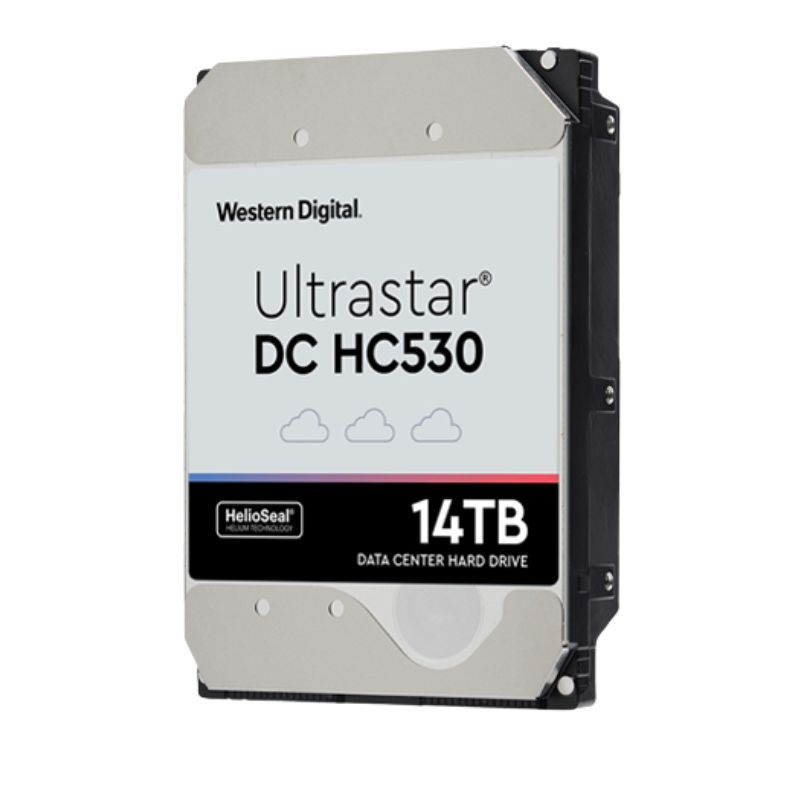


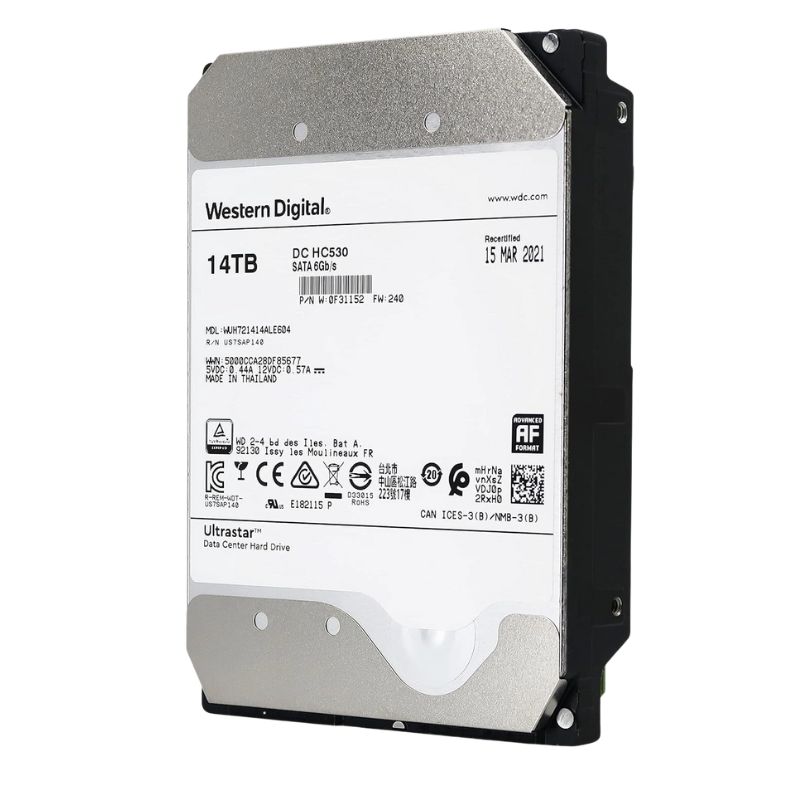
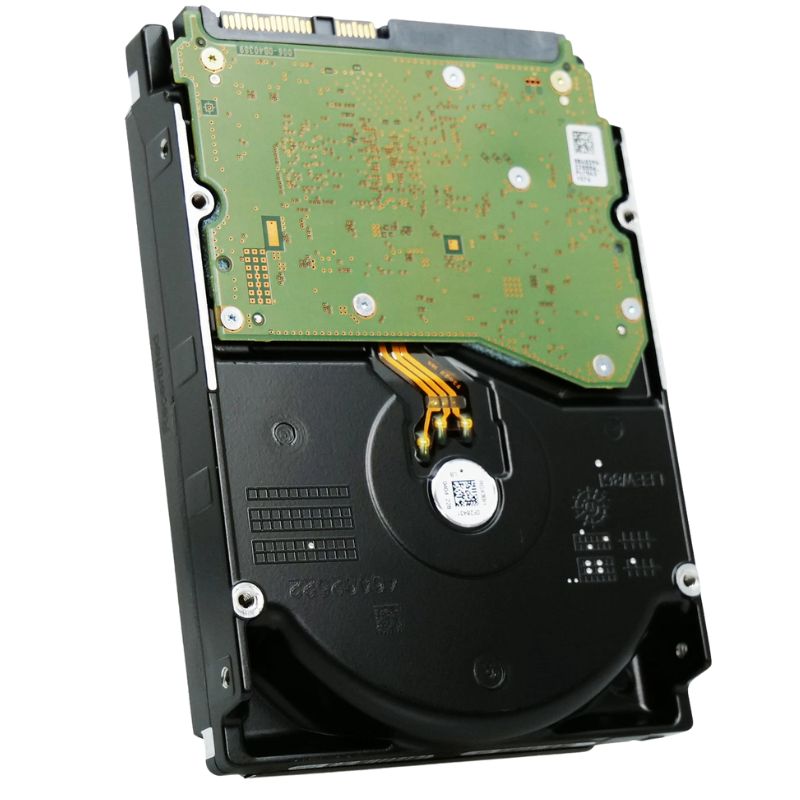
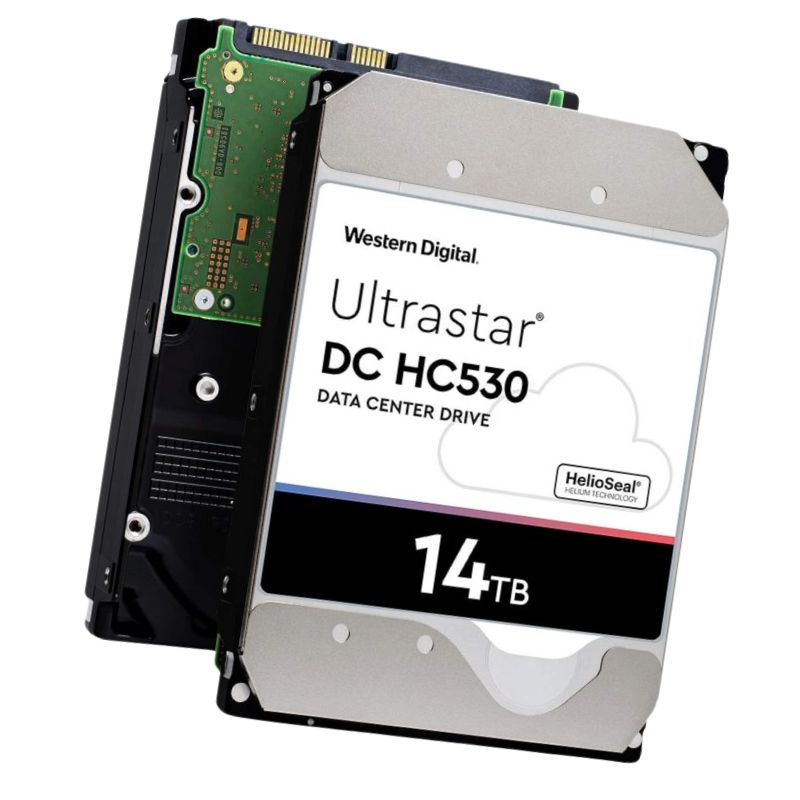
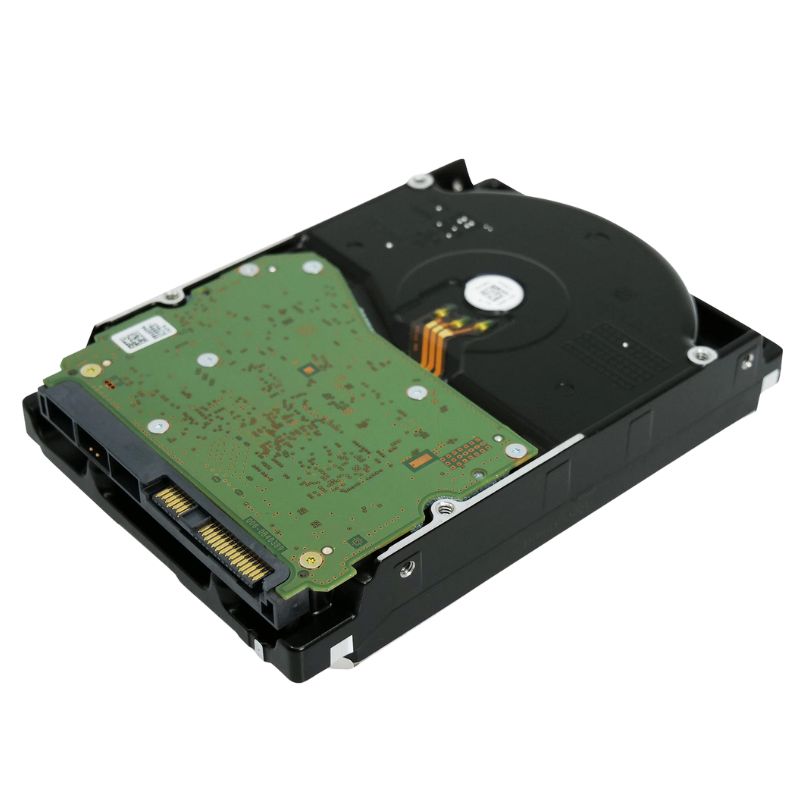
Western Digital 0F31284 Ultrastar Dc Hc530 14TB 7.2K RPM SATA-6GBPS 512mb Buffer 512e Se 3.5 Inch Helium Platform Enterprise Hard Disk drive. Excellent Refurbished with 1 year replacement warranty
This high-capacity internal hard drive, part number 0F31284, is engineered for demanding enterprise applications, delivering exceptional reliability and performance.
The drive features a standard 3.5-inch form factor with the following precise measurements:
Constructed for non-stop operation, this drive boasts an impressive Mean Time Between Failures (MTBF) of 2.5 million hours, ensuring long-term data integrity.
The drive delivers robust performance characteristics essential for data-intensive tasks:
This Ultrastar series component is ideally suited for a diverse range of professional applications:
Utilizing the ubiquitous SATA-6Gbps interface, the drive ensures broad compatibility with existing enterprise server and storage hardware.
Designed for 24/7 operation, this hard disk drive meets the rigorous demands of enterprise-grade workloads, offering unparalleled durability and consistent performance.
Western Digital 0F31284 Ultrastar DC HC530 14TB is a purpose-built enterprise hard disk drive engineered for data centers, hyperscale storage, and archival applications. Built on a helium platform with 7,200 RPM spindle speed and SATA 6.0 Gbps interface, this 3.5-inch drive delivers a balance of high capacity (14TB), predictable performance, and energy-efficient operation. The Ultrastar DC HC530 supports a 512MB cache buffer and native 512e sector emulation, making it compatible with a wide range of legacy and modern storage systems while maximizing usable capacity per drive bay.
The 14-terabyte capacity of the Ultrastar DC HC530 dramatically increases storage density compared to lower-capacity drives. For racks, enclosures, and storage shelves where drive count is fixed, upgrading to 14TB drives multiplies usable capacity without increasing footprint. This reduces space, power, and cooling overhead per terabyte and lowers overall total cost of ownership (TCO) for capacity-centric workloads.
A 7.2K RPM rotational speed strikes a broad compromise between sequential throughput and latency. For large-block sequential reads and writes (typical of backup, archival, and cold data retrieval), Ultrastar DC HC530 delivers consistent throughput. While it does not match SSD random IOPS, the HDD’s rotational speed is optimized for predictable streaming performance across multi-drive arrays.
The SATA 6.0 Gbps interface ensures broad compatibility with commodity servers, enterprise SATA controllers, and many storage arrays. A 512MB onboard cache (buffer) smooths bursty workloads and improves sustained transfer performance by caching frequently accessed blocks and buffering write bursts to the drive’s media.
The Ultrastar DC HC530 implements 512e (512-byte emulation) sectors on high-capacity physical sectors, allowing legacy operating systems, hypervisors, and firmware that expect 512B sectors to operate without modification. This simplifies upgrades in heterogeneous environments and reduces compatibility issues during migration from older drives to high-density helium HDDs.
Helium-filled enclosures reduce aerodynamic drag on spinning platters, enabling more platters in the same form factor with lower power and operating temperatures. The key benefits of the helium platform include:
For sequential workloads — large-file backups, object store retrievals, media streaming, and bulk replication — Ultrastar DC HC530 offers high sustained throughput that makes it cost-effective compared with SSDs for cold/archival data. When deployed in RAID or erasure-coded clusters, its sequential bandwidth aggregates across many drives to deliver multi-gigabit-per-second transfer rates suitable for bulk operations.
Mechanical HDDs are inherently higher in latency for small random I/O compared with flash. Expect typical single-drive random read/write latencies in the millisecond range, which is entirely acceptable for capacity-optimized use cases (archival, cold storage, backup) but less suitable for high-transaction databases and VDI workloads where low microsecond latency is required. For mixed environments, pair Ultrastar HC530 drives with SSD caching tiers or use them for capacity backing layers beneath faster tiers.
This drive excels in:
As an enterprise hard drive, the Ultrastar DC HC530 is engineered for continuous operation in datacenter environments. Expect firmware-level features, robust error correction, and drive-level monitoring designed to support high-availability clusters, RAID arrays, and large-scale storage deployments.
Enterprise deployments should leverage SMART attributes and vendor utilities to monitor drive health indicators like reallocated sector count, pending sectors, temperature, and read/write error rates. When combined with a predictive monitoring policy and thresholds in storage orchestration software, drive failures can be anticipated and replaced proactively, reducing rebuild risks.
Ultrastar drives typically include features to mitigate vibration sensitivity when deployed in high-density trays and enclosures. Helium enclosures further dampen disc wobble. Still, when planning dense arrays (24, 36, 60 drives per chassis), select chassis and backplanes rated for enterprise vibration and ensure firmware settings and controller features (TLER/CT) are set appropriately to avoid unnecessary drive dropouts.
A primary advantage of helium platform drives is reduced energy consumption per unit of capacity. Organizations focused on minimizing data center power usage effectiveness (PUE) will find that 14TB helium drives deliver a lower watts-per-TB ratio versus older air-filled drives of comparable form factor.
Although helium reduces internal drive temperatures and aerodynamic drag, dense enclosures still generate cumulative heat. Space planning should include adequate airflow, hot and cold aisle containment when appropriate, and temperature monitoring integrated with facility management systems to maximize both reliability and efficiency.
The SATA 6Gb/s interface and 3.5-inch form factor mean the Ultrastar DC HC530 is compatible with most modern enterprise servers, storage arrays, and external JBOD enclosures that accept SATA drives. Before mass deployment:
For reliability, data protection strategies should incorporate RAID or erasure coding tuned for large-capacity drives:
Because of large capacity, the time to rebuild a failed 14TB drive in a RAID array can be lengthy and can stress remaining drives. Design arrays with sufficient redundancy (double parity or higher) or with distributed erasure coding to limit the window of vulnerability. Implement background integrity checks and prioritize sequential IO shaping to avoid saturating controllers during rebuilds.
Hyperscale and cloud architectures that rely on object storage (e.g., Ceph, S3-compatible stacks) benefit from the Ultrastar DC HC530’s high capacity and low cost per TB. Typical deployment uses include:
Backup vendors and appliance builders can reduce chassis count and power with 14TB drives—fewer blades or enclosures are required to host a given backup dataset. When paired with deduplication and compression, the effective capacity multiplies, making Ultrastar HC530 ideal for long-term retention and compliance storage.
Many enterprises retain logs, telemetry, and compliance records for months or years. Using Ultrastar DC HC530 drives in nearline storage arrays helps organizations meet retention requirements affordably while still keeping data online for audits and analytics queries that scan large datasets.
Deploying enterprise HDDs at scale requires a lifecycle plan: track firmware versions, coordinate updates during maintenance windows, and verify that drive firmware is compatible with the host system. Western Digital periodically releases firmware revisions to address performance, compatibility, and reliability improvements—check vendor bulletins and vendor-validated firmware lists before applying updates in production.
Maintain accurate inventory—serial numbers, firmware, deployment date, and SMART baseline. Implement end-of-life and replacement policies based on manufacturer MTBF, observed SMART trends, and business SLAs. For drives used in archival or compliance contexts, establish secure disposal and data destruction procedures when drives are retired.
When comparing suppliers, consider both raw capacity and effective capacity after RAID/erasure overhead. Price-per-TB is a useful metric, but also factor in power consumption, rack density, and maintenance overhead. 14TB helium drives typically offer a competitive price per TB compared with smaller-capacity enterprise drives.
SSDs are superior for low-latency, high-IOPS tiers, but they remain more expensive per TB. Choose Ultrastar DC HC530 for:
Choose flash for hot tiers where latency and random IOPS dominate. Many modern architectures use hybrid tiers—SSDs for front-end caching and HDDs for capacity—to optimize both performance and cost.
When procuring, confirm mechanical compatibility (3.5" form factor) and check the manufacturer warranty and support terms. Enterprise warranties often include advanced replacement and longer coverage periods; verify RMA procedures and how replacements are handled across regions to reduce mean time to recovery.
Operate HDD arrays within vendor-specified temperature ranges. Ensure consistent airflow through drive bays and monitor inlet/outlet differentials. Temperature throttling or thermal-induced errors can reduce drive life over time; pay attention to cabinet-level airflow and avoid blocking vents.
Implement continuous monitoring that collects SMART metrics and drive-facing telemetry. Use anomaly detection to flag increasing reallocated sectors, read error rates, or rising temperature trends. Automated alerts should feed into runbooks that specify next steps—snapshotting data, provisioning a hot spare, or initiating a drive swap.
Even with enterprise-grade drives, ensure robust backup strategies. Combine on-premises replication, offsite backups, and cloud-based immutable storage for critical datasets. For compliance, maintain audit trails and retention policies that align with your industry requirements.
Migrations should be staged. Test a pilot array with representative workloads to measure rebuild times, power draw, and thermal behavior. Validate that controllers and OS drivers handle 512e sector emulation correctly. Plan for capacity rebalancing in distributed file systems and ensure monitoring is in place before scaling to full production.
When replacing smaller drives with 14TB units in clustered environments, use automated rebalancing tools and tiering policies to avoid hotspots and to evenly distribute data across disks and racks. Consider throttling rebalances to avoid saturating network or controller resources during business hours.
Yes—especially enterprise NAS systems and multi-bay enclosures that support 3.5" drives and SATA 6Gb/s interfaces. It is ideal for NAS deployments focused on high capacity, cold storage, or archive functions rather than small-office consumer NAS scenarios that may require different feature sets or warranties.
While individual helium drives are more power-efficient than older air-filled models, deploying many high-capacity drives still requires careful planning for rack power and thermal dissipation. Calculate watts-per-rack and design cooling to match peak load. Use vendor power specifications to estimate aggregate facility requirements.
512e allows compatibility with legacy systems but involves internal translation between logical 512-byte sectors and the drive’s physical sectors. In most typical sequential workloads the performance impact is negligible. For certain random write patterns, aligning partitions and filesystems to the drive’s physical sector boundaries can reduce write amplification and improve efficiency.
Common enterprise monitoring tools (Nagios, Zabbix, Prometheus with node exporters, vendor OEM tools) can collect SMART metrics and SNMP alerts. Western Digital also provides drive utilities and integration guidance for enterprise monitoring stacks—leverage those to implement actionable alerting and predictive replacement workflows.
When planning architectures that prioritize capacity, durability, and cost-efficiency, the Western Digital Ultrastar DC HC530 14TB is a compelling choice. Its helium platform, 7.2K RPM design, and SATA 6Gb/s interface make it broadly compatible and ideal for large-scale, capacity-oriented deployments such as object storage clusters, backup vaults, and nearline tiers. Successful adoption depends on careful sizing, attention to rebuild and redundancy policies, thermal and power planning, and integration into monitoring and lifecycle management processes. Optimizing file system alignment for 512e, using caching tiers where low latency is required, and employing erasure coding or double parity in large arrays will help extract the most value while protecting data integrity and minimizing operational risk.
Over the lifecycle of a storage cluster, consider periodic reviews of cost-per-TB as new drive generations become available. Plan staged upgrades, adopt automation to manage rebalances, and maintain a strict discipline around monitoring and proactive replacement. With the Ultrastar DC HC530 14TB, organizations can significantly reduce the physical footprint of their capacity tiers while retaining enterprise-grade reliability—provided they design for the operational realities of large-capacity HDDs.


 Contact Us
 Information
 Catalog
 Solid State Drives (SSD)
 Network Switches
 Hard Disk Drives
 HBA & Controllers
 PC & Servers
 PC & Server Memory
 CPU & Processors
 Network Routers
 Power Supplies
 Tape Drives & Libraries
 Network Devices
 Computer & Network Cables