(7% discount is applied at checkout)
Cart is empty
Your go-to destination for cutting-edge server products
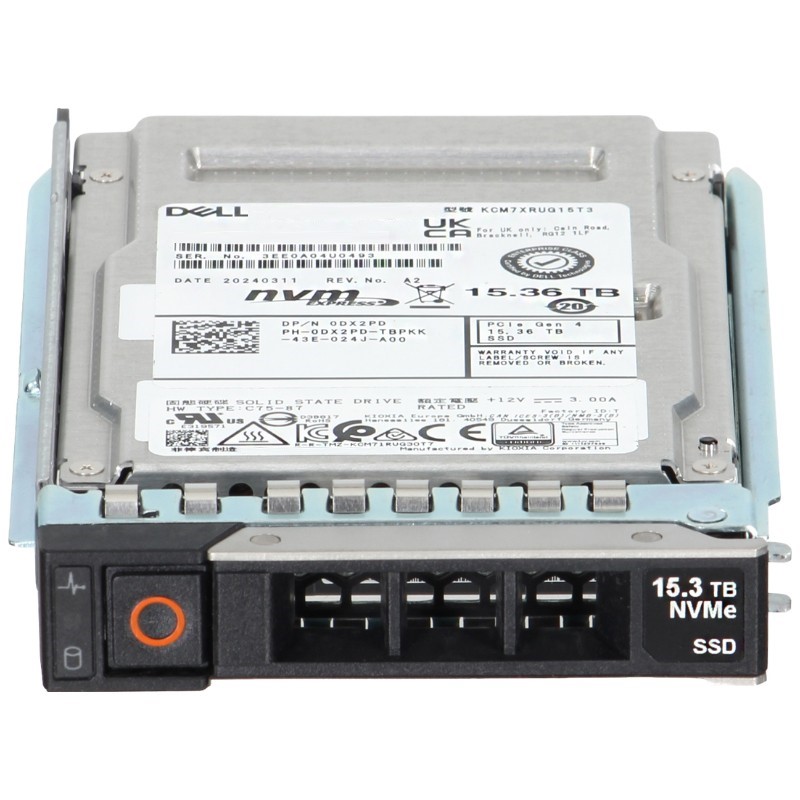


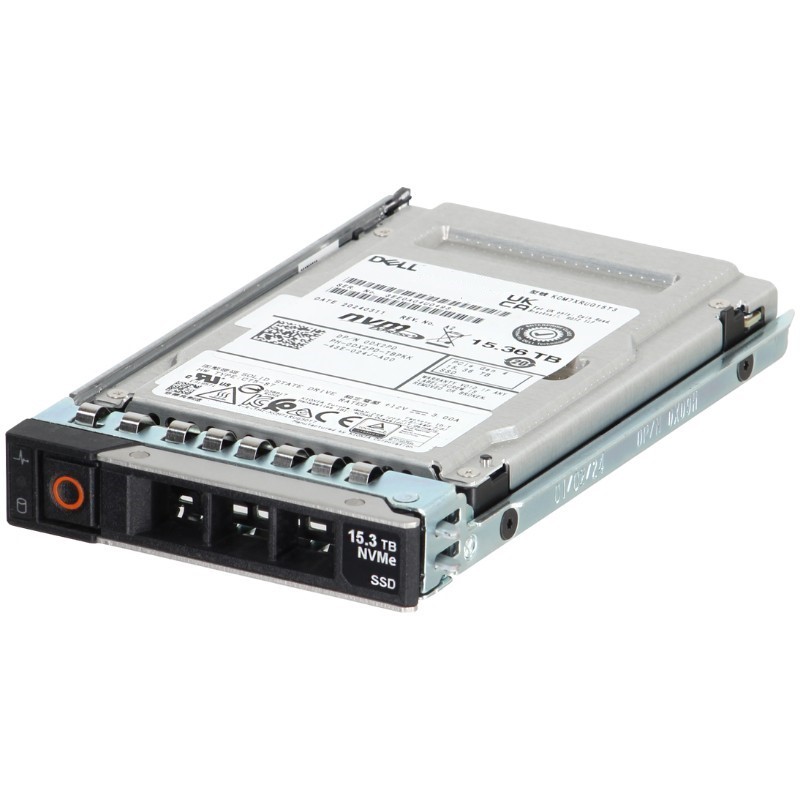
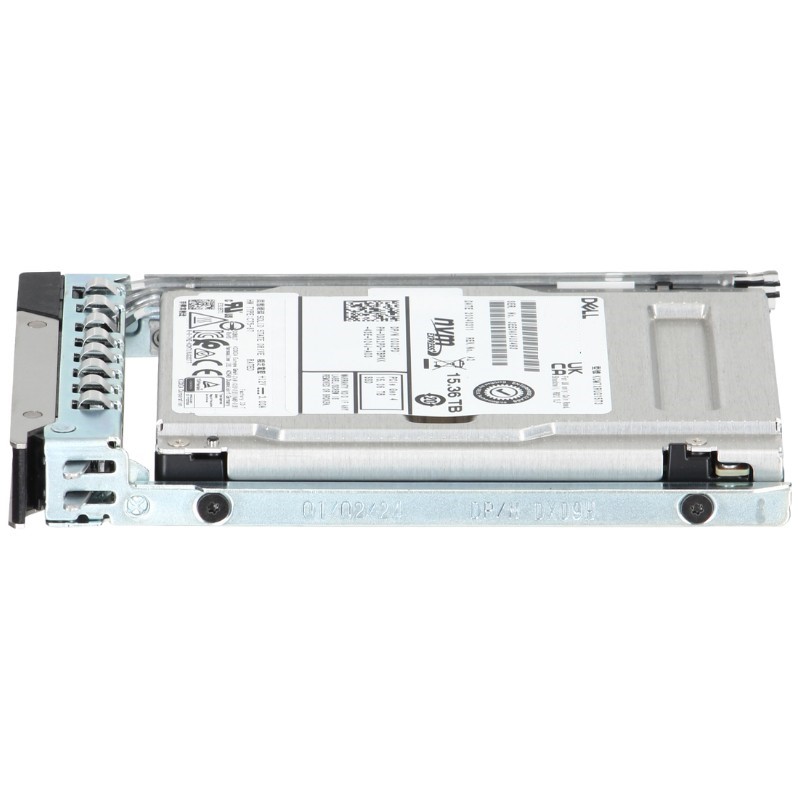
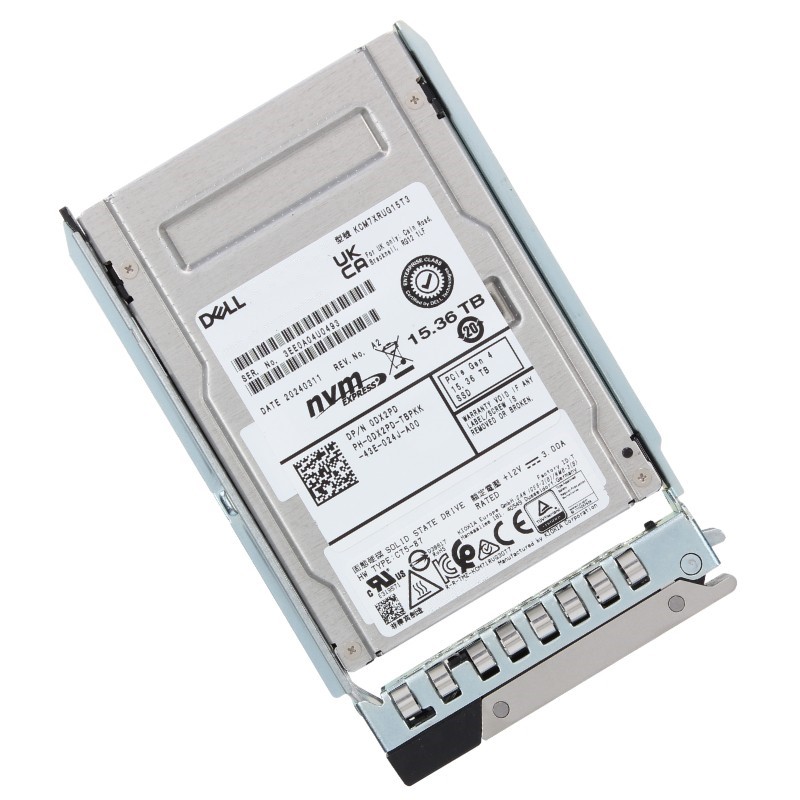
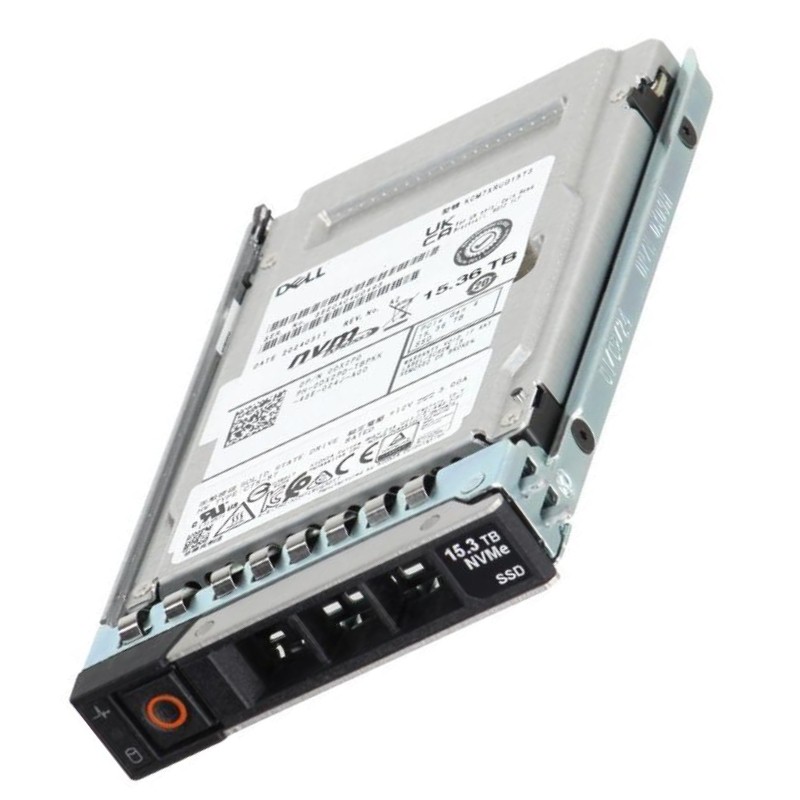
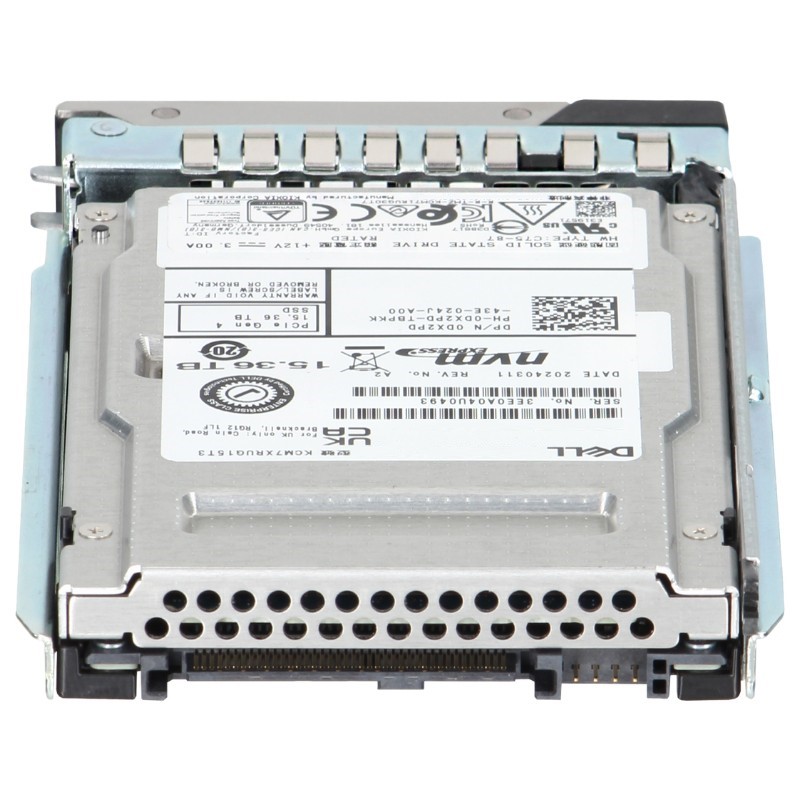
Dell 400-BOMB 15.36TB PCI-E Gen4 NVMe U.2 Read Intensive 1DWPD SFF Enterprise Solid State Drive. New Sealed in Box (NIB) with 1 year Warranty
Engineered for demanding server environments, this enterprise-grade solid state drive delivers exceptional performance and reliability for data-intensive applications.
Dell 400-BOMB 15.36TB PCIe Gen4 NVMe 2.5-inch U.2 Read Intensive Enterprise Solid State Drive (SSD) With Tray For Dell PowerEdge 14G, 15G, 16G And 17G Server represents a class-leading storage solution engineered for demanding data-center workloads that require high-capacity, high-throughput, and consistent low-latency read performance. Designed to meet the rigorous expectations of modern enterprise environments, this drive combines PCIe Gen4 NVMe performance with U.2 form-factor flexibility and enterprise-grade endurance characteristics optimized for read-dominant applications. Whether deployed in large-scale virtualization clusters, analytics platforms, content delivery systems, or high-performance database servers, the 400-BOMB series delivers the predictable performance and operational resilience that enterprise IT teams rely on.
This Dell 400-BOMB SSD is a 2.5-inch U.2 (SFF) NVMe device implementing the PCIe Gen4 interface to exploit double the raw bandwidth of PCIe Gen3 in compatible platforms. The drive’s 15.36TB capacity targets data-dense workloads and consolidation scenarios where fewer higher-capacity drives reduce rack-space, cabling, and overall system complexity. The “Read Intensive” designation and 1 DWPD (Drive Writes Per Day) endurance rating reflect a design trade-off optimized for read-heavy enterprise use cases: web serving, large-scale object stores, media streaming, OLAP analytics, and similar applications where reads vastly outnumber writes.
Engineered for Dell PowerEdge 14G, 15G, 16G, and 17G servers, the drive ships with a tray/adapter that ensures tool-less or simple tray-based integration into the native hot-swap bays offered by these servers. Compatibility with these PowerEdge generations makes the 400-BOMB a natural fit for organizations standardizing on Dell infrastructure, simplifying procurement, inventory, and replacement procedures. The U.2 connector combined with NVMe protocol support allows direct backend connectivity to NVMe controllers, enabling server architectures to benefit from parallel queues and reduced storage stack overhead compared to legacy SATA or SAS devices.
PCIe Gen4 NVMe architecture unlocks elevated sequential throughput and random I/O capabilities. For read-intensive workloads, the Dell 400-BOMB's architecture focuses on maximizing sustained read throughput, read IOPS, and minimizing tail latency—attributes that materially improve application responsiveness under complex multi-tenant or high-concurrency conditions. The NVMe protocol reduces CPU overhead per I/O and supports multiple hardware queues, which allows modern multi-core processors to achieve superior parallelism and throughput when saturating storage channels.
Sequential read performance is a cornerstone for large-file transfers, backup restores, and streaming workloads; the PCIe Gen4 interface provides enough headroom for multi-gigabyte-per-second streams in aggregate when multiple drives are combined. Random read IOPS and low 99th-percentile latency are crucial for database query workloads and metadata-heavy operations. The 400-BOMB is calibrated to sustain high random read IOPS over long periods, which provides stable, predictable latency for applications that require consistent query response times.
Enterprises prioritize not just average performance but the predictability of performance at the tail. The Dell 400-BOMB's firmware and controller tuning aim to minimize high-percentile latency spikes, allowing service-level objectives (SLOs) to be met more reliably. For latency-sensitive services—such as transactional databases, search platforms, and user-facing APIs—this stability can directly translate into higher user satisfaction and more efficient resource utilization.
Although this model is optimized for read-heavy usage patterns, its 1 DWPD endurance rating provides sufficient write endurance for many enterprise scenarios when deployed with appropriate workload planning. The drive's enterprise-grade NAND and controller firmware include mechanisms for wear-leveling, error-correcting code (ECC), and background maintenance to preserve data integrity throughout the drive’s lifecycle. In addition to NAND-level protections, the drive typically supports power-loss protection features or capacitive buffering strategies in the event of abrupt power interruption, which helps protect in-flight data and maintain metadata consistency across unexpected outages.
Firmware maturity is a critical enterprise consideration. Dell-qualified firmware and supported updates help ensure compatibility with PowerEdge management frameworks and storage ecosystems. IT operators benefit from predictable firmware maintenance windows, vendor-backed QA, and integration with Dell’s management tools for drive health monitoring, SMART reporting, predictive failures alerts, and secure firmware rollbacks. These management features reduce unplanned downtime and facilitate lifecycle management at scale.
Security is a first-class concern in enterprise storage. The drive supports industry-standard features for data protection, such as TCG Opal or other hardware-based encryption options when enabled by the server platform and policy. Hardware encryption offloads cryptographic overhead from the CPU, enabling secure data-at-rest protection with negligible performance impact on read-dominant workloads. For regulated industries, encryption and secure erase capabilities assist compliance with data protection regulations and internal governance policies. The inclusion of secure device identifiers and firmware attestation mechanisms can also aid in secure asset tracking and anti-tamper workflows.
When drives reach end-of-life, secure and verifiable wipe procedures are essential. The Dell 400-BOMB supports cryptographic erase and vendor-recommended secure erase protocols that enable certified data sanitization for secure disposal or redeployment. These processes, when combined with careful asset management, help organizations maintain regulatory compliance and lower the risk associated with data leakage from retired hardware.
High-capacity NVMe U.2 drives like the 15.36TB 400-BOMB enable consolidation strategies that reduce the number of physical drives required to reach desired capacity targets. This consolidation lowers power draw per terabyte, reduces cooling requirements per terabyte, and simplifies cabling and backplane utilization. For hyper-converged or converged infrastructure, larger NVMe drives reduce the overhead of replication and administrative burden. Storage architects can choose higher-capacity drives to balance performance density against redundancy protocols such as RAID or erasure coding, optimizing total cost of ownership (TCO) and rack density.
The drive supports deployment in single-drive performance tiers, mixed-tier architectures, or as part of all-flash arrays. In hybrid configurations, these read-intensive NVMe drives can serve hot or warm data sets, complementing higher-endurance or write-optimized devices for write-heavy tiers. For cloud-native applications, the 400-BOMB can be integrated into software-defined storage layers and orchestrated via container storage interfaces to support ephemeral and persistent volumes with consistent performance characteristics.
The Dell 400-BOMB excels when matched to workloads where read performance, capacity density, and predictable latency matter most. Typical use cases include read-heavy database replicas, content delivery networks caching nodes, search indexes, analytical data marts, virtualization boot stores, and large-scale file-serving where reads greatly outnumber writes. Its balance of capacity and read-optimized endurance makes it suitable for read-scale-out architectures where many parallel read streams access large datasets.
Analytical platforms that perform frequent large-scale scans and queries benefit from the high sequential and random read capabilities of NVMe Gen4 drives. Using Dell 400-BOMB drives for read replicas or for read-heavy partitions reduces query response times and enables faster analytics cycles, which improves time-to-insight for business intelligence and machine-learning model training pipelines.
In media-heavy environments, the ability to stream large media objects concurrently with low latency is essential. The capacity and bandwidth characteristics of the drive allow content providers to host more data per node, reducing the need for horizontal sprawl and simplifying cache layer architectures while maintaining high concurrency.
Like all enterprise storage hardware, the Dell 400-BOMB benefits from deployment within data-center environments that provide stable power, adequate cooling, and proper rack airflow. NVMe drives are sensitive to thermal conditions; therefore, system-level airflow patterns and ambient temperature policies should be enforced to prevent thermal throttling. Servers equipped with the recommended trays and Dell’s validated backplanes will ensure proper mechanical and electrical integration.
Operational efficiency improves when drives operate within manufacturer-specified temperature ranges. Data centers should monitor inlet and internal chassis temperatures to preserve long-term NAND health and reduce the risk of performance throttling under sustained load. Power provisioning should account for peak power draw during heavy I/O bursts and background maintenance events such as garbage collection and scrubbing.
Enterprises often maintain mixed storage fleets containing NVMe, SAS, and SATA devices. In such environments, ensure that the storage orchestration layer and data placement policies use appropriate tiers: hot data on NVMe, warm data on SAS, and cold data on high-capacity SATA. Tiering software or object-storage policies can automate data movement based on access patterns, enabling the Dell 400-BOMB to serve as a high-performance read tier while optimizing cost efficiency across the estate.
Dell 400-BOMB 15.36TB PCIe Gen4 NVMe U.2 Read Intensive 1DWPD Enterprise SSD, Dell PowerEdge SSD compatibility, NVMe U.2 enterprise solid state drive, PCIe Gen4 NVMe server storage, high-capacity enterprise SSD, read-intensive NVMe SSD, U.2 2.5-inch SSD for PowerEdge 14G 15G 16G 17G, enterprise SSD endurance 1 DWPD, data center NVMe read performance—these keyword phrases and long-tail variants are intentionally present in the preceding content to improve discoverability for procurement teams, infrastructure architects, and system integrators searching for high-capacity read-optimized NVMe storage tailored for Dell PowerEdge servers.
Deployment success hinges on understanding the intersection of workload characteristics, system architecture, and operational practices. When specified correctly and integrated with appropriate monitoring and lifecycle procedures, the Dell 400-BOMB 15.36TB PCIe Gen4 NVMe U.2 SSD delivers a compelling mix of capacity, read performance, and integration convenience for modern enterprise data centers.


 Contact Us
 Information
 Catalog
 Solid State Drives (SSD)
 Network Switches
 Hard Disk Drives
 HBA & Controllers
 PC & Servers
 PC & Server Memory
 CPU & Processors
 Network Routers
 Power Supplies
 Tape Drives & Libraries
 Network Devices
 Computer & Network Cables