(7% discount is applied at checkout)
Cart is empty
Your go-to destination for cutting-edge server products
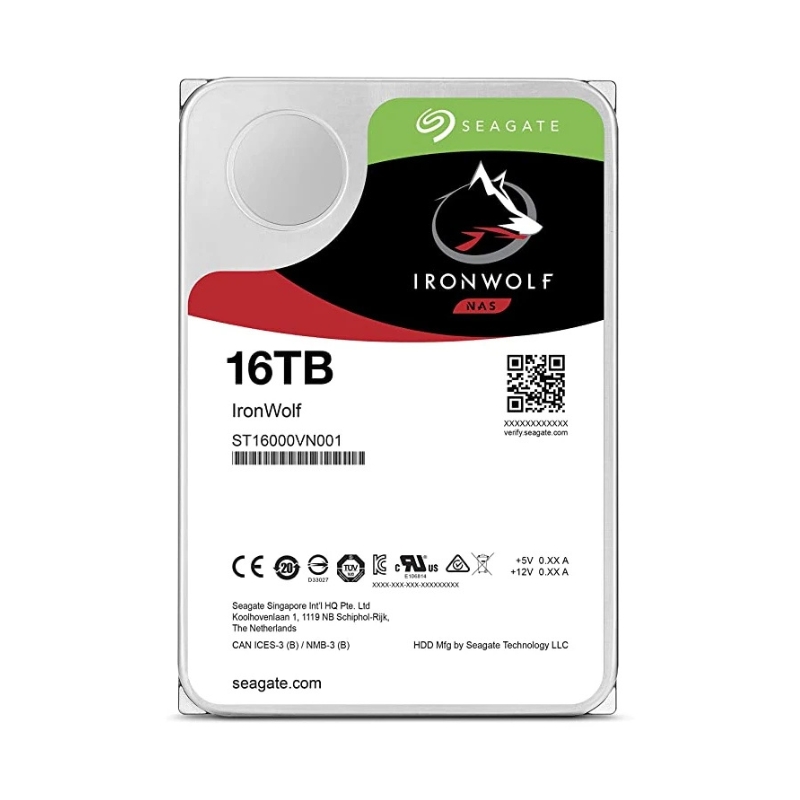


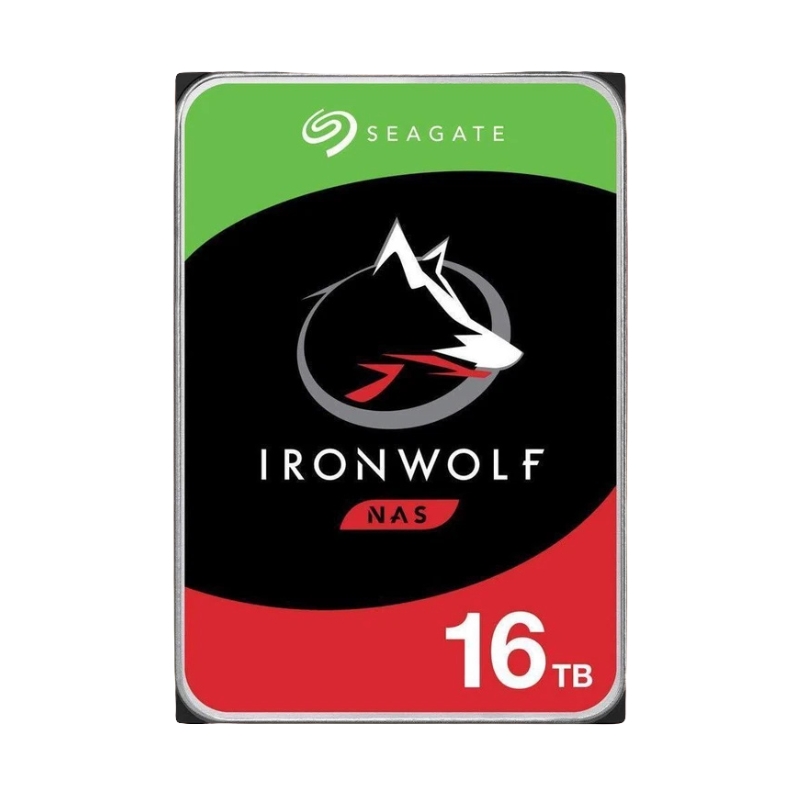
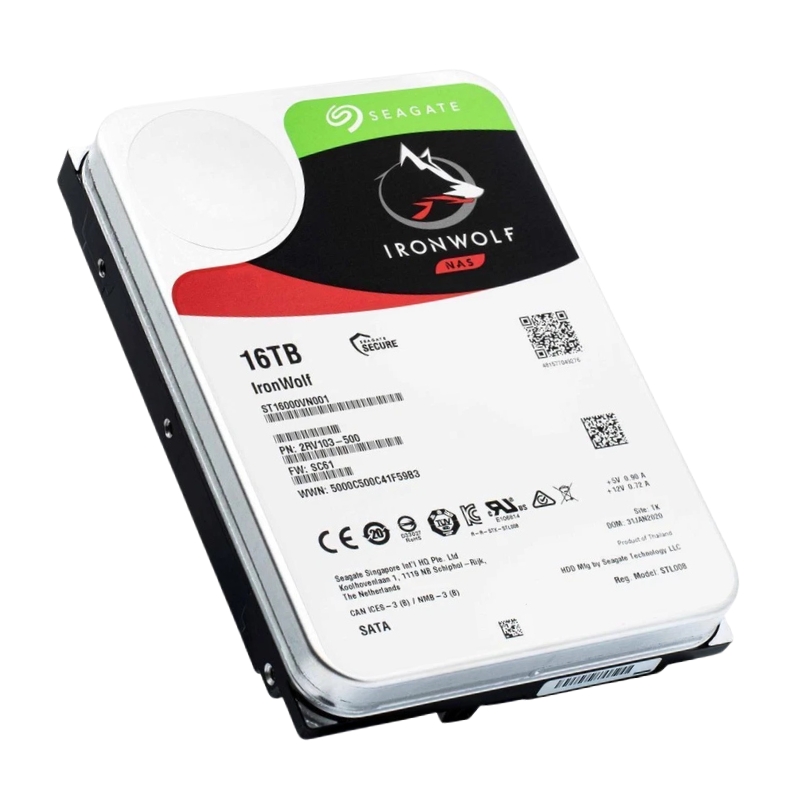
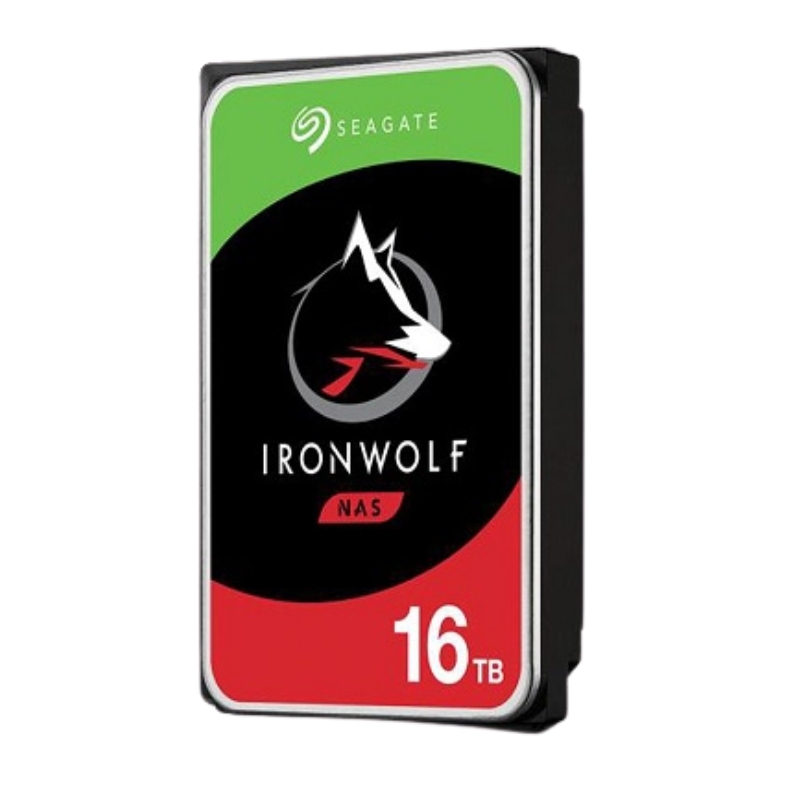
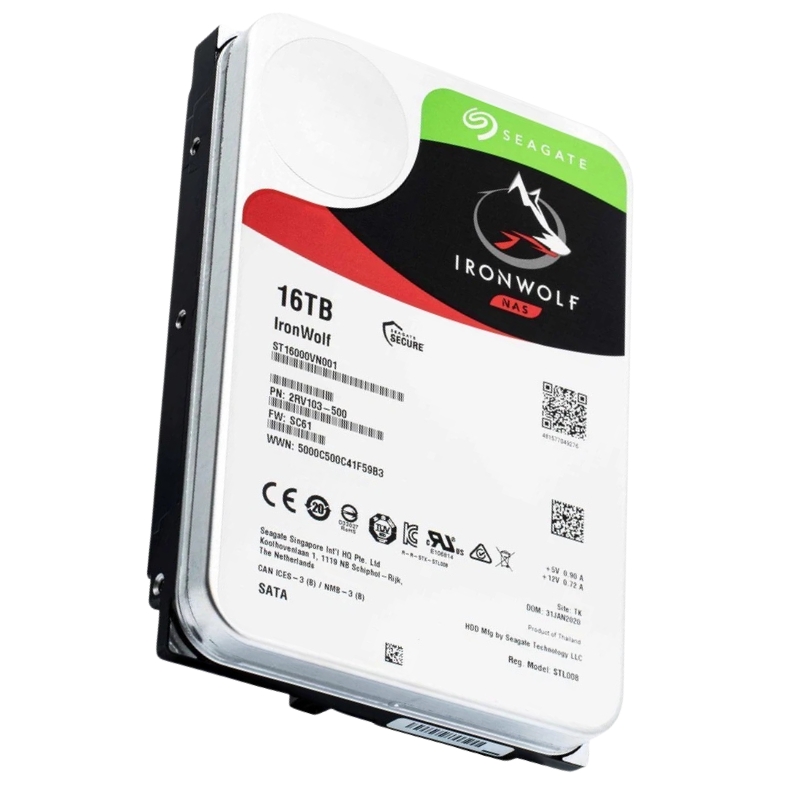
Seagate ST16000VN001 16TB Ironwolf Nas 7.2K RPM SATA-6GBPS 256mb Buffer 3.5 Inch Hard Disk Drive. New Sealed in Box (NIB) With 3 years Warranty
The Seagate ST16000VN001 belongs to the IronWolf NAS series, designed for high-capacity and reliable storage in network-attached storage environments. Offering a massive 16TB of space, this 3.5-inch drive combines durability, performance, and efficiency, making it ideal for multi-user workloads and private cloud setups.
This Seagate IronWolf NAS hard drive is tailored for 1 to 8-bay NAS enclosures, offering robust performance in personal cloud storage and multi-user environments. Its design ensures seamless support for small businesses, creative professionals, and home offices needing dependable and continuous data access.
The Seagate IronWolf NAS 16TB is crafted to ensure strong and consistent performance with features such as error recovery controls, dual-plane balancing, and built-in rotational vibration sensors. These attributes make it dependable for constant operation in high-intensity NAS setups.
Designed for always-on operation, this hard drive supports 180TB per year workload rate. With multi-user optimization, users can collaborate without performance bottlenecks, making it ideal for enterprises and demanding home setups. Integrated sensors minimize vibrations to maintain consistent data access speed.
Beyond its internal architecture, the Seagate IronWolf NAS 16TB also provides practical build quality. With a 3.5-inch form factor, it is easily compatible with NAS bays and storage enclosures. Compact and sturdy, the hard disk ensures easy installation while maintaining a solid, balanced weight.
Investing in the ST16000VN001 means choosing high-capacity, dependable, and efficient storage. With seamless NAS compatibility, multi-user support, and advanced vibration control, this HDD is engineered for professionals and businesses needing uninterrupted access to massive amounts of data.
The Seagate ST16000VN001 16TB IronWolf NAS drive belongs to a specialized storage category built specifically for network-attached storage (NAS) systems, small office/home office (SOHO) environments, and multi-bay RAID arrays. As a 3.5-inch SATA hard disk with a 7,200 RPM spindle speed, SATA-6Gb/s interface and a 256MB cache buffer, the IronWolf 16TB model delivers a balance of large capacity, consistent performance, and NAS-oriented firmware optimizations. This category covers drives designed to remain powered and active for extended periods, handle mixed read/write workloads, tolerate multi-drive vibration, and integrate tightly with NAS health-monitoring tools.
Drives in the "Seagate IronWolf NAS 16TB" category are optimized for the following fundamental needs of NAS deployments:
Understanding the technical details of the Seagate ST16000VN001 helps you match the drive to your NAS workload and performance expectations. Below we break down the most important specs and what they mean in practice.
The ST16000VN001 uses a 3.5-inch form factor and a SATA 6.0 Gb/s interface. The 3.5-inch format is standard for desktop and NAS bays, offering the best price-per-terabyte. SATA-6Gb/s is fully backward compatible with 3Gb/s and 1.5Gb/s ports but achieves maximum throughput with modern NAS controllers and RAID cards.
With a 7,200 RPM spindle speed and a 256MB cache (buffer), this IronWolf drive reduces seek latency and improves sustained read/write throughput compared with lower-RPM alternatives. The large cache helps smooth bursty workloads—particularly useful when multiple simultaneous clients access the NAS or when running virtual machines from the array.
At 16TB, the ST16000VN001 is designed for high-density storage arrays. Using multiple 16TB drives in RAID 5/6 or other redundancy schemes allows businesses and power users to create petabyte-scale pools without consuming excessive rack or desk space.
IronWolf drives are rated with workload limits and mean time between failures (MTBF) figures that reflect their intended continuous-use cases. While manufacturer numbers vary by model year, typical enterprise-grade NAS drives like this one offer workload ratings in the hundreds of terabytes written (TB/year) range and MTBF measured in millions of hours. These figures indicate suitability for backup servers, media editing systems, and moderate enterprise deployments.
The Seagate IronWolf series includes firmware-level enhancements aimed specifically at multi-disk NAS environments—features that materially improve reliability and maintainability:
The "Seagate ST16000VN001 16TB IronWolf NAS" category fits a wide range of users and organizations. Below are typical scenarios where this drive excels and practical recommendations for each.
Home users storing large media libraries—TV shows, movies (4K/8K), RAW photo archives, and music—benefit from the large capacity and good sustained throughput of the 16TB IronWolf. When installed in two-bay or four-bay NAS systems, this drive gives homeowners the opportunity to keep years of content locally, stream to multiple devices simultaneously, and maintain redundancy using RAID 1 or RAID 5 configurations.
Video editors working with multi-stream 4K footage or VR content need storage that can handle sustained large-file reads and writes and survive continuous workloads. Multiple ST16000VN001 drives in RAID provide the capacity and consistent performance needed for editing proxies and full-resolution timelines directly from NAS volumes. Photographers with large RAW collections will find the 16TB capacity convenient for long-term archiving and active project libraries.
Small and medium businesses (SMBs) frequently use NAS devices for centralized file sharing, automated backups, and hosting lightweight virtual machines. The IronWolf series supports these workloads by offering higher workload ratings than consumer drives, robust multi-drive reliability, and monitoring tools that integrate with business-grade NAS firmware.
When paired with appropriate NAS software, IronWolf drives can be used to store surveillance footage from IP cameras. The sustained write performance and large capacity of 16TB make them suitable for systems that archive long retention periods at high resolutions, though users should check compatibility with surveillance-specific drive lines if their environment requires extremely high continuous write endurance.
It’s important to align expectations with real-world performance. The ST16000VN001 provides faster average access times and improved sustained throughput compared to 5,400 RPM drives, but its latency will still be higher than SSDs. For many NAS workloads—media streaming, backup, cold storage, and moderate VM usage—the IronWolf strikes an effective price/performance compromise.
In sequential read/write scenarios (large file transfers, backups), 16TB IronWolf drives deliver solid throughput consistent with 7,200 RPM mechanical media. The 256MB cache helps with short-duration bursts and metadata-heavy operations, improving responsiveness in multi-user access patterns.
Mechanical drives excel less at small random IOPS workloads compared to NVMe or SATA SSDs. When designing NAS systems that will run databases or heavy virtualization directly from spinning disks, consider hybrid architectures—using SSD caches for hot data and IronWolf high-capacity drives for bulk storage.
Reliability is a central concern with multi-disk NAS. The Seagate IronWolf 16TB model is engineered with features and warranties that reflect its intended always-on usage:
Seagate typically backs IronWolf drives with a multi-year limited warranty (check the model’s current warranty period at point of purchase). The warranty covers defects in workmanship and materials but does not replace backup strategy. Always maintain redundant copies of critical data and implement off-site backups when possible.
The IronWolf series advertises workload ratings—measured in TB written per year—that indicate how much sustained write activity the drive is engineered to support. For environments with extremely high continuous writes (e.g., heavy surveillance ingestion, large-scale analytics), evaluate workload ratings and consider purpose-built surveillance drives or enterprise-class storage.
MTBF provides a statistical measure of expected reliability across many drives. Coupled with S.M.A.R.T. monitoring and IronWolf Health Management, these metrics offer early warning signs of impending failures so administrators can replace drives proactively before data loss occurs.
Before purchasing, check NAS compatibility lists from major vendors (Synology, QNAP, Asustor, TerraMaster, TrueNAS, etc.) to confirm the ST16000VN001 or equivalent 16TB IronWolf model is listed for your NAS chassis and firmware version. While SATA is a standard interface, vendor-verified compatibility helps avoid unexpected issues with RAID management and drive sleep behavior.
Seagate occasionally issues firmware updates for its drives; keep disks up to date where recommended. If mixing drives from different manufacturers or families in the same array, be mindful of potential differences in error-recovery behavior and performance characteristics.
Choose RAID levels based on needs:
For large arrays with 16TB drives, consider the rebuild time and exposure window; using RAID 6, hot spares, or backup replication can reduce risk during rebuilds.
Implement scheduled health checks and backups:
Mechanical drives generate audible noise and consume more power than SSDs. The ST16000VN001’s 7,200 RPM speed can be louder than 5,400 RPM drives. In home or office deployments, choose enclosures that dampen noise if acoustics matter. Also evaluate power consumption if deploying many drives in a single rack—calculate power and cooling budgets before scaling up.
Multi-bay NAS arrays can induce significant rotational vibration. IronWolf’s RV sensors and firmware mitigations reduce error rates from vibration, but proper mechanical design, secure mounting, and chassis-level vibration dampening further improve reliability.
Keep drives within their manufacturer-specified operating temperature range; typical values fall roughly between 0°C–60°C for storage and about 5°C–40°C for operating conditions, but always confirm the exact values for the model you purchase. Sustained high temperatures reduce lifespan and increase failure rates.
Choosing storage involves trade-offs among capacity, performance, cost, endurance, and power consumption. Here’s how the IronWolf 16TB compares to common alternatives.
Consumer desktop drives are often cheaper per TB but lack NAS-specific firmware, RV sensors, and workload ratings. For multi-bay NAS and always-on applications, IronWolf offers superior reliability and longer useful life.
Enterprise HDDs may offer higher MTBF, longer warranties, and more aggressive workload ratings, but typically at a greater cost. For many SMBs and prosumers, IronWolf provides an optimal balance of price and NAS-focused features without the premium enterprise price.
SSDs outperform HDDs in random IOPS and latency but remain far more expensive per TB. Many NAS systems benefit from a hybrid approach: use one or more SSDs as cache or for VM volumes, while leveraging 16TB IronWolf drives for cold and warm data. This approach delivers responsiveness where needed and provides economical bulk capacity.
If moving to ST16000VN001 drives from smaller drives or different vendors, plan your migration to minimize downtime and risk:
Many NAS systems support hot-swapping and online RAID expansion. Migrate data by adding a new 16TB drive, allowing the array to rebalance, then replace the next drive iteratively. Monitor rebuild times and system load—large-capacity drive rebuilds can require many hours, increasing vulnerability during the rebuild window.
Use snapshots and offsite replication (or cloud sync) to protect against accidental deletions and catastrophic failures. While RAID protects against a single drive failure, it doesn’t replace backups or replication strategies.
Seagate promotes additional services and software that complement IronWolf drives. Consider these integrations when planning a NAS deployment:
IHM works within certain NAS vendor environments to provide predictive failure analysis, actionable alerts, and recommendations for drive replacement. When available, enabling IHM provides an added layer of proactive maintenance.
For mission-critical data, investigate Seagate’s optional data recovery services or third-party recovery firms. These services are typically separate from the standard warranty but can be invaluable when handling irreplaceable data.
Use the sections below to estimate capacity, redundancy, and usable storage for common RAID configurations with 16TB drives.
A 4-bay NAS configured with four 16TB drives in RAID 5 yields approximately 48TB usable capacity (16TB * (4 − 1)), minus formatting and filesystem overhead. RAID 5 offers a good mix of capacity efficiency and single-drive redundancy but comes with rebuild risk on very large drives.
In a 6-bay system using RAID 6 (dual parity), six 16TB drives provide approximately 64TB usable (16TB * (6 − 2)). RAID 6 protects against two simultaneous drive failures, which is beneficial during long rebuilds common with high-capacity media.


 Contact Us
 Information
 Catalog
 Solid State Drives (SSD)
 Network Switches
 Hard Disk Drives
 HBA & Controllers
 PC & Servers
 PC & Server Memory
 CPU & Processors
 Network Routers
 Power Supplies
 Tape Drives & Libraries
 Network Devices
 Computer & Network Cables