(7% discount is applied at checkout)
Cart is empty
Your go-to destination for cutting-edge server products


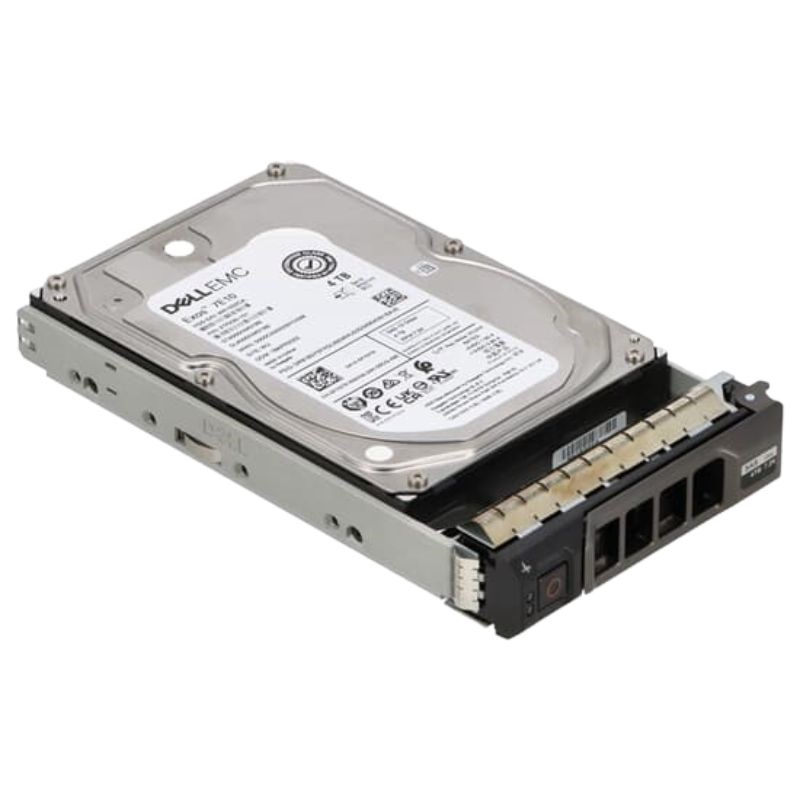
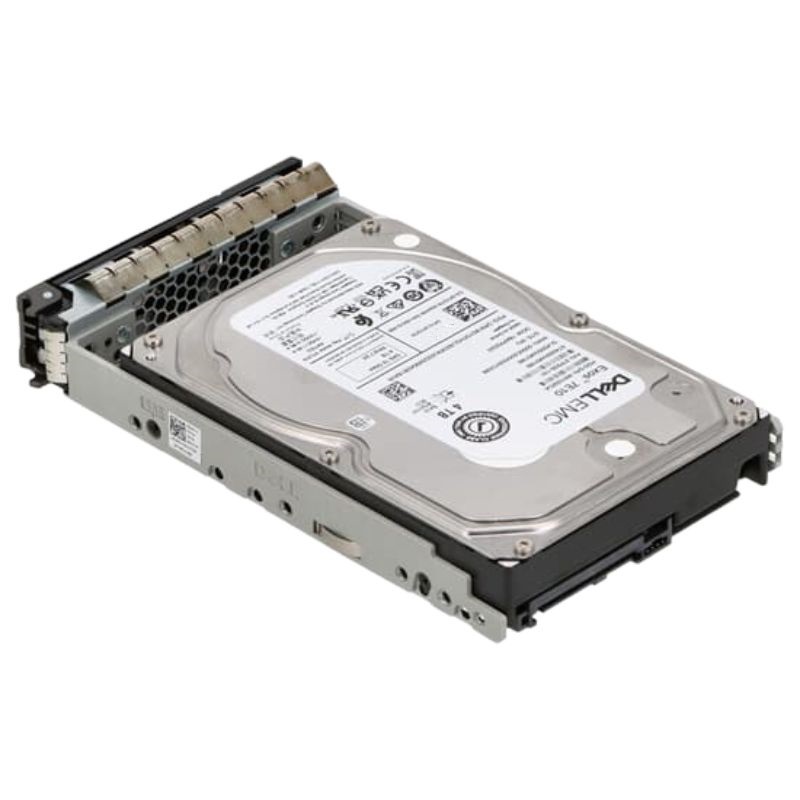
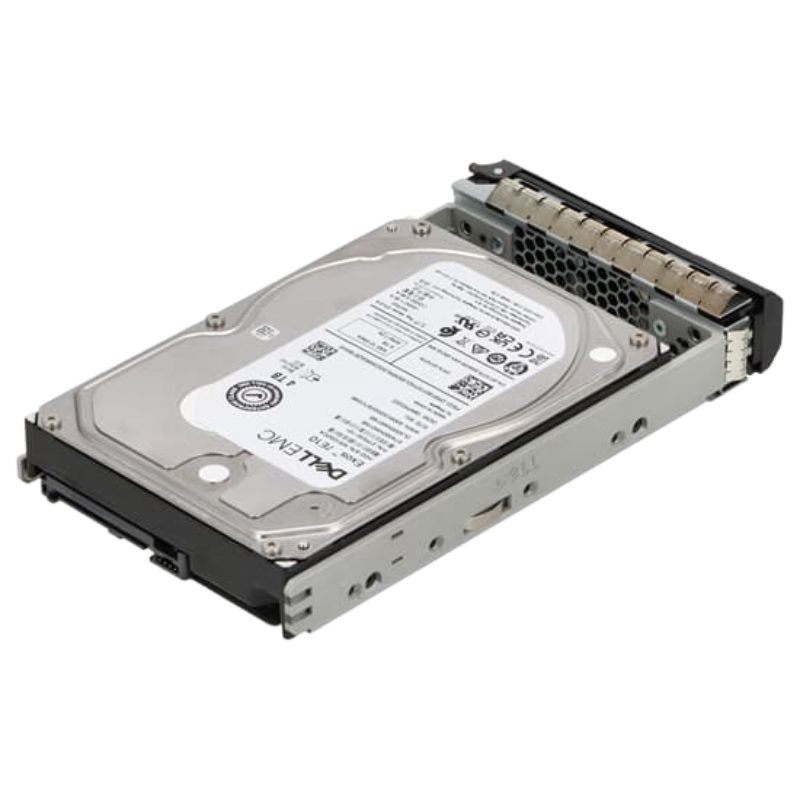
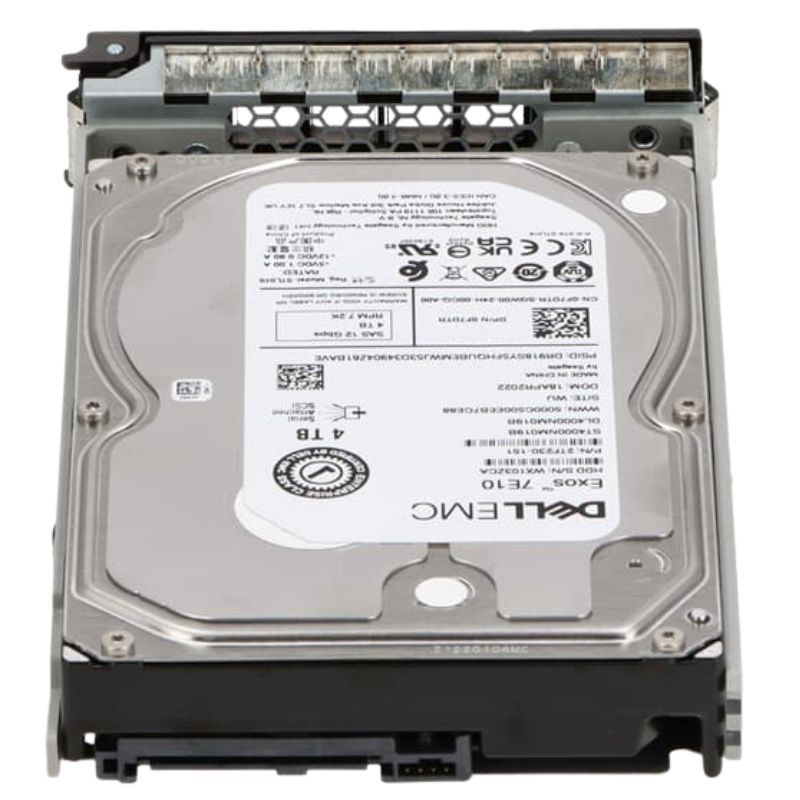
Dell 400-BMIJ 4TB SAS 12GBPS 7.2k 256MB 512n 3.5inch Hot Plug Hard Disk Drive. New Sealed in Box (NIB) with 1-Year Warranty
The Dell 400-BMIJ 4TB 7200RPM Nearline SAS 12Gbps 512n Hard Disk Drive with Tray is purpose-built for enterprise storage demands, offering exceptional scalability, consistency, and efficiency. Designed for Power Vault ME5 storage arrays, this model ensures that data-intensive environments get the speed, reliability, and capacity required for seamless operations.
The 400-BMIJ Dell 4TB SAS 12Gbps 7.2K 256MB 512n 3.5-inch Hot Plug Hard Disk Drive belongs to a class of enterprise-grade storage built for reliability, scalability, and sustained throughput in mission-critical environments. This category focuses on high-capacity, rotational media optimized for servers and storage arrays that require predictable performance over long duty cycles. Whether you are modernizing a legacy platform or expanding a current Dell PowerEdge deployment, products in this category align with data center best practices, emphasizing stable firmware, consistent latency, and excellent integration with Dell’s RAID controllers and backplanes.
At the core of the category is the SAS (Serial Attached SCSI) interface, offering dual-port connectivity, advanced command queuing, and robust error handling. The 12Gbps SAS link and 512n sector format ensure broad compatibility with a wide range of Dell servers and enclosures while maintaining dependable data integrity. With a generous 256MB cache and a spindle speed of 7,200 RPM, these hard drives provide a balance between cost per terabyte and performance, making them a go-to option for capacity-oriented workloads such as file serving, backup targets, surveillance storage, data lakes, and nearline applications that benefit from steady sequential throughput.
Enterprises choose this category to scale storage pools without sacrificing reliability. The 12Gbps SAS interface supports point-to-point links, domain zoning, and expanded addressability compared with SATA, while still being cost-effective for capacity tiers. Drives under the 400-BMIJ umbrella emphasize compatibility and hot-plug convenience, featuring sleds or carriers designed for Dell chassis. The 3.5-inch form factor provides room for higher platter counts, translating to efficient capacity density per bay.
Unlike SSDs, nearline SAS HDDs excel when the workload is dominated by large sequential streams, where sustained transfer rates matter more than IOPS. Use cases include large file repositories, cold to warm storage, media archives, hybrid tiers beneath SSD caches, and log retention that must meet compliance timelines. With firmware tuned for enterprise duty, error recovery times and command timeout policies are carefully balanced to play nicely with RAID controllers, helping prevent drive dropouts and unnecessary rebuilds.
12Gbps SAS delivers a robust transport with features that go beyond raw link speed. Dual-porting enables redundant paths to each drive, increasing fault tolerance during maintenance or path failures. SAS expanders allow many drives to be aggregated within an enclosure, simplifying cabling while sustaining bandwidth. Command queuing depth and full-duplex signaling improve throughput under concurrency, particularly during RAID rebuilds and scheduled background scans. This category emphasizes predictable, sustained performance over peak burst numbers, ensuring that your backup windows and data synchronization jobs finish on time.
While 4Kn and 512e formats are common, the 512n sector type delivers straightforward compatibility with legacy applications, certain boot environments, and older operating systems that expect native 512-byte blocks. For organizations with mixed fleets or specific software requirements, 512n minimizes the risk of alignment issues and simplifies migrations. The 400-BMIJ 512n profile offers the reassurance of plug-and-play behavior across many Dell Certified configurations.
The 256MB cache buffer enhances read-ahead for streaming workloads and can smooth write bursts during RAID operations. When paired with modern PERC controllers, the combination of drive cache and controller cache yields efficient queue management, reducing latency spikes and improving consistency during snapshots, integrity scans, or background parity checks.
This category is designed with Dell’s server ecosystem in mind. Drives qualified as 400-BMIJ are typically integrated into Dell carriers—featuring LED indicators, latch mechanisms, and airflow contours optimized for PowerEdge drive bays. These details matter for serviceability and thermal performance in dense racks.
When planning deployment, ensure the backplane supports 12Gbps SAS to avoid link downgrades. While SAS is backward compatible, linking a 12Gbps drive through a 6Gbps backplane will constrain throughput. Verify controller firmware and driver versions are current, especially if mixing media types (HDDs and SSDs) or sector formats within the same array. Dell’s PERC family typically provides broad support for nearline SAS HDDs in RAID 0/1/5/6/10/50/60 configurations.
3.5-inch nearline drives rely on steady airflow to maintain optimal temperatures. Ensure empty bays have blanks installed to preserve designed airflow. Mixed-drive configurations should respect thermal zoning; place higher-RPM or SSD units where the chassis directs the strongest cooling. Proactive fan profiles during rebuilds can mitigate occasional temperature-related slowdowns.
High-density racks can introduce rotational vibration that degrades performance. Use chassis with vibration-tuned drive trays, and avoid loose cabling or components near the drive cage. For environments with numerous 7.2K drives, sustained vibration control keeps latency predictable during concurrent streaming reads and writes.
While the 400-BMIJ 4TB 12Gbps SAS drive is not intended to rival SSD IOPS, it excels in throughput-oriented tasks. The following tuning practices help you extract consistent performance:
Match RAID stripe sizes with I/O patterns. Sequential backups and media streams benefit from larger stripes, reducing parity overhead. Controller write-back cache (with battery or flash protection) can significantly improve perceived performance. Tune OS-level queue depths to prevent thrashing while keeping the SAS pipeline busy.
Position these 4TB nearline SAS HDDs as a capacity tier beneath SSD caches or NVMe primary storage. Automated tiering policies can move hot blocks to flash while keeping bulk cold data on HDDs. This architecture yields an excellent cost-per-TB without sacrificing the responsiveness of frequently accessed data.
Enterprises deploy this category in many contexts where dependable capacity is paramount. Below are representative scenarios:
Large shared directories, CAD assets, and high-resolution media libraries typically contain large files. The 7.2K drives handle prolonged streaming reads well, ideal for media processing pipelines, content distribution staging, and post-production asset storage where SSD speed is not strictly necessary for the bulk layer.
Centralized logging clusters and data lake landing zones frequently ingest large log batches, telemetry, and semi-structured files. Nearline SAS provides a cost-effective ingestion layer before data is transformed and moved into analytical tiers—or retained for regulatory discovery and audit trails.
Drives in the 400-BMIJ category are tuned for predictable behavior under RAID control. Enterprise firmware typically manages error recovery limits to avoid prolonged timeouts that could compromise array stability. SMART attributes, adaptive error correction, and background media scans help identify latent sector issues early.
Schedule non-intrusive background scans during off-peak hours. Monitor SMART trends for reallocated sectors, pending sectors, or escalating error rates. Keep firmware uniform across the pool, and use maintenance windows to rotate older units out before they approach end of service life.
Maintain at least one global hot spare per chassis or per 24-bay group, and ensure the spare matches capacity and sector format. For RAID 6 pools with many drives, consider multiple hot spares to shorten exposure windows during sequential failures. Verify rebuild policies do not starve foreground workloads—use controller QoS settings to balance user operations with rebuild urgency.
The 4TB capacity point strikes a practical balance between drive count and pool size. Planning should consider growth rate, backup retention policies, and snapshot strategies. Drives in this category scale efficiently within 12Gbps SAS topologies, with expanders enabling dozens of devices per domain when necessary.
On high-capacity HDDs, rebuild duration depends on controller speed, background I/O, and stripe widths. Tune consistency check schedules, and during a rebuild, consider temporary throttling of non-critical batch jobs to expedite array healing. Keep firmware and drivers updated to benefit from ongoing optimizations.
RAID alone is not a backup. Combine your nearline SAS arrays with snapshot policies, versioned backups, and off-site or cloud replication. Plan for immutability features where feasible to combat ransomware, aligning retention with compliance frameworks relevant to your industry.
When deciding where the 400-BMIJ 4TB SAS drive fits, it helps to compare it with adjacent choices:
SSDs excel in random IOPS and latency-sensitive databases. However, nearline SAS wins on cost per terabyte at high capacities, making it ideal for bulk storage, large sequential reads/writes, and long-term retention. A tiered approach—SSDs for hot data, nearline SAS for warm/cold—is often optimal.
3.5-inch drives allow higher capacity per bay with traditional HDD technology, which is essential for dense repositories. While 2.5-inch SAS SSDs and HDDs support high drive counts, the 3.5-inch nearline category remains the cost-effective path for multi-petabyte cold storage footprints.
Thoughtful lifecycle management reduces unplanned downtime and preserves performance as arrays age. Adopt policies that treat drives as consumable components with predictable service intervals.
When retiring drives, follow secure erasure or destruction protocols that comply with your internal data governance policy. Keep certificates of destruction where regulatory frameworks require proof of sanitization.
Nearline SAS deployments succeed when thermals and power budgets are managed methodically. The 3.5-inch form factor, combined with 7.2K RPM mechanics, offers predictable power draw that scales linearly with bay count.
Account for spin-up currents during power cycles or after outages. Many controllers support staggered spin-up to limit inrush on large enclosures. Proper sizing of UPS and PDU capacity ensures clean restarts and protects against brownouts that could otherwise trigger unexpected rebuilds.
Use proper rack rails, secure cabling, and avoid unbalanced weight distribution across the rack. Facilities with concrete floors typically provide better damping than raised floors; where raised floors are in use, confirm structural stiffness meets vendor guidelines to limit transmitted vibration.
Modern enterprise storage is as much about firmware cohesion as it is about raw hardware. Keeping drive firmware aligned with controller revisions reduces edge-case timeouts and improves recovery behaviors.
Enterprise firmware typically caps deep error recovery to prevent the drive from disappearing from the RAID set. Controllers expect prompt responses, remapping sectors opportunistically while the array maintains parity integrity. Understanding your controller’s patrol read and consistency check cadence helps you plan maintenance windows without impacting users.
Centralize logs from servers, controllers, and enclosures. Pattern analysis reveals failing slots, finicky cables, or thermal hotspots early. Proactive cable or backplane replacement is far cheaper than the downtime associated with reactive troubleshooting during a failure.
Beyond raw capacity, how you store, tier, and protect data determines user experience and compliance posture. The 400-BMIJ category is a strong foundation for multi-tier storage designs.
Depending on the platform, enable block-level compression or deduplication to stretch capacity. For archival data, dedupe ratios can be significant. Ensure CPU and memory resources are sufficient to avoid throttling during heavy ingest or compaction tasks.
Nearline drives are happiest streaming large blocks. If your workload includes a heavy mix of tiny files, consider consolidating them into container formats, leveraging SSD caches for metadata hot sets, or batching transfers to reduce random I/O overhead on the HDD tier.
Even well-planned deployments occasionally face hiccups. Efficient troubleshooting minimizes downtime and prevents repeat incidents.
To accelerate planning, the following blueprints illustrate how organizations commonly deploy 4TB nearline SAS drives.
In enterprise environments, clearly identifying the correct drive is essential for replacement stock and scaling projects. The 400-BMIJ reference helps align field technicians, procurement, and data center operations on the exact profile: 4TB capacity, 12Gbps SAS interface, 7.2K RPM, 256MB cache, 512n sector format, and 3.5-inch hot plug form factor for Dell platforms. When stocking spares, ensure the carrier style matches your chassis generation and that firmware is harmonized with existing arrays.
An enterprise storage interface supporting dual-port connectivity, deep queues, and robust error handling. Ideal for RAID and high-drive-count environments.
A storage tier between primary (hot) and archival (cold), balancing cost and performance. Nearline drives run 24x7 and handle sustained sequential I/O well.
Native 512-byte sector format that maximizes compatibility with software expecting traditional block sizes.
The ability to insert or remove a drive while the system remains powered, supported by proper RAID and OS features for minimal downtime.
Dell’s family of RAID controllers that manage arrays, caching, rebuilds, and background integrity tasks for enterprise deployments.
Background processes that scan drives and arrays for latent errors and parity integrity, helping detect issues early and maintain data health.
The 400-BMIJ Dell 4TB SAS 12Gbps 7.2K 256MB 512n 3.5-inch Hot Plug Hard Disk Drive category offers a dependable platform for organizations seeking scalable, cost-effective bulk storage with enterprise reliability. The union of dual-port SAS connectivity, hot-swap serviceability, and broad Dell ecosystem alignment ensures that capacity expansion can proceed without architectural surprises. With thoughtful array design, sensible firmware discipline, and balanced tiering, these drives deliver consistent results across backup repositories, content stores, and data lake staging areas.


 Contact Us
 Information
 Catalog
 Solid State Drives (SSD)
 Network Switches
 Hard Disk Drives
 HBA & Controllers
 PC & Servers
 PC & Server Memory
 CPU & Processors
 Network Routers
 Power Supplies
 Tape Drives & Libraries
 Network Devices
 Computer & Network Cables