Product Overview of Dell 3.84TB NVMe SSD
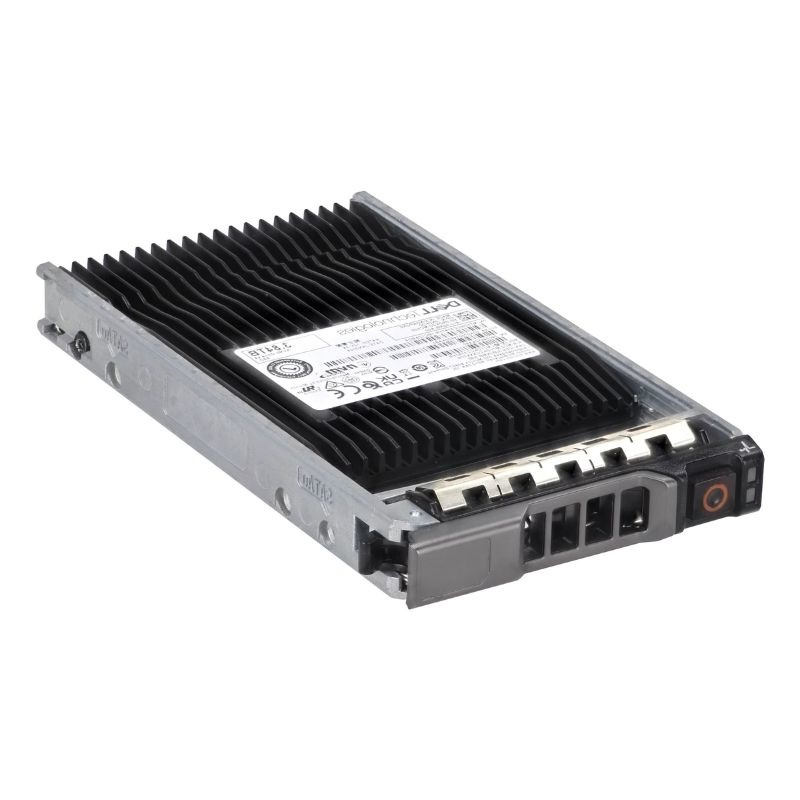
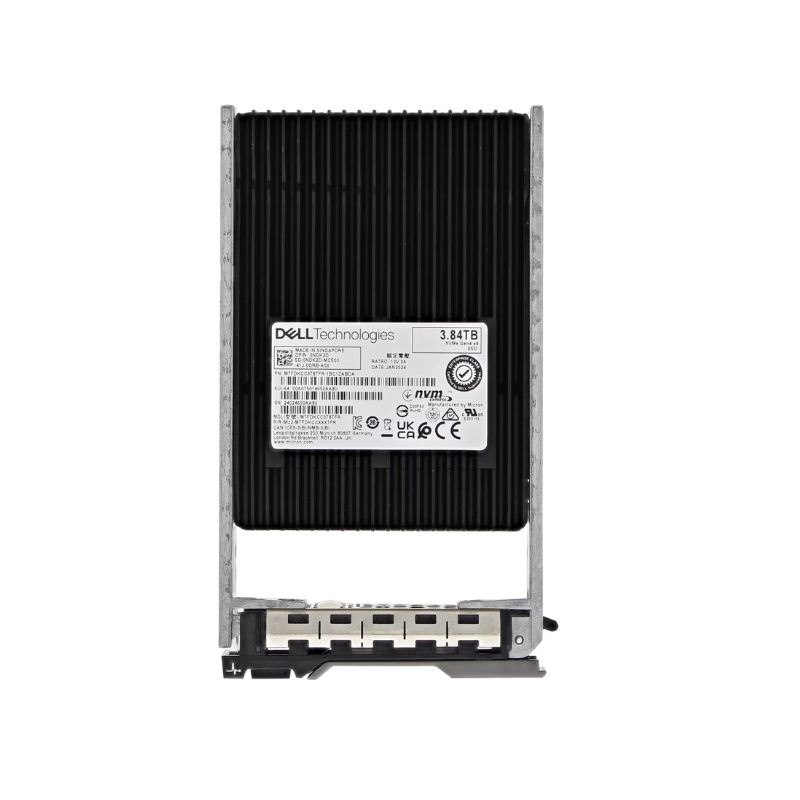
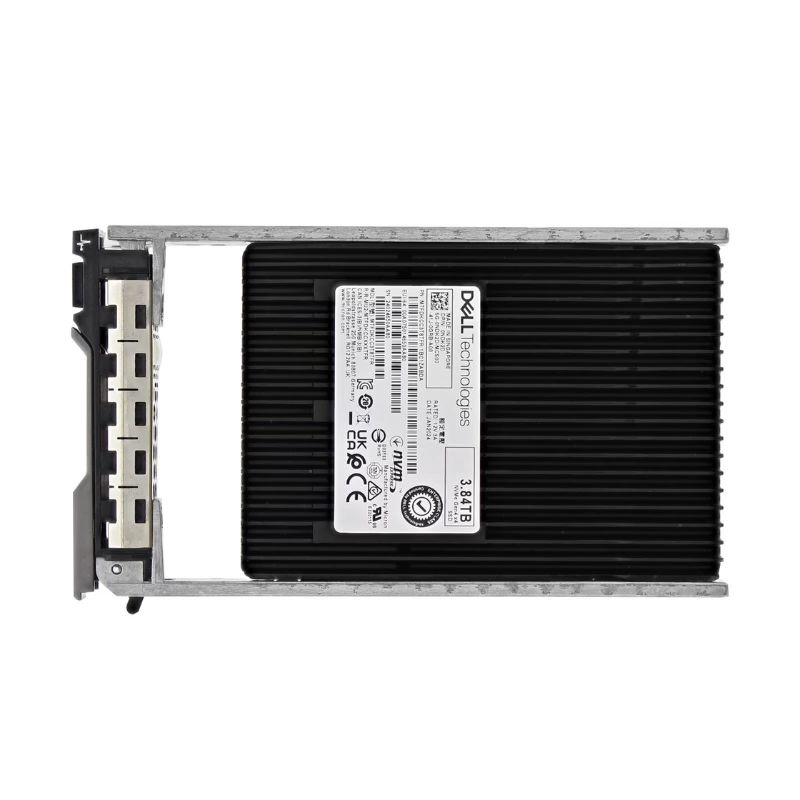
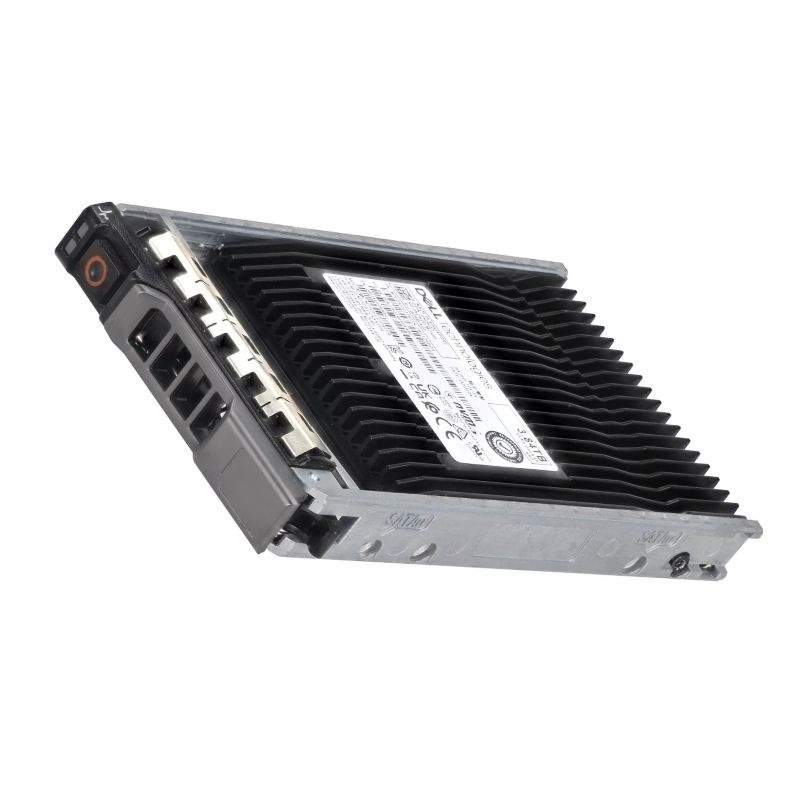
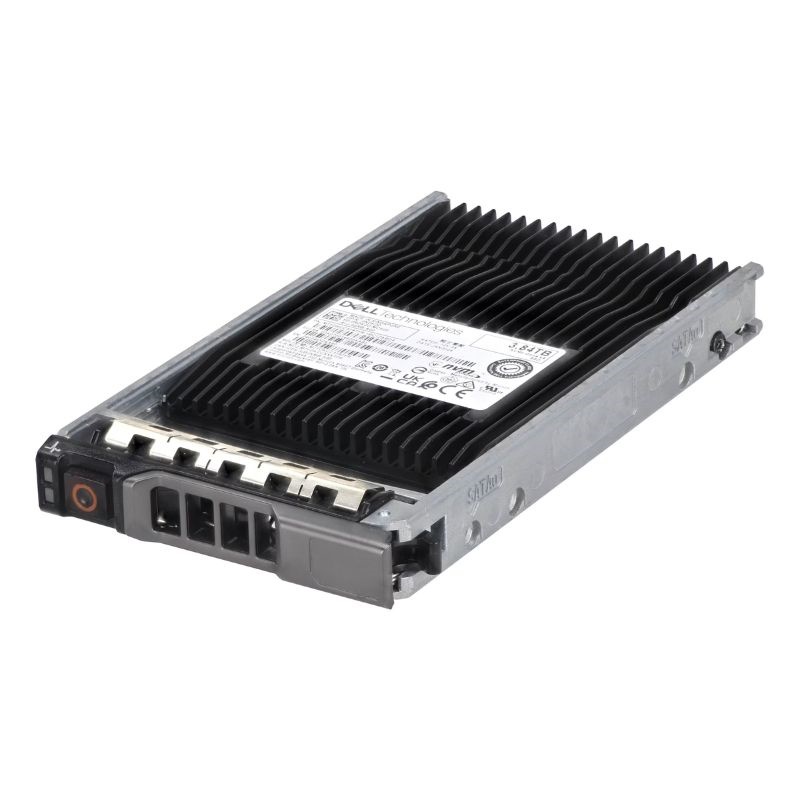
The Dell NDK2D 3.84TB DC NVMe Read Intensive Solid State Drive is a high-performing enterprise-grade storage option designed for demanding workloads. Built for data-intensive applications, this U.2 Gen4 SFF SSD ensures low latency, reliable throughput, and dependable data integrity for business environments.
General Specifications
- Manufacturer: Dell
- Part Number: NDK2D
- Product Category: Enterprise Solid State Drive
- Storage Capacity: 3.84 Terabytes
Key Technical Features
Engineered to deliver superior efficiency, this Dell SSD provides fast responsiveness and optimized performance for server applications. Its read-intensive endurance makes it particularly well-suited for workloads where high read speeds outweigh heavy write cycles.
- Device Type: Internal Solid State Drive
- Form Factor: Compact 2.5-inch SFF
- Interface: U.2 PCI Express Gen4 x4 (NVMe)
- Performance: Read-optimized endurance
- Reliability: Consistent low latency and high throughput
Expansion and Connectivity Options
- Interface Support: U.2 PCIe Gen4 x4
- Compatible Bays: 2.5-inch SFF slots
- Designed for scalable server environments
System Compatibility
The Dell 3.84TB NVMe SSD is fully compatible with a wide selection of Dell PowerEdge servers, offering seamless integration and optimized storage performance across multiple platforms.
Supported Server Models
PowerEdge C-Series
PowerEdge R-Series
- R440, R640, R650, R650xs
- R6515, R6525, R6615, R6625
- R740xd, R7425
- R750, R750xa, R750xs
- R7515, R7525, R760, R760xa
- R7625
- R840, R940, R940xa, R960
PowerEdge T-Series
PowerEdge XE and XR-Series
Dell 3.84TB NVMe Read Intensive SSD
Organizations that require consistent performance for data-heavy operations such as database acceleration, cloud platforms, analytics, and virtualized environments will benefit greatly from this Dell storage drive. Its compatibility with multiple Dell servers ensures flexibility and long-term investment protection.
Core Advantages
- Enhanced read performance for enterprise workloads
- Durable NVMe architecture with U.2 Gen4 support
- Compact form factor for optimal server density
- Validated for Dell PowerEdge infrastructure
- Ideal balance of performance and reliability
Enterprise Use Cases
The Dell NDK2D SSD is a strong choice for enterprises managing applications where fast access speeds are critical. It is purpose-built for workloads requiring high-volume read transactions with moderate write demands.
- Data analytics and reporting systems
- Cloud and virtualization platforms
- Business intelligence workloads
- Content delivery networks (CDNs)
- Database optimization
NDK2D Dell 3.84TB SSD — Enterprise-Grade Storage for Modern Data Centers
The NDK2D Dell 3.84TB DC NVMe Read Intensive Endurance U.2 SFF Internal SSD is engineered for consistency, reliability, and predictable latency in read-centric workloads. Built for servers and virtualization hosts that demand rapid access to large datasets, this U.2 NVMe drive supports dense storage configurations, streamlined serviceability, and low-latency I/O paths that unlock the full potential of contemporary CPU architectures. With data protection features expected in data center hardware and a capacity sweet spot of 3.84TB, it delivers balanced performance-per-watt and performance-per-dollar, making it well suited for web-scale infrastructures, private clouds, analytics clusters, and content delivery platforms.
Core Value Proposition of a 3.84TB U.2 NVMe Read-Intensive Drive
- Capacity Efficiency: 3.84TB hits a practical balance between density and rebuild times, enabling high-capacity nodes without extended recovery windows.
- Read-Optimized Throughput: Tailored for applications where read operations dominate—think databases, search indices, VM boots, and microservice caching layers.
- Enterprise Reliability: Read-intensive endurance profiles emphasize sustained QoS (Quality of Service) and predictable latency—key to multi-tenant environments.
- Serviceability of U.2: Hot-swap, front-of-chassis accessibility reduces maintenance overhead and improves fleet availability metrics.
- NVMe Advantages: Direct, parallel queues minimize protocol overhead compared to legacy interfaces, yielding consistently lower latency under mixed loads.
Dell NDK2D 3.84TB NVMe SSD Fits in Your Storage Strategy
In a tiered storage design, this SSD typically anchors the performance tier for read-heavy data. It is ideal ahead of a capacity tier composed of high-density SATA SSDs or HDDs, and behind an ultra-low-latency memory tier (DRAM or persistent memory). For hyperconverged infrastructures, it functions as a cache/read-optimized device, reducing pressure on capacity drives and accelerating application responsiveness across the cluster.
Technical Orientation for Procurement and Architects
Although SKUs vary by generation, the category of a read-intensive DC NVMe U.2 SFF SSD generally shares a consistent design language across vendors: a standard U.2 (SFF) 2.5-inch form factor, enterprise-grade NAND (commonly 3D TLC), power loss protection, end-to-end data path protection, and firmware tuned for deterministic performance. Capacity-oriented configurations like 3.84TB are favored because they reduce the number of devices per node while maintaining manageable rebuild and resynchronization times.
Form Factor & Interface Essentials
- U.2 SFF 2.5-inch: Enables dense, hot-pluggable trays in 1U/2U servers and JBOD/JBOF enclosures; standard sleds and carriers simplify swaps.
- NVMe Protocol: Multiple submission/completion queues allow high parallelism, improving throughput in multi-threaded application stacks.
- PCIe Connectivity (per U.2 spec): Designed to attach directly to PCIe lanes on the motherboard or backplane, bypassing legacy HBA bottlenecks.
Read-Intensive Endurance Profile
“Read-intensive” in enterprise parlance typically indicates a lower drive writes per day (DWPD) rating relative to mixed-use or write-intensive SSDs, trading some write endurance for lower cost per gigabyte. This makes the NDK2D-class drive a smart choice where write amplification is controlled and the majority of workload operations are reads. Examples include static content repositories, inference models, catalog indices, user profiles, logs after compaction, and VM image libraries.
Common Read-Intensive Use Patterns
- Boot & Golden Images: Store templates that are read frequently across orchestration events.
- Search & Analytics: Indexes and optimized columnar datasets with high read concurrency.
- Web Front Ends & CDNs: Frequently accessed static assets require predictable, low-latency reads.
- Microservices: Shared configuration and feature flag storage with bursty read behavior.
Performance Considerations for the NDK2D Dell 3.84TB NVMe SSD
While exact performance figures vary by firmware release and platform topology, NVMe U.2 SSDs in this category are engineered to deliver:
- Low Latency Under Concurrency: NVMe queues sustain throughput without dramatic tail latency spikes, which is vital for SLAs.
- High Random Read IOPS: Ideal for small-block reads common in database and virtualization environments.
- Stable QoS: Predictability across mixed background tasks (garbage collection, TRIM, wear leveling) maintains application responsiveness.
Architects should evaluate performance not only in peak terms but also in p99 and p999 latencies—true indicators of user experience in multi-tenant clouds and bursty workloads.
Latency-Aware Infrastructure Planning
- Align Queue Depth: Size NVMe queue depths according to application parallelism; overtuning can raise latencies if it saturates internal resources.
- Balance PCIe Lanes: Ensure backplanes and bifurcation settings provide sufficient lanes per drive; avoid oversubscription scenarios that mask device capability.
- NUMA Locality: Pin critical I/O paths close to CPU sockets connected to the storage backplane to reduce inter-socket latency penalties.
Reliability, Data Integrity, and Fleet Operations
Enterprise SSDs like the NDK2D Dell 3.84TB DC NVMe emphasize reliability features that protect data in flight and at rest. Although implementation details differ by model, the category typically incorporates mechanisms such as power-loss protection capacitors, end-to-end data path protection, thermal throttling safeguards, and firmware resiliency checks designed for long-term operation in always-on environments.
Protection Mechanisms Typically Found in This Category
- Power-Loss Protection (PLP): Helps commit in-flight data upon unexpected power events, reducing risks of metadata loss and file-system corruption.
- End-to-End Data Protection: Parity and CRC checks across the controller, DRAM (if used), and NAND to detect and correct bit errors.
- Wear Management: Sophisticated garbage collection and wear-leveling algorithms extend useful life, especially under read-heavy usage with controlled writes.
- Thermal Management: Temperature sensors and throttling policies safeguard device health during sustained bursts or constrained airflow.
Operational Telemetry and Lifecycle Management
Data center teams rely on SMART attributes and vendor tooling to track health metrics and plan proactive replacements. For read-intensive NVMe SSDs, key indicators include:
- Percentage Used / Life Remaining: A quick snapshot of endurance consumption relative to the device’s design target.
- Media and Data Integrity Reports: Correctable/uncorrectable errors, reallocated blocks, and ECC statistics signal early warning trends.
- Temperature & Throttle Events: Useful for airflow planning and detecting chassis-level hotspots.
- Host-Issued TRIM/Deallocate: Monitored to ensure background maintenance is effective and sustained QoS remains constant.
Compatibility and Platform Fit
The U.2 SFF form factor is ubiquitous across enterprise servers, enabling rapid integration into Dell platforms and multi-vendor ecosystems. Before deployment, confirm backplane and firmware support for the target NVMe generation and lane mapping, and ensure your OS, hypervisor, or container host includes appropriate NVMe drivers with stable queue handling.
Typical Deployment Scenarios
- Hyperconverged Nodes: Deployed as read cache or performance tier in software-defined storage stacks.
- Database Servers: Dedicated NVMe pools for indexes and hot partitions, leaving colder tables to capacity tiers.
- Virtual Desktop Infrastructure (VDI): Accelerates boot storms and profile reads during peak login windows.
- AI/ML Inference Hosts: Serves model files and preprocessed datasets to inference engines with steady, low-latency reads.
Capacity Planning with 3.84TB U.2 NVMe Drives
Sizing your fleet involves balancing VM density, replication policies, and recovery objectives. The 3.84TB capacity tier streamlines node counts while containing rebuild windows. For clustered storage, consider how erasure coding or RAID groups affect both usable capacity and fault domains.
Planning Checklist
- Redundancy Model: Determine whether mirroring, RAID, or erasure coding meets your durability and performance constraints.
- Rebuild Profiles: Assess how long a node can tolerate degraded state, and size spares accordingly.
- QoS Guardrails: Cap per-tenant or per-volume IOPS to prevent noisy-neighbor scenarios during peak hours or rebuilds.
Example Capacity Strategy (Illustrative)
In a 2U chassis with 24 x U.2 bays, populating with 3.84TB NVMe devices yields substantial raw capacity, while leaving 2–4 bays free for hot spares or mixed-use SSDs dedicated to write-heavy logs. A storage policy may place hot data on read-intensive NVMe and cold data on capacity media; a scheduled data lifecycle job then rightsizes placement nightly, minimizing write amplification on the read-optimized tier.
Power, Cooling, and Density
U.2 NVMe SSDs in this class balance performance with moderate power draw. In dense enclosures, airflow design becomes crucial to maintaining sustained performance and longevity. Proper cable management, blanking panels in unused bays, and awareness of inlet temperatures all contribute to device health and predictable throttling behavior.
Energy-Aware Operations
- Thermal Margin Tracking: Use BMC telemetry to correlate fan curves with drive temperature trends.
- Firmware-Level Power States: Leverage NVMe power states to reduce energy use during off-peak windows if workload SLAs allow.
- Balanced Population: Spread read-intensive devices across backplane domains to distribute thermal load evenly.
Data Services and Software-Defined Storage Synergy
The NDK2D Dell 3.84TB DC NVMe Read Intensive Endurance U.2 SFF Internal SSD becomes even more valuable paired with software-defined storage (SDS) that can place data intelligently. Compression and deduplication features significantly amplify effective capacity when workloads exhibit redundancy. Snapshotting and thin provisioning keep agility high without overcommitting physical resources beyond acceptable risk thresholds.
Smart Tiering
Automated tiering engines identify hot blocks and promote them to NVMe while demoting cold blocks to capacity tiers. Read-intensive NVMe shines as the top tier in this strategy, providing the snappy experience end users expect while keeping total cost of ownership in check.
Recommended SDS Capabilities
- Real-Time Hot/Cold Detection: Rapid identification of access patterns prevents unnecessary writes.
- Inline Compression/Dedup: Maximizes effective TBs and reduces backend I/O for identical data segments.
- QoS Policies: Ensures fairness and predictable performance amid competing tenants or services.
- Non-Disruptive Upgrades: Firmware and node updates without downtime protect SLAs.
Security & Compliance Posture
Enterprise NVMe SSDs frequently support security features appropriate for regulated industries. While exact capabilities depend on the specific submodel and configuration, the category often includes options like secure erase commands, namespace isolation, and support for at-rest data protection. Administrators should validate organizational compliance requirements such as data retention policies, sanitization procedures, and chain-of-custody needs when deploying and retiring drives.
Operational Security Practices
- Drive Sanitization Workflow: Adopt standardized secure erase and verification steps prior to repurposing or RMA.
- Access Control: Lock management interfaces and restrict firmware update privileges to signed, authorized packages.
- Audit & Logging: Correlate storage events with SIEM platforms to track anomalies and policy deviations.
Migration and Integration Paths
Transitioning to NVMe U.2 from SATA or SAS can be incremental. Mixed backplanes and adapter sleds let operators adopt NVMe for hot datasets while keeping legacy tiers for cold data. Over time, as application owners recognize performance wins, migration accelerates naturally.
Stepwise Adoption Plan
- Pilot on a Subset: Target a read-heavy app with clear SLAs and measurable latency KPIs.
- Profile & Tune: Right-size queue depths, NUMA pinning, and interrupt coalescing.
- Expand to Adjacent Workloads: Add NVMe to analytics and VDI pools where read performance yields immediate user-facing gains.
Virtualization and Containerization Synergy
Virtual machines and containers benefit from the parallelism and low latency of NVMe. Spiky read patterns during VM boots, container cold starts, or rolling deployments become smoother, reducing pressure on orchestration systems and improving deployment reliability.
Hypervisor and Orchestrator Tips
- Storage Policies per VM/Pod: Direct performance-critical volumes to NVMe-backed datastores.
- I/O Limits: Apply per-entity limits to maintain fairness in shared clusters.
- Image Caches: Leverage local NVMe for image layers and frequently pulled artifacts.
Best Practices for Read-Centric Workloads
To extract maximum value from the NDK2D Dell 3.84TB DC NVMe drive, design with read amplification, cache locality, and request fan-out in mind. Distribution strategies like sharding and consistent hashing can prevent hotspots, while intelligent client libraries coalesce reads and exploit locality.
Database Patterns
- Index Placement: Keep primary and secondary indexes on NVMe; place cold tables on capacity tiers.
- Point Reads vs. Scans: Tune block sizes and prefetching for the dominant access pattern.
- Checkpoint Hygiene: Schedule heavy write phases during off-peak to protect read latency.
Analytics Patterns
- Columnar Formats: Optimize for predicate pushdown and selective reads to minimize I/O.
- Working Set Curation: Materialize hot datasets to NVMe; archive cold partitions to object storage.
- Concurrency Controls: Set job-level I/O caps to protect interactive workloads.
Edge, Remote, and Branch Deployments
Not every data center rack has luxurious power and cooling budgets. The U.2 form factor and read-intensive profile make the NDK2D Dell 3.84TB NVMe a strong fit for edge sites and branch offices, where compact servers must serve content, analytics, or VDI reliably without the maintenance overhead of complex SANs.
Benefits at the Edge
- Local Caching: Reduce WAN latency and bandwidth costs by caching hot datasets locally.
- Fast Recovery: Quick rebuilds from replicas or immutable images minimize onsite downtime.
- Predictable Operations: Enterprise SSDs provide consistent behavior in diverse environmental conditions.
Strategic Capacity of Dell 3.84TB SSD
Enterprises frequently select 3.84TB because it scales capacity without imposing long rebuild windows. Larger per-drive capacities can extend repair times and increase exposure to concurrent failure risk during degraded states. Meanwhile, smaller drives increase device counts, complicating fleet management. At 3.84TB, administrators gain a balanced footprint that supports dense configurations with manageable operational risk.
Operational Advantages
- Manageable Rebuild Times: Faster recovery from failures reduces SLA risk.
- Fewer Devices, Lower Overhead: Simplifies inventory, firmware management, and monitoring.
- Predictable Performance: Maintains consistent QoS even as arrays scale out.
Integrating with Backup and DR Strategies
Although the NDK2D Dell 3.84TB DC NVMe is highly reliable, it must be paired with robust backup and disaster recovery (DR) plans. Snapshots, replication, and offsite backups protect against logical corruption and site-level events. Read-intensive NVMe accelerates backup verification and instant-recovery workflows by serving metadata and catalog reads quickly.
DR Design Notes
- Incremental Forever: Reduces write load while maintaining recovery points.
- Replica Placement: Store at least one replica outside the primary fault domain.
- Recovery Drills: Regularly test restore times to validate RTO/RPO against real hardware.
Sustainability and ESG Alignment
Consolidating onto efficient NVMe tiers can reduce rack space, power draw, and cooling requirements, which supports ESG goals. NVMe’s performance-per-watt gains often allow fewer nodes to deliver more service, decreasing the overall environmental footprint.
Practical Steps to Reduce Footprint
- Node Consolidation: Replace many legacy SATA/SAS devices with fewer NVMe-powered nodes.
- Adaptive Power States: Utilize NVMe power features where SLA flexibility exists.
- Lifecycle Recycling: Follow responsible e-waste programs for decommissioned drives.
Sample Configurations and Design Patterns
Read Cache in Front of Capacity Tier
Place the NDK2D Dell 3.84TB NVMe as the primary read cache in a two-tier system. The capacity layer—whether SATA SSDs, HDD arrays, or object storage—handles bulk retention. Intelligent cache policies keep the hottest blocks resident on NVMe, minimizing latency for user-facing transactions.
Dedicated Index Volume for Databases
Partition database volumes so indexes and hot tables live on the NVMe tier. Cold tables, archives, and historical partitions reside on capacity media. This pattern often yields significant query-time improvements at modest cost.
Per-Node Local NVMe for Kubernetes
Use local U.2 NVMe volumes for container image caches and persistent volume claims (PVCs) with strict latency requirements. Combine with a networked storage class for less latency-sensitive data to balance cost and performance.
Administrative Tips and Tricks
Drive Naming and Slot Mapping
Adopt a consistent naming scheme that encodes rack, chassis, and slot. Store a mapping table for rapid incident response and streamlined replacements. Include NVMe namespace identifiers where applicable.
Spare Strategy
Maintain a spare pool sized to your mean time to repair and logistics realities. Edge sites may require a higher local spare ratio due to shipping lead times.
Change Windows and Freeze Periods
Define calendar windows for firmware and kernel updates. Implement freeze periods during peak retail seasons or product launches, protecting business-critical performance.
Key Advantages of the NDK2D Dell 3.84TB DC NVMe Read Intensive U.2 SFF Internal SSD
- Data-Center Focused: Tuned for read-dominant workloads with stable QoS and low tail latency.
- Serviceability: U.2 hot-swap simplifies maintenance, enabling high availability.
- Scalable Capacity: 3.84TB supports dense nodes and manageable rebuilds.
- Operational Visibility: Enterprise telemetry allows proactive lifecycle management.
- Ecosystem Fit: Works within standard server backplanes and SDS stacks for rapid value.
Migration Outcomes You Can Expect
Organizations migrating hot datasets to the NDK2D 3.84TB NVMe tier consistently report smoother application behavior under load, reduced user-visible latency spikes, and improved deployment reliability. These benefits cascade through business outcomes—from faster page loads and query responses to quicker CI/CD rollouts and more predictable maintenance windows.
Post-Migration Validation
- Latency Benchmarks: Compare pre- and post-cutover p95/p99 latencies on representative transactions.
- Error Rate Trends: Confirm that timeouts and retries decline in parallel with latency improvements.
- Resource Efficiency: Track node consolidation opportunities as performance headroom increases.
Actionable Next Steps
- Profile Current Latencies: Measure baseline p95/p99 metrics on target workloads.
- Identify Hot Datasets: Prioritize volumes where read operations dominate I/O.
- Pilot with NDK2D 3.84TB NVMe: Validate on a small scale, then scale out systematically.
- Operationalize Observability: Implement dashboards and alerts tailored to NVMe behavior.
- Codify Runbooks: Document provisioning, monitoring, and replacement procedures for repeatability.
Specification Snapshot (Category-Oriented, Illustrative)
The following reflects typical attributes of enterprise read-intensive U.2 NVMe SSDs in the 3.84TB class; specific values may vary by exact submodel and platform configuration.
- Form Factor: U.2, 2.5-inch Small Form Factor (SFF)
- Interface: NVMe over PCIe, optimized for parallel I/O queues
- Capacity Class: 3.84TB
- Endurance Profile: Read-intensive, engineered for high read IOPS and predictable latency
- Enterprise Features: Power-loss protection, data path protection, thermal safeguards, SMART telemetry
Glossary for Fast Onboarding
- NVMe: A protocol designed for non-volatile memory over PCIe, enabling low-latency, high-parallel I/O.
- U.2 (SFF): 2.5-inch drive form factor supporting hot-swap serviceability in data center chassis.
- Read-Intensive: Endurance class tuned for workloads dominated by reads with controlled writes.
- QoS: Quality of Service; consistency of latency and throughput under varying load.
- DWPD: Drive Writes Per Day; endurance rating indicating how much data can be written daily over warranty.
Storage Architecture Takeaways
- Right Workload, Right Tier: Assign NVMe to the most latency-sensitive, read-heavy datasets.
- Sustainability via Consolidation: NVMe’s performance-per-watt allows fewer nodes to serve more load.
- Operational Discipline: Firmware baselines, proactive monitoring, and clear runbooks preserve value over the device lifecycle.
- Future-Proofing: Standards-based U.2 NVMe eases generational upgrades and mixed-fleet operation.





 Contact Us
 Information
 Catalog
 Solid State Drives (SSD)
 Network Switches
 Hard Disk Drives
 HBA & Controllers
 PC & Servers
 PC & Server Memory
 CPU & Processors
 Network Routers
 Power Supplies
 Tape Drives & Libraries
 Network Devices
 Computer & Network Cables