(7% discount is applied at checkout)
Cart is empty
Your go-to destination for cutting-edge server products
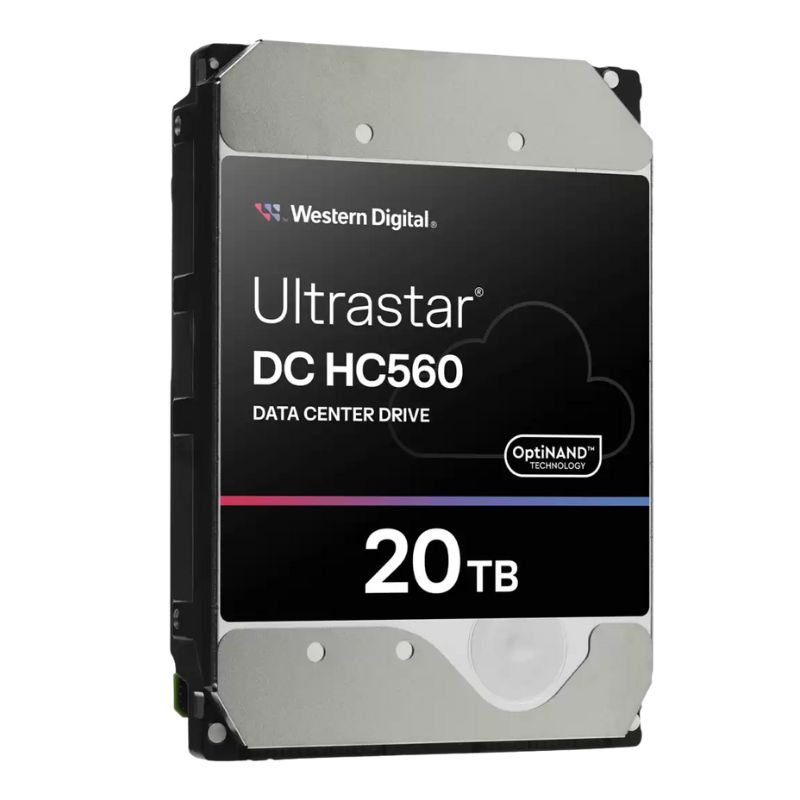


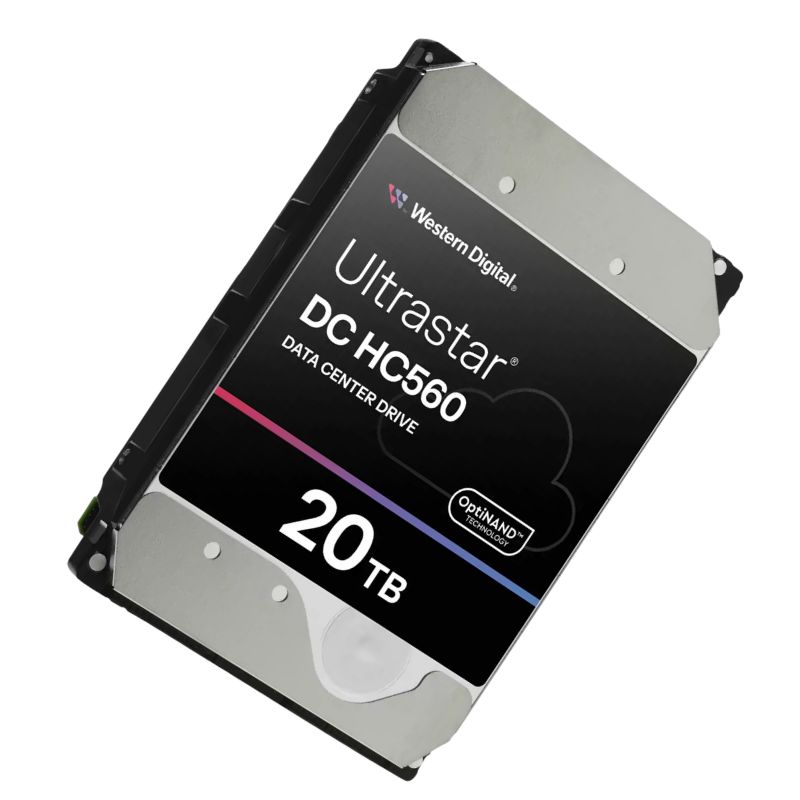
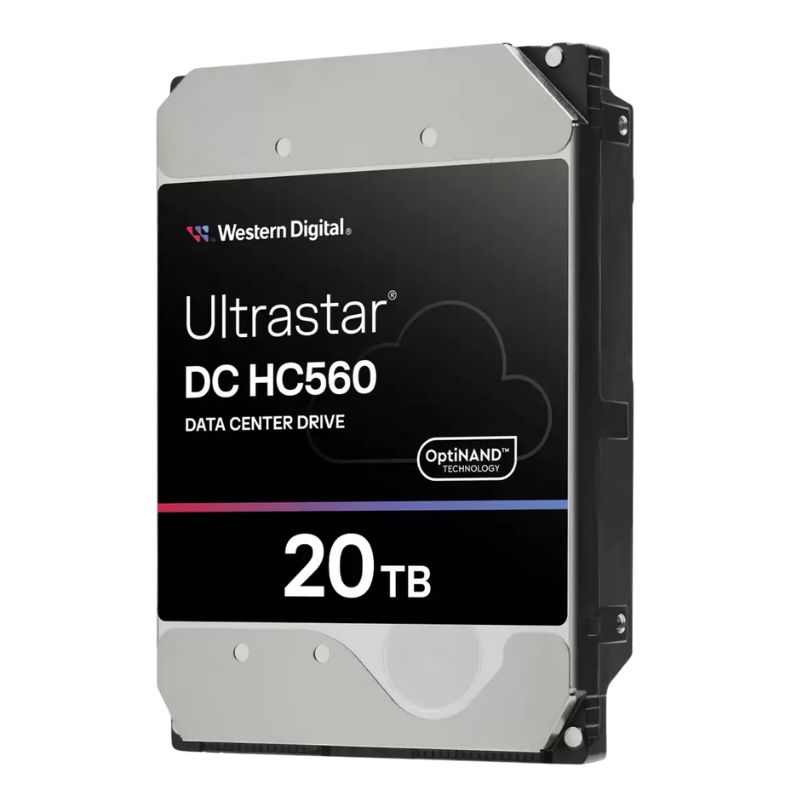
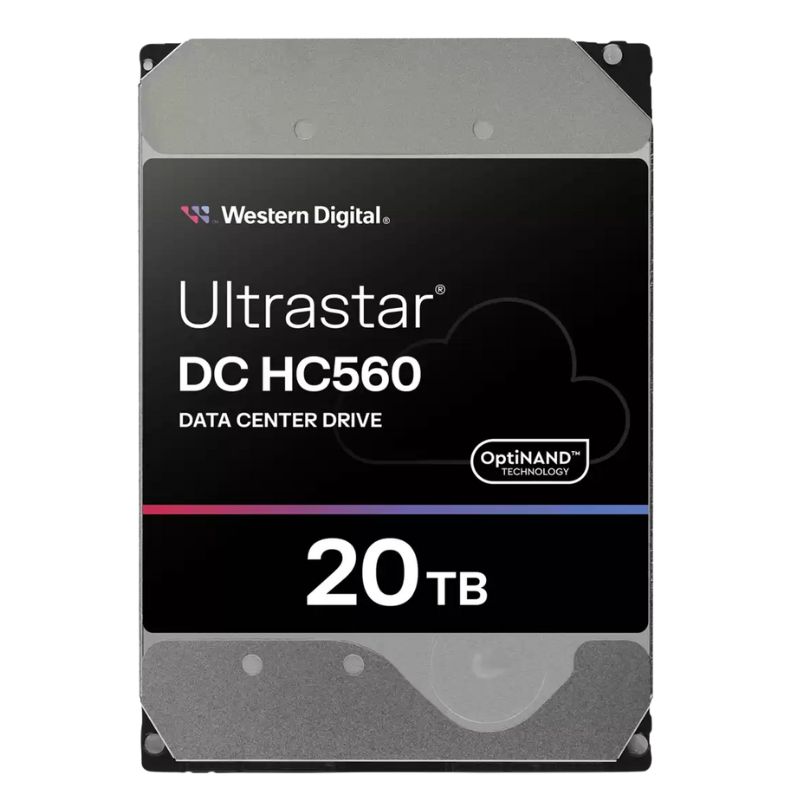
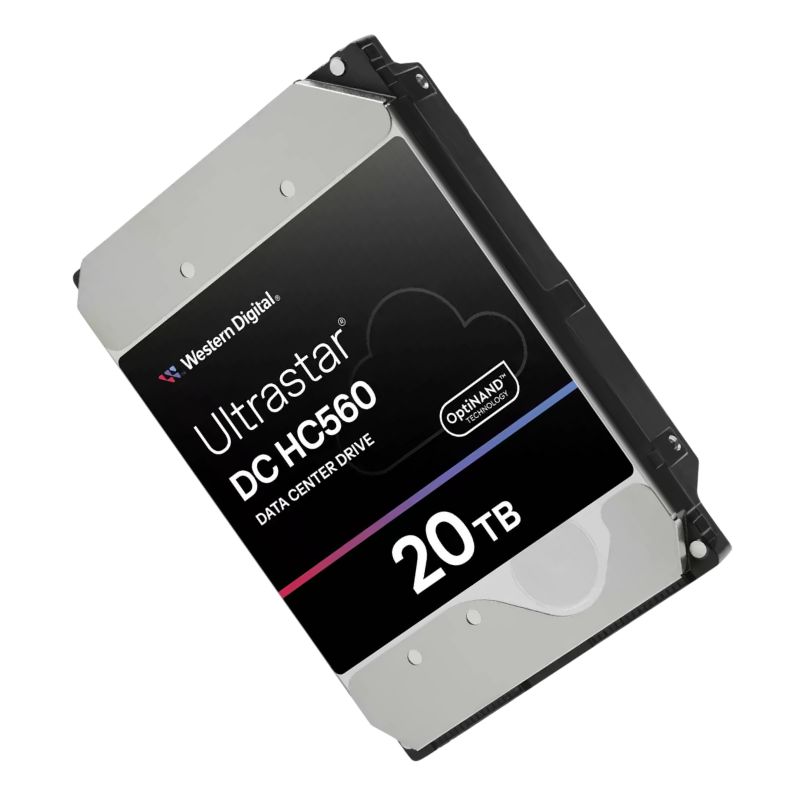
Western Digital WUH722020BL5200 Ultrastar DC Hc560 20 TB 7. 2K RPM SAS 12GBPS 512MB Buffer 512e 3.5 Inch Hard Disk Drive. Excellent Refurbished with 1 year replacement warranty. Dell Version
Core Specifications of the Ultrastar DC HC560 Enterprise HDD
This enterprise-class data center hard drive is engineered for demanding storage applications. It delivers exceptional performance and reliability for large-scale infrastructure.
The drive incorporates advanced technologies like Helium-sealing and OptiNAND for enhanced efficiency and colossal capacity.
This unit utilizes energy-assisted magnetic recording technology and a 512e sector format for optimized aerial density and improved integrity.
The Western Digital WUH722020BL5200 Ultrastar DC Hc560 is a high-capacity, enterprise-grade hard disk drive engineered for modern data center environments. With a 20 terabyte raw capacity, a 7,200 RPM spindle speed, SAS 12Gb/s interface, 512MB cache buffer and 512e sector emulation, this 3.5-inch helium-filled platform drive delivers a balanced combination of density, performance, and endurance for heavy-duty storage applications. Built on a helium-sealed design and optimized for continuous operation, the Ultrastar DC Hc560 series addresses the needs of hyperscale storage, cloud infrastructure, object storage, backup/archive systems, and mixed workload enterprise deployments.
Helium technology is a fundamental differentiator for the Ultrastar DC Hc560 family. Filling the drive enclosure with helium — a gas roughly one-seventh the density of air — reduces internal aerodynamic drag, enabling Western Digital to stack more platters while maintaining acceptable power, heat, and vibration profiles. The net result is significantly higher areal density and much larger raw capacities within a standard 3.5-inch chassis.
Compared to conventional air-filled HDDs, the Ultrastar helium platform typically exhibits better watts-per-terabyte ratios, lower enclosure temperature rise, and improved long-term reliability metrics for multi-platter configurations. For operators optimizing rack space and energy efficiency (power and cooling costs are often the largest OPEX drivers in hyperscale deployments), these benefits compound when scaled across hundreds or thousands of drives.
The WUH722020BL5200 uses a 12 Gbps SAS interface which supports full-duplex high-throughput connectivity and enterprise-class multi-initiator topologies. The 7,200 RPM spindle speed provides a balance between sustained transfer rates and access latency. The generous 512 MB cache buffer aids in smoothing bursty workloads and improves read/write efficiency in mixed operation scenarios.
In sequential read/write scenarios (large-block transfers), the Ultrastar DC Hc560 series is optimized for sustained throughput typical of nearline storage and cold/hot tier object stores. While sequential throughput will depend on enclosure density and RAID configuration, operators can expect strong sustained MB/s rates suitable for backup/restore, large media serving, and bulk data ingest jobs.
Mechanical HDDs are inherently higher-latency for small random I/O compared to SSDs. However, the DC Hc560 mitigates random access penalties through firmware optimizations, rotational speed, and sizable cache. When architecting systems, combine the Ultrastar HDDs with tiered caching (NVMe/SSD layers) for very high random IOPS workloads and use HDD capacity for bulk persistent storage.
Reliability metrics and endurance features are essential when spec’ing drives for data center deployments. The Ultrastar DC Hc560 family is designed with enterprise-grade mechanical and firmware safeguards, including stable flying heights, helio-seals, power-loss protection (on applicable models), and advanced vibration and error recovery controls.
Western Digital rates enterprise drives with high MTBF figures and workload limits tailored for 24/7 operation. The DC Hc560 drives are built to tolerate sustained write/read intensities characteristic of cloud and object storage, making them well-suited for scenarios where drives run continuously under load.
The drive supports Self-Monitoring, Analysis and Reporting Technology (SMART) attributes that expose health metrics to storage management systems — enabling predictive maintenance and fleet analytics. Enterprise telemetry combined with data center monitoring tools lets administrators schedule preemptive replacements and minimize unplanned downtime.
Dense arrays in large enclosures can generate substantial vibration. Ultrastar drives incorporate RV sensors and firmware compensation techniques so multiple neighboring drives can operate reliably in high-density trays and sleds. This is particularly important for 4U/60-bay and 2U/24-bay storage chassis where close mechanical coupling occurs.
The SAS 12Gb/s interface provides broad compatibility with enterprise RAID controllers, HBAs (host bus adapters), and storage arrays. Administrators should verify controller firmware supports 512e sector emulation and the drive capacity (20 TB) — older controllers may require firmware updates to address SMR/PMR differences or to recognize high-capacity LBA addressing.
The 512e (512-byte emulation) format allows compatibility with legacy operating systems and storage stacks that expect 512-byte sectors while allowing the drive to internally manage 4K physical sectors. Confirm that your host OS, RAID card, and virtualization platforms correctly handle 512e drives — most modern enterprise systems do, but some legacy software might require updates.
Deploying large-capacity 20 TB drives changes how architects design racks and clusters. Instead of optimizing for many small drives, modern designs center on fewer, larger-capacity drives per chassis with denser compute and network topologies. This yields benefits in cabling complexity and management overhead but requires careful redundancy planning to avoid single points of failure.
At hyperscale, erasure coding across many nodes is common because it provides better space efficiency and failure tolerance than classic RAID inside a single box. For smaller deployments or traditional arrays, RAID-6 or multi-parity RAID variants remain standard to protect against multiple simultaneous disk failures.
The Ultrastar DC Hc560 can be used for NFS/SMB file shares, object stores (S3-compatible), or block-level volumes. Object storage architectures especially benefit from high-capacity drives, where metadata servers handle access patterns and HDDs provide cost-efficient capacity for objects.
To maximize uptime and minimize data loss risk, follow operational best practices: monitor SMART attributes, schedule periodic scrubs, stagger firmware updates, and design for parallel rebuilds rather than serial rebuilds that can overload controllers. Keep a documented incident response plan for drive failures and ensure spare inventory that matches form factors and firmware families.
Implement telemetry aggregation and use predictive failure algorithms. Replace drives proactively based on SMART trends and telemetry signals rather than waiting for catastrophic failure. This reduces unplanned downtime and can improve long-term array health.
When decommissioning or retiring drives, adhere to secure sanitization procedures — use vendor-recommended secure erase or cryptographic erase if the drive supports encryption. For non-sensitive data or when full physical destruction is impractical, perform multiple-pass overwrite or follow organizational and regulatory guidelines for media sanitization.


 Contact Us
 Information
 Catalog
 Solid State Drives (SSD)
 Network Switches
 Hard Disk Drives
 HBA & Controllers
 PC & Servers
 PC & Server Memory
 CPU & Processors
 Network Routers
 Power Supplies
 Tape Drives & Libraries
 Network Devices
 Computer & Network Cables