(7% discount is applied at checkout)
Cart is empty
Your go-to destination for cutting-edge server products
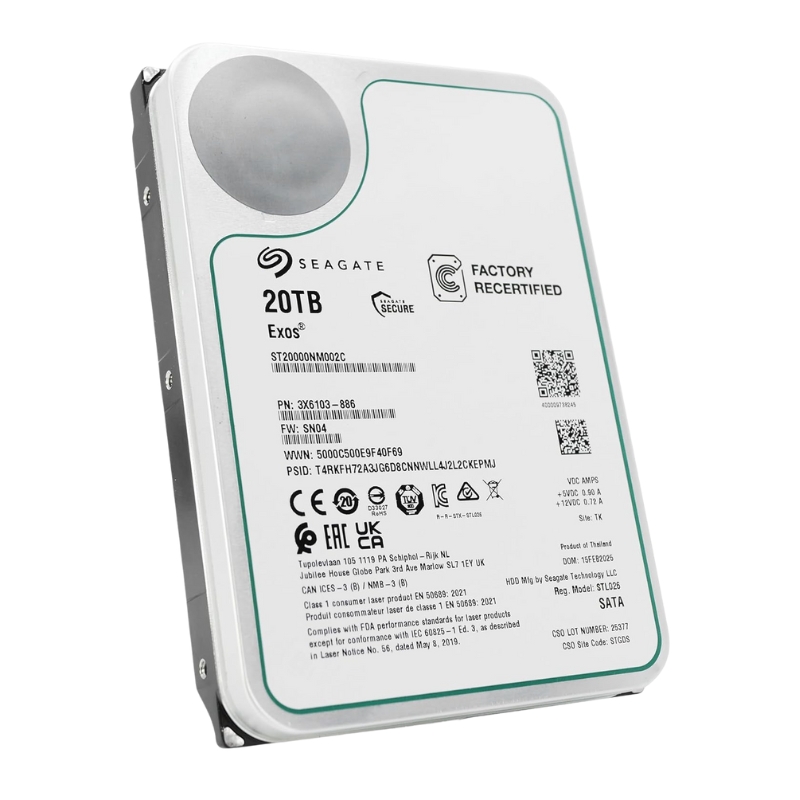


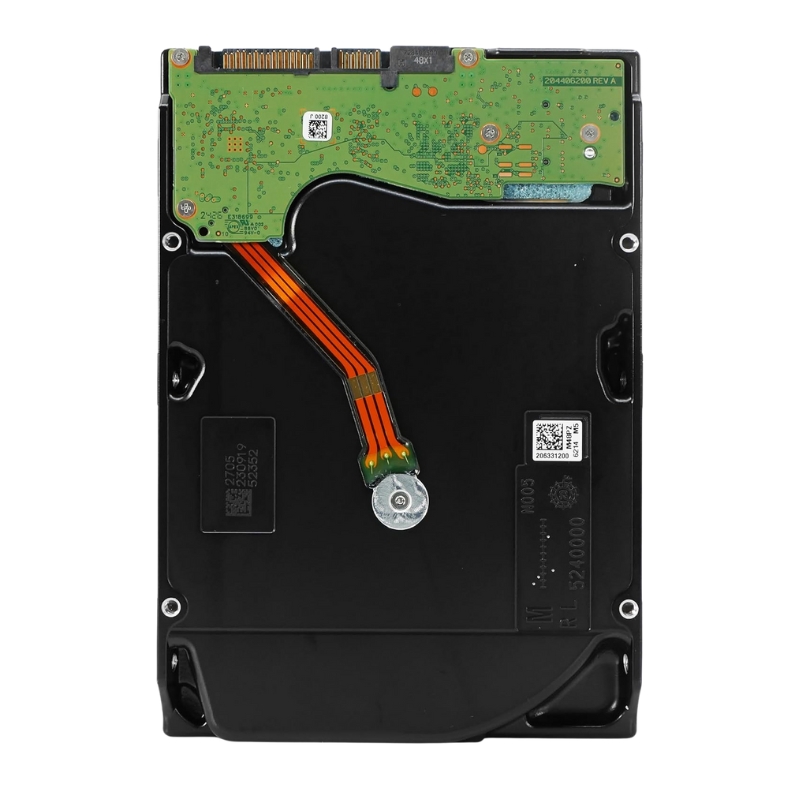
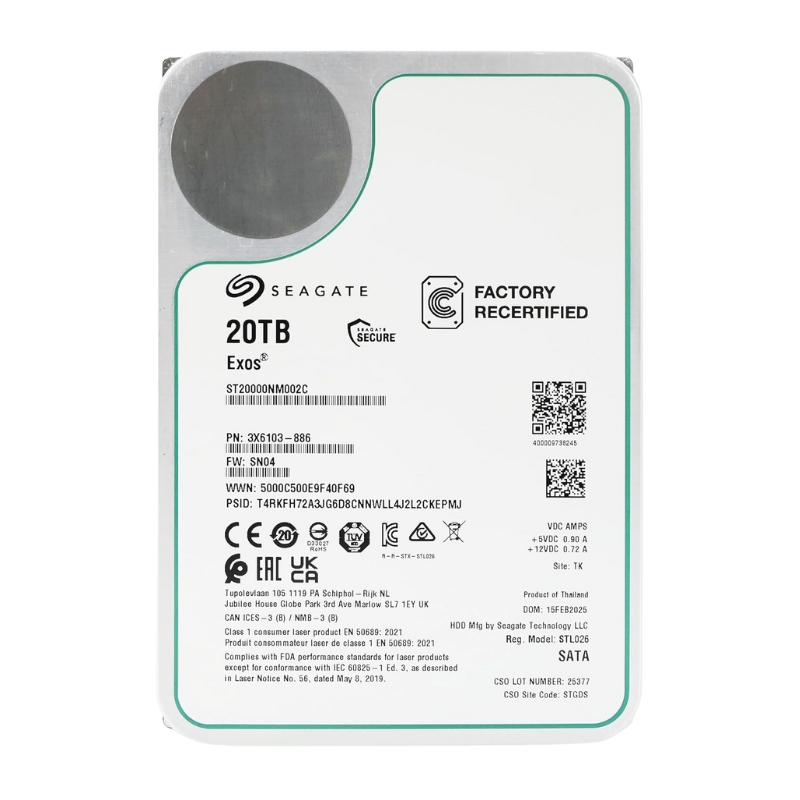
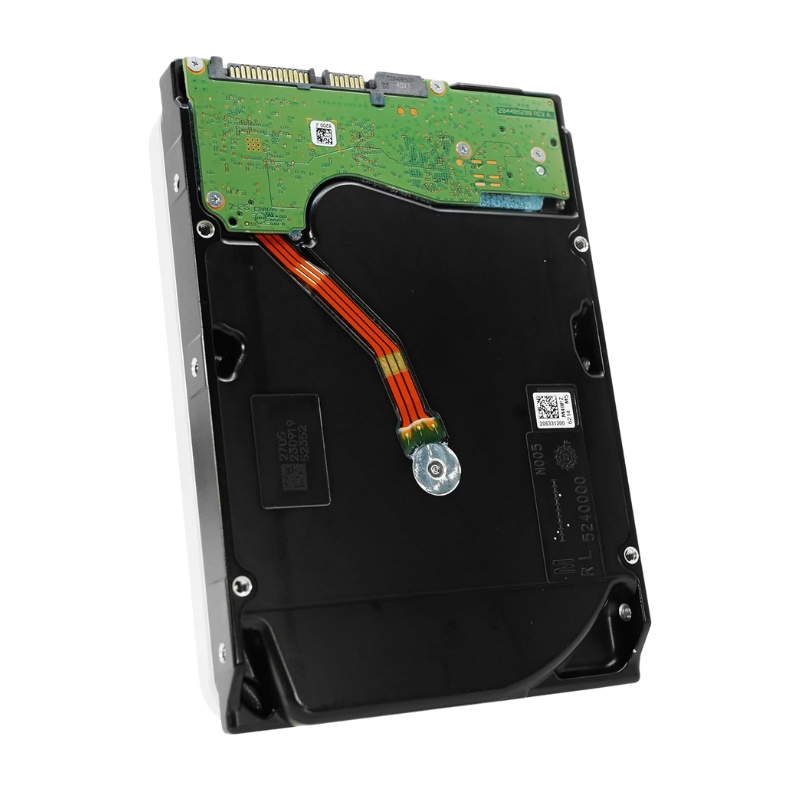
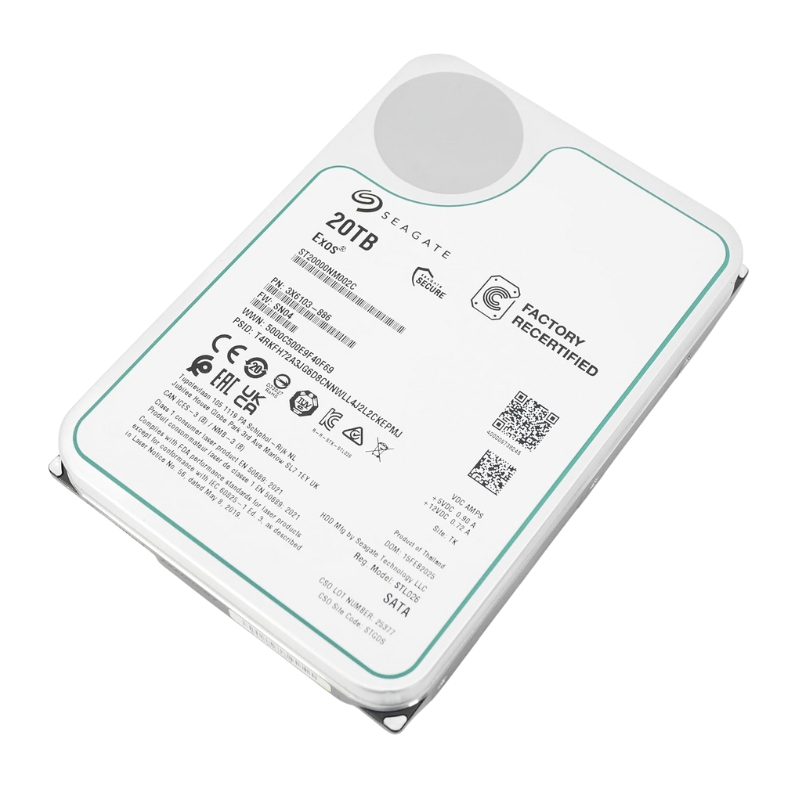
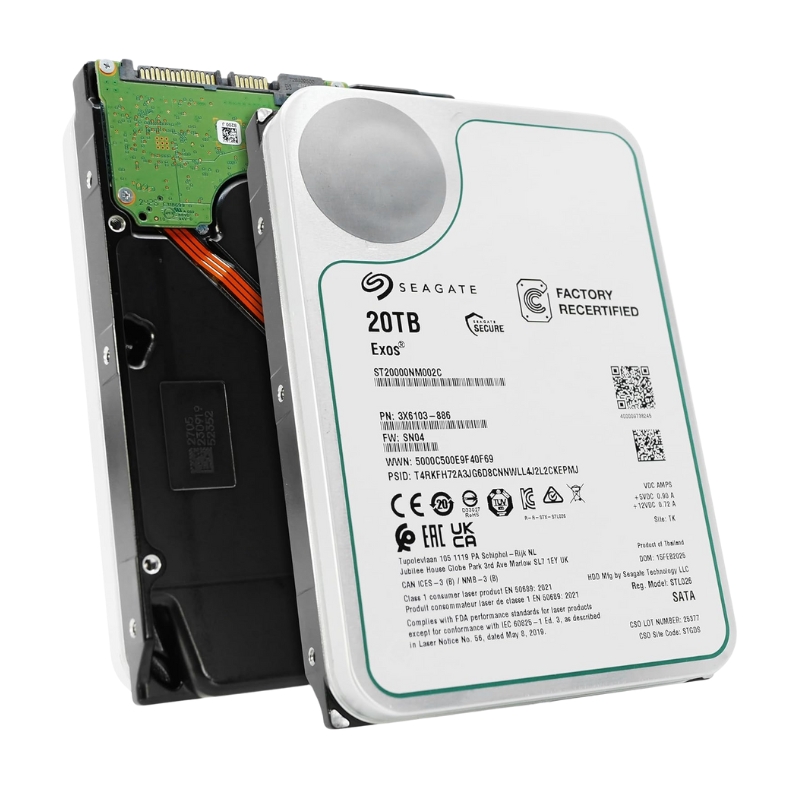
Seagate ST20000NM002C 20TB 7.2K RPM SATA 6GBPS Exos 512e 3.5inch Enterprise Hard Disk Drive. Excellent Refurbished with 1 year replacement warranty
The Seagate ST20000NM002C SATA 6Gbps 20TB 7.2K RPM Hard Drive is a massive-capacity enterprise storage solution, engineered for reliability, efficiency, and optimized performance in large-scale data environments.
The Seagate ST20000NM002C 20TB Exos 7.2K RPM SATA 6Gbps 3.5-inch enterprise hard disk drive represents a high-capacity storage solution engineered specifically for demanding data center environments. Designed under the Exos enterprise storage family, this hard drive delivers scalable, reliable, and efficient storage performance for hyperscale cloud infrastructures, enterprise backup systems, distributed storage arrays, and mission-critical workloads that require continuous uptime and predictable data access.
Built on advanced helium-sealed technology and optimized for nearline storage applications, this drive enables organizations to manage exponentially growing datasets without compromising reliability or operational efficiency. It is widely adopted in environments where large-scale storage density, energy efficiency, and sustained performance are essential.
The Seagate ST20000NM002C integrates helium-sealed internal architecture, which significantly reduces air resistance inside the drive enclosure. This design allows for more platters to be added within the same 3.5-inch form factor while simultaneously lowering power consumption and heat generation. The reduced turbulence inside the sealed chamber enhances mechanical stability and improves long-term durability under continuous operation.
By leveraging helium instead of traditional air, the drive achieves improved platter density, enabling 20TB of storage capacity without increasing physical size. This is especially beneficial for modern data centers that prioritize rack space optimization and energy-efficient scaling.
Operating at a rotational speed of 7200 RPM, the ST20000NM002C is designed to balance performance and efficiency for enterprise workloads. This rotational speed ensures consistent sequential data throughput while maintaining stable latency characteristics across large-scale read and write operations.
Unlike consumer-grade hard drives, this enterprise model is optimized for sustained 24/7 workloads, making it suitable for environments where consistent performance is more critical than burst speed. The spindle motor is engineered with vibration-resistant balancing systems that enhance operational stability in multi-drive storage arrays.
The drive utilizes a SATA 6Gbps interface, ensuring compatibility with a wide range of enterprise storage systems, servers, and storage enclosures. This interface provides reliable data transfer rates suitable for sequential workloads such as archival storage, backup systems, and large-scale data ingestion pipelines.
While SATA is often associated with cost-effective storage solutions, the enterprise-grade implementation in this Exos model includes enhanced firmware optimization, error correction mechanisms, and workload management features that distinguish it from standard consumer SATA drives.
The 20TB storage capacity of the Seagate ST20000NM002C enables organizations to consolidate massive datasets into fewer physical drives, reducing overall infrastructure complexity. This high-density approach minimizes rack space usage while lowering power consumption per terabyte.
Data centers managing big data analytics, artificial intelligence training datasets, cloud storage repositories, and enterprise backup archives benefit significantly from such high-capacity drives. The ability to store more data per drive also reduces the number of devices required in RAID configurations, improving efficiency and reducing maintenance overhead.
The Seagate Exos series is engineered with high mean time between failure (MTBF) ratings, reflecting its suitability for continuous enterprise operation. The ST20000NM002C is designed to operate in 24/7 environments, maintaining consistent performance under heavy workloads without degradation.
Advanced error correction systems, predictive failure analysis, and firmware-level diagnostics help ensure long-term data integrity. These features are essential for enterprise environments where downtime or data loss can result in significant operational and financial impact.
In storage arrays containing multiple hard drives, rotational vibration can negatively affect performance and data accuracy. The ST20000NM002C incorporates rotational vibration sensors that detect and compensate for external mechanical disturbances.
This technology ensures consistent read/write performance even in densely packed server racks where multiple drives operate simultaneously. By minimizing the effects of vibration, the drive maintains stable throughput and reduces the risk of performance degradation in RAID configurations.
The drive includes sophisticated error recovery controls that prevent data corruption during read and write operations. These mechanisms are designed to handle sector-level anomalies and ensure that data integrity is preserved even under high-stress workloads.
Firmware-level enhancements allow the drive to manage bad sectors intelligently, reallocating data and maintaining operational continuity without requiring immediate system intervention.
One of the key advantages of helium-filled hard drive architecture is reduced power consumption. The ST20000NM002C consumes less energy per terabyte compared to traditional air-filled HDDs, making it a more sustainable option for large-scale deployments.
Lower energy usage translates directly into reduced operational costs for data centers, especially those managing thousands of drives. This efficiency also reduces cooling requirements, contributing to improved overall system sustainability.
Thermal management is critical in enterprise storage environments. The Seagate Exos 20TB drive is designed with optimized heat dissipation characteristics that maintain stable operating temperatures even during prolonged workloads.
Efficient internal airflow, combined with helium-based reduction in friction, ensures that the drive remains thermally stable, reducing the risk of overheating and extending overall lifespan.
The drive intelligently manages power consumption across idle and active states. During periods of low activity, it reduces energy draw without compromising readiness, ensuring quick response times when data requests resume.
This balance is particularly useful in cloud storage environments where data access patterns fluctuate significantly.
The ST20000NM002C is fully compatible with RAID storage configurations, including RAID 0, RAID 1, RAID 5, RAID 6, and RAID 10 systems. Its consistent performance and vibration-resistant design make it highly suitable for redundant storage environments.
In RAID arrays, the drive contributes to improved data redundancy, fault tolerance, and system resilience. Its large capacity also reduces the total number of drives required, simplifying RAID management.
Network Attached Storage (NAS) and Storage Area Network (SAN) systems benefit significantly from the high-capacity and reliability features of this enterprise HDD. It is optimized for multi-user environments where simultaneous data access is common.
The drive ensures smooth data flow across networked storage systems, supporting file sharing, virtualization workloads, and centralized backup solutions.
The SATA interface ensures compatibility with a wide range of enterprise servers, including rack-mounted systems and blade server architectures. Its firmware is optimized for integration with server-grade operating systems and storage management software.
Cloud service providers rely heavily on high-density storage solutions to manage user data, application data, and backup systems. The ST20000NM002C enables scalable storage expansion without requiring significant physical infrastructure changes.
Its high capacity and reliability make it suitable for distributed cloud storage systems where data redundancy and availability are critical.
Modern big data applications require storage systems capable of handling massive datasets efficiently. This enterprise hard drive supports sequential read and write optimization, making it ideal for analytics pipelines, data warehousing, and machine learning datasets.
The ability to process large volumes of structured and unstructured data enhances performance in analytics environments.
Artificial intelligence workloads often involve large-scale datasets used for training models. The ST20000NM002C provides reliable storage for these datasets, ensuring consistent access during model training and evaluation processes.
The drive includes enterprise-grade firmware designed to protect data integrity during read/write operations. These controls help prevent corruption and ensure consistent performance under varying workloads.
Enterprise environments often require secure data disposal. The ST20000NM002C supports secure erase functions that allow organizations to safely remove sensitive data when decommissioning or repurposing drives.
Built-in diagnostics continuously monitor drive health, enabling predictive maintenance and reducing the likelihood of unexpected failures. This proactive approach helps maintain data security and system uptime.
The drive is engineered to handle heavy annual workload ratings, making it suitable for enterprise environments with continuous data processing demands. This ensures consistent operation even under sustained heavy use.
In multi-drive configurations, the ST20000NM002C is optimized to maintain performance consistency across arrays. This ensures balanced workload distribution and reduces bottlenecks in storage systems.
Advanced firmware optimizations enhance throughput efficiency, reduce latency fluctuations, and improve overall system responsiveness in enterprise deployments.


 Contact Us
 Information
 Catalog
 Solid State Drives (SSD)
 Network Switches
 Hard Disk Drives
 HBA & Controllers
 PC & Servers
 PC & Server Memory
 CPU & Processors
 Network Routers
 Power Supplies
 Tape Drives & Libraries
 Network Devices
 Computer & Network Cables