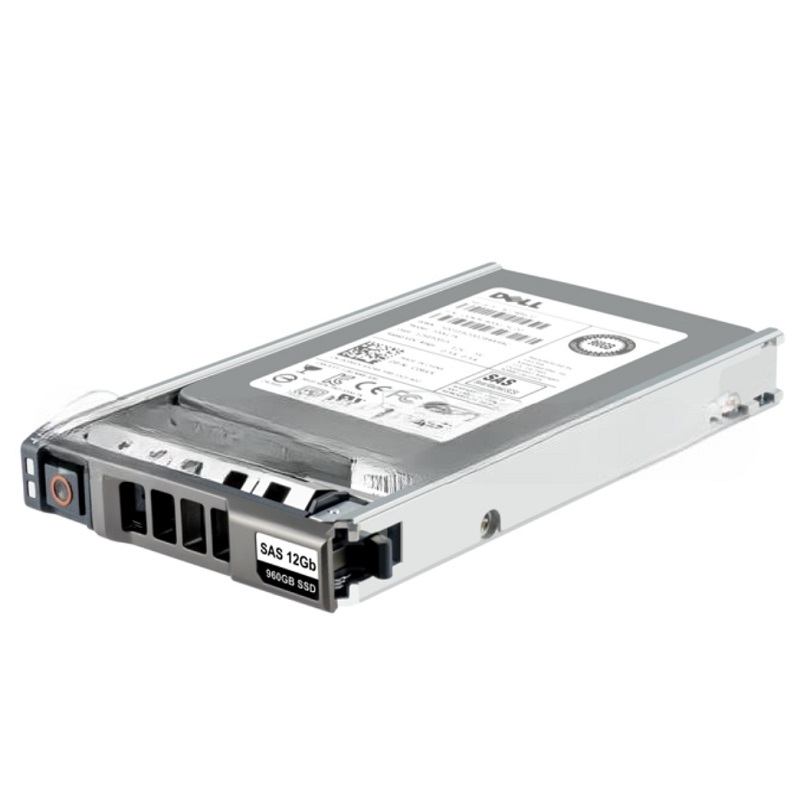
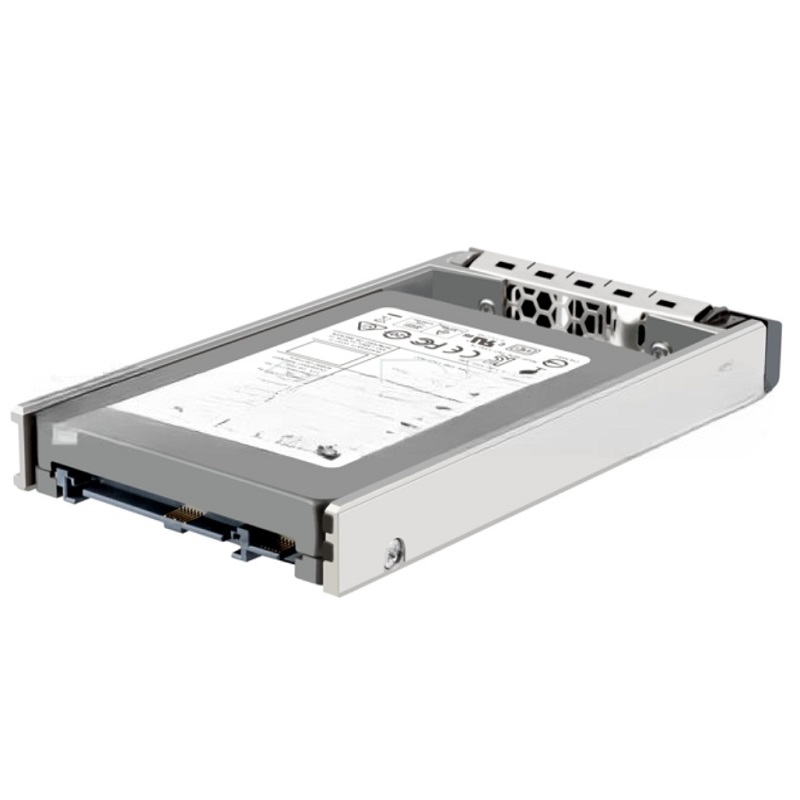
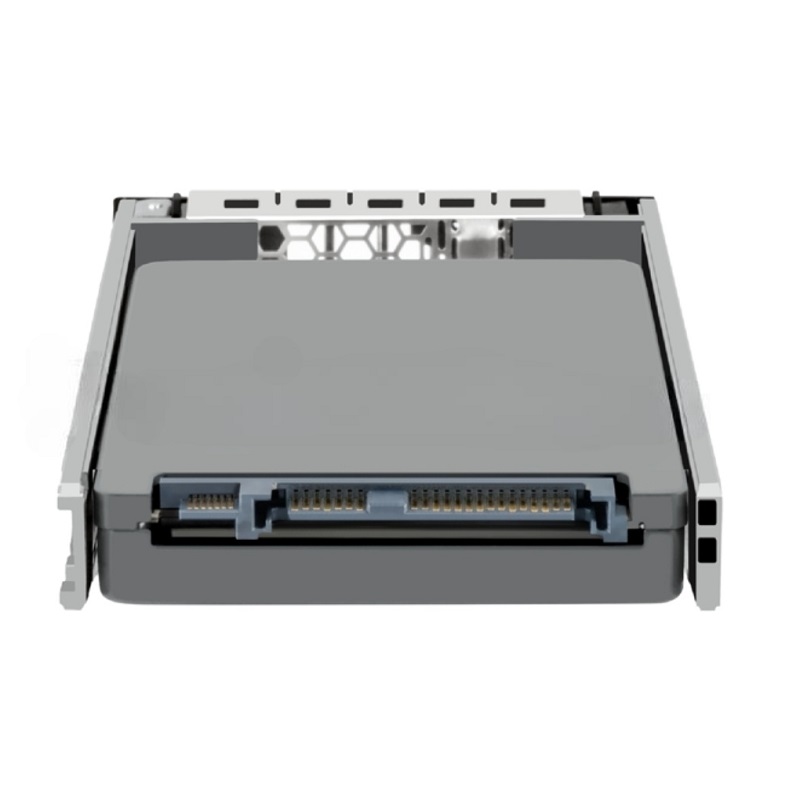
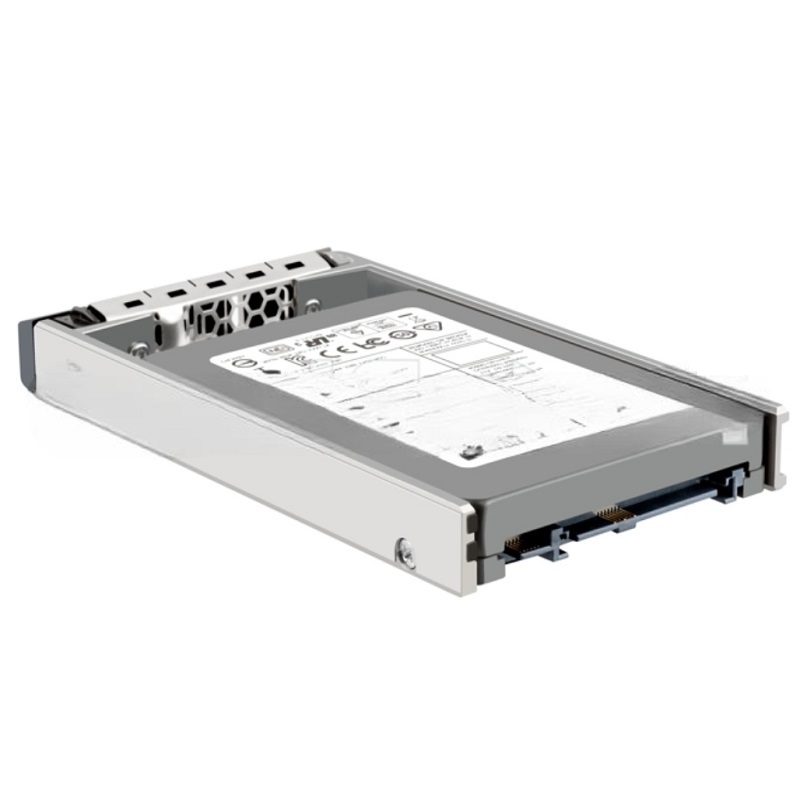
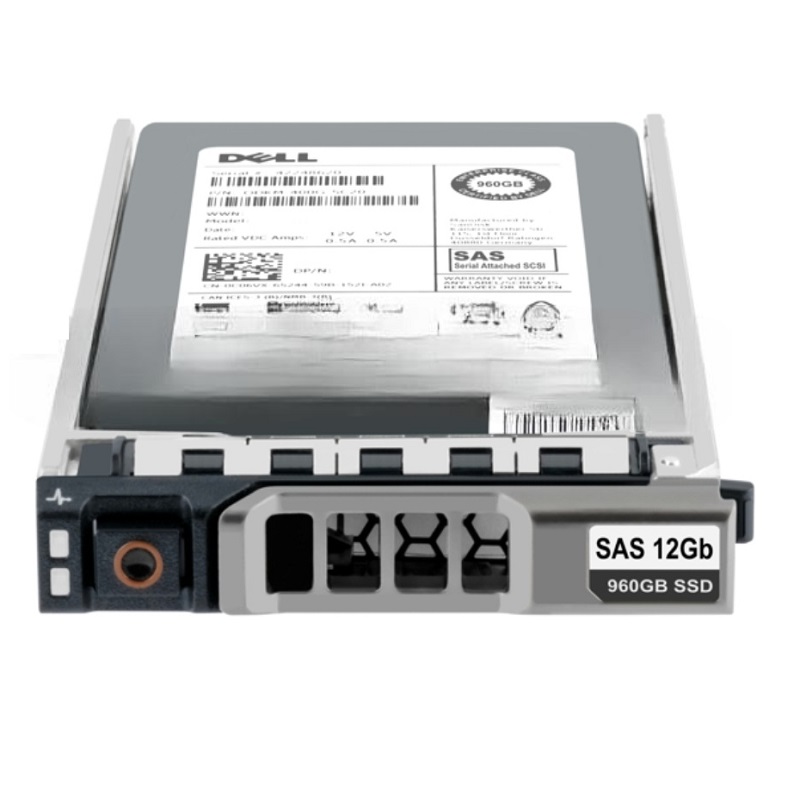
DELL NF76W 1.6TB Mixed Use SAS 12Gbps 2.5-Inch Hot Plug SSD
The DELL NF76W 1.6TB Mixed Use Self-Encrypting Solid State Drive is designed to deliver reliability, consistent performance, and enhanced security for enterprise-class workloads. Built for DELL PowerEdge servers, this storage solution offers a balance between endurance, speed, and data protection, making it a perfect fit for mixed-use environments where both read and write operations are crucial.
Key Specifications
- Manufacturer: Dell
- torage Capacity: 1.6TB
- Form Factor: 2.5-inch Hot-Swap
- Interface: SAS 12Gb/s
- Drive Type: Mixed-Use Solid State Drive
- Encryption: FIPS 140-2 compliant Self-Encrypting Drive
- Manufacturer Part Number: NF76W
- Transfer Rate: Up to 1.2 Gbps (external)
Enterprise-Grade Performance
This enterprise-class SSD offers robust transfer speeds and dependable throughput that optimize server performance. With a SAS 12Gb/s interface, the DELL NF76W ensures rapid data accessibility, supporting business-critical applications and virtualization workloads without bottlenecks.
Advantages for Data Centers
- Consistent IOPS for demanding workloads
- Hot-swap support for minimal downtime
- Enhanced data security with hardware-level encryption
- Balanced endurance for read and write intensive operations
Security and Compliance
One of the standout features of the DELL NF76W SSD is its compliance with FIPS 140-2 security standards. The built-in hardware encryption protects sensitive information, ensuring that data remains secure both at rest and in motion. This makes it an ideal solution for organizations that prioritize regulatory compliance and data confidentiality.
Self-Encrypting Drive Benefits
- Secure encryption without impacting performance
- Automatic protection of stored data
- Compliance with government and enterprise-level security requirements
- Peace of mind for industries like healthcare, finance, and government
Compatibility with DELL PowerEdge Servers
The DELL NF76W 1.6TB SAS SSD integrates seamlessly with a range of DELL PowerEdge servers, ensuring smooth deployment and dependable compatibility. Supported models include:
- DELL PowerEdge R630
- DELL PowerEdge R730
- DELL PowerEdge R730xd
- DELL PowerEdge T630
Optimized Server Workloads
From database management and cloud computing to virtualization and business applications, the NF76W is engineered to maintain consistent performance under demanding conditions. Its endurance profile makes it well-suited for mixed-use cases where both sequential and random operations are frequent.
Hot-Swap Functionality
The hot-plug capability of this SSD allows for easy replacement and upgrades without system downtime. This feature is essential for enterprises that require uninterrupted uptime and fast scalability.
Benefits of Hot-Swapping
- Minimal service interruptions during maintenance
- Seamless drive replacement without rebooting
- Greater flexibility in managing storage arrays
DELL NF76W 1.6TB SSD
- Reliability backed by DELL enterprise standards
- Strong security through FIPS-certified encryption
- Optimal for both read-heavy and write-intensive tasks
- Hot-plug support for continuous operations
- Guaranteed compatibility with major PowerEdge servers
Use Case Scenarios
- Virtualized environments requiring high I/O performance
- Business-critical database applications
- Cloud workloads needing balanced endurance
- Enterprises requiring secure, compliant storage
Expansion & Connectivity
The NF76W drive provides straightforward integration with server environments through a 1x SAS 12Gb/s interface. Its compatibility with 2.5-inch bays ensures ease of installation across supported systems, giving IT managers flexible deployment options.
Connectivity Highlights
- SAS 12Gbps interface for rapid data throughput
- Compatible with 2.5-inch drive bays
- Seamless connection with supported PowerEdge models
- Future-ready design for scalable infrastructures
Dell NF76W 1.6TB SSD — Enterprise-Ready Storage for Balanced Workloads
The Dell NF76W 1.6TB Mixed Use SAS solid state drive is designed for organizations that need dependable performance, enterprise-grade endurance, and straightforward serviceability in Dell PowerEdge and PowerVault environments. With a 12Gbps SAS interface, dual-port redundancy, and a 2.5-inch hot-plug form factor, this drive delivers the blend of speed, stability, and uptime that virtualized clusters, database servers, and high-throughput applications demand. Built for mixed read/write activity, it excels in everyday production workloads where reliability and predictable latency matter as much as raw throughput.
Key Takeaways for IT Buyers
- Form factor & serviceability: 2.5-inch hot-plug carrier enables quick, tool-less swaps in compatible Dell servers and storage arrays.
- Interface: 12Gbps SAS with dual-port capability for path redundancy and seamless failover in HA designs.
- Use profile: Mixed Use endurance class suited for sustained read/write cycles across production workloads.
- Capacity: 1.6TB usable, ideal for boot, application, and data volumes in balanced configurations.
- Enterprise features: End-to-end data protection, power-loss protection, and robust firmware validation for consistent performance.
Dell NF76W Fits in Modern Infrastructure
This 1.6TB Mixed Use SAS SSD sits at the sweet spot between read-intensive drives and write-intensive models. It aligns naturally with mid-tier databases, virtualized application servers, collaboration platforms, and analytics jobs that read and write continuously throughout the day. Environments that benefit most include:
- Virtualization & private cloud: Balanced I/O patterns from VMs, vApps, and containers running web, app, and middleware layers.
- Databases & data services: OLTP/OLAP blends, logging, tempdb-style volumes, and microservice back-ends.
- VDI and knowledge worker apps: Users generate steady reads and writes; predictable latency ensures responsive sessions.
- Dev/Test & CI pipelines: Frequent compiles, artifact writes, and environment refreshes benefit from solid mixed IOPS.
- Edge & ROBO sites: Compact 2.5-inch hot-plug design supports limited-space, high-availability deployments.
Mixed Use Endurance Explained
Endurance classes map to expected daily write levels and duty cycles. Read-intensive SSDs favor high reads with minimal writes, while write-intensive lines are designed for heavy write logging and scratch duties. Mixed Use models, like the NF76W, are tuned for balanced read/write activity, offering dependable lifespan without the premium of write-mostly SKUs. For many production stacks, this is the most cost-efficient endurance class.
Benefits of a 12Gbps SAS Enterprise SSD
Serial Attached SCSI remains the backbone of many enterprise storage stacks because it prioritizes reliability, multi-pathing, and scale-out compatibility:
- Dual-port redundancy: Two independent data paths to a single device safeguard against controller or cable failures.
- Deterministic latency: SAS devices maintain consistent response times under mixed loads and heavy queue depths.
- Backplane integration: 12Gbps SAS integrates cleanly into mainstream Dell chassis, expanders, and enclosures.
- Multi-initiator support: Essential for shared storage topologies and clustered designs.
2.5-Inch Hot-Plug Carriers
Hot-plug carriers mean maintenance windows are shorter, and drive replacements don’t require powering down a server or unmounting the entire chassis. In production environments, the difference between a hot-plug SSD and a non-hot-plug device is measured in reduced downtime and fewer late-night change controls.
Performance Characteristics That Matter
While raw throughput is important, real-world performance depends on a mix of traits. The NF76W is engineered to deliver:
- Low, predictable latency: Handles mixed IO patterns gracefully for steady application responsiveness.
- Sustained mixed IOPS: Optimized for workloads that interleave reads and writes rather than pure sequential transfers.
- Firmware-level QoS: Consistency under contention reduces tail latency spikes during peak usage.
- Data integrity features: End-to-end protection, ECC, and power-loss protection to help preserve in-flight data.
Comparison: SAS vs. SATA vs. NVMe
- SAS (this drive): Dual-port redundancy, strong QoS, enterprise backplane support, 12Gbps signaling.
- SATA: Cost-efficient, but single-port and typically less robust for multi-initiator, HA paths.
- NVMe: Very high performance over PCIe; ideal for ultra-low latency tiers. SAS persists in environments valuing dual-port redundancy and broad enclosure compatibility.
Typical Deployment Scenarios
Virtualized Clusters
Deploy the NF76W in host-local tiers for VM datastores, or as part of a shared storage fabric using SAS expanders. The drive’s mixed-use profile supports transactional apps, middleware layers, and shared services that generate continuous writes (logs, metadata, snapshots) alongside heavy reads.
Database Volumes
Use this SSD for primary tablespaces, log and journal volumes, or temp areas with steady write cycles. Pair with a disciplined backup strategy and RAID protection for balanced performance and resilience.
VDI & Knowledge Worker Loads
Profile-based I/O in VDI can be bursty. The NF76W’s predictable latency ensures smooth logon storms and steady interactive response times across a diverse set of applications.
Compatibility & Platform Fit
The NF76W is supplied in a Dell hot-plug carrier designed for compatible 2.5-inch bays across multiple PowerEdge generations and select PowerVault enclosures. Always verify backplane revision, controller firmware, and drive slot availability before large-scale rollouts.
- Controller support: Works with Dell PERC/HBA SAS controllers supporting 12Gbps SAS and mixed-use SSDs.
- Backplane: Intended for 2.5-inch SAS bays; confirm any interposer or caddy requirements for specific chassis.
- Interoperability: Ideal in heterogeneous racks using SAS expanders and redundant pathing.
Hot-Plug & Serviceability Best Practices
- Confirm the target slot’s status in iDRAC or OS-level storage management before extraction or insertion.
- Use the labeled pull tab and ejector lever; avoid force during insertion.
- Wait for carrier LEDs to settle and for the controller to recognize the new device before proceeding with array operations.
- Rebuild or restripe during low I/O windows where possible to minimize performance impact.
Data Protection, Integrity, and Firmware
Enterprise SAS SSDs incorporate multiple safeguards that help maintain data integrity across power events and firmware edge cases:
- Power-loss protection (PLP): Onboard capacitance helps flush in-flight data to non-volatile media when power is interrupted.
- End-to-end data path protection: Detects and corrects bit errors from host to NAND.
- Advanced ECC & wear leveling: Sustains performance and extends media life under sustained mixed workloads.
- Validated firmware stacks: Tuned to minimize tail latency and ensure consistent behavior under heavy queue depths.
RAID Strategies for the NF76W
Choose a RAID level aligned to performance and resiliency goals:
- RAID 1/10: Excellent for latency-sensitive databases and VMFS/NTFS/ext volumes; strong write performance with redundancy.
- RAID 5: Capacity-efficient for mixed workloads; consider write penalties for parity updates.
- RAID 6: Enhanced fault tolerance for large pools; good for capacity tiers that still need steady performance.
Capacity Planning & I/O Sizing
Successful deployments size not only by gigabytes but also by IOPS, latency, and bandwidth headroom. For mixed-use tiers, plan arrays with enough spindles (SSD count) to spread workload across devices. Evaluate the following:
- Peak IOPS vs. sustained IOPS: Ensure array can absorb peaks without sustained tail latency.
- Queue depth & concurrency: Profile application thread counts and storage request sizes.
- Write amplification factors: Balance over-provisioning and workload shaping to maintain endurance.
- Spare drives: Keep on-hand spares for rapid replacement and faster rebuilds.
Endurance Considerations
Mixed Use drives target a balanced life expectancy under daily read/write operations. In production, mitigate wear by aligning log-intensive volumes to appropriate RAID levels, enabling TRIM/UNMAP where supported, and avoiding unnecessary write-amplifying tasks. Proactive health monitoring via iDRAC, PERC, or OS-level tools helps forecast replacements well before failure thresholds.
Security & Compliance Features
Enterprise fleets increasingly align storage with compliance and security baselines. The NF76W, as an enterprise SAS SSD, is typically offered with features that support layered defenses and operational controls:
- Data at rest controls: Consult your specific drive SKU for secure erase and cryptographic capabilities aligned to corporate policies.
- Access control: Leverage controller-level authentication and role-based management.
- Auditability: Maintain inventory of serials, firmware revisions, and chain-of-custody documentation for regulated environments.
Deployment Patterns & Reference Architectures
Balanced Virtualization Host
- Goal: Reliable VM performance with straightforward scaling.
- Approach: Populate multiple NF76W devices in RAID 10 for latency-sensitive VMs; use separate volumes for logs and temp.
- Result: Predictable performance under concurrent read/write bursts and maintenance safety via hot-plug.
Mid-Tier Database Server
- Goal: Consistent transaction processing with safe recovery.
- Approach: Place data files and logs on separate NF76W-backed arrays; leverage controller cache to smooth small random writes.
- Result: Balanced throughput, controlled latency, and simpler serviceability during drive replacements.
ROBO File & App Node
- Goal: High availability at the edge without specialized staff.
- Approach: Use dual-port SAS paths into a redundant controller; keep a labeled spare NF76W on site.
- Result: Rapid recovery from a single-drive incident and sustained uptime with low operational complexity.
Best Practices for Longevity & Performance
- Enable TRIM/UNMAP: Helps the drive manage free space and reduce write amplification where supported.
- Align volumes: Proper block alignment avoids partial page writes that reduce performance and endurance.
- Temperature management: Keep adequate front-to-back airflow; monitor thermals in iDRAC.
- Partitioning strategy: Separate busy logs and application data to different arrays for cleaner performance isolation.
Procurement, SKU Notes & Asset Management
The NF76W is a Dell-specific part number associated with a 1.6TB Mixed Use SAS 12Gbps 2.5-inch hot-plug SSD. For consistency, standardize on a specific part and firmware bundle across nodes in the same cluster. Align purchase orders with asset tags and document each drive’s slot, WWN, and array membership for rapid RMA or replacement actions.
Racking & Environmental Considerations
- Airflow: Ensure unobstructed intake; avoid mixing carriers that disrupt front bezel airflow patterns.
- Cable discipline: When using external SAS expanders, use certified cables with correct lengths and strain relief.
- Vibration: SSDs are resilient, but chassis vibration can still impact connectors and carriers over time in dense racks.
Migration & Upgrade Paths
Upgrading from HDD or SATA SSD tiers to the NF76W typically yields immediate latency benefits. Plan migrations with:
- Phased rollouts: Move non-critical volumes first, then step up to core workloads.
- Live migration tools: Use hypervisor features to relocate VMs during array changes.
- Snapshots & backups: Maintain restore points before array reconfigurations or firmware updates.
Integrating with Existing Storage Policies
Align the NF76W with your data classification tiers. For example, Tier 1 transactional workloads and Tier 2 mixed apps may both fit Mixed Use SSDs, while archival tiers remain on capacity media. Map RPO/RTO objectives to RAID and replication strategies to ensure that protection aligns with business impact.
Sustainability & Efficiency
Consolidating mixed workloads onto SAS SSDs like the NF76W can lower power draw and cooling needs compared to legacy HDD arrays. Increased density, predictable performance, and hot-plug serviceability also reduce truck rolls and unplanned downtime, contributing to greener and more efficient operations.
E-Waste Reduction & Lifecycle
- Standardization: Fewer SKUs simplify sparing and extend fleet usefulness.
- Refurb & redeploy: As primary tiers upgrade, repurpose drives into dev/test or lab environments.
- Certified disposal: When retiring media, follow certified destruction or sanitization processes consistent with policy.
Ideal Use Cases at a Glance
- Virtualized application stacks and mid-tier databases.
- VDI desktops and collaboration workloads with steady I/O.
- DevOps build servers, artifact repositories, and CI/CD pipelines.
- Edge/ROBO nodes demanding quick maintenance and high uptime.
Capacity Planning Tips
- Headroom: Keep 20–30% free capacity for steady performance during spikes and background tasks.
- Segmentation: Split log-heavy and data-heavy volumes across arrays to avoid contention.
- Snapshots: Factor snapshot retention into total capacity calculations.
Operational Runbook Snippet
Drive Replacement (Hot-Plug)
- Identify failed or predictive-failure drive in iDRAC/PERC and map to physical slot.
- Mark the device offline if required by policy; confirm array state.
- Release the carrier latch and remove the drive; insert the NF76W replacement firmly.
- Monitor LEDs and controller logs; confirm rebuild initiation and progress.
- Update CMDB with serial/slot information and close the change ticket upon validation.
Performance Tuning
- Ensure write-back cache policies are aligned with PLP and UPS coverage.
- Set queue depth and I/O scheduler settings per OS best practices.
- Separate metadata/log paths where practical to minimize latency spikes.
Standardize on the Dell NF76W for Mixed Tiers
Standardizing on a single, widely validated Mixed Use SAS SSD like the NF76W simplifies inventory, support, and operational processes. Teams get consistent performance characteristics, predictable maintenance workflows, and easier capacity planning. In multi-rack environments, a standard mixed tier streamlines troubleshooting because behavior is uniform across hosts and arrays.
Risk Reduction Through Predictability
Predictable IO behavior reduces the risk of outlier latency events that can cascade into application timeouts. The NF76W’s enterprise features are engineered for stable throughput under pressure, meaning fewer surprises in change windows, patch cycles, and seasonal traffic peaks.





 Contact Us
 Information
 Catalog
 Solid State Drives (SSD)
 Network Switches
 Hard Disk Drives
 HBA & Controllers
 PC & Servers
 PC & Server Memory
 CPU & Processors
 Network Routers
 Power Supplies
 Tape Drives & Libraries
 Network Devices
 Computer & Network Cables