(7% discount is applied at checkout)
Cart is empty
Your go-to destination for cutting-edge server products
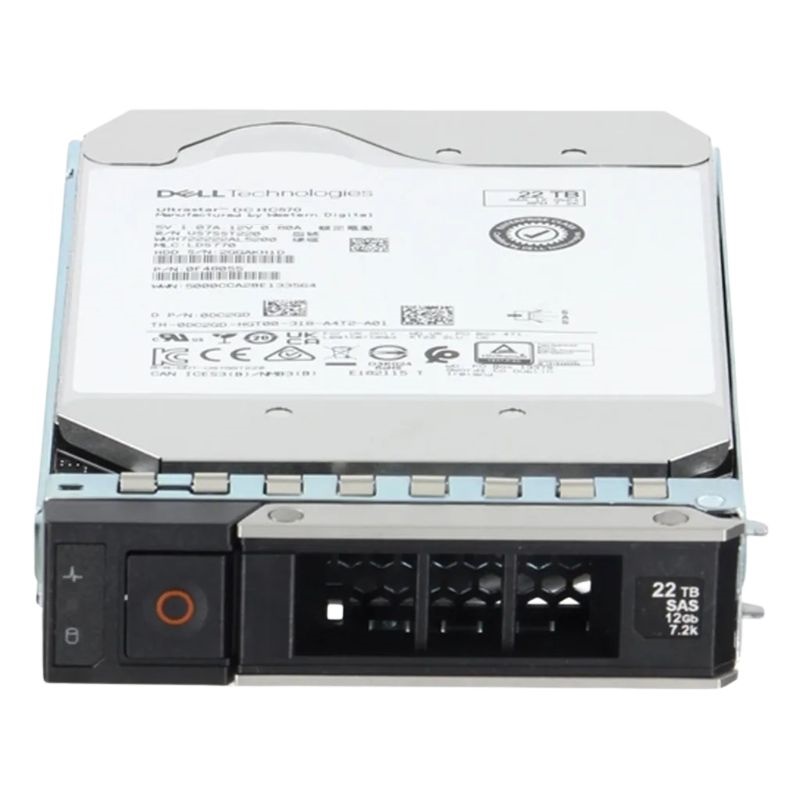


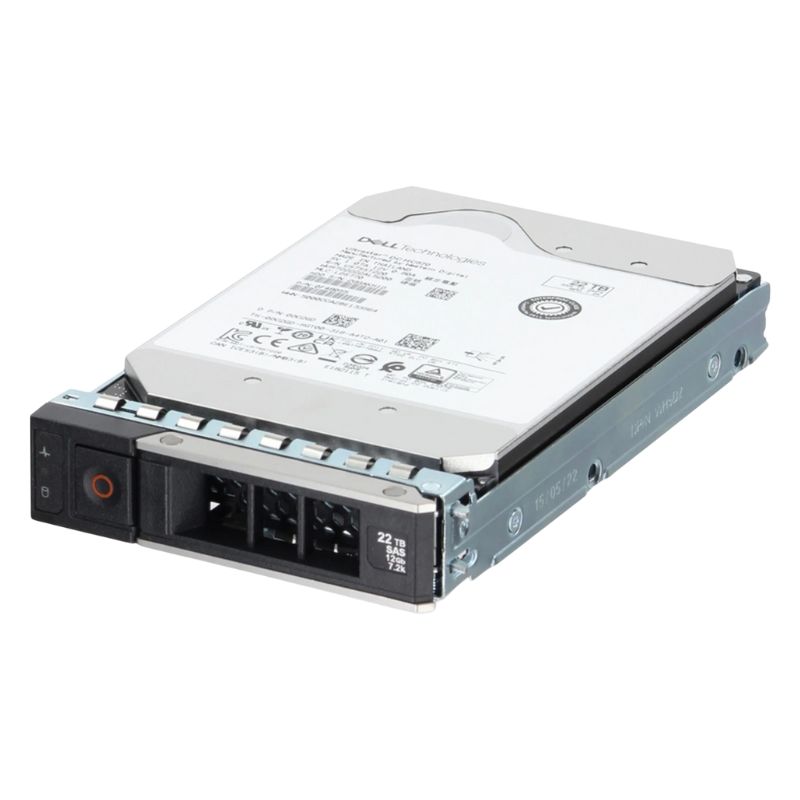
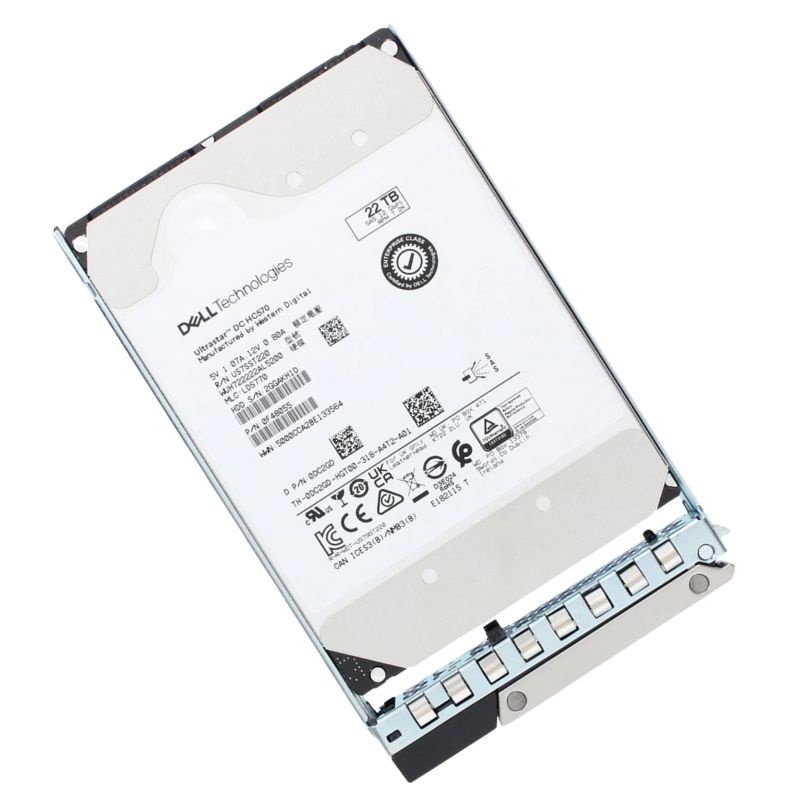
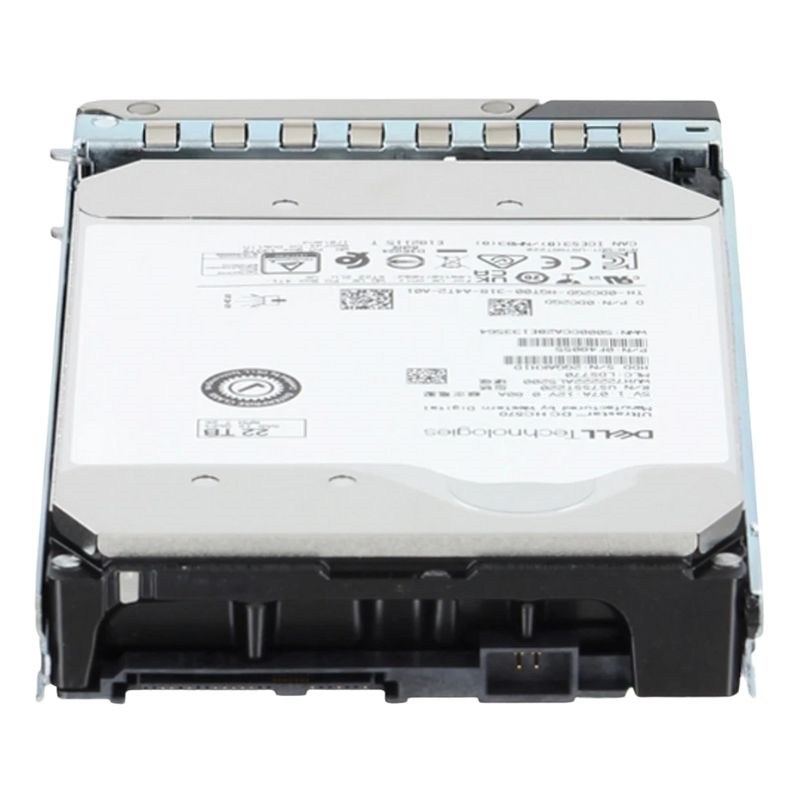
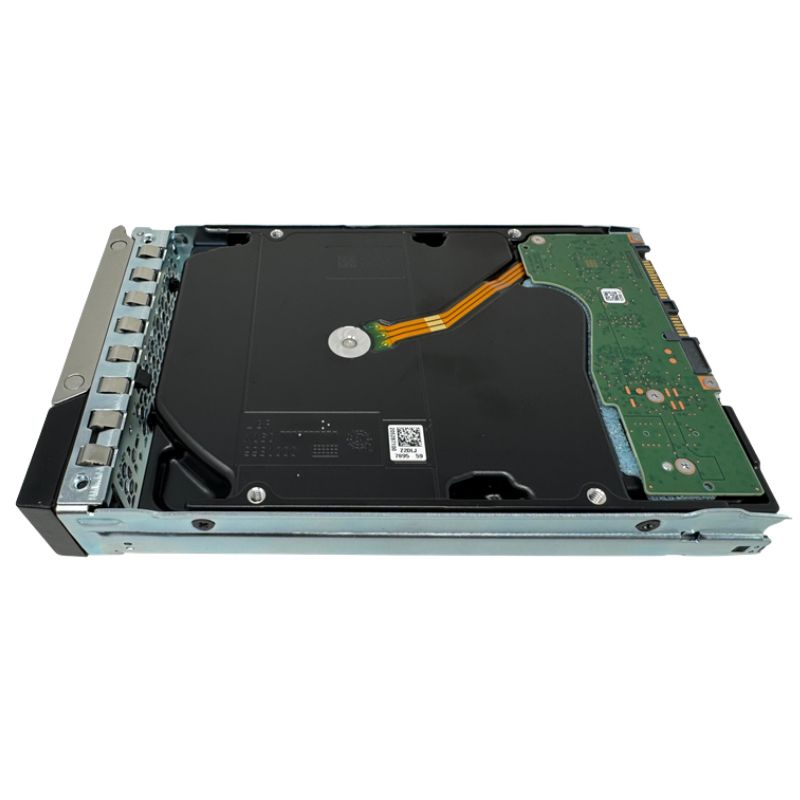
Dell 400-BRRP Ultrastar DC HC570 SAS-12GBPS 22TB 7.2K 512e 512MB 3.5inch Hot-Plug HDD. New Sealed in Box (NIB) with 1 Year Warranty
The Dell 400-BRRP 22TB SAS 12Gbps 7.2K Hot-Plug HDD delivers large-scale capacity and robust performance for enterprise environments. Designed with a 3.5-inch form factor and an efficient 7200 RPM spindle speed, it ensures excellent reliability for high-demand workloads in data centers, virtualization platforms, and business-critical storage applications.
The 400-BRRP Dell Ultrastar DC HC570 22TB listing represents a category of enterprise-grade, high-capacity hard disk drives designed for modern data center and server environments. These drives combine very high raw capacity (22 TB), a 3.5-inch form factor, and enterprise interfaces such as SAS 12 Gb/s (and variants in SATA), along with a 512e sector format and a large 512 MB cache. The result is a family of drives optimized for dense storage racks, cloud and hyperscale installations, backup and archive arrays, and mixed workload environments where capacity, efficiency, and long-term reliability are primary selection criteria.
One 22 TB Ultrastar DC HC570 can significantly lower the number of drives required to achieve a target raw capacity compared to earlier-generation 10–14 TB drives. In dense 4U or 2U server/storage enclosures, that density translates directly into lower power-per-TB and fewer physical drive slots to manage. Vendors often highlight theoretical rack densities (for example, multi-petabyte totals per rack) as a selling point for these drives, and the HC570’s 22 TB capacity is engineered precisely for such density-first deployments.
The Dell part number (400-BRRP) is commonly used in Dell catalogs and third-party reseller listings to identify a specific OEM configuration of the HC570 suited for Dell PowerEdge servers and storage shelves. System integrators should check Dell compatibility matrices and firmware revision notes when deploying these drives in production to ensure firmware matches controller expectations and hot-plug behavior aligns with the server backplane firmware. Resellers frequently list 400-BRRP with compatibility details (e.g., PowerEdge models supported) and packaging information indicating whether the drive ships with trays or as bare drives.
As a 3.5-inch hot-plug enterprise drive, the HC570 is designed for front-accessible bay replacement with tools-less trays in many chassis. Hot-swap capabilities reduce downtime during maintenance, and the SAS interface supports dual-porting possibilities in certain configurations (depending on SKU and backplane). When planning storage arrays, confirm that your chassis backplane, RAID controller or HBA supports 12 Gb/s SAS signaling and the appropriate power/dust/tray profiles used by Dell enclosures.
Many HC570 listings show the drive configured as 512e — that is, 512-byte emulation on a 4k native physical layout. This improves compatibility with operating systems and applications that expect 512-byte sector sizes while still providing the density benefits of 4K-sector recording. However, when migrating or performing in-place operating system upgrades, storage admins should be mindful of alignment and partitioning best practices to avoid write amplification; some HC570 models also support 4Kn modes where native 4K sector addressing is desired.
The HC570 series targets high sequential throughput suitable for large-block backups, archival streaming, and many object storage workloads. Typical published sequential transfer rates reach the high hundreds of MB/s on sustained sequential reads for SAS models (individual result numbers vary with firmware, host interface, and workload type). The 512 MB cache helps smooth bursty writes, while enterprise firmware optimizations reduce read/write latencies under mixed workloads. For latency-sensitive random I/O, solid-state caching layers or NVMe tiers are commonly used in front of HDD tiers to meet IOPS targets while the HC570 supplies large-capacity cold or warm storage.
While the HC570 provides respectable random read/write performance for a mechanical drive, it is not a substitute for SSDs in IOPS-heavy front-end applications. Best practice is to combine HC570 capacity tiers with SSD caching or write-back proxy layers for applications that need low-latency responses. Using RAID configurations tuned for HDD semantics (appropriate stripe sizes, write-back policies, and rebuild priorities) will maximize both performance and resiliency.
One of the fundamental benefits of helium-sealed drives like the HC570 is reduced power consumption and thermal output for a given capacity. Helium reduces drag on spinning platters, enabling more platters per drive and lower rotational friction. For large-scale deployments, lower watt-per-TB reduces power and cooling costs and therefore the effective TCO of the storage array. Operators should still plan for adequate airflow and ambient temperature control — manufacturers publish operating temperature and power curves that should be used when calculating rack-level power draw.
Manufacturers publish non-operating temperature ranges and shock/vibration tolerances for safe shipping, storage and handling. These specifications influence how drives should be staged prior to installation and how they should be mounted inside chassis. Confirming these specs is particularly important for field-servicing scenarios in colocation facilities or when drives transit long distances between vendors and data centers.
Ultrastar DC HC570 drives include firmware-level features that strengthen data integrity and security suitable for enterprise deployments. Features commonly cited in product literature and datasheets include hardware-assisted power-loss protection (Armor Cache), integrated non-volatile buffers (Opti NAND variants), and support for security standards such as TCG (Trusted Computing Group) for drive-level encryption on some SKUs. For regulated environments or multi-tenant hosting, hardware encryption and secure-erasure features may be decisive. Always cross-check the specific part number/SKU (SAS vs SATA, SE vs TCG security) to ensure the feature set matches your compliance needs.
Firmware versions can affect interoperability with RAID controllers and server backplanes. Dell-branded OEM drives (like 400-BRRP) may ship with vendor-accepted firmware to simplify integration with PowerEdge systems; however, in heterogeneous environments you may need to coordinate firmware updates across your fleet. When planning firmware updates, follow vendor guidelines, perform staged updates, and maintain known-good copies of drive firmware in case of rollbacks.
The HC570 is most often deployed as part of a tiered storage topology: a small pool of high-performance SSDs for hot data, with large-capacity HDDs like the HC570 forming the warm/cold tier. Typical deployment patterns include:
Considerations for RAID or erasure coding parameters include chunk/stripe sizes, rebuild concurrency limits, and read/write amplification characteristics for 512e drives. Properly tuned RAID controllers and erasure coding configurations will reduce rebuild times and minimize the risk of array-level failures during drive replacement cycles.
Dell part numbers for OEM drives, such as 400-BRRP, are used by enterprise purchasers to ensure compatibility and simplified RMA support through the OEM channel. Third-party resellers also list identical or factory-refurbished SKUs — price, warranty, and packaging will vary. When comparing prices, factor in:
It’s common to see occasional price variations and discounts from resellers, but total procurement cost should include potential support and replacement shipping times, which can add operational risk if not planned for.
Key SMART metrics often monitored for HC-series drives include reallocated sector counts, pending sectors, uncorrectable sector counts, and spin-up time variations. Sudden deviations from baseline behavior (e.g., rising pending sector counts or increased correction events) warrant immediate review and possible replacement before catastrophic failure. Maintain historical baselining rather than relying on single-sample thresholds for better predictive maintenance.
Select the HC570 (400-BRRP listing) when the primary requirement is high-density, enterprise-class capacity with reasonable sequential throughput and built-in drive-level resilience features (Opti NAND, Armor Cache, HelioSeal). If your workload is small-block, high-IOPS, or requires ultra-low latency, an NVMe/SSD-based tier is better suited. For archival, backup, and large object stores, the HC570 strikes a favorable balance between $/GB and operational robustness. Consider the following decision points:
Consider embedding machine-readable schema (Product/Offer) on the category or item pages to surface price, availability, SKU (400-BRRP) and vendor mappings for search engines and comparison shopping feeds. Keep canonical specifications and link to official datasheets for trust signals. Include internal links to server compatibility lists, datasheets, and firmware resources to assist buyers and reduce post-purchase support calls.
Confirm the drive’s exact SKU (SAS vs SATA and security option such as TCG vs SE) matches your planned use and controller compatibility. Validate chassis/backplane support for 3.5-inch hot-plug HDDs and SAS 12Gb/s signaling. Plan for firmware coordination if deploying in large arrays; obtain firmware notes from Dell or Western Digital. Keep spare drives matched by firmware and model to simplify rebuilds and reduce compatibility surprises. Confirm warranty and RMA pathways when purchasing through Dell (OEM part 400-BRRP) versus third-party resellers.
Helpful follow-ups when evaluating this category include downloading the official Ultrastar DC HC570 datasheet, reviewing Dell compatibility matrices for your PowerEdge model, and consulting third-party performance tests or community forum posts about large-array rebuild behavior with 22 TB drives. These resources will close knowledge gaps about integration details and real-world behavior in rebuild, scrub, and degraded scenarios.


 Contact Us
 Information
 Catalog
 Solid State Drives (SSD)
 Network Switches
 Hard Disk Drives
 HBA & Controllers
 PC & Servers
 PC & Server Memory
 CPU & Processors
 Network Routers
 Power Supplies
 Tape Drives & Libraries
 Network Devices
 Computer & Network Cables