(7% discount is applied at checkout)
Cart is empty
Your go-to destination for cutting-edge server products


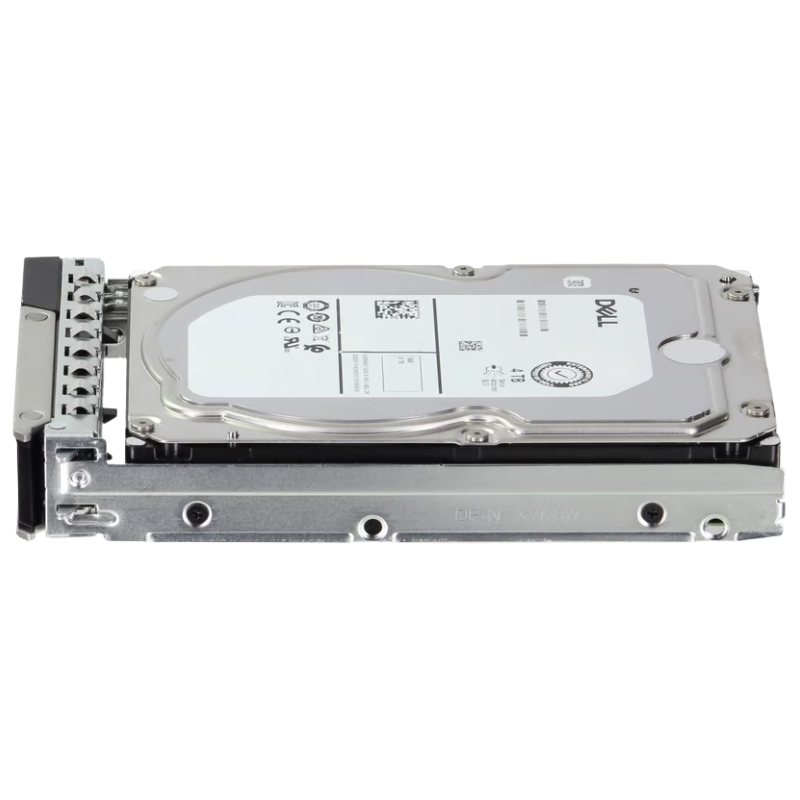
Toshiba MG10SDA800EY 8TB 7.2K RPM Near line SAS 12GBPS 512e 3.5inch Form Factor Hot-plug Hard Drive. New Sealed in Box (NIB) with 1 Year Warranty. Dell Version
The Toshiba MG10SDA800EY 8TB Nearline SAS hard drive is built for enterprise-scale workloads where capacity, dependability, and seamless scalability are critical. Featuring 7,200 RPM spindle speed, a 12Gbps SAS interface, and 512e sector formatting, this 3.5-inch hot-plug drive is a high-performance storage solution designed for data centers, enterprise IT environments, and cloud infrastructure systems.
The MG10SDA800EY integrates advanced enterprise-grade technologies to deliver consistent throughput, low latency, and long-term durability. It supports heavy-duty workloads across cloud storage arrays, virtualization, and mission-critical applications. The combination of SAS 12Gbps bandwidth with high-speed rotational performance ensures smooth operation even in environments with multi-user access patterns.
With a maximum transfer rate of 1200 Mbps, the Toshiba MG10SDA800EY ensures reliable throughput and efficient performance for sequential and random read/write workloads. This makes it ideal for businesses managing data warehouses, online transaction processing, and archival solutions.
The MG10SDA800EY Nearline SAS HDD is purpose-built for continuous operation in 24/7 data center environments. Toshiba’s engineering expertise ensures dependable performance with reduced downtime. Its enterprise-class components are designed for longevity, vibration resistance, and error recovery, making it suitable for scalable enterprise infrastructures.
This drive is optimized for high workloads, extended operational life, and stable performance. By incorporating advanced technologies, Toshiba delivers a drive that can withstand intense workloads in servers, backup systems, and large storage clusters.
The 3.5-inch hot-plug design allows IT teams to replace or upgrade drives without powering down systems. This feature improves uptime, reduces service interruptions, and ensures smooth scalability for growing data requirements.
The SAS 12Gbps interface not only delivers high-speed connectivity but also ensures compatibility with existing 6Gbps SAS controllers. This makes the Toshiba MG10SDA800EY flexible for different enterprise deployments, whether in traditional IT infrastructures, blade servers, or modern cloud-based systems.
The Toshiba MG10SDA800EY is versatile, making it a preferred solution for organizations managing large datasets, high-demand applications, and mission-critical services. Its combination of storage capacity, speed, and durability makes it an excellent option for:
The drive excels in backup solutions, content delivery networks (CDNs), and big data analytics. Its capacity allows businesses to consolidate storage arrays while its hot-plug functionality enables seamless expansion and maintenance.
Nearline SAS drives occupy a strategic middle ground between mission-critical 10K/15K spindles and purely capacity-focused SATA units. The MG10SDA800EY leverages this balance by delivering consistent throughput across long sequential transfers and stable performance with concurrent I/O streams. Whether you are feeding a backup repository, storing surveillance video, housing log data, or powering content libraries, this drive was engineered to scale horizontally—add more bays, expand your pool, grow your namespace—without sacrificing resiliency or manageability.
Many storage tasks are “bursty,” but genuine enterprise workloads sustain load for hours. Thanks to the SAS protocol’s full-duplex design, large queue depths, and robust error recovery, this 8TB model maintains predictable throughput while minimizing tail latency events. Administrators benefit from deterministic behavior during RAID rebuilds and lengthy data scrubs—a crucial factor when SLAs depend on consistent service times.
With deeper command queues and dual-port architecture, SAS drives like the MG10SDA800EY handle concurrent requests gracefully. When multiple VMs or containers contend for storage, command prioritization and error handling ensure fair access and continued responsiveness, even as utilization peaks.
While SATA remains suitable for low-cost bulk storage, nearline SAS drives introduce features essential in shared infrastructure. Dual ports enable redundant paths, helping clusters ride through cable, expander, or controller issues. Expander-aware enclosures benefit from SAS enclosure services (SES) for health telemetry and LED slot mapping, streamlining field operations. The protocol itself is tuned for high concurrency, robust timeouts, and swift error isolation, minimizing the blast radius of a misbehaving component.
The 3.5-inch enclosure standardizes drive trays and airflow behavior, which matters when racks run dense. Toshiba’s enterprise build emphasizes vibration tolerance, balanced platters, and firmware that mitigates rotational vibration (RV) from neighboring drives. In multi-bay servers, that RV damping directly influences consistency, especially under random I/O or during parallel rebuilds.
Hot-plug support lets technicians replace a unit without powering down the host. With SAS slot addressing, SES reporting, and front-panel indicators, you can localize a failing bay, swap the carrier, and initiate rebuilds in minutes. The less time spent hunting for the right tray, the faster the array returns to optimal redundancy.
Enterprise bays are designed to channel air over the drive face and out the rear, maintaining safe temperatures during continuous duty. The MG10SDA800EY is optimized for data-center airflow patterns, sustaining longevity as ambient temperatures rise. Keeping drives within recommended thermal limits pays compounding dividends through lower failure rates and predictable performance curves.
Nearline drives run nonstop. Toshiba’s enterprise firmware manages error recovery time limits to cooperate with RAID controllers, reducing dropouts and minimizing the chance of a premature drive eviction. Background media scans, offline self-tests, and scrubbing routines help detect weak sectors before they become uncorrectable.
Enterprise HBAs expect a drive to return an answer—or a well-defined error—quickly. The MG10SDA800EY follows those conventions, preventing long timeouts that can confuse controllers. In practice, this reduces “false positive” failures and keeps arrays healthy during transient read issues.
Nearline SAS models are rated for heavy annual workloads, typically orders of magnitude higher than desktop drives. That rating reflects not just media endurance, but actuator robustness, spindle bearings, and vibration control. When drives operate in close quarters for years, those details matter.
While synthetic benchmarks are useful, administrators care how drives behave in the real world. The MG10SDA800EY’s 7.2K spindle, cache algorithms, and SAS command set together deliver strong sequential throughput for backup and media, and reliable mixed I/O for log ingest, analytics staging, and file serving. Its consistency under long transfers reduces job overruns and keeps maintenance windows predictable.
Backup repositories favor high-capacity drives with steady sequential write speeds. When paired with a modern HBA and a sensible stripe size, this model sustains large write operations elegantly. During restore events, SAS’s dual-port design and queue depth help maintain read throughput even while other tasks continue in the background.
For video-on-demand, surveillance, and creative asset libraries, sustained read performance and fast error handling are imperative. The MG10SDA800EY’s firmware is tuned to avoid long read retries and move forward, letting RAID logic reconstruct data where needed. That behavior translates into visible stability for end users streaming or reviewing footage.
Because the MG10SDA800EY supports SAS 12Gb/s and 512e, integration is straightforward. Choose an HBA or RAID controller that supports your target topology—pure JBOD for ZFS, or hardware RAID for traditional arrays. For hyperconverged deployments, validate the driver stack and firmware versions of your HBA; performance and stability often hinge on consistent firmware baselines.
On Linux, mdadm, LVM, device-mapper, and ZFS are popular. Administrators often pair nearline SAS with ZFS to gain checksumming, snapshots, scrubs, and straightforward drive replacement workflows. Hardware RAID remains common in Windows shops; SAS shines in both contexts.
Effective capacity isn’t just raw TBs; it’s raw capacity minus RAID overhead, hot spares, snapshots, and compression deltas. Plan for growth by modeling data retention policies and expected ingest rates. Use the MG10SDA800EY as the capacious baseline tier beneath SSD caches or NVMe front-ends, letting nearline SAS absorb the majority of bytes while flash optimizes hot paths.
Provisioning on-line hot spares shortens risk windows. With large drives, rebuild duration matters; SAS’s command handling and error recovery help maintain service responsiveness during parity reconstruction.
Data governance mandates are tightening across industries. Enterprise SAS ecosystems often incorporate features like sanitization commands, secure erase options, and, where applicable, Tamper-Resistant encryption variants. While exact options depend on the specific MG10 sub-SKU and controller pairing, the ecosystem readily supports compliance-aligned workflows for drive retirement and RMA handling.
Mature storage stacks integrate with Active Directory/LDAP, role-based administration, and audit logging. SAS backplanes that expose SES enable precise slot identification for chain-of-custody documentation—useful in regulated environments where traceability is mandatory.
Nearline SAS is the classic fit for backup targets. Combine immutable snapshots, air-gapped copies, and off-site replication to strengthen ransomware recovery. The MG10SDA800EY’s reliable sequential performance ensures backup windows remain inside SLA, even as data sets grow.
From finance and healthcare to media and education, the MG10SDA800EY supports a broad spectrum of data lifecycles. Its steady-state performance and serviceability reduce operating friction in environments where data is simultaneously collected, processed, and retained for long periods.
Despite the growth of cloud storage, on-premises capacity remains vital for latency-sensitive workloads, privacy controls, and cost predictability. Many organizations adopt a hybrid model—front-end services in the cloud, bulk storage on nearline SAS. At the edge, localized servers capture and preprocess data, then replicate to central repositories—an excellent fit for the MG10SDA800EY’s efficiency and durability.
Modern camera fleets produce immense volumes of footage. The MG10SDA800EY delivers the sustained write profiles required for multi-stream ingest and the stable read behavior demanded during investigation playback, all while keeping power and thermals manageable in dense chassis.
In tightly packed racks, acoustic noise often signals mechanical vibration. Enclosures designed for SAS workloads mitigate resonance. Pairing those designs with Toshiba’s RV-aware firmware helps minimize off-track events, improving both throughput and longevity under continuous duty.
Standardize on the MG10SDA800EY for bulk capacity tiers to simplify spares and documentation. Keeping a consistent model across bays aids predictive failure analysis and reduces the variety of firmware images your team must track. Over the lifecycle, that uniformity can save hours of administrative overhead and reduce mean time to repair.
Maintain on-site spares sized to your fault domain. For example, in a 60-bay enclosure using RAID 6, many teams keep at least two ready-to-go spares per shelf. Because this model is hot-pluggable, replacements are fast, and SES allows slot-accurate identification for audit logs.
When controllers, expanders, and drives share a validated firmware matrix, surprises are rare. Vendors publish interoperability lists; aligning with those reduces escalation cycles. The MG10SDA800EY’s adoption within enterprise SAS ecosystems makes it straightforward to meet those guidelines.
Small IT shops run the MG10SDA800EY in compact 8–12 bay servers with a single HBA; enterprises field it in multi-shelf enclosures behind redundant controllers; service providers adopt it in scale-out object stores. Across those patterns, the common thread is operational simplicity—the ability to add more capacity with minimal disruption and predictable behavior.
As datasets grow, add shelves or nodes and reflow workloads to maintain headroom. With SAS, expanding is straightforward: cable the expander, present new LUNs or vdevs, and rebalance. The MG10SDA800EY’s consistent profile helps forecasting: you know how each new 8TB drive behaves, so planners can model capacity and performance with confidence.
Replicate nearline SAS pools to secondary or tertiary sites. During DR drills, the drive’s reliable sustained throughput ensures restore and verification steps complete within planned windows. For object storage, cross-region replicas keep data available if a site goes dark.
These specs translate to dependable sustained transfers for backup and media, and resilient mixed workloads for shared file services. The interface and firmware characteristics matter as much as raw RPM; in clustered arrays, SAS’s queue depth and fault isolation make the difference between a brief hiccup and a cascading slowdown.
An effective runbook prevents surprises. Monitor SMART and SES alerts, log all interventions by enclosure/slot, and test restores quarterly. Replace drives proactively as they approach vendor-defined wear indicators rather than waiting for hard failures during peak traffic.
Integrate drive swaps, firmware updates, and scrubbing into regular windows with a change log tied to slot IDs. The faster technicians correlate alerts to physical bays, the less risk of accidental removal. SAS SES mapping is invaluable here; it reduces human error and shortens MTTR.
Buying in scheduled tranches rather than ad hoc emergencies reduces costs and keeps firmware versions aligned. With consistent use of the MG10SDA800EY across shelves, you simplify spares and reduce compatibility testing time. Over years, those procedural efficiencies can rival hardware savings.
Long-lived drives that avoid early replacement contribute to sustainability goals. Efficient power usage at scale lowers carbon impact; disciplined monitoring reduces waste by catching environmental issues early instead of swapping hardware unnecessarily.
For users, stable storage translates into reliable access to archives, faster restores when something goes wrong, and fewer pauses during content retrieval. When the storage layer is quiet and predictable, applications feel faster—even when the underlying media focuses on capacity rather than raw IOPS.


 Contact Us
 Information
 Catalog
 Solid State Drives (SSD)
 Network Switches
 Hard Disk Drives
 HBA & Controllers
 PC & Servers
 PC & Server Memory
 CPU & Processors
 Network Routers
 Power Supplies
 Tape Drives & Libraries
 Network Devices
 Computer & Network Cables