(7% discount is applied at checkout)
Cart is empty
Your go-to destination for cutting-edge server products
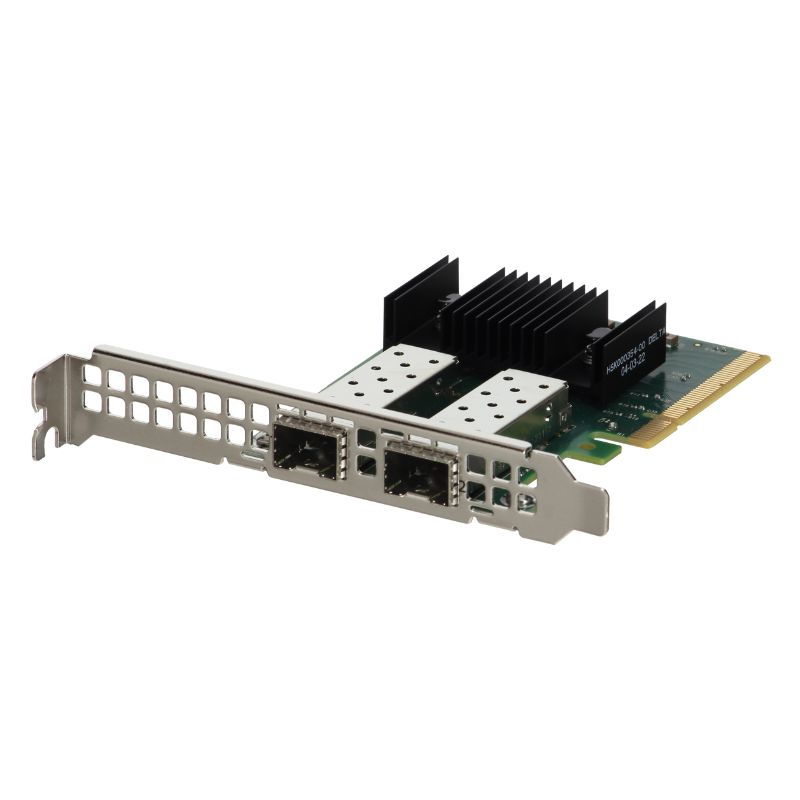


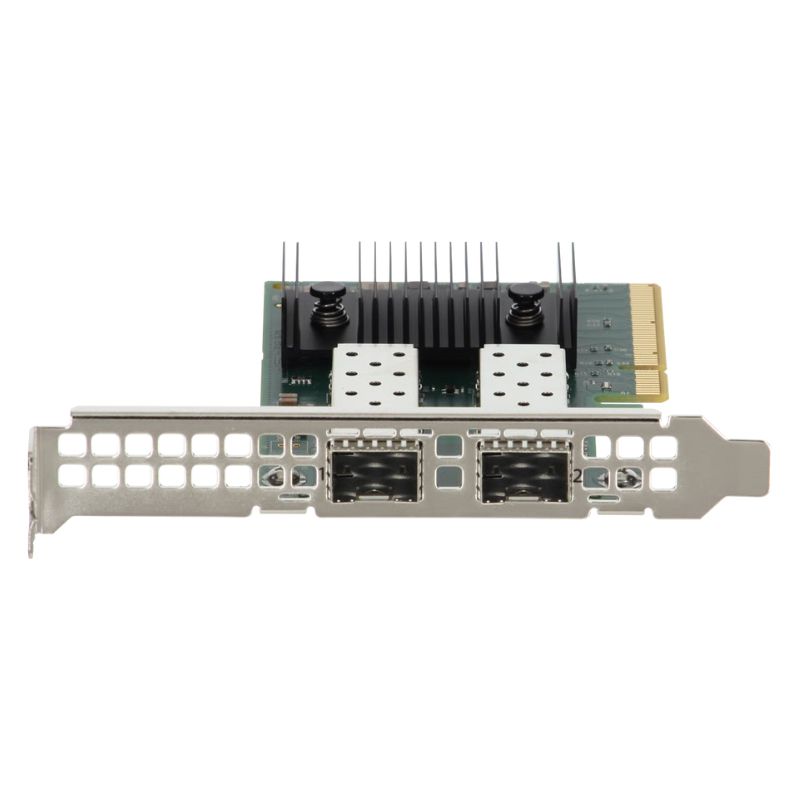
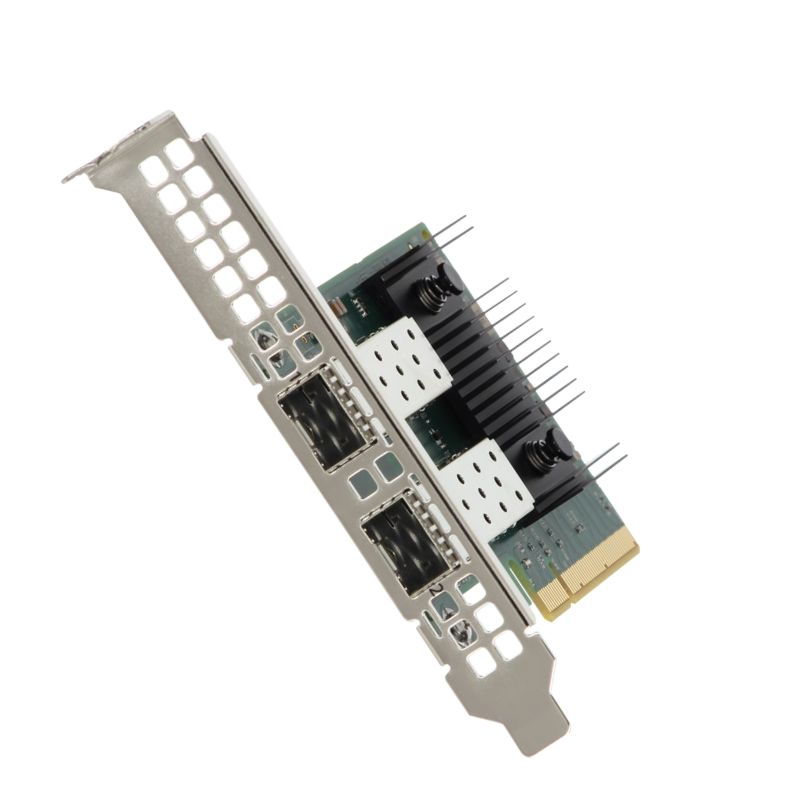
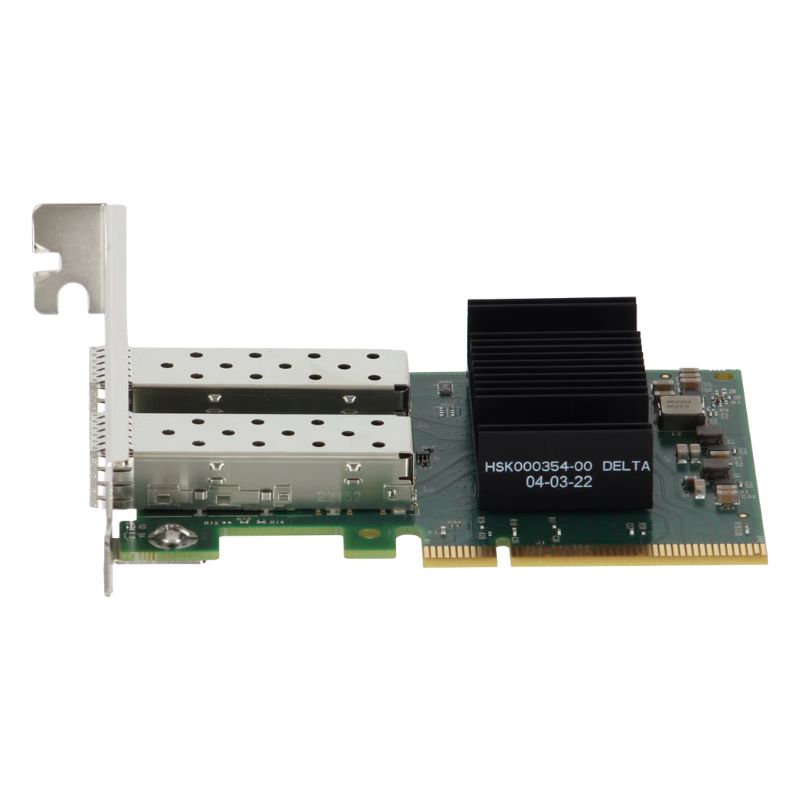
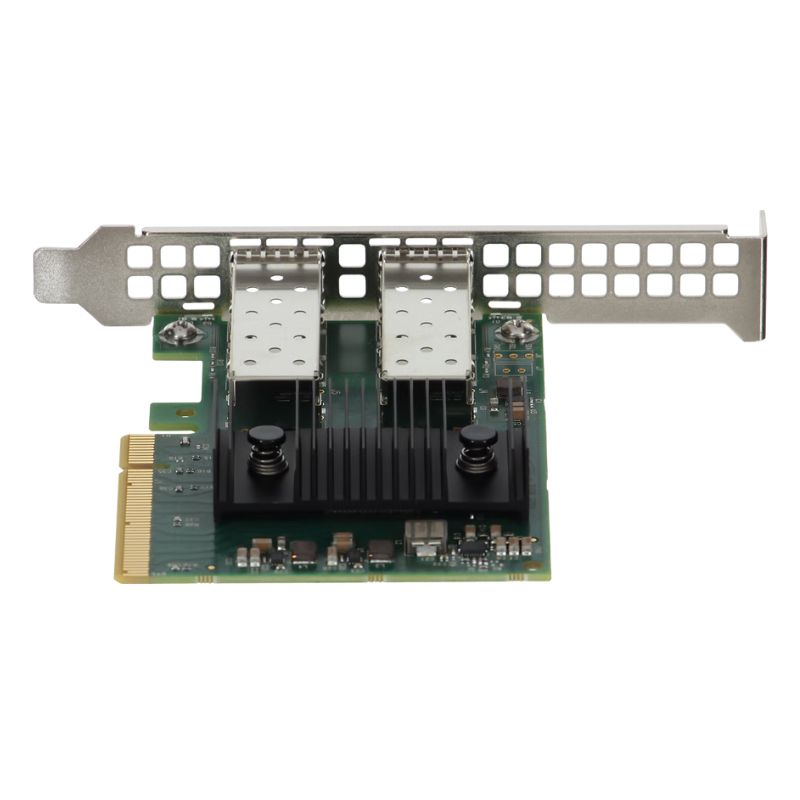
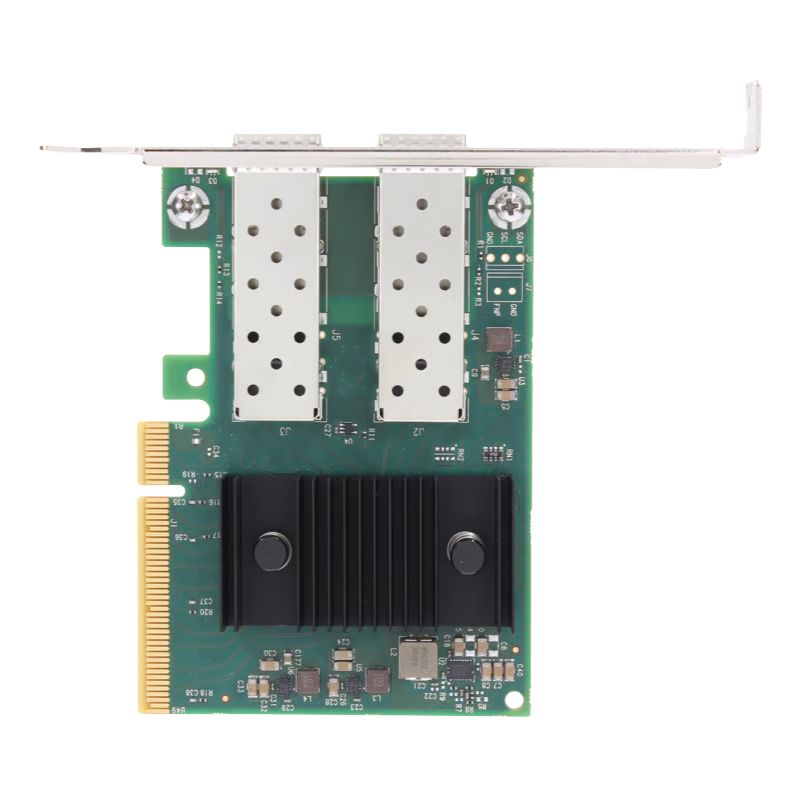
Nvidia 900-9X662-0073-ST0 Connectx-6 Card 25GBE 2Port PCIe 4.0 X8 SFP28 Network Adapter. Factory-Sealed New in Original Box (FSB) with 3 Years Warranty
| SKU/MPN | Warranty | Price | Condition | You save |
|---|---|---|---|---|
| 900-9X662-0073-ST0 | 1 Year Warranty | Contact us for a price | Excellent Refurbished | |
| 900-9X662-0073-ST0 | 1 Year Warranty | $345.00 | Factory-Sealed New in Original Box (FSB) | You save: $120.75 (26%) |
The Nvidia 900-9X662-0073-ST0 ConnectX-6 Lx network interface card is a high-performance dual-port 25GbE SFP28 PCIe 4.0 x8 adapter designed for modern data centers, cloud environments, and enterprise infrastructures. Built to deliver exceptional throughput and ultra-low latency, this dual-port 25G NIC enables seamless data transmission for bandwidth-intensive workloads. Its advanced architecture supports scalable networking, making it a reliable solution for virtualization, storage networking, and high-density server deployments.
The Nvidia 900-9X662-0073-ST0 ConnectX-6 network adapter belongs to the high-performance 25GbE Ethernet adapter category built for enterprise servers, virtualization clusters, cloud platforms, storage fabrics, and high-throughput data center environments. This dual-port SFP28 PCIe 4.0 x8 adapter is designed for organizations that require dependable low-latency packet delivery, strong bandwidth density, and advanced offload capabilities without moving into higher-cost 100GbE deployments. The exact SKU maps to the ConnectX-6 Lx EN adapter variant with dual 25GbE SFP28 ports and PCIe Gen4 x8 host connectivity, making it an excellent fit for modern rack servers and high-performance workstations.
This category focuses on advanced dual-port 25GbE PCIe Ethernet adapters that deliver a major performance step above 10GbE infrastructure. With two SFP28 ports, the adapter supports high-speed uplinks for storage, east-west traffic, virtualization migration, distributed applications, software-defined networking, and bandwidth-heavy backup workflows. Each port is capable of 25GbE connectivity, enabling up to 50Gbps aggregate bandwidth in full deployment scenarios. The dual-port design is especially valuable for link redundancy, active-active bonding, LACP deployments, storage isolation, and multi-network segmentation across enterprise environments.
For data centers moving from legacy 10GbE to 25GbE leaf-spine fabrics, this product category provides a strong cost-to-bandwidth advantage. The performance increase improves VM mobility, container orchestration traffic, software-defined storage replication, and AI data ingestion pipelines while preserving familiar SFP-based cabling ecosystems. The use of SFP28 keeps transceiver and DAC cable deployment flexible for short-rack and long-distance optical networking requirements.
The PCIe 4.0 x8 interface is one of the strongest reasons this adapter category remains highly relevant for modern infrastructure refresh projects. PCIe Gen4 x8 provides substantial host-side bandwidth, ensuring the network card can sustain dual-port 25GbE traffic while maintaining low DMA latency and efficient memory transfers. This is particularly important in high-I/O servers running hypervisors, NVMe storage targets, real-time analytics, database replication, and distributed file systems.
Because the category is backward compatible with PCIe Gen3 slots, it also fits mixed-generation environments where enterprises are gradually upgrading hardware. This flexibility makes the adapter useful in hybrid server fleets where some nodes use PCIe 4.0 motherboards while others still operate on Gen3 enterprise platforms. The result is simplified standardization across racks and lower procurement complexity.
A major advantage of the ConnectX-6 category is its hardware acceleration and smart packet offload capabilities. Rather than forcing the host CPU to process every packet in software, the adapter handles numerous networking tasks directly in hardware. This reduces CPU overhead, improves packet consistency, and frees compute resources for application workloads.
Important acceleration features within this category commonly include receive-side scaling, large send offload, checksum offload, interrupt moderation, packet steering, virtualization queue acceleration, and hardware-assisted traffic classification. In large-scale Kubernetes clusters, VMware farms, Proxmox deployments, and Hyper-V virtualization stacks, these capabilities help maintain better performance under dense east-west network traffic.
The category is especially effective for storage networking use cases such as NVMe over TCP, iSCSI, Ceph, GlusterFS, and backup replication traffic. Hardware offloads lower CPU contention during heavy sustained transfers, improving consistency in environments where network performance directly affects storage latency.
This adapter category is widely used in enterprise virtualization platforms where network density and VM mobility are business critical. Live migration, distributed switching, software overlays, storage traffic, backup VLANs, and management segmentation all benefit from the dual-port architecture.
In VMware ESXi, Microsoft Hyper-V, Nutanix, OpenStack, and containerized private cloud deployments, the category supports efficient network queue scaling and traffic isolation. One port can be dedicated to storage or replication traffic while the second handles application and client access, improving security and reducing congestion.
For cloud-native workloads, the high packet processing capability helps microservices architectures where east-west traffic often exceeds north-south ingress. Service meshes, API gateways, distributed logging systems, and message queue backplanes all benefit from the throughput and low-latency behavior of this category.
The Nvidia 900-9X662-0073-ST0 category is highly suitable for modern storage-centric infrastructure. Backup servers, object storage nodes, software-defined SAN appliances, NAS acceleration platforms, and distributed databases can all leverage dual 25GbE throughput.
In AI and machine learning environments, this category is frequently used for feeding data into GPU compute nodes, moving large datasets between preprocessing servers, and accelerating distributed inference clusters. Large-scale media production pipelines, 4K/8K editing backends, and render farms also benefit from the fast sequential transfer performance possible with dual-port 25GbE networking.
This category is ideal for businesses standardizing on a consistent high-speed Ethernet layer across multiple server generations. The combination of PCIe 4.0 x8, dual SFP28 ports, and mature driver support makes it highly practical for enterprise lifecycle planning.
Large organizations often deploy this class of adapter across virtualization hosts, storage nodes, application clusters, edge compute appliances, and analytics servers to maintain a uniform operational standard. This simplifies spare inventory management, firmware control, transceiver reuse, and driver package maintenance.
Scalability is another major strength of this category. As workloads grow, multiple servers equipped with dual-port 25GbE adapters can be scaled horizontally without the immediate need to redesign the switching backbone. This allows businesses to expand capacity incrementally while maintaining predictable performance.
Before deploying within this category, infrastructure teams typically evaluate slot availability, airflow direction, bracket height, DAC versus optics selection, switch compatibility, firmware PSID alignment, and host operating system support. This specific SKU is known as a tall-bracket dual-port SFP28 PCIe 4.0 x8 variant, making it suitable for standard rack server installations.
It is commonly selected for Dell, HPE, Lenovo, Supermicro, Cisco, and white-box enterprise servers where 25GbE density, efficient power usage, and long-term platform support are priorities. Linux distributions, enterprise Windows Server deployments, and virtualization hypervisors generally provide strong support through mature Nvidia networking drivers and firmware utilities.


 Contact Us
 Information
 Catalog
 Solid State Drives (SSD)
 Network Switches
 Hard Disk Drives
 HBA & Controllers
 PC & Servers
 PC & Server Memory
 CPU & Processors
 Network Routers
 Power Supplies
 Tape Drives & Libraries
 Network Devices
 Computer & Network Cables