(7% discount is applied at checkout)
Cart is empty
Your go-to destination for cutting-edge server products
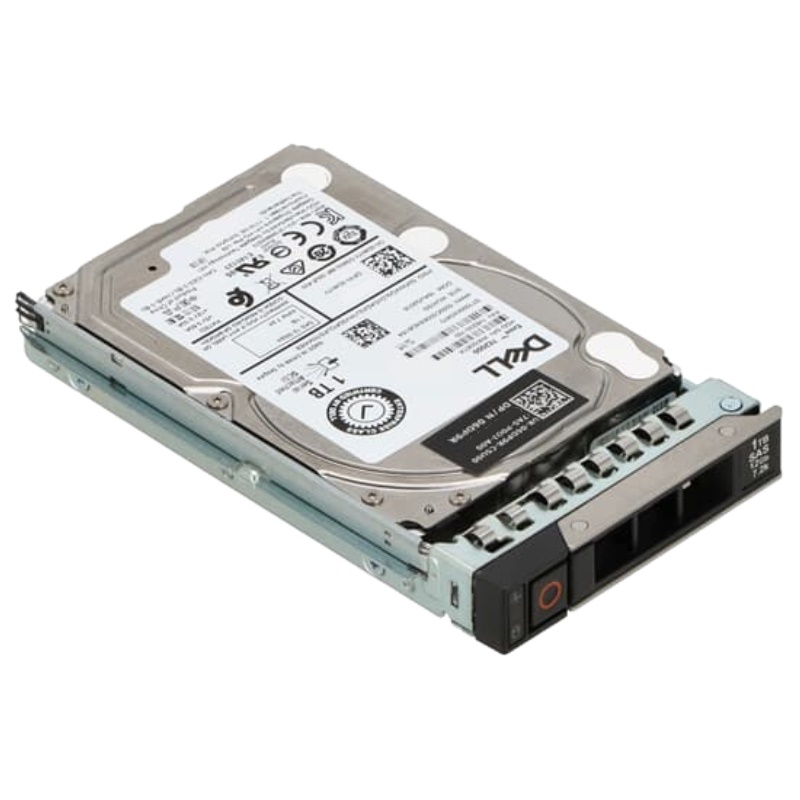


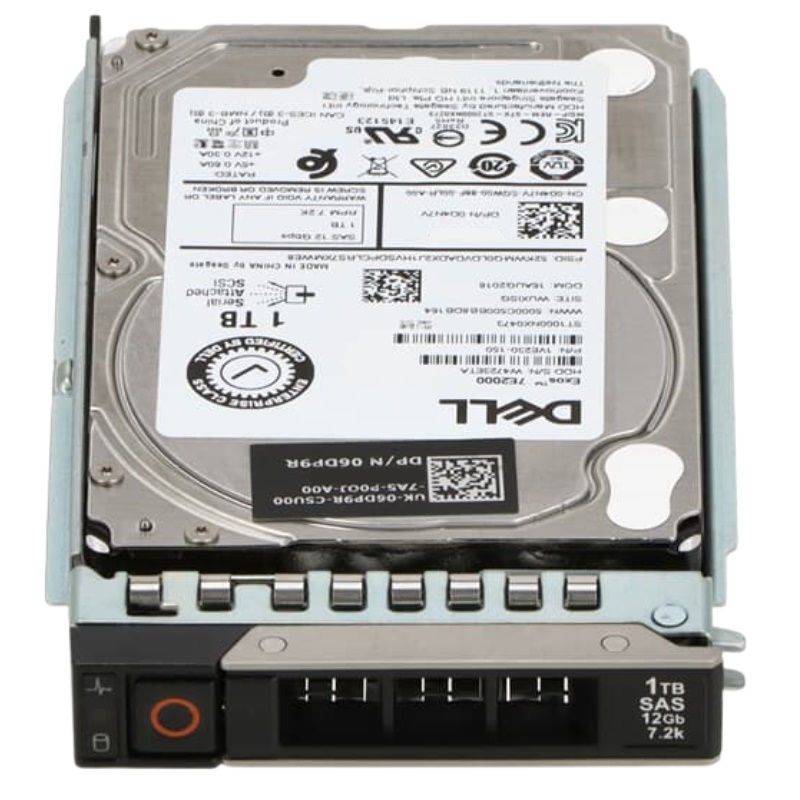
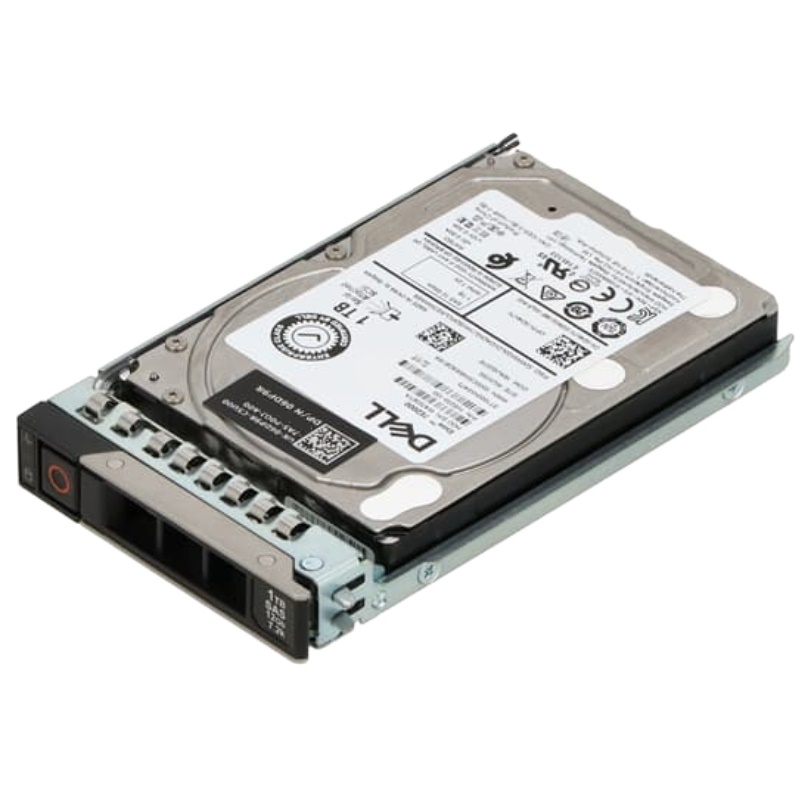
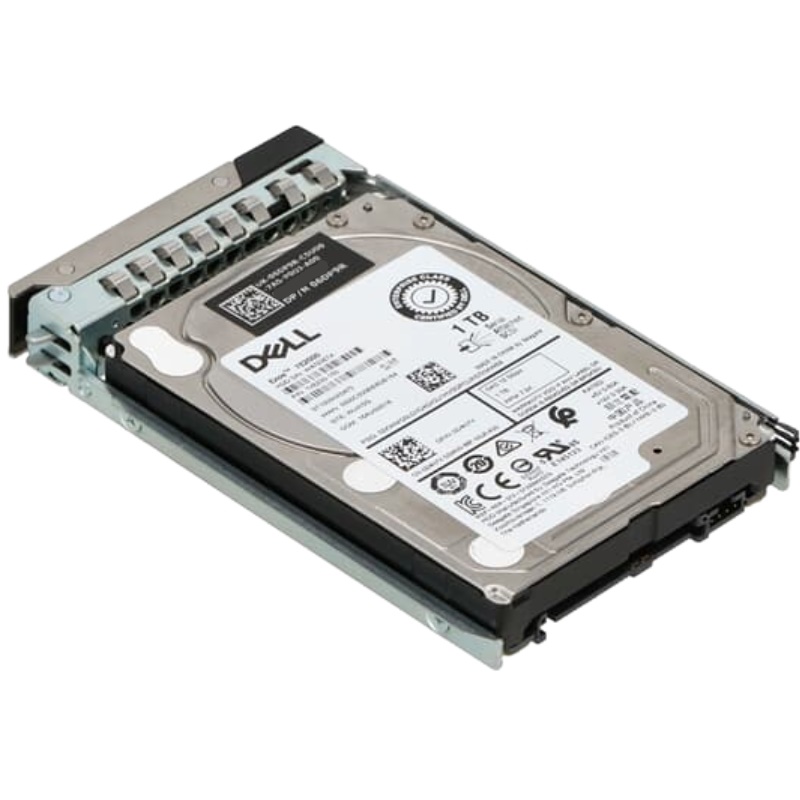
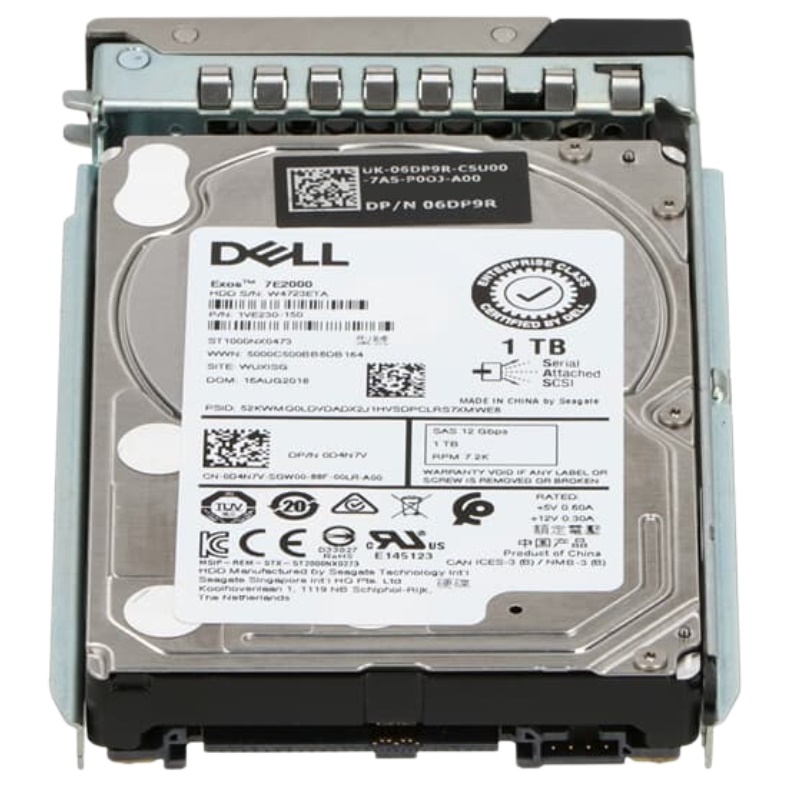
Dell VFV30 1TB 7.2K RPM Near-Line SAS-12GBPS SFF Form Factor Hot-Plug with tray for Poweredge Server Hard Disk Drive. Excellent Refurbished with 1 year replacement warranty
Experience enterprise-grade reliability with Dell’s 1TB Nearline SAS drive, engineered for seamless integration into PowerEdge servers. Designed for high-demand environments, this hot-swappable unit ensures minimal downtime and maximum efficiency.
While the above list highlights primary compatibility, this drive may also function with select MD PowerVault arrays and other Dell server models not explicitly mentioned.
The Dell VFV30 1TB 7.2K RPM Near-Line SAS (NL-SAS) 12Gbps SFF hot-plug hard disk drive (HDD) with tray is a purpose-built storage device engineered for modern PowerEdge server deployments that require a balance of capacity, cost-efficiency, and reliable sequential throughput. Designed as a near-line storage option, the VFV30 1TB SAS drive offers enterprise-minded features—such as 12Gbps SAS interface, small form factor (SFF) compatibility, hot-swap capability, and optimized firmware for RAID and server-class workloads—making it an ideal candidate for tiered storage, backup, archival, and large-file sequential read/write scenarios in data centers and remote office environments.
The 12Gbps Serial Attached SCSI (SAS) interface on the Dell VFV30 1TB drive enables substantially higher sustained sequential throughput compared with legacy 6Gbps SATA or older SAS generations. For data-center focused workloads such as continuous backups, large media file serving, or cold-tier video surveillance storage, the 12Gbps physical layer reduces I/O bottlenecks when drives are saturated, improves headroom for simultaneous streams, and provides robust error handling and multipath support when paired with enterprise-class HBA/RAID controllers in PowerEdge servers.
Classified as Near-Line SAS, the VFV30 1TB drive offers higher capacity per spindle while retaining SAS-class reliability, command set, and manageability. Unlike consumer SATA drives, NL-SAS devices are engineered for prolonged operational duty cycles and are better suited to always-on server contexts. The 1TB capacity per 2.5" SFF drive is particularly attractive where rack density and energy efficiency are priorities; it gives administrators a way to scale capacity without resorting to larger, slower archival media.
The 7,200 RPM rotational speed summarizes the drive’s design target: a compromise between the high IOPS of 10K/15K drives and the high capacity of slower spindles. For sequential-heavy workloads and large-block transfers, the VFV30 7.2K delivers consistent throughput that often translates to lower power consumption per TB. For mixed workloads, pairing VFV30 drives with a caching tier (NVMe SSD or higher-RPM SAS) can unlock smoother transactional performance.
The VFV30’s Small Form Factor (SFF) design (commonly 2.5") is optimized for high-density server chassis typical of modern PowerEdge models. Smaller form factor drives yield advantages in rack capacity and airflow management; server cooling systems can be tuned for more consistent thermal profiles across populated bays, helping with drive longevity and performance stability.
Hot-plug capability and the included drive tray make the VFV30 ideal for maintenance in live environments where downtime is costly. Administrators can replace, upgrade, or swap drives without powering down the server, facilitating faster drive replacements during failures or capacity expansions. The tray often includes a front-latch compatible with PowerEdge bay mechanics and provides proper alignment for the drive’s backplane SAS connector.
The Dell VFV30 1TB NL-SAS drive is typically qualified for a range of PowerEdge servers; compatibility lists vary by generation and chassis model. Using drives that are firmware-matched to Dell server controllers improves drive health reporting, SMART telemetry consistency, and RAID resiliency. When used in PowerEdge environments, the drive integrates with Dell management tools such as iDRAC and OMSA to surface predictive failure alerts and to perform proactive drive lifecycle management.
For SMB environments running file servers, email archiving, or virtual machine density where cost per GB matters, the VFV30 represents a balanced choice. Paired with a modest SSD caching tier, these drives can host less-latency-sensitive VMs and bulk storage while keeping upfront costs moderate.
In larger data centers, VFV30 drives are commonly used for capacity tiers—such as nearline backup repositories, cold object stores, or distributed file system nodes—where energy, density, and predictable sequential performance are essential. They also work well in secondary replica arrays for disaster recovery clusters.
NVMe SSDs dominate in low-latency, high-IOPS scenarios (databases, caching, high-concurrency VDI). The VFV30 NL-SAS excels in cost-effective bulk storage with reliable sequential throughput. Hybrid architectures combining NVMe/SAS layers often yield the best balance—flash for hot data, NL-SAS for cold/nearline data.
Higher RPM SAS drives provide superior random I/O and lower latency at the cost of higher power and lower capacity-per-spindle. Choose 10K/15K when transactional throughput is critical; use 7.2K NL-SAS like the VFV30 for capacity, energy efficiency, and sequential-heavy workloads.
In a converged environment, design VFV30 arrays as the secondary backup tier underneath an SSD-based primary backup cache. Use deduplication appliances or software-defined storage layers to compress and reduce the capacity footprint. Replicate across racks for redundancy and maintain a hot-spare policy for rapid rebuilds.
For continuous video recording appliances, VFV30 drives offer the sequential write performance and capacity needed for hours of high-resolution footage. Configure arrays with RAID 6 for redundancy and ensure adequate bandwidth on ingestion nodes to match camera streams.
In noise-sensitive deployments or densely populated racks, consider the acoustic profile of 2.5" NL-SAS drives. Use power management features in the server BIOS where appropriate, but balance aggressive spin-down strategies with the increased wear cycles that can occur from frequent spin-up/spin-down events.
Perform thermal mapping of racks and chassis, especially in fully populated configurations. Drives operating consistently above recommended temperatures show higher failure rates and may suffer reduced performance. Ensure unobstructed airflow and consider variable-speed fan profiles to maintain optimal drive temperatures.


 Contact Us
 Information
 Catalog
 Solid State Drives (SSD)
 Network Switches
 Hard Disk Drives
 HBA & Controllers
 PC & Servers
 PC & Server Memory
 CPU & Processors
 Network Routers
 Power Supplies
 Tape Drives & Libraries
 Network Devices
 Computer & Network Cables