(7% discount is applied at checkout)
Cart is empty
Your go-to destination for cutting-edge server products
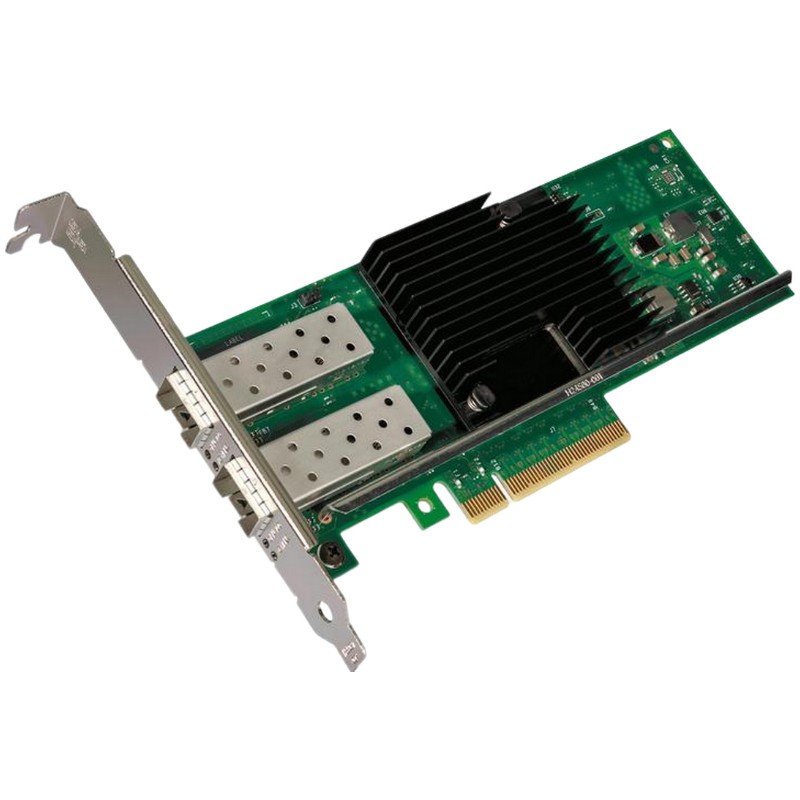


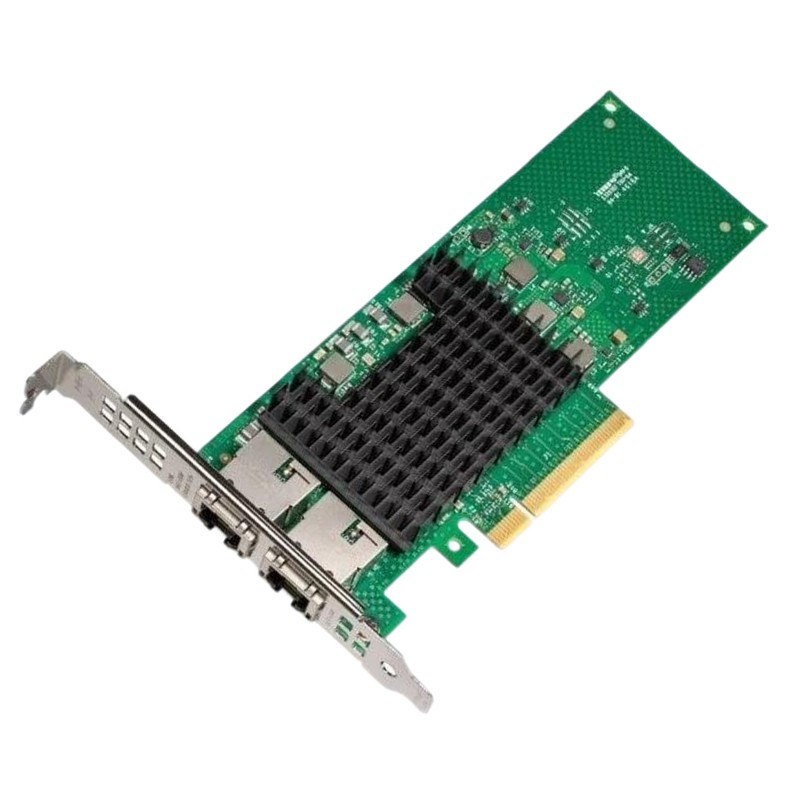
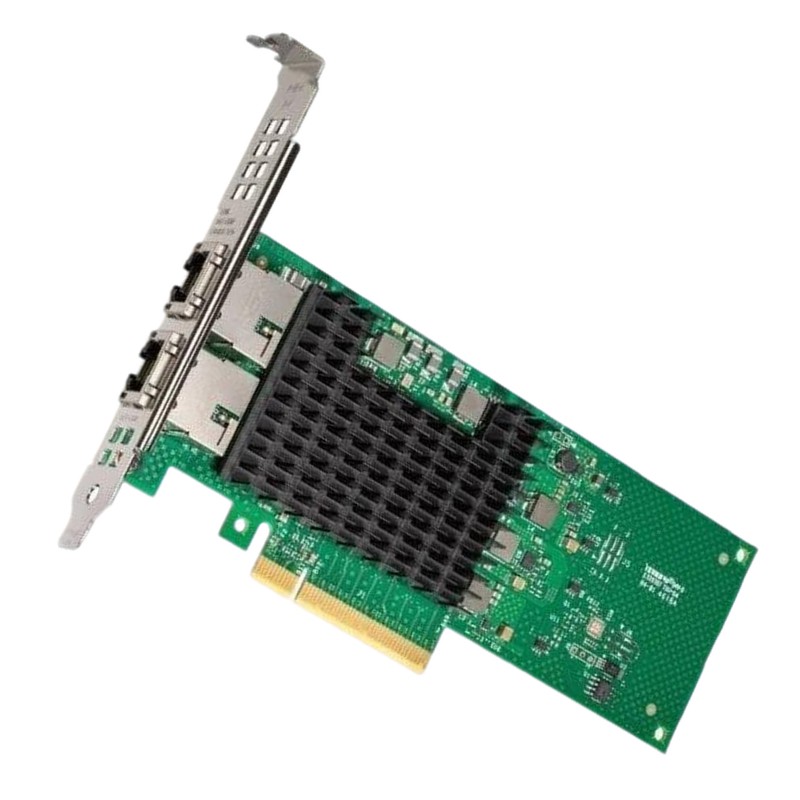
Intel E610XT2 PCI-E 4.0 X4 2 Ports 10GbE 5GbE 2.5GbE 1G Ethernet Network Adapter. Factory-Sealed New in Original Box (FSB) with 3 Years Warranty
Engineered for seamless integration and superior data throughput, the Intel E610XT2 network interface card provides a robust and adaptable connectivity solution for modern data centers and enterprise server environments. This adapter is designed to streamline infrastructure upgrades. Its intelligent auto-negotiation capability allows each port to automatically select the optimal operating speed—10Gbps, 5Gbps, 2.5Gbps, or 1Gbps—ensuring flawless compatibility with existing network hardware and facilitating a smooth, cost-effective transition to higher-speed networks.
The E610XT2 Intel PCI-E 4.0 X4 2 Ports 10GbE 5GbE 2.5GbE 1G Ethernet Network Adapter belongs to the performance segment of dual-port, multi-gigabit copper Ethernet adapters built for modern servers and workstations. It bridges legacy one-gigabit infrastructure and contemporary 10-gigabit distribution, enabling seamless upgrades without forklift changes to cabling plants. By combining PCI Express 4.0 bandwidth with two RJ-45 interfaces that negotiate 10G, 5G, 2.5G, and 1G link speeds, the adapter supports mixed-speed topologies, bursty east-west traffic in virtualized hosts, and latency-sensitive application flows across enterprise, cloud, and edge environments.
PCI Express 4.0 X4 connectivity doubles the per-lane throughput of previous-generation PCIe 3.0, providing a robust pipe for sustained multi-gigabit traffic. Under heavy virtualization or storage workloads, the combination of high-efficiency DMA engines, large receive/transmit queues, and intelligent interrupt moderation prevents the PCIe link from becoming a bottleneck. This architecture is particularly valuable when both ports run concurrently—one port may sustain 10G traffic to a top-of-rack switch while the other handles a 2.5G or 5G connection to a downstream aggregation device, with the adapter’s internal schedulers balancing queue depths and preserving latency budgets.
Each RJ-45 interface on the E610XT2 negotiates link speed automatically, supporting 10G, 5G, 2.5G, and 1G modes in accordance with IEEE 802.3 standards including 802.3an (10GBASE-T) and 802.3bz (NBASE-T). This flexibility allows staged migrations: a site may deploy 10G-capable switches in core/distribution tiers while access switches remain at 2.5G or 5G; the adapter will adapt on a per-port basis without manual intervention. For cabling, Cat6a is recommended for 10-gig links up to typical distances, while quality Cat5e or Cat6 may support 2.5G or 5G where 10G is not yet required. By leveraging common twisted-pair cabling and standard RJ-45 connectors, the adapter simplifies moves, adds, and changes and avoids specialty optics or DAC cable inventories.
Modern hypervisors and container platforms depend on efficient network virtualization. The E610XT2 class adapter supports Single Root I/O Virtualization (SR-IOV) to expose multiple virtual functions that map directly to guest operating systems, bypassing portions of the host networking stack and lowering per-packet CPU overhead. This is particularly effective for NFV workloads, microservices handling high request rates, and data plane components such as API gateways or service meshes. When SR-IOV is not desirable, para-virtualized drivers still benefit from RSS, MSI-X interrupt steering, and offloads that minimize context switches and reduce jitter for latency-sensitive transactions.
Security segmentation begins at the adapter. The E610XT2 class platform integrates VLAN tagging (IEEE 802.1Q), priority handling (802.1p), and receive/transmit filters that enforce network segmentation at the port level. When paired with switch MACsec or ACLs, administrators can establish application or tenant boundaries with minimal performance overhead. Hardware-assisted checksum validation, packet filtering, and programmable flow steering help mitigate malformed frames and provide deterministic handling of control traffic such as ARP, DHCP, and routing protocols.
Enterprise adoption depends on broad compatibility. The E610XT2 Intel PCI-E 4.0 X4 2 Ports 10GbE 5GbE 2.5GbE 1G Ethernet Network Adapter is designed to operate with mainstream Linux kernels, Windows Server releases, and popular hypervisors. Linux distributions recognize the adapter through mature Intel Ethernet driver families that expose ethtool controls for offloads, queue counts, and coalescing parameters. Windows environments benefit from advanced properties in the device manager for RSS, interrupt moderation, and VLAN tagging. VMware, Hyper-V, Proxmox, and other platforms can map SR-IOV virtual functions to guests, and orchestration frameworks may automate VF lifecycle to align with workload placement policies.
In video post-production suites, editors and colorists benefit from 5G or 10G links to shared NVMe NAS, cutting ingest times and enabling real-time collaboration on mezzanine codecs. Engineering teams running EDA or CAD projects can centralize datasets on high-throughput storage backends, with each workstation negotiating its optimal speed based on cable quality and switch capability. For DevOps pipelines, artifact repositories and container registries push and pull layers at multi-gigabit rates, dramatically reducing build times and improving developer velocity.
Edge nodes processing camera feeds, sensor telemetry, or transactional data require deterministic throughput with moderate latency. The E610XT2’s queueing model and interrupt moderation reduce CPU spikes, allowing more cycles for inference frameworks or rule engines running on the same host. With multirate ports, one interface can connect to an upstream 10G core while the other bridges a 2.5G device cluster, maintaining isolation and simplifying quality-of-service policy.
Virtual Desktop Infrastructure (VDI) benefits from higher link speeds during logon storms and profile synchronization. The adapter’s offloads accelerate SMB and HTTP/S traffic, while RSS distributes sessions across cores for steady responsiveness. In scenarios that mandate GPU virtualization, bandwidth headroom ensures that HDX or Blast Extreme streams remain fluid even during patch deployment windows.
Operational stability hinges on visibility. The adapter cooperates with standard telemetry protocols, exposing per-queue statistics, error counters, and flow control events. Administrators can monitor packet drops, ring buffer occupancy, and interrupt rates to detect microbursts or misconfigurations. Linux ethtool and Windows PowerShell cmdlets adjust coalescing thresholds, RSS hash policies, and maximum number of queues without rebooting, aligning NIC behavior with application characteristics. Exported metrics feed into observability stacks, where alerts can trigger remediation such as scaling additional application replicas or shifting traffic via load balancers.
Ethernet-based storage continues to expand in capability. With 10GbE available on copper and multirate fallbacks, the E610XT2 adapter handles iSCSI boot, SMB Direct substitutes that do not require specialized RDMA hardware, and NFSv4.2 workloads that thrive on higher bandwidth. For backup and archival strategies, 10G links reduce window duration and allow periodic full snapshots rather than incremental-only schemes. Media asset management systems, photo libraries, and analytics data lakes all benefit from consistent throughput and reduced CPU overhead during sustained transfer operations.
Downtime is costly. Dual ports allow resilient designs such as active-active LACP bonds or active-standby pairs split across access switches. Link state tracking and fast failover protect sessions when a switch or cable fails, while bonding drivers distribute flows for aggregate throughput when both links are healthy. For maintenance windows, traffic can be drained gracefully from one port while firmware updates or cabling changes occur on the other, preserving service continuity.
Thermal design and airflow-friendly heatsinks maintain stable operation in high-density servers. The adapter’s firmware exposes health indicators that infrastructure teams can poll periodically to catch anomalies before they cause incidents. Combined with proactive switch-side monitoring, this produces an end-to-end reliability posture appropriate for always-on services.
Broadcast and production studios increasingly rely on IP-based contribution and distribution. Editors exchange multi-gigabyte assets over SMB or NFS, transcoders push mezzanine files to render farms, and asset managers maintain nearline libraries on NAS. The adapter’s multi-gig rates allow teams to place processing where it is most efficient without shuttling drives or saturating legacy one-gig links. Scientific labs stream instrument data to on-premises compute nodes, where 10G pipes accelerate ingestion and preprocessing. Industrial sites deploy machine vision and quality assurance systems that move image batches to inference servers; the negotiated link speed adapts to switch capabilities present in each cell on the factory floor.
Standards compliance ensures that the E610XT2 integrates cleanly with campus and data center switch families across vendors. Autonegotiation and flow control interoperate with typical access configurations, while advanced deployments can enable LACP bonding, VLAN trunking, and QoS markings. Where switches provide PTP boundary clocking, the adapter’s time synchronization support reinforces precise logging. In mixed environments that include 2.5G PoE access switches, the host can uplink at 2.5G without risking errant power negotiation because the NIC is a consumer, not a provider, of power on copper—an important distinction when tracing link issues.
Form factor flexibility is essential for consistent fleet builds. The card typically ships with both low-profile and full-height brackets to fit slim 1U chassis and tower workstations alike. Heatsinks are oriented for front-to-back airflow found in rack servers, and component selection targets high mean time between failures even in elevated ambient temperatures. Status LEDs present clear link and activity indicators for on-site technicians, speeding rack-level validation during turn-ups and minimizing mean time to repair when issues arise.
Many organizations embark on phased migrations. The E610XT2 supports a classic three-stage pattern. First, replace legacy adapters with multi-gig-capable NICs while keeping existing switches; hosts jump from 1G to 2.5G or 5G immediately where cabling supports it. Second, upgrade aggregation switches to 10G and rehome key servers to take advantage of higher uplink speed; mixed rates coexist gracefully. Third, extend 10G across access layers as budgets allow, enabling full-line-rate workflows for everyone who needs them. Throughout, standard copper cabling and consistent driver models reduce risk and keep change windows short.
Extending lifecycle without sacrificing performance supports sustainability goals. By retaining copper cabling and embracing multirate negotiation, organizations avoid unnecessary material consumption. Higher link speeds shorten job durations, which lowers cumulative energy use per workload. Driver and firmware stability reduces hardware churn, and dual-port density postpones the need for additional PCIe cards. When systems eventually retire, standards-based RJ-45 components integrate easily into secondary roles, such as lab benches or test beds, maximizing the useful life of the investment.
While many adapters expose one multi-gig port, the E610XT2 delivers two, doubling connection options per slot. PCIe 4.0 x4 bandwidth avoids contention when both ports operate at high rates. Mature, widely supported drivers streamline enterprise rollouts, and comprehensive offloads minimize CPU utilization under mixed workloads. Compatibility with virtualization technologies makes the adapter suitable for cloud hosts, while predictable copper media support across 1G, 2.5G, 5G, and 10G ensures smooth transitions in heterogeneous network environments.
When planning purchases, teams consider bracket types, spare quantities for rapid replacement, and alignment with server models in the fleet. Multisite organizations standardize on a small set of adapter SKUs to simplify imaging and driver repositories. Staging labs validate performance with representative switches at 1G, 2.5G, 5G, and 10G, confirming autonegotiation and link stability on common cable lengths. Load generation tools exercise offloads and queue settings under realistic traffic patterns—small control packets mixed with large payloads—to establish performance baselines that guide production rollouts.
Clear operational documentation ensures successful long-term adoption. Admin guides should include diagrams for common bonding configurations, VLAN mappings for segmented networks, PTP setup steps for time-sensitive applications, and storage performance profiles using different MTUs. Training sessions walk through driver installation, firmware updates, and ethtool or PowerShell tuning so that every administrator can diagnose and optimize performance independently.
Technological change is constant, but the right abstractions endure. By supporting 1G through 10G over copper within a single dual-port card, the E610XT2 Intel PCI-E 4.0 X4 2 Ports 10GbE 5GbE 2.5GbE 1G Ethernet Network Adapter anchors a long-lived strategy: deploy today for immediate gains, evolve switching tiers over time, and retain consistent operational practices across generations. Whether the environment is a high-density server cluster, a creative studio, a research lab, or a branch network that prizes simplicity, the adapter’s blend of throughput, efficiency, and flexibility positions it as a cornerstone of modern, pragmatic Ethernet design.
Dual RJ-45 interfaces negotiate 10G/5G/2.5G/1G speeds with automatic detection, simplifying mixed-speed topologies during staged migrations. PCIe 4.0 x4 provides ample host bandwidth, and hardware offloads—TSO/LRO, checksum, RSS, and flow steering—deliver strong throughput with reduced CPU utilization. SR-IOV enables direct assignment to virtual machines or containers, while VLAN, QoS, and rate limiting integrate neatly with upstream switch policies for secure multi-tenant operation. PTP compatibility supports precise timekeeping where application logs and schedules demand accuracy. Mature driver ecosystems across Linux and Windows, plus hypervisor support, accelerate deployment and standardize management at scale.


 Contact Us
 Information
 Catalog
 Solid State Drives (SSD)
 Network Switches
 Hard Disk Drives
 HBA & Controllers
 PC & Servers
 PC & Server Memory
 CPU & Processors
 Network Routers
 Power Supplies
 Tape Drives & Libraries
 Network Devices
 Computer & Network Cables