(7% discount is applied at checkout)
Cart is empty
Your go-to destination for cutting-edge server products
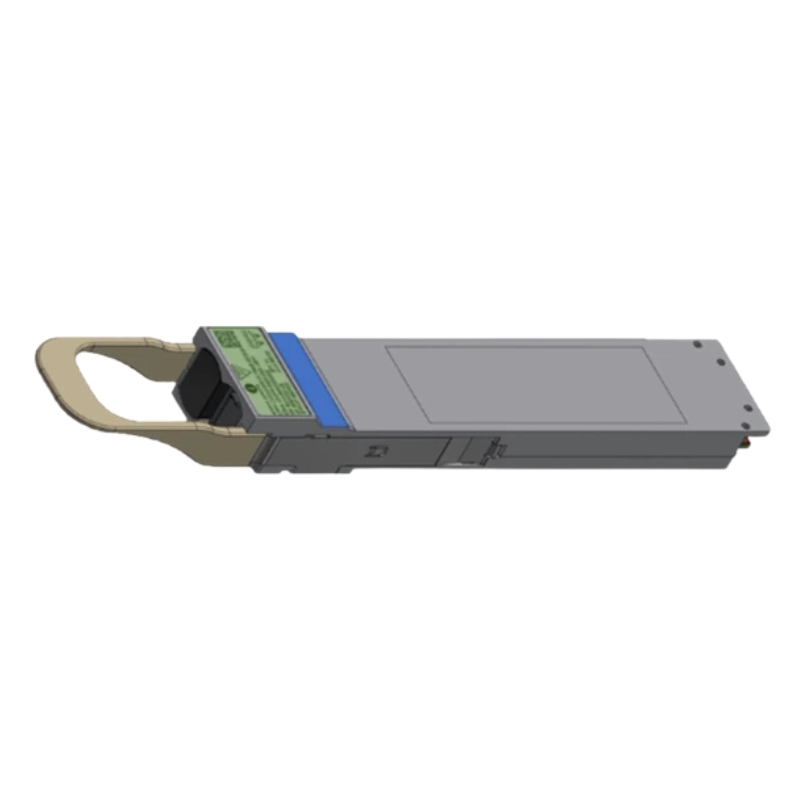


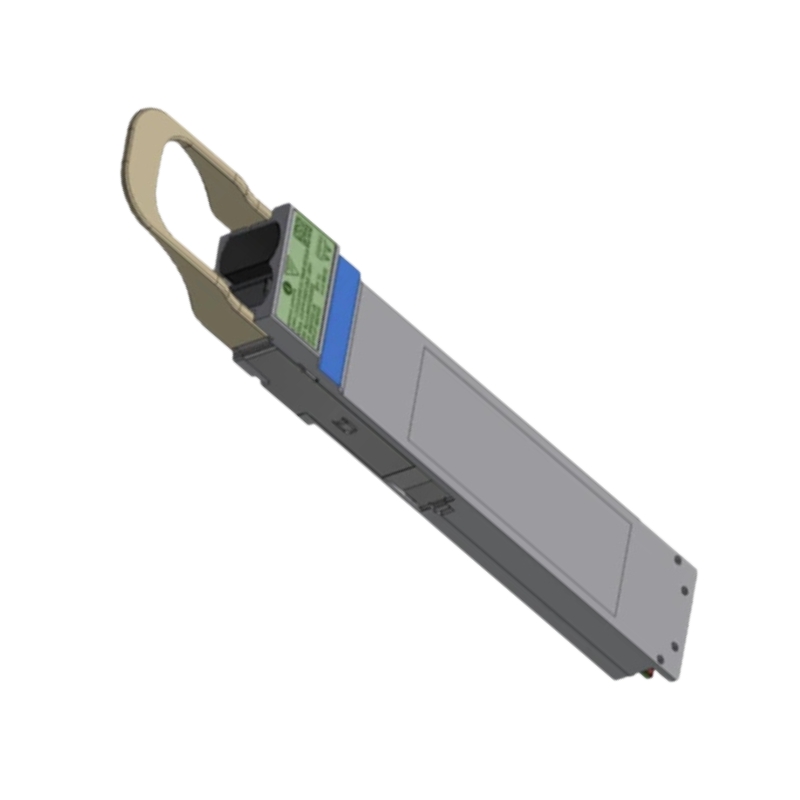
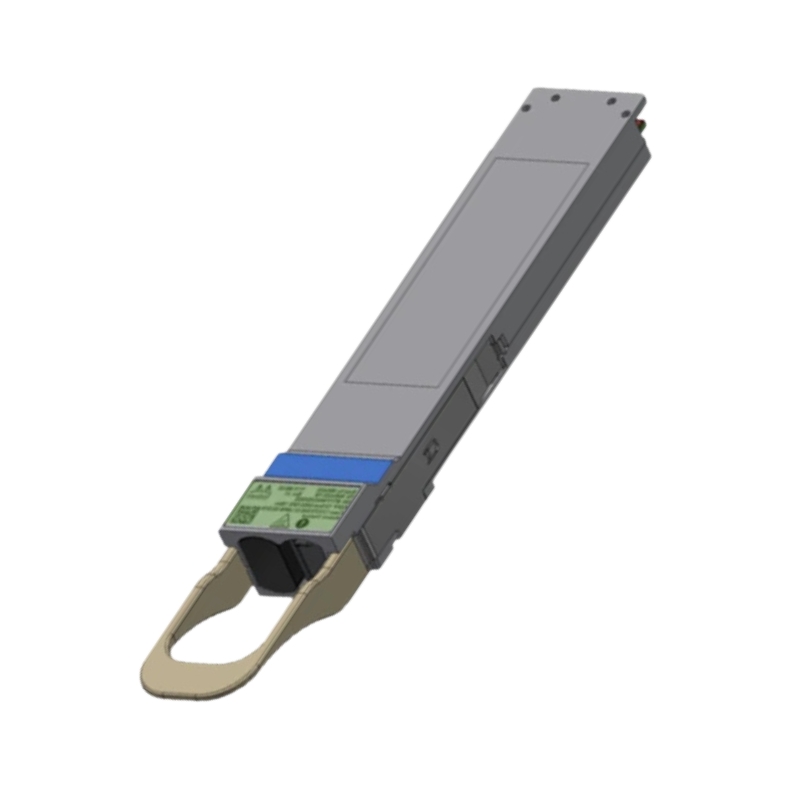
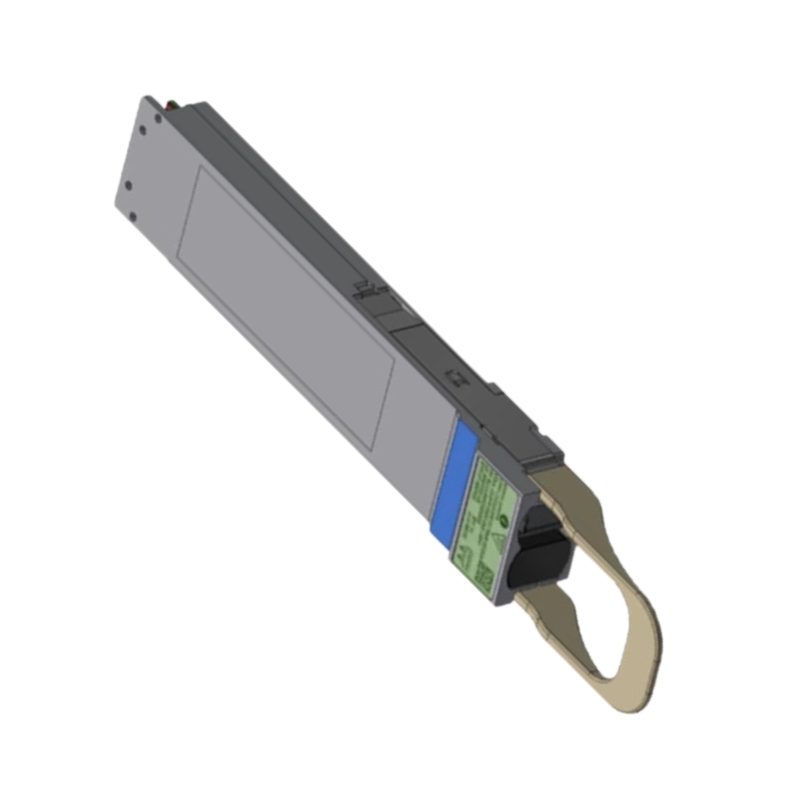
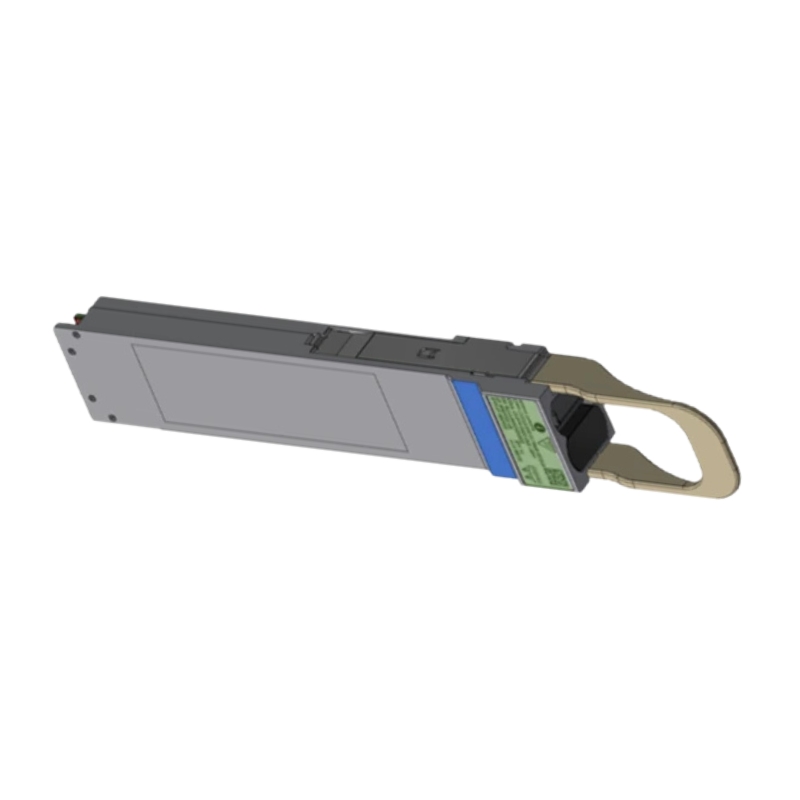
Nvidia MMA4Z00-NS400-T OSFP MPO12 Single Port 400GBPS APC 850Nm MMF Up to 50m Flat Top Transceiver. New Sealed in Box (NIB) with 3 Years Warranty
The NVIDIA MMA4Z00-NS400-T is a high-performance 400Gbps Ethernet optical transceiver designed for short-reach, multimode fiber connectivity. It operates as a single-port OSFP solution that leverages MPO-12/APC optical connectors, delivering reliable performance for next-generation data centers, AI workloads, and HPC environments. Its flat-top OSFP housing integrates seamlessly with NVIDIA’s ConnectX-7 cages, ensuring optimized cooling through advanced heat sink technology.
Built for scalability, the NVIDIA MMA4Z00-NS400-T OSFP module ensures reduced latency and dependable connectivity in bandwidth-intensive applications. The transceiver is engineered for cloud computing, artificial intelligence frameworks, and high-performance clusters where robust throughput is mandatory. The riding heat sink mechanism integrated with OSFP flat-top casing enhances airflow and cooling efficiency, which helps maintain system stability even in dense rack deployments.
The MPO-12/APC connector in this module guarantees precise alignment, signal stability, and reduced optical reflection. Its angled polish construction ensures it is not interchangeable with UPC connectors, eliminating risks of cross-compatibility issues. The green connector housing with aqua-colored fibers and tan pull-tabs signify its multimode optic classification, ensuring easy identification for IT professionals.
Data centers prioritize energy-efficient networking hardware, and the NVIDIA MMA4Z00-NS400-T delivers with low maximum power consumption. Operating at only 8.5W under full load and as low as 5.5W when functioning in 200GbE mode, it balances performance with sustainability. Its efficient power draw reduces thermal loads, lowering cooling requirements and contributing to overall infrastructure cost savings.
A distinctive advantage of this OSFP transceiver is its ability to switch between 400GbE and 200GbE modes. When linked with a 1:2 splitter fiber cable, only two channels remain active, automatically adjusting the link speed to 200GbE. This intelligent flexibility extends the module’s usability across diverse networking environments.
Supercomputing facilities depend on low-latency links to maximize compute output. By deploying NVIDIA’s OSFP optics, enterprises can streamline data exchange between compute nodes while ensuring long-term operational stability.
NVIDIA subjects each module to extensive manufacturing and quality control processes. Compliance with OSFPMSA, RoHS standards, and CMIS 4.0 protocols guarantees industry-standard compatibility. Furthermore, Class 1 laser certification ensures safe usage without risks to operators.
Designed for challenging data center conditions, this module operates within a wide temperature range of 0°C to +70°C. Its rugged build quality ensures long service life with consistent performance, even under continuous heavy workloads.
The NVIDIA MMA4Z00-NS400-T is a high-speed 400 Gbps single-port OSFP optical transceiver designed for modern data center fabrics that demand extreme bandwidth density, predictable latency, and energy-efficient performance. Engineered for 850 nm multimode fiber (MMF) links and built around a flat-top OSFP mechanical profile, this module terminates to an MPO-12 APC connector and supports reaches of up to 50 m under the specified fiber and channel conditions. Its robust construction, thermal characteristics, and interoperability posture make it an excellent fit for spine-leaf architectures, AI/ML training clusters, NVLink-orchestrated GPU pools, high-performance storage backbones, and cloud-scale virtualization fabrics.
As a category, 400G OSFP multimode transceivers like the MMA4Z00-NS400-T deliver a compelling balance of throughput, port density, and power consumption for short-reach intra-data-hall connectivity. They enable rapid east-west traffic patterns across top-of-rack (ToR), leaf, and spine layers; fast data ingest into GPU servers; and streamlined aggregation for NVMe-over-Fabrics, RoCEv2, or other latency-sensitive overlays. This description explores the technology stack, design attributes, installation guidance, compatibility considerations, and lifecycle practices to help architects and operators select, deploy, and maintain NVIDIA’s 400G OSFP MMF solutions with confidence.
400G OSFP multimode optics consolidate multiple electrical lanes from the host into a single pluggable port. On the electrical side, the OSFP edge connector seats into switches or NICs designed to drive 400G per port; inside the module, integrated DSP/SiPh components condition and map the traffic onto a set of 850 nm multimode optical paths. The MPO-12 APC interface concentrates multiple fibers into one compact trunk, streamlining panel density and field handling while maintaining low insertion loss and improved reflectance control.
For short-reach data center distances, 850 nm MMF remains a cost-effective choice due to high-yield manufacturing, familiar installation practices, and widespread availability of pre-terminated cabling. A 50 m reach target aligns with the majority of leaf-to-spine and row-to-row runs in contemporary halls, especially when designed around hot-aisle/cold-aisle layouts and top-of-rack compute blocks.
The OSFP flat-top shell provides a thermally efficient envelope with a broad surface area for heat dissipation and an insertion geometry that supports sturdy latching. Compared to lower-power small-form modules, OSFP affords higher power budgets, enabling advanced DSP features and optics that would otherwise be thermally constrained. The flat-top variant further improves contact with module cages and airflow directionality, benefiting locations adjacent to high-power GPUs and switch ASICs where chassis exhaust temperatures can be elevated.
The MMA4Z00-NS400-T category specifies an MPO-12 APC connector interface on the optical side. MPO-12 groups twelve fibers in a single multi-fiber ferrule, simplifying routing compared to discrete duplex jumpers. The APC (angled physical contact) polish geometry reduces back-reflections at the interface, contributing to link stability and optical return loss (ORL) performance. In practice, this means more consistent link margins and fewer transient errors, particularly important in dense patching environments where connectors may be mated and unmated during moves, adds, and changes (MACs).
Operating around 850 nm, the module targets multimode infrastructure common in short-reach enterprise and hyperscale deployments. Under the stated specification, the module supports up to 50 m reach when paired with compatible MMF cabling and channel budgets. This reach bracket covers typical rack-to-rack and row-to-row interconnects within the same data hall. For architects planning new rows or pods, cabling pathways can be arranged to preserve margin within this distance while allowing service loops and slack management in overhead trays or underfloor raceways.
Effective operations rely on visibility. The MMA4Z00-NS400-T class modules typically expose diagnostics such as case temperature, supply voltage, TX bias current, TX optical power, and RX optical power. By integrating module health into switch or NIC telemetry, operators can detect slow-drift conditions (e.g., rising loss due to dust accumulation), proactively schedule maintenance, and correlate link events with physical layer metrics during change windows.
AI/ML clusters thrive when network underlay bandwidth matches collective GPU demand. For pods of GPU-accelerated servers, 400G uplinks from each node to a low-oversubscription leaf reduce synchronization times during distributed training. Short-reach 850 nm modules are ideal within the pod, where distances remain within 50 m. When pods scale beyond a single row, consider structured trunk routes that keep path lengths—and thus loss budgets—consistent across nodes to ease deterministic job scheduling.
In compact data halls, leaf-to-spine links seldom exceed 50 m, even when routed through tidy overhead trays. The MMA4Z00-NS400-T suits these short spans, lowering cost per 400G port compared to long-reach single-mode solutions and simplifying inventory by leveraging standardized MPO-12 APC trunks. For operators deploying multi-pod leaf layers, consistent MPO polarity and pinout policies avoid operational mismatches and accelerate turn-ups during maintenance windows.
Structured cabling choices significantly influence performance and serviceability. MPO-12 APC trunks and cassettes should be matched for polarity (Type A, Type B, or specific vendor schemas). Keep documentation at the panel for quick verification during field changes. Use low-loss MPO components to preserve margin; each mated pair introduces insertion loss, so design channels with the fewest necessary interconnects. Dust caps must remain on unused ports—APC geometry is resilient to reflections, but debris can still impair coupling efficiency.
Power envelopes for 400G OSFP modules are engineered for balance: enough budget for DSP features while remaining within chassis cooling capacity. The flat-top lid improves convection and conduction paths to the cage, supporting stable temperatures under sustained line-rate operation. Combined with compact 1RU/2RU switches carrying dozens of 400G ports, operators can realize high Gbps per RU density without resorting to exotic cooling schemes.
While the optical module contributes only a fraction of end-to-end latency, clean signal integrity and predictable link training reduce jitter that can otherwise compound in multi-hop paths. For GPU collective operations or real-time media pipelines, such predictability translates to steadier job pacing and fewer tail latencies. Properly cleaned connectors, verified polarity, and sound fiber management all contribute to consistent performance.
The MMA4Z00-NS400-T class is designed for hosts with 400G OSFP cages, such as high-end data center switches and NVIDIA-based or third-party NICs that expose 400G ports. Interoperability is bounded by physical media (MMF at 850 nm), connectorization (MPO-12 APC), and supported link coding/management as implemented by host firmware and module logic. Always align firmware baselines and enable module monitoring in the NOS for clean handshakes, proper alarm reporting, and accurate inventory capture.
With rows separated by modest aisles, leaf switches can uplink to a pair of spines using 400G OSFP MMF across overhead trays. Cable lengths typically land between 10–35 m, leaving clear margin against the 50 m target. MPO-12 APC trunks reduce the number of individual patch points and enable neat, labeled bundles that correspond to switch port ranges.
In GPU pods, each accelerator server presents one or more 400G ports to the leaf. The intra-pod links remain short and orderly, often routed within the same row. The MMA4Z00-NS400-T helps keep pod wiring uniform while delivering the bandwidth needed for all-reduce operations and distributed training gradients.
Storage racks placed adjacent to compute racks benefit from short MMF trunks to leaf or aggregation switches. 400G uplinks consolidate multiple 100G flows, simplifying LAG topologies and enabling smooth scale-out as storage nodes are added.
Modules in this category are manufactured to stringent quality and reliability standards typical for hyperscale and enterprise environments. On arrival, verify tamper seals and inspect physical condition. Before service integration, run light-level checks and a basic traffic pass to ensure error-free operation. For large rollouts, sample testing per lot can catch handling or shipping anomalies early.
High-density 400G ports reduce the number of physical connections needed to achieve targeted bandwidth, trimming material usage and simplifying cabling pathways. Efficient thermal design in flat-top OSFP modules helps the overall system meet power and cooling objectives without exotic approaches, contributing to greener, more sustainable data center operations.
NVIDIA’s networking portfolio is optimized for data-intensive computing. The MMA4Z00-NS400-T module complements NVIDIA switches and adapters with consistent performance, mature diagnostics, and mechanical robustness tuned for accelerator-dense racks. Selecting this module for short-reach links aligns physical infrastructure with the performance envelope of cutting-edge GPU clusters and storage fabrics while managing cost and operational complexity.
Keep every mated interface pristine. Even minor contamination on an MPO ferrule can elevate insertion loss across several fibers simultaneously. Use lint-free wipes and approved fluids, followed by an MPO-specific cleaner. Inspect, clean, inspect—then connect. Protect all unused ports with dust caps, and avoid touching ferrules. Maintain gentle cable arcs above minimum bend radius through trays and ladder racks.
Adopt a consistent naming scheme for trunks (row-rack-panel-position), module serials, and switch port IDs. Place QR codes on panel doors linking to live documentation so technicians can validate polarity and route plans in seconds. Accurate records shorten mean-time-to-repair and reduce the risk of accidental service impact during MACs.
Build with growth in mind: reserve panel space, pre-pull spare trunks to common aggregation points, and leave service loops where permissible. Within a 50 m design envelope, incremental capacity is straightforward—add modules and patch additional trunks without re-architecting the plant. This modular approach accelerates project timelines and keeps change windows short.
While optics themselves do not enforce encryption, the reliability of physical links underpins higher-layer security frameworks. Stable 400G paths ensure consistent performance for MACsec or overlay encryption endpoints. Physically secure patch fields, implement access controls for cabling closets, and log all physical changes against tickets to maintain auditability.
Provide hands-on labs where staff practice cleaning MPO-12 APC connectors, verifying polarity with visual tools, and interpreting DOM metrics. Familiarity reduces handling mistakes and speeds up troubleshooting when time is critical.
Track module age, insertion cycles, and environmental conditions in your asset system. Establish criteria for proactive replacement where optics see frequent mate/demate cycles or elevated thermal stress. A considered lifecycle plan prevents unplanned downtime and smooths budget forecasting.


 Contact Us
 Information
 Catalog
 Solid State Drives (SSD)
 Network Switches
 Hard Disk Drives
 HBA & Controllers
 PC & Servers
 PC & Server Memory
 CPU & Processors
 Network Routers
 Power Supplies
 Tape Drives & Libraries
 Network Devices
 Computer & Network Cables