(7% discount is applied at checkout)
Cart is empty
Your go-to destination for cutting-edge server products
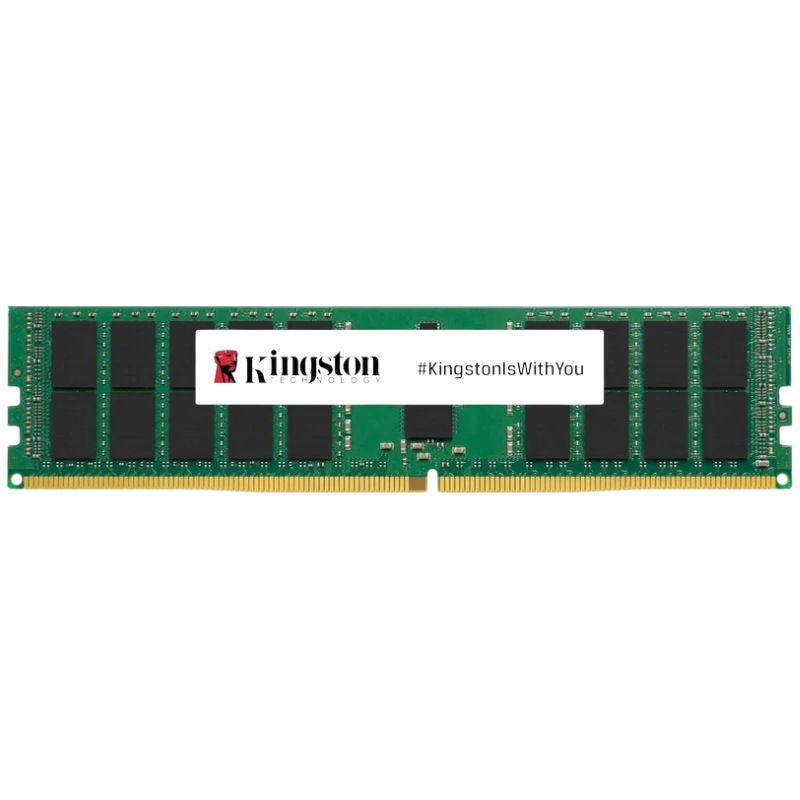


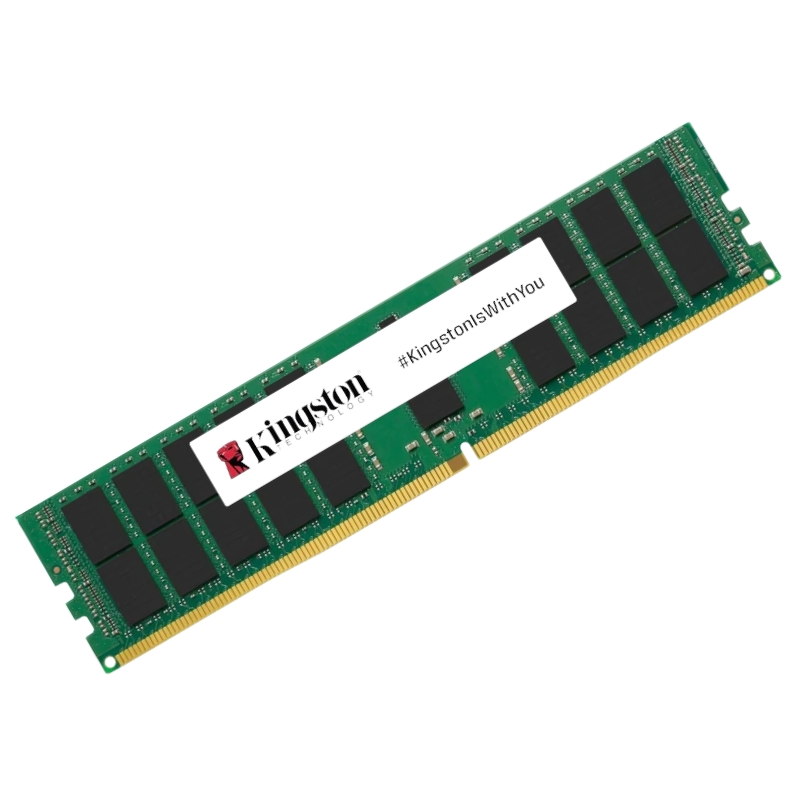
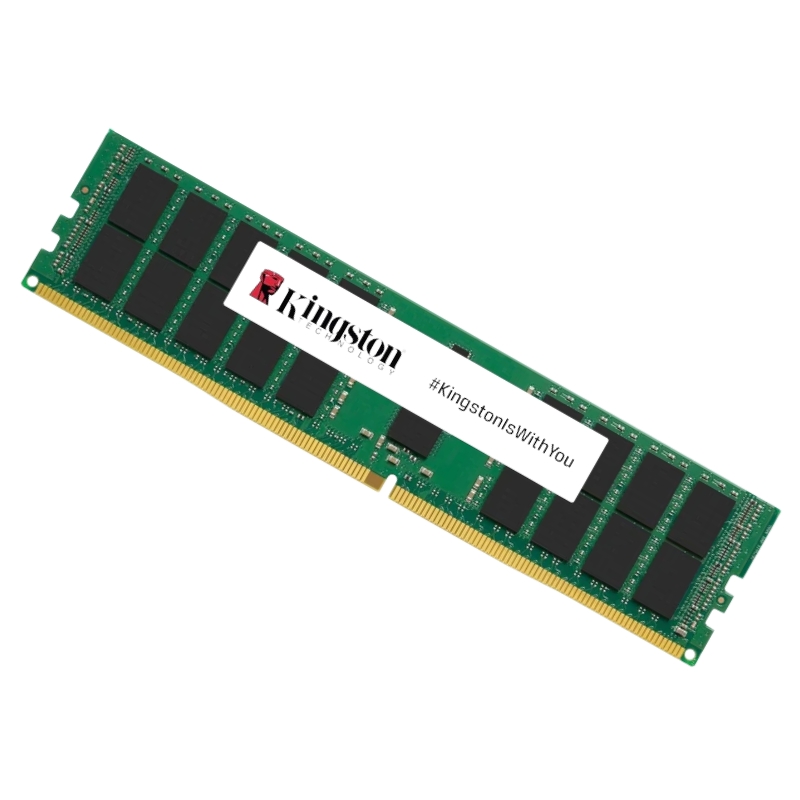
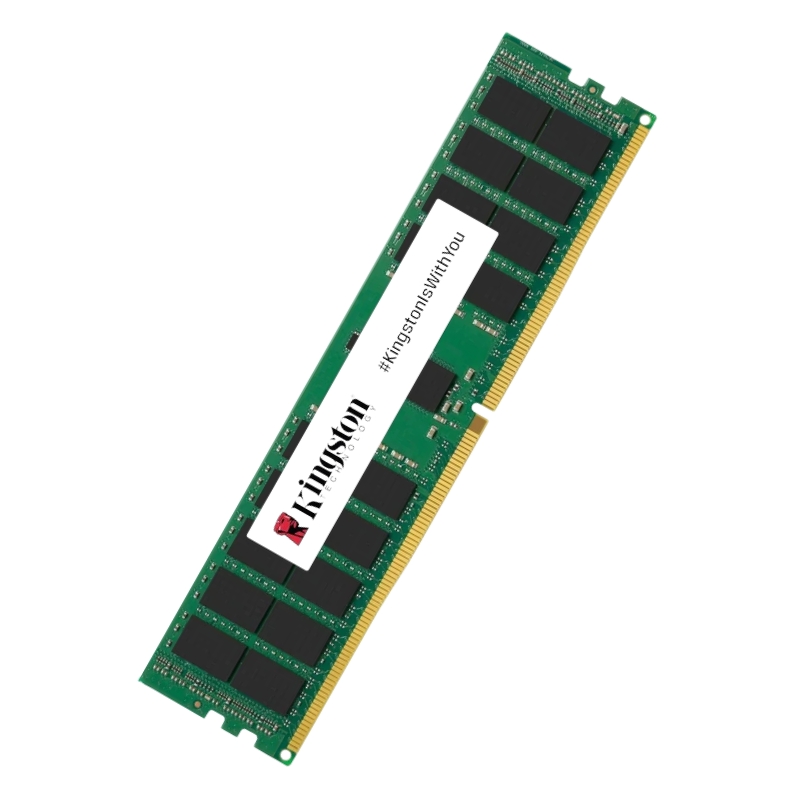
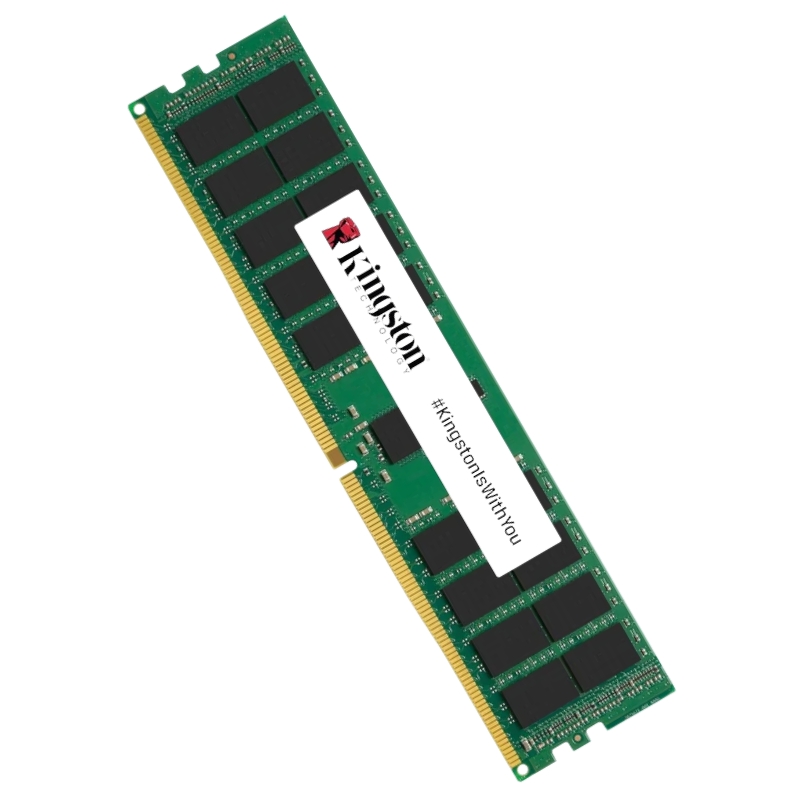
KSM56R46BS8PMI-16HAI Kingston16GB(1x16GB) DDR5 5600MHz Pc5-44800 Single Rank X8 SDRAM 1.1v Cl46 ECC Registered 288-pin Hynix A Renesas/idt DIMM Memory Module. New Sealed in Box (NIB) with 3 Year Warranty
The Kingston KSM56R46BS8PMI-16HAI is part of Kingston's high-performance DDR5 memory lineup, designed to meet the rigorous demands of modern enterprise servers and workstations. DDR5 memory represents the next generation of memory technology, offering higher bandwidth, improved power efficiency, and enhanced reliability compared to DDR4. These modules provide robust performance for compute-intensive applications, virtualization, and large-scale data processing environments.
The Kingston KSM56R46BS8PMI-16HAI represents a significant advancement in server memory technology, engineered for reliability, performance, and data integrity in mission-critical environments. This 16GB DDR5 ECC Registered module is designed to meet the rigorous demands of modern data centers, cloud infrastructure, and high-performance computing (HPC) applications. Utilizing high-quality Hynix A-die DRAM components and Renesas/IDT register clock drivers, this module ensures optimal signal integrity and stability in multi-DIMM configurations, making it an essential component for servers requiring maximum uptime and error-free operation.
At its heart, this module adheres to strict JEDEC standard specifications, ensuring broad compatibility and predictable performance within qualified server systems. The core architecture is defined by its adherence to the DDR5 standard, which introduces fundamental shifts from previous generations, splitting the module into two independent 32-bit subchannels. This design effectively increases memory concurrency and improves efficiency for multi-threaded workloads.
Understanding Kingston's naming convention reveals the module's key attributes. 'KSM' identifies it as a Kingston Server Memory product. '56' denotes the data rate of 5600 Megatransfers per second (MT/s). The 'R' signifies that this is an ECC Registered (RDIMM) module. '46' indicates the CAS Latency (CL) of 46 cycles at the base speed. 'BS8' refers to the 8Gb DRAM die revision and organization. 'PMI' points to the presence of a PMIC (Power Management Integrated Circuit). '16H' confirms the capacity is 16GB. 'AI' is an internal code often associated with specific component sourcing, in this case, confirming the use of Hynix A-die ICs and Renesas/IDt components.
This module conforms to the DDR5 SDRAM standard, specifically the PC5-44800 classification. The "5600MHz" refers to the module's data rate of 5600 MT/s, which translates to a peak theoretical bandwidth of 44.8 GB/s per module (calculated as 5600 MT/s * 64-bit data bus / 8 bits per byte). This represents a significant leap over DDR4-3200's 25.6 GB/s, providing the headroom needed for CPU cores with increased core counts and bandwidth-hungry applications.
With a capacity of 16GB (1x16GB), this module utilizes high-density 16Gb DRAM chips. It is configured as a Single Rank (1R) module, meaning all DRAM chips on one side of the PCB are accessed as a single logical unit by the memory controller. Single-rank designs often allow for higher achievable frequencies and better signal integrity compared to dual-rank modules at the same density, as the electrical load on the memory channel is reduced. The "x8" notation refers to the organization of the individual DRAM chips, indicating they have an 8-bit wide data interface internally, a common and efficient configuration for server modules.
Operating at a nominal voltage of 1.1V, DDR5 offers improved power efficiency over DDR4's typical 1.2V. However, the true innovation lies in the relocation of the voltage regulator from the motherboard to the memory module itself, enabled by the onboard Power Management Integrated Circuit (PMIC).
The inclusion of a Renesas (formerly Integrated Device Technology, IDT) PMIC is a hallmark of a quality server DIMM. This component transforms the 12V supply from the server power rail into the precise voltages required by the DRAM (VDD, VDDQ, VPP). This localized regulation improves power delivery efficiency, reduces noise, and allows for finer-grain power control and monitoring. The PMIC enhances the module's stability, especially during power transitions and under heavy load, and is a critical differentiator for enterprise-grade memory.
In server environments, data corruption is not an option. The KSM56R46BS8PMI-16HAI incorporates a multi-layered approach to error detection and correction, going beyond the capabilities of standard unbuffered memory.
ECC is a non-negotiable feature for critical systems. It works by adding extra bits (check bits) to each data word. As data is written to memory, an algorithm calculates and stores these check bits. Upon reading the data, the algorithm recalculates the check bits and compares them to the stored ones. This allows the memory controller to detect and, most importantly, correct single-bit errors on-the-fly without any system interruption. It can also detect (but not correct) multi-bit errors within the same data word.
The "Registered" or "RDIMM" designation indicates the presence of a register (or buffer) between the memory controller and the DRAM chips. This register buffers the command and address signals, reducing the electrical load on the controller. This allows servers to support a much higher number of memory modules per channel (typically 2 for unbuffered vs. 4-8 for registered) without degrading signal integrity. While it adds a minimal cycle of latency, the benefit is vastly increased memory capacity and stability in multi-DIMM configurations, which is the standard in server deployments.
As a DDR5 module, it also benefits from the inherent On-Die ECC feature of the DDR5 specification. This is an additional, internal layer of error correction that occurs within each individual DRAM chip. ODECC handles small, transient errors that occur inside the chip's core array, scrubbing them before they can propagate to the system-level ECC. This two-tiered approach (On-Die + Module-level ECC) significantly improves the overall robustness and reduces the raw bit error rate (RBER) of the memory subsystem.
The module uses the 288-pin DDR5 DIMM form factor. It is crucial to note that while physically similar in pin count to some desktop DDR5 DIMMs, the key notch position is different, preventing accidental insertion into an incompatible motherboard. The server-grade PCB features a 10-layer or greater design with enhanced trace routing, dedicated power and ground planes, and superior impedance control. This careful engineering minimizes crosstalk and electromagnetic interference (EMI), which is paramount for maintaining signal integrity at high data rates in the densely packed, high-vibration environment of a server chassis.
Memory performance is a balance of bandwidth (speed) and latency (response time). The timing parameters, often expressed as a series of numbers (e.g., CL46-45-45), dictate the latency of various memory operations.
The primary timing for this module is CAS Latency (CL) 46. This represents the number of clock cycles between the memory controller issuing a read command and the first piece of data being available. At 5600MT/s, a clock cycle is approximately 0.357 nanoseconds. Thus, the absolute CAS latency is roughly 46 * 0.357 ns = 16.4 ns. While this absolute latency is comparable to high-speed DDR4, the vastly increased bandwidth is the primary benefit. Other key primary timings (tRCD, tRP) are also typically at 45 cycles, working in concert with CL to define the core access delays.
Beyond the primary timings, a host of secondary and tertiary timings (such as tRAS, tRC, tRFC, tFAW) govern refresh cycles, row activation, and bank management. On a server RDIMM like the Kingston KSM56R46BS8PMI-16HAI, these timings are pre-configured by the SPD to JEDEC-recommended values that prioritize absolute stability and compatibility over aggressive tuning. The tRFC (Refresh Cycle Time) value, in particular, is critical for reliability and is set conservatively to ensure correct data retention even under elevated operating temperatures.
This memory module is purpose-built for environments where reliability, capacity, and sustained throughput are paramount.
In virtualized environments running VMware vSphere, Microsoft Hyper-V, or KVM, physical hosts manage numerous virtual machines (VMs). Each VM consumes a portion of the host's RAM. The high density (16GB per module), ECC protection, and multi-DIMM support of RDIMMs like this Kingston module allow IT administrators to build servers with large, fault-tolerant memory pools (256GB, 512GB, 1TB+), enabling higher VM densities and consolidation ratios while safeguarding against silent data corruption that could crash multiple VMs.
HPC clusters performing scientific simulations, financial modeling, or genomic sequencing require immense bandwidth to feed arrays of CPU cores. The 44.8 GB/s bandwidth per module of this DDR5-5600 DIMM helps alleviate data starvation. Similarly, in-memory databases like SAP HANA, Redis, or Apache Ignite store entire datasets in RAM for instantaneous access. Here, the combination of high bandwidth, large capacity, and the continuous data integrity provided by ECC is essential for both performance and transactional accuracy.
Deploying ECC Registered DDR5 memory in these systems minimizes the risk of unplanned downtime due to memory errors, ensuring business continuity and data fidelity. For cloud service providers, these modules form the building blocks of their rented virtualized instances, where hardware reliability directly impacts service level agreements (SLAs).


 Contact Us
 Information
 Catalog
 Solid State Drives (SSD)
 Network Switches
 Hard Disk Drives
 HBA & Controllers
 PC & Servers
 PC & Server Memory
 CPU & Processors
 Network Routers
 Power Supplies
 Tape Drives & Libraries
 Network Devices
 Computer & Network Cables