(7% discount is applied at checkout)
Cart is empty
Your go-to destination for cutting-edge server products
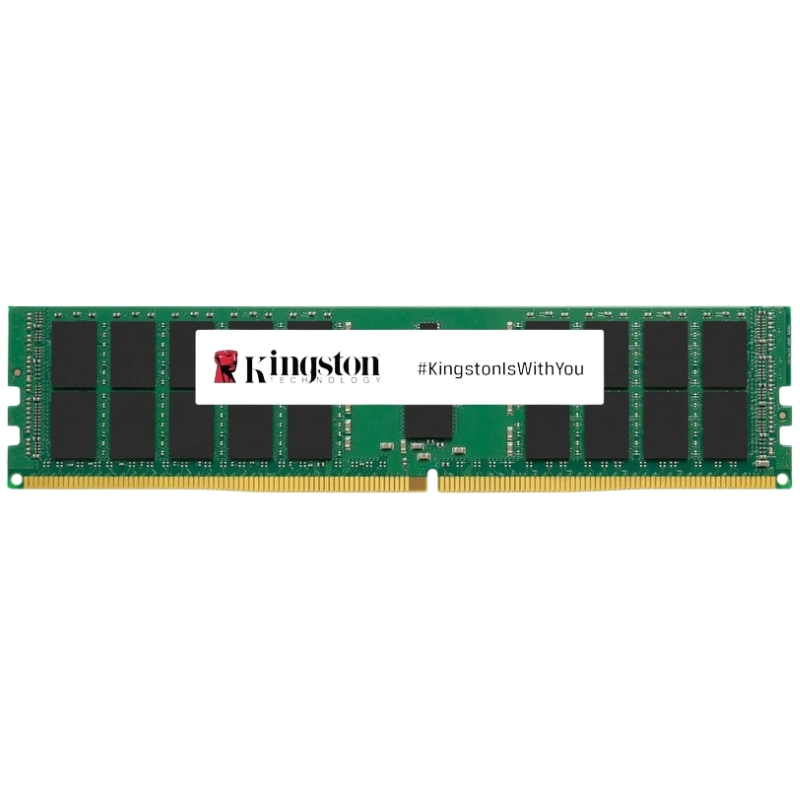


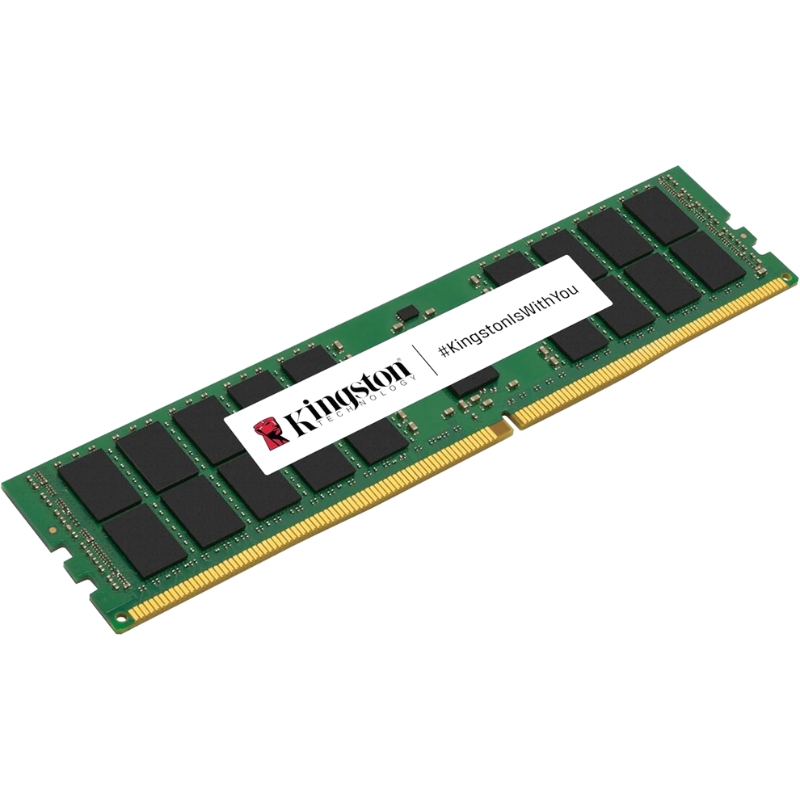
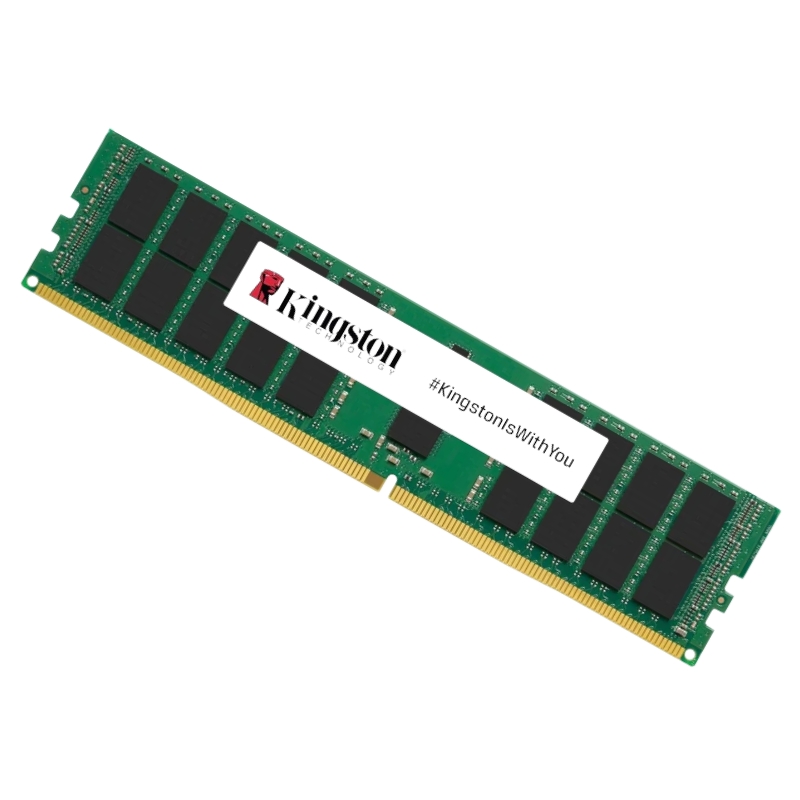
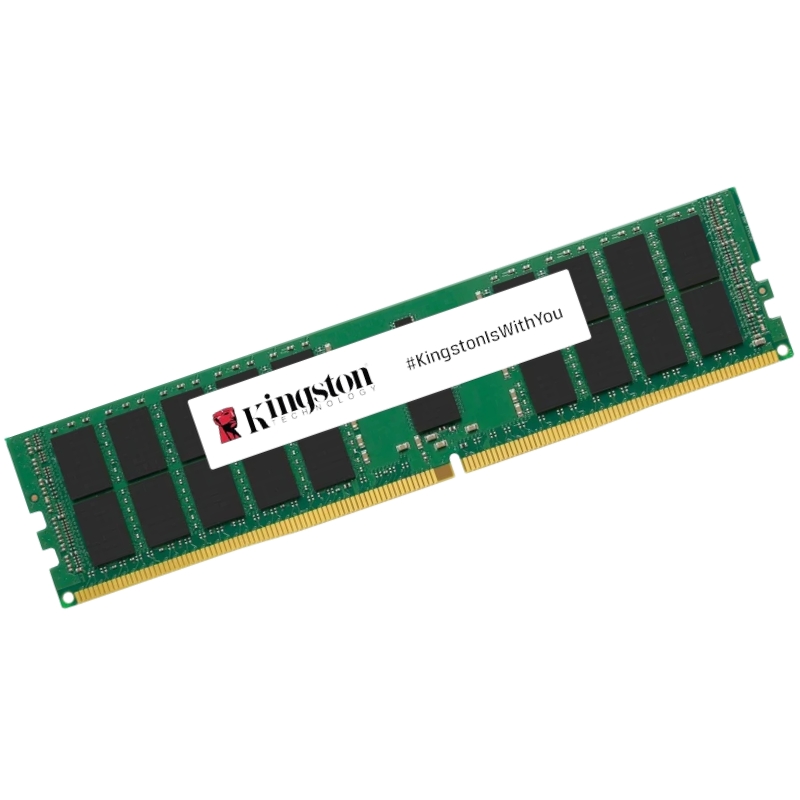
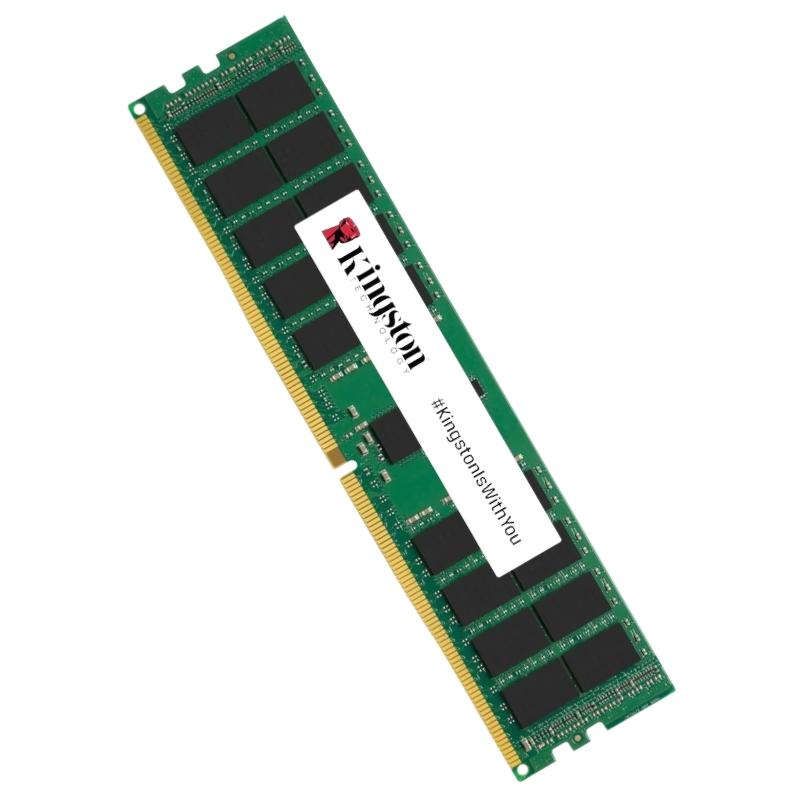
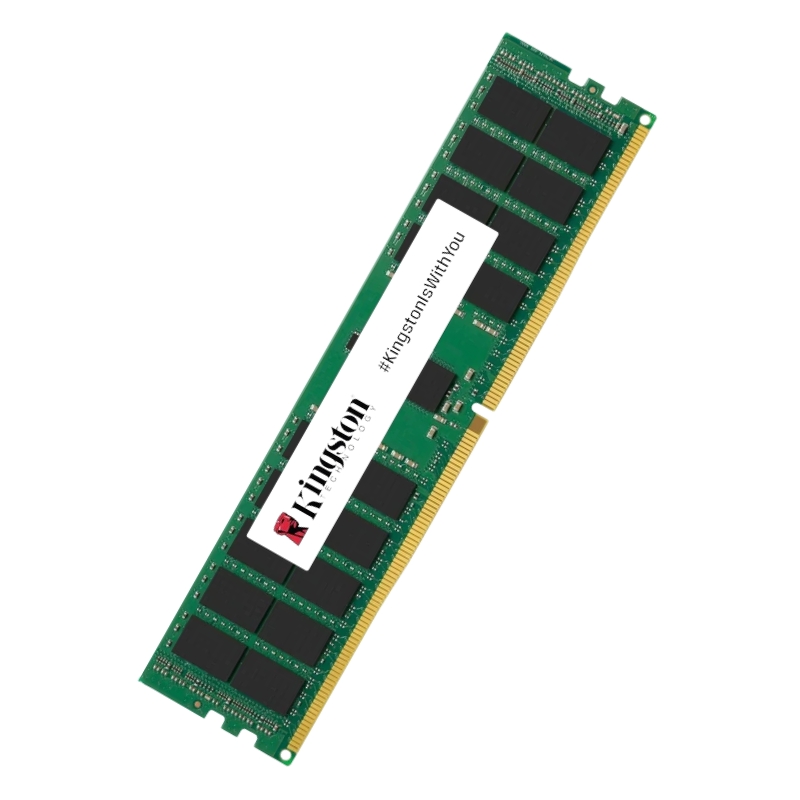
Kingston KSM56R46BS8PMI-16MDI 16GB DDR5 5600MHz PC5-44800 Single-rank Ecc Registered Cl46 1.10 V 288-pin DIMM SDRAM For Server. New Sealed in Box (NIB) with 3 Year Warranty
The Kingston KSM56R46BS8PMI-16MDI delivers advanced server-grade performance with DDR5 technology, ensuring faster bandwidth and reliable error correction for enterprise workloads.
In the mission-critical environment of servers, memory is not merely a performance component; it is a cornerstone of data integrity, system stability, and uptime. Unlike standard desktop memory, server memory incorporates advanced technologies designed to prevent, detect, and correct errors in real-time. The Kingston KSM56R46BS8PMI-16MDI represents a pinnacle of this philosophy, engineered for next-generation server platforms demanding uncompromising reliability and speed. This module belongs to the high-performance DDR5 Registered ECC DIMM category, a specific class of memory architected for enterprise servers, high-density virtualized environments, and demanding computational workloads.
The transition from DDR4 to DDR5 is a fundamental architectural shift, bringing transformative improvements in bandwidth, power efficiency, and channel architecture. The Kingston module leverages these advancements to deliver a substantial leap in performance for servers.
Operating at a data rate of 5600 Megatransfers per second (MT/s), denoted as PC5-44800, this module offers significantly higher peak bandwidth compared to previous-generation DDR4 standards. This increased throughput is vital for accelerating data-intensive applications, reducing latency in database queries, and improving the responsiveness of virtual machines. The 5600MHz speed ensures that the CPU is fed data rapidly, mitigating bottlenecks and enhancing overall system efficiency.
A key innovation of DDR5 is the relocation of the Power Management Integrated Circuit (PMIC) from the motherboard to the memory module itself. This Kingston DIMM features its own PMIC, which allows for more precise voltage regulation and improved power integrity. Operating at a nominal voltage of 1.10V, it provides greater power efficiency compared to DDR4, reducing overall server power consumption and thermal output—a critical factor in large-scale data center deployments.
The "ECC Registered" designation in the Kingston KSM56R46BS8PMI-16MDI is not a marketing term but a description of two essential technologies that define its server-grade pedigree.
ECC modules include extra memory bits (e.g., 8 bits for a 64-bit data word) that are not available to the operating system. A specialized algorithm calculates parity values for data as it is written to memory. When data is read, the algorithm recalculates the parity and compares it to the stored value. If a single-bit error (a flipped 0 to 1 or vice versa) is detected, the ECC circuitry automatically corrects it on the fly, without any notification or interruption to the system. This technology can also detect, though not always correct, multi-bit errors, alerting the system administrator to a potential failing module.
While ECC protects data, the Registered (RDIMM) architecture protects system signal integrity, especially in memory-intensive configurations.
An RDIMM incorporates a register, or buffer, on the module itself (typically one per memory channel). This register sits between the server's memory controller and the DRAM chips. It buffers the command and address signals from the controller before relaying them to the memory chips. This process introduces a slight, one-clock-cycle latency but provides immense system benefits.
The primary advantage is a significant reduction in the electrical load on the server's memory controller. By buffering the signals, the controller sees only the load of the register, not the combined load of all the DRAM chips on the module. This allows a single CPU socket to support a much larger quantity of memory modules (often doubling or tripling the capacity versus unbuffered designs) without overwhelming the controller. It results in greater system stability, higher achievable memory capacities, and more reliable operation in fully populated memory configurations common in servers.
The Kingston KSM56R46BS8PMI-16MDI is defined by a precise set of technical parameters that determine its compatibility and performance profile.
This module offers a 16-gigabyte (GB) capacity, a versatile size that balances density and performance for a wide range of server applications. It is configured as a Single-rank (1R) module. "Rank" refers to an independent set of DRAM chips that is accessed simultaneously by the memory controller. A single-rank design means all chips on one side of the PCB are accessed as one group. Compared to dual-rank modules, single-rank DIMMs can sometimes offer slightly lower latency and are less taxing on the memory controller, which can be advantageous for achieving higher speeds in certain configurations.
Memory performance is not solely defined by clock speed (5600MHz); timings are equally crucial. The CAS Latency (CL), specified as CL46 for this module, represents the number of clock cycles between the memory controller issuing a read command and the first piece of data being available. At a high frequency like 5600MT/s, absolute latency in nanoseconds (ns) can remain competitive despite a higher CL number. The CL46 timing is optimized for the DDR5 architecture and the registered design to provide an optimal balance of high bandwidth and responsive latency for server workloads.
The module conforms to the industry-standard 288-pin Dual In-line Memory Module (DIMM) form factor. The pin layout and notch key are specific to DDR5, preventing accidental insertion into a DDR4 slot. Its design is for use in systems that support ECC Registered DDR5 memory, which are typically modern single- and dual-socket servers from major OEMs. The 1.10V operating voltage underscores the improved efficiency of the DDR5 standard.
This specific type of memory is engineered for professional and enterprise computing environments where reliability, capacity, and performance are paramount.
The primary application for the Kingston KSM56R46BS8PMI-16MDI is in mainstream enterprise servers from vendors like Dell, HPE, Lenovo, and Cisco. It is ideal for roles such as file servers, email servers, collaboration platforms, and middleware application servers. The combination of ECC and Registered technology ensures maximum uptime and data protection in these always-on business infrastructure components.
Hypervisors from VMware, Microsoft (Hyper-V), and others are intensely memory-dependent. The ability to populate servers with high-capacity, reliable modules like this 16GB DDR5 RDIMM is essential for hosting a large number of virtual machines (VMs). The high 5600MHz bandwidth improves VM density and performance, while ECC protects the integrity of data belonging to multiple tenants or business units residing on a single physical host.
Workloads involving in-memory databases (e.g., SAP HANA), big data analytics, and computational modeling benefit from the increased memory bandwidth of DDR5. Faster data access speeds up processing times for complex queries and simulations. ECC is particularly critical here, as a silent error in a scientific calculation or financial model could invalidate results without any obvious system crash.
Deploying server memory requires careful attention to platform compatibility and configuration rules.
The Kingston KSM56R46BS8PMI-16MDI is designed for server platforms built on Intel Xeon Scalable Processors (Sapphire Rapids, Emerald Rapids, and later generations) and compatible AMD EPYC processors that support DDR5 Registered memory. It is imperative to verify the server motherboard or system manufacturer's qualified vendor list (QVL) to ensure this specific Kingston module has been tested and validated for the target system, guaranteeing performance and reliability.


 Contact Us
 Information
 Catalog
 Solid State Drives (SSD)
 Network Switches
 Hard Disk Drives
 HBA & Controllers
 PC & Servers
 PC & Server Memory
 CPU & Processors
 Network Routers
 Power Supplies
 Tape Drives & Libraries
 Network Devices
 Computer & Network Cables