(7% discount is applied at checkout)
Cart is empty
Your go-to destination for cutting-edge server products


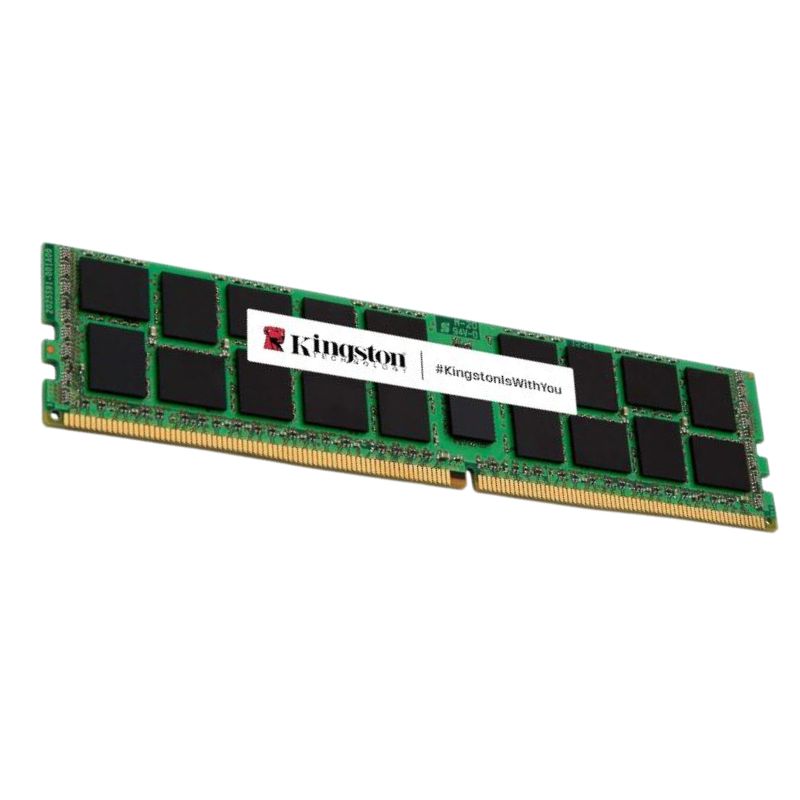
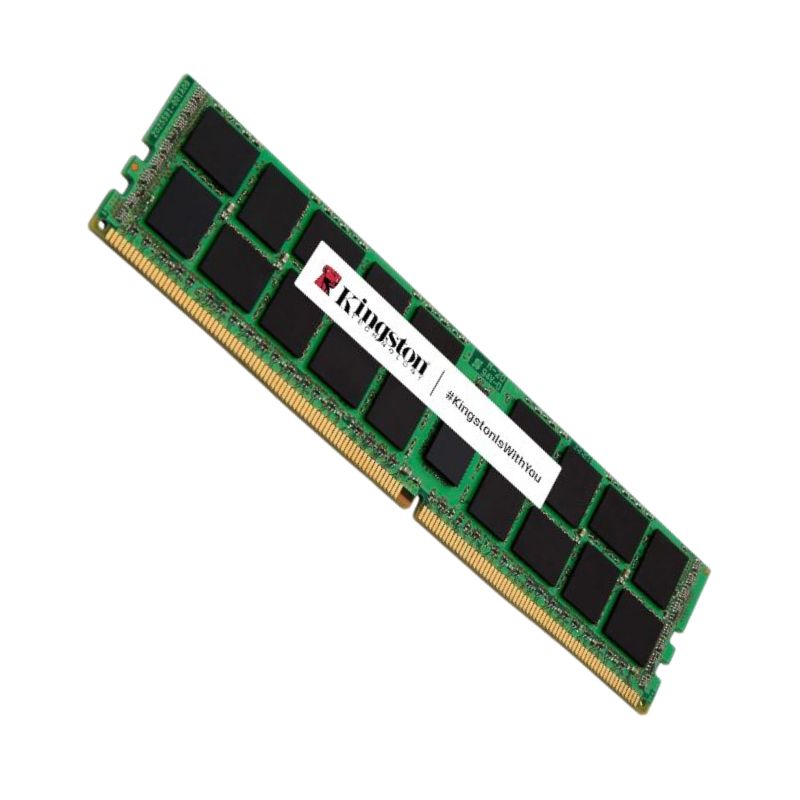
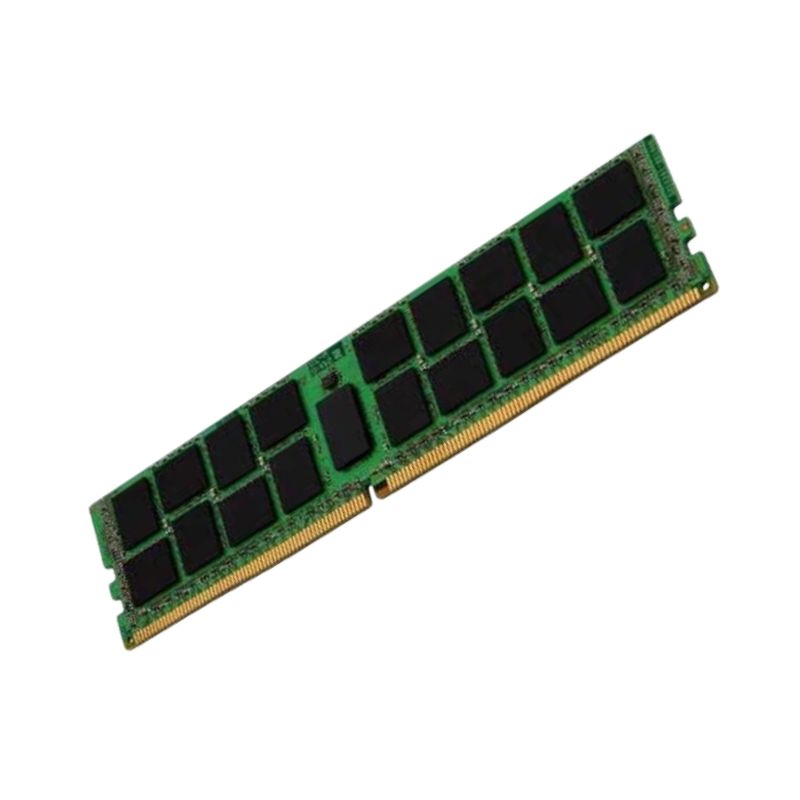
Kingston KCS-UC432/32G 32GB DDR4 3200MT/s Dual-Rank SDRAM Memory Module. New Sealed in Box (NIB) with 3 Year Warranty
The KINGSTON KCS-UC432/32G is a high-performance 32GB DDR4 memory module engineered for enterprise-class Cisco UCS C225 M6 SFF rack servers. Designed as a dual-rank, registered (buffered) ECC DIMM, this module delivers reliable, low-latency data throughput at 3200MT/s (PC4-25600) while operating at an efficient 1.20V. Ideal for mission-critical workloads, virtualization and database applications, the KCS-UC432/32G balances speed, stability and error correction for server environments.
The KCS-UC432/32G Kingston 32GB DDR4 3200MT/s Dual-Rank SDRAM Memory Module belongs to a specialized category of high-capacity, high-frequency system memory engineered for reliability, scalability, and sustained performance. This category focuses on DDR4 SDRAM modules designed to meet the requirements of professional workstations, entry-to-mid-level servers, and business-critical computing environments where memory integrity, throughput, and compatibility are paramount.
DDR4 memory represents a substantial advancement over previous DDR generations, offering increased data transfer rates, improved power efficiency, and higher module densities. Within this category, 32GB modules operating at 3200MT/s occupy a strategic position, delivering an optimal balance between capacity and bandwidth. Dual-rank configurations further enhance memory performance by enabling better utilization of the memory controller, making these modules particularly suitable for multitasking-intensive workloads and data-heavy applications.
Double Data Rate 4 (DDR4) Synchronous Dynamic Random-Access Memory is built upon a refined architecture that improves signaling efficiency and reduces operating voltage compared to DDR3. Operating typically at 1.2V, DDR4 memory minimizes power consumption and heat generation, which is especially beneficial in dense system configurations and environments with continuous uptime requirements.
Modules in this category utilize advanced memory ICs organized across multiple banks and bank groups, allowing for greater parallelism in data access. The 3200MT/s data rate signifies the module’s ability to transfer up to 3.2 billion data transfers per second, which directly contributes to faster application response times, reduced latency in data-intensive processes, and smoother overall system performance.
Dual-rank memory modules feature two independent sets of memory chips (ranks) on a single module that can be accessed alternately by the memory controller. This interleaving capability enhances effective bandwidth and improves performance in scenarios where multiple memory requests are processed concurrently.
In professional and server-oriented systems, dual-rank modules are often preferred over single-rank alternatives due to their ability to deliver better throughput under sustained workloads. This makes the category well-suited for virtualization platforms, database servers, content creation systems, and engineering applications that rely on consistent memory access patterns.
Memory modules with a 32GB capacity play a critical role in modern system architecture by enabling higher total memory configurations with fewer slots populated. This category supports system scalability by allowing administrators and system builders to reach large memory footprints without compromising on frequency or stability.
Utilizing fewer, higher-capacity modules can also improve airflow within a chassis, reduce power draw across memory channels, and simplify future upgrades. In environments where motherboard memory slots are limited, 32GB DDR4 modules provide a practical solution for achieving 64GB, 128GB, or higher total system memory capacities.
Memory reliability is a defining characteristic of this category. Modules are engineered to meet stringent quality control standards, often undergoing extensive validation and testing to ensure compatibility with a wide range of system platforms. This focus on reliability is essential for systems that operate continuously or support mission-critical tasks.
Kingston’s server- and workstation-oriented memory categories are typically designed with long-term availability in mind, reducing the risk of component changes that could affect system stability. This approach is particularly valuable for IT departments managing standardized hardware deployments over extended lifecycles.
Many modules within this category are designed to support enhanced data integrity features, depending on system compatibility. Such features help detect and manage data errors that may occur during memory operations, contributing to overall system reliability.
In professional environments, maintaining data accuracy is just as important as achieving high performance. Memory modules optimized for stability help protect against system crashes, data corruption, and unexpected downtime, which can have significant operational and financial impacts.
The 3200MT/s speed grade aligns well with the capabilities of modern CPU memory controllers, enabling systems to operate at or near their optimal memory frequency without requiring manual overclocking or custom tuning. This category is tailored for plug-and-play compatibility, allowing systems to achieve rated speeds through standard BIOS configurations.
As multi-core processors continue to evolve, memory bandwidth becomes increasingly important. High-speed DDR4 modules help ensure that processor cores are consistently fed with data, minimizing idle cycles and maximizing computational efficiency.
Applications that leverage multiple threads or cores benefit significantly from increased memory bandwidth and efficient rank interleaving. Dual-rank 3200MT/s modules can improve performance in tasks such as parallel rendering, large-scale data processing, and real-time analytics.
This category is therefore well-suited for users who require predictable performance under load, whether in a professional workstation or a small-to-medium enterprise server environment.
Memory modules in this category are designed to integrate seamlessly with a wide range of motherboards and chipsets that support DDR4 technology. Attention to standard form factors, electrical specifications, and timing parameters ensures broad compatibility and straightforward installation.
System builders and integrators benefit from memory solutions that conform strictly to industry standards, reducing the likelihood of configuration issues and simplifying qualification processes.
Standard DDR4 DIMM form factors allow these modules to fit into conventional desktop and server memory slots. The physical layout of components on dual-rank modules is optimized to balance signal integrity and thermal performance.
Heat dissipation is managed through efficient PCB design and component placement, enabling stable operation even in densely populated systems or environments with limited airflow.
Operating at lower voltages than previous DDR generations, DDR4 memory modules contribute to reduced overall system power consumption. This efficiency is particularly important in data centers and business environments where energy costs and thermal management are ongoing concerns.
By minimizing heat output, these modules help maintain stable operating temperatures across the system, supporting longevity and consistent performance over time.
Systems designed for continuous or near-continuous operation require components that can withstand prolonged thermal and electrical stress. Memory modules in this category are well-suited for such environments, offering dependable operation under sustained workloads.
This makes the category relevant not only for servers but also for professional workstations used in production studios, laboratories, and enterprise offices.
Investing in high-quality DDR4 memory modules provides long-term value by extending system usability and supporting future software demands. As applications continue to grow in complexity and memory requirements increase, having ample, high-speed RAM becomes a critical factor in maintaining system responsiveness.
The category encompassing the KCS-UC432/32G module is designed to offer deployment flexibility, allowing systems to be configured for current needs while retaining the ability to scale as workloads evolve.


 Contact Us
 Information
 Catalog
 Solid State Drives (SSD)
 Network Switches
 Hard Disk Drives
 HBA & Controllers
 PC & Servers
 PC & Server Memory
 CPU & Processors
 Network Routers
 Power Supplies
 Tape Drives & Libraries
 Network Devices
 Computer & Network Cables