(7% discount is applied at checkout)
Cart is empty
Your go-to destination for cutting-edge server products
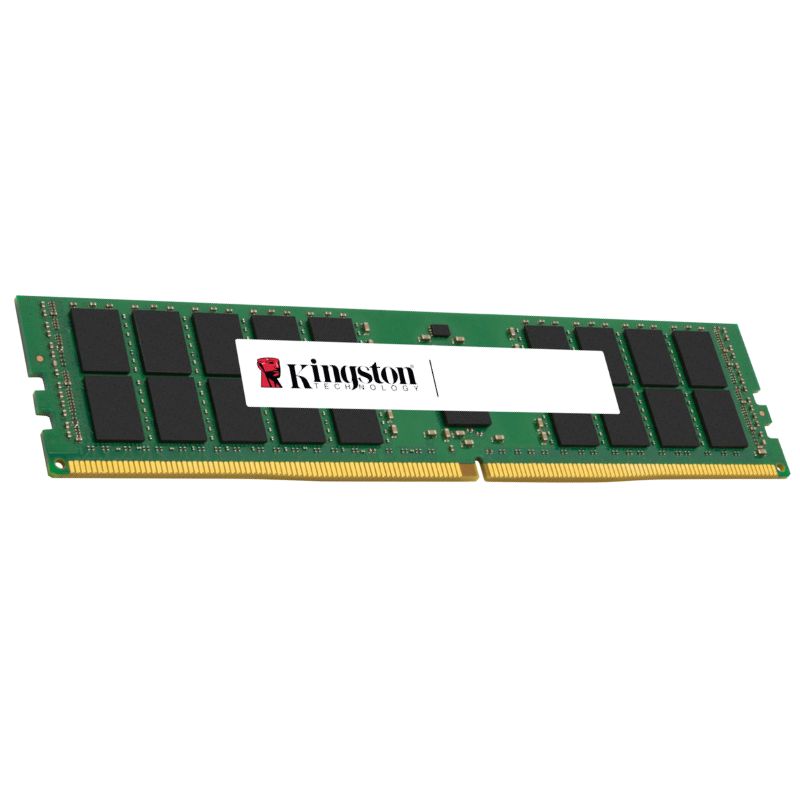


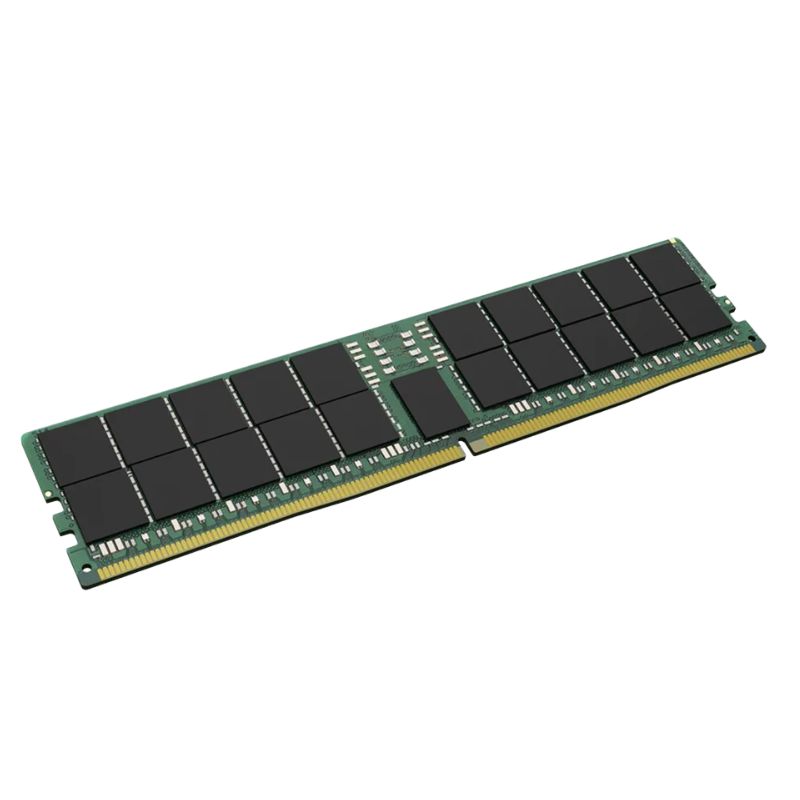
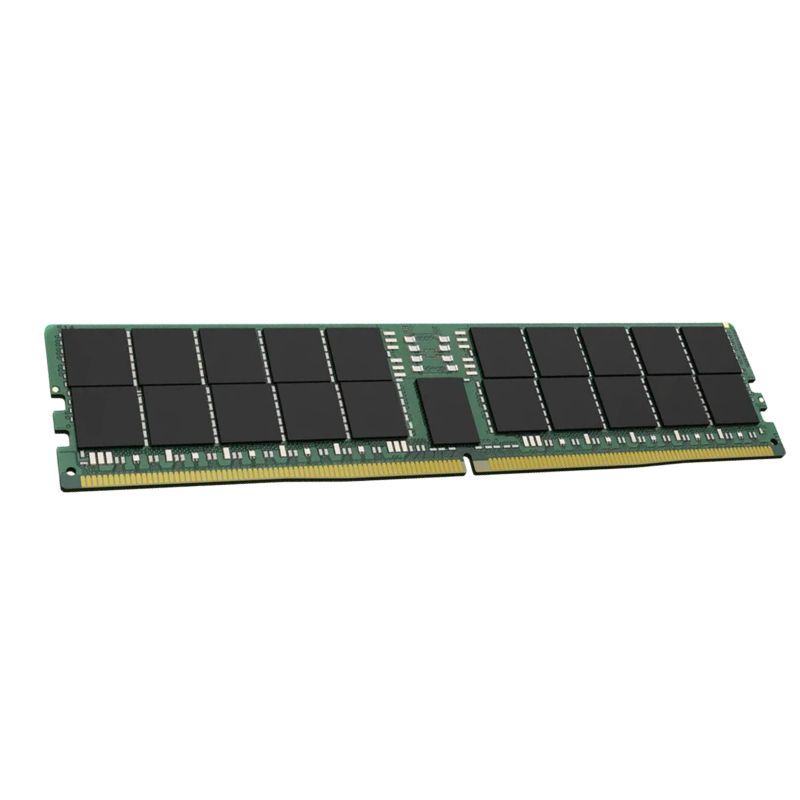
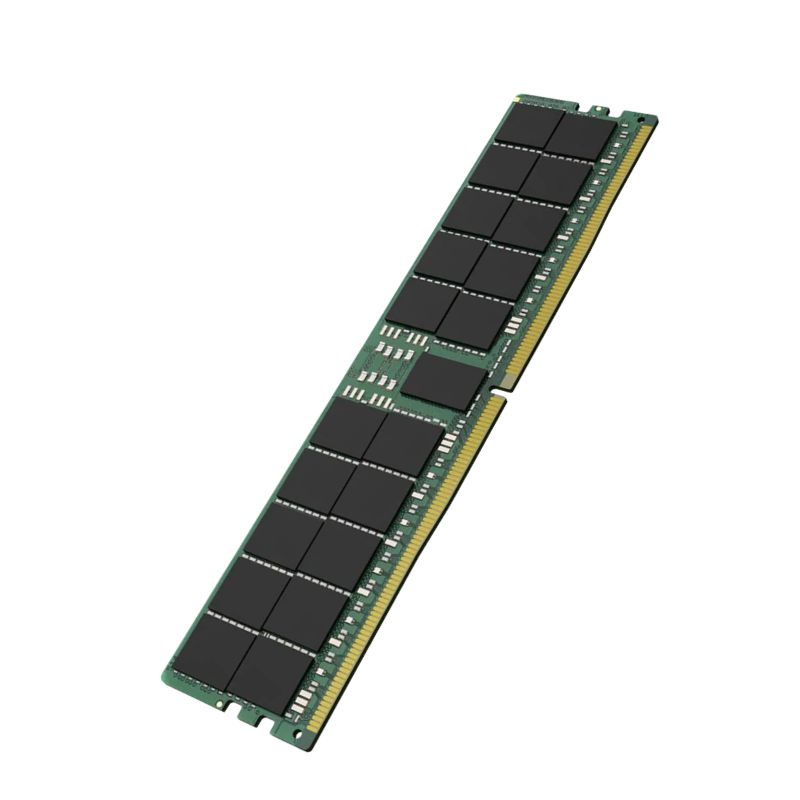
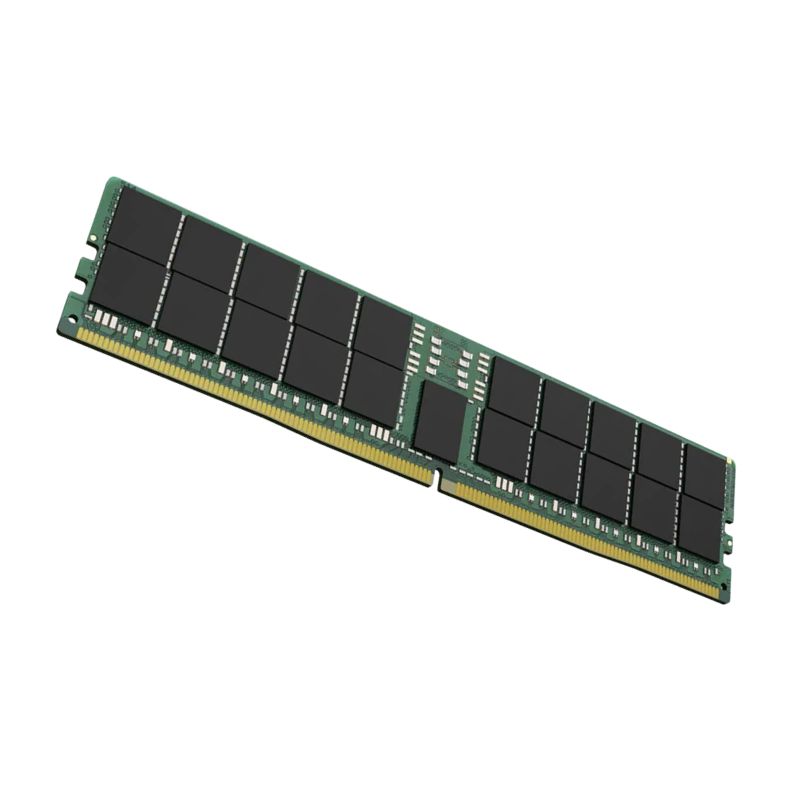
Kingston KCS-UC564D4-128G 128GB DDR55-6400/pc5-51200 Sdram 6400Mt/s Dual-rank Cl52 1.10 V Ecc 288-pin Dimm RAM Module. Factory-Sealed New in Original Box (FSB) with 3 Years Warranty
Kingston KCS-UC564D4-128G is a high-performance 128 GB DDR5 memory module engineered for enterprise servers and workstations that demand ultra-fast throughput, dependable error correction and power-efficient operation. This registered, dual-rank DIMM conforms to the DDR5-6400 / PC5-51200 standard with 288 pins and operates at 1.10 V for optimized stability.
The KCS-UC564D4-128G Kingston 128GB DDR5 6400MT/s ECC RAM Module belongs to a specialized category of high-capacity, high-frequency, error-correcting system memory designed for professional, enterprise, and workstation-class computing environments. This category focuses on reliability, performance scalability, and long-term platform stability, making it essential for servers, virtualization hosts, data analytics platforms, AI workloads, engineering simulations, and professional content creation systems.
DDR5 ECC memory represents a major generational leap from previous DDR4 ECC modules by delivering significantly increased bandwidth, improved power efficiency, higher memory densities, and enhanced reliability features. Kingston’s implementation within this category emphasizes strict validation, platform compatibility, and predictable performance across supported Intel and AMD server and workstation architectures.
DDR5 memory introduces architectural changes that directly benefit systems requiring consistent throughput under heavy workloads. Modules in this category operate at a base frequency of 6400MT/s, enabling substantially higher data transfer rates compared to earlier DDR5 generations and legacy DDR4 solutions. The increased bandwidth supports modern multi-core CPUs, high-thread-count processors, and memory-intensive applications without bottlenecks.
One of the defining architectural changes in DDR5 is the dual independent 32-bit sub-channel design per DIMM. This improves memory efficiency by allowing better parallelism and reduced access latency under mixed workloads. For enterprise users, this translates into smoother virtualization performance, faster dataset processing, and improved responsiveness for memory-bound tasks.
While all DDR5 memory includes on-die error correction for internal reliability, modules in this category extend protection through full system-level ECC (Error-Correcting Code) support. The KCS-UC564D4-128G is designed to detect and correct single-bit memory errors and detect multi-bit errors, reducing the risk of data corruption, application crashes, or silent computational inaccuracies.
ECC functionality is particularly critical in environments where data integrity cannot be compromised, such as financial modeling, database servers, cloud infrastructure, scientific research, and medical imaging systems. This category of memory ensures long-term operational stability even under continuous high-load conditions.
The defining characteristic of this category is the availability of 128GB capacity per module. High-density DIMMs enable system builders and IT administrators to scale total system memory efficiently while minimizing physical slot usage. This is especially beneficial in platforms with limited DIMM slots or where maximizing memory per CPU socket is a priority.
Large-capacity modules allow for higher virtual machine density, larger in-memory databases, and more extensive caching without resorting to slower storage-based solutions. This makes the category ideal for virtualization clusters, hyper-converged infrastructure, real-time analytics platforms, and AI inference environments.
Using fewer high-capacity DIMMs instead of many smaller modules reduces electrical load on the memory controller, improves airflow within server chassis, and simplifies system configuration. DDR5’s improved power management architecture, including onboard power management ICs (PMICs), contributes to better voltage regulation and overall energy efficiency.
These benefits align with modern data center goals of reducing total cost of ownership (TCO), lowering power consumption, and improving thermal management without sacrificing performance.
The KCS-UC564D4-128G module belongs to the ECC UDIMM (Unbuffered DIMM) category, which is specifically designed for workstations and entry-level to mid-range servers that require ECC reliability without the complexity of registered memory.
ECC UDIMMs offer lower latency compared to RDIMMs and LRDIMMs, making them well-suited for professional applications that benefit from fast memory access times. This category bridges the gap between consumer-grade memory and fully buffered enterprise solutions.
Memory modules in this category are validated for compatibility with supported Intel Xeon and AMD Ryzen Pro / EPYC workstation platforms that support DDR5 ECC UDIMM memory. Kingston’s qualification process includes rigorous testing against chipset specifications, motherboard firmware, and BIOS configurations to ensure consistent behavior.
Proper platform compatibility ensures that ECC features are fully enabled, memory timings are correctly negotiated, and long-term reliability is maintained across operating systems and hypervisors.
Operating at 6400MT/s, this category of DDR5 memory delivers exceptional bandwidth for applications that scale with memory speed. High-frequency memory improves performance in tasks such as large-scale simulations, 3D rendering, real-time video processing, and high-performance computing (HPC) workloads.
Faster memory speeds reduce data access bottlenecks between the CPU and memory, enabling processors to maintain higher utilization and reducing idle cycles. This is especially important for modern CPUs with high core counts and wide memory buses.
Although higher memory speeds traditionally increase latency, DDR5 architectural improvements and optimized timing profiles help balance performance and stability. Modules in this category are engineered for consistent timing behavior under sustained load, avoiding the instability commonly associated with overclocked consumer memory.
Kingston’s focus on JEDEC-compliant specifications ensures predictable performance and avoids compatibility issues that may arise from non-standard profiles.
Reliability is a defining attribute of this memory category. Each module undergoes extensive testing, including thermal stress testing, signal integrity validation, and compatibility verification with supported platforms. This ensures dependable operation in environments where downtime is costly.
Kingston’s enterprise-grade manufacturing processes emphasize component quality, traceability, and long-term availability. This is particularly important for organizations that require consistent hardware configurations over extended deployment cycles.
Memory modules in this category are designed for extended lifecycle availability, making them suitable for enterprise procurement, system certification programs, and standardized hardware deployments. Long-term support reduces the risk of component mismatches during system expansion or replacement.
This approach benefits system integrators, IT departments, and OEMs who prioritize stability and predictable maintenance schedules.
The category encompassing the KCS-UC564D4-128G DDR5 ECC module is tailored for a wide range of professional applications. These include virtualization hosts running multiple operating systems, enterprise databases requiring large memory pools, and analytics platforms processing high-volume datasets in memory.
Creative professionals also benefit from high-capacity ECC memory, particularly in workflows involving large media assets, complex timelines, and real-time rendering where stability is essential.
As software complexity and data volumes continue to grow, scalable memory solutions become increasingly important. This category of DDR5 ECC memory supports future system expansion by enabling higher total memory capacities with fewer modules.
The adoption of DDR5 also positions systems to take advantage of future CPU architectures and platform advancements, ensuring continued relevance and performance longevity.
Modern operating systems and virtualization platforms are designed to take advantage of high-bandwidth, high-capacity memory configurations. DDR5 ECC modules in this category support advanced memory management features, large page sizes, and efficient resource allocation.
This results in improved application responsiveness, reduced memory contention, and better overall system efficiency across diverse workloads.
Enterprise memory modules are engineered for continuous operation under sustained workloads. Thermal stability is achieved through efficient PCB design, high-quality components, and optimized power delivery.
The category prioritizes consistent performance across varying environmental conditions, making it suitable for data centers, workstations, and edge computing deployments.
Systems operating around the clock require memory that can maintain performance without degradation. ECC DDR5 modules in this category are designed for nonstop operation, supporting critical services where system failure is not an option.
This reliability underpins the trust placed in Kingston memory solutions by enterprises, system integrators, and professionals worldwide.


 Contact Us
 Information
 Catalog
 Solid State Drives (SSD)
 Network Switches
 Hard Disk Drives
 HBA & Controllers
 PC & Servers
 PC & Server Memory
 CPU & Processors
 Network Routers
 Power Supplies
 Tape Drives & Libraries
 Network Devices
 Computer & Network Cables