(7% discount is applied at checkout)
Cart is empty
Your go-to destination for cutting-edge server products
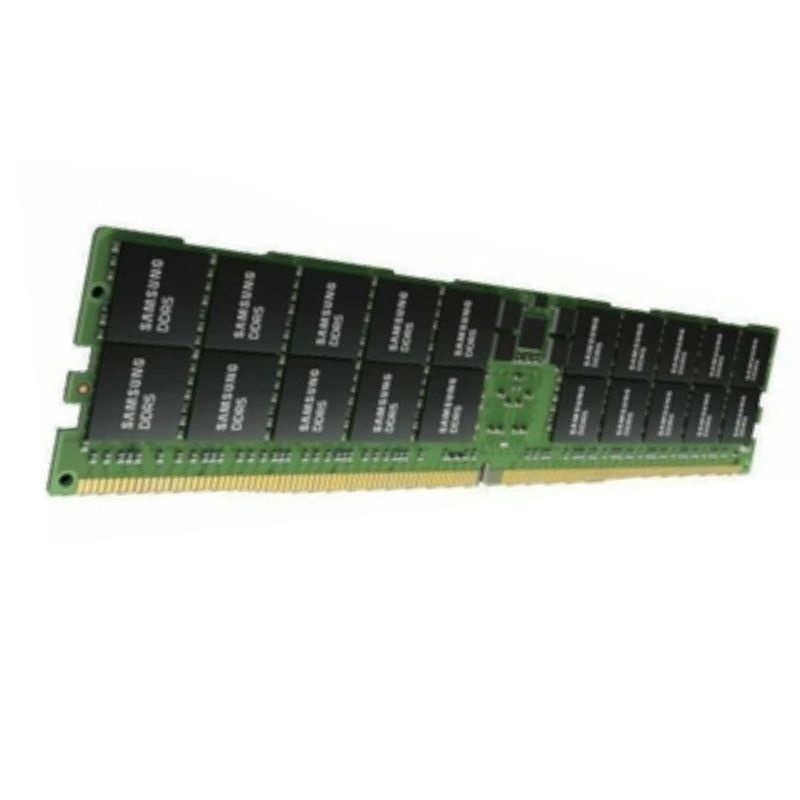


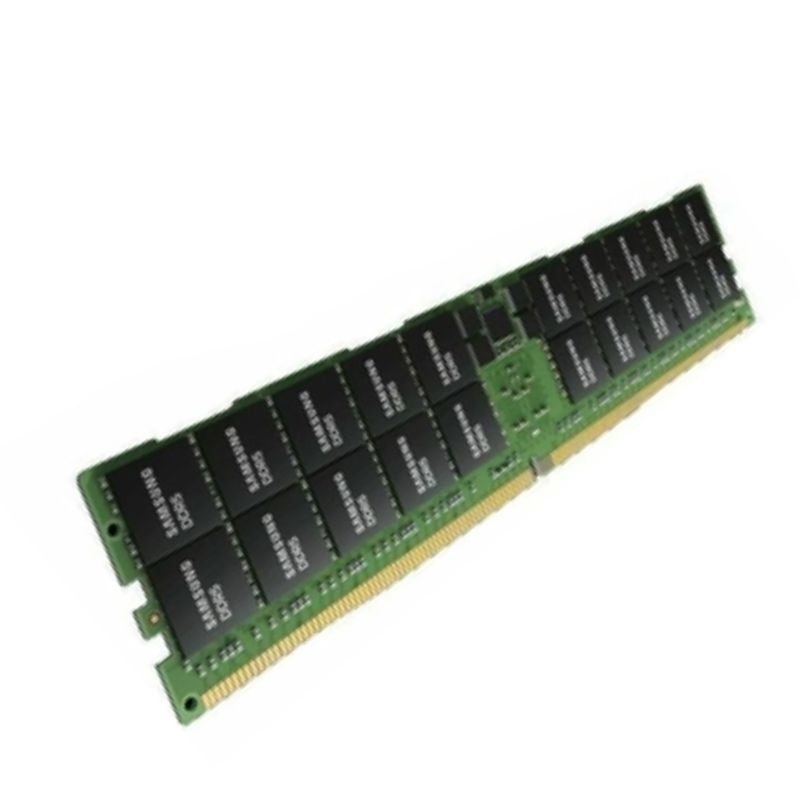
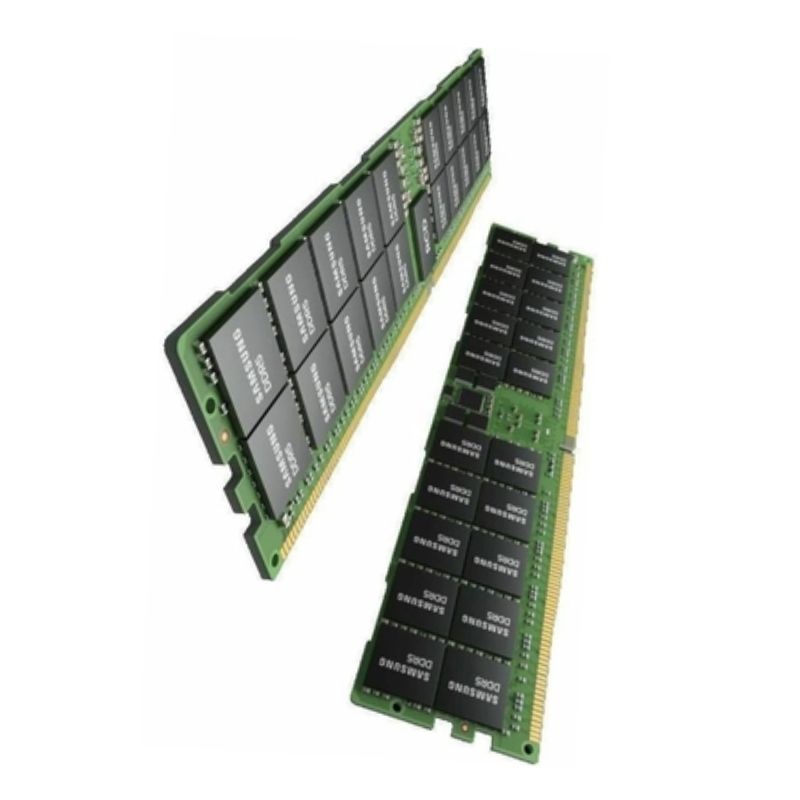
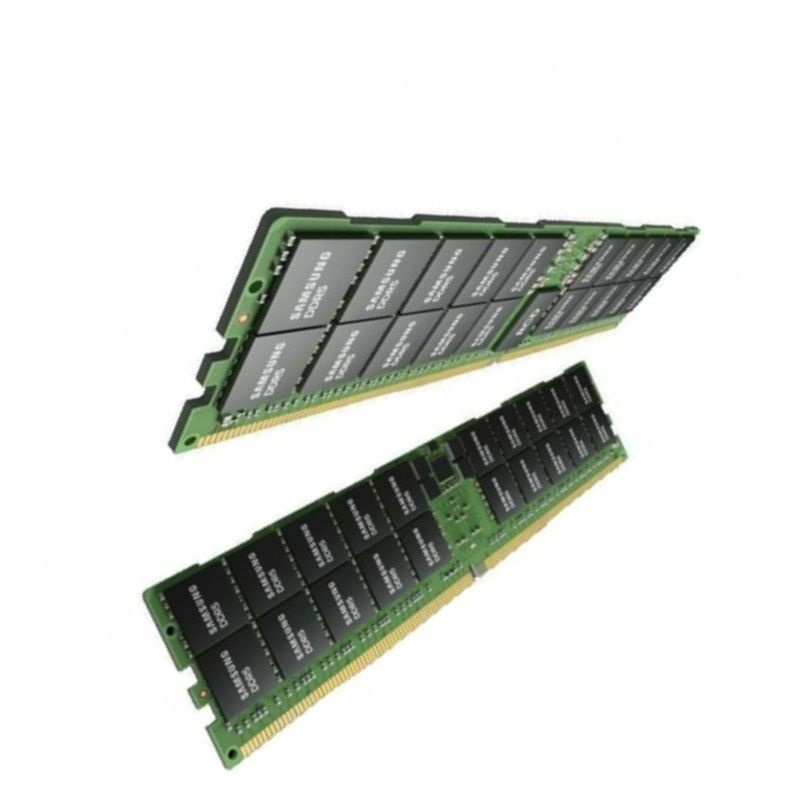
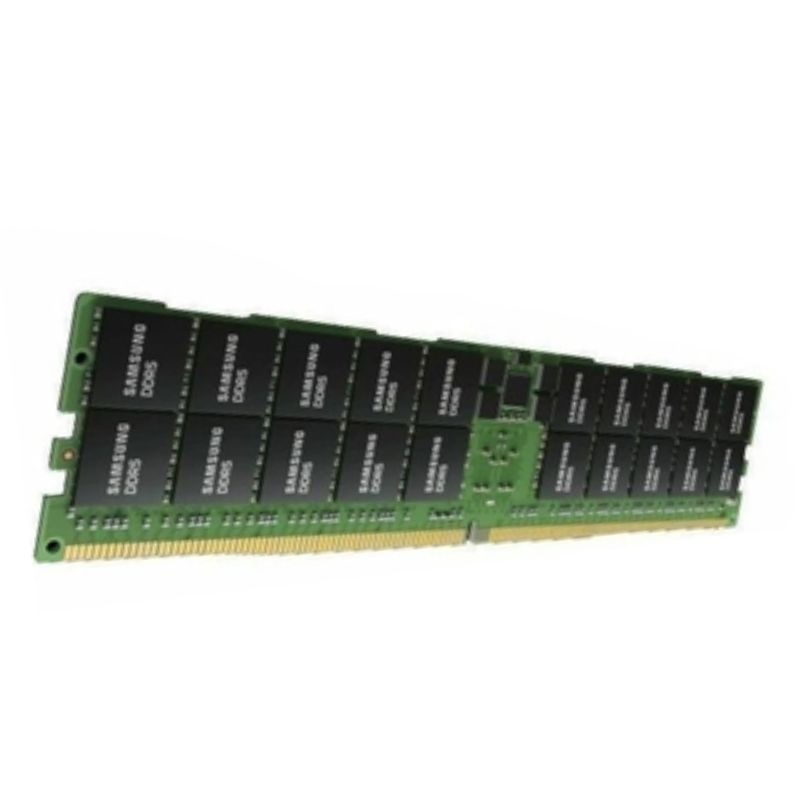
Samsung M321R2GA3EB0-CWM 16GB SDRAM ECC REG 288P RDIMM DDR5 PC5-44800 Memory Module. New Sealed in Box (NIB) with 3 Years Warranty
Discover the Samsung M321R2GA3EB0-CWM — a 16GB DDR5 Registered DIMM engineered for servers and workstations that require robust reliability and high-throughput memory. This ECC-capable module (Error-Correcting Code) provides dependable data integrity and consistent performance for mission-critical systems.
The transition to DDR5 memory represents a quantum leap in server, workstation, and high-performance computing architecture. At the forefront of this revolution are ECC Registered RDIMMs (Error-Correcting Code Registered Dual In-Line Memory Modules), a category engineered for mission-critical environments where data integrity, capacity, and stability are non-negotiable. Modules like the Samsung M321R2GA3EB0-CWM 16GB SDRAM ECC REG 288-pin RDIMM embody the core advancements of this generation. Unlike standard unbuffered DIMMs, RDIMMs incorporate a register (or buffer) on the module itself to manage electrical load. This crucial feature allows systems to support significantly higher memory capacities per channel and more modules per system without overloading the memory controller, enabling the expansive, multi-terabyte configurations required by modern data centers, virtualization hosts, and enterprise databases.
Decoding the part number and specifications of the Samsung M321R2GA3EB0-CWM reveals its precise position within the server memory hierarchy. This module is a 16GB (Gigabyte) Synchronous Dynamic Random-Access Memory (SDRAM) stick. Its "ECC REG" designation confirms it features both Error-Correcting Code and a Register. The "288-pin" form factor is the standard physical interface for DDR5 modules, though the pinout and notch position are different from DDR4 to prevent accidental insertion. Perhaps the most telling specification is its data rate: PC5-44800. In DDR nomenclature, this indicates a peak transfer rate of 44,800 MB/s (Megabytes per second). This is often also expressed as a speed of 5600 MT/s (MegaTransfers per second), as DDR (Double Data Rate) transfers data twice per clock cycle. Thus, this module operates at an effective clock speed of 2800 MHz, delivering breathtaking bandwidth that alleviates data bottlenecks for CPU-intensive workloads.
To fully appreciate the capabilities of this memory category, one must understand the synergistic technologies at work within a module like the Samsung M321R2GA3EB0-CWM.
ECC is not merely a feature; it is a foundational pillar for enterprise stability. As memory densities increase and cell sizes shrink, the potential for soft errors—single-bit flips caused by cosmic rays or electrical interference—increases. ECC memory adds extra bits (e.g., 8 bits for a 64-bit word) to create a checksum. The memory controller uses this checksum to detect and, critically, correct single-bit errors on the fly, and to detect multi-bit errors. This proactive correction happens without any operating system or application involvement, preventing silent data corruption, system crashes, and computational errors that could be catastrophic in financial modeling, scientific research, or database transactions.
The Register, or Registering Clock Driver (RCD), is the defining component of an RDIMM. It sits between the memory controller and the DRAM chips. Command and address signals from the controller are sent to the RCD, which then buffers and re-drives these signals to the memory chips. This process reduces the electrical load on the controller, as it only "sees" the RCD, not all the individual DRAM chips. This buffering results in a slight increase in latency (typically one extra clock cycle), but the trade-off is profoundly beneficial: it enables the use of more memory ranks and modules per channel. This allows servers to achieve massive total memory capacities—often into the tens of terabytes—that would be impossible with unbuffered designs, making it the de facto standard for multi-socket servers and high-end workstations.
DDR5 introduces a groundbreaking feature: On-Die ECC. This is separate from the module-level ECC discussed earlier. Within each DDR5 DRAM chip, a small portion of the memory array is dedicated to correcting bit errors internal to the die. This addresses the increasing error rates within the chip itself due to advanced manufacturing processes. ODECC improves the raw reliability of the memory chips before data even leaves the module, providing an additional layer of data integrity and increasing the overall yield and robustness of the memory subsystem.
The combination of high bandwidth (PC5-44800), large capacity per module (16GB), and the scalability of the RDIMM design translates directly into tangible performance benefits across a spectrum of demanding applications.
Modern hypervisors like VMware vSphere, Microsoft Hyper-V, and KVM allow dozens of virtual machines (VMs) to run on a single physical host. Each VM requires allocated RAM. High-density, reliable RDIMMs are the literal lifeblood of these environments. They enable higher VM density, improve consolidation ratios, and ensure that a memory error in one VM does not destabilize the entire host. The high bandwidth also speeds up live migrations (vMotion) and handles the intense I/O workloads typical of virtualized servers.
Platforms such as SAP HANA, Oracle TimesTen, and Redis store entire datasets in RAM to eliminate the latency of disk access. For these systems, memory is the primary data store. The capacity provided by RDIMMs allows for larger, more complex datasets to be held in memory, while the robust ECC protection is absolutely critical to prevent database corruption. The 5600 MT/s bandwidth dramatically accelerates query processing, real-time analytics, and transaction speeds, enabling businesses to gain insights and make decisions at unprecedented rates.
Computational workloads in scientific simulation, financial modeling, and machine learning training are often bound by memory bandwidth. Complex calculations require constant feeding of data to the CPU (or GPU). The 44,800 MB/s bandwidth of these modules helps keep processing units saturated with data, reducing idle cycles and shortening time-to-solution for massive computational jobs. ECC ensures the mathematical integrity of these long-running, billion-calculation tasks, where even a single flipped bit could invalidate days of computation.
The Samsung M321R2GA3EB0-CWM is not a universal module; it is designed for specific platforms that require DDR5 ECC Registered RDIMMs.
This module is engineered for next-generation servers and workstations based on Intel Xeon Scalable Processors (Sapphire Rapids, Emerald Rapids, and later) and AMD EPYC 7004 "Genoa" (and later) series CPUs. These platforms feature memory controllers specifically designed to leverage DDR5's speed and the RDIMM's capacity. It is critical to consult your system or motherboard manufacturer's Qualified Vendor List (QVL) to confirm compatibility, as BIOS and firmware support are essential for stable operation.
Samsung controls the entire production process, from silicon wafer fabrication to module assembly. This allows for stringent quality control at every stage. Modules undergo extensive testing and validation for thermal, electrical, and signal integrity performance. This results in memory known for its exceptional reliability, low failure rates, and long-term stability—key attributes for infrastructure meant to run 24/7/365.
DDR5 introduces a new power architecture with the Power Management IC (PMIC) located on the module itself, rather than on the motherboard. Samsung designs its PMICs to provide stable, clean power to the DRAM chips, which is crucial for maintaining signal integrity at high speeds. Furthermore, DDR5 operates at a lower voltage (typically 1.1V) than DDR4, contributing to improved power efficiency—a major consideration for large-scale data centers calculating Total Cost of Ownership (TCO) and PUE (Power Usage Effectiveness).


 Contact Us
 Information
 Catalog
 Solid State Drives (SSD)
 Network Switches
 Hard Disk Drives
 HBA & Controllers
 PC & Servers
 PC & Server Memory
 CPU & Processors
 Network Routers
 Power Supplies
 Tape Drives & Libraries
 Network Devices
 Computer & Network Cables